Start With the MOQ Driver, Not the Bag
When buyers say they need a lower MOQ on wholesale canvas grocery totes for event planners, they usually mean something more specific: they want the smallest workable run that still protects budget, schedule, and brand appearance. The order may be for a one-day conference, a seasonal roadshow, a distributor promo, or a retail test, but the factory still has to stage fabric, cut panels, print screens, and allocate sewing capacity. MOQ is the result of those setup steps, not a random number pulled from a catalog.
The fastest way to get a useful quote is to define the use case before negotiating the quantity. A tote for registration kits can be lighter and simpler than a tote meant to carry groceries home. If the bag only needs to hold brochures and a notebook, a 10 oz to 12 oz canvas build may be enough. If it needs to hold heavier items or survive repeat use, you will usually need a thicker fabric, stronger stitching, and a more careful sample approval process, all of which affect MOQ logic.
- Lower MOQ usually comes from standard fabric, one print location, and one stock color.
- MOQ rises when you ask for custom dye, extra pockets, heavy trim, or multiple print steps.
- A direct factory can often optimize one element at a time, but it will still protect line efficiency.
Choose the Spec That Keeps the Order Standard
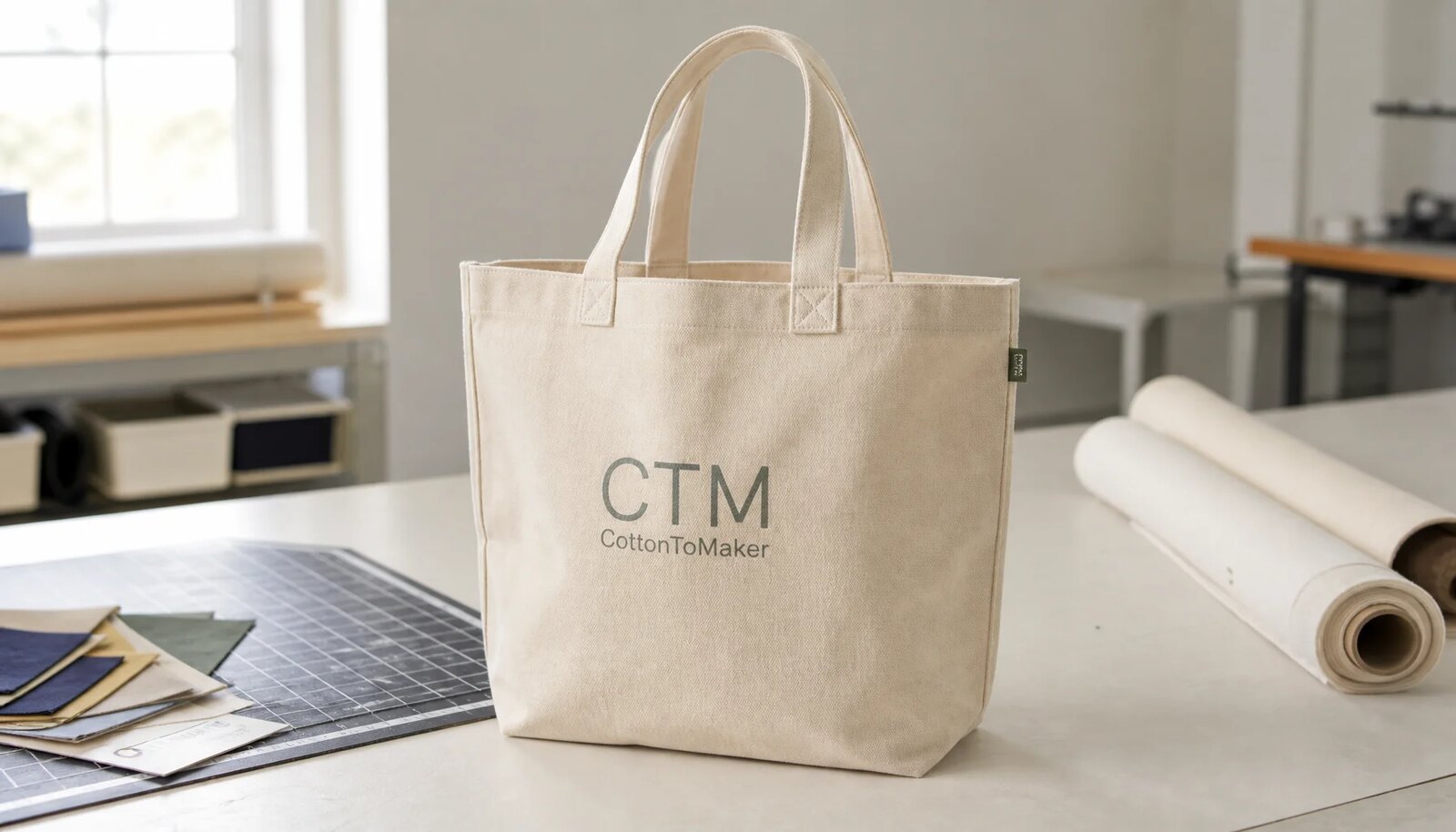
For event buyers, the cheapest acceptable canvas tote is usually the one that stays closest to a factory standard. A natural 12 oz canvas bag with one-color print, self-fabric handles, and a simple gusset is a common baseline because the mill and sewing line can repeat it without much retooling. Once you add a dyed body, contrast handles, zipper tape, inside pockets, or a full-wrap graphic, the order stops behaving like a standard tote and starts behaving like a custom project.
The fabric weight matters more than many RFQs show. A bag around 340 to 410 GSM usually gives a practical balance for grocery carry and event use. Below that, the tote can feel too soft and may distort once loaded. Above that, the bag becomes more expensive to cut and sew, and the carton weight climbs quickly. If the buyer wants a retail-ready look, a slightly heavier body with cleaner pressing and tighter stitching is often better than chasing the lowest possible GSM.
- Use 10 oz canvas for lighter handouts and short carry distances.
- Use 12 oz canvas for most grocery and event tote programs.
- Reserve heavier builds for premium retail or repeated consumer use.
- Keep handle length standard unless the carry position is a real requirement.
Compare Supplier Routes Before You Compare Price
A clean quote comparison starts with the sourcing route, not the number on the page. A direct factory, a trading company, a domestic decorator, and a stock-program seller can all quote the same tote, but they do not absorb cost in the same way. One may look cheaper on the bag price and more expensive on artwork or freight handling. Another may offer a fast sample path but push the MOQ higher once you ask for custom fabric or carton labels. If the buyer compares only the unit price, the cheapest line item often becomes the most expensive landed order.
For event planners and procurement teams, the right route depends on how often the tote will be repeated. If the same design runs across several events, a factory with a stable canvas program is usually better because it can lock the sewing method and keep the same specification from order to order. If the order is a one-off and speed matters more than long-term repeatability, a stock-program supplier may be acceptable, but the buyer should expect narrower options on color, handle style, and print placement.
- Direct factory: best for control, repeat orders, and clearer MOQ breakpoints.
- Trading company: useful when you need consolidated sourcing, but ask who actually makes the bag.
- Domestic decorator: good for urgent local delivery, usually higher on custom unit cost.
- Stock program: fastest path for simple art, but the spec range is usually limited.
Build a Quote That Can Be Compared
A useful quote for wholesale canvas grocery totes should separate the real cost drivers. Ask for the fabric weight, bag size, handle construction, print method, carton packing, and sample fees in writing. If the supplier gives only one all-in price, it is hard to know whether the lower number came from thinner cloth, looser stitch control, or a hidden assumption that the artwork will never change. For procurement teams, that is where quote comparisons break down.
The cleanest way to compare landed cost is to split the order into material, sewing, printing, packing, internal handling, and freight prep. The bag price is only one part of the equation. Screen setup, extra color passes, special labels, inserted cardboard, individual polybags, and export carton marks all affect the true cost. A factory that is transparent about those steps is usually easier to negotiate with because you can change one variable at a time and see exactly where the money moves.
- Ask for quotes at two or three spec levels so you can see the cost jump between options.
- Request the same bag with blank, one-color print, and two-color print pricing.
- Separate sample cost from bulk cost so the first shipment does not hide tooling or setup charges.
- Ask whether the lead time starts after artwork approval or after sample sign-off.
Use the Sample to Lock the Critical Tolerances
The pre-production sample is where most tote orders are won or lost. A digital proof can confirm artwork placement, but it cannot show how the canvas hangs, whether the handles sit flat, or how the gusset behaves once the bag is packed. For a buyer planning an event, those details matter because the tote is part of the guest experience. If the sample feels thin, the handle length is awkward, or the print lands too close to the seam, the bulk order will repeat that problem at scale.
Treat the sample like a production reference, not a courtesy item. The approved sample should reflect the same canvas weight, thread color, print method, and handle reinforcement that will go into the bulk run. Check the sample under normal handling, not just on a desk. Fill it with the kind of load the event will actually create, then look for handle stretch, seam puckering, print distortion, and the way the bottom panel sits. That is the point where a weak spec becomes obvious.
- Approve the sample only after measuring finished size and checking load behavior.
- Compare the print position against the seam line, not just against the edge of the panel.
- Check both the front and back of the tote if the bag will be carried in public.
- Keep one signed sample on file for the bulk inspection reference.
Pick the Print and Finish for the Event Use Case
Print choice has a direct effect on MOQ, cost, and appearance. Screen print is usually the best option when the artwork is simple and the order needs a clean price step. It handles logo work well, especially on natural canvas, and the factory can repeat it efficiently across larger runs. Heat transfer or other applied decoration can work for shorter runs or more colorful art, but the hand feel, wear, and visual texture should be reviewed carefully because not every event tote needs a premium print effect.
Finishing matters too. Raw natural canvas is easier to source and usually easier to repeat. Bleached or dyed canvas can help the bag look more polished, but it adds shade control and often pushes MOQ higher. If the buyer wants a simple branded tote for planners to distribute, a modest finish with stable color is usually better than a decorative build that looks nice in a render but creates issues in mass production. The goal is repeatability, not novelty.
- Use screen print for one to three spot colors and a straightforward logo.
- Use applied decoration only when the artwork or brand requirements justify the extra setup.
- Keep artwork away from heavy folds and seam intersections where cracking can begin.
- For premium use, a woven label or sewn side label can be more durable than a complex print.
Pack for the Actual Distribution Plan
Packing should follow the way the tote will be handed out, not just the way it is cheapest to ship. If the bags are going directly to an event warehouse, bulk carton packing may be enough. If the buyer needs them pre-kitted for registration desks or retail shelves, then individual polybags, size stickers, or barcode labels may be worth the added handling. The key is to decide that before the order starts, because last-minute packing changes can create avoidable delay and cost.
Carton math also matters for freight. Heavy canvas totes can reach a freight threshold faster than buyers expect, especially when the design includes a gusset, lining, or thick handles. A quote that looks good per piece can become expensive if the cartons are overweight, oversized, or split inefficiently. Ask for carton count, gross weight, and carton dimensions on the quote itself. That gives the logistics team a real basis for comparing air, ocean, or domestic consolidation options.
- Use bulk packing when the event team will repack on arrival.
- Use polybags only when retail presentation or moisture control justifies it.
- Keep carton weight within the handling limit of the destination warehouse.
- Make sure the outer carton marks match the purchase order and packing list.
Protect the Schedule From Artwork and Dye Delays
Lead time is usually lost in two places: artwork approval and fabric availability. A tote made from stock natural canvas with one-color print can move faster than a dyed bag with multiple logo colors, but only if the buyer clears artwork early and sends final copy in the right format. If the design is still changing while the factory has already reserved cloth and labor, the order stalls. That is why buyers should treat the sample and artwork stage as the critical path, not as a side task.
It also helps to understand where the schedule can flex. If the event date is fixed, the safer move is to simplify the spec before asking for a faster date. Reduce print colors, use a standard body size, and keep the fabric in a stock line. If the date is flexible but the design is not, then the buyer can allow more time for a tighter sample review and a more controlled bulk run. In practice, the lowest-risk schedule is usually the one that accepts a standard construction and gives the factory enough time to avoid expediting mistakes.
- Give the factory final artwork only after internal approval is complete.
- Avoid dye or wash changes once the sample has been approved.
- Build a buffer between bulk completion and the event handout date.
- If multiple event dates share the same tote, order in one repeatable spec.
Turn the RFQ Into a Clean Buying Decision
A good RFQ for canvas grocery totes does not need to be long, but it must be complete. The buyer should specify the tote size, fabric weight, color, print method, handle style, packing method, quantity target, and destination. That lets factories quote on the same basis and makes it easier to see who is solving the same problem. Without those inputs, the quote may look competitive while hiding a different construction or a different assumption about how the bag will be packed.
The last step is to decide which compromise is acceptable. If the tote is for event planners, the bag has to look clean, carry well, and arrive on time. Most buyers can lower MOQ by keeping the spec standard, limiting the print to one side, and accepting bulk packing. What they should not compromise on is sample approval, stitch strength, and the write-up of all hidden charges. Those are the items that turn a cheap quote into a real order or into a production problem.
- Write the RFQ around the use case, not around a generic tote description.
- Keep one approved sample and one approved spec sheet tied to the PO.
- Reject vague pricing that does not separate unit cost from setup cost.
- Choose the simplest design that still works for the event and the brand.
Specification comparison for buyers
| Spec decision | Recommended option | When it fits | Buyer risk to check |
|---|---|---|---|
| Sourcing route | Direct factory with a standard canvas program | Best for repeat event orders that need control over GSM, print, and carton packing | MOQ can change by fabric color, print color, and whether the factory has stock cloth |
| Fabric weight | 12 oz canvas, roughly 340 to 410 GSM | Balanced for grocery use, tote giveaways, and light retail resale without overbuilding the bag | Confirm finished GSM after weaving, washing, or dyeing so the fabric does not come in lighter than the sample |
| Print method | One to two color screen print on one panel | Works for logos, event names, and simple sponsor marks with a clean factory setup | Watch for registration shift, ink cracking on folds, and extra screen charges for each artwork color |
| Bag size | Approximate 14 x 16 x 4 inch body with a reinforced gusset | Fits brochures, water bottles, snacks, and light groceries while keeping fabric use efficient | Measure finished size after sewing allowance, not the cut panel size |
| Handle spec | Self-fabric handles with bar-tacks at the stress points | Good for hand carry and occasional shoulder carry at events | Check pull strength, stitch density, and whether handle length matches your carry use |
| Color strategy | Natural canvas or one stock-dyed color | Reduces fabric sourcing complexity and usually keeps MOQ more manageable | Multiple dye lots can create visible shade variation if the run is split |
| Packaging route | Bulk packed with carton labels and a clear inner count | Best when the buyer repacks bags for event registration or kit building | Confirm carton weight, compression level, and whether the bags need polybags or moisture protection |
| Approval path | Physical pre-production sample plus photo approval of bulk setup | Necessary when artwork placement, handle feel, or gusset shape affects the final event presentation | Do not approve from artwork PDF alone because print position and seam behavior change on real fabric |
Buyer checklist before sampling
- Set the target use first: giveaway, grocery carry, attendee kit, or retail resale, because that decides the right GSM and size.
- Lock the bag construction before negotiating price: body size, gusset depth, handle length, and whether you need a pocket, zipper, or closure.
- Limit the print to the minimum number of colors that still protects the brand look.
- Choose one fabric color family if the event calendar is split across several orders.
- Ask for a physical sample on the same fabric weight, not just a digital mockup.
- Confirm how the bags will be packed, counted, and labeled at carton level.
- Request a written MOQ by color, print color, and size, not a single blanket number.
- Define the acceptable defect level before the bulk run starts.
Factory quote questions to send
- What is the MOQ for this tote by fabric color, print color count, and total order size?
- Is the quoted price based on stock canvas or newly woven or dyed fabric?
- What setup costs are separate for screens, plates, embroidery files, or labels?
- Can you quote the same bag in one-color print, two-color print, and blank stock so I can compare the cost steps?
- What is the finished fabric GSM and the expected tolerance after production?
- Will the pre-production sample use the same fabric, thread, and ink as bulk order production?
- How are the bags packed per carton, what is the gross carton weight, and are inner polybags needed?
- When does the lead time start: order confirmation, artwork approval, sample sign-off, or deposit receipt?
Quality-control points to confirm
- Finished fabric meets the agreed GSM range and does not feel thin, limp, or uneven across the roll.
- Panel dimensions stay within the agreed tolerance after sewing and trimming.
- Handle stitching is even, with secure bar-tacks or reinforcement at the load points.
- Print registration is aligned with the approved sample and does not show obvious shift, bleeding, or cracking.
- No visible oil stains, broken threads, skipped stitches, holes, or dirty marks on the finished bag.
- Color shade is consistent within the run and does not mix obvious dye lots without approval.
- Carton count matches the packing list and the outer marks are readable for warehouse receiving.
- The sample and bulk goods use the same approved construction details unless a written change is accepted.