1. Start with the event use, not the unit price
Wholesale canvas grocery totes for craft fairs can be several different products hiding under one name. One buyer may need a low-cost sponsor bag for the entrance table. Another may want a reusable retail tote for makers, museums, farm markets, or gift shops. A third may need sturdy vendor packaging for candles, jars, soaps, books, prints, boxed foods, or small ceramics. If the RFQ only says “canvas tote bag,” suppliers will fill in the blanks themselves. That is how buyers end up comparing different fabric weights, different handle constructions, and different packing assumptions as if they were the same item.
Define the tote’s commercial role before asking for pricing. A giveaway bag needs visible branding, acceptable sewing, and efficient carton packing. A resale tote has to feel cleaner in the hand and look good on a display table because the bag itself is merchandise. A grocery-style utility tote needs capacity, comfortable handles, and stress-point reinforcement. These are not just price tiers. They are different specifications.
The sales environment also changes the right spec. Indoor craft fairs usually need tidy presentation and clear SKU separation. Outdoor markets add dust, moisture, and rougher handling. Distributor or retail channels may require barcode labels, carton marks, and stricter receiving rules. A one-time event shipment can often use bulk flat packing, while a retail account may need hangtags, inserts, or individual polybags. Good procurement starts by describing the job the tote must do.
- Classify the order as giveaway, resale item, vendor packaging, sponsor merchandise, grocery-style shopping tote, or distributor stock.
- List likely contents by weight and shape: brochures, apparel, candles, jars, books, boxed soap, small pottery, packaged food, or framed prints.
- State whether the tote must support repeat use after the fair or only short-term event use.
- Decide whether presentation should be event-stock efficient, retail-ready, or warehouse/DC compliant.
- Avoid approving a catalog photo without a written spec; identical photos can represent 8 oz, 10 oz, or 12 oz canvas and very different sewing standards.
2. Make canvas weight and weave easy to compare
Fabric is one of the largest cost and performance drivers in canvas grocery tote sourcing. A quote for 8 oz cotton canvas is not comparable to a quote for 12 oz canvas, even if the logo, color, and bag size look similar in a mockup. In the U.S. market, canvas weight is often listed in ounces per square yard. Metric references help when quoting globally: 8 oz is about 271 GSM, 10 oz about 339 GSM, and 12 oz about 407 GSM. Use both numbers in the RFQ when possible, then ask the supplier to confirm the basis of measurement.
For most reusable wholesale canvas grocery totes for craft fairs, 10 oz to 12 oz cotton canvas is a sensible starting range. It gives the bag more body, improves perceived value, and feels more appropriate for mixed purchases. Eight-ounce canvas can work for light-duty promotional handouts, especially when the budget is tight. It should not be called heavy-duty unless the buyer has tested it with the intended contents. Heavier canvas may improve structure, but it also increases fabric cost, carton weight, and sometimes print difficulty on rougher cloth.
Do not stop at the weight number. Ask whether the figure refers to raw greige fabric, finished fabric after processing, or an estimated finished bag weight. Natural cotton canvas will vary in shade from lot to lot; that is normal within commercial limits. Large shade swings, however, can be a problem for retail displays and repeat orders. Weave quality matters too. Severe slubs, loose yarns, fuzzy surfaces, or thin spots can create print pinholes, broken logo edges, panel skew, and sample-to-bulk arguments.
- State fabric weight in oz/yd² and GSM where possible; example: 10 oz cotton canvas, approximately 339 GSM.
- Ask whether the stated weight is raw, finished, or estimated after sewing.
- Use 10-12 oz for most reusable craft fair grocery totes; reserve 8 oz for light-duty handouts or very price-sensitive programs.
- Set a written fabric weight tolerance, often negotiated around +/-5% to +/-10% depending on supplier capability and order size.
- Request a fabric swatch or physical sample when print quality, hand feel, or reorder consistency matters.
3. Specify size by finished measurements and real capacity
A tote’s capacity comes from its finished dimensions, not from the name printed on a product sheet. “Market tote,” “shopping tote,” and “grocery tote” are not technical specs. Procurement should define finished width, height, gusset depth, bottom construction, and handle drop. One common quote error is comparing a flat tote with a bottom-gusset tote as if both carry the same types of goods. They do not.
For craft fair use, gusseted construction is often worth the added fabric and sewing cost. A bottom gusset helps the bag accept jars, candles, boxes, soaps, and small food packages. A side-and-bottom gusset can create more usable volume and a more grocery-style shape, although it may increase unit cost and carton volume. If the bag needs to stand reasonably when filled, say so in the RFQ. A soft canvas tote will not behave like a rigid paper shopping bag, but balanced cutting and clean gusset sewing make a noticeable difference.
Agree on measurement tolerances before production starts. Depending on construction and fabric behavior, commercial tolerances such as +/-0.5 in on body width, height, or gusset and +/-0.25-0.5 in on handle drop may be realistic. The exact numbers should be confirmed with the factory and validated on the sample. If the tote must fit a specific boxed item, retail display, or shipping carton plan, do not assume standard tolerances will be tight enough.
- Flat tote: best for brochures, apparel, low-cost sponsor handouts, and simple event bags.
- Bottom-gusset tote: better for grocery-style use and mixed craft purchases without excessive complexity.
- Side-and-bottom gusset tote: better capacity and shape, usually at higher cost and carton volume.
- Specify finished measurements, not only cut-panel dimensions.
- Ask the supplier to fill the sample with representative items and photograph front, side, and bottom views.
4. Treat handles as a load-bearing part, not a detail
Handle failure is one of the most preventable problems in canvas grocery tote programs. The bag body can be strong while the handle attachment is weak. Craft fair purchases are also rarely balanced: a jar may sit on one side, a book may pull the bottom down, and a candle box may press against a seam. Shoppers may lift the bag quickly by one strap or hang it from a booth hook. That is why handle construction deserves its own line in the specification.
Common options include self-fabric canvas handles and cotton webbing handles. Self-fabric handles can look integrated and cost-effective, but the folding, stitching, and consistency need control. Cotton webbing often gives stronger perceived value and may be easier to sew consistently. For grocery-style totes, handle widths around 1-1.25 in are a practical starting point. Hand-carry drops often fall around 6-8 in, while shoulder-carry drops commonly run around 10-12 in, adjusted to the bag height.
Avoid vague wording such as “reinforced handles” unless it is backed by a visible construction. X-box stitching, bar-tacks, or dense back-tacking can all be acceptable when executed consistently with suitable thread. Ask for close-up photos and approve the stitch pattern on the physical sample. During sample review, fill the tote with representative weight, lift it by both handles, lift briefly by one handle, and inspect the attachment points for stitch opening, fabric tearing, or distortion.
- Specify handle material: cotton webbing, self-fabric canvas, blended webbing, or another approved construction.
- Define handle width, drop, placement, stitch color, and attachment method.
- Require X-box, bar-tack, or approved dense back-tack reinforcement at every stress point.
- Check symmetry so the bag hangs evenly and does not twist when loaded.
- Include handle pullout, seam opening, and stress distortion as QC checks, not just general appearance.
5. Choose a logo method that suits canvas, not a screen mockup
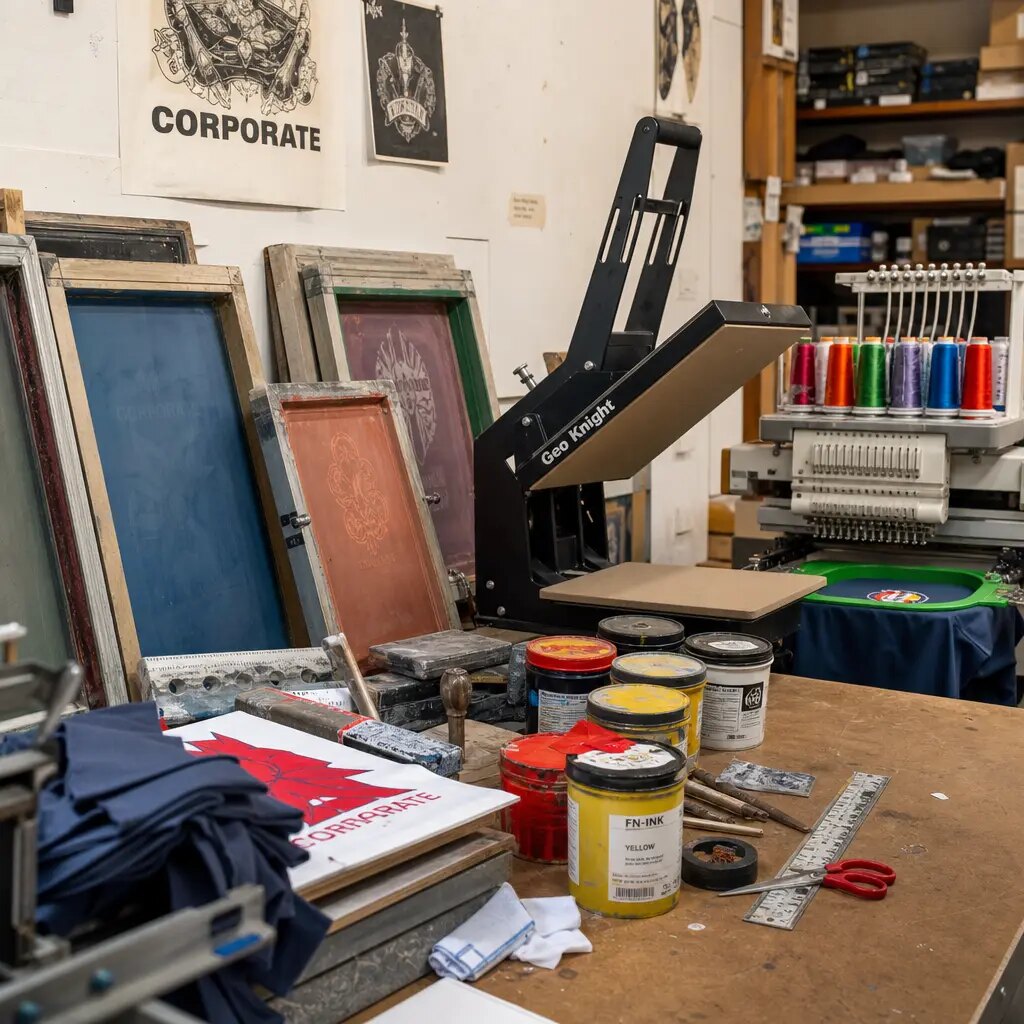
Printing on natural canvas is not the same as printing on paper, coated board, or smooth polyester. The cloth texture can soften logo edges, absorb ink unevenly, and change how color appears. For one-color or two-color craft fair logos, screen printing is usually the most practical wholesale method. It offers familiar setup economics, good opacity, and predictable production for medium and larger quantities. To compare quotes fairly, every supplier should price the same print size, number of colors, print side, placement, and ink expectations.
Heat transfer or digital transfer can be useful for complex artwork, gradients, photographs, or shorter runs where screen setup does not make sense. Transfers should be approved carefully on canvas because they can feel heavier or glossier and may show edge adhesion issues if applied poorly. Embroidery works well for small premium marks, patches, or monograms. It is usually not the default choice for large grocery tote graphics because dense stitching can pucker the fabric and add cost.
Artwork instructions should be measurable. State the logo width and height, print side, distance from the top edge, centerline, color reference, and placement tolerance. A practical print placement tolerance might be around +/-0.25-0.5 in, depending on whether the process is manual or semi-automatic, but this needs supplier confirmation. Natural canvas is not white, so Pantone colors often look warmer or duller on the finished bag. If brand color matters, approve a strike-off or pre-production sample before bulk printing.
- Use screen printing for simple spot-color craft fair logos and most medium-to-large wholesale orders.
- Use transfers for detailed short-run artwork only after approving hand feel, edge adhesion, and flexibility.
- Use embroidery for small premium marks, not large grocery tote graphics unless the buyer accepts cost and puckering risk.
- Measure print placement from defined reference points: top edge, side seam, centerline, or gusset edge.
- Ask about ink type, curing method, setup charges, strike-off cost, and whether screens are stored for reorders.
6. Ask how MOQ really works before splitting designs
MOQ is more than a minimum number. It shows how the supplier organizes fabric buying, cutting, printing, sewing, and packing. One supplier may quote MOQ per purchase order. Another may set it per body color, handle color, print design, finished SKU, packing style, or shipment. If these rules are not clear in the RFQ, the buyer may learn too late that five artwork versions cannot share one quoted minimum.
The simplest way to protect cost and production control is to standardize the first order. Keep the body color, handle material, print position, and packing method consistent where possible. If several craft fair vendors need different logos, ask for a matrix quote that shows MOQ and price per design. A 5,000-unit quote may not hold if the order becomes ten designs of 500 units. Printing setup, sewing line changeover, SKU separation, and carton labeling all affect the final cost.
Request realistic quantity breaks instead of chasing one headline price. Ask for pricing at 1,000, 2,500, and 5,000 units using the exact same specification. Then ask what changes at each break: fabric purchasing efficiency, screen setup allocation, cutting yield, sewing labor, or carton density. Also settle the over/under shipment tolerance. Some production systems may create a small surplus or shortage; the purchase order should state whether overproduction can be invoiced and how shortages are handled.
- Ask for MOQ per order, body color, handle color, print design, finished SKU, and packing style.
- Request matrix pricing when multiple event logos, vendor designs, or seasonal graphics are involved.
- Standardize the first order if reliable cost, faster approval, and easier QC are the priority.
- Clarify over/under shipment tolerance before production, not after final inspection.
- Avoid excessive variants until sell-through and reorder demand are proven.
7. Compare sourcing routes by control and reorder risk
Canvas grocery totes can be sourced through direct factories, trading companies, promotional product distributors, local importers, or retail-ready wholesalers. Each route can work. They simply offer different levels of control. Direct factory sourcing may provide stronger specification control and better continuity for repeat programs, as long as the buyer can manage samples, artwork approval, QC, and freight coordination. Trading companies may simplify communication or bundle multiple SKUs, but buyers should still require technical answers on fabric, handles, printing, and packing.
Local distributors and domestic importers can be helpful when the craft fair deadline is close or the order quantity is small. The tradeoff is that stock specifications may be fixed, customization choices may be limited, and unit cost may be higher. Promotional product distributors can be convenient for logo programs, but the same questions still apply: Is the tote 8 oz, 10 oz, or 12 oz? How are the handles reinforced? What print tolerance is included?
The best route depends on total procurement risk, not only the unit price. A slightly higher quote that lists fabric weight, GSM, finished dimensions, handle reinforcement, print method, carton data, lead time, and inspection terms is often easier to manage than a cheaper quote full of assumptions. If a supplier cannot answer basic technical questions before the purchase order, it will likely be harder to resolve defects or keep reorders consistent.
- Choose direct factory sourcing for repeatable custom specs and long-term cost control.
- Choose a trading company when you need bundled SKUs or sourcing support, but still demand spec-level answers.
- Choose a local distributor when speed or small quantity matters more than deep customization.
- Use the same RFQ template for every supplier route so quotes are comparable.
- For reorders, confirm fabric source, handle material, print setup, packing method, and reference sample retention.
8. Build landed cost from packing, freight, and handling
A low ex-factory or FOB unit price can hide costs if packing, freight, setup charges, and receiving labor are left out. Canvas totes are not fragile, but they can take up meaningful carton volume, especially when they are gusseted, individually polybagged, or packed with hangtags and inserts. A slightly higher unit price with efficient bulk flat packing may produce a better landed cost than a cheaper tote shipped in oversized cartons.
Every serious quote should include carton dimensions, units per carton, gross weight, net weight, total carton count, carton marks, and whether cartons contain mixed SKUs. Without dimensions and weights, freight estimates are guesswork. Without SKU separation rules, warehouse teams may spend extra time counting, sorting, relabeling, or repacking. For retail DC shipments, carton labels and barcode rules may be mandatory. For direct-to-event inventory, bulk flat packing may be faster and cleaner.
Landed cost also includes the charges that do not appear in the basic tote price. Screen charges, strike-off fees, sample freight, artwork cleanup, barcode labels, hangtags, insert cards, polybags, palletizing, inspection, duties, inland freight, and warehouse handling can all change the cost per sellable unit. Clarify Incoterms early so factory cost, export cost, freight, duties, destination charges, and local delivery are not confused.
- Compare unit prices only after fabric weight, finished size, handle spec, print method, and packing are aligned.
- Request carton dimensions, gross/net weight, units per carton, and total carton count before freight estimation.
- Confirm whether screens, strike-offs, samples, artwork cleanup, labels, inserts, polybags, and carton marks are included.
- Avoid individual polybags unless the retail channel, distributor, or warehouse process requires them.
- Calculate receiving, counting, sorting, storage, event allocation, and repacking labor as part of landed cost.
9. Use samples and QC tolerances to avoid bulk surprises
A digital mockup can show artwork position, but it cannot prove the tote. A physical sample confirms fabric hand feel, real shade, handle comfort, seam alignment, gusset function, print appearance, and packing method. For a new supplier or retail-facing program, approve a pre-production sample before bulk cutting and printing. Keep one sealed sample with the supplier and one with the buyer so both sides judge production against the same reference.
Sampling should be measured, not just photographed. Record finished body dimensions, gusset depth, handle drop, handle width, print size, print placement, stitch pattern, and overall visual acceptability. Weigh the fabric or verify it using the agreed method. Fill the tote with representative contents and check how the bottom opens, whether the handles feel comfortable, and whether stress points distort. For printed totes, inspect after curing or bonding for pinholes, smearing, peeling, edge lift, ghosting, cracking, or heavy ink buildup.
QC criteria should be written before production. Larger or retail-sensitive orders may use a formal AQL inspection with agreed inspection levels and defect classifications. Smaller programs may use a simpler checklist, but the decisions still need definitions. Critical defects can include wrong artwork, unsafe contamination, handle detachment, severe seam failure, or unusable size. Major defects may include crooked print, open seams, broken stitches in functional areas, unacceptable stains, and severe shade variation. Minor defects may include small loose threads or natural canvas irregularities within approved limits.
- Approve a physical pre-production sample for fabric, dimensions, handles, print, and packing.
- Keep sealed reference samples for both factory and buyer.
- Define body and handle measurement tolerances before bulk production.
- Classify defects as critical, major, and minor so inspection decisions are not subjective.
- Inspect random cartons from different parts of the lot, not only cartons prepared for viewing.
10. Lock timing, packing instructions, and final acceptance
Craft fair tote orders often become stressful because the timeline is too optimistic. A supplier may quote 25-40 days for production after final approval, but that may exclude artwork correction, sample making, sample transit, strike-off approval, fabric booking, inspection, export paperwork, freight transit, customs clearance, and warehouse receiving. Craft fair dates do not move, so work backward from the event and build in buffer time, especially when the supplier, artwork, or construction is new.
Packing instructions should be as clear as the product spec. State whether totes are bulk flat packed, folded, individually polybagged, labeled, hangtagged, or bundled. Confirm units per carton, maximum carton weight, SKU separation, carton marks, PO number, destination, and barcode requirements. Cartons that are too heavy can be difficult for event teams to move safely. Mixed artwork cartons can slow receiving, allocation, and booth distribution.
Final acceptance should connect the quote, purchase order, approved sample, inspection result, packing list, and commercial invoice. Before shipment release, confirm fabric weight, finished dimensions, gusset, handle construction, print, labels, carton count, and SKU separation. After delivery, archive the final spec sheet, approved sample, artwork file, packing rules, supplier quote, and inspection report. The goal is not only to receive one acceptable order. It is to create a repeatable wholesale canvas grocery tote specification that can be reordered with fewer quote gaps and less QC risk.
- Separate artwork time, sampling time, bulk production, inspection, paperwork, freight transit, customs, and receiving in the calendar.
- State packing method, carton marks, SKU separation, barcode rules, and polybag requirements on the purchase order.
- Set a practical maximum carton weight for warehouse and event handling.
- Use a final pre-shipment checklist covering fabric, handles, seams, print, odor, stains, labels, carton count, and documentation.
- Archive the approved specification and sample for reorders and supplier accountability.
Specification comparison for buyers
| Spec decision | Recommended option | When it fits | Buyer risk to check |
|---|---|---|---|
| Fabric weight | 10 oz to 12 oz per square yard cotton canvas, or roughly 340-407 GSM, for most reusable craft fair grocery totes; 8 oz, about 271 GSM, only for light-duty programs | Use 10-12 oz when the bag may carry candles, jars, books, small ceramics, boxed food, packaged soaps, or mixed booth purchases | Confirm whether the stated weight is raw fabric, finished fabric, or an estimate. Set a written tolerance, commonly +/-5% to +/-10% depending on mill control and order size. |
| Fabric construction | Plain-weave cotton canvas with declared composition, controlled shade range, and acceptable slub level | Best for retail-facing totes where print clarity, consistent hand feel, and repeat orders matter | Uncontrolled slubs, loose yarns, or shade swings can cause pinholes in print, panel skew, and sample-to-bulk disputes. |
| Finished dimensions | Specify finished width, height, gusset depth, handle drop, and measurement tolerance; do not quote from catalog names only | Needed for grocery-style capacity and reliable carton planning | Common commercial tolerance is often about +/-0.5 in on body dimensions and +/-0.25-0.5 in on handle drop, but buyer and supplier must agree before production. |
| Bag structure | Gusseted grocery tote with reinforced bottom seams for utility use; flat tote for lower-cost handouts | Choose gusseted construction for bulky craft purchases and multiple small goods | A flat tote can be cheaper but may not hold boxes or jars well. Confirm whether gusset is bottom-only or side-and-bottom. |
| Handle spec | Cotton webbing or self-fabric handles, typically 1-1.25 in wide for grocery-style totes, with X-box stitching, bar-tacks, or dense back-tacking | Webbing is useful for heavier loads and repeat-use positioning; self-fabric handles suit value programs | Handle pullout is a common failure point. Require stitch pattern, stitch density target, thread color, and load test method. |
| Handle drop | Hand-carry drop around 6-8 in; shoulder-carry drop around 10-12 in, adjusted to bag height | Shoulder drop suits craft fairs where shoppers browse with hands free | Too short reduces usability; too long drags when filled. Approve on a physical sample with representative contents. |
| Print method | Screen print for 1-2 spot colors; heat transfer or digital transfer for complex short runs; embroidery for small premium marks | Screen print is usually the most practical wholesale route for simple craft fair logos | Confirm ink type, curing, color reference, print size, placement tolerance, rub resistance, and whether setup charges are included. |
| MOQ strategy | Standardize body color, handle type, print location, and packing method; request MOQ by SKU and design | Best for distributors, brands, event organizers, and makers buying repeatable stock | MOQ may be per body color, handle color, artwork, finished SKU, packing style, or shipment. Do not rely on one blended MOQ. |
| Packing method | Bulk flat pack in master cartons unless retail channel requires polybags, hangtags, barcodes, or inserts | Bulk packing is efficient for wholesale event inventory and distributor stock | Individual polybags add labor, material, carton volume, waste, and receiving time. Confirm carton size, units/carton, gross weight, and carton marks. |
Buyer checklist before sampling
- Define the business use: free entrance handout, paid retail item, vendor merchandise bag, sponsor bag, grocery-style purchase bag, or distributor stock item.
- State expected contents and target load: brochures only, apparel, candles, jars, books, boxed soaps, small ceramics, packaged food, or mixed booth purchases.
- Specify target fabric weight in oz/yd² and GSM where possible; clarify whether it is raw fabric weight, finished fabric weight, or estimated finished bag weight.
- Set fabric tolerance in writing, such as target 12 oz canvas with agreed production tolerance, and ask the supplier to confirm what their mill can hold.
- Confirm composition, weave type, color, dye/bleach status, shrinkage expectation if relevant, and whether any washing, softening, or finishing is included.
- Lock finished dimensions: width, height, gusset depth, bottom construction, seam allowance standard, and body measurement tolerance.
- Specify handle material, width, total length or drop, placement, reinforcement pattern, stitch density target, and thread color.
- Choose print method before quoting; provide artwork size, number of colors, Pantone or brand reference, file type, print location, and placement tolerance.
- Ask whether screen, film, plate, digitizing, artwork cleanup, strike-off, sample, and color matching charges are included or separate.
- Request MOQ by body color, handle color, print design, finished SKU, packing method, and purchase order rather than accepting one general MOQ.
Factory quote questions to send
- Is your quote based on 8 oz, 10 oz, 12 oz, or another canvas weight, and can you provide the equivalent GSM?
- Does the fabric weight refer to raw greige fabric, finished fabric after processing, or estimated finished bag weight?
- What is the fiber composition, weave type, natural/bleached/dyed status, and expected fabric weight tolerance in bulk production?
- Can you provide a fabric swatch or sample from the same mill quality you will use for production?
- What are the finished bag dimensions, gusset depth, bottom construction, seam allowance standard, and measurement tolerances?
- What handle material is included, what are the handle width and drop, and how far are the handles inserted or attached into the bag body?
- Is the handle attachment reinforced by X-box, bar-tack, dense back-tack, or another approved method, and what stitch density do you normally use?
- What practical load test can you perform on the sample, for example filled-load hold and repeated lift, and what load weight do you recommend for this construction?
- Which print method are you pricing, how many colors are included, what ink or transfer type is used, and what curing or adhesion checks are performed?
- What print size and print placement tolerance are included, measured from the top edge, side seam, or centerline?
Quality-control points to confirm
- Fabric weight is checked against the approved specification within the written tolerance; inspector records the method used, such as weighing a measured fabric area or verifying approved mill documentation plus sample comparison.
- Canvas composition, hand feel, color tone, weave appearance, and slub level match the sealed reference sample within agreed commercial tolerance for natural cotton fabric.
- No obvious thin spots, holes, severe slubs, contamination, mildew, oil stains, water marks, dye streaks, or weak selvedge areas appear on visible panels.
- Finished dimensions are measured on a statistically relevant sample: width, height, gusset depth, bottom shape, handle drop, and handle placement are within agreed tolerances.
- Panel alignment is acceptable: no severe skew, twisting, lopsided shape, mismatched side seams, or gusset distortion that reduces usable capacity.
- Seams are straight enough for retail presentation, seam allowance is consistent, and there are no open seams, skipped stitches, broken stitches, or loose thread nests in critical areas.
- Handle material, width, drop, placement, stitch pattern, and reinforcement match the approved sample and purchase order.
- Handle stress check shows no tearing, stitch opening, loose bar-tacks, fabric distortion beyond tolerance, or immediate failure under the agreed practical load test.
- Print artwork, color count, logo size, print location, orientation, and print side match the approved strike-off or pre-production sample.
- Print is cured or bonded as required; no smearing, peeling, ghosting, unacceptable pinholes, heavy ink buildup, blurred edges, transfer cracking, or major shade shift.