Start With the Use Case, Not the Artwork
For wholesale canvas grocery totes used in corporate gifting, logo placement is not a design detail you can decide at the end. The bag is handled, folded, carried, stacked, and often photographed in use, so the logo must stay visible when the tote is moving, not just when it is laid flat on a table. A placement that looks balanced on a mockup can disappear once the bag fills out, the handles pull upward, or the tote is folded into a gift kit.
The first question is what the tote is supposed to do for the buyer. A welcome kit bag, a conference handout, a staff appreciation gift, and a retail resale bag all justify different placement choices. If the bag is meant to be reused often, the logo should survive abrasion and folding. If it is a premium gift, the placement can be smaller and more restrained, but it still needs to read cleanly from a few steps away.
- Use a larger front-panel mark for event gifting and daily carry.
- Use a cleaner, smaller mark for premium packs where the bag must feel retail-ready.
- Avoid placing critical text where it will land on seams, gussets, or handle stitches.
Choose the Canvas Spec Before the Print Spec
Canvas weight changes everything about the tote, including how the logo looks. A light promotional bag around 8 oz or 260 to 280 GSM folds small and keeps cost down, but it can feel soft and show more distortion around the print area. For most corporate gifting programs, 10 oz or about 340 GSM is the practical baseline because it gives enough body for a clean print and still keeps freight and handling manageable. If the bag needs a more premium hand feel or a sturdier shelf presence, 12 oz or roughly 400 GSM is a better fit.
Do not stop at the fabric weight. Ask the factory to confirm bag size, gusset depth, handle width, handle length, and whether the canvas is raw, washed, or dyed. Those choices affect the final logo placement because seams, shrinkage, and fabric density change the usable print area. If the tote is meant to stand up in a car seat, on a desk, or on a retail counter, a reinforced base and bar-tacked handles matter more than an extra line of branding.
- 8 oz or 260 to 280 GSM fits lower-cost promotional runs.
- 10 oz or about 340 GSM is the common corporate gifting baseline.
- 12 oz or about 400 GSM suits premium programs and heavier carry loads.
- Ask for shrinkage, color variation, and seam tolerance before the print is approved.
Where the Logo Should Go for Best Visibility
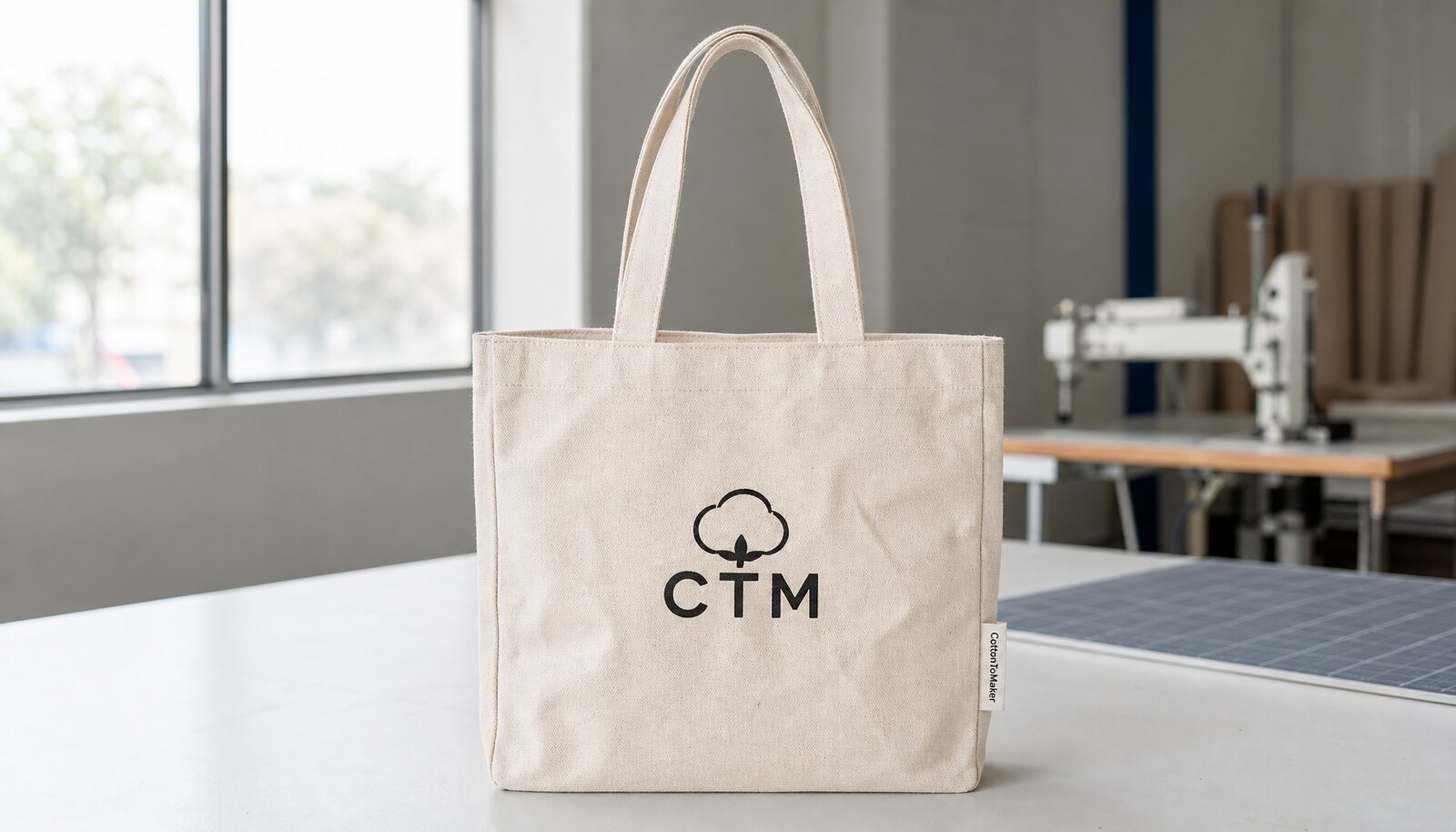
The safest placement for a canvas grocery tote is centered on the front panel in the upper third, with enough distance from the top hem and side seams to avoid distortion. That zone stays visible when the bag is carried by hand and when it is placed on a desk, checkout counter, or gift table. It also leaves room for the gusset and bottom panel to do their job without cutting into the printed area.
Secondary placements can work, but they should solve a specific problem. Side panels are useful for small marks, web addresses, or discreet branding. Bottom prints are usually wasted because they are not visible in normal use. Handle prints look clever on a flat proof but tend to wear early, especially when the bag is carried daily. If the brand needs more than one touchpoint, a woven side label or sewn patch often gives a cleaner result than adding a second printed panel.
- Keep important artwork away from seams and hems by a practical margin, not just a visual guess.
- Use one strong front-panel logo if the mark needs to read from a distance.
- Move legal text, QR codes, or secondary branding to a side label when the front panel is crowded.
- Avoid fine details across slubby or uneven canvas texture if legibility matters.
Match the Decoration Method to the Order Size
Screen print is still the default for wholesale canvas grocery totes because it handles bold logos well and keeps unit cost under control on repeat orders. One to three spot colors is usually the most efficient setup. The method gives clean edges on canvas and is easy to inspect visually, which matters when a procurement team needs to compare multiple suppliers and keep the artwork consistent across reorders.
Other decoration methods solve different problems. Heat transfer can handle complex artwork or short runs, but the buyer should verify wash and rub resistance before approving it for a reusable grocery tote. Embroidery gives a premium finish on heavier canvas, although very small text can lose sharpness. Woven labels and sewn patches are useful when the logo is minimal or the brand wants a retail-style finish without a full ink laydown. The right choice depends less on style preference and more on how many pieces you need and how the bag will be used.
- Screen print works best for simple logos, repeated runs, and price-sensitive corporate orders.
- Heat transfer can help when the art is detailed or the order is short run.
- Embroidery suits heavier canvas and simple shapes, not fine text.
- Woven labels are useful when the brand wants a premium look with low visual clutter.
Compare the Supplier Route, Not Just the Unit Price
The source route changes the result more than many buyers expect. A direct canvas factory with in-house printing usually gives the best control over fabric weight, stitch quality, and logo registration because the same team owns the material, decoration, and final inspection. That matters when the tote is part of a corporate gifting program and the buyer needs the same look on every reorder.
A trading company can still be the right choice if it is managing mixed trims, multiple bag programs, or shipments to more than one market. The risk is not the middleman itself. The risk is unclear responsibility when a print drifts, the wrong fabric is booked, or the carton spec is not followed. Local stock-and-decorate suppliers can move fastest, but they usually limit control over color, size, and packing. Compare the route based on the exact level of control you need, not on the first quote line that looks cheap.
- Use direct factory sourcing when the bag spec and artwork are already fixed.
- Use a trading company only if it can show the actual production source and inspection role.
- Use stock-and-decorate routes for urgent timing, not for long-term repeat programs.
- Treat any unclear ownership of sample approval or rework as a sourcing risk.
Write the RFQ So Quotes Are Comparable
A weak RFQ is why tote quotes are difficult to compare. If one supplier quotes a 10 oz bag with one print color and another assumes 12 oz canvas, two-sided printing, and retail folding, the unit price is meaningless. The RFQ should lock the bag size, fabric weight, canvas color, logo dimensions, print method, print position, quantity by color or size, and packing spec before the factory quotes anything. That is the only way to keep the process commercially useful.
The quote should also separate the bag from the decoration and the packing. Ask the supplier to show the blank bag cost, print setup, any extra color or second placement, packaging, sample charge, and any inland or export charges that affect the final landed cost. If the artwork has small text or a tight placement near a seam, include a line in the RFQ that says the supplier must flag any printability problem before production. That prevents a silent assumption from turning into a rejected batch.
- List exact dimensions in cm or inches, including gusset depth.
- State whether the canvas is raw, bleached, washed, or dyed.
- Attach vector artwork and define the maximum print area.
- Ask for separate pricing on additional print positions and extra colors.
- Request carton count and pack format in the same quote sheet.
Set Sample Checks Before You Approve Bulk
The pre-production sample should prove more than the logo shape. It needs to confirm that the print sits flat on the fabric, the handles are stitched evenly, the bag opens to the correct width, and the color stays close to the approved reference. On canvas grocery totes, the small mistakes show up quickly: off-center logos, crooked seam lines, weak handle attachment, and fabric that looks fine in a photo but feels too soft in hand. The sample is where those issues should be caught.
Use measurable acceptance criteria rather than vague approval language. Small size variation may be acceptable on a handmade canvas bag, but visible misalignment on the main logo is not. If the bag will carry groceries, event kits, or onboarding materials, test the handles under load and rub the print with a dry cloth and a slightly damp cloth. You do not need laboratory-level testing for every order, but you do need a repeatable way to reject a sample that would create complaints after delivery.
- Check the print against a centerline, not only against the edge of the fabric.
- Confirm handle stitching, side seams, and bar-tacks are even on both sides.
- Ask for the same fabric lot on the sample and bulk order when possible.
- Test folding and carton fit before the sample is signed off.
Plan Packing and Lead Time Around Real Warehouse Use
Packing changes landed cost and receiving speed. Flat-packed canvas totes reduce carton volume and freight, but the fold method has to look neat when the bag is opened by the end user. If the order goes to a distributor, fulfillment center, or retail warehouse, specify polybag count, carton marks, barcode labels, and whether the inner pack needs a size sticker or no label at all. A missing pack detail can slow receiving more than a slightly higher unit price.
Lead time should be broken into sample time and bulk time. For a first order, it is normal to allow time for artwork confirmation, material booking, print setup, and final inspection. A practical cycle often needs about 7 to 14 days for sampling and 25 to 45 days for bulk after approval, depending on whether the canvas is in stock and how many decoration steps are involved. Repeat orders can move faster if the factory can reuse the same fabric, print screen, and carton spec without changes.
- Ask how the bag will be folded and how many units fit per carton by gross weight.
- Specify whether cartons need moisture protection for sea freight.
- Confirm palletization or loose-carton shipment before booking transport.
- Treat sample approval as a hard gate before cutting bulk fabric.
Use Landed Cost to Choose the Right Build
The cheapest blank tote is not always the cheapest delivered tote. Heavier canvas raises freight, darker fabric can increase dye and print complexity, embroidery adds labor, and premium packing increases carton volume. Procurement teams should compare landed cost by the final use case, not by the factory ex-works number alone. A low-priced bag that arrives too soft, too small, or too crowded with branding often costs more when the replacement order is counted.
A 10 oz screen-printed tote may be the right choice for a broad event giveaway because it balances price, appearance, and throughput. A 12 oz tote with a woven label may be better for a higher-value gift pack even if the factory quote is higher. The point is to keep the spec stable enough to compare suppliers, but flexible enough to choose the build that supports the brand. Change only one major variable at a time or you will not know what actually improved the order.
- Compare ex-works price, packing, freight, duty, and receiving cost separately.
- Hold one bag color constant when testing print methods.
- Do not change size, fabric weight, and decoration method in the same trial run.
- Archive the approved spec sheet so the next reorder is not rebuilt from memory.
Freeze the Spec Before the PO
Before the purchase order goes out, freeze the bag size, canvas weight, handle length, logo size, print method, pack format, and the approved sample reference. If the supplier proposes a cheaper substitution after that point, treat it as a change order, not as a free improvement. This matters because even a small substitution can alter print opacity, bag hand feel, or carton efficiency, and those changes are hard to unwind once bulk production starts.
For corporate gifting runs, consistency is usually worth more than a small unit-price reduction. The same tote may appear in employee welcome kits, event packs, and retail-facing promotions, so the brand needs the logo to sit in the same position and the bag to feel the same from one order to the next. Lock the approval trail in writing, keep the photo set from the signed sample, and make one buyer-side owner responsible for any last-minute edits.
- Lock the approved sample and artwork version number before bulk.
- Require written approval for any material, print, or packing substitution.
- Keep one internal owner responsible for final changes.
- Store front, back, and close-up photos of the approved sample with the PO file.
Specification comparison for buyers
| Spec decision | Recommended option | When it fits | Buyer risk to check |
|---|---|---|---|
| Source route | Direct canvas factory with in-house screen print | Medium to large corporate gifting runs with fixed artwork | Check that printing, cutting, and final inspection are all in the same plant |
| Source route | Trading company coordinating one or more factories | You need mixed trims, language support, or multiple destinations | Confirm who owns sample errors, rework, and late shipment risk |
| Fabric weight | 10 oz / 340 GSM canvas | Most corporate gifting totes that need structure and value | Ask for GSM tolerance and whether shrinkage changes print alignment |
| Fabric weight | 12 oz / 400 GSM canvas | Premium gift sets or reusable retail-style bags | Heavier fabric increases cost and carton weight, so check freight impact |
| Decoration method | 1 to 3 color screen print | Clear logos, repeat orders, and mid-size MOQs | Confirm mesh, curing temperature, and registration tolerance |
| Decoration method | Woven label or sewn patch | Premium brand programs or very small logos | Verify placement accuracy and edge finish so it does not fray |
| Logo placement | Centered front panel in the upper third | Best balance of visibility and daily use | Keep clear of seams, gussets, and handle stitch points |
| Packing route | Flat-packed bulk cartons with carton marks | Export orders and warehouse receiving | Confirm fold method, carton count, and barcode placement |
Buyer checklist before sampling
- Bag size, gusset, and handle length are fixed in writing
- Fabric weight is specified in oz or GSM with tolerance
- Logo art is supplied in vector format with a clean centerline
- Print method and color count are locked before sampling
- Sample approval criteria include placement, opacity, and stitch quality
- Packing format, carton marks, and labels are defined
- Lead time is split into sample, bulk, and transit
- Re-order spec sheet is saved with photos of the approved sample
Factory quote questions to send
- What is the exact canvas GSM and acceptable tolerance?
- Is cutting, printing, and sewing done in one factory?
- What is the MOQ by size, fabric color, and print color count?
- What is the smallest safe print area for my logo?
- Can you quote blank bag, print, packaging, and freight separately?
- Does the sample fee cover a pre-production sample and how many revision rounds are allowed?
- What is your inspection standard for logo placement and handle stitching?
- How will the bags be packed for warehouse receiving or export?
Quality-control points to confirm
- Bag dimensions match the approved spec and the sample reference
- Canvas weight is within the agreed GSM range
- Main logo is centered and held within the approved placement tolerance
- Print is opaque, sharp, and free of pinholes or ghosting
- No skipped stitches, loose threads, or weak bar-tacks at the handles
- Handles are even, with the same length and attachment height on both sides
- Carton pack count, labels, and outer marks match the packing list
- Random units from the carton open and fold correctly without distortion