1. Start with the roaster’s selling channel
A canvas grocery tote for a coffee roaster may be a paid merchandise item, a gift-with-purchase bag, an event resale product, a subscription insert, or a practical carry bag for wholesale cafe partners. Those channels may use the same basic tote shape, but they do not require the same presentation. Retail merchandise needs a cleaner fold, consistent logo position, and fewer visible creases. Event totes need fast unpacking and reliable counts. Grocery partner programs may need barcode labels, pallet-friendly cartons, and destination marks that match receiving instructions.
The carton packing plan should be part of the first RFQ, not an afterthought after the bag is approved. Packing affects folding labor, carton size, gross weight, inspection time, freight cube, and the condition of the printed panel when the carton is opened. For procurement buyers, the commercial question is not only “What is the tote price?” It is “Will this packed tote arrive in the right condition, in the right quantity, with handling costs we can control?”
The long-tail need behind wholesale canvas grocery totes for coffee roasters carton packing plan is simple: the tote and the carton must be developed together. A low unit price can become expensive if cartons are too heavy, labels are vague, or retail teams must refold every bag before selling it.
- Identify who opens the carton first: warehouse, store team, event staff, distributor, or retailer DC.
- Decide whether the tote must arrive retail-ready, allocation-ready, or low-cost bulk packed.
- Confirm whether the program is promotional cost, resale merchandise, or part of a coffee bundle margin calculation.
- Share destination and freight mode early so the supplier does not design a carton for the wrong route.
2. Define canvas weight as a planning assumption, then verify it
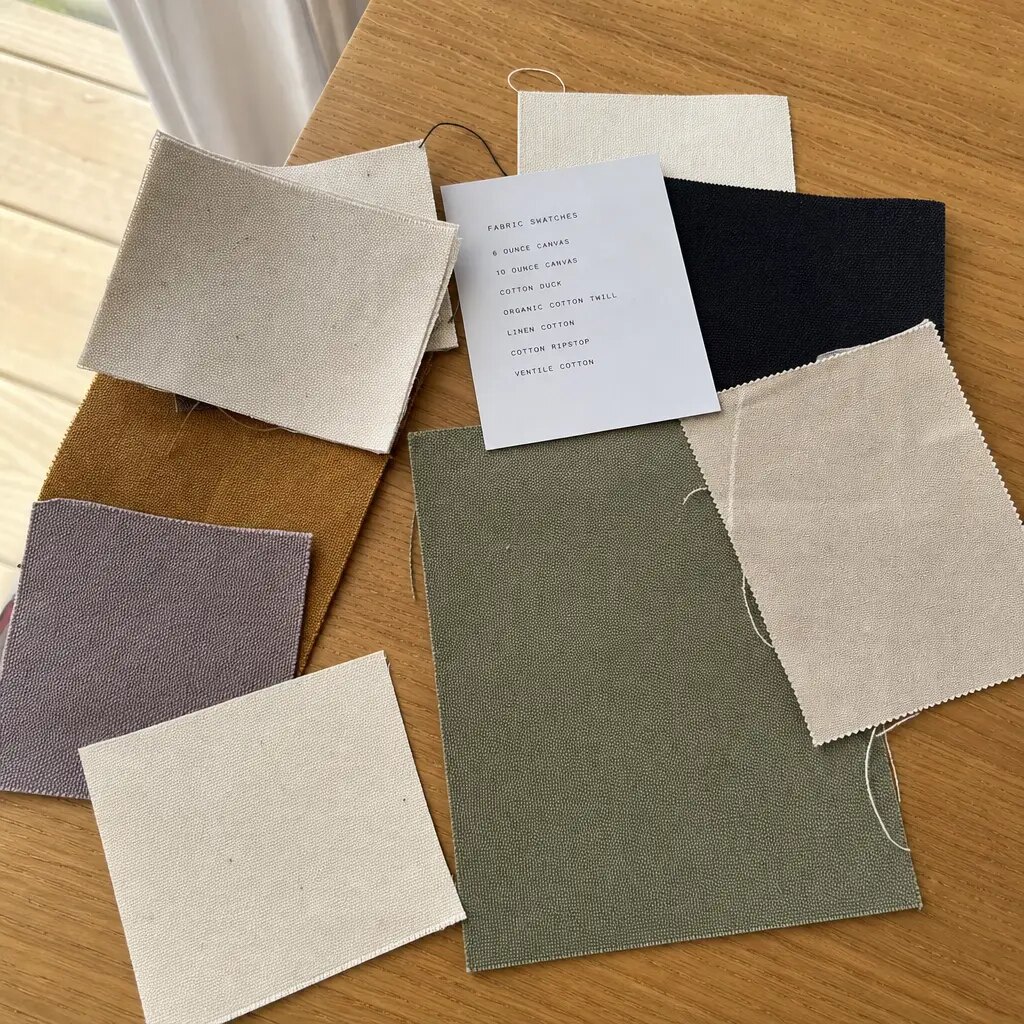
Canvas weight is one of the fastest ways to make quotes comparable. Suppliers may describe cotton canvas in ounces, GSM, or vague terms such as light, medium, or heavy. For many medium grocery tote programs, buyers often begin with supplier-confirmed options around 10 oz to 12 oz, roughly 340 to 410 GSM. That is not a universal standard; it is a practical starting band that many procurement teams test because it balances structure, print surface, cost, and carton density.
An 8 oz canvas tote can work for a price-sensitive giveaway or short event campaign, but it will normally feel softer and may wrinkle more in bulk packing. A 14 oz or heavier tote can feel premium, but it uses more carton space, increases piece weight, and can require extra attention at thick handle seams. A roaster selling the tote at a meaningful retail price may justify that choice. A roaster using the tote as a free bundle insert may not.
Always ask the supplier to quote oz and GSM, and confirm whether the fabric is natural, bleached, dyed, washed, recycled, or finished. Natural canvas shade can vary between fabric lots. Dyed canvas may require colorfastness checks. Washed canvas may compress and fold differently from untreated canvas. Treat these as verification points, not assumptions.
- Request 10 oz and 12 oz options when you need a balanced grocery tote comparison.
- Use 8 oz only when load expectation and brand presentation allow a lighter feel.
- Treat 14 oz and heavier canvas as a premium decision with carton and freight impact.
- Ask for fabric weight tolerance, shade approval method, and whether the fabric is from stock or custom production.
3. Treat handles as a durability and packing detail
Handles are where tote failures become visible. A grocery tote may carry coffee bags, retail goods, bottles, produce, or farmers market purchases, so handle construction should be specified clearly. Common options include self-fabric handles, cotton webbing handles, and reinforced attachments such as cross-stitch, bartack, or box-X stitching. The right choice depends on expected load, visual style, and target cost.
For coffee roaster merchandise, self-fabric handles create a cohesive look because the handle matches the bag body. Webbing handles can feel sturdy and comfortable, but they may introduce shade variation or a more utilitarian appearance. Reinforcement usually adds cost, but weak handles create returns, complaints, and unsellable inventory. Avoid quote wording such as “standard handle” unless the supplier attaches a drawing or approved sample photo.
Handle length also affects the carton. Long shoulder handles can fold across the printed face or create a thick stack at one side of the carton. Short carry handles pack neatly but may be less useful for grocery shopping. During sample approval, document how handles are folded into the bag so the factory packs consistently during bulk production.
- Specify handle drop and confirm whether it is measured from the top edge to the handle apex.
- Request inside and outside photos of handle attachment, not only a front product view.
- Define reinforcement type, handle width, stitch density expectation, and loose-thread standard.
- Load-test the sample with a realistic coffee-and-grocery weight and inspect handle stress points afterward.
4. Match decoration method to artwork risk
Coffee roaster tote graphics often use a wordmark, roastery name, simple icon, or one-color brand mark. For those designs, screen printing is usually a strong wholesale option on cotton canvas because it is predictable, scalable, and easy to control by print size, placement, ink color, and number of screens. The print still needs to be tested on final canvas because fabric texture can soften edges and make small type look heavier than it appears on a digital proof.
If the design includes gradients, small lettering, multi-color illustration, or photo-like detail, the supplier may suggest heat transfer, digital transfer, embroidery, woven label, or sewn patch. None is automatically best. Transfers can show edges or crack if they are poorly matched to the fabric. Embroidery can pucker lighter canvas or become costly on large art. Woven labels look refined but may not provide the same shelf visibility as a large front print.
Ask suppliers to make decoration cost drivers visible: number of print colors, maximum print area, screen charge, ink type, curing method, strike-off cost, and whether the price includes artwork positioning. For brand-critical colors, approve a strike-off on the final canvas, not only a digital mockup.
- Use screen print for simple one-color or two-color roaster logos on natural canvas.
- Use woven labels or side labels when understated branding is more important than front-panel impact.
- Avoid fine text below the supplier’s proven capability on textured canvas.
- Approve print position with measurements from top edge and side seam, plus a placement photo.
5. Build MOQ around real cost drivers
MOQ is usually tied to fabric purchasing, dye lot size, cutting efficiency, print setup, sewing line changeover, and packing complexity. A quote for 1,000 natural canvas totes with one black logo is not the same as 1,000 totes split across five fabric colors, four location logos, two handle colors, and mixed carton ratios. The piece count may be identical, but the setup work is very different.
A practical RFQ asks for MOQ by fabric color, artwork, handle variation, label, and packing style. If a coffee group has multiple cafes, ask whether one fabric run can be shared while the front print changes by location. The supplier may allow it, but screen charges, labeling, and carton separation should be visible on the quote.
For a first order, request at least two quantity levels, such as a pilot quantity and a replenishment quantity. The pilot confirms hand feel, sell-through, warehouse fit, and carton handling. The replenishment quote shows the cost position once the specification is stable. This is better than forcing a very small custom order through a production setup that was designed for larger runs.
- Ask for MOQ per fabric color and per logo design, not only a single total MOQ.
- Separate sample charges, screen charges, label charges, carton charges, and unit price.
- Request practical price breaks such as 500, 1,000, 2,500, and 5,000 pcs.
- Confirm whether mixed cartons change unit cost, packing labor, inspection time, or lead time.
6. Compare suppliers on one normalized specification
The lowest tote price is not useful if every supplier is quoting a different product. One factory may quote 10 oz canvas with loose bulk packing. Another may quote 12 oz canvas with individual polybags. A distributor may include domestic delivery but use a stock handle length and smaller print area. A trading company may offer a good unit price while outsourcing printing or packing, which can make carton control harder to verify.
Create one quote comparison sheet with columns for fabric weight, finished size, gusset, handle construction, decoration method, print area, color count, MOQ, sample cost, unit cost, packing method, pcs/carton, carton dimensions, gross weight, lead time, incoterms, and QC evidence. This shows whether the price difference comes from true efficiency or missing scope.
If the final channel is not locked, ask each supplier to quote two or three packing scenarios: loose bulk, retail folded, and mixed carton or bundle pack. You do not need the supplier to guess your business strategy. You need the cost, carton, and handling impact of each option stated clearly enough to choose.
- Reject quotes that say packing is “standard” without pcs/carton and carton dimensions.
- Ask whether barcode labels, carton liners, desiccants, polybags, belly bands, and palletization are included.
- Compare incoterms carefully; EXW, FOB, DDP, and domestic delivered prices are not equivalent.
- Keep every quote tied to the same spec version and artwork version.
7. Use carton math, not broad carton guesses
Carton planning is where tote orders often lose money quietly. A medium 10 oz to 12 oz canvas grocery tote may be planned at 20 to 40 pcs/carton for retail-ready packing or 30 to 60 pcs/carton for bulk packing, but those are only supplier-confirmed planning ranges. The actual carton count depends on finished size, gusset, handle thickness, fold method, carton board strength, moisture protection, transit route, and manual handling limits.
Ask the supplier to measure folded tote length, folded tote width, and stack height for a known number of pieces. For example, assume a finished 12 oz tote weighs 230 g and folds to 30 cm x 25 cm. If 10 folded pieces create a 15 cm stack, then 30 pieces create about 45 cm of product stack height before carton liner, tolerance, and compression allowance. A possible carton could be 32 cm x 27 cm x 48 cm, giving a carton volume of about 0.0415 CBM. For 30 pcs, that is about 0.00138 CBM per tote before pallet effects.
Now check weight. Thirty totes at 230 g each equal 6.9 kg net product weight. If the export carton, liner, labels, and moisture material add about 1.1 kg, estimated gross weight is 8.0 kg. That may be comfortable for manual receiving. If the buyer increases to 50 pcs, net product weight becomes 11.5 kg and the stack may need about 75 cm of height before allowances, which may create a tall, awkward carton or require a different fold. This is why carton count must be tested, not copied from a generic tote program.
The supplier should confirm whether the carton closes without heavy compression. Over-compression can crease the print, distort handles, bulge cartons, and create poor stacking. Underfilled cartons waste freight and may crush if void space is not managed.
- Request folded dimensions and 10-piece stack-height photos before approving carton quantity.
- Set a target gross-weight range based on your receiving policy and pallet plan.
- Ask for estimated CBM per carton and total CBM for the purchase order.
- Avoid carton counts that require force to close the flaps or create visible carton bulging.
8. Select packing style by downstream labor cost
Loose bulk packing is often right for replenishment orders where the buyer will count, store, and distribute totes internally. It usually has the lowest factory packing labor and can use carton space efficiently. The tradeoff is more wrinkles, possible carton dust, handle creases, and buyer-side sorting work. If the tote is sold as merchandise, those issues can reduce sellable quality.
Retail folded packing is cleaner for store teams. Individual polybags protect against dust and moisture, but add material, labor, cube, and possible sustainability concerns. Belly bands or paper sleeves can look better for a roaster brand, but they need carton protection so bands do not scuff or tear during transit. If the tote will sit on a cafe shelf, presentation may be worth the extra packing cost.
Inner cartons or bundle packs help when goods are allocated by cafe, sales rep, grocery account, or event. They are less cube-efficient but can reduce warehouse counting. Mixed cartons can also be useful, but only if the carton label and packing list show the exact ratio. A label such as “mixed tote bags” is not enough for commercial receiving.
- Use loose bulk when internal warehouse labor is acceptable and presentation is secondary.
- Use folded retail packing when the tote is sold as merchandise or sent directly to store teams.
- Use inner cartons when allocation speed matters more than maximum freight efficiency.
- Use mixed cartons only with exact SKU ratios, carton-number control, and inspection records.
9. Approve samples, packed trials, and QC before bulk shipment
A pre-production sample should prove the full tote program, not only the front panel. It should confirm final canvas, dimensions, handle build, stitch quality, decoration method, logo position, label placement, fold direction, and carton fit. A tote can look good on a table but still pack poorly if the handles create a lump, the print lands on a fold line, or the carton needs force to close.
Sample approval should move in stages. First approve fabric and construction. Then approve the print or label on actual canvas. Then approve folding and carton quantity. Finally confirm carton marks, barcode placement, packing list format, and pallet plan if needed. For remote approval, ask for photos with a ruler showing tote width, height, gusset, handle drop, print placement, folded size, and packed carton condition.
QC should follow how the order will be used. Retail merchandise requires attention to cosmetic issues, print alignment, folding, and packaging cleanliness. Grocery carry use requires handle and seam checks. Warehouse programs require carton count, carton label accuracy, and mixed assortment control. Use AQL or another agreed sampling method and state it on the purchase order. Final inspection should open cartons randomly and verify count, fold direction, assortment ratio, carton marks, and gross weight before shipment release.
- Keep one approved physical sample with the buyer and one with the factory when possible.
- Request a trial carton or carton-fit photo set before mass packing begins.
- Require final inspection photos showing measurement points, print checks, handle reinforcement, carton labels, and packed cartons.
- Treat carton labels, barcode placement, and packing list accuracy as QC points, not administrative details.
Specification comparison for buyers
| Packing option | Supplier-confirmed planning range | Best fit | Buyer risk to check | Freight and handling effect |
|---|---|---|---|---|
| Loose bulk export packing | Often planned around 30-60 pcs/carton for medium canvas totes, subject to folded size, canvas weight, handle bulk, and carton grade | Warehouse replenishment, internal distribution, low-cost promotional programs | Wrinkles, carton dust, inconsistent folding, manual recounting, and over-compression at carton closing | Usually cube-efficient, but too many pieces per carton can create bulky or heavy cartons |
| Folded retail-ready with individual polybag | Often planned around 20-40 pcs/carton for medium 10-12 oz totes, depending on fold and bag size | Retail merchandise, ecommerce kits, store shipments where clean presentation matters | Extra packaging material, trapped odor, higher labor, and possible sustainability concerns | More material and air space may increase CBM per piece; reduces store prep work |
| Folded retail-ready without individual polybag | Often planned around 25-45 pcs/carton when fold is compact and canvas remains clean | Roaster retail shelves, event sales, or domestic shipments where plastic reduction matters | Scuffing, dust exposure, fold inconsistency, and print creasing if carton liner is weak | Balanced option when presentation matters but individual polybags are not required |
| Inner carton or bundle pack | Commonly 5-10 pcs per inner bundle or carton, then 20-40 pcs per master carton | Allocation to cafes, sales reps, grocery accounts, or branch warehouses | Higher material and packing labor; inaccurate bundle counts can create receiving disputes | Less cube-efficient, but can reduce downstream sorting and labor |
| Mixed carton by color, logo, or location | Usually 20-50 pcs/carton depending on assortment complexity and label control | Multi-location roasters, seasonal artwork, small SKU splits shipped together | Wrong SKU ratio, unclear carton labels, slower inspection, and warehouse mis-picks | Can avoid many underfilled cartons, but requires precise labels and packing list control |
| Palletized master cartons | Carton count depends on carton size, pallet height limit, route, and destination receiving rules | LTL, ocean freight, distributor warehouses, retailer DC receiving | Pallet pattern, crush risk, carton orientation, stretch wrap, and pallet label accuracy | Improves handling and carton protection; may add pallet cube and local delivery constraints |
Buyer checklist before sampling
- Define finished tote width, height, gusset, canvas weight, fabric color, handle drop, handle width, reinforcement stitch, and expected use before requesting a firm price.
- State the sales channel: roaster retail shelf, cafe merchandise, grocery partner program, subscription gift, event resale, wholesale account, or warehouse replenishment.
- Send vector artwork with print size, placement, color count, Pantone or ink reference, and notes on whether fine details can be simplified for textured canvas.
- Ask for MOQ by fabric color, artwork, handle type, label, and packing style instead of accepting one blended minimum.
- Request a pre-production sample using final canvas, final print method, final handle construction, final label or tag, and intended fold direction.
- Require supplier-confirmed carton details: pcs/carton, carton L x W x H, carton board type if available, estimated net weight, estimated gross weight, and pallet plan if applicable.
- Set a practical carton gross-weight target based on your warehouse rules, hand-lift policy, and freight mode rather than relying on a generic supplier carton count.
- Compare quotes on the same basis: fabric oz/GSM, tote dimensions, handle build, decoration method, number of print colors, packing materials, carton count, inspection scope, incoterms, and delivery point.
- Require carton labels to show item code, fabric color, artwork version, quantity, gross weight, net weight, carton number, PO reference, and destination if the shipment is split.
- Confirm lead time by stage: artwork review, sample production, sample transit, material booking, cutting, sewing, printing, packing, inspection, and dispatch.
Factory quote questions to send
- What exact canvas weight are you quoting in both oz and GSM, and is the fabric natural, bleached, dyed, washed, recycled, or treated with any finish?
- What tolerance do you hold for finished width, height, gusset, handle drop, handle position, and print placement after sewing and pressing?
- Are the handles self-fabric, cotton webbing, or another material, and are they stitched into the top hem, cross-stitched, or box-X reinforced?
- What handle width, handle length, and stitch density are included in this price, and which handle changes would affect the unit cost?
- Which logo method is included: screen print, heat transfer, digital print, embroidery, woven label, sewn patch, or hangtag?
- For screen printing, what maximum print area and number of colors are included before screen charges, ink charges, or curing requirements change the quote?
- What is the MOQ per fabric color, per artwork, and per packing style? Can several roaster locations share one fabric run if the print changes?
- Are sample charges refundable or credited to the bulk order, and how many sample revisions are included before bulk approval?
- What carton pack quantity do you recommend for this tote size and canvas weight, and what are the estimated carton length, width, height, net weight, and gross weight?
- Can you provide a carton-fit photo or trial packing before mass packing starts, including folded dimensions, stack height, and quantity per carton?
Quality-control points to confirm
- Canvas weight should be checked against the approved oz or GSM specification with an agreed tolerance, because weight variation changes hand feel, print appearance, folding bulk, and freight density.
- Fabric shade should be compared against an approved physical swatch, especially for natural canvas where lot-to-lot tone can vary from cream to grey-beige.
- Finished tote dimensions should be measured after sewing, pressing, and folding, not only at cutting, because seam allowance and fabric behavior affect carton fit.
- Handle drop, handle width, and handle attachment position should be consistent across sampled pieces so the bag carries comfortably and looks aligned on display.
- Handle reinforcement should be checked for skipped stitches, loose threads, broken needles, seam puckering, weak bartacks, and asymmetry at stress points.
- Side seams, bottom seams, and gussets should be inspected for straightness, seam allowance, loose threads, and weak points that could fail when the tote carries coffee bags or grocery items.
- Print placement should be measured from fixed edges with an agreed tolerance for vertical and horizontal position rather than approved by visual judgment only.
- Print quality should be checked for ink bleed, pinholes, cracking, registration issues, color mismatch, uneven curing, transfer edge marks, and abrasion risk after folding.
- Labels, tags, barcode stickers, and carton marks should match the purchase order, artwork version, item code, quantity, and destination routing instructions.
- Carton count should be verified by random carton opening, with special attention to mixed assortments, underfilled cartons, overfilled cartons, and cartons that require heavy compression to close.