1. Start With the Roaster Use Case
Coffee roasters buying wholesale canvas grocery totes are usually buying a branded retail and operational item, not just a fabric bag. The same-looking tote may be used as paid cafe merchandise, a market carry bag, a subscription pickup bag, a holiday bundle component, or a wholesale-account gift. Each use case changes the required fabric weight, handle comfort, logo method, packing, and acceptable unit cost.
Procurement should begin with the job the tote must perform. A bag expected to carry several coffee bags plus a mug or jar needs stronger handle reinforcement than a lightweight giveaway. A tote sold at the register needs cleaner folding, sharper print, fewer loose threads, and more consistent shade than a back-of-house pickup bag. A tote shipped to multiple cafe locations may need carton-level SKU control more than premium hangtags.
The fastest way to avoid false savings is to write a short buying brief before requesting quotes. State the intended load, sales channel, target retail price if any, required launch date, reorder expectation, packing method, destination, and who will inspect the goods. Without that brief, one supplier may quote a 10 oz flat promotional tote while another quotes a 14 oz bottom-gusseted grocery tote with reinforced handles. Those prices are not comparable.
- Paid merchandise: prioritize fabric hand feel, print quality, folding, and retail presentation.
- Grocery carry: prioritize gusset capacity, handle comfort, seam strength, and a written load test.
- Event giveaway: prioritize lead time, simple artwork, and reliable stock or semi-custom supply.
- Subscription pickup: prioritize fold size, clean handling, and carton density.
- Wholesale account gift: prioritize accurate carton labels, consistent branding, and dependable construction.
2. Convert the Idea Into a Spec Sheet
A strong RFQ reads like a production spec, not a mood board. Suppliers need measurable details to quote fairly: finished dimensions, fabric weight, fabric color, gusset style, handle drop, handle width, reinforcement, print method, packing, quantity tiers, destination, and Incoterm. If these details are missing, the supplier will fill gaps with its own assumptions, usually in the direction of easier production or lower material cost.
For coffee roaster totes, size the bag around real products. Test whether retail coffee bags stand upright, whether a 5 lb bag fits without stressing the seams, and whether a gift bundle changes the required gusset. If the tote will be shipped folded in a subscription box, check folded thickness before approving bulk production. Finished dimensions should include body width, height, gusset depth, handle drop, handle width, and top hem depth.
Tolerances also belong in the spec. Cotton canvas is a flexible sewn product, so it will not behave like molded plastic or metal. A practical starting point is ±1 cm for body width and height, ±0.5 cm to ±1 cm for handle drop, and ±0.5 cm to ±1 cm for print placement depending on artwork and factory capability. If the tote must fit a rigid box or display fixture, ask the supplier to confirm tighter tolerances before pricing.
- Concise spec template: 14 oz natural cotton canvas; 38 cm W x 40 cm H x 12 cm gusset; 60 cm handle length or stated handle drop; 3 cm cotton web handles; box-X handle reinforcement; one-color screen print, 24 cm wide, centered, 10 cm below top edge; bulk folded in bundles of 25; 100 pcs per carton; FOB or DDP stated destination.
- Add separately priced options: woven side label, hangtag, belly band, individual packing, dyed canvas, contrast handles, custom carton labels, and third-party inspection.
- Attach vector artwork, Pantone or ink target, label artwork, carton mark requirement, and any retail packaging instruction to the RFQ.
- State whether the quote should include samples, screen charges, label setup, export cartons, and standard inspection photos.
3. Fabric Weight, GSM, Finish, and Color
Fabric is usually the largest cost driver in a canvas grocery tote. For coffee roaster programs, 12 oz cotton canvas, roughly 407 GSM, is a practical baseline when the bag needs more substance than a lightweight promotion but still has to stay cost-efficient. A 14 oz canvas, roughly 475 GSM, gives a stronger retail feel and better shape retention. A 16 oz canvas, roughly 542 GSM, can feel premium, but it raises material cost, sewing resistance, carton weight, and freight exposure.
Ask whether the quoted weight is finished fabric weight. Some quotes refer to greige cloth, some to finished cloth, and some use local shorthand. Finishing steps such as washing, bleaching, dyeing, softening, and calendaring can affect final weight and hand feel. Request the normal mill tolerance in writing. Many programs work with a stated fabric-weight tolerance such as ±5% to ±8%, but the accepted range should be agreed before bulk fabric is purchased.
Natural canvas is often a good fit for coffee brands because it pairs well with kraft packaging and simple black, brown, or dark green prints. Bleached canvas gives a brighter print base but shows dirt more easily. Dyed canvas can create a more brand-led retail item, but it adds lab-dip approval, shade-lot control, possible higher MOQ, and colorfastness checks. For dark dyed canvas with a light logo, ask whether an underbase or extra print passes are needed for opacity.
- 10 oz / about 339 GSM: useful for light promotional totes, usually weak for true grocery-carry positioning.
- 12 oz / about 407 GSM: balanced choice for many coffee roaster retail and carry programs.
- 14 oz / about 475 GSM: stronger hand feel for paid merch, gift bundles, and heavier contents.
- 16 oz / about 542 GSM: premium feel, higher unit cost, more sewing time, heavier cartons, and greater freight impact.
- Approve a physical swatch for shade, slub level, weave density, stiffness, and transparency; do not rely only on a digital mockup.
4. Construction Details That Protect the Brand
A tote does not fail because of fabric weight alone. Handles, top hem, gusset structure, seam allowance, thread, stitch density, and reinforcement determine whether it survives normal use. Coffee customers may carry coffee bags, mugs, bottles, jars, books, or brewing accessories. Narrow handles, shallow hems, weak handle joins, and loose stitching can make even heavy canvas feel cheap.
Specify handle drop as a finished measurement for the intended carry style. Hand-carry totes can use shorter handles. Shoulder-carry grocery totes need enough drop to fit comfortably over a coat. Handle width matters too: wider cotton webbing distributes weight better and looks more substantial. Self-fabric handles can look premium, but they may require extra labor and need clear layer and seam-finish instructions.
Gusset choice controls capacity and price. A flat tote is cheaper and folds tightly, but it does not hold boxed or block-bottom coffee bags as cleanly. A side or bottom gusset improves capacity. A boxed bottom helps the tote stand more squarely for gift bundles or retail presentation, but it adds sewing operations and requires better alignment. Fill the sample with real products before approving bulk.
- Name the reinforcement method: box-X, bar-tack, double row stitching, or another approved pattern.
- State handle insertion depth into the hem and confirm the reinforcement catches all required layers.
- Define top hem depth, seam allowance, stitch density range, thread color, and trimming standard.
- Check that the tote lies flat without twisting and that gussets are symmetrical when filled.
- Require bulk production to match the sealed sample for handle placement, reinforcement size, and stitch quality.
5. Logo Method, Artwork, and Print Control
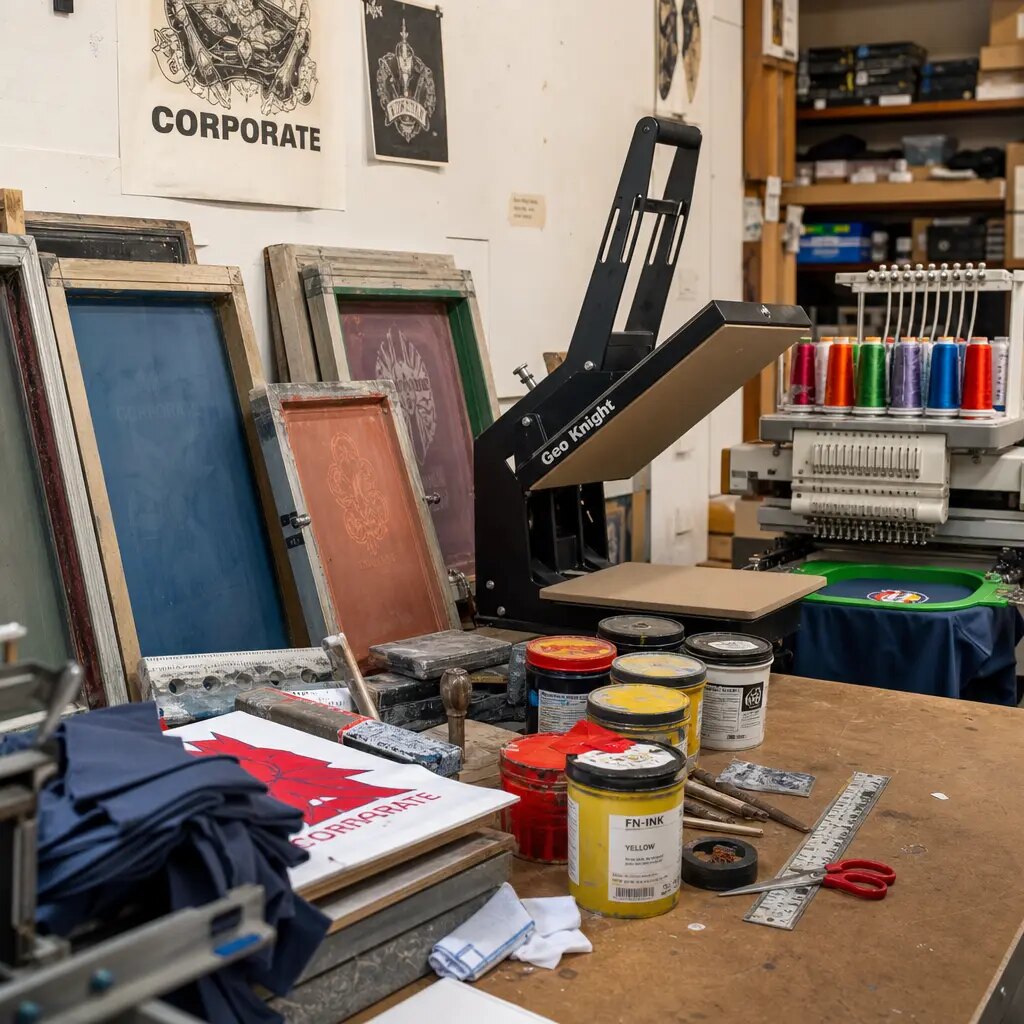
One-color screen printing is often the best-value logo method for wholesale canvas grocery totes. It scales well, suits simple coffee roaster wordmarks, and works on natural canvas when artwork is prepared correctly. Supply vector files and simplify fine details that may break up on textured cotton. Before pricing, confirm print size, print placement, number of colors, ink target, screen charges, and whether a strike-off is included.
Multi-color screen printing can work, but it adds setup cost, registration risk, and approval time. Small text, thin lines, halftones, and distressed textures are harder to control on coarse canvas. Ask the supplier for minimum line thickness and review a print strike-off on the actual fabric when the tote is a paid retail item. A digital proof shows layout; a strike-off shows opacity, edge quality, and how ink behaves on the weave.
Embroidery is better for small premium marks, patches, or subtle branding than for large grocery-tote graphics. Dense embroidery can stiffen one area of the bag and may raise cost quickly. Heat transfer or digital print may suit some artwork, but buyers should ask about edge feel, cracking, wash behavior, and adhesion on rough cotton.
- State print placement by measurement: for example, logo centered horizontally and 10 cm below the top edge, not simply centered.
- Set print placement tolerance, often ±0.5 cm to ±1 cm depending on artwork and supplier capability.
- Ask how many screens, color changes, artwork revisions, and strike-offs are included.
- For dark canvas, confirm underbase, print passes, opacity, and rub resistance.
- Price woven labels, care labels, hangtags, and belly bands separately because they often have separate MOQs and setup charges.
6. Bulk Pricing Plan With Sample Tier Assumptions
A useful bulk pricing plan separates the base tote cost from setup, decoration, labels, packing, inspection, and freight. Canvas tote pricing is generally driven by fabric consumption, cutting, sewing, trimming, printing, labels, packing labor, cartons, overhead, quality allowance, and margin. If a quote is much lower than others, check what has been excluded: screen charges, label setup, export cartons, inland freight, rework allowance, inspection support, or realistic packing.
Request tiered pricing using the same written spec. The purpose is not only to chase the lowest unit price; it is to see where fixed costs are absorbed and where inventory risk begins. A 10,000 pc tier may reduce the unit share of screens and labels, but it also increases cash tied up in inventory, warehouse space, obsolescence risk if artwork changes, and freight exposure. Match the order size to sell-through forecast and reorder lead time.
Illustrative tier comparison for the same custom 12 oz natural canvas grocery tote with one-color screen print and bulk folded packing: 1,000 pcs includes high setup impact per unit, suitable for launch validation, with screen/sample/setup charges visible; 3,000 pcs usually spreads setup better and is useful for first planned retail rollout; 5,000 pcs is often the first meaningful scale tier for a stable design; 10,000 pcs may improve material purchasing and production efficiency but requires stronger demand confidence. Landed cost still depends on carton CBM, gross weight, Incoterm, duty, brokerage, freight mode, destination, and warehouse handling.
- Quote columns to request: quantity, base blank unit price, print cost, label cost, packing cost, one-time charges, sample charges, carton quantity, CBM, gross weight, Incoterm, estimated freight, and total landed estimate.
- Sample tier table to include in your RFQ: 1,000 pcs launch test with one-color print and bulk packing; 3,000 pcs first rollout with optional side label; 5,000 pcs planned retail program with carton labels and inspection; 10,000 pcs repeat program with optimized packing and confirmed freight data.
- Separate one-time charges from recurring charges: screens, label setup, pattern fees, artwork separation, and sample fees should not be hidden in the same line as the repeat unit price.
- Compare blank, printed, labeled, and retail-packed versions of the same tote so marketing upgrades are visible before approval.
- Never compare EXW, FOB, DAP, and DDP pricing without matching carton data, destination, duty assumptions, and freight mode.
7. Choose the Right Supplier Route
The best supplier route depends on deadline, volume, customization, and how much control the buyer needs. A direct factory is often strongest for repeat custom totes with stable artwork, defined fabric, and controlled sewing details. The buyer gets closer to production decisions but must manage specification discipline, sample approval, inspection terms, and freight assumptions.
A trading company or sourcing partner can be useful when the roaster needs several bag styles, coordinated merchandise, or faster supplier comparison. The key question is accountability. Ask who owns QC, who approves materials, where production will occur, and who pays if the bulk goods do not match the approved sample. A good partner coordinates; a weak partner simply relays messages.
Domestic decorators and stock distributors are practical for urgent events, local launches, and low-volume tests. They reduce import complexity and speed up delivery, but the buyer has less control over fabric weight, handle drop, stitching, and shade. If stock blanks are used for a first market test, document the blank style and do not assume it can be duplicated exactly in a later custom overseas run.
- Use direct factory sourcing for repeat custom specs and larger planned volumes.
- Use a sourcing partner for multi-SKU programs or when you need coordination across several production steps.
- Use domestic decoration for urgent or low-volume programs where stock construction is acceptable.
- Use a stock test before custom production when demand is uncertain.
- For every route, require a written spec, approved sample, packing plan, and defect responsibility rule.
8. Sampling and Approval Workflow
A physical sample aligns procurement, marketing, and operations around the same object. Digital proofs help with artwork layout, but they cannot confirm fabric stiffness, handle comfort, seam strength, print opacity, fold thickness, or carton density. For wholesale canvas grocery totes, the sample should show actual or clearly identified substitute fabric, final dimensions, handle construction, gusset, reinforcement, print scale, label placement, and packing method.
Use staged approvals when schedule allows. First approve fabric swatches or lab dips, especially for dyed canvas. Then approve a blank construction sample for size, gusset, handle drop, and reinforcement. Next approve a print strike-off or printed pre-production sample. Finally approve packing if the order includes hangtags, belly bands, individual bags, fixed bundles, store allocations, or custom carton labels.
Do not approve samples only by appearance. Measure the sample, fill it with realistic coffee products or test weight, carry it as a customer would, fold it as the warehouse will receive it, and inspect the print under normal light. After approval, keep a sealed buyer sample and factory sample with photos, revision number, and signed spec sheet. The purchase order should state that bulk goods must match the sealed sample within written tolerances.
- Approve swatch or lab dip before color-sensitive orders.
- Approve blank construction before printing when size, gusset, or handle design is new.
- Approve print strike-off on actual fabric for paid retail totes or detailed artwork.
- Approve packing sample when fold method, hangtag, belly band, or carton labels matter.
- Keep dated sealed samples for reorders so same as last time is not a guess.
9. QC, Packing, and Receiving Rules
Quality control should be agreed before production starts. The main inspection areas are fabric consistency, finished dimensions, seam construction, handle attachment, print placement, print curing, cleanliness, label accuracy, packing count, and carton marks. If the tote is marketed as a grocery carry bag, include a written load test that defines weight, hold time, repeated lifting if used, and failure criteria.
A practical inspection acceptance summary keeps decisions clear. Critical defects include wrong artwork, unsafe debris, mold or mildew odor, broken handles, severe seam failure, materially wrong fabric, or wrong SKU packing. Major defects include visible stains, poor print curing, missing labels, dimensions outside tolerance, skipped stitches at handle joins, incorrect carton count, or print placement outside tolerance. Minor defects may include small loose threads, slight wrinkles, or natural slubs within the approved fabric standard.
Packing affects landed cost and warehouse labor. Loose bulk packing is cheap but may create wrinkles, dust, and counting issues. Fixed bundles make receiving easier. Individual polybags, paper bands, belly bands, or hangtags can improve retail handling but add cost, labor, carton cube, and sustainability questions. Ask for each packing method as a separate line item.
Carton data should be confirmed before freight approval: pieces per carton, carton dimensions, net weight, gross weight, and CBM. If multiple designs, colors, or cafe allocations are included, carton labels should identify PO, SKU, item description, color, quantity, carton number, weights, dimensions, and destination. Receiving teams should not need to open every carton to know what arrived.
- Inline QC: check first cut panels, first printed pieces, sewing consistency, handle reinforcement, and label placement before the run is completed.
- Final QC: compare random finished units with the sealed sample and inspect dimensions, print, sewing, cleanliness, packing, carton count, and carton marks.
- Load test: record agreed weight, test duration, repeated lifts if required, and any seam or handle deformation.
- Rework rule: define who sorts, repairs, replaces, reinspects, and pays if major or critical defects exceed the agreed limit.
- Receiving rule: require carton photos and final packing data before shipment release, especially for multi-SKU or multi-location orders.
Specification comparison for buyers
| Supplier route | Best-fit volume/timing | Typical cost tradeoff | Procurement risk to control |
|---|---|---|---|
| Direct overseas factory | Planned custom orders around 1,000 to 10,000+ pcs with approved artwork and time for sampling, production, inspection, and freight | Usually strongest unit-cost route at scale, but buyer must manage samples, Incoterms, inspection, carton data, and reorder standards | Confirm factory owns or controls cutting, sewing, and printing; state whether price includes export cartons, screen setup, labels, inland freight, documents, and inspection support |
| Trading company or sourcing partner | Multi-SKU programs, several tote constructions, mixed merchandise, or buyers needing sourcing coordination | Unit price may include service margin, but coordination can reduce buyer workload and supplier-search time | Ask for production factory details, QC owner, rework responsibility, sample approval chain, and whether the partner can enforce the sealed sample |
| Domestic decorator on stock blanks | Urgent events, low-volume tests, local launches, or quick replenishment where custom construction is not required | Higher blank-unit cost but lower import complexity and faster turnaround; good for demand testing before a custom run | Stock lots may vary in fabric weight, shade, handle drop, and stitching; document the blank style and inspect before treating it as a long-term standard |
| Hybrid route: stock test, then custom production | Roasters validating retail demand before committing to a custom bulk tote | Initial cost per unit may be higher, but it reduces risk before investing in custom labels, dyed fabric, or larger inventory | Do not assume the later custom tote will match the stock blank exactly; build a new spec and sample approval process |
| DDP supplier-managed import | Teams needing one landed-cost number for budget approval and simple receiving | Convenient comparison number, but freight assumptions and duties may be hidden or adjustable | Require destination address, shipping mode, carton dimensions, gross weight, CBM, Incoterm, duty/tax treatment, and surcharge policy |
| FOB or EXW with buyer freight forwarder | Import teams with existing forwarders, consolidated shipments, or stronger freight control | Factory unit price looks lower, but buyer must calculate inland freight, ocean/air freight, duty, brokerage, drayage, and warehouse receiving | Compare landed cost, not factory price; request carton data before approval and update after final packing |
Buyer checklist before sampling
- Define the use case: paid cafe merchandise, grocery carry bag, subscription pickup tote, market giveaway, wholesale account gift, employee kit, or e-commerce insert.
- Estimate real load: number of coffee bags, 5 lb bag, mug, bottle, jar, brewer accessory, book, or bundle weight.
- Set a written load-test rule, such as an agreed 6 kg to 10 kg practical test when the tote is positioned for grocery carry.
- Specify finished dimensions: width, height, gusset depth, handle drop, handle width, top hem depth, and print area.
- Lock fabric weight in oz/yd² and/or GSM, and ask whether the quoted value is finished fabric weight with a stated tolerance.
- Choose fabric finish: natural, bleached, dyed, washed, softened, starch-finished, or another approved hand feel.
- State construction: flat, side-gusseted, bottom-gusseted, boxed-bottom, open-top shopper, or folded retail format.
- Specify handle material and reinforcement: cotton webbing or self-fabric, box-X, bar-tack, double row stitching, insertion depth, and thread color.
- Define logo method, artwork file type, print size, print placement, print color target, and whether a strike-off is required.
- Confirm packing and freight data: fold method, bundle count, pieces per carton, carton dimensions, gross weight, CBM, carton labels, Incoterm, and destination.
Factory quote questions to send
- Is the quoted fabric weight finished fabric weight or greige/raw cloth weight, and what tolerance will apply in bulk?
- Can you quote the same tote in 12 oz, 14 oz, and 16 oz canvas so we can see the material and freight impact?
- What are the MOQs for the bag body, dyed fabric if applicable, print run, woven label, hangtag, and custom carton labels?
- Does the unit price include one-color print, screen setup, artwork separation, export cartons, carton marks, wastage, and standard packing?
- Please quote 1,000, 3,000, 5,000, and 10,000 pcs using the same written specification and identify one-time charges separately.
- Which production steps are in-house and which are outsourced: fabric sourcing, cutting, sewing, printing, labeling, packing, and inspection?
- What print method do you recommend for textured cotton canvas, and what are the limits for fine lines, small text, opacity, and registration?
- What sampling sequence do you propose: fabric swatch, blank sample, print strike-off, pre-production sample, and packing sample?
- What carton quantity, carton dimensions, net weight, gross weight, and CBM do you estimate for each quoted fabric weight?
- What inspection standard will you support, and who pays for sorting, repair, replacement, and reinspection if major defects exceed acceptance limits?
Quality-control points to confirm
- Measure finished width, height, gusset depth, boxed-bottom width if applicable, handle drop, handle width, top hem depth, print size, and print placement against the spec sheet.
- Use practical sewn-goods tolerances, such as ±1 cm for body dimensions and ±0.5 cm to ±1 cm for handle drop and print placement unless the supplier confirms tighter control.
- Check fabric weight against the approved standard and document whether the accepted tolerance is ±5%, ±8%, or supplier-confirmed by mill practice.
- Compare bulk fabric to the sealed swatch for shade, weave density, slub level, stiffness, transparency, odor, and visible contamination.
- Inspect seam quality: straight stitching, consistent stitch density, correct seam allowance, back-tacking, no skipped stitches, no broken threads, and no puckering at stress points.
- Verify handle joins match the approved sample, including box-X or bar-tack size, insertion depth, stitch density, thread color, and left-right symmetry.
- Run the agreed load test and record weight, hold time, repeated-lift method if used, and failures such as seam tearing, stitch breakage, or handle detachment.
- Check print curing, opacity, edge quality, color, registration, placement, and whether ink cracks, rubs off, or bleeds into textured canvas.
- Confirm labels, hangtags, SKU separation, fold method, bundle count, carton count, carton marks, and barcode readability where applicable.
- Classify defects before shipment: critical defects reject shipment review; major defects trigger sorting/rework above the agreed limit; minor defects are accepted only within the approved appearance standard.