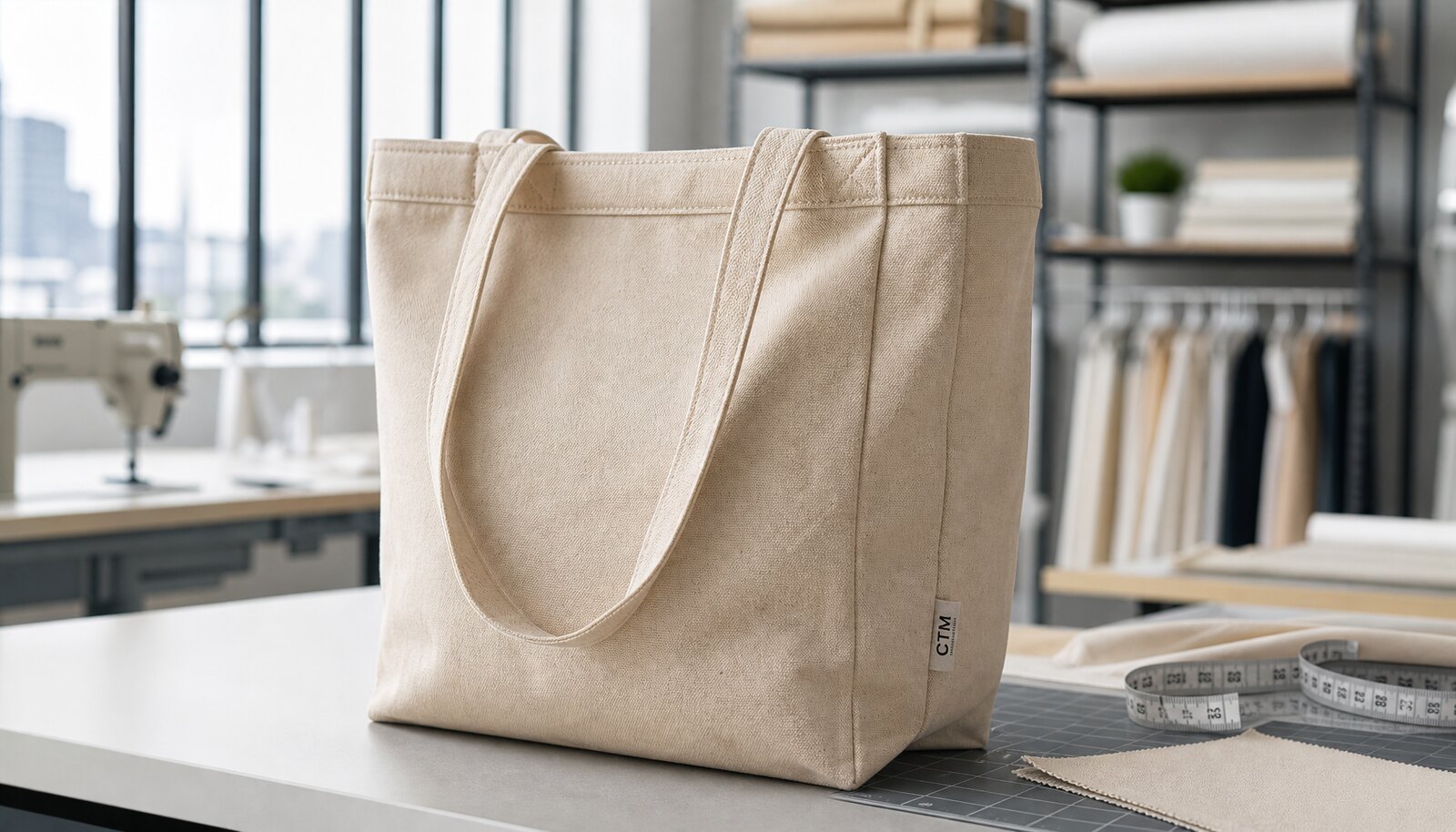
Start With the Use Case, Not the Bag
Canvas grocery totes for boutique wineries are usually purchased for three jobs at once: retail carry, tasting room merchandising, and a reusable brand asset that needs to look presentable after repeated use. That mix changes the buying logic. A tote that is only cheap on paper can become expensive if it collapses under a bottle and a few purchases, or if the logo print breaks after one wash. Start by defining how the bag will be used on the shelf and in the customer car, not by asking for the lowest unit price.
For most winery programs, the bag should feel closer to a small retail product than a promo handout. That means the spec has to cover structure, not just artwork. If the tote will carry groceries, gift items, or a bottle plus boxes, you need enough body, a stable base, and handles that do not twist. If the bag is mainly an impulse add-on at the register, you can simplify the build and use the MOQ leverage on existing materials.
- Define the load: bottles, jars, merch, or mixed grocery items.
- Decide whether the tote must stand up on a shelf or only carry flat items.
- Separate the launch spec from the repeat-order spec.
- Treat print durability as part of product function, not decoration.
Lock the Spec Before You Negotiate MOQ
Canvas weight is the first lever that affects both price and minimum order. For a boutique winery grocery tote, 10 oz to 12 oz canvas is a common commercial range; 8 oz can feel too soft for heavy retail loads, while 14 oz and up gives a firmer hand and better shape retention but adds fabric cost and sewing effort. If the tote will often carry heavier grocery items, a thicker canvas is easier to sell and less likely to generate complaints about sagging handles or transparent weave.
Size, handle style, and decoration method should be fixed before the factory quotes. A standard flat tote with a moderate gusset is easier to source than a custom silhouette. Screen print is usually the most practical choice for one or two colors on canvas because it scales well and keeps the line consistent. Woven labels, embroidery, or multi-location prints can work, but each one raises setup time and often pushes MOQ higher.
- Use 10 oz to 12 oz canvas for general retail carry; move to 12 oz to 14 oz for heavier loads.
- Keep the first order to one body size, one handle length, and one print position.
- If the logo must be premium-looking, consider a woven side label instead of a complex full-panel print.
- Specify finished dimensions, not just cut size, so the supplier cannot overcut and overcharge later.
What Really Drives MOQ
MOQ is usually not a random number. It comes from fabric roll economics, cutting efficiency, print setup, label minimums, and labor balancing. If the factory has to buy a special canvas width, change thread color, or set up a separate screen for each logo color, the minimum will rise. If you allow the supplier to use standard natural canvas, a common webbing color, and an existing handle pattern, the order becomes easier to slot into production and the MOQ can drop.
The right negotiation is to separate the hard minimum from the flexible adders. A supplier may say the base tote needs 3,000 pcs, but the print, label, or carton format might be flexible if the buyer agrees to standard materials. That is the line to push on. Ask for price breakpoints and minimums by component, because a quote that looks simple can hide a high setup charge in the artwork or decoration line.
- Ask which element sets the MOQ: fabric, print, trim, or packing.
- Request pricing at 500, 1,000, 3,000, and 5,000 pcs so you can see the breakpoints.
- Separate bag MOQ from artwork MOQ and label MOQ.
- Confirm whether the mill or factory stocks usable canvas widths or buys fabric to order.
Pick the Right Sourcing Route
Direct cut-and-sew factories give the most control over fabric weight, sewing detail, and sample revision. That route is usually the best fit when the tote will become a stable SKU and you need repeatability. Trading companies can be useful when you are coordinating several winery items at once or when you need a broader vendor network, but the buyer should still demand factory identity, responsibility for defects, and a clear sample approval path.
Stock blank plus local decoration is the fastest route and often the safest for a launch with a short calendar. The tradeoff is limited choice: you may get less control over tote size, fabric handfeel, and handle construction. Regional converters can help when freight timing matters more than exact custom features. The important thing is to match the route to the commercial plan, not to assume the cheapest quote is the best sourcing model.
- Direct factory: best for repeat programs and spec control.
- Trading company: useful for multi-item orders, but requires transparency.
- Stock blank decorator: best for urgent launches with simple branding.
- Regional converter: useful when lead time and inland freight outweigh deep customization.
Read the Quote Like a Sourcing Document
A useful quote should break the cost into fabric, cut and sew, print setup, label or trim, packing, and cartonization. If all of that is blended into one lump sum, it becomes hard to compare suppliers or negotiate the right lever. On canvas totes, the hidden cost drivers are usually screen setup, handle material, and any reinforcement or internal binding. A flat tote can look simple while still having very different production costs depending on construction.
Compare quotes only after you standardize the same spec sheet and the same commercial terms. If one supplier includes inner polybags and master cartons while another excludes them, the lower unit price is not the better offer. The same applies to freight terms and currency. The clean way to compare is to request line items for each production step and to show pricing at more than one quantity so you can see whether the supplier is really negotiating or simply moving costs around.
- Quote the same bag size, canvas weight, handle length, print colors, and carton pack.
- Keep currency and incoterm consistent across all suppliers.
- Ask for surcharge details on extra color screens, custom labels, or rush samples.
- Request landed-cost inputs, not just ex-works pricing, if freight is part of the decision.
Samples and Proofing: What to Approve
Sample approval is the point where buyers either save the order or lock in a mistake. A proper pre-production sample should match the finished canvas weight, handfeel, dimensions, stitch pattern, handle length, and logo placement. A digital artwork proof can confirm layout, but it cannot validate print density, edge sharpness, or the look of ink on real canvas. If the factory offers only a screen image, treat it as a design checkpoint, not a production approval.
For screen printing, require a strike-off on the same fabric color and finish that will be used in bulk. For woven labels or embroidery, inspect edge clean-up, thread density, and whether the detail still looks crisp from normal shelf distance. If the tote is meant for retail, the sample should also show how it folds and how the logo sits when the bag is filled. Buyers often overlook that last part and end up with a print that looks centered on a flat table but awkward in use.
- Measure finished dimensions after sample sewing, not before.
- Compare print placement against the actual seam lines, not just the paper proof.
- Check handle drop with a loaded bag, not an empty one.
- Keep a signed sample, dated photo set, and approved artwork file before bulk release.
Set QC Thresholds That Matter
Canvas tote defects are usually visible in a few areas: crooked print, mismatched panel size, weak handle stitching, and dirty fabric. Buyers should define the defect threshold before production starts, because a tote can pass a casual visual scan and still fail in retail if the logo is off-center or the handles twist under weight. A practical QC standard focuses on function first and appearance second. If the bag is meant to carry groceries or bottles, strength and consistency matter more than cosmetic perfection.
Put the factory on notice with measurable acceptance criteria. That does not mean you need an overly complicated inspection system. It means the supplier knows what will be rejected in bulk. Ask for in-line checks on cutting accuracy, print registration, and handle bartack placement, then confirm random pull testing at final inspection. If the supplier cannot explain how they prevent stitch drift or ink smudging, the quote is not mature enough for purchase order release.
- Reject obvious print misalignment if the logo sits close to a seam or edge.
- Require consistent stitching on both handle attachment points.
- Reject visible oil marks, needle holes, or dirty canvas on the face panels.
- Load test finished samples to the intended carrying weight before signoff.
Packing Affects Carton Count and Freight
Packing is not a back-end detail for canvas grocery totes. The way the bag is folded, sleeved, and stacked changes carton utilization, labor cost, and arrival condition. A tote packed loosely will take more carton space and arrive with more wrinkles. A consistent fold, with handles tucked the same way every time, improves count per carton and makes the product easier to count and warehouse at destination.
If the bags go into retail or e-commerce channels, define the inner pack and master carton standards before the factory books materials. That includes the number of units per inner polybag, carton size, barcode or carton mark placement, and moisture protection. For winery programs, a clean presentation matters because the tote is often sold near other branded goods. Poor packing can make an otherwise good bag look like leftover stock.
- Lock the folding method so every carton packs the same way.
- Confirm final carton dimensions before freight booking.
- Keep gross carton weight within warehouse handling limits.
- Use interleaving or a sleeve if the print surface is vulnerable to abrasion.
Negotiate for a Repeatable Program
The best MOQ negotiation usually trades complexity for certainty. If the factory sees a realistic repeat order, it is more willing to reduce the first-run minimum or absorb some setup cost. The most effective concessions are often operational, not financial: standard canvas, one-color print, existing webbing, or a reusable label plan that can stay in place across multiple buys. Standard material plus a clear reorder path is far more persuasive than pushing for the lowest possible first order without a follow-on forecast.
For launch planning, a simple schedule is easier to defend than a perfect but slow spec. A basic stock-material tote with one-color screen print can often move faster than a custom dyed build, while a custom fabric or premium label program will usually stretch the timeline. In practical terms, buyers should expect a shorter cycle for stock components and a longer one when the supplier must source or reserve special materials. Use that reality in negotiation: ask for a pilot order first, then a cleaner second order once the product has proven demand.
- Offer a 2-step plan: pilot run, then repeat order after sell-through.
- Keep artwork simple on the first purchase.
- Prefer standard canvas color and standard trim on launch.
- Ask the factory to price the same tote at 1,000, 3,000, and 5,000 pcs so the reorder case is visible.
Specification comparison for buyers
| Spec decision | Recommended option | When it fits | Buyer risk to check |
|---|---|---|---|
| Direct cut-and-sew factory | Best when you need custom size, handle, or print control | Repeat program or launch with a stable forecast | Requires a clear spec and stronger QC discipline; revisions can slow the schedule |
| Trading company with factory network | Useful when coordinating several winery items at once | You want one contact for tote, pouch, and carton work | Factory identity, audit path, and claim responsibility must be documented |
| Stock blank tote plus local decorator | Fastest route for a simple branded tote | Short deadline and modest differentiation requirements | Limits on fabric weight, size, handle style, and print area are common |
| Regional nearshore converter | Good for urgent reorders or smaller replenishment runs | Freight timing matters more than deep customization | Unit cost can be higher; verify textile consistency across lots |
| Integrated packaging supplier | Best if the tote ships with insert card, wrap, or gift packaging | Retail display program or seasonal gift set | Bag quality can get secondary attention if packaging dominates the quote |
| Custom print on standard blank body | Middle ground for lower MOQ | You want logo control without a fully custom pattern | Decoration area and placement options are narrower than full custom |
| Fully custom fabric and trim | Use only when the tote is a core brand SKU | High volume and a long selling season | Higher MOQ and a longer sample and approval cycle |
| Multi-SKU consolidated order | Bundle tote with pouch or drawstring bag | You can share fabric, carton, or print setup across items | One delayed component can hold the whole shipment |
Buyer checklist before sampling
- Final bag size and gusset in finished dimensions
- Target fabric weight and acceptable handfeel
- Handle length, width, and attachment style
- Print method, color count, and logo placement
- Need for label, wash tag, or side patch
- Carton pack, inner pack, and barcode format
- Target MOQ and acceptable price breakpoints
- Sample type required: digital proof, strike-off, or pre-production sample
- Lead time from sample approval to shipment
- Inspection standard and defect tolerance
Factory quote questions to send
- What is your MOQ by fabric weight and by print color count?
- Which component drives the MOQ: fabric, print, trim, or packing?
- Can you quote standard canvas and custom canvas separately?
- What is the cost difference between one-color and two-color screen print?
- Are woven labels, embroidery, or side labels extra setup items?
- What units per carton and what carton size do you recommend?
- Can you provide a pre-production sample on the same fabric, not a substitute?
- What is the lead time after sample approval and after purchase order deposit?
- What defect standard do you inspect to before shipment?
- Can you quote 1,000, 3,000, and 5,000 pcs with the same incoterm?
Quality-control points to confirm
- Finished dimensions stay within the agreed tolerance after sewing and pressing
- Fabric weight matches the approved spec and does not feel noticeably thinner in bulk
- Logo placement, color, and print sharpness stay consistent across the run
- Handle attachment points use uniform stitching and secure back-tacks or bartacks
- No broken stitches, skipped stitches, raw edges, or loose threads on visible seams
- No oil marks, holes, fabric stains, or color contamination on the front panels
- Loaded bag testing confirms the tote can carry the intended retail weight
- Carton count, fold method, and packing list match the approved packing spec