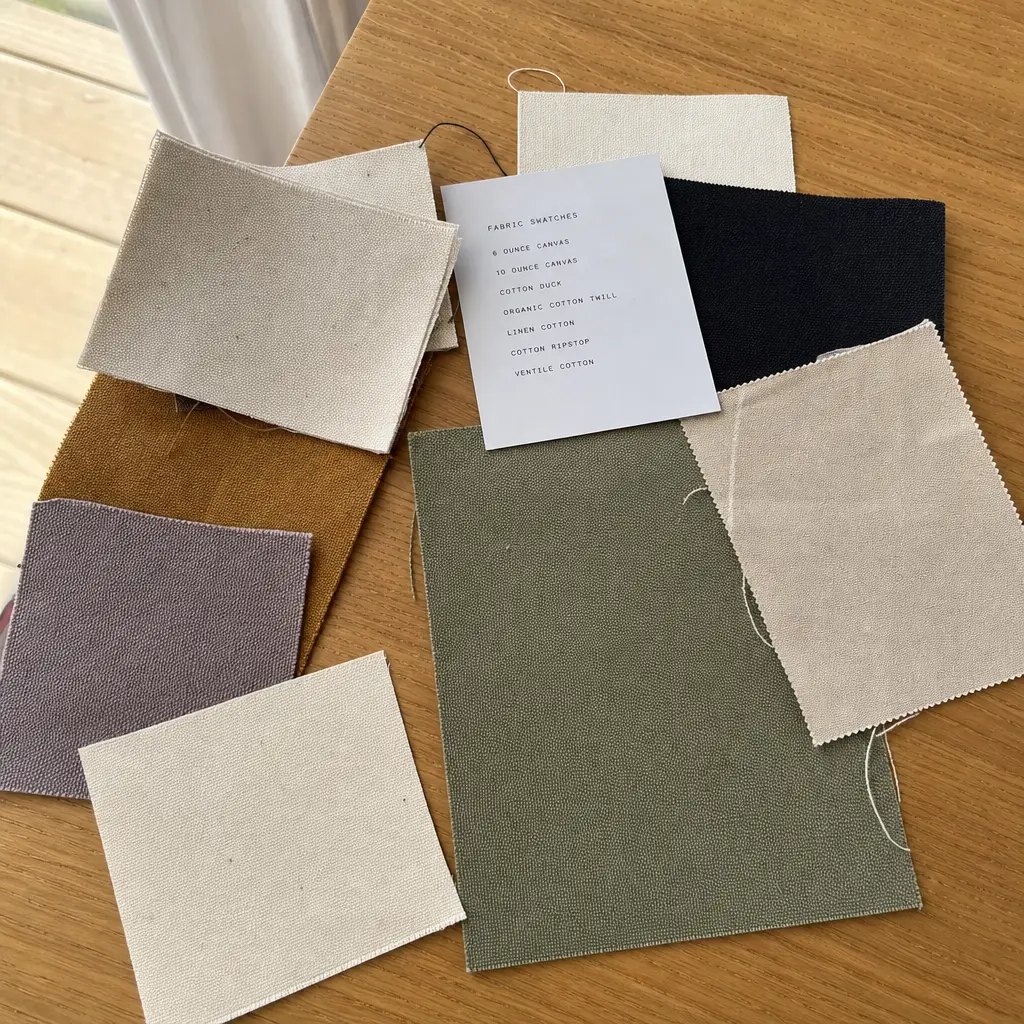
Why fabric weight decides tote performance
For artisan bakeries, a tote is not a decorative giveaway. It has to carry bread, fruit, dairy, jars, and sometimes a full grocery top-up, while still looking clean at the register and on the shelf. That is why fabric weight matters more than a generic "canvas" label. A bag that feels fine empty can still distort, wrinkle badly, or look cheap once the first load goes in.
For procurement teams, the real job is to define performance in a way the factory can reproduce. If you only ask for "good quality canvas," you leave open questions about weave density, finishing, shrinkage, handle strength, and print surface. Those details determine whether the tote stays upright on a shelf, survives weekly use, and still looks like a brand asset after multiple trips. A useful fabric weight guide should therefore connect GSM to actual shopping behavior, not just to marketing language.
The wrong weight also makes quote comparison misleading. One supplier may quote a light promotional canvas, another may quote a denser retail bag, and both may call it a canvas tote. If you do not define the finished GSM, handle construction, and intended fill weight, the cheapest quote often wins on paper and loses in the store. For bakery buyers, fabric weight is not only a spec issue; it is a sell-through issue. The tote is part of the product mix, and weak presentation can hurt repeat purchases and brand perception just as much as weak durability can create returns.
A practical way to frame the decision is to think about the bag’s life on day one and on month six. On day one, the tote needs enough body to stand neatly, accept the logo, and feel worth paying for. On month six, it still needs to carry a mixed grocery load without stretching out of shape or fraying at the handles. That is why the best spec is usually not the most rugged one on paper. It is the one that balances handfeel, durability, print quality, and cost against how often customers are likely to reuse it.
Match GSM to the actual bakery use case
For most wholesale canvas grocery totes for artisan bakeries, the practical range is 12-14 oz finished canvas, roughly 410-475 GSM. That range gives enough body for grocery use without turning the tote into a stiff promotional bag. It also prints well, sews reliably, and keeps the price structure manageable for retail programs, loyalty rewards, and checkout add-ons. In procurement terms, it is the range most likely to survive real shopping behavior without overpaying for unnecessary weight.
Below that range, the bag can still work, but only for lighter use. Around 10-12 oz, you are closer to a simple market tote or event bag, which may be fine for dry goods or branded bakery merch but less safe for heavier pantry loads. Above 14 oz, you get more structure and a premium handfeel, but the bag becomes harder to fold, costlier to sew, and less efficient in carton packing. The right answer is usually not the heaviest fabric available; it is the lightest fabric that still passes your use test.
To choose the range correctly, define what the customer will actually carry. A bakery customer might buy a single boule and a coffee bag one day, then a loaf, a carton of eggs, and a jar of jam the next. If the tote is only intended for bread and light merchandise, a lower weight may be acceptable. If it is meant to function as the store’s preferred grocery add-on, choose the heavier end of the practical range and reinforce the handles and base accordingly. One way to avoid over-specifying is to match fabric weight to a load target, such as a typical mixed grocery carry instead of a vague "heavy-duty" request.
It also helps to compare the feel of the fabric with the job it has to do. A soft canvas may fold neatly and ship efficiently, but it can lose shape faster if the bag is packed full each week. A denser canvas holds its form longer, yet can feel bulky in hand if the tote is meant to fold down into another shopping bag. Procurement should ask the supplier how the finished fabric behaves after sewing and finishing, not just what the raw cloth weighed before production. That small distinction often explains why two bags with similar-sounding specs can perform very differently in use.
Direct factory, trader, or stock program?
The sourcing route changes the risk profile as much as the price. A direct factory is usually the right path when you need repeat orders, controlled sewing, and custom packing. A trading company can help when you are consolidating multiple bag types or when your order is too small to justify a custom fabric run. A stock program is fastest, but it is usually a compromise on exact GSM, size, or print placement. Procurement should select the route based on control needs first, then unit price second.
For bakery buyers, the most dangerous quote is the one that looks simple but hides where the bag is actually made and decorated. If the seller cannot show sewing-line photos, print-stage photos, and a recent carton image, you are not comparing a factory quote against a factory quote. You are comparing a promise against a production quote. That may be fine for one-off promotions, but it is weak for a retail tote program that needs reorder stability. A supplier should be able to explain whether it buys canvas in-house, cuts and sews internally, and prints in the same facility or through a subcontractor.
Direct factory sourcing also improves correction speed when something goes wrong. If the handle drop is off, the weave is looser than expected, or the print placement needs adjustment, a factory with in-house pattern, sewing, and packing teams can usually revise more cleanly than a layered supply chain. Traders are not automatically worse, but they are better suited to buyers who need flexibility and are willing to manage more review steps. If you use a stock program, ask what is fixed and what is customizable, because "available now" often means the fabric weight, panel size, and carton pack are already locked.
That said, route selection should follow your commercial calendar. If the tote supports a seasonal bakery launch, a quick stock or trader program may be the only practical way to hit the shelf date. If the bag will be reordered through the year, the extra time spent verifying a direct factory often pays back in cleaner spec control and fewer surprises later. The safest question is not "Which option is cheapest?" but "Which option can repeat the same result without rework?"
Construction details that protect margins
On a grocery tote, the handle and base carry most of the failure risk. Cotton webbing handles with box-X reinforcement are usually safer than simple stitched fabric straps, especially when the bag is used for weekly grocery runs. If the handles are too narrow or the stitch density is weak, the bag may look fine in a photo but fail after a few real loads. Handle drop matters too: too short and the tote feels awkward; too long and the bag swings badly in retail use. Procurement should treat handle design as a load-bearing specification, not as a style note.
The base and gusset should match the intended fill. A flat tote with no gusset can work for lightweight merch, but bakery customers usually appreciate a deeper body because it holds loaves, paper bags, and produce without collapsing. A 10-14 cm gusset is a practical starting point. If the tote is likely to carry bottles, jars, or flour, ask for a reinforced base seam and test how the bag sits when filled. A bag that tips, twists, or collapses in the cart makes the customer experience worse even if the print looks perfect.
Small sewing details matter because they determine the bag’s retail life. Look closely at top hem folding, bartack placement, stitch density, and the transition where handles meet the bag body. A neat top hem keeps the tote looking clean on display. Even reinforcement at the stress points helps the bag resist tearing. If a factory uses the same sewing spec for all bag types, ask it to explain why that spec is suitable for grocery use rather than only for promotional events. A tote that will be sold repeatedly should be built like a retail product, not a one-day handout.
The finishing stage deserves attention too. Loose threads, uneven trimming, and inconsistent handle spacing are small defects, but customers notice them fast when the tote is hanging at checkout. Once a bag is on a shelf, visual symmetry matters almost as much as strength. That is why a clean sewing pattern and consistent trimming are part of the commercial spec, not just factory housekeeping. When the tote looks neat from a distance and holds its shape under load, it supports the bakery’s premium image instead of competing with it.
Print method and branding that survive shelf use
The print method should fit the brand, not the other way around. For artisan bakeries, a clean one-color or two-color screen print usually gives the best balance of price, clarity, and repeatability. It works well on natural canvas and gives a handmade feel without looking flimsy. If the logo has fine lines or the artwork changes often, a sewn woven label on the side seam can be a better long-term branding device than trying to force detail into the canvas surface. Procurement should choose the method that keeps reorders consistent and quality risk low.
Heat transfer can work for short runs or more detailed artwork, but it needs more care because the finish can crack or lift where the bag folds. Embroidery is usually not the first choice for grocery totes because it adds cost and stiffness, unless the brand specifically wants a premium patch-style look. Whatever method you choose, define the print area and placement relative to the side seam and handle line. A logo that collides with the fold line or gusset looks careless even if the ink is good. Ask the supplier to mark the artwork position on the physical sample before approving bulk.
Also think about the bag surface itself. Natural canvas, lightly bleached canvas, and dyed canvas each affect print contrast differently. On rough or open-weave canvas, small text can fill in and thin strokes can disappear. On darker fabric, the ink system needs enough opacity without creating a thick, rubbery handfeel. If you want a premium retail finish, ask for a production sample that uses the final fabric color, final print size, and final drying method. A screen-printed tote that looks crisp in a rendering may behave very differently on a real weave under retail lighting.
For repeat programs, the branding method should be easy to reproduce. If your team expects quarterly reorders, avoid any decoration that depends on a highly manual setup unless the supplier can document it clearly. A simple screen print may seem less ambitious than a complex finish, but it is often easier to keep color, placement, and coverage consistent from lot to lot. That consistency matters when the tote becomes a visible part of the bakery’s customer experience and not just a one-time promotional item.
Write the RFQ so quotes are comparable
A weak RFQ creates quote confusion before production even starts. At minimum, your request should define the finished size, gusset depth, handle length and width, finished fabric weight, fabric shade, logo size, print colors, print positions, and packing requirement. If you only send a reference photo and a target price, factories will fill in the blanks differently, and your quotes will not be comparable. For procurement teams, the goal is to remove interpretation from the first round so that pricing reflects true differences rather than hidden assumptions.
The cleanest way to review offers is to force a line-item structure. Ask the supplier to separate the blank tote cost, decoration cost, setup or screen fee, label cost, packing cost, carton cost, and sample cost if applicable. That lets procurement compare real value instead of one blended number. It also shows whether the factory understands the work or is simply relaying someone else's stock product. For MOQ logic, remember that fabric width, screen count, sewing efficiency, and carton pack density often drive the minimum more than the sewing line itself. If a supplier cannot explain why the MOQ exists, it may not have been calculated from your actual spec.
A strong RFQ should also include what is not acceptable. If the tote must not have PVC, must not use synthetic handles, or must be suitable for direct retail display without extra wrapping, say so. If you need color consistency from reorder to reorder, ask the factory how it controls shade lots. If the bag will be sold in a premium gift shop as well as used for groceries, add that context, because it affects how the supplier balances cost and finish quality. The more precise the brief, the more useful the quote review becomes.
It also helps to share your use scenario in plain language. A tote that sits in a bakery boutique and goes home with a loaf needs a different balance than a tote that replaces paper grocery bags at checkout. When the supplier understands the channel, it can recommend a more realistic structure, print method, and packing format. That does not make the buyer’s job harder; it usually makes the first sample closer to the target and reduces the number of revision rounds.
Sample approval and QC thresholds
For this product, the sample stage should prove three things: the bag shape is right, the print is clean, and the construction can survive normal carry weight. A pre-production sample is more useful than a photo sample because you can touch the seam finish, measure the handles, and see how the fabric folds. If the factory offers a counter sample or revised sample, treat it as part of the approval cycle, not as a courtesy item. The purpose of sampling is to lock the spec before bulk sewing starts, not to admire the design.
Set acceptance criteria before bulk production starts. Many buyers use practical thresholds such as finished dimensions within a small tolerance band, handle drop within a similar band, even seam appearance on both sides, and no loose threads at stress points. For the load test, use the type of weight your customer will actually carry, not a random object from the office. The goal is not to over-engineer the bag; the goal is to know whether the sewing, print, and fabric combination are fit for a retail environment. A simple internal sample sheet can capture dimensions, print placement, seam observations, and packing notes in one place.
It also helps to check the sample under repeat handling, not just first impression. Fold the tote several times, set it down full, lift it by one handle and then both handles, and check whether the seams distort or the print cracks along the fold line. If the product will sit on a shelf before purchase, look at it from arm’s length and close up. A tote that is acceptable in a photoshoot may still fail the real retail standard if the stitching is uneven, the base is unstable, or the logo edges bleed into the weave. The sample should answer whether the bag is production-ready, not just visually acceptable.
For ongoing programs, keep the approved sample with notes, photos, and measured dimensions in a shared file or purchasing folder. That record becomes the reference point for reorder checks, claim handling, and any future factory change. When everyone is looking at the same approved standard, it is much easier to resolve disputes about print size, handle length, or fabric feel before they become a shipment problem.
Packing, carton count, and export handling
Packing decisions affect both cost and retail readiness. Bulk-packed canvas grocery totes are usually the most efficient for export, but some bakery programs need individual polybags if the bags are sold as merchandise or are displayed on open shelves. If the bag is folded too tightly, the handles can crease and the print can pick up pressure marks. If it is folded too loosely, you lose carton efficiency and freight cost climbs. The right packing method depends on whether the product is a warehouse item, a point-of-sale item, or a gift-shop display item.
For wholesale orders, carton size and carton fill should be planned around how the bag will arrive in store. A good export carton keeps the tote flat, protects the print, and still avoids wasted air. Ask for carton photos and a packing diagram, not only a packed weight. Moisture protection matters too, especially for natural canvas shipping across humid routes. If the order is time-sensitive, make sure the packing spec is frozen before production starts, because a late packing change can push lead time just as much as a fabric change. If a supplier cannot tell you the exact pieces per carton and the carton dimension, the freight estimate is not dependable either.
For procurement, packing is part of quality control. The same tote can arrive looking premium or crushed depending on how it is folded, stacked, and bagged. If the bags will be palletized, confirm pallet height, stretch-wrap method, and carton label placement. If the bags will move through a warehouse with barcode scanning, ask where the carton marks will go and whether the carton label format is fixed across reorders. A good packing spec reduces damage, improves warehouse handling, and helps keep the product looking retail-ready when it is received.
Packing also affects counting accuracy. Bags that are folded inconsistently can shift inside cartons, which makes spot checks slow and increases the chance of a short-pack dispute. Clear fold direction, fixed carton count, and labeled master cartons save time at receiving. For a procurement team managing multiple SKU lines, that operational detail matters as much as the tote construction itself.
Landed-cost comparison: cheapest quote vs best quote
The lowest unit price rarely gives the best landed cost. For canvas grocery totes, the real cost is built from fabric weight, sewing time, print setup, packing format, sample rounds, carton volume, and freight. A supplier may quote a low FOB number by using lighter canvas or a minimal stitch spec, but that can create hidden costs later through returns, extra QC, or a second run. If your goal is a retail-ready bakery tote, compare landed value, not just factory price. This is especially important when the tote is part of a repeat retail program, because the first order often sets the quality expectation for later reorders.
A useful comparison method is to line up four sourcing routes: blank tote plus local printing, full custom production at origin, stock tote plus sewn label, and trading-company bundled supply. Each route has a different risk profile. Local decoration can shorten lead time but may not reduce cost once inbound freight and handling are counted. Full custom production gives the best spec control, but only if the factory can prove it owns the process. The winning option is the one that balances unit cost, reorder stability, and packaging efficiency for your exact sales channel. Procurement should look at the cost per sellable unit, not only the cost per sewn bag.
It also helps to estimate the cost of uncertainty. If one supplier is vague about fabric weight, another is vague about print coverage, and a third is vague about carton count, the cheapest quote may carry the highest management burden. A slightly higher quote with clear specs, good sample communication, and stable packing can be the better commercial choice because it lowers the chance of delay or correction. For artisan bakery programs, the bag becomes part of the brand display, so quality inconsistency is not just a logistics issue; it can affect customer perception at point of sale and reorder confidence from store teams.
When comparing offers, make sure the numbers are based on the same assumptions. One quote may include individual polybags, another may not. One may be based on a stock canvas, another on a custom weave. One may show a low unit price but require a separate fee for artwork or screen setup. If procurement does not normalize those differences, the "best" quote may simply be the least complete one. A disciplined comparison protects margin better than chasing the lowest headline number.
Common mistakes that turn a tote order into rework
Most problems on canvas grocery tote programs come from vague specs, not from sewing skill alone. Buyers often say "canvas" without naming GSM, or they approve artwork on a white background without testing it on the actual fabric shade. Others forget to define handle drop, then discover the tote is awkward to carry once it reaches the store. These are small omissions in the RFQ, but they become expensive once the goods are packed. In a wholesale environment, ambiguity is effectively a cost driver.
Another common mistake is treating the sample as a photo approval instead of a production control point. A nice-looking mockup does not prove that the print will hold on real canvas or that the bag will stack cleanly in cartons. Before the PO is released, the buyer should already know the overrun rule, carton count, and sample acceptance threshold. That is what keeps the first production run from turning into a slow, expensive correction loop. Buyers should also avoid assuming that a vendor's standard tote spec is "close enough," because "close" can still mean a different fabric weight, a different handle length, or a different sewing allowance.
A final mistake is ignoring the end user. Artisan bakery shoppers may carry the tote on a bike, fold it into another bag, or reuse it for weekly groceries. If the tote is too stiff, too shallow, or too narrow at the opening, it may be durable but still unpleasant to use. That is why the best procurement spec is one that fits both the product and the shopping behavior. Function, presentation, and reorder consistency need to be developed together, not one after the other.
Procurement teams can avoid most of these errors by building a short approval gate before bulk release: confirm the measured sample, confirm the carton pack, confirm the decoration method, and confirm the tolerance sheet. That simple discipline prevents a lot of avoidable rework, especially when several stakeholders review the tote from different angles. Marketing may care about appearance, operations may care about packing, and sourcing may care about price; the best spec satisfies all three without drifting from the actual use case.
Specification comparison for buyers
| Spec decision | Recommended option | When it fits | Buyer risk to check |
|---|---|---|---|
| Sourcing route | Direct factory with sewing and print in-house | Repeat programs that need custom size, fabric weight, and carton control | A brokered quote can hide subcontracted sewing, print, or packing losses and make comparison noisy |
| Fabric weight | 12-14 oz finished canvas, about 410-475 GSM | Most artisan bakery grocery totes that carry bread, fruit, dairy, and pantry goods | Too-light fabric stretches and looks thin; too-heavy fabric raises cost and stiffness |
| Weave and finish | Tight natural or lightly bleached canvas with consistent weave | Retail-ready branding where ink needs a clean surface and a premium shelf look | Loose weave can blur print edges and create shade variation between lots |
| Handle construction | Cotton webbing handles with box-X reinforcement | Shoulder-carry grocery totes that will be reused often | Weak bartacks, short stitch length, or poor handle centering can pull out at stress points |
| Print method | 1-2 color screen print or a sewn woven side label | Simple bakery logo, high repeat volume, and a clean handmade feel | Fine detail can fill in on rough canvas and dense ink can crack if the bag flexes hard |
| Bottom and gusset | 10-14 cm bottom gusset with reinforced base seam | Loaves, produce, pastry boxes, and mixed grocery use | No base support leads to bag sag, seam strain, and poor stacking in cartons |
| MOQ logic | Set MOQ around fabric width, screen count, sewing efficiency, and carton pack density | Buyers planning stable reorders or multiple bakery SKUs | Very low MOQ often means stock fabric only and limited spec control |
| Quote evidence | Factory photos, sample images, and line-item breakdown by blank bag, print, packing, and carton | When you need apples-to-apples supplier comparison | A polished sales deck without process proof does not show who will actually sew and pack the order |
Buyer checklist before sampling
- Finished bag size, gusset depth, and handle drop are written in centimeters, not only in marketing terms.
- Finished fabric weight is stated in GSM or oz after weaving and finishing, not just as "heavy canvas."
- Logo file, print colors, print size, and print placement are approved before sampling.
- Carton pack count, carton size, and polybag requirement are included in the quote.
- Sample acceptance rules cover dimensions, seam quality, print registration, and load behavior.
- MOQ, overrun policy, underrun policy, and production lead time are confirmed in writing.
- The supplier can separate blank bag cost, decoration cost, packing cost, and freight-ready carton cost.
- You have a backup plan if the factory proposes a lighter stock canvas instead of the requested custom fabric.
Factory quote questions to send
- What is the finished GSM of the canvas after weaving and finishing, and what tolerance do you allow from lot to lot?
- Is the price based on direct production or on a stock bag that is being decorated later?
- What exactly is included in the unit price: blank tote, print setup, print run, woven label, inner polybag, master carton, and export packing?
- What is your minimum order quantity for the requested size, fabric weight, and print method?
- Can you show a recent production photo, sample photo, and carton photo for a similar tote?
- What is your standard handle construction, stitch pattern, stitch length, and reinforcement at the stress points?
- How do you pack cartons for export, and how many pieces go into one master carton?
- What is the normal production lead time after sample approval, and where can delays appear?
- What dimensional tolerance do you hold on finished size, gusset depth, and handle drop?
- What overrun or underrun tolerance do you allow on bulk quantity?
Quality-control points to confirm
- Measure finished size, gusset depth, and handle drop on the first article and keep your own tolerance sheet.
- Inspect seam density, bartack length, and whether the handle reinforcement is centered and even.
- Rub-test the print by hand after drying and look for ink cracking, patchy coverage, or color shift on folds.
- Load-test a small batch with your intended shopping weight standard, then hold and carry it by the handle points.
- Check the top hem for neat folding, no puckering, and no loose threads at the corners.
- Verify that the base seam stays flat and does not twist when the bag is filled.
- Open several cartons to confirm count, folding direction, polybag use, and moisture protection.
- Reject samples that look acceptable from a distance but show uneven weave, crooked print, or weak stitch finish up close.
- Check that all handles match in length within the agreed tolerance and that both sides hang evenly.
- Confirm carton labels, quantity marks, and packing list match the purchase order before release.