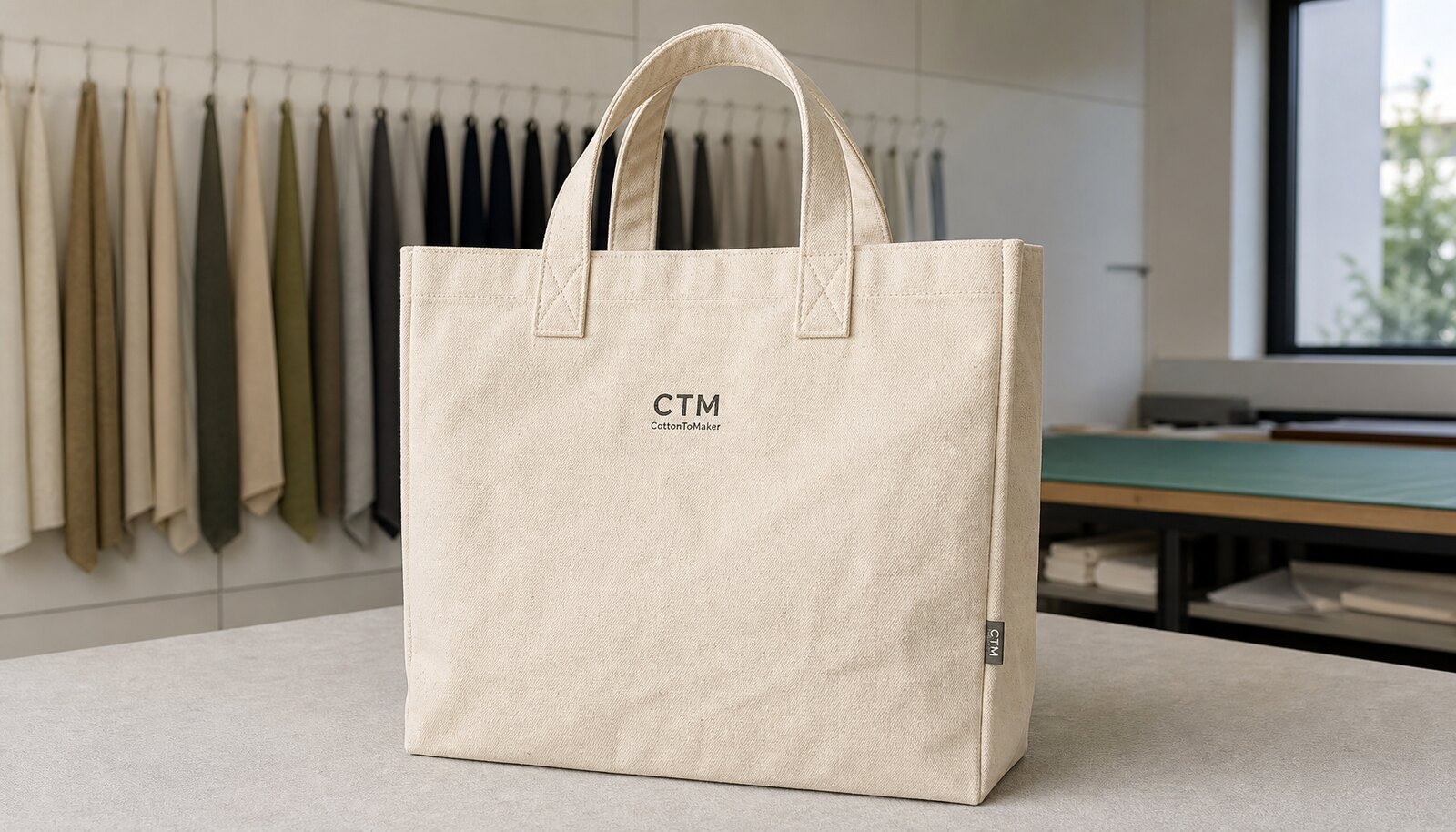
Start With the Gift Job
Wholesale canvas grocery totes for corporate gifting should be specified from the job they need to perform, not from a catalog photo. A tote that carries a brochure and pen at a conference is a different product from one holding a bottle, notebook, apparel item, food package, and welcome card. The product name may be the same, but the right fabric weight, gusset, handle drop, reinforcement, logo method, and packing format can change quickly.
Begin the RFQ with operational facts. Will the tote be used as packaging, as the gift itself, or both? Will recipients reuse it for groceries? Will it ship flat to a 3PL, arrive already kitted, or be handed out at an event? Does it need to fit inside a gift box or stand open on a packing table? These details help suppliers quote the same product instead of guessing from a generic tote description.
Corporate gifting also carries brand risk. Recipients may not know whether a bag is 10 oz or 12 oz canvas, but they will notice thin hand feel, crooked printing, twisted handles, loose threads, odor, stains, or a bag that collapses during packing. A useful buying spec turns those expectations into measurable requirements: finished fabric weight, finished size, gusset, loaded weight, handle construction, logo placement, sample approval, QC rules, and carton plan.
- Define whether the tote is packaging, the gift itself, or both.
- List expected contents and target loaded weight before requesting price.
- State where the tote enters the distribution chain: factory pack, 3PL kitting, warehouse redistribution, retail display, or direct shipment.
- Treat print alignment, cleanliness, creasing, and carton consistency as procurement requirements.
Use Ounces and GSM Correctly
Canvas tote fabric is commonly sold by ounces, while procurement and compliance teams often compare GSM. Use both. As a working conversion, 10 oz canvas is about 339 GSM, 12 oz is about 407 GSM, 14 oz is about 475 GSM, and 16 oz is about 542 GSM. These figures help buyers compare quotes, but they are not a complete quality standard. Two fabrics with the same nominal weight can feel different because of yarn size, weave density, finish, shrinkage, washing, softening, dyeing, and moisture content.
The quote must say whether the supplier is stating greige fabric weight, finished fabric weight, washed fabric weight, or a rounded commercial description. Greige fabric is unfinished fabric before bleaching, dyeing, washing, or other finishing. Finished fabric can measure differently after processing. A supplier may call a tote 12 oz even when the actual finished fabric varies by lot, so the PO should name the target and the measurement basis.
For most corporate gifting grocery totes, 12 oz is the practical starting point because it balances structure, sewing efficiency, printability, and freight. Use 10 oz when contents are light and the tote is mainly a carrier. Consider 14 oz when the tote is part of the perceived gift value. Use 16 oz only when durability and structure justify the higher material, sewing, carton, and freight impact.
- 10 oz, about 339 GSM: light events, mailer inserts, and budget campaigns.
- 12 oz, about 407 GSM: balanced default for corporate gifting grocery totes.
- 14 oz, about 475 GSM: premium grocery use and heavier gift kits.
- 16 oz, about 542 GSM: durable programs where structure matters more than freight efficiency.
Connect Fabric to Construction
Fabric weight does not guarantee performance. A heavy body with weak handles can fail quickly, while a lighter body with proper seam allowance, handle reinforcement, and gusset design may perform well for moderate loads. Specify the construction package, not just the fabric: finished width, height, bottom gusset, side gusset if any, top hem depth, seam style, stitch density, handle length, handle drop, handle width, and reinforcement method.
The gusset is important for grocery-style totes. A flat promotional tote may look acceptable in a photo, but it does not carry boxy contents as well as a gusseted bag. A bottom gusset improves usable capacity and helps the tote hold food boxes, drink cartons, apparel bundles, or gift kits. Deeper gussets use more fabric and affect cutting yield, so the depth should come from real contents rather than a default template.
Handle design should follow carrying behavior. Shoulder carry needs a longer drop than hand carry. Wider handles can improve comfort under load but increase material use and may require different stitching. Common reinforcement choices include box stitch, cross stitch, bar-tack, extra seam passes, or handle ends inserted into the folded top hem. The approved sample should show the exact method, and the spec should name it.
- Specify finished measurements instead of approximate flat size only.
- Choose bottom gusset depth based on actual contents and packing needs.
- Write handle length, handle drop, handle width, and reinforcement method into the RFQ.
- Ask the supplier to measure the sample after sewing, finishing, pressing if used, and packing simulation.
Build a Quote Sheet That Prices the Same Tote
Many quote problems happen because suppliers price different products under one generic name. One supplier may quote a sewn-to-spec 12 oz tote with reinforced handles, screen print, inner count, export cartons, and inspection support. Another may quote a stock 10 oz blank with a simple logo and bulk carton packing. The lower unit price is not useful unless the underlying specification is the same.
A procurement-ready RFQ should split the product into cost drivers. Ask suppliers to price the base bag, decoration, setup charges, labels, hangtags, barcode stickers, inserts, packing, samples, testing, inspection support, and freight assumptions. This makes comparison cleaner and exposes late charges such as screens, color changes, carton labels, special folding, or individual packing.
The quote sheet should force suppliers to declare assumptions. Is the tote stock, modified stock, or fully sewn to spec? Is the canvas natural, bleached, dyed, washed, or softened? How many print colors and what print size are included? Are cartons standard export cartons or built for a 3PL receiving rule? Are unused labels or fabric held for reorders? Clear answers reduce substitution risk during production.
For repeat programs, ask for first-order and reorder pricing. First orders may include screens, sample development, label setup, or testing. Reorders may be faster if fabric, artwork, and packing remain unchanged, but repeatability should still be controlled through approved samples and documented production specs.
- Quote the same fabric weight, size, gusset, handle, seam, decoration, label, and packing across suppliers.
- Request cost splits for bag body, print, trims, packing, setup, samples, testing, and freight assumptions.
- Separate stock, modified stock, and sewn-to-spec quotes.
- Ask which charges repeat on every order and which are one-time setup charges.
Know What Moves MOQ
MOQ for canvas grocery totes is usually a stack of component minimums. Fabric mills may set minimums by weight, width, color, finish, or fiber type. Dyeing and washing facilities may require batch quantities. Sewing lines need enough volume to justify cutting and line setup. Printers may have screen setup and color-change thresholds. Labels, hangtags, inserts, special webbing, and retail packing can each add their own minimum.
This is why a supplier may offer a low MOQ for a natural 12 oz tote with a one-color print but a higher MOQ for a dyed tote with woven side labels and individual packing. The second quote is not automatically inflated; the customization may require larger production batches. Ask for MOQ by component so the constraint is visible.
For pilot programs, reduce MOQ by staying close to standard production: natural canvas, standard body size, standard handle, one-color screen print, no custom dye, no custom hardware, and bulk packing. For larger corporate gifts, customization may be worth the higher MOQ because the brand result improves and the cost spreads across volume.
Substitution rules should be written into the PO. If the requested fabric is unavailable, can the supplier use another lot, blank, handle webbing, or finish? For branded gifts, the answer should be no unless the buyer approves the change in writing.
- Ask for MOQ by fabric, color, finished size, handle type, print method, label, trim, and packing.
- Use natural canvas and standard construction for small test orders.
- Expect custom dyeing, washing, recycled or certified fabric, woven labels, and retail packing to raise MOQ.
- Require approval before fabric, blank source, handle, print method, or packing substitutions.
Choose Decoration After Fabric
Decoration should be selected after the fabric weight, weave, color, and finish are confirmed. Screen printing is usually the strongest default for corporate logos on canvas grocery totes because it handles solid brand colors well and is cost-effective at wholesale quantities. It works especially well for one- to four-color logos on many 10 oz to 14 oz canvas totes, provided opacity and curing are tested on the actual fabric.
Transfers can help with gradients, small details, or many-color artwork, but they should be checked for hand feel, edge lift, cracking after folding, and adhesion. Digital printing can support detailed art, though natural canvas tone and texture may mute color. Embroidery can look premium for small logos, patches, or monograms, but dense stitching may pucker lighter canvas. Woven labels and sewn patches work well when the buyer wants subtle branding.
Artwork approval should not rely only on a digital mockup. The approved proof should show print size, placement, color, and method on the intended fabric. Placement should be measured from fixed reference points such as the top hem, side seam, or bottom edge. Any placement tolerance should be confirmed with the supplier rather than assumed.
Decoration QC should include practical handling checks. Rub the print after curing. Fold through the print area. Check for tackiness before packing. Confirm that ink does not transfer to adjacent bags under carton pressure. For dyed canvas, check opacity and color shift carefully because light inks may need an underbase or extra pass.
- Use screen print for simple solid corporate logos and repeatable wholesale production.
- Use transfers or digital printing only after checking fold resistance, adhesion, hand feel, and color on the approved fabric.
- Use embroidery, woven labels, or patches for subtle premium branding or small logo applications.
- Define logo placement by measurement and tolerance, not by visual mockup alone.
Use Samples to Prove Bulk Readiness
A showroom sample is not enough for bulk approval. It may use available fabric, extra sewing attention, or a decoration method that differs from mass production. The sample that matters most is the pre-production sample made from intended bulk fabric, using final construction, final decoration, final label, and intended packing. That sample should become the physical standard for production and inspection.
A practical sampling sequence starts with fabric swatches or lab dips when color or finish matters. Next, review a blank construction sample for size, gusset function, handle comfort, seam quality, and structure. Then review a decorated sample for logo size, placement, color, opacity, curing, and surface quality. Finally, approve a pre-production sample that includes all confirmed elements. Buyer and factory should each keep a sealed reference sample.
Sample approval should include measurement. Check width, height, gusset depth, handle drop, handle width, top hem, print placement, label location, and carton fit. Load the tote with representative contents and carry it briefly. Look for handle stretch, seam opening, gusset distortion, corner stress, and uncomfortable handle pressure. If a 3PL or gift assembler will pack the order, send the sample to that team before bulk release.
Sampling also protects timelines. If 14 oz canvas is too bulky for the gift box, or a transfer cracks when folded, it is cheaper to adjust before cutting bulk fabric. The RFQ should state what each sample proves, how long it takes, what it costs, and whether any sample charge is credited against the order.
- Approve fabric, blank construction, decoration, and packing in stages.
- Use a pre-production sample made from bulk-intended materials as the final standard.
- Measure the sample against the spec sheet before authorizing production.
- Keep sealed reference samples with both buyer and factory for inspection comparison.
Write QC Rules Early
Quality control works best when the rules are set before production starts. For canvas grocery totes, the main QC areas are fabric, dimensions, stitching, handle strength, decoration, cleanliness, odor, and packing. The PO should define critical, major, and minor defects in practical terms. For a corporate gifting order, wrong logo, wrong fabric, open seam, broken handle, mildew odor, incorrect carton count, or missing barcode label can be critical because the event date may be fixed.
Fabric inspection should cover weight, shade, stains, oil marks, holes, broken yarns, heavy slubs outside the approved standard, odor, and moisture risk. Natural canvas can include small flecks, but not every mark should be accepted. Define the appearance standard at normal viewing distance and compare bulk to the approved sample. If shade consistency matters across locations or reorders, require notification before changing fabric lot, mill, dye lot, or finish.
Sewing inspection should focus on stress points: handle attachment, top hem, side seams, bottom seam, gusset corners, and label attachment. Inspectors should check skipped stitches, loose threads, broken threads, seam allowance, crooked seams, uneven top hems, and insecure reinforcement. Stitch density should match the approved sample or written spec.
Decoration inspection should use the artwork sheet and reference sample. Measure placement from defined edges. Check color, registration, opacity, bleeding, pinholes, smudging, cracking after folding, and curing. For transfers, check edge lift and adhesion. For embroidery, check puckering, thread trimming, backing, and distortion. A first-piece check before the full print run can prevent a large misprint.
- Define critical defects such as wrong logo, wrong fabric, open seams, broken handles, mildew, strong odor, and incorrect carton quantities.
- Use agreed tolerances for finished size, fabric weight, handle drop, and print placement.
- Require in-line checks for sewing and decoration before the full order is completed.
- Ask for inspection photos, measurement results, and defect summaries before shipment release.
Specify Load and Compliance Expectations
Canvas grocery totes are simple products, but B2B buyers should still define performance expectations. A load test should reflect the intended contents rather than a vague durable claim. If the tote is expected to carry 6 kg, 8 kg, or 10 kg, state that target and ask how the supplier will test it. A static load test can suspend the loaded tote for a defined time, while a carry simulation can reveal handle discomfort, seam stress, and distortion. The method should be agreed before production.
Clarify whether the tote carries packaged groceries or may touch unpackaged food. Most corporate grocery totes are not direct food-contact packaging; they carry packaged goods. If direct food contact is possible, separate material and compliance review may apply. For standard corporate gifting, buyers should still ask about restricted substances, azo dyes where relevant, odor control, ink safety expectations, and destination-market requirements tied to internal policy.
Sustainability claims need precise wording. Natural cotton, recycled cotton, organic cotton, and certified cotton are not interchangeable. If the program requires organic cotton, recycled content, GOTS, OEKO-TEX, or another certification, request current documentation and confirm whether it covers the fabric, factory, finished product, or transaction scope. A general eco description should not replace documents needed by procurement or legal teams.
- State the intended loaded weight and ask for a practical load test on the approved sample or production goods.
- Clarify whether the tote carries packaged groceries or requires direct food-contact review.
- Request documentation for organic, recycled, or other certified materials instead of accepting broad sustainability wording.
- Ask which chemical, colorfastness, rubbing, odor, or performance tests are available and whether they are in-house or third-party.
Control Packing and Fulfillment Fit
Packing is part of the product specification because it affects cost, warehouse efficiency, and presentation. Bulk packing in export cartons is often best for corporate gifting programs that will be kitted by a 3PL or redistributed to warehouses. It reduces material, carton volume, and handling cost. Individual polybags, hangtags, retail sleeves, inserts, or barcode labels may be necessary for resale or direct-to-recipient programs, but they add labor and can increase freight volume.
The carton plan should be written into the quote and PO. Define units per inner pack if any, units per master carton, carton dimensions if constrained, maximum gross weight, carton marks, barcode label format, pallet configuration, and receiving rules. Fulfillment centers often care as much about consistent carton count and readable labels as they do about the tote itself. Inconsistent counts can delay receiving even when the bags are acceptable.
Canvas can crease, absorb odor, and react to moisture. Over-compressed cartons may create hard folds that look poor in a gift kit. Loose packing wastes freight. Damp storage or packing before full print curing can create odor or mildew risk, especially with natural cotton. Ask how the supplier controls drying, curing time, warehouse conditions, desiccant use if needed, carton lining if needed, and container loading.
For multi-location programs, packing accuracy is a brand requirement. If different regions receive different quantities, carton labels and packing lists must match the distribution plan. State whether cartons need SKU labels, purchase order numbers, destination labels, sequential carton numbers, or pallet labels before production begins.
- Use bulk packing for 3PL kitting, warehouse redistribution, and programs where totes will be repacked with other gifts.
- Use individual packing only when retail presentation, direct mailing, cleanliness, or barcode control justifies it.
- Specify unit count, carton count, carton marks, barcode labels, pallet rules, and maximum gross weight.
- Discuss crease control, print curing time, moisture protection, and storage conditions before shipment.
Specification comparison for buyers
| Spec decision | Recommended option | When it fits | Buyer risk to check |
|---|---|---|---|
| Fabric weight default | 12 oz canvas, about 407 GSM as a finished target | Balanced choice for corporate gifting grocery totes that need structure, reuse value, and clean screen print results | Confirm whether the quoted weight is greige, finished, washed, or nominal; define the measurement basis and tolerance in the PO |
| Budget or light event use | 10 oz canvas, about 339 GSM as a finished target | Conference handouts, light welcome kits, mailer inserts, and programs where the tote is secondary packaging | Check opacity, handle reinforcement, seam strength, and whether the tote feels too soft for the brand level |
| Premium grocery use | 14 oz canvas, about 475 GSM as a finished target | Heavier gift kits, retail-style presentation, grocery reuse, and programs where the tote is part of the gift value | Review sewing capability, fold bulk, carton count, freight impact, and print curing on the heavier weave |
| Heavy-duty option | 16 oz canvas, about 542 GSM as a finished target | Durable gift item, dense contents, repeated use, or programs where structure matters more than freight efficiency | Confirm load testing, handle comfort, machine capability, print hand feel, and carton creasing risk |
| Fabric tolerance | Written finished-weight tolerance agreed by buyer and supplier | Needed for fair supplier comparison, inspection, and repeat orders | A range such as plus or minus 5% may be used as an example only; confirm what the factory can hold and how it will be tested |
| Finished size tolerance | Written tolerances for width, height, gusset, handle drop, and print placement | Important for gift box fit, 3PL packing, retail display, and consistent presentation | A range such as plus or minus 0.5 cm to 1.0 cm may be workable for some constructions, but must be confirmed by sample and factory capability |
| Sourcing route | Sewn-to-spec tote using approved fabric, construction, decoration, and packing | Best for brand programs where repeatability and exact specs matter | Verify fabric lot, shrinkage, seam allowance, stitch density, reinforcement, sample retention, and inspection plan |
| Rush route | Stock blank with decoration added after production | Useful for shorter lead times, simple logos, and smaller campaigns | Confirm actual blank weight, finished size, handle construction, stock continuity, and whether substitutions are allowed |
| Decoration choice | Screen print for solid one- to four-color corporate logos | Strong default for most 10 oz to 14 oz canvas totes at wholesale quantities | Test opacity, registration, ink cure, rub resistance, cracking after folding, and placement tolerance |
Buyer checklist before sampling
- Define the tote's job: event handout, employee welcome kit, client gift, grocery carry, donor gift, retail resale item, or fulfillment insert.
- List likely contents and estimated loaded weight so the supplier can recommend fabric, handle, seam, and reinforcement details realistically.
- State fabric weight in both ounces and GSM, and clarify whether the target applies to finished fabric after dyeing, washing, softening, printing, or sewing.
- Specify finished width, height, bottom gusset, side gusset if any, handle length, handle drop, handle width, top hem depth, seam style, and reinforcement method.
- Confirm whether the tote must stand upright, fold flat, fit inside a gift box, carry bottles, pass through a kitting line, or hang on a retail display.
- Define canvas color and finish: natural, bleached, dyed, washed, softened, recycled blend, organic cotton, certified cotton, or undyed conventional cotton.
- Provide final artwork with print size, placement measurements, Pantone or brand color targets, number of colors, color-change rules, and acceptable placement tolerance.
- Ask whether pricing is based on a sewn-to-spec tote, modified stock blank, or stock blank decorated after production.
- Request a pre-production sample made with intended bulk fabric, actual handles, actual seam construction, final decoration, labels, and intended packing.
- Confirm MOQ by fabric weight, fabric color, finished size, handle type, decoration method, label, hangtag, accessory, and packing format.
Factory quote questions to send
- What is the actual finished fabric weight in ounces and GSM, and what tolerance do you can hold against the approved sample or test result?
- Is the quoted weight measured before or after finishing, dyeing, washing, softening, printing, and sewing?
- Is this quote based on a sewn-to-spec tote, a modified stock tote, or a stock blank with decoration added later?
- What fabric construction are you using: yarn count if available, weave, fabric width, natural or bleached finish, washed or unwashed status, and estimated shrinkage?
- What finished-size tolerances can you hold for width, height, gusset depth, handle length, handle drop, and print placement?
- What is the MOQ by fabric weight, fabric color, size, handle type, print method, woven label, hangtag, insert, barcode label, and packing format?
- Can you split the quote into bag body, decoration, setup charge, label or trim, packing, sample charge, testing, inspection support, and freight assumptions?
- What decoration method do you recommend for this fabric weight and logo, and what limitations should we expect for opacity, detail, color matching, and curing?
- How many setup charges apply for screens, plates, embroidery files, color changes, label tooling, hangtag printing, barcode labels, or carton labels?
- Can you share the cut sheet, seam allowance, stitch type, stitch density, handle attachment, top hem construction, and reinforcement details?
Quality-control points to confirm
- Fabric weight should match the approved finished spec within the written tolerance agreed by buyer and supplier, with the test basis stated before production.
- Finished dimensions should stay within the agreed tolerance on width, height, gusset depth, handle length, handle drop, handle width, and top hem depth.
- Canvas color should match the approved swatch, lab dip, or sealed sample under consistent lighting, with acceptable natural variation defined before production.
- Fabric should be checked for stains, oil marks, mildew, odor, holes, broken yarns, heavy slubs outside the agreed standard, contamination, and unacceptable shade panels.
- Seams should be straight and secure, with no skipped stitches, open seams, broken threads, loose threads, unraveling, or needle damage at stress points.
- Stitch density should be consistent across top hem, side seams, bottom seams, gusset corners, handle attachment, labels, and any pocket or patch area.
- Handle reinforcement should match the approved construction, such as box stitch, cross stitch, bar-tack, extra seam pass, or handle ends inserted into the top hem.
- A practical load test should confirm that the tote can carry the intended contents without seam failure, handle tearing, excessive stretching, fabric distortion, or visible damage.
- Print placement should match the approved artwork sheet, with position measured from defined bag edges rather than estimated by eye.
- Print quality should show clean registration, correct brand color within agreed tolerance, acceptable opacity, no bleeding, no pinholes, no smudging, no cracking after folding, and no tackiness after curing.