1. Define the Carrying Job First
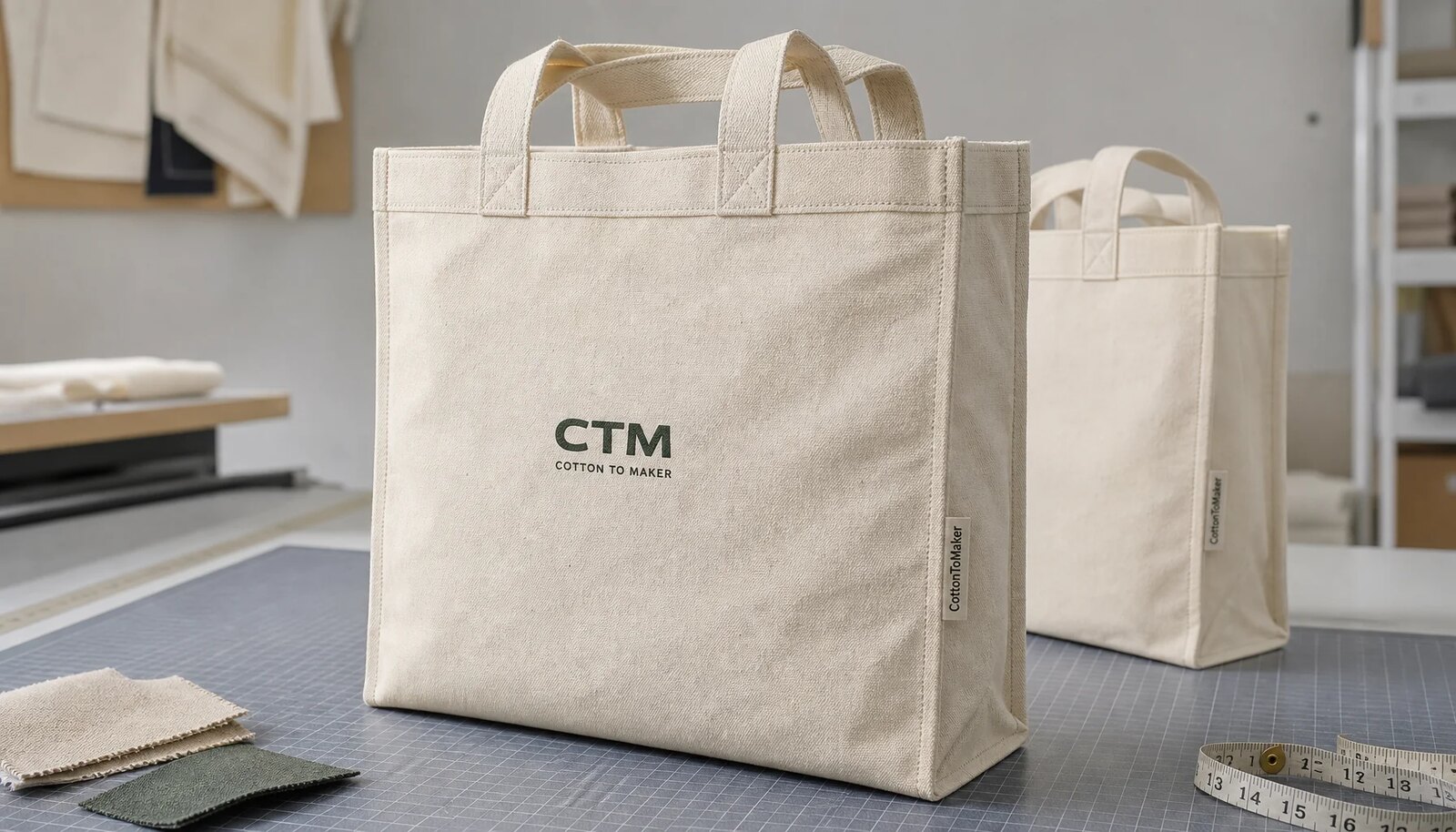
Canvas grocery totes used at craft fairs sit between simple promotional bags and heavier retail merchandise totes. They may carry candles, jars, books, soaps, ceramics, small produce, packaged food, folded apparel, and booth samples. The right material choice depends less on the word “canvas” and more on how the buyer expects the bag to be used after it leaves the booth.
A distributor quoting an event giveaway does not need the same product as a maker brand selling a reusable tote at retail. A welcome-kit bag may only need to hold brochures and light samples. A paid grocery-style tote needs stronger handles, a better base, cleaner stitching, and more consistent decoration. If those uses are not separated in the RFQ, suppliers can submit prices for very different bags that look similar in a spreadsheet.
Start the buying brief with the tote’s commercial role, target load, expected use frequency, and resale requirement. Then decide whether the bag platform should be standardized across multiple craft fairs or customized for one event. Standardizing the body size, handle style, and packing method often improves quote comparability and reorder control while still allowing artwork to change by event or sponsor.
- Use a lighter specification only when the bag is clearly a giveaway for paper goods or small samples.
- Choose a functional grocery-style construction when shoppers may carry jars, books, boxed products, food items, or multiple vendor purchases.
- Reserve premium heavy canvas, custom labels, and extra trims for resale programs or brand-led merchandise.
- Standardize one approved tote platform for multi-event programs, then vary print artwork by fair, vendor, or sponsor.
2. Compare Materials Side by Side
The main sourcing decision is not simply 8 oz versus 12 oz. Buyers should compare material options by availability, claim risk, handfeel, decoration behavior, lead time, and reorder stability. Natural cotton canvas is often the safest default for craft fair orders because it is familiar, printable, and visually aligned with handmade or local-market products. It also tends to be easier to source at moderate quantities than custom dyed or certified materials.
Dyed canvas can be useful when the bag itself is part of the brand palette, but it adds lab dip, dye lot, shrinkage, and print-matching risk. A logo that looks correct on natural canvas may look dull, too warm, or too bright on a dyed ground. If color is important, approve a lab dip first, then approve the print strike-off on the final fabric shade before bulk cutting.
Organic and recycled materials should be treated as documented claims, not decorative adjectives. Before quoting, ask what the certificate covers, who holds it, whether it applies to fabric only or finished goods, and whether transaction records can connect the ordered material to the final shipment. Recycled-content claims should include the stated percentage, blend composition, and evidence type. If the supplier can only provide a general mill certificate or marketing statement, limit the buyer-facing claim accordingly.
- Natural cotton canvas: best default for flexible sourcing, classic appearance, and straightforward screen printing.
- Dyed canvas: good for brand color, but requires lab dip, bulk shade approval, and print testing on final fabric.
- Organic cotton canvas: only use organic wording when certificate scope, certificate holder, and transaction records support the claim.
- Recycled cotton blend: review fiber shedding, flecks, shade variation, content percentage, and claim evidence before approval.
- Cotton-poly blend: may improve cost or stability, but confirm the buyer accepts the changed handfeel and composition labeling.
3. Specify GSM as a Buyer Standard
Canvas is commonly described in ounces, but procurement teams should define the finished GSM they expect to receive. A 10 oz canvas is often near 340 GSM and a 12 oz canvas is often near 400 GSM, but these are reference ranges, not universal guarantees. Yarn count, weave density, fabric width, finishing, washing, and supplier convention all affect the number. Some suppliers quote greige fabric before finishing, while buyers judge the finished tote after sewing and printing.
The RFQ should state the fabric weight in buyer-controlled terms: finished GSM target, ounce reference, allowed tolerance, canvas type, composition, shade, and whether the supplier is quoting greige or finished weight. If a tolerance is needed, define it as part of the program. A controlled retail order may require a tighter range than a broad event giveaway, but the factory must know the standard before ordering fabric.
Do not use heavy fabric to compensate for weak construction. A moderate-weight canvas with a boxed bottom, reinforced top hem, and proper handle stitching can perform better than a heavier tote with shallow handle attachment. Fabric weight matters, but the buyer should evaluate it together with seam allowance, thread, stitch density, gusset construction, and practical load testing.
- 8 oz reference: suitable for light giveaways and paper goods when the buyer does not need grocery-style performance.
- 10 oz reference: practical entry point for functional craft fair totes balancing cost, printability, and moderate strength.
- 12 oz reference: stronger retail feel and better structure, with higher material cost and carton weight.
- 14-16 oz reference: premium structure for resale or boutique use, but slower sewing and higher freight impact.
- RFQ control: define finished GSM, ounce reference, tolerance, composition, finish route, and approved swatch.
4. Build Capacity with Gussets
A flat tote and a boxed-bottom grocery tote may have the same front panel size but very different usefulness. Flat totes are cheaper and pack efficiently, yet they do not handle bulky craft fair purchases well. Rigid boxes lean, jars cluster at the bottom, and books pull the bag into a narrow shape. A side gusset or boxed base creates real volume and helps the tote stand better on a booth table.
For many grocery-style craft fair programs, a buyer-defined starting point is 35-40 cm wide, 35-42 cm high, and 10-15 cm at the base. This is not a universal standard; it is a useful commercial example that should be adjusted for the products being carried. Bakery boxes, candle cartons, ceramics, and folded apparel may need different base depth than paper goods or small soap boxes.
Dimensions must be shown in a diagram. Define whether width is measured at the mouth, body panel, or base. Clarify whether the gusset is side-only, bottom-only, or boxed. Measure the handle drop from the bag mouth to the top of the loop. These details prevent sampling loops and make final inspection measurable.
- Choose flat construction only when low cost and light contents matter more than grocery capacity.
- Use a boxed bottom when the tote must carry rigid products, sit on display tables, or feel like a reusable shopping bag.
- Specify finished width, height, side gusset, bottom gusset, mouth width if needed, and handle drop in centimeters.
- Confirm interior seam finish: overlock is efficient; binding looks cleaner but adds cost and inspection points.
- Inspect bottom corners and gusset intersections because several fabric layers meet at those stress points.
5. Treat Handles as Load-Bearing Parts
Handles are one of the most visible failure points on a canvas grocery tote. A strong body fabric will not protect the buyer if the handle attachment is shallow, thread tension is poor, or the handle is too narrow for loaded use. Craft fair shoppers may walk for hours while carrying glass jars, books, ceramics, and packaged foods. Comfort and reinforcement matter.
Self-fabric handles create a consistent canvas appearance and can feel more premium. On heavier canvas, however, they create thick attachment areas that require suitable needles, thread, and operator skill. Cotton webbing is often more consistent in width and can be more comfortable, though it may look less refined. The right choice depends on the buyer’s price point and brand expectation.
Write handle width, drop, attachment depth, and reinforcement pattern into the specification. For lighter programs, a 2.5 cm handle may be acceptable. For grocery-style loads, many buyers prefer 3.2-3.8 cm for better comfort. These are buyer-defined examples, not fixed rules. The final decision should match the tote size, fabric weight, load expectation, and target customer.
- Define handle drop in finished centimeters instead of using vague terms such as short, long, or shoulder length.
- Specify box stitch, cross stitch, bar tack, or another approved reinforcement pattern before sampling.
- Check all four handle joints for attachment depth, stitch density, skipped stitches, loose thread, and fabric tearing.
- Set a practical load test with agreed weight, hold time, sample count, and failure definition.
- Inspect the bottom seam after loading because tote failures can occur away from the handle itself.
6. Match Decoration to Canvas Texture
Screen printing remains the practical choice for many craft fair tote orders, especially for one to three solid colors. Water-based ink often suits natural canvas because it gives a softer hand and a less plastic surface. The buyer still needs approval standards for opacity, color, edge clarity, curing, and dry rub performance. A PDF proof only confirms layout; it does not prove how ink will behave on textured fabric.
Canvas surface variation affects print results. Slubs, seed flecks, weave texture, and dyed grounds can change color perception and line sharpness. Fine type, thin sponsor marks, distressed artwork, and small QR codes should be tested at actual size. If the print must avoid seams, gussets, folds, or handle reinforcement, those areas should be marked on the artwork file and sample comments.
Digital print can fit short runs, gradients, or complex illustrations. Heat transfer can reproduce detail, but buyers should check handfeel, visible film edges, cracking, and lift risk. Embroidery, woven labels, patches, printed care labels, hang tags, and barcodes can improve resale presentation, but each adds cost, labor, and QC points. Use premium trims when they support the commercial price, not simply because they look good in a mockup.
- Request a strike-off on the selected canvas, not only a digital mockup or paper proof.
- Define artwork size, color references, placement from seams, and maximum print-position tolerance.
- Check curing, dry rub, scratch resistance, and ink transfer after the print is fully dry.
- Avoid placing large prints across hard folds unless the packing method has been tested.
- Approve label placement, hang tag position, and barcode readability before bulk production.
7. Normalize MOQ and Quote Scope
MOQ is connected to fabric availability, dye lot, cutting efficiency, screen setup, trim sourcing, packing material, and line changeover. Stock natural canvas in a standard size usually supports lower minimums than custom dyed fabric, special labels, multiple print placements, or organic and recycled materials requiring documentation. A low MOQ can be useful, but it may rely on stock fabric that changes between runs.
Unit price alone is not enough for supplier comparison. One quote may include export cartons, screen setup, sample cost, label sewing, and carton marks. Another may exclude those items and look cheaper until the final invoice. Freight also matters: heavier canvas and deep gussets increase carton weight and cube, which can affect landed cost more than a small unit-price difference.
Send the same specification to every supplier and ask for an itemized quote. Separate base bag price, decoration charges, setup cost, trim cost, packing charges, sample fees, inland freight, inspection support, lead time, and Incoterm. This makes the commercial comparison clearer and helps buyers understand what changes if they reduce GSM, simplify handles, remove labels, or adjust packing.
- Define MOQ per fabric color, print design, label design, carton mark, and destination split.
- Compare total landed cost, not only FOB unit price.
- Ask whether the quoted fabric is stock, reserved, custom dyed, certified, or subject to mill MOQ.
- Check carton dimensions and gross weight before approving heavy canvas or deep gussets.
- Use one standardized tote body for repeated craft fair programs when artwork can vary by event.
8. Approve Samples with Measurable Notes
A sample-room tote can be misleading because it may be sewn slowly by a skilled sample maker using available materials. It is helpful for concept review, but procurement release should rely on a pre-production sample made with nominated bulk fabric, actual decoration, final handle material, final label placement, final stitch pattern, and intended packing method.
If bulk fabric is not available, label the sample’s purpose clearly. It may be approved as a construction reference, size reference, or artwork reference, but not as the full production standard. The supplier should then provide bulk fabric approval and print confirmation before mass cutting. This protects the buyer from receiving production with a different shade, weight, handfeel, or print surface than the approved sample.
Approval comments should be measurable. Replace “logo centered” with a position from top seam and side seam. Replace “handles stronger” with handle width, attachment depth, reinforcement pattern, and load test. Replace “fabric too thin” with finished GSM target and tolerance. Keep one signed sample, sealed sample, or documented approval record for final inspection.
- Measure body width, height, gusset, handle drop, handle width, print size, print position, and label placement.
- Review fabric shade, odor, linting, slub level, cleanliness, thickness, and handfeel against approved swatch.
- Test practical loading and observe handle joints, top hem, bottom seam, and gusset corners after handling.
- Confirm print color, opacity, edge clarity, curing, rub resistance, and scale on actual canvas.
- Approve folding, stacking, bundle count, polybag use if any, carton quantity, and print protection before production.
9. Set QC and Receiving Controls
A useful QC plan reflects real craft fair use. Critical defects can include broken handles, open load-bearing seams, mold, wet packing, severe odor, unsafe contamination, or sharp foreign material. Major defects can include wrong artwork, wrong fabric color, dimensions outside tolerance, missing labels, serious stains, mixed SKUs, heavy print cracking, or incorrect carton quantity. Minor defects may include small thread ends or natural slubs within the approved standard.
Inspection should include random carton opening, measurement checks, print checks, seam checks, handle pull checks, packing count, carton marks, and odor or moisture review. Some buyers use AQL sampling; others define sample size and defect limits for smaller event orders. Either approach can work if the pass criteria are written before production begins.
Packing deserves attention because canvas is bulky and can absorb odor or moisture. Heavy compression may crease printed panels, and undercured ink can transfer when bags are stacked. Ask for carton dimensions, gross weight, units per carton, inner bundle count, SKU marks, PO number, destination split, and warehouse handling limit before goods leave the factory.
- Set buyer-defined tolerances for width, height, gusset, handle drop, print placement, label placement, carton count, and carton weight.
- Open random cartons to check odor, dampness, mold, ink transfer, SKU mixing, and bundle accuracy.
- Inspect thick seam intersections, bottom corners, top hems, and handle attachments where stress and skipped stitches concentrate.
- Confirm carton marks show SKU, artwork, color, quantity, purchase order number, and destination when needed.
- Do not approve shipment if goods are packed wet, strongly odorous, undercured, mislabeled, or mixed across designs.
Specification comparison for buyers
| Buyer choice | Best fit | Typical buyer-defined spec example | Trade-offs to check before PO |
|---|---|---|---|
| Natural cotton canvas | Most craft fair organizers, distributors, market vendors, and local retail programs needing a classic canvas look with manageable lead time | 10-12 oz reference, about 340-410 GSM finished fabric, natural shade, boxed bottom, screen print logo | Shade and slub variation are normal within an approved swatch range. Confirm finished GSM, odor, linting, print opacity, and reorder shade continuity. |
| Dyed cotton canvas | Brand-led programs needing a specific bag color or stronger retail shelf presence | 10-12 oz reference, lab-dip approval, dye-lot control, print strike-off on final dyed fabric | Higher MOQ, longer lead time, shade tolerance issues, shrinkage variation, and ink color shift. Approve lab dip and bulk shade before cutting. |
| Organic cotton canvas | Buyers that have a real claim requirement for event, retail, or corporate sustainability reporting | Certified-scope fabric or finished-product route defined before quoting; certificate and transaction documentation requested | Do not assume a finished tote can be marketed as organic from fabric claims alone. Confirm certificate holder, product scope, transaction records, and approved wording limits. |
| Recycled cotton blend | Programs where recycled-content positioning matters and a flecked or textured look is acceptable | Supplier-stated recycled content percentage, blend composition, swatch approval, print test, and claim documentation reviewed | Handfeel, shade, linting, fiber shedding, and print clarity can vary. Confirm evidence for recycled content and avoid unsupported percentage claims. |
| Cotton-poly or recycled blend | Cost-sensitive or stability-focused orders where a fully natural handfeel is not mandatory | Composition stated by percentage, finished GSM defined, decoration tested on actual blend | May change ink absorption, heat behavior, and perceived value. Confirm the buyer accepts blend labeling and appearance. |
| Flat tote construction | Low-cost giveaways, literature bags, and short-event use with light loads | No gusset or shallow side gusset, lighter canvas, simple handle attachment | Cheaper, but less grocery capacity. Rigid craft products, jars, boxes, and books sit poorly compared with a boxed-bottom tote. |
| Boxed-bottom grocery construction | Functional craft fair shopping bags, vendor merchandise carriers, paid resale totes | 35-40 cm width, 35-42 cm height, 10-15 cm base gusset as buyer-defined starting example | More fabric and sewing labor, but better carrying volume and display stability. Check bottom corners, seam strength, and carton cube. |
| Screen print decoration | Most one- to three-color event logos, sponsor graphics, and maker-market branding | Water-based screen print, Pantone reference, strike-off approval, placement tolerance defined | Canvas texture affects small type and fine lines. Confirm curing, rub resistance, color under consistent lighting, and packing after drying. |
| Premium trims and labels | Retail resale programs or higher-value maker brands needing a finished merchandise look | Woven side label, printed care label, hang tag, barcode, embroidery, or patch added to approved base tote | Adds sewing steps, inspection points, lead time, and MOQ. Check label placement, barcode readability, needle damage, and packaging sequence. |
Buyer checklist before sampling
- Define the tote’s commercial role: free giveaway, paid retail tote, vendor welcome bag, sponsor shopping bag, grocery-style merchandise carrier, or reusable store bag.
- Set the expected carrying scenario in buyer terms, such as light paper goods, mixed craft fair purchases, or repeated grocery-style use with a stated test load.
- Specify finished dimensions with a diagram: body width, height, side gusset, bottom gusset, mouth width if relevant, handle width, and handle drop measured from the bag mouth.
- State fabric by composition, canvas type, finished GSM target, ounce reference, color, finish route, shrinkage expectation, and buyer-approved tolerance rather than using only terms like heavy canvas.
- Request current swatches for natural, dyed, organic, recycled, and blended options before sampling; review shade, handfeel, odor, linting, slub level, thickness, and print surface.
- Provide artwork size, color count, Pantone or brand references, print position, maximum placement tolerance, and areas the print must avoid, such as seams, folds, gussets, and handle reinforcement.
- Choose construction details before quoting: boxed bottom, side gusset, reinforced top hem, interior overlock or binding, self-fabric handles, webbing handles, labels, hang tags, barcodes, and packing method.
- Require a pre-production sample that uses nominated bulk fabric, actual decoration method, final handle construction, final label placement, final stitch pattern, and intended folding or packing method.
- Ask suppliers to separate base bag price, sample cost, screen or setup charges, Pantone matching, trim costs, packing materials, carton marks, inland freight, and inspection support.
- Confirm export carton dimensions, gross weight, net weight, units per carton, inner bundle count, SKU carton marks, destination split, and warehouse handling limits before production release.
Factory quote questions to send
- What finished GSM, ounce reference, weave type, composition, color, and finish route are included in this quote, and can you send current production swatches before sampling?
- Are you quoting greige fabric weight or finished fabric weight, and what GSM, shade, shrinkage, and width tolerances should be written into the purchase order?
- What MOQ applies per fabric color, print design, label design, trim package, carton mark, and shipping destination?
- Is the fabric stock material, booked material, custom dyed material, certified organic material, recycled-content material, or a blend, and what claim documentation is available?
- For organic or recycled claims, who holds the certificate, what product scope does it cover, are transaction records available, and what claim wording has the certification body or supplier approved?
- Which decoration method is included, what ink or thread is used, what curing or finishing process applies, and what is the largest print area before pricing changes?
- Are screen charges, artwork adjustment, Pantone matching, print strike-offs, woven labels, hang tags, barcode stickers, individual polybags, carton marks, and export cartons included or itemized?
- What handle material, width, drop, attachment depth, stitch pattern, thread type, stitch density, and reinforcement method are included in the unit price?
- What practical load test can you perform, how many samples are tested, how long is the load held, and what failure definition will appear on the QC report?
- What tolerances do you propose for body dimensions, gusset, handle drop, print placement, label placement, carton quantity, carton weight, and mixed-SKU carton marking?
Quality-control points to confirm
- Finished fabric GSM checked against the approved standard using a buyer-agreed tolerance; example tolerances such as plus or minus 5% or 8% should be defined by program, fabric source, and finish, not assumed universally.
- Fabric composition, color, handfeel, slub level, odor, linting, surface cleanliness, and visible defects checked against the approved swatch or signed pre-production sample.
- Claim documentation checked before any organic, recycled, or content-percentage language is used on product pages, hang tags, invoices, or packaging.
- Finished dimensions measured by the approved method; body width, height, gusset, handle drop, print position, and label placement should each have written tolerances.
- Handle attachment checked at all four joints for approved stitch pattern, attachment depth, stitch density, thread tension, skipped stitches, and fabric tearing around reinforcement.
- Bottom seam, side gusset corners, top hem, and thick seam intersections inspected for open seams, loose tension, broken thread, needle damage, weak backstitching, or fraying.
- Print color reviewed against approved strike-off under consistent lighting; curing, adhesion, dry rub resistance, scratch resistance, and ink transfer checked after full drying.
- Critical, major, and minor defects classified before final inspection, including broken handles, mold, wet packing, severe odor, wrong artwork, stains, open seams, missing labels, and carton shortages.
- Packing count, SKU separation, carton marks, barcode readability, hang tag position, inner bundle quantity, carton gross weight, and destination split checked against buyer instructions.
- Moisture, odor, and transfer risk reviewed by opening random cartons, checking folded print areas, and confirming bags were not packed while damp or undercured.