Start with the event use case, then price the tote
A canvas grocery tote for a craft fair may be sold as event merchandise, handed out by a sponsor, used as a vendor welcome bag, or packed with market purchases. Those uses sound close, but they create different sourcing decisions. A resale tote needs a cleaner front panel, stronger presentation, and more consistent stitching. A giveaway needs reliable logo reproduction, simple packing, and delivery certainty. A vendor packaging tote may need strength and easy booth allocation more than retail finishing.
Do not begin with “What is your cheapest canvas tote?” Begin with the commercial job: expected contents, event date, selling or giveaway model, destination count, and artwork plan. A 10 oz natural canvas tote with one-color screen print and bulk cartons is not comparable to a 12 oz gusseted tote with hangtags, barcode labels, and five sponsor versions.
For repeat craft fairs, approve one base tote specification and price artwork updates separately. That reduces re-approval work and avoids changing fabric, size, handle length, and packing every season.
- Resale tote: prioritize hand-feel, clean panels, reinforced handles, print quality, and retail presentation.
- Sponsor giveaway: prioritize logo clarity, stable unit cost, bulk packing, and delivery buffer.
- Vendor welcome bag: prioritize practical strength, moderate GSM, and carton counts that match booth allocation.
- Multi-location fair: prioritize SKU separation, carton marks, destination labels, and packing-list accuracy.
Convert canvas weight into measurable GSM control
Canvas bags are often sold by ounce weight, but procurement teams should also specify GSM. Ounce labels are useful shorthand; GSM is easier to inspect. Actual weight varies by yarn, weave, mill convention, washing, bleaching, dyeing, and finishing. Ask for the finished GSM range after processing, not only the catalog ounce name.
As a working guide, 8 oz canvas often falls around 230-260 GSM, 10 oz around 280-300 GSM, 12 oz around 340-360 GSM, and 16 oz around 450-480 GSM. These are references, not universal standards. The supplier must confirm the actual range for the fabric lot and provide a swatch. If fabric weight affects retail value, freight cost, or customer expectation, write the tolerance into the PO, such as a supplier-confirmed range or target GSM ±5% where practical.
For craft fair grocery totes, 10 oz and 12 oz natural cotton canvas are common choices. A 10 oz tote often balances cost and usability for event programs. A 12 oz tote feels sturdier and more retail-ready for heavier purchases such as jars, books, candles, ceramics, and packaged foods. The heavier choice usually increases material cost, carton weight, and freight exposure.
- Ask for actual finished GSM, not only an ounce label.
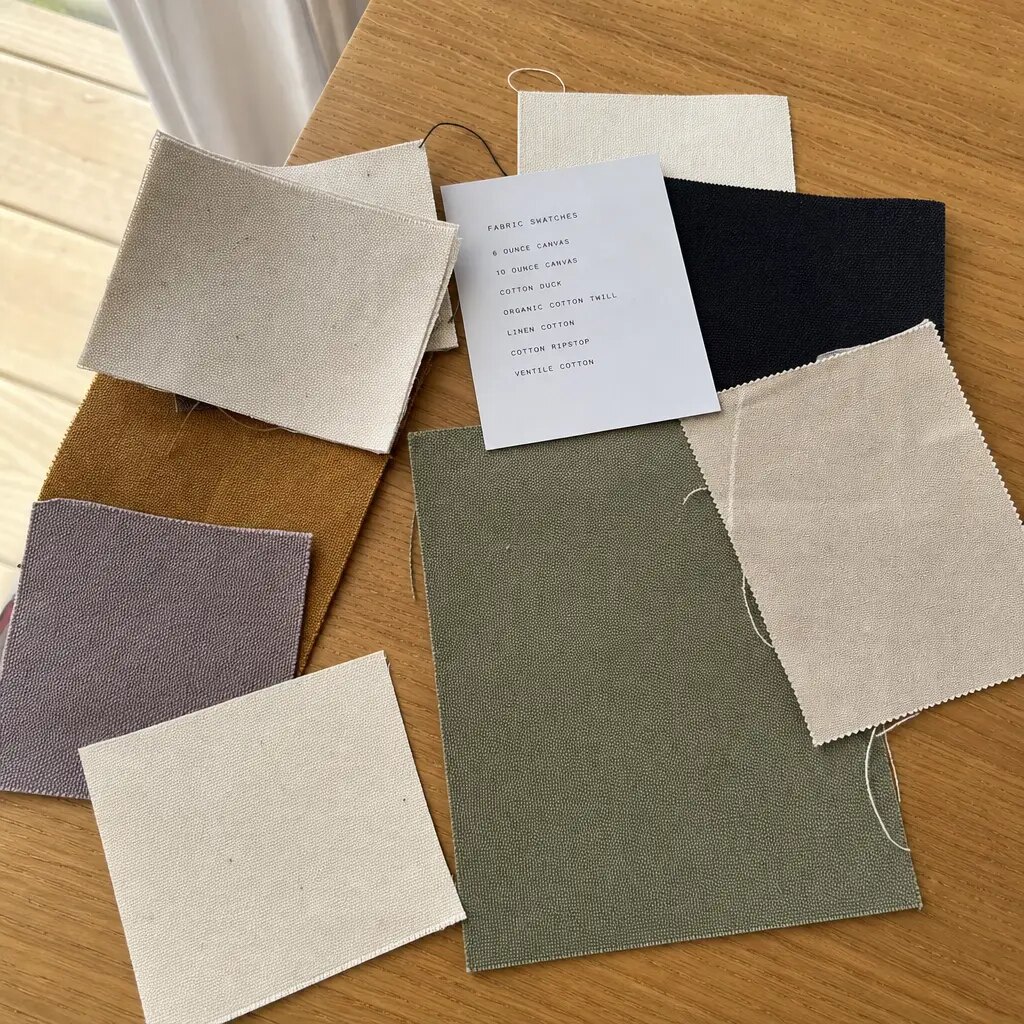
- Approve a fabric swatch for shade, texture, seed flecks, slubs, and hand-feel.
- Use 10 oz when cost-performance is the main target.
- Use 12 oz when resale feel and heavier loads justify the higher landed cost.
- Define unacceptable defects: stains, mildew, oil marks, strong odor, and heavy contamination.
- For dyed canvas, add lab dip approval, shade tolerance, and possible higher MOQ.
Lock construction details before negotiating discounts
Construction determines whether the tote works like a grocery bag or only looks good in a photo. A flat tote can be cheaper, but a grocery-style craft fair tote usually benefits from a bottom gusset or side-and-bottom gusset. The gusset helps boxed goods, candles, produce, jars, and books sit more securely. Common event dimensions may be around 13 x 15 x 4 inches or 14 x 16 x 4 inches, but the RFQ should state exact finished dimensions after sewing.
Handles are a frequent source of hidden downgrades. Self-fabric handles give a consistent canvas look. Cotton webbing handles may feel more comfortable and durable, but can change cost and style. Define handle width, finished loop length, attachment placement, and reinforcement method. For grocery positioning, request bartacks, cross-stitch, or box-X stitching at stress points.
If the buyer negotiates price before construction is fixed, a supplier may meet the target by shortening handles, narrowing the gusset, reducing stitch density, or using lighter canvas. That is not a discount; it is a different product.
- Specify finished width, height, and gusset with measurement method.
- Choose flat, bottom gusset, side-and-bottom gusset, or boxed-bottom construction.
- Define handle material, width, loop length, and placement from side seams.
- Require reinforcement suitable for expected craft fair contents.
- State top hem, seam allowance, stitch density, thread color, and raw-edge treatment if presentation matters.
Choose decoration by artwork complexity, not habit
Screen printing is usually the best cost-performance decoration for bulk canvas grocery totes with 1-3 spot colors. It works well for event logos, sponsor marks, simple illustrations, and repeat branding. Its cost structure may include screen setup, color count, print area, ink coverage, curing, and artwork separation.
Digital print can support full-color artwork and smaller runs, but buyers must approve how color appears on natural canvas. Heat transfer can reproduce complex graphics, but film edge, hand-feel, rub behavior, and adhesion should be checked. Embroidery can look premium for a small mark, yet it is rarely the economical option for large grocery tote graphics.
Also confirm when printing happens. Printing on cut panels before sewing gives a flatter surface and better access, but artwork must be approved earlier. Printing on finished bags allows blank inventory and late artwork decisions, but seams, gussets, wrinkles, and handles restrict the print zone.
- Screen print: best for spot-color logos and medium-to-large quantities.
- Digital print: useful for full-color or multiple versions, with higher unit-cost sensitivity.
- Heat transfer: approve edge visibility, hand-feel, rub behavior, and adhesion.
- Embroidery: suitable for small premium marks, not budget grocery graphics.
- Ask for the safe print area for the exact tote body, gusset, and handle placement.
- Approve a strike-off on the actual canvas before bulk printing.
Build a bulk pricing plan with visible cost drivers
Bulk pricing improves when fixed costs are spread across more units, but the curve is not endless. Fabric buying, cutting setup, screen making, print setup, sewing-line setup, packing labor, and administration all affect the first price breaks. At higher quantities, fabric, labor, and freight dominate, so the discount curve often flattens.
Request quantity breaks using the same specification at 500, 1,000, 2,500, and 5,000 pcs. Keep fabric GSM, tote size, gusset, handles, reinforcement, print method, print size, color count, packing, and trade term identical. Otherwise, the comparison is not valid.
Use a simple landed-cost model before choosing the quantity. For example, compare: unit product cost plus setup charges divided by order quantity, sample or strike-off cost, packing upgrades, inspection cost, inland freight, international freight, duty, customs brokerage, warehouse receiving, and any rush freight risk. A lower FOB price can lose if it excludes screens, carton labels, inspection support, or freight realities.
Artwork versioning is a major pricing driver for craft fairs. One artwork at 1,000 pcs may need one setup flow. Ten sponsor logos at 100 pcs each may require separate screens, strike-offs, packing labels, production checks, and carton audits. Quote total quantity and quantity per artwork separately.
- Ask for 500, 1,000, 2,500, and 5,000 pc breaks on the same spec.
- List one-time charges separately: screens, samples, strike-offs, lab dips, artwork separation, and pattern work.
- Calculate landed cost, not only FOB or EXW unit price.
- Compare overbuy savings against storage, cash flow, damage risk, and obsolete dated artwork.
- Separate MOQ per fabric color, size, artwork, print method, and packing style.
Use one RFQ sheet so supplier quotes are comparable
Canvas tote quotes can appear similar while hiding different assumptions. One supplier may include 12 oz fabric, a screen print, counted bundles, export cartons, and sample credit. Another may quote 10 oz fabric, shorter handles, no carton labels, and EXW pricing. A photo and unit price are not enough for procurement approval.
A controlled RFQ sheet should include a drawing or measurement table, target GSM, fabric color, gusset, handle details, reinforcement, print method, artwork count, print location, packing method, carton marks, trade term, sample plan, inspection standard, and required delivery window. Ask suppliers to list exceptions in writing instead of substituting quietly.
Require suppliers to separate unit cost from non-unit costs. Screen charges, strike-offs, lab dips, hangtags, barcode labels, carton relabeling, inspection support, inland freight, export documents, and bank fees can change the real comparison.
- Product: GSM, finished size, gusset, handles, seams, thread, and finishing.
- Artwork: file type, Pantone targets, print size, side count, color count, and versions.
- Packing: bundles, polybag rule, hangtags, barcodes, carton count, and carton marks.
- Trade term: EXW, FOB, FCA, CIF, DDP, and named port or destination.
- Commercials: setup charges, sample charges, payment terms, lead time, and quote validity.
- Risk items: reinspection, urgent freight, late artwork, relabeling, and missed event deadline.
Turn samples into production controls
Samples should not be approved only because they look good in a photo. The approved sample becomes the production reference for fabric appearance, weight, finished dimensions, gusset shape, handle construction, stitching, print color, print placement, folding, and packing. Keep one approved sample with the buyer and require the factory to keep a matching reference.
For a new program, three stages are useful: a blank construction sample, a print strike-off, and a pre-production sample. The blank sample confirms size, fabric, gusset, handles, reinforcement, and sewing. The strike-off confirms artwork scale, ink coverage, Pantone target, registration, hand-feel, and curing on the actual canvas. The pre-production sample combines the approved build and print before mass production.
Measure the sample the way an inspector will. Record body width, height, gusset, handle loop, handle placement, and print placement. Photograph the approved print with ruler references from the top edge, side seam, or centerline. For grocery use, test with realistic event contents rather than relying on vague claims such as “strong handle.”
- Approve fabric swatch before cutting if GSM or shade matters.
- Approve print strike-off on actual canvas, not only a digital proof.
- Record sample measurements and use them for bulk tolerances.
- Check print curing with an agreed rub, tape, or handling test.
- Approve folding and packing photos when carton presentation matters.
Set QC tolerances and defect rules before production
Quality language must be measurable. Terms such as good stitching, strong handles, and nice print are too vague for a purchase order. For sewn canvas totes, buyers often use practical tolerances such as around ±0.5 inch for body dimensions and handle loop length, depending on construction. Print placement may need tighter control, often around ±0.25 to ±0.5 inch for a simple front logo. Confirm final tolerances with the supplier before cutting and printing.
Define defect levels before inspection. Critical defects may include wrong artwork, wrong product, broken handle, open seam affecting function, severe stain, mold, needle fragment, or missing destination marks. Major defects may include print outside tolerance, skipped stitches at handle stress points, poor curing, wrong carton quantity, visibly uneven handles, or incorrect artwork separation. Minor defects may include small thread ends or approved cotton flecks that do not affect use or presentation.
AQL inspection works best when it is supported by an approved sample, PO specification, artwork file, packing instruction, and written defect list. Multi-artwork orders require verification of each version, not only the first carton opened.
- Measure body width, height, gusset, handle loop, handle position, and print placement.
- Inspect handle reinforcement, stitch density, skipped stitches, backtacking, and seam strength points.
- Check print color, registration, ink coverage, smudging, curing, cracking, and adhesion.
- Review cleanliness for stains, mildew, odor, loose threads, and foreign material.
- Audit carton quantity, SKU separation, artwork separation, carton marks, and packing list accuracy.
- Schedule inspection early enough to allow sorting, rework, or replacement before shipment.
Design packing for receiving, not only shipping
Packing affects both cost and event execution. Craft fair totes often arrive close to a fixed date, so poor packing creates sorting labor when the team has little time. Bulk packing may use 50 or 100 pcs per export carton depending on tote size, fabric weight, folding method, and carton weight. Heavy 12 oz or 16 oz totes should not be packed into cartons that exceed warehouse or carrier handling limits.
Individual polybags are not always necessary. For booth handouts or vendor allocation, counted inner bundles can reduce waste, cost, and unpacking time. For retail resale, the tote may need a controlled fold, hangtag, belly band, barcode label, price label, or individual bag. Decide this before quoting because packing upgrades add labor and may change carton dimensions.
Multi-artwork orders should be packed so receiving teams can identify versions quickly. Use one artwork per carton where possible, or clearly labeled inner bundles. Carton marks should show PO number, SKU, artwork name, quantity, carton sequence, destination, and buyer reference. Cotton canvas can absorb moisture and odor, so require clean dry cartons and suitable route protection.
- Use counted inner bundles for event distribution when retail packing is not needed.
- Use hangtags, barcodes, belly bands, or individual bags only when commercially required.
- Set maximum carton gross weight and confirm carton dimensions before production packing.
- Do not allow unidentified mixed artwork cartons.
- Add destination marks for multi-location craft fairs.
- Require dry storage, clean cartons, and moisture protection when transit risk is high.
Protect the schedule from artwork and freight delays
Lead time is more than sewing time. A custom tote program may include RFQ clarification, fabric sourcing, sampling, artwork preparation, screen setup, cutting, printing, curing, sewing, trimming, final inspection, packing, export documents, freight, customs clearance, warehouse receiving, and event sorting. Production usually starts after deposit, artwork approval, and approved sample, not after the first inquiry.
Craft fair dates are fixed, so late artwork or failed strike-offs can be expensive. Air freight may rescue a small urgent quantity, but canvas totes are bulky and heavy enough that emergency freight can erase unit-price savings. A safer plan is to approve the blank tote early and leave only final sponsor artwork as the last variable when necessary.
Build buyer deadlines into the calendar. Late Pantone confirmation, delayed sponsor logos, unclear carton marks, or unresolved packing instructions can slow the order as much as factory delay. For repeat programs, keep the approved specification sheet, sample reference, artwork placement guide, carton marking rule, and packing plan on file.
- Allow time for fabric swatch, blank sample, strike-off, revisions, and pre-production sample.
- Confirm artwork, Pantone targets, print size, and version quantities before screens are made.
- Schedule inspection before cargo is handed to the forwarder.
- Include freight, customs, receiving, carton audit, and event allocation in the timeline.
- Keep a buffer for damaged cartons, shortages, relabeling, or rework.
Specification comparison for buyers
| Buyer decision | Lower-cost bulk option | Higher-control option | What to verify before award |
|---|---|---|---|
| Sourcing route | Stock blank tote plus local decoration for urgent or small craft fair runs | Factory cut-and-sew order for planned 500-5,000+ pc programs | Compare total cost, not just unit price: setup, sample, print, packing, inland freight, duty, inspection, and rush freight exposure |
| Fabric weight | 8-10 oz natural canvas for giveaways, vendor bags, and lighter purchases | 12 oz natural canvas for resale, heavier craft purchases, and stronger hand-feel | Ask for actual finished GSM range and tolerance; ounce labels alone are not enough |
| Construction | Flat tote or small bottom gusset with basic handles | Side-and-bottom gusset, reinforced handles, defined stitch density, cleaner hem finish | Confirm finished dimensions, gusset type, handle loop length, reinforcement method, and measurement tolerances |
| Artwork plan | One-color screen print, one side, one artwork | Multiple sponsor versions, two-sided print, larger print area, tighter Pantone control | Quote total quantity and quantity per artwork separately; each version may add screen, strike-off, packing, and QC work |
| Packing | Bulk folded totes in counted inner bundles, no individual polybags | Retail fold, hangtag, barcode, belly band, individual bag, SKU cartons | Packing changes affect labor, carton size, receiving accuracy, waste, and lead time |
| Pricing comparison | EXW or low FOB unit price with many exclusions | Controlled landed-cost comparison using same spec, trade term, freight assumptions, and setup charges | Use one RFQ sheet and ask suppliers to declare exclusions and substitutions in writing |
| Inspection | Factory self-check with photo report | Buyer-approved AQL inspection against sample, artwork, packing list, and defect classifications | Include fabric GSM, measurements, seams, handles, print curing, cleanliness, carton count, and artwork separation |
| Timeline | Late artwork approval and urgent freight recovery | Calendar with sample, strike-off, production, inspection, freight, receiving, and event buffer dates | Production usually starts after deposit, artwork approval, and approved sample—not after first inquiry |
Buyer checklist before sampling
- Define the tote by finished body width, body height, and gusset, measured flat after sewing. Do not rely only on names such as grocery tote, market bag, shopper, or craft fair tote.
- State the fabric clearly: cotton canvas, natural/ecru or dyed, target ounce weight, finished GSM range, and whether the fabric is greige, washed, bleached, dyed, or preshrunk.
- Use GSM references only as guides: 8 oz often falls around 230-260 GSM, 10 oz around 280-300 GSM, 12 oz around 340-360 GSM, and 16 oz around 450-480 GSM, depending on supplier and finishing.
- Set a fabric weight tolerance before quoting, such as an agreed target range or target GSM ±5% where practical. Keep an approved swatch as the appearance standard.
- Define acceptable natural-canvas appearance. Seed flecks and slubs may be normal; stains, mildew, strong odor, oil marks, and heavy contamination should not be accepted.
- Specify handle material, handle width, finished loop length or total strap length, placement from side seams, and reinforcement method such as bartack, cross-stitch, or box-X.
- Confirm expected use and load category. Giveaway totes, resale totes, vendor welcome bags, and booth packaging totes do not need the same fabric weight or presentation.
- Confirm whether printing is done on cut panels before sewing or on finished bags. This affects print area, seam clearance, placement tolerance, and schedule risk.
- Provide vector artwork with Pantone references, print size, print location, number of sides, color count, and all sponsor or location versions at RFQ stage.
- Request quantity breaks at 500, 1,000, 2,500, and 5,000 pcs using the same specification, same packing, and same trade term.
Factory quote questions to send
- What cotton canvas options can you supply for this tote size, and what are the actual finished GSM ranges after finishing?
- When you quote 10 oz or 12 oz canvas, what GSM target and tolerance do you control? Can you send a current production swatch?
- Is the fabric greige, natural/ecru, bleached, dyed, washed, or preshrunk? What shade variation and shrinkage should we expect between lots?
- What is the MOQ per finished size, fabric color, artwork, print method, and packing style? Which charges change below 500, 1,000, or 2,500 pcs?
- Can you quote 500, 1,000, 2,500, and 5,000 pcs using the same tote specification, print, packing, and trade term?
- If we need multiple sponsor logos, what is the cost difference between one artwork at 1,000 pcs and ten artworks at 100 pcs each?
- Will you print on cut panels before sewing or on finished bags? What is the safe maximum print area for this body size, gusset, and handle placement?
- What print method do you recommend for this artwork, and what are the setup charges, color limits, minimum line-size concerns, and curing requirements?
- Can you provide a print strike-off on the actual production canvas, and will bulk color be judged against the strike-off or only against Pantone references?
- What sample stages are included: fabric swatch, blank construction sample, print strike-off, revised sample, and pre-production sample? How many working days are required for each?
Quality-control points to confirm
- Fabric GSM verified against the approved swatch or agreed production range; record results by roll, lot, or inspection sample where practical.
- Canvas shade, seed flecks, slubs, weaving defects, stains, oil marks, mildew, odor, and surface texture checked against the approved fabric standard.
- Finished dimensions measured flat after sewing: body width, body height, gusset width, handle loop length, handle attachment position, and handle spacing.
- Handle construction checked for correct reinforcement, stitch density, skipped stitches, broken thread, needle damage, and clean backtacking at stress points.
- Seam construction reviewed for seam allowance, straightness, top hem consistency, loose threads, open seams, puckering, fraying, and exposed raw edges where not approved.
- Print color compared to approved strike-off under consistent light; Pantone references are treated as targets on natural canvas, not guarantees of coated-paper color.
- Print placement measured from top edge, side seam, or centerline; crooked, off-center, upside-down, wrong-side, distorted, or seam-interfered prints beyond tolerance are rejected.
- Print quality checked for ink coverage, pinholes, registration, smudges, ghosting, transfer marks, cracking, tackiness, and curing or adhesion by agreed rub or tape test.
- Interior and exterior cleanliness checked for loose threads, dirt, metal fragments, needle pieces, stains, mildew, strong odor, and unacceptable handling marks.
- Packing audit confirms carton quantity, inner bundle count, folding method, polybag or no-polybag rule, hangtags, barcode labels, SKU separation, artwork separation, carton marks, destination marks, and PO references.