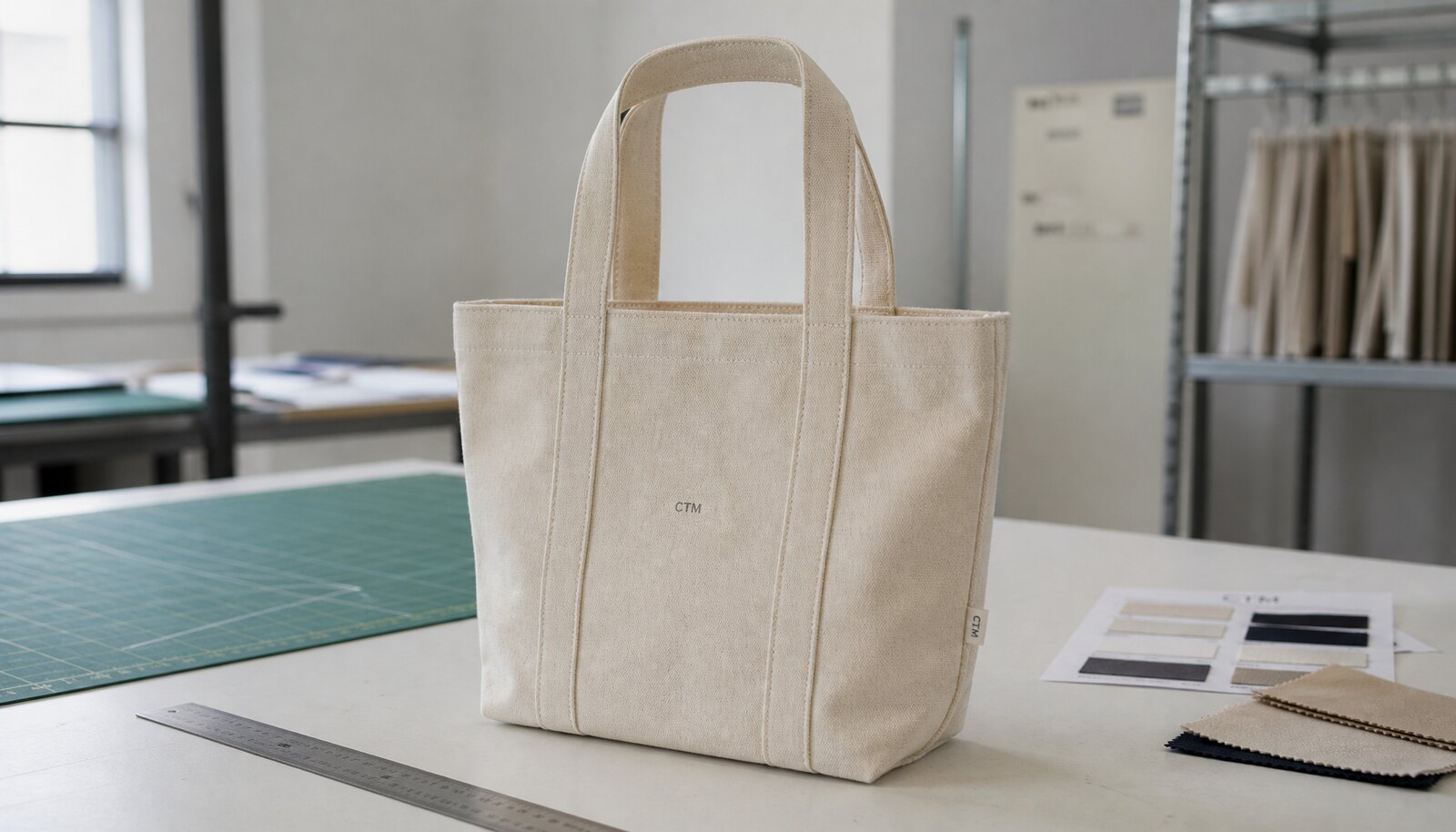
1. Start With the Gifting Use Case Before You Approve a Tote Spec
A corporate gifting tote is not just a blank bag with a logo. The correct specification depends on how the tote will be used after it leaves the factory. A conference handout that carries a brochure and water bottle can be lighter and simpler than a grocery tote expected to carry produce, boxed food, and repeat weekly shopping loads. A premium employee welcome kit may need a cleaner fold, neater surface finish, and more controlled logo placement than a public giveaway. Procurement teams get stronger supplier responses when the RFQ explains the distribution route and use case before asking for price.
The clearest RFQ starts with the buyer outcome: who receives the bag, what it will carry, whether it must look premium when unboxed, and whether it will be resold or given away. Resale and retail programs usually need tighter labeling, carton marking, barcode, and compliance review than internal company gifts. Programs distributed across multiple countries need an even more deliberate compliance file because a tote accepted in one channel may not satisfy the requirements of another.
This early framing also prevents overengineering. A heavy structured grocery tote may look expensive but can increase freight cube and make gift-kit packing harder. A light canvas tote may keep unit cost down but damage brand perception if the seams twist or the print cracks after a few uses. The goal is not to buy the heaviest possible bag; it is to match material, construction, decoration, and packing to the real job.
- State the recipient and channel: employee, customer, event attendee, retail shopper, or reseller.
- Define the load: light collateral, mixed gift kit, groceries, or repeated daily carry.
- Confirm whether the bag must stand upright, fold flat, fit inside another gift box, or ship as the main gift container.
- Tell the supplier if the tote will be distributed in the United States, EU, UK, Canada, or multiple regions so compliance planning starts early.
2. Specify Canvas Weight and Material Without Mixed Units
Canvas fabric weight is one of the biggest drivers of tote feel, durability, freight weight, and price. For procurement, the important point is to use consistent units. Canvas is often quoted in ounces per square yard, while many textile suppliers also use GSM. As a practical reference, 10 oz canvas is roughly 339 GSM, 12 oz is roughly 407 GSM, and 14 oz is roughly 475 GSM. These are not the same category as very light 120–220 GSM cotton bags, which are closer to thin promotional cotton shoppers than structured canvas grocery totes.
For most wholesale canvas grocery totes for corporate gifting, 12 oz canvas is a practical baseline because it provides noticeable body without making the tote overly rigid or expensive to ship. A 10 oz canvas may be acceptable for lighter gift programs or budget event distribution. A 14 oz canvas can be more appropriate for premium grocery positioning, heavier loads, or a bag that should hold shape. Heavier fabric does not automatically mean better value; it must match the handle reinforcement, seam construction, and packing method.
Material composition also matters. Conventional cotton canvas is common and straightforward. Recycled cotton may support brand messaging but can bring shade variation, fiber inconsistency, and different strength characteristics, so it needs a real swatch and test plan rather than a marketing assumption. Organic cotton claims should be supported by the certification chain required by the buyer’s channel. Dyed canvas requires colorfastness and shade-lot control. Natural unbleached canvas is often easier for simple gifting programs, but it can show cotton seed flecks and natural variation that should be approved in advance.
A useful material approval pack includes the fabric swatch, composition declaration, finished weight, shade tolerance, shrinkage statement, and whether the fabric has any finishing treatment. If the supplier says the bag is “eco-friendly,” ask what that means in measurable procurement terms: recycled content, organic certification, unbleached cotton, water-based ink, plastic-free packing, or simply reusable design. Each claim needs different evidence.
- Do not compare 12 oz canvas with 120–220 GSM cotton as if they are equivalent materials.
- Ask whether quoted weight is raw fabric weight or finished fabric weight after dyeing, washing, or finishing.
- Approve natural canvas shade variation if cotton flecks and yarn irregularities are acceptable.
- For recycled or organic claims, request the documentation your company or retail channel actually requires.
3. Build the Bag Construction Around Load, Not Appearance Alone
A grocery tote fails first at stress points: handle attachments, top opening seams, gusset corners, and side seams. A beautiful logo cannot compensate for weak construction. For corporate gifting, the tote should look clean at handover and still function after the recipient uses it. The construction spec should therefore include bag dimensions, gusset depth, handle width and drop, seam allowance, stitch density, reinforcement method, and the load expectation.
Handle drop is more than a comfort detail. A short handle may work for hand carry but feel awkward over the shoulder. A long handle improves wearability but can drag when the tote is carried by hand, especially if the bag is heavily loaded. Grocery totes often benefit from a wider handle or reinforced attachment points because narrow handles can twist under load. Reinforcement can be a bar tack, X-box stitch, folded seam construction, interior patch, or a combination depending on fabric and style.
Gusset design should match the intended pack-out. A flat tote is cheaper and easier to fold, but it carries groceries poorly. A bottom gusset improves capacity and stability. Side gussets can help the bag open wider but require cleaner sewing control. If the tote will be packed with gift items, ask for an actual packing test using representative contents. This shows whether the base shape, opening width, and handle drop work in practice.
Supplier samples should be judged for repeatable factory construction, not hand-finished perfection. Ask for seam close-up photos and a construction drawing or annotated sample. If the supplier cannot describe how the handles are reinforced or what stitch density is used, it will be difficult to hold them accountable during inspection.
- Define finished dimensions, gusset depth, handle width, and handle drop in the PO.
- Specify reinforcement at handle attachments, especially for grocery-use positioning.
- Set stitch density expectations, for example a defined stitches-per-inch range approved during sampling.
- Include a load or pull-test expectation instead of relying on subjective wording such as “strong handles.”
4. Select Decoration for Brand Accuracy, Durability, and Production Control
Decoration is where brand teams focus attention, but it is also a production risk. On textured canvas, ink coverage, edge sharpness, and color accuracy depend on artwork complexity, fabric surface, ink selection, screen preparation, curing, and inspection. For many wholesale canvas grocery totes, screen printing is the most reliable choice for simple one- or two-color artwork. It is scalable, cost-efficient at volume, and usually gives better coverage on canvas than a low-quality transfer.
Digital printing or heat transfer may be useful for complex, gradient, or full-color artwork, but the buyer should ask about hand-feel, wash expectations, cracking risk, and surface compatibility. Embroidery can look premium on some bags, yet it adds thread bulk and stiffness and can distort lighter canvas if the backing and stitch count are not controlled. Woven labels or side labels can be a strong choice when the brand wants subtle retail styling rather than a large promotional logo.
Decoration safety is part of compliance. Ask what inks are used and whether the supplier can provide a safety data sheet or restricted-substance confirmation for the target market. Water-based ink may support a softer hand-feel, but it still needs proper curing and test evidence if a buyer has restricted-substance requirements. Plastisol, pigment, discharge, and transfer systems each carry different process controls. Avoid broad claims such as “non-toxic ink” unless the supplier can connect the claim to a test report or ink declaration.
Color approval should not rely on a digital mockup. A print strike-off on the actual canvas is the practical control point. Canvas color affects perceived logo color, and natural cotton variation can shift the result. Specify the artwork size, placement reference points, color standard, acceptable color variance if your company uses one, and print placement tolerance. A clear strike-off approval prevents disputes after the bulk run is printed.
- Use screen print for simple, repeatable corporate logos and larger quantities.
- Request a print strike-off on the same fabric color and weight as bulk production.
- Confirm ink type, curing process, and restricted-substance support for the destination market.
- For labels, approve label material, size, fold type, stitch placement, and fray control.
5. Make Supplier Compliance Destination-Specific, Not Generic
A supplier compliance checklist should separate product compliance, material compliance, labeling compliance, social compliance, and commercial compliance. A canvas tote may seem low risk compared with electronics or toys, but corporate gifting buyers still need a defensible file. The file should show who made the product, what materials were used, what regulations or customer standards were considered, and how the supplier can trace documents to the actual order.
For the United States, start with use and recipient. If the tote is intended for adults as a general corporate gift, the compliance scope may focus on restricted substances, labeling, country-of-origin marking, and customer requirements. If the tote is designed, marketed, or distributed for children, CPSIA requirements may become relevant, including lead and phthalate restrictions depending on materials and components. California distribution may require Proposition 65 review for listed chemicals, especially in inks, dyes, coatings, trims, or packaging. Retailers may also impose their own chemical restriction lists beyond minimum legal requirements.
For the European Union and United Kingdom, REACH restricted substances should be considered, especially for dyes, inks, coatings, finishes, and trims. Depending on materials and packaging, buyers may also need to consider POPs restrictions, packaging requirements, and any retailer-specific product chemical standards. Fiber composition labeling and care information may be required depending on the sales channel and local rules. If the tote is sold rather than given away, labeling expectations can be stricter than for internal distribution.
For Canada, Australia, Japan, or other destination markets, ask the supplier and your compliance team to confirm the applicable textile labeling, chemical, and packaging rules before artwork and labels are finalized. Country-of-origin marking is another common issue. The tote, label, packaging, or commercial invoice may need consistent origin information. Do not wait until shipment booking to review markings.
Social and commercial compliance should not be ignored. Many corporate buyers require supplier onboarding, anti-bribery declarations, code-of-conduct acceptance, and factory audit evidence. Audit expectations vary by buyer and channel. Examples include BSCI, Sedex/SMETA, WRAP, SA8000, or a customer’s own audit program. The important procurement question is not whether every factory has every audit; it is whether the supplier can meet your company’s vendor requirements before production begins.
- Ask for a material declaration covering canvas, thread, labels, trims, inks, coatings, and packaging.
- Match test reports to the exact production material, not a similar sample from a previous order.
- Check CPSIA only where product use and recipient make it relevant, especially children’s programs.
- Review REACH, Prop 65, restricted-substance lists, ink safety, origin marking, and labeling rules for the destination market.
- Confirm social audit or code-of-conduct requirements during supplier onboarding, not after deposit payment.
6. Compare Quotes by Cost Drivers, Incoterms, and MOQ Logic
A low unit price is not useful if it excludes the elements needed to execute the order. Tote quotes should be broken into cost categories so procurement can compare like for like. Typical categories include fabric, cutting, sewing, decoration setup, decoration run charge, label or trim cost, sample cost, compliance testing or documentation support, packing materials, cartonization, inland transport, export documentation, and freight if quoted. Exact prices vary by market and order conditions, but the categories should be visible.
MOQ is driven by more than factory preference. Fabric availability is a major driver: stock natural canvas can usually support smaller orders than custom dyed canvas. Decoration also changes MOQ because screen setup, ink mixing, strike-offs, label weaving, and machine scheduling create fixed costs. Packing requirements can raise the practical minimum if each unit needs individual folding, barcode labels, inserts, or retail cartons. Custom labels, special trims, and recycled or certified materials may also bring supplier-side minimums.
Incoterms are essential for quote comparison. EXW may look cheap but leaves local pickup, export handling, and many logistics tasks to the buyer. FOB is common for ocean freight programs because it includes delivery to the named port under agreed conditions. FCA, CIF, DAP, and DDP can be useful depending on the buyer’s logistics capability, but the scope must be clear. Ask for the named place, not just the term. “FOB China” is not a complete commercial term; “FOB Shanghai” or another named port is more actionable.
Payment terms and sample policies affect cash flow and risk. Ask whether the sample fee is refundable or deductible from a confirmed bulk order. Confirm whether setup fees are one-time or charged per reorder, whether screens are stored, and how long tooling remains valid. Also clarify balance payment conditions: after final inspection, before shipment, against copy documents, or another agreed milestone. For large corporate gifting programs with fixed event dates, the payment and inspection calendar should be built into the schedule.
- Request an itemized quote instead of a single all-in number.
- Ask for MOQ by fabric, color, print, label, packing, and certification requirement.
- Compare Incoterms using the named delivery point and what each party controls.
- Clarify sample fee refund policy, setup/tooling ownership, payment terms, and reinspection cost if defects are found.
7. Use a Practical Timeline Framework With Approval Gates
Lead time for wholesale canvas grocery totes is a chain of milestones, not one factory promise. A practical timeline begins with RFQ clarification and artwork review, then fabric swatch approval, blank or construction sample, print strike-off, pre-production sample, bulk material booking, cutting, printing, sewing, finishing, packing, inspection, export preparation, and shipping. If any early gate is vague, the later delivery date becomes fragile.
A typical planning framework should identify owner and approval time for each stage. For example, the supplier may need a few days to prepare fabric swatches or a strike-off, but the buyer’s internal brand approval can take longer. Delays often come from artwork changes, incomplete packing instructions, missing barcode data, late compliance questions, or a buyer team that approves the logo but not the construction sample. Build one correction loop into the plan, especially for first-time suppliers or new artwork.
Bulk production should not start until the pre-production sample and production documents are aligned. That sample should represent actual fabric, print, thread, reinforcement, label, and packing. If the schedule is tight, suppliers may ask to start fabric cutting before final approval. This can save time but shifts risk to the buyer if the sample changes. Procurement should document any early-start authorization and what costs are accepted if revisions are needed.
Shipping milestones must be realistic. Ocean freight needs carton dimensions, cargo ready date, booking, customs documents, and delivery planning. Air freight can rescue a late program but can erase the savings of offshore sourcing, especially for bulky canvas totes. If an event date cannot move, set a backstop decision date for switching freight mode or reducing decoration complexity.
- Build the schedule around approvals: swatch, strike-off, PP sample, bulk start, inspection, and shipment.
- Assign buyer-side approval deadlines so the supplier is not blamed for internal review delays.
- Do not cut bulk fabric before PP sample approval unless the risk is accepted in writing.
- Ask for carton cube early so freight booking and cost comparison can start before goods are packed.
8. Approve Samples Against Measurable Production Criteria
Sample approval should prove that the factory can repeat the result at volume. A polished sample made from leftover fabric is not enough. The approval process should include a material swatch, blank construction sample if needed, print strike-off, and pre-production sample. For repeat orders, some steps may be shortened, but first orders should be controlled carefully.
The pre-production sample should be compared against a written spec sheet. This spec should include body width, height, gusset, handle drop, handle width, seam allowance, stitch density, print size, print placement, label location, folding method, and packing. The sample should also be used for a practical load check. If the bag twists, handle stitching stretches, or the base collapses in a way that does not match the intended use, revise the construction before bulk production.
Measurement method matters. A soft canvas tote can shift depending on how it is laid flat. Define whether measurements are taken with the bag flattened, squared, or opened. Specify the reference points for logo placement, such as distance from top seam to top of print and centerline alignment. If the bag has natural fabric variation, approve what variation is acceptable on front-facing panels.
The approved sample should be physically signed, sealed, or photographed with clear reference details and shared with production and inspection teams. If a buyer approves a sample in one office but inspection uses a different file, disputes are likely. The factory should keep a counter sample, and any deviation from it should be recorded before bulk production proceeds.
- Approve production fabric, not only a stock showroom sample.
- Use a print strike-off for logo color, opacity, and placement confirmation.
- Record measurement tolerances and inspection method before bulk production.
- Keep an approved counter sample with the factory and reference it during final inspection.
9. Set AQL, Defect Classifications, and Functional Tests Before Shipment
Quality control becomes stronger when acceptance criteria are agreed before production. For many tote orders, a third-party or buyer inspection can use ANSI/ASQ Z1.4 or ISO 2859-1 sampling, commonly general inspection level II, with AQL levels defined by the buyer. A typical starting point may be critical defects 0, major defects 2.5, and minor defects 4.0, but the correct level depends on brand risk, channel, and order size. Premium gift programs or retail programs may require stricter criteria.
Defect classification prevents argument. Critical defects might include safety issues, contamination, wrong product, or compliance mismatch. Major defects can include broken handles, open seams, severe stains, incorrect fabric, wrong print, failed load test, incorrect dimensions beyond tolerance, or carton count errors. Minor defects may include small loose threads, slight creasing, small shade variation within approved range, or minor print specks away from the primary logo area. The buyer should state which defects are unacceptable on the front panel because that area carries the brand image.
Functional testing should be specific. Instead of saying “handles must be strong,” define a static load test using a stated weight and duration that matches the intended grocery or gift-kit use. The factory can then conduct internal checks during production, and the final inspector can repeat the agreed test on sampled units. If the tote is marketed as washable, define the wash expectation. If not washable, still consider a rub test for print durability because bags rub against cartons, clothing, and other items in transit.
Print QC should include color, registration, placement, curing, and surface defects. A rub test can be specified dry and wet if needed. For screen print, inspect for pinholes, poor opacity, bleeding, ghosting, offset ink, and rough edges. For labels, inspect stitching, fraying, alignment, and label content. Packing QC should verify fold, count, carton dimensions, weight, marks, SKU separation, and moisture protection. A beautiful bag in the wrong carton pack can still fail warehouse receiving.
- Use a written AQL plan and defect list before production begins.
- Set dimension tolerance, commonly around ±1 cm for main dimensions unless the design requires otherwise.
- Define stitch density, handle pull test load/time, and pass/fail criteria.
- Inspect print rub, color, opacity, placement, and curing against the approved strike-off.
- Classify defects as critical, major, or minor so shipment release is not subjective.
10. Control Packing, Freight Cube, and Landed Cost
Canvas totes are bulky, and packing choices can change landed cost significantly. A supplier with a slightly higher unit price may be cheaper landed if the fold method reduces carton cube without damaging presentation. Conversely, overly tight packing can crease the front panel, distort handles, or transfer ink if curing was not complete. Packing should be engineered for the distribution route, not treated as an afterthought.
For corporate gifting, the choice is usually between bulk packing, bundled packing, and individual packing. Bulk packing is efficient for warehouse distribution and lower cost. Bundled packing with a set quantity per inner pack improves counting and event handling. Individual polybags, paper sleeves, tissue, belly bands, or retail inserts can improve presentation but add labor, materials, carton volume, and sometimes packaging compliance obligations. If your company is reducing plastic packaging, state that in the RFQ so the supplier can quote paper or bulk alternatives.
Export carton specifications should be part of the quote. Ask for pieces per carton, carton dimensions, gross weight, net weight, carton cube, carton material, and carton marks. If the goods will go to a third-party logistics warehouse or retailer, carton labels and barcode placement may need to follow a routing guide. Missing carton data can delay freight booking and create surprise cost changes.
Landed cost comparison should include unit price, setup, samples, compliance testing, inspection, inland freight, ocean or air freight, duties or taxes where applicable, customs brokerage, warehousing, and rework risk. Procurement can often reduce cost more effectively by simplifying decoration, using stock canvas, adjusting pack style, or improving carton efficiency than by pressuring the supplier to cut sewing cost. The best supplier is the one that can show process control, compliance readiness, and predictable execution at a fair total cost.
- Request export carton dimensions and cube before final supplier comparison.
- Choose bulk, bundled, or individual packing based on the actual receiving and gifting process.
- Include carton marks, barcodes, SKU separation, and routing-guide requirements in the PO.
- Compare landed cost, not just FOB or EXW unit price.
Specification comparison for buyers
| Supplier option | What to verify | Commercial advantage | Buyer risk to control |
|---|---|---|---|
| Direct sewing factory | fabric swatch, approved sample, seam close-ups, logo test photos, packing pilot, and final inspection evidence | Better sample-to-bulk control and faster production feedback | May be weaker on export paperwork or branded packing unless checked early |
| Trading company | Factory name, production photos, trim-source proof, and who owns QC decisions | Can coordinate small mixed orders and extra services | Markup can hide real factory capability and slow defect decisions |
| Specialized bag workshop | bag size, gusset, handle drop, seam allowance, stitch density, reinforcement patch, and loading expectation | More practical for detailed construction, trims, and repeat programs | Capacity may be limited during peak seasons |
| Low-price general supplier | 8-12 oz cotton canvas, 120-220 gsm cotton, recycled cotton, or blended fabric selected by use case and target price | Useful for simple promotional runs with loose specs | Material downgrades, weak packing, and vague inspection scope can erase savings |
| Retail-ready supplier | fold method, inner bundle, carton count, carton mark, moisture protection, SKU separation, and warehouse receiving needs | Can handle labels, SKU separation, carton marks, and receiving rules | Higher unit cost must be compared against reduced warehouse work |
| Compliance-focused supplier | Fabric records, labeling review, test plan, and production traceability | Safer for retail programs and repeat brand orders | Documentation claims need evidence, not only sales language |
| Local sample room plus bulk factory | Signed sample, bulk factory handoff, first-piece photos, and deviation owner | Good for complex branding before large production | Sample room quality may not match bulk line unless handoff is controlled |
Buyer checklist before sampling
- Define the distribution route: employee gift kit, conference handout, customer thank-you package, retail resale, or grocery loyalty program.
- State the practical load expectation, such as light collateral, mixed gift items, or repeated grocery shopping, and align handle reinforcement to that use.
- Lock the bag size, gusset depth, handle drop, seam allowance, fabric weight, fabric color, and whether the canvas should be natural, bleached, dyed, recycled, or organic.
- Specify fabric weight consistently: use either oz/yd² with an approximate GSM conversion or finished GSM, and avoid mixing canvas weights with lightweight plain cotton bag weights.
- Approve artwork with size, placement, color count, Pantone or brand color target, print method, label position, and acceptable placement tolerance.
- Request production fabric swatches and a pre-production sample made with the same fabric, thread, print ink, reinforcement, and packing method planned for bulk.
- Ask for a destination-specific compliance pack covering material declarations, restricted substances, labeling, ink safety, and any retail or corporate vendor requirements.
- Confirm whether CPSIA, REACH, California Proposition 65, country-of-origin marking, fiber content labeling, packaging warnings, or retailer-specific chemical restrictions apply to your market and channel.
- Set measurable QC rules before production: AQL level, dimension tolerance, stitch density, handle pull test, print rub or wash expectation, and defect classifications.
- Define packing for receiving: fold method, individual or bulk packing, carton quantity, carton dimensions, carton marks, barcode labels, SKU separation, and moisture protection.
Factory quote questions to send
- What fabric are you quoting: composition, weave, finished GSM or oz/yd², color, shrinkage range, and tolerance? Is this exact fabric available for bulk production?
- Is the canvas conventional cotton, recycled cotton, organic cotton, cotton-poly blend, or another blend? Can you provide a material declaration for the exact production lot?
- What is the MOQ by fabric color, bag size, custom dyeing, print color count, decoration position, label type, and packing style?
- Which cost items are fixed and which are variable: screen setup, label tooling, sample fee, sample freight, artwork adjustment, packing labor, carton marks, compliance testing, and inspection support?
- Which Incoterms are quoted, such as EXW, FOB, FCA, CIF, DAP, or DDP? What port or delivery point is used for the quote?
- What payment terms are available, and is the sample fee refundable or deductible after bulk order confirmation?
- What sample stages do you recommend: blank fabric swatch, blank bag sample, print strike-off, label sample, and pre-production sample? How long does each stage take?
- Is printing completed in-house? If outsourced, who controls ink selection, curing, color approval, and print QC?
- How many logo colors and print positions are included in the quoted unit price? What is the surcharge for extra colors, larger artwork, back-side printing, or a sewn label?
- What stitch density, seam allowance, handle reinforcement, and load-test method are included in the construction?
Quality-control points to confirm
- Use an agreed inspection standard such as ANSI/ASQ Z1.4 or ISO 2859-1 with a typical general inspection level II and AQL targets agreed in the PO, for example critical 0, major 2.5, minor 4.0 unless the buyer requires stricter limits.
- Fabric weight should match the approved swatch and PO within the agreed tolerance, commonly ±5% for finished GSM or oz/yd², with fabric composition matching the material declaration.
- Finished bag dimensions should stay within the approved tolerance, commonly ±1 cm for body width/height and gusset depth, and ±1.5 cm for handle drop unless the design requires tighter control.
- Stitch density should be defined at approval, commonly in the range of 8–10 stitches per inch or an equivalent metric range for cotton canvas totes, with no skipped stitches, open seams, broken threads, or loose bar tacks at stress points.
- Handle pull testing should be specified by intended use, such as a static load test for a defined weight and time; for grocery totes, require a written load target, test duration, and pass/fail criteria before production starts.
- Handle attachment points, bar tacks, X-box stitching, or reinforcement patches should match the approved construction drawing and show no tearing, seam slippage, or distortion after the agreed internal load test.
- Print placement should be measured from fixed reference points and remain within the agreed tolerance, commonly ±3 mm to ±5 mm for centered front-panel artwork depending on artwork size and fabric movement.
- Print quality should match the approved strike-off for color, opacity, edge sharpness, registration, and hand-feel, with no smearing, pinholes beyond agreed limits, ghosting, curing marks, or visible ink contamination.
- Print durability should be checked with an agreed rub test and, if the tote is marketed as washable or repeatedly reusable, a wash or colorfastness expectation should be defined before order confirmation.
- Major defects should include broken handles, open seams, incorrect dimensions beyond tolerance, wrong fabric, wrong logo, severe stains, failed pull test, incorrect carton count, or non-matching compliance documents.