Start with the coffee load, not the tote name
A useful RFQ for wholesale canvas grocery totes for coffee roasters starts with the work the bag has to do. "Natural canvas tote with logo" sounds simple, but it leaves too much open to interpretation. Coffee is compact and heavy. It is often sold in block-bottom or side-gusseted packaging, then paired with mugs, filters, jars, brew tools, tasting cards, or gift boxes. A tote built for one 250 g bag and a receipt is not the same product as a grocery tote expected to carry several 12 oz bags and a ceramic mug.
Before you choose the fabric weight or ask for price tiers, describe the channel. A tote sold as merchandise needs a better handfeel, cleaner inside finishing, and tighter print control than a one-day giveaway. A subscription pickup tote has to pack quickly and hold its shape during fulfillment. A multi-cafe or distributor program needs careful carton marking and SKU separation, otherwise the receiving team may waste time opening bundles just to confirm counts.
Write the load target in plain language. For example: "Open-top canvas grocery tote to carry three 12 oz flat-bottom coffee bags plus one 12 oz mug, approximate maximum load 4 kg, suitable for hand or shoulder carry." That single sentence helps the supplier think through handle width, gusset depth, reinforcement, thread, and stitch method. It also gives your QC team a practical benchmark for sample testing and final inspection.
- List expected contents, not just a target tote size.
- State an estimated maximum loaded weight, commonly 3-5 kg for standard cafe retail use unless your program needs more.
- Clarify whether the tote must stand upright when filled for retail display.
- Say whether the tote is sold, gifted, packed with coffee, or used for events.
- Include the largest product that must fit because it drives opening width and gusset depth.
- Confirm hand carry or shoulder carry before finalizing handle drop.
Turn real coffee packaging into finished dimensions
Tote capacity is not just width and height. The gusset does the heavy lifting. Many sourcing mistakes start with a flat reference photo or a rough mockup. Coffee bags, jars, mugs, boxes, and brewers all have depth, so a flat tote may look fine on screen but become slow to pack at the counter. Worse, it may crush packaging, tip over when filled, or pull the logo into a fold.
For many coffee roaster grocery tote programs, a practical sample starting point is 35-40 cm wide, 35-42 cm high, and 10-15 cm bottom gusset. Treat that as a starting range, not a universal formula. Tall retail coffee bags may need more height. Gift kits with jars or boxes may need a deeper base. If staff will pack the tote during a busy cafe rush, the opening must be wide enough to load products without fighting the bag.
Ask for finished dimensions, not only pattern dimensions. Finished size changes with fabric thickness, seam allowance, folding, handle attachment, and gusset construction. Ask the supplier how they measure width, height, bottom gusset, side gusset, handle drop, and logo placement. For sewn cotton canvas goods, ±1 cm for body dimensions is often more realistic than very tight tolerances. Print placement and handle drop may need ±0.5-1 cm, depending on the construction and print setup.
- Measure your actual coffee bags before issuing the RFQ.
- Specify finished width, height, bottom gusset, side gusset, handle drop, and handle width.
- Use a technical sketch even if the tote looks simple.
- Request the supplier's normal sewing tolerance before sample approval.
- Check that the logo does not sit on a fold line when the gusset expands.
- Test the pre-production sample with real products, not paper stuffing.
Choose canvas weight by use, not by habit
Fabric weight affects cost, structure, durability, sewing efficiency, carton volume, and freight. For reusable grocery totes for coffee roasters, 10 oz to 12 oz cotton canvas is usually a sensible range. Depending on the mill standard and finishing, that is commonly about 280-340 GSM. An 8 oz tote can work for a lighter promotional program, but it may not have the structure or perceived value expected from a retail grocery carrier.
Heavier canvas can be attractive, but it is not automatically the better buy. A 14 oz or 16 oz tote feels substantial and may suit premium merchandise, yet it also raises fabric cost, shipping weight, carton space, and production difficulty. Very heavy fabric can become stiff, bulky behind the cafe counter, and harder to fold neatly. Procurement should connect the fabric choice to the commercial purpose: resale, loyalty gift, subscription packaging, event giveaway, or functional retail carrier.
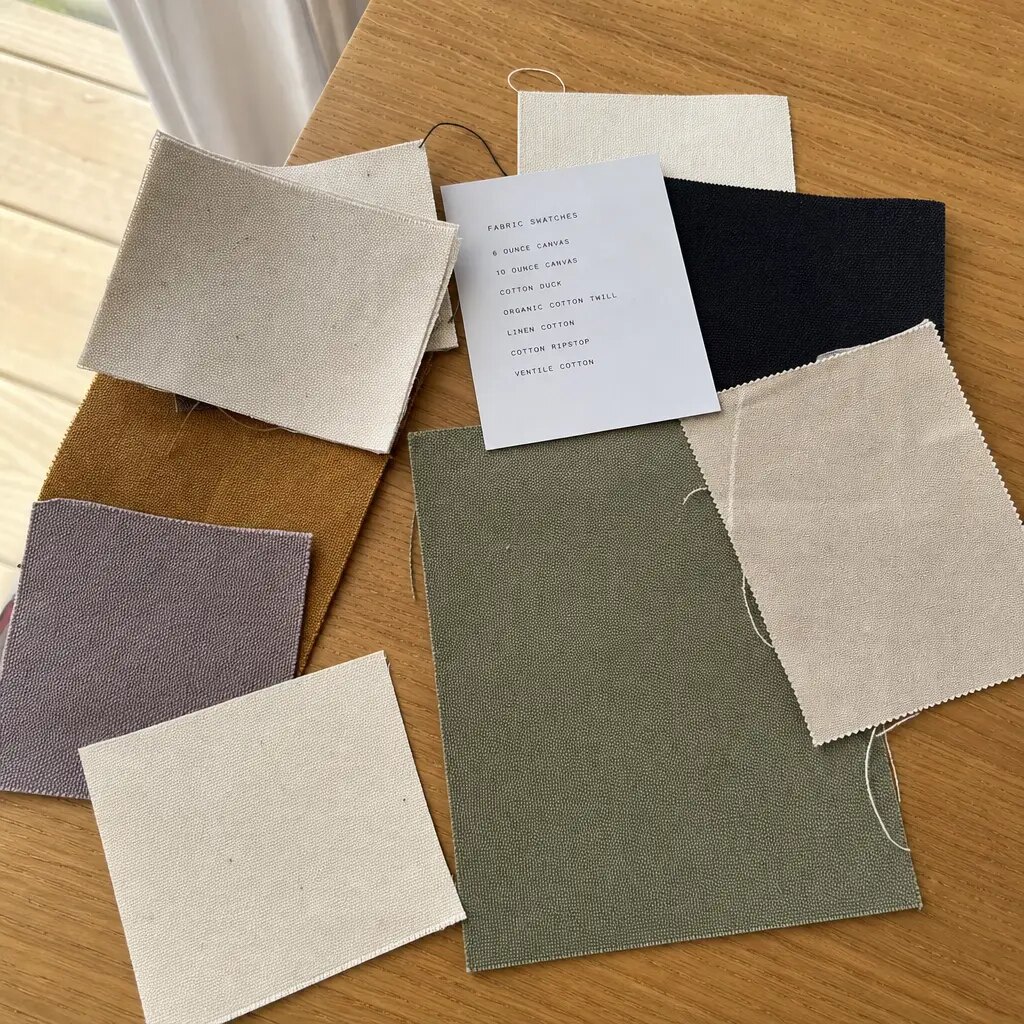
Do not compare quotes labeled only as "canvas." Ask for composition, ounce weight, GSM, finish, color, and tolerance. If one quote is much lower, check whether the supplier assumed a lighter cloth, a looser weave, thinner handles, or fewer reinforcement steps. For natural canvas, approve a physical swatch because base shade changes logo contrast. For dyed canvas, discuss shade tolerance, colorfastness expectations, and whether the fabric is stock dyed or custom dyed.
- 8 oz: better for light promotional programs and low load expectations.
- 10 oz: common balance of handfeel, cost, and usability for reusable cafe totes.
- 12 oz: stronger structure for retail merchandise and heavier grocery-style use.
- 14 oz and above: premium positioning only when higher freight and unit cost are acceptable.
- Natural canvas shade should be approved from a physical swatch.
- Dyed canvas needs colorfastness expectations and lot-control discussion.
Treat handles as a load-bearing part
Handles are where many cheap grocery totes fail first. Coffee products are dense, so the stress is concentrated at the handle attachment. A clear RFQ should define handle material, width, drop, attachment depth, reinforcement stitch, and thread color. If the RFQ says only "standard handles," the supplier may choose the lowest-cost option, and customers will feel the difference the first time the tote is loaded.
Two common choices are self-fabric canvas handles and cotton webbing handles. Self-fabric handles match the tote body and can look polished when sewn cleanly. Cotton webbing is consistent, comfortable, and efficient for production. For coffee roaster grocery totes, handle width around 2.5-3.8 cm is a practical range. Narrow handles may save cost, but they dig into the hand when the bag carries multiple coffee bags and a mug.
Handle drop should match how the customer will carry the tote. Hand-carry bags can use a shorter drop for a compact look. Shoulder-carry grocery totes need a longer drop and enough clearance at the opening. Ask the supplier to mark handle placement on the technical drawing and confirm it on the sample. During QC, check that left and right handles are symmetrical, reinforcement is secure, and handle ends are folded or finished to prevent fraying.
- Require box-X, cross-stitch, or bartack reinforcement at handle ends.
- State handle width and handle drop instead of total handle length only.
- Define whether the tote is hand carry or shoulder carry.
- Inspect thread tension and skipped stitches at every handle stress point.
- Use realistic load testing during sample review and final inspection.
- Reject handles with raw fraying ends, uneven placement, or weak reinforcement.
Build the print spec around canvas texture
Most coffee roaster artwork is well suited to screen printing: solid logos, cafe names, roast marks, simple illustrations, and one to three spot colors. Screen print can give strong coverage on natural cotton canvas, but the artwork must respect the fabric surface. Fine serif text, thin lines, distressed effects, and small halftones can fill in or lose sharpness on a textured weave.
Heat transfer can be useful for gradients, full-color illustrations, or multiple low-quantity artwork versions. Still, it needs a real sample review. A transfer can look sharp in a photo but feel plastic, crack after folding, lift at the edge, or show scorch marks if process control is weak. Embroidery may work for a small premium mark, but large embroidery on a grocery tote can distort the panel and raise cost.
The RFQ should include vector artwork, Pantone or brand references, final print size, print side, placement from the top edge and center line, and an acceptable placement tolerance. A digital mockup is not enough for approval on a first order. Natural canvas is warmer and more irregular than paper, coated packaging, or a website color. For important brand colors, approve a physical print sample and use it as the inspection standard.
- Use screen print for solid one-color or low-color roaster logos.
- Use heat transfer only after checking handfeel, folding, edge quality, and durability.
- Avoid tiny text and very thin lines unless the supplier confirms a safe minimum.
- Keep artwork away from seams, gusset folds, and handle stitch areas.
- State whether printing is one side, two sides, side panel, or includes a label.
- Approve a physical print sample for first orders or changed artwork.
Decide inside finishing, labels, and retail prep early
The inside of the tote affects perceived quality, even when the front logo looks perfect. A neat overlock seam is often acceptable for cost-controlled wholesale grocery totes. Bound seams cost more, but they look cleaner and may be worth it for resale merchandise, holiday gift kits, or premium cafe retail. Do not leave the seam finish to assumption. Put it in the RFQ and confirm it on the sample.
Labels and retail preparation can change the sewing sequence, MOQ, cost, packing time, and inspection plan. A woven side label, inside care label, country-of-origin label, barcode sticker, hangtag, or paper band should be listed before the supplier quotes. If totes will ship to multiple stores, distributors, or warehouse locations, barcode accuracy and SKU control may matter as much as the tote itself.
Thread color deserves a decision too. Matching thread is usually safer on natural canvas because it hides small sewing variations. Contrast thread can look intentional and branded, but it also highlights every uneven stitch. Define label position, thread color, trimming expectations, and whether loose threads are considered minor or major defects. Good canvas can still look low grade when the inside is messy.
- Choose overlock for efficient wholesale programs and binding for premium retail presentation.
- Specify label type, size, position, orientation, and artwork file.
- Confirm care label and origin-label requirements with your compliance team.
- Define hangtag, barcode, paper band, or individual bag requirements before quoting.
- Set a loose-thread trimming standard for inside and outside seams.
- Check inside finishing on the approved sample, not only the front logo.
Use an RFQ table that removes guesswork
Suppliers quote faster and more accurately when the RFQ is structured. A reference photo helps, but it is not a specification. Put fabric, dimensions, handles, printing, labels, packing, quantity splits, trade term, and timeline in one document. This makes supplier comparison easier and reduces the risk of a low price based on hidden substitutions.
Show quantity by version, not only total quantity. A 3,000-piece order may sound efficient, but the factory sees a different job if it is split into three fabric colors, six cafe logos, and two destination warehouses. Each version may need separate screens, material control, packing instructions, carton marks, and inspection records. List exact quantities per SKU and ask the supplier to show split surcharges separately.
Give the supplier milestone dates, not just a vague deadline. Canvas tote lead time depends on fabric availability, swatch approval, print setup, sample approval speed, production capacity, final inspection, and packing complexity. If the totes are for a seasonal launch, event, or holiday gift program, state the required in-hand date and work backward from there.
- Create columns for size, fabric, handle, print, label, packing, quantity, and destination.
- Separate total quantity from quantity per SKU or artwork version.
- Ask for price tiers if demand is not final: 500, 1,000, 3,000, and 5,000 pieces.
- Request setup charges separately from unit price.
- State sample approval deadline, bulk production deadline, and required delivery date.
- Ask the supplier to confirm what assumptions they used if any field is missing.
Compare landed cost instead of unit price alone
Two tote quotes can look similar and still describe very different products. One may include 12 oz canvas, reinforced handles, screen setup, export cartons, and FOB terms. Another may use lighter fabric, simple stitching, excluded setup charges, and EXW terms. If procurement compares only the unit price, the cheaper offer may not stay cheaper after corrections, freight, and handling are added.
Ask for unit price by tier, sample cost, setup charges, packing cost if separate, carton dimensions, units per carton, net weight, gross weight, trade term, quote validity, and payment terms. Carton data matters because canvas totes are bulky relative to unit value. A small unit-price saving can disappear if the tote folds poorly, packs inefficiently, or increases freight volume.
Trade terms must be written clearly. EXW, FOB, CIF, and DDP shift different costs and responsibilities between buyer and supplier. A low EXW price does not include inland transport, export handling, freight, duties, or final delivery. For an apples-to-apples comparison, put every quote into the same landed-cost model and record all exclusions before approval.
- Confirm whether print setup, screens, films, and artwork separation are included.
- Ask whether repeat orders will pay full setup again or reduced repeat charges.
- Request carton dimensions and gross weight before freight comparison.
- Confirm the named port or delivery address in the trade term.
- Record quote validity because cotton, freight, and dyeing costs can change.
- Do not approve purchasing based on unit price if key specs are missing.
Use sample approval to test the real buying experience
A pre-production sample is not just a logo proof. It is the last controlled opportunity to confirm fabric handfeel, body shape, gusset function, handle comfort, seam finishing, print coverage, and packing behavior before bulk cutting. For a first order, new artwork, new fabric weight, new gusset pattern, or changed handle construction, a physical sample is the safer route.
Use the sample the way a customer or cafe team will use it. Load it with the coffee bags and accessories named in the RFQ. Lift it repeatedly, carry it for several minutes, set it on a counter, and check how the gusset sits. Fold and stack it to see whether the print creases badly or the handles create bulky cartons. If the tote will be sold as merchandise, inspect it under retail lighting and from a normal customer viewing distance.
Write the approval carefully. Do not mark a sample as approved if you still expect changes. Use clear categories such as approved as is, approved with corrections, or remake required. Keep one signed sample with the buyer and one with the factory. Attach dated photos, measurements, fabric swatch references, artwork proof, label details, and packing instructions to the purchase order.
- Measure sample width, height, gusset, handle drop, and logo placement.
- Check fabric weight or request a production-lot swatch if the sample fabric is not final.
- Load the tote with the expected maximum coffee retail load.
- Inspect handle reinforcement after lifting and carrying.
- Review print color, opacity, edge sharpness, handfeel, and placement.
- Fold and stack the sample to predict carton creasing.
- Keep signed approval samples for inspection and claim resolution.
Set QC standards before production starts
Quality control should be planned before fabric is cut. For canvas grocery totes, inspection should cover incoming fabric, cutting, stitching, printing, labels, final measurements, cleanliness, odor, and packing. If the order is large or split across many SKUs, define whether inspection will use an AQL sampling plan and how defects will be classified.
Common major defects include wrong fabric weight, wrong size outside tolerance, weak handle attachment, missing reinforcement, wrong logo, print color outside the approved range, severe smudging, incorrect barcode, mildew odor, wet cartons, and mixed SKUs that make receiving difficult. Minor defects may include small thread tails, slight shade variation within the approved range, or small print pinholes if already agreed. The key is to classify defects before shipment, not after a dispute.
Tie the load test to the RFQ. For example, random units can be tested with the agreed maximum retail load, then inspected at the handle seams, bottom seam, gusset corners, and fabric stress points. The method should be practical and repeatable. If destructive testing is required, agree in advance on the sample quantity and who bears the cost.
- Check incoming fabric weight, shade, and visible defects before cutting.
- Inspect in-line stitching at handle stress points and bottom gusset corners.
- Use written tolerances for measurements and print placement.
- Classify critical, major, and minor defects before final inspection.
- Confirm labels, barcodes, artwork versions, and carton marks against the PO.
- Inspect odor, moisture, dust, insects, and production debris before packing.
- Require shipment release approval before balance payment or freight booking when applicable.
Specification comparison for buyers
| Spec decision | Recommended option | When it fits | Buyer risk to check |
|---|---|---|---|
| Main fabric weight | 10 oz to 12 oz cotton canvas; commonly about 280-340 GSM, but confirm by actual mill standard | Reusable grocery tote for 2-4 retail coffee bags, mugs, jars, filters, brew tools, or subscription pickup orders | Do not compare quotes unless fabric weight, composition, and tolerance are stated; lighter fabric can reduce price but collapse under load |
| Fabric composition | 100% cotton canvas for classic natural look; cotton-poly blend only if buyer accepts changed handfeel and labeling | Best for specialty coffee merchandising, cafe retail walls, farmers markets, and gift bundles | Composition affects shrinkage, print absorption, care labeling, import declaration, and customer perception |
| Fabric color | Natural cotton canvas as default; dyed black, washed, or custom colors only with approved swatch and colorfastness expectation | Natural canvas supports simple roaster branding; darker colors hide dirt and may suit premium retail programs | Natural shade variation and dyed lot variation must be approved; dark fabric may need underbase printing or different ink system |
| Bag structure | Open-top grocery tote with boxed bottom gusset and side gusset shaping | Coffee bags, cups, retail jars, and gift kits need usable volume and a base that packs quickly at the counter | Flat totes may not fit block-bottom coffee bags well; incorrect gusset pattern can distort logo placement when loaded |
| Finished dimensions | Starting point: 35-40 cm W x 35-42 cm H x 10-15 cm bottom gusset; adjust after testing actual coffee packs | Works for common 250 g, 12 oz, 1 lb, and mixed retail coffee purchases | Drawings without sample load testing can create a tote that looks correct flat but performs poorly when filled |
| Dimension tolerances | Discuss ±1 cm for body width/height/gusset and ±0.5-1 cm for handle drop or print placement, depending on construction | Reasonable for sewn cotton canvas goods where fabric, folding, and sewing introduce normal variation | Unstated tolerances cause disputes; overly tight tolerances can raise cost or rejection rate |
| Handle construction | Self-fabric canvas handles or 2.5-3.8 cm cotton webbing; reinforced by box-X stitch, cross stitch, or bartack | Repeat-use grocery totes and heavier coffee orders where comfort and attachment strength matter | Narrow handles, weak stitch boxes, poor thread tension, or insufficient seam allowance can fail before the body fabric |
| Printing method | Screen print for solid logos and 1-3 spot colors; transfer only for gradients/full color after durability sample review | Screen print is usually reliable for natural canvas roaster logos and clean typography | Fine text can fill in on textured canvas; transfers can crack, lift, scorch, or feel plastic if not specified and cured correctly |
| Inside finishing | Clean overlock for cost-controlled wholesale; bound seams for premium resale merchandise or gift sets | Overlock is practical for bulk grocery totes; binding improves perceived quality when customers inspect the inside | Loose threads, uneven overlock, exposed raw edges, or mismatched thread make good fabric look low grade |
Buyer checklist before sampling
- State the use case: sold merchandise, gift-with-purchase, cafe retail stock, farmers market carrier, subscription pickup bag, distributor kit, or event giveaway.
- Define the intended load by item and weight: for example, three 12 oz coffee bags plus one mug, maximum loaded weight 3.5-5 kg, hand or shoulder carry.
- List the largest product that must fit, including 250 g, 12 oz, 1 lb, 1 kg, 2 lb coffee bags, mugs, jars, boxes, filters, or brewers.
- Specify fabric composition, fabric weight in oz and GSM, color, finish, and acceptable weight tolerance rather than writing only "canvas tote."
- Provide finished dimensions: width, height, bottom gusset, side gusset if used, handle drop, handle width, and measurement method for inspection.
- Define practical tolerances: body size, gusset depth, handle drop, handle placement, logo placement, print color, carton count, and unit count per carton.
- Specify handle material, handle attachment depth, reinforcement method, thread color, and whether box-X stitching, bartack, or cross-stitch is required.
- Send vector artwork with Pantone or brand color references, final print size, side to print, placement from top edge and center line, and acceptable logo tolerance.
- Ask the supplier to confirm minimum readable text size, minimum line width, maximum print area, and risk areas near seams, handle stitching, or gusset folds.
- Decide whether inside seams can be overlocked or must be bound, and state loose-thread trimming expectations before sample approval.
Factory quote questions to send
- What exact fabric composition will be used, and can you state both ounce weight and GSM with the normal tolerance you control in production?
- Is the fabric stock greige/natural, bleached, dyed, washed, or custom dyed, and what shade variation should be expected between production batches?
- Can you provide a fabric swatch from the actual production lot before bulk cutting, especially for natural shade or dyed fabric approval?
- What shrinkage should we expect if the tote is exposed to moisture, steaming, light cleaning, or customer washing, and how is that tested?
- What finished size tolerances do you propose for width, height, bottom gusset, handle drop, handle position, and logo placement?
- What handle material, width, drop, sewing allowance, thread type, and reinforcement stitch will be used at the stress points?
- What realistic load test do you recommend for this construction, and how many units can be tested during final QC without damaging saleable goods?
- Which print method do you recommend for our artwork, and what ink or transfer type is included in the quote?
- What is the maximum printable area on this tote size without crossing seams, gusset folds, handle stitch areas, or high-distortion zones?
- What minimum text height and line width do you recommend for clean printing on this canvas texture?
Quality-control points to confirm
- Incoming fabric weight should be checked against the approved standard in GSM or oz using the agreed test method and tolerance; record results before cutting.
- Fabric composition, shade, surface texture, and finish should match the approved swatch, with no visible oil stains, mildew marks, heavy slubs outside approved character, weaving defects, or dye streaks on major panels.
- Finished dimensions should be measured on flat samples from each SKU: width, height, bottom gusset, side gusset symmetry, handle drop, handle width, and handle attachment position.
- A practical sewn-goods tolerance should be written in the PO, such as ±1 cm for main body dimensions and tighter tolerance only where the construction can realistically hold it.
- Handle reinforcement must show secure stitch boxes, box-X stitches, cross-stitching, or bartacks without skipped stitches, broken threads, loose ends, needle damage, or left-right imbalance.
- Thread tension should be balanced so seams are secure without puckering, open seams, pulled corners, excessive needle holes, or long thread tails.
- Random load testing should use the buyer's expected maximum load or a written test load; inspect handle seams, bottom seam, gusset corners, and fabric distortion after lifting and holding.
- Print color should be compared with the signed physical sample or Pantone target under consistent lighting, not only under warm factory floor light.
- Print coverage should be even on the canvas surface, with no unacceptable pinholes, smudges, bleeding, offset ink, transfer lifting, scorch marks, hard edges, or tacky handfeel.
- Print placement should be checked from the top edge and center line and remain within the approved tolerance; tilted logos or artwork distorted by gusset folds should be rejected or sorted.