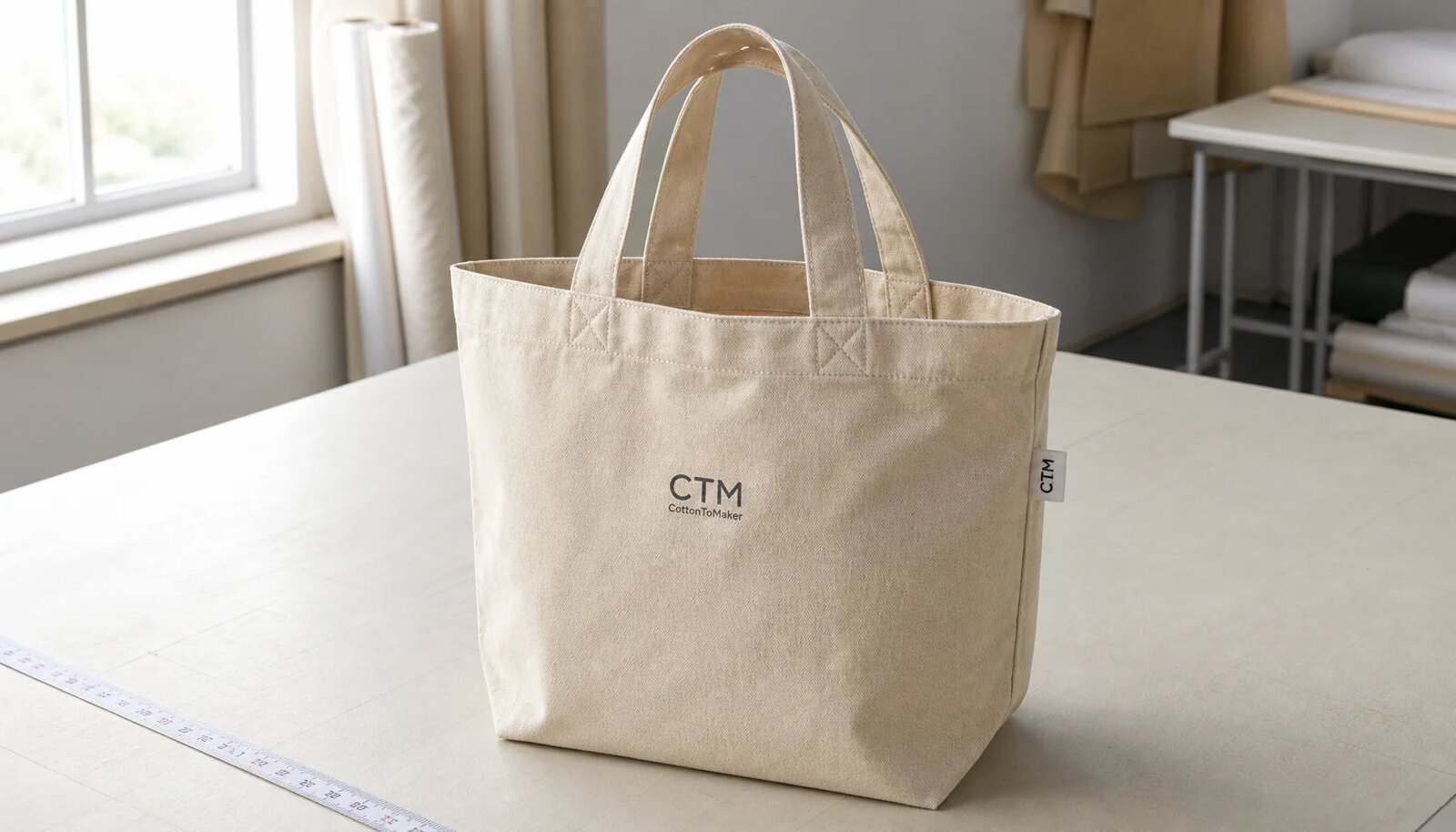
Start With the Load Case
Event planners do not buy canvas grocery totes the same way a fashion brand buys a lifestyle bag. The real job is to move objects safely through a busy event flow: welcome kits, bottled drinks, boxed gifts, brochures, small retail items, or a mix of all of them. Before you talk about artwork or packaging, define the heaviest normal load, how often the bag will be reused, and whether the tote must survive a single handout or multiple event cycles. That load case drives the fabric weight, seam design, handle length, and the testing plan.
If the bag is meant for retail resale or premium event gifting, the tolerance for visible flaws drops quickly. A tote that is acceptable for a one-day conference may be unacceptable if your client wants guests to reuse it in daily grocery runs. That is why the spec should start with use, not with a generic product name. Once the use case is clear, the supplier can quote a real construction instead of a vague canvas bag.
- Define the heaviest likely fill, not just the average fill.
- State whether the bag must survive reuse, not only first delivery.
- Decide whether appearance or load strength is the top priority when there is a tradeoff.
Choose Fabric Weight and Construction First
For most wholesale canvas grocery totes used by event planners, 10 oz / about 340 gsm is the practical baseline. It gives enough body for printing, keeps the bag from collapsing on the floor, and usually survives moderate carrying without becoming too heavy or expensive. If the tote will carry bottles, hard gifts, or retail merchandise, 12 oz / about 407 gsm is often the safer choice. Lighter 8 oz canvas can work for simple promotional inserts, but it is usually too soft for repeated heavy use unless the design is minimal and the load is controlled.
Construction matters as much as fabric weight. A tight weave prints more cleanly than a loose weave, and a bag with a folded top hem, reinforced handle anchor, and solid bottom seam outperforms a plain cut-and-sewn body at the same GSM. If the supplier offers pre-shrunk canvas, ask how much shrinkage remains after finishing. For buyer specs, a realistic shrinkage allowance is usually more useful than a vague claim that the fabric is "stable."
- Use 10 oz / 340 gsm as the default starting point for most event-use totes.
- Move to 12 oz / 407 gsm when the bag will carry heavier items or needs a premium feel.
- Require a tight weave and reinforcement details in writing, not just a fabric description.
Compare Supplier Routes Before You Send RFQs
The right supplier route depends on how much control you need over sewing, decoration, and packing. A direct factory is usually the strongest choice when you want a repeatable bag spec, consistent print placement, and clear accountability on quality. A trading company can be useful if you buy mixed merchandise or want one point of contact, but you need to understand whether the quote hides margin between you and the actual factory. A local decorator is sometimes the fastest route for small quantities, yet it often limits your options on fabric weight and reinforcement.
Do not let the first quote frame the comparison. Ask each supplier to price the same finished size, same canvas weight, same print method, same packing, and same trade term. If one quote looks cheaper because it omits inner polybags, sample costs, or carton labeling, the comparison is already distorted. For wholesale canvas grocery totes for event planners durability testing checklist work, source control matters because the bag will be handled by people who are not treating it gently.
- Prefer a direct factory when you need repeat orders and construction control.
- Use a trading company only if you can still trace the real production source.
- Use a local decorator only when lead time beats unit cost and spec depth.
Build the Sample Into a Test Plan
A sample is only useful if it is tested against the real use case. Start with a simple load test at or above the expected event fill weight, then look for seam opening, handle elongation, and distortion around the top hem. If the bag will carry sharp-edged boxes or drinks, add an abrasion step by moving the tote repeatedly across a rough surface. A good sample should survive normal handling without the stitching relaxing or the print looking damaged after a few passes.
For event planners, the weak points are usually not the center panel but the stress points. Handle anchors, side seams, and the top turnback take the load first. If the tote has a logo close to a seam, print cracking may appear earlier because the fabric bends there more often. Your sample stage should also include visual checks for odor, loose threads, puckering, and any mismatch between the approved drawing and the actual sewing pattern.
- Run a load test using the intended fill weight, then add a margin above it.
- Inspect seam integrity after repeated lifting, not only after one static hold.
- Move the bag across a surface to see whether the print or fabric surface marks easily.
Use Print and Reinforcement Details to Control Failure
Screen print is usually the best cost-to-performance option for wholesale canvas grocery totes. It gives strong color on uncoated canvas, keeps unit cost manageable at scale, and is easy to specify when you only need one or two logo colors. Heat transfer can work for short runs or complex art, but it is usually more sensitive to wear and can look less natural on heavy canvas. If your brand needs a premium finish, a woven label or sewn patch may be a better long-term choice than trying to force a large print into a rough fabric surface.
Reinforcement is where many quote sheets stay too vague. Ask for X-stitch or bar-tack reinforcement at the handle anchors, plus a clean top hem that does not twist after loading. If the supplier suggests a thin thread or a single row of stitching to save cost, that saving often disappears in use. For event planners who expect the tote to be reused, a little extra sewing cost is cheaper than a batch of split handles or a bad guest experience.
- Use 1-2 color screen print when the logo is flat and the quantity is meaningful.
- Choose woven label or sewn patch when wear resistance and premium presentation matter more than ink coverage.
- Require handle anchor reinforcement in the quote, not as an optional upgrade.
Lock the Golden Sample Before Bulk Production
A golden sample is the only reference that should matter once production starts. The drawing, the swatch, and the factory promise are not enough if the bag in hand differs from the approved version. Measure the finished width, height, gusset, handle drop, and print position on the sample, then record the acceptable tolerance. For canvas totes, a small tolerance is practical, but the bag still needs to look intentional and symmetric when it is photographed or handed to guests.
Treat the sample approval as a control point, not a formality. If the print sits too low, if the handle lengths differ, or if the bag body twists when filled, fix it before bulk cutting starts. The sample should also reflect the actual bulk fabric and the actual packing method. A neat-looking sample made from a better cloth than the production order gives a false approval and usually creates a problem later.
- Measure the sample and write down the tolerance for every critical dimension.
- Approve only one golden sample version for size, print, and construction.
- Make sure the bulk sample uses the same fabric and trim as the production run.
Understand MOQ Logic and Lead Time
MOQ is not just a factory number; it is the result of cutting efficiency, print setup, fabric roll use, and trimming economics. A plain stock-color tote with a simple logo can often start lower than a custom-dyed body with multiple print colors or special labels. If you add woven labels, inner printing, special handles, or non-standard packing, the MOQ usually rises because the line needs more setup and more material control. That is normal, and it should be visible in the quote instead of being hidden until later.
Lead time should be read as a sequence, not a single promise. Sample production, sample approval, fabric sourcing, cutting, sewing, printing, packing, and booking freight all take time. For a standard canvas grocery tote, a sample can often be turned in about a week, while bulk production commonly runs in the multi-week range after approval. If the order needs dyed fabric, special trims, or unusual cartons, the schedule stretches. A realistic quote names the assumptions behind the date.
- Blank or stock-color totes can support a lower MOQ than fully custom builds.
- Multiple print colors, special labels, or custom-dyed fabric usually push MOQ higher.
- Ask for lead time by stage: sample, approval, bulk production, and packing.
Specify Packing So the Bags Arrive Clean
Packing is part of the product, especially when the totes will travel by sea or sit in storage before an event. Flat bulk packing is usually the most efficient route for wholesale canvas grocery totes because it protects carton density and keeps freight under control. But if the print is fresh, the canvas is heavily dyed, or the artwork can transfer, the factory may need interleaving or a better inner wrap. Moisture protection matters too, because a canvas tote that reaches the warehouse with odor or damp cartons is already a quality problem.
The carton spec should be more than a count per box. Ask for the bag count, carton size, gross weight, palletization plan if needed, and the shipping marks on the master carton. If the tote has long handles or thick reinforcement, carton compression can distort the bag shape. Packing that looks efficient on paper but crushes the handles in transit is a false economy.
- Use flat packing unless the decoration or finish needs extra protection.
- Specify carton count, carton dimensions, and gross weight before production starts.
- Add moisture protection or interleaving if print transfer or odor is a risk.
Read Quotes as Landed Cost, Not Unit Price
A low unit price is not a good deal if the quote is incomplete. Compare quotes on the same fabric weight, same print method, same packing, same sample stage, and same trade term. Then add the costs that the supplier may exclude: setup charges, carton costs, inland freight, test fees, broker fees, duty, and the risk allowance for damaged or rejected cartons. Once those are included, the cheapest-looking quote often moves to the middle or the top of the stack.
The easiest way to compare suppliers is to normalize everything into landed cost per usable tote. If one factory offers stronger stitching, better sample control, and clearer packing at a slightly higher ex-factory price, that can still be the better buy. For event planners, the actual cost is the bag that arrives on time, looks consistent on the table, and survives the first use without a complaint.
- Compare quotes only after aligning fabric, print, packing, and Incoterm.
- Add setup, packaging, freight, duty, and damage allowance to the base price.
- Give extra weight to suppliers who document the spec instead of describing it loosely.
What a Clean Final Approval Looks Like
A clean approval is one where the bag, the paperwork, and the production line all describe the same product. The approved sample should match the quote sheet, the artwork proof, the carton pack, and the QC tolerance sheet. If there is a mismatch anywhere, production teams tend to solve it in the cheapest way, which is usually not the way your team wanted. This is why the final signoff should be based on one locked spec, not on a stack of loosely connected emails.
For procurement teams, the safest finish line is simple: one golden sample, one spec sheet, one packing standard, one agreed lead time, and one comparison sheet for the quote. That does not make the order more complicated; it makes it less fragile. When the bag is a canvas grocery tote for event use, the buyer who controls the spec usually gets the best combination of durability, appearance, and cost.
- Keep one signed spec sheet as the master reference.
- Make the approved sample match the artwork proof and carton plan.
- Do not release bulk order approval until the factory confirms every key detail in writing.
Specification comparison for buyers
| Spec decision | Recommended option | When it fits | Buyer risk to check |
|---|---|---|---|
| Sourcing route | Direct factory with sewing and print under one roof | Best for repeat event programs, controlled specs, and fewer handoffs | Confirm whether printing, stitching, and final QC are really in-house or subcontracted |
| Sourcing route | Trading company with a fixed factory pool | Useful when you need mixed products, one contact, and easier admin | Watch margin stacking and make sure the quote still names the actual factory and process owner |
| Sourcing route | Domestic decorator or local bag converter | Works for short deadlines, small runs, or last-minute event changes | Check whether the available canvas weight and reinforcement match your load target |
| Fabric weight | 10 oz / about 340 gsm canvas | Good baseline for most event-planner grocery totes and moderate reuse | Ask for shrinkage allowance and verify the weave is tight enough for clean printing |
| Fabric weight | 12 oz / about 407 gsm canvas | Better for heavier gifts, bottles, retail resale, or premium programs | Confirm handle stitching and carton weight because the bag is heavier and costs more to ship |
| Decoration method | 1-2 color screen print | Best for flat logos, larger artwork, and cost control at scale | Test rub resistance and curing because weak ink shows up fast on uncoated canvas |
| Decoration method | Sewn woven label or side label | Useful when the brand wants a cleaner premium look and less print wear | Make sure label placement does not interfere with side seams or handle reinforcement |
| Reinforcement spec | X-stitch with bar-tacks at handle anchors | Recommended for repeated loading, event handouts, and grocery use | Require stitch count, thread type, and pull-test evidence, not just a verbal promise |
Buyer checklist before sampling
- Define the real load case first: what goes inside the tote, how often it will be reused, and whether guests will carry bottles, boxed items, or flat collateral.
- Lock the fabric spec in GSM and weave, not just "canvas"; for most event use, 10 oz / 340 gsm is the practical starting point.
- Specify finished dimensions, handle drop, gusset depth, and seam allowance before quoting so every supplier prices the same bag.
- Choose the decoration method before sampling; screen print, woven label, and sewn patch behave very differently on canvas.
- Request a pre-production sample with measured tolerance on size, print placement, and handle symmetry.
- Set your test criteria in writing: seam integrity, handle pull, abrasion, print rub, and shrinkage after exposure to moisture or light washing.
- Confirm packing method, carton count, and carton weight before approval so the freight quote is not built on assumptions.
- Compare quotes on the same Incoterm, same packaging, and same sample stage, not on unit price alone.
Factory quote questions to send
- What is the exact fabric composition, GSM, weave density, and whether the cloth is pre-shrunk or washed before cutting?
- What are the finished size, handle length, handle drop, gusset depth, and seam allowance in the quoted version?
- Which decoration method is included in the price, how many colors are covered, and what is the setup charge for screens, plates, or woven labels?
- What is the MOQ per color and per artwork version, and does the MOQ change if we add labels, lining, or reinforcement?
- What sample stages are available, what does each sample include, and is the pre-production sample made on the actual bulk fabric?
- What is the expected lead time for sample, bulk production, and packing, and what happens if we need fabric dyeing or special trims?
- How are the bags packed per carton, what is the gross weight, and do you use moisture protection or inner polybags?
- Which trade term is quoted, and what costs are excluded from the unit price, including freight, duty, cartons, and testing?
Quality-control points to confirm
- Finished dimensions stay within the agreed tolerance for width, height, gusset, and handle drop.
- Seam lines remain closed after a practical load test at the target weight for the intended event use.
- Handle anchors hold without stitch popping, twisting, or elongation after repeated lifting.
- Screen print shows even ink coverage, correct placement, and no obvious cracking, peeling, or ghosting.
- Woven label or sewn patch is secure, flat, and aligned without puckering the canvas body.
- Fabric weight matches the approved swatch or test report and does not feel loosely woven under hand inspection.
- Shrinkage stays within the agreed allowance after moisture exposure or wash testing, if applicable.
- Cartons arrive dry, clean, and undamaged, with bag count and color count matching the packing list.
- Odor, staining, loose threads, and needle damage are below the acceptance limit you set before production.
- A signed golden sample exists and matches the production reference for size, print, and construction.