Start With The Use Case, Not The Logo
A boutique winery grocery tote is usually doing three jobs at once: retail merchandising, tasting-room resale, and light grocery or gift carry. That means the right spec is not the prettiest sample on the table, it is the bag that keeps its shape after repeated folding, carries enough weight without handle creep, and still prints cleanly with the winery mark. If the supplier starts by selling you a logo application method before they ask what the bag will hold, the quote is probably built around decoration, not performance.
The first RFQ question should be practical: what will the tote carry on a normal day. Two bottles plus packaging, mixed merchandise, or produce and deli items all point to different reinforcement and fabric choices. A bag that will only hold a brochure and a gift box can be lighter. A tote expected to carry wine bottles should be treated more like a utility item, with stronger seams, better handle anchors, and a fabric body that does not sag after the first use.
- Define the real load in kilograms, not just a marketing description.
- State whether the bag is for point-of-sale resale, promo gifting, or everyday grocery use.
- Decide early if the priority is shelf shape, low cost, or repeated carry performance.
Pick A Canvas Weight That Survives Winery Retail
For most boutique winery programs, 12 to 16 oz canvas is the useful range, which is roughly 340 to 470 GSM depending on the construction and finish. Around 12 oz or 340 to 360 GSM is a sensible starting point if the tote needs a softer hand and a lower landed cost. Move up to 14 or 16 oz, or about 400 to 470 GSM, if the bag must stand up on its own, hold heavier contents, or look premium on a retail shelf. The wrong weight usually shows up as one of two failures: the bag feels too flimsy in the hand, or the stitches start fighting the fabric because the cloth is too stiff and under-engineered for the seam line.
Raw canvas weight is not the whole story. Two fabrics with the same GSM can behave differently if one is tightly woven, pre-shrunk, brushed, or dyed after weaving. Ask for the finished fabric spec, not just the mill name. If the supplier offers a washed or pre-shrunk canvas, that can reduce size drift and improve the way the tote folds in carton, but it may also slightly raise cost and lengthen lead time. For a winery buyer, the point is to get a tote that looks consistent across the whole order and does not change shape after the first use.
- Use 12 to 14 oz for most retail grocery totes that need a softer body and moderate price.
- Use 14 to 16 oz when the bag must hold heavier mixed loads or stand upright for display.
- Require the supplier to state whether the canvas is raw, washed, pre-shrunk, or finished after weaving.
Choose Handles And Reinforcement For Real Loads
Handle failure is the most expensive kind of tote defect because it creates both a safety issue and an immediate brand impression problem. For boutique winery bags, cotton webbing handles are usually easier to scale and more stable than thin self-fabric handles, especially if the bag is meant to carry wine, jars, or packaged food. Self-fabric handles can work when the design is simple and the load is modest, but they depend more heavily on fabric quality and sewing accuracy. Whatever the material, the anchor method matters more than the handle width alone.
Look for X-box stitching or dense bar-tacks at the top of each handle, and make sure the reinforcement area has enough cloth under it to stop seam tear-out. If the tote has a gusset or side panel, the handle anchor should not sit too close to the fold line. A common mistake is asking for a heavy canvas body but leaving the handle anchor too shallow, which moves the stress directly into the top seam. For load-bearing retail use, the handles and their sewing spec are the first line item that should be locked in the quote.
- Prefer webbing handles when the bag needs repeat load handling or a cleaner production repeatability.
- Specify handle length with the intended carry mode in mind, hand carry versus shoulder carry.
- Require the factory to state the exact reinforcement pattern and stitch count at each anchor.
Use A Print Method That Matches The Fabric Surface
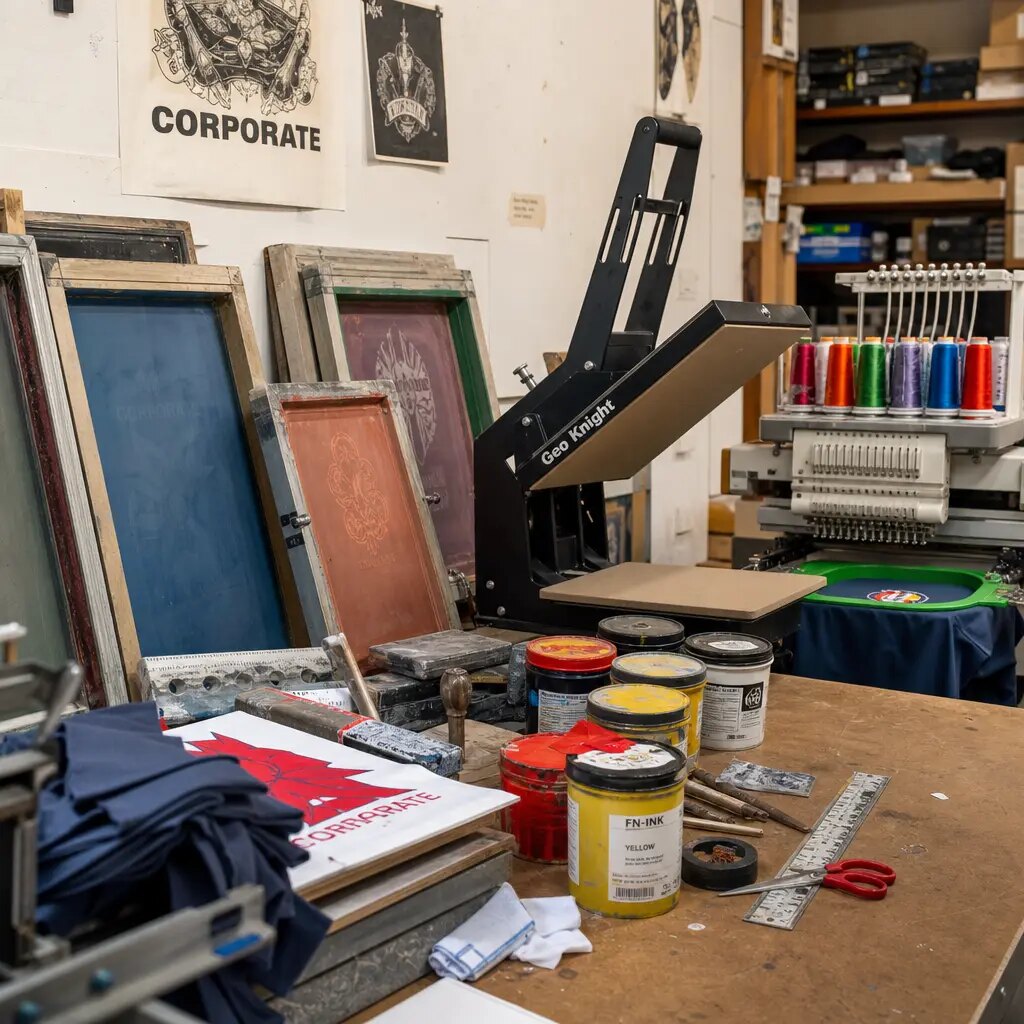
For most boutique winery logos, one or two color screen print is the most practical choice. It gives strong opacity on natural canvas, holds up well in retail handling, and usually keeps the quote manageable. Heat transfer can make sense when the artwork is detailed, but buyers should understand the tradeoff: more visual detail often means more sensitivity to abrasion and folding, especially on textured canvas. If the logo is small and premium positioning matters more than a large bold mark, a woven label, sewn patch, or side label can add value without relying on a big ink area.
The safest approval step is a strike-off on the exact body color and canvas weight that will be used in production. Print behavior can change when the cloth is darker, rougher, or heavier than the sample the sales rep showed. Ask for registration limits and a clear definition of acceptable ink coverage, edge sharpness, and color match. If the design includes thin fonts, fine lines, or reverse type, test it at actual size. A logo that looks sharp on a digital file can lose legibility when it is forced onto thick woven canvas.
- Use screen print for simple winery marks, line art, and short-run seasonal designs.
- Use heat transfer only when detail matters more than abrasion resistance.
- Approve a strike-off on the final canvas color, not a generic white sample.
Turn Durability Testing Into A Pass-Fail Checklist
A real durability test should reflect how the tote will be used, not how it looks in a sample room. Define a loaded carry test, a seam check, a handle pull check, and a surface rub check before bulk production starts. For a grocery tote used by a boutique winery, a practical internal standard might be a loaded lift with 8 to 10 kg for normal retail use, and higher if the tote is expected to carry bottles plus inserts. The goal is not to publish an impossible lab result. The goal is to set a pass-fail standard that the supplier can repeat on every production lot.
Use a simple acceptance threshold that is easy to inspect. No handle pull-out, no broken main seams, no visible seam opening, and no major print cracking after folding and rubbing. If the bag is laminated, coated, or treated, include a fold test so the finish does not split at the creases. If the supplier can only say the bag is strong without defining the test method, that is not a test plan. It is a sales statement. Buyers get better results when they name the load, the cycle count, the inspection point, and the rejection criteria in writing.
- Set the load in kilograms and define whether the test uses a single bag or a repeated lift cycle.
- Require no broken stitches, no seam opening, and no handle creep beyond the agreed limit.
- Add a dry and wet rub check for print transfer if the tote will be handled frequently.
Approve Samples Like A Production Part, Not A Display Piece
The sample stage should tell you whether the factory can actually repeat the spec. A useful pre-production sample is not just a nice tote with a logo on it. It should show the final fabric weight, the real handle material, the exact print method, the sewn label, the carton pack pattern, and the final finished dimensions. If the factory sends a hand-built sample that is cleaner than the production line can reproduce, the buyer is being shown a presentation sample rather than a control sample.
Measure the sample against a short list of checkpoints. Compare the width and height to the tech pack, inspect the handle symmetry, check whether the bag stands and folds the way you expected, and review how the print sits relative to the seam and top edge. If the order includes multiple SKUs, approve each core variable once. For example, one canvas color, one handle build, one print method, one label placement. That approach prevents the factory from mixing approved and unapproved parts when the bulk order starts.
- Ask for a pre-production sample after the supplier has sourced the exact fabric lot.
- Measure the sample, do not rely on a photo or a video call alone.
- Approve one master sample and tie it to a written revision date and artwork version.
Packing Decisions Affect Damage, Count Accuracy, And Retail Speed
Canvas grocery totes often look simple, but poor packing creates avoidable claims. Individual polybag packing helps protect the print from scuffing and keeps the bag clean for retail, while a sensible master carton pack keeps the shipment count stable and easier to receive. For export orders, the carton should be marked with style, color, quantity, and buyer reference. If your distribution team uses barcodes or SKU labels at receiving, build that into the packing spec rather than adding it later as a manual sticker operation.
Fold direction matters more than many buyers expect. A tote folded the wrong way can crease the print, distort the side panel, or press the handle anchor into the body panel during transit. Ask the factory to show the folded pack dimension and the carton load pattern before bulk starts. If the bag is intended for retail shelves, the folded presentation should be repeatable from carton to shelf without rework. That reduces store labor and keeps the brand presentation consistent across locations.
- Specify whether each bag needs a polybag, barcode sticker, insert card, or hangtag.
- Request carton dimensions and gross weight in the quote, not only in the packing list.
- Make the folding method part of the approved sample so the bulk line copies it exactly.
Read The Quote Line By Line
A usable factory quote for canvas grocery totes should break the order into specific cost drivers. The buyer needs to see fabric weight, bag dimensions, handle spec, print colors, label type, packing method, sample fees, and whether the quote includes screen setup or plate charges. A single all-in number is hard to compare because one supplier may be quoting 12 oz raw canvas with simple folding, while another is quoting heavier washed canvas, reinforced handles, and barcode labels. When the specs are hidden, the cheapest quote usually wins on paper and loses in production.
MOQ logic should also be visible in the quote. A factory may give a better unit price if the order is one color, one artwork location, and one carton pack, but the cost can rise quickly when you split sizes, add multiple print colors, or ask for different label types. For first-time winery programs, the best negotiating move is not to squeeze every line item. It is to simplify the spec where the customer will not see the difference, then spend the budget where the bag touchpoints matter: canvas weight, print clarity, and handle strength.
- Insist on separate lines for fabric, stitching, print, label, packing, and shipping terms.
- Compare quotes only after all suppliers are using the same artwork, size, and pack spec.
- Treat unusually low MOQ pricing as a signal to inspect setup fees and hidden material substitutions.
Choose The Supplier Route Based On Risk, Not Habit
Different supplier routes fit different buying problems. A direct factory is usually the best route when you need control over the fabric, sewing, print, and packing details, and when you want one party to own production defects. A trading company can help if you are bundling multiple product types or need someone to coordinate low-friction communication, but buyers should confirm who the real maker is and who is responsible if the tote fails QC. A domestic wholesaler or stock bag distributor can shorten lead time, but you give up most of the control over fabric weight, reinforcement, and brand-specific finishing.
The right sourcing route depends on the cost of failure. If the tote is a small add-on and you mainly need speed, a stocked or semi-custom route can be fine. If the tote is part of a branded retail program, the safer path is usually a factory that can show production photos, inline inspection records, and a stable history of the same construction method. Landed cost should include more than the ex-factory price. Add testing time, sample revision risk, freight, carton quality, and the labor cost of receiving and repacking if the order arrives in a bad fold or mislabeled carton.
- Use direct factory sourcing when you need custom spec control and clear defect ownership.
- Use a trading company only when they can show the actual factory and manage QC transparently.
- Use a domestic stock route only if speed matters more than custom branding and exact construction.
Specification comparison for buyers
| Spec decision | Recommended option | When it fits | Buyer risk to check |
|---|---|---|---|
| Sourcing route | Direct cut-and-sew factory with in-house print | You need custom size, custom label, and one supplier to own the bag build and decoration | Confirm the factory actually controls fabric cutting, stitching, and print instead of brokering the order |
| Fabric weight | 12 to 16 oz canvas, roughly 340 to 470 GSM | Standard grocery use, repeat retail handling, and moderate bottle loads | Light canvas may collapse and show print distortion; heavy canvas raises stitch stress and freight cost |
| Handle build | Cotton webbing or self-fabric handles with X-box or bar-tack reinforcement | Orders expected to carry wine, packaged food, or mixed retail purchases | Check handle pull strength and stitch count at the anchor points, not only the handle material |
| Print method | One to two color screen print for most boutique winery logos | Simple logos, short seasonal runs, and better abrasion resistance | Fine details can fill in on textured canvas; require a strike-off on the final fabric color |
| MOQ logic | 500 to 1,000 pcs per style and color for a fully custom run | Private label programs that need custom size, print, and label | Low MOQ can hide setup fees, limited fabric choices, or a weak unit price comparison |
| Supplier route | Direct factory for control, trading company for bundled sourcing, domestic wholesaler for speed | Choose based on lead time, compliance needs, and how much customization you need | Compare who owns defect resolution, sample approval, and export documents |
| Packing spec | Individual polybag plus master carton with carton mark and barcode | Export orders, distributor replenishment, and retail backroom receiving | Loose packing increases scuffing, count disputes, and warehouse delays |
| Testing standard | Internal load, seam, handle, abrasion, and color rub checks defined in the PO | Any custom order before bulk approval | If the supplier cannot state a pass-fail method, the quote is not production ready |
| Lead time | About 45 to 60 days after sample approval for custom orders | Made-to-order programs with print, label, and carton printing | Separate sample time, production time, and shipping time so the schedule is realistic |
Buyer checklist before sampling
- Lock the final tote dimensions, canvas GSM, handle length, and print placement before requesting a quote.
- Ask for a pre-production sample or strike-off on the same fabric color that will be used in bulk.
- Define the intended load in kilograms or bottles so the supplier can size the handles and seam reinforcement correctly.
- Confirm whether the quote includes screen setup, label application, carton marks, polybags, and inner packing ratio.
- Request a fabric swatch or mill data so the stated GSM is not just a marketing number.
- Set an acceptable dimensional tolerance and print registration tolerance in writing.
- Verify the carton pack count, carton dimensions, and gross weight to avoid freight surprises.
- Get a written lead time split between sample approval, bulk production, and dispatch date.
Factory quote questions to send
- What is the finished canvas GSM after washing or finishing, not only the raw fabric weight?
- Which reinforcement is used at the handle anchors, and how many stitch passes are on each anchor point?
- How many print colors are included in the quote, and is the price based on screen print, heat transfer, or another method?
- What is the MOQ by fabric color, print color, and label type?
- Does the quote include sample fee, screen fee, label fee, and carton printing, or are those separate?
- What are the finished size tolerance and acceptable seam deviation?
- What is the standard pack method per polybag and per master carton, and can the cartons be export marked?
- What is the production lead time after sample approval, and what events can move the ship date?
Quality-control points to confirm
- Fabric weight should stay within a clear tolerance of the approved spec, with no obvious thin spots or slubs in the body panel.
- Main seams should show even stitch length, no skipped stitches, and no loose thread tails at the anchor points.
- Handle anchors should not pull apart, distort, or create puckering after a loaded lift test.
- Print should be centered to the approved artwork, with no major pinholes, bleeding, cracking, or ghosting.
- Bag dimensions should stay within the written tolerance on width, height, and gusset depth if applicable.
- Color rub testing should not leave visible transfer on a white cloth after dry and wet rubbing within the agreed cycle count.
- Fold lines should not crack the print or break the canvas surface if the tote is packed flat.
- Carton counts should match the packing list, and every carton mark or barcode should scan correctly.
- If a woven label or side flag is used, it should be sewn straight, secure, and free of twisted edges.