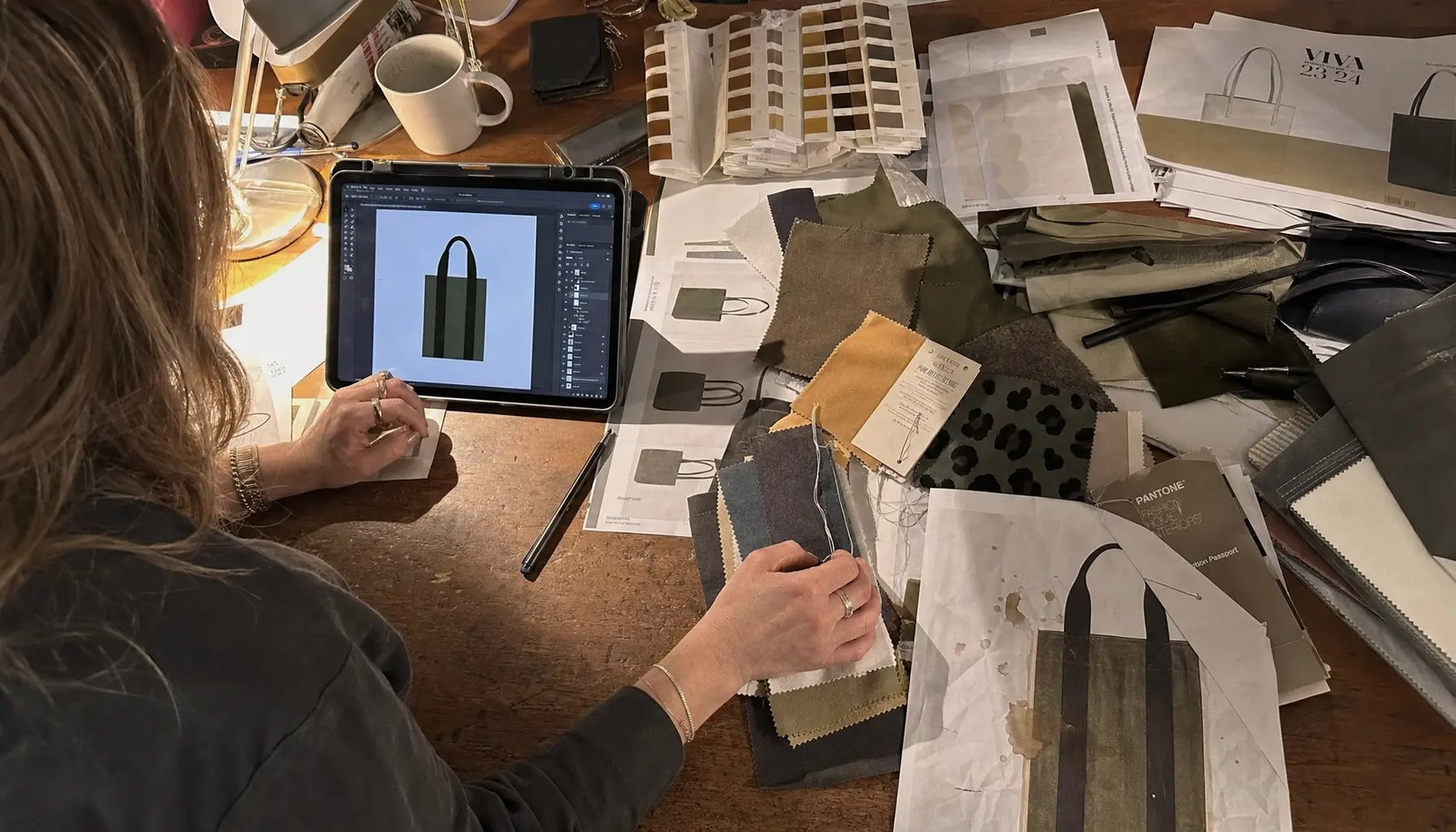
Why Carton Planning Changes the Tote Specification
For wholesale canvas grocery totes for artisan bakeries, carton planning is not an afterthought. The bag looks simple, but the carton plan affects freight cost, warehouse receiving, retail distribution, and even the risk of print creasing. A tote specified only by size and logo may quote well at first, then become expensive when the packed cartons are too heavy, too bulky, or inconsistent across SKUs.
Bakery buyers often focus on fabric feel and print appearance because those are visible to customers. Importers and distributors also need the less visible data: pieces per carton, carton dimensions, gross weight, net weight, total CBM, packing fold, and carton marking. Those details decide whether the order cubes out in a container, triggers extra handling at a warehouse, or needs repacking before store allocation.
- Treat carton data as part of the product specification, not only a shipping detail.
- Lock the folding method before bulk production so print panels do not crease randomly.
- Compare quotes by landed cost per usable tote, not only by FOB unit price.
- Require carton dimensions on the quotation before issuing a purchase order.
Set the Bakery Use Case Before Choosing Canvas Weight
A bakery grocery tote may be used for daily bread purchases, holiday gift sets, farmers market shopping, catering pickup, or retail merchandise. These uses do not need the same fabric. A light promotional tote can be acceptable for a single baguette and receipt. A paid retail grocery tote should support boxed pastries, jars, coffee bags, and multiple bread loaves without looking stretched or cheap.
For most artisan bakery wholesale programs, 10-12 oz canvas, roughly 340-407 GSM, is the practical middle range. It gives enough body for a reusable grocery tote while still folding into cartons efficiently. An 8 oz canvas can reduce cost and freight weight but feels more promotional. A 14 oz canvas feels premium and rigid, but it increases sewing difficulty, carton weight, and packed cube; it may also make screen-printed panels more prone to fold memory if packed too tightly.
- 8 oz canvas: suitable for light giveaway bags where low unit cost matters most.
- 10 oz canvas: balanced option for bakery retail and grocery use with manageable carton weight.
- 12 oz canvas: stronger hand-feel for paid merchandise and higher perceived value.
- 14 oz canvas: premium use only when stiffness is important and freight impact is accepted.
Size, Gusset, and Handle Choices That Affect Packing
Canvas grocery totes for bakeries usually need a gusset. A flat tote may pack efficiently, but it does not hold a loaf box, pastry clamshell, or coffee pouch neatly. A boxed bottom or side gusset helps the bag stand better at the counter and creates a more useful customer experience. The tradeoff is more sewing operations and slightly higher packed volume.
A practical bakery grocery tote often falls around 35-40 cm wide, 35-42 cm high, with an 8-12 cm gusset. Shoulder handles around 55-60 cm are common because customers carry baked goods while holding coffee, phones, or market items. If the tote is meant for heavier grocery use, handle width and reinforcement become more important than adding decorative details.
- Use finished dimensions in the RFQ; fabric cut size is not enough for quote comparison.
- Define gusset type clearly: side gusset, bottom gusset, or boxed bottom construction.
- Specify handle length and width because both change fabric consumption and carton fold.
- Confirm whether the tote must stand upright for counter display or only fold flat for shipment.
Print Method Decisions for Bakery Branding
Most bakery canvas grocery totes use screen printing because logos are usually simple, brand colors are controlled, and the order quantity justifies screens. Water-based screen print is common on natural canvas because it keeps a softer hand-feel than heavy plastisol-style ink. For one to three spot colors, it is usually the cleanest balance of price, durability, and production speed.
The artwork still needs to respect canvas texture. Very thin serif type, small slogan text, dotted flour illustrations, and fine croissant line art can fill in or break on coarse canvas. Before sampling, the factory should review minimum line width, print size, placement, and ink color. If the buyer wants a large solid print area, the print hand-feel and curing method should be checked on a real sample rather than approved from a digital mockup.
- Best for simple logos: water-based screen print on natural or dyed canvas.
- Best for multi-color artwork: consider transfer print only after checking hand-feel and wash expectations.
- Best for premium retail: woven label, side label, or small embroidered detail can support a cleaner front panel.
- Risk point: large dark ink blocks on natural canvas may show uneven texture, which is normal unless tighter standards are agreed.
MOQ Logic for Bakery Chains, Distributors, and Seasonal Designs
MOQ depends on fabric availability, dyeing, printing setup, label setup, and cutting efficiency. A standard natural canvas tote with one-color print may be workable at a lower MOQ than a dyed canvas tote with custom woven label and multiple store versions. Buyers should separate MOQ by bag body color, artwork version, and packing requirement, otherwise supplier quotes become difficult to compare.
For artisan bakery programs, a common mistake is creating too many logo versions for small quantities: one for each branch, event, pastry line, or holiday message. Every extra print version adds screen setup, sorting risk, carton marking complexity, and inspection time. If the budget is tight, consolidate the base bag and use hangtags, carton labels, or small removable inserts for store-level allocation.
- Natural canvas with one logo usually supports the cleanest MOQ and shortest setup path.
- Dyed canvas may require higher MOQ because fabric dye lots need efficient batching.
- Custom woven labels add brand value but should be consolidated across SKUs where possible.
- Multiple artwork versions need separate carton marks and a clear packing list to prevent mixed shipments.
Carton Pack Method and Warehouse Handling
Packing method should be chosen before the sample is approved. Bulk flat packing is efficient and usually enough for wholesale distribution. Individual polybags protect each tote but add material cost, labor, carton cube, and waste concerns. Belly bands or paper wraps can improve retail presentation, but they slow packing and may deform if cartons are compressed during transport.
For medium-weight canvas grocery totes, 50 pieces per export carton is a common planning starting point, but it is not a fixed rule. The right count depends on fabric weight, bag size, gusset depth, handle thickness, and whether hangtags or individual packaging are included. The carton should stay within a practical handling weight for the receiving warehouse; a carton that is cheap to pack but too heavy to move safely creates downstream cost.
- Bulk flat pack: lowest packing cost and efficient for distributor warehouse handling.
- Individual polybag: useful for clean retail stock, but increases labor, plastic use, and CBM.
- Belly band or paper wrap: better shelf presentation, higher packing complexity.
- Carton target: balance pieces per carton with safe gross weight and stable stacking.
Quote Data That Prevents Landed-Cost Surprises
A useful factory quote for canvas grocery totes should include more than unit price. Procurement teams need fabric weight, finished dimensions, print method, color count, MOQ, sample cost, setup cost, packing method, carton data, lead time, payment terms, and incoterm. Without carton CBM and gross weight, the buyer cannot calculate realistic landed cost or compare suppliers fairly.
Two quotes can look similar at FOB level but differ after freight. One supplier may pack 100 pieces per carton to reduce carton count, but the cartons may become too heavy and cause crushed folds. Another may pack 40 pieces with better presentation but higher CBM. The right decision depends on whether the order ships by air, LCL, FCL, or domestic truck after import.
- Request total CBM and gross weight for the full order quantity, not only one sample carton estimate.
- Separate tooling, screen, label, and sample charges from the unit price.
- Ask whether quoted carton data is based on a similar product or an actual packed sample.
- For multi-SKU orders, require carton data by SKU, not only a combined shipment total.
Sample Approval Should Include the Packed Fold
A pre-production sample should be made with final fabric weight, final handle construction, final print method, final label, and the planned fold. Many buyers approve a beautiful loose sample, then find that the bulk packing creates a fold line through the logo or pushes handles into the print surface. This is avoidable if the packed sample is reviewed before mass production.
The sample approval should record measurements and tolerances. For sewn canvas bags, expecting absolute precision is unrealistic, but the supplier and buyer can agree practical limits. Main dimensions may use a tolerance such as around plus or minus 1 cm, while logo placement may need a tighter visual standard depending on artwork size. Handle reinforcement, print position, thread color, and top-opening finish should be signed off together.
- Approve one loose sample for appearance and one folded sample for packing confirmation when presentation matters.
- Mark logo placement from top edge and side seam to avoid subjective inspection disputes.
- Check whether the fold line crosses the print, label, or barcode area.
- Keep the approved sample as the reference for final inspection and supplier production control.
Inspection Thresholds for Canvas Grocery Totes
Quality control for canvas grocery totes should focus on functional failures first: weak handles, open seams, wrong size, wrong print, stains, holes, and mixed SKUs. Cosmetic standards also matter, but natural canvas has texture, seed flecks, and slight shade variation. Buyers should define which natural fabric characteristics are acceptable and which defects cause rejection.
For bakery buyers, food-adjacent presentation matters even if the tote is not direct food-contact packaging. Oil marks, dirty handling, strong odor, mold risk, and dusty cartons are not acceptable for retail bakery distribution. The inspection plan should include carton condition and packing cleanliness, not only bag sewing.
- Major defects: broken handles, open seams, incorrect logo, severe stains, wrong size, wrong SKU mix.
- Minor defects: small loose threads, slight fabric slubs, minor shade variation within approved range.
- Functional checks: handle pull test, seam stress review, print rub check, and carton drop or compression awareness where required.
- Packing checks: carton count, carton mark, SKU separation, polybag or wrap method, and gross weight.
Lead Time Risks and How to Build a Safer Schedule
Lead time starts after the factory has complete inputs, not after the first email inquiry. Artwork, fabric choice, label details, sample approval, deposit, and packing instructions all affect the schedule. If the buyer changes logo size after screens are made or changes carton quantity after packing materials are ordered, the production clock effectively moves.
A safer schedule separates milestones: quotation, artwork review, sample production, sample approval, bulk material preparation, printing, sewing, trimming, packing, final inspection, and shipment booking. Bakery buyers planning holiday launches or farmers market seasons should add buffer for sample shipping, artwork revisions, and inspection rework. The fastest production plan is usually the one with the clearest RFQ.
- Lock artwork before screen making to avoid reset charges and schedule loss.
- Approve fabric shade and weight before cutting, especially for dyed or custom canvas.
- Reserve inspection time before the booked vessel or truck pickup date.
- Avoid last-minute carton changes because packed dimensions affect freight booking and warehouse notices.
Specification comparison for buyers
| Spec decision | Recommended option | When it fits | Buyer risk to check |
|---|---|---|---|
| Fabric weight | 10-12 oz cotton canvas, about 340-407 GSM | Bakery grocery totes carrying bread, pastries, flour packs, and small retail add-ons | Too light may sag with boxed goods; too heavy increases carton weight and freight cost |
| Bag construction | Boxed bottom with side gusset and reinforced cross-stitch handles | Orders where the tote must stand better on bakery counters and hold loaf boxes neatly | Flat totes reduce packing cube but perform worse for real grocery use |
| Handle length | 55-60 cm shoulder handle in self-fabric canvas | Retail bakery customers carrying multiple items or walking from farmers markets | Short handles lower fabric cost but create complaints when the bag is full |
| Print method | Water-based screen print for 1-3 spot colors | Natural or dyed canvas with bakery logos, simple illustrations, and slogan panels | Fine lines can fill on coarse canvas; confirm minimum line width and curing test |
| Inner finishing | Overlocked seams plus binding at top opening for higher perceived quality | Brand owners selling or gifting the tote as a reusable merchandise item | Raw or weak finishing may fray after washing or repeated grocery loading |
| Carton pack method | Flat folded, 50 pieces per export carton for medium canvas weights | Most wholesale orders balancing carton handling, warehouse count, and freight cube | Overpacked cartons can exceed safe manual handling weight and deform prints |
| MOQ logic | Start at 500-1000 pcs per design/color, higher for dyed canvas or custom labels | Bakery chains, distributors, and retail buyers consolidating seasonal campaigns | Splitting too many designs below MOQ raises setup cost and shade variation risk |
| Sample approval | Pre-production sample using final fabric, print, label, and packed fold | Orders where carton size, logo position, and retail presentation must be locked before bulk | Approving only a blank sample leaves print hand-feel and carton fit unverified |
| Quote comparison | Compare FOB unit price with carton CBM, gross weight, setup fees, and sample charges | Importers calculating landed cost per tote and warehouse receiving cost | Lowest unit price can lose value if cartons cube out early or require repacking |
Buyer checklist before sampling
- Define the tote use case: bread counter giveaway, paid retail merchandise, market shopping bag, or distributor promotional pack.
- Specify finished size with tolerance, not only fabric cut size; include width, height, gusset, handle length, and handle width.
- Choose fabric weight by load and freight impact: 8 oz for light promotion, 10-12 oz for practical grocery use, 14 oz only when premium stiffness is worth the carton weight.
- State whether natural canvas, bleached canvas, dyed canvas, recycled cotton blend, or organic cotton is required, and whether documentation is needed.
- Send vector artwork with Pantone references, print size, placement from seams, and any minimum line-width concerns.
- Request carton dimensions, pieces per carton, gross weight, net weight, and estimated CBM before approving the final quote.
- Approve a pre-production sample made with final fabric, final print method, final label, and the same folding method planned for bulk packing.
- Set acceptance criteria for fabric shade, print registration, seam strength, handle reinforcement, carton marking, and barcode or SKU separation.
- Clarify MOQ by design, color, print version, and shipping destination; avoid combining unrelated SKUs unless the supplier confirms production feasibility.
- Include inspection timing in the purchase order: material check, inline review if needed, and final random inspection before carton sealing or shipment release.
Factory quote questions to send
- What fabric weight in oz and GSM are you quoting, and is the weight measured before or after washing or finishing?
- Is the quoted canvas natural, bleached, dyed, recycled blend, or organic cotton, and what documentation can be supplied if required?
- What is the finished bag size tolerance for width, height, gusset, handle length, and handle placement?
- Which print method is included in the price, how many colors are included, and what setup or screen charges apply?
- What minimum artwork line width and gap width do you recommend for this canvas texture and print method?
- What MOQ applies per design, per fabric color, and per logo version, and what surcharge applies below standard MOQ?
- How many pieces will be packed per carton, what are the carton dimensions, gross weight, net weight, and total CBM for the order?
- Will each tote be bulk packed, individually polybagged, belly-banded, or packed with hangtags, and how does each option change cost and carton cube?
- What production lead time starts after sample approval, and what inputs must be completed before the schedule is locked?
- Can you provide a pre-production sample with final fabric, print, label, carton fold, and carton marking before bulk cutting?
Quality-control points to confirm
- Fabric weight tolerance should be agreed in GSM or oz range, with random roll checks before cutting.
- Finished size tolerance should be practical for sewn canvas bags, commonly around +/-1 cm for main dimensions unless a tighter retail standard is agreed.
- Handle reinforcement should use cross-stitch or box-stitch construction with consistent thread tension and no skipped stitches at stress points.
- Print adhesion should pass a dry rub check and reasonable hand-scratch check after curing; for washable claims, define the wash method before quoting.
- Logo placement should be measured from the top edge and side seams, with an agreed tolerance suitable for manual sewing and printing.
- Seams should be cleanly overlocked or bound, with no loose threads, open seams, needle damage, oil marks, or fabric holes.
- Cartons should use export-strength corrugated board, clear shipping marks, SKU separation, and a packed weight suitable for manual warehouse handling.
- Final inspection should verify carton count, piece count per carton, gross weight, carton dimensions, print consistency, handle strength, and packing method.