Start With the Job the Tote Must Do
Wholesale canvas grocery totes for artisan bakeries usually begin as a brand idea: natural cotton, a simple logo, soft texture, and a look that feels at home beside sourdough, pastries, coffee, and preserves. That matters. A tote may sit on a counter, appear in customer photos, or be sold as merchandise. Procurement, however, has to look past the charm. The same bag must also survive bulk sewing, printing, packing, warehouse handling, store receiving, and real customer loads.
The first step is to describe the tote as a reusable sewn product, not as a generic giveaway. A useful specification names the finished size, fabric weight, fabric composition, gusset, handle construction, safe carrying weight, logo method, ink type, packing method, carton data, tolerances, and defect classification. With those details in writing, suppliers can quote the same product. Without them, one factory may price an 8 oz flat promotional tote while another prices a 12 oz gusseted grocery bag with reinforced handles. The cheaper quote may simply be a different bag.
Bakery use has its own pattern of stress. Bread is bulky but often light. Pastry and cake boxes need a base that sits reasonably level. Coffee bags, jars, sauces, bottles, and gift bundles add concentrated weight. Natural canvas shows some stains quickly, while black or dyed canvas introduces shade and colorfastness controls. Seasonal campaigns add another layer because artwork versions, launch dates, and packing instructions can change close to production.
A stronger buying process starts with real products on the table. Measure the largest expected bakery load, define the intended carrying weight, approve a physical sample, and inspect bulk production against that sample. This shifts the conversation from taste to evidence. It also gives the supplier fewer opportunities to guess, substitute, or simplify construction without the buyer noticing.
- Write the performance specification before asking for final price.
- Compare quotes only when fabric, size, handle, print, and packing match.
- Test fit with real bakery products, not only paper stuffing.
- Use the approved physical sample as the production reference.
- Set written tolerances before fabric cutting, printing, or sewing begins.
Fabric Weight, Canvas Grade, and Natural Cotton Variation
Canvas weight affects almost every commercial decision: structure, unit cost, print appearance, carton weight, freight cost, and perceived value. Suppliers often speak in ounces, while quality teams may prefer GSM. The two are related but not identical in practice because yarn, weave density, moisture, finishing, and fabric treatment all change how a canvas feels and performs.
For reusable bakery grocery totes, 10 oz or 12 oz cotton canvas is a practical starting range. A lighter 8 oz fabric can work for simple handout bags or short-term promotions, but it often feels limp when customers carry pastry boxes, jars, or retail grocery items. A 10 oz canvas commonly sits around 270-300 GSM depending on construction. It is a sensible middle ground when paired with good sewing and proper handle reinforcement. A 12 oz canvas, often around 320-340 GSM, gives more body and a more premium handfeel.
Heavier fabric is not a cure for every failure. If the tote tears at the handle attachment, increasing fabric weight may not solve the problem unless reinforcement and stitch quality also improve. If the print cracks, the issue may be ink choice, curing, coverage, or fabric texture rather than the base cloth. Procurement should ask for fabric weight, GSM, finished bag weight, composition, weave, and finishing notes so the approved sample can be checked against bulk production.
Natural canvas is popular for artisan bakery branding, but it is not perfectly uniform. Seed flecks, small slubs, and warm shade variation can be acceptable if they fit the brand standard. Oil stains, water marks, mildew, large dark fibers across the logo area, strong odor, and dirty handling marks should not be treated as natural character. If the bakery wants a cleaner base, bleached canvas may be better. If a campaign requires a custom color, dyed canvas adds lab dip approval, shade-lot review, crocking checks, and usually more MOQ pressure.
Be careful with stiff samples. Some feel substantial because of sizing or starch rather than true fabric weight. Ask directly whether the fabric has a heavy finish. If washability will be claimed, request shrinkage and print durability expectations before marketing the tote that way.
- 8 oz: suitable for light handouts and low-load promotions.
- 10 oz: common starting point for reusable bakery grocery totes.
- 12 oz: stronger structure for premium programs and heavier gift bundles.
- Natural canvas: define acceptable seed flecks, slubs, shade range, and foreign fibers.
- Dyed canvas: require lab dip approval, bulk shade review, and crocking checks.
- Finished bag weight: use it to detect lighter fabric or construction changes.
Size Engineering: Build Around Boxes, Bread, and Gussets
The right tote size is not the one that looks best in a mockup. It is the size that lets customers carry the bakery’s actual products without crushing corners, tipping boxes, or fighting the opening. Start with the largest product combination the tote is expected to hold: a pastry box plus coffee, two loaves and a jar, a gift bundle, a cake box, or a farmers market mix.
A flat tote may work for a baguette sleeve or lightweight merchandise. For most grocery-style bakery use, a gusseted tote performs better. The gusset creates a usable base, supports pastry and cake boxes more evenly, and makes loading easier at the counter. A common reference size is about 38 x 42 cm with a 10-12 cm bottom gusset, but it should be treated as a starting point rather than a rule. Tall seasonal boxes, wide cake cartons, or subscription bundles may need a different proportion.
The specification should state finished dimensions, not cutting dimensions. Fabric is consumed by top hems, side seams, bottom seams, and gusset folds. If a quote gives only panel size, the finished bag may arrive smaller than expected. Define how the inspector will measure the tote: body width across the front panel, body height from top edge to bottom seam, bottom gusset depth when opened, side gusset if used, handle drop, and handle spacing.
Dimension tolerance should reflect sewn cotton production. For many canvas totes, about +/- 1 cm on body size and gusset is workable, depending on design and factory method. Logo placement needs tighter control because a small shift can look obvious on a clean front panel. Around +/- 5-8 mm may be realistic for visually sensitive logo positions, but the exact number should be agreed before production. If the tote must fit a gift box, shelf display, or fulfillment kit, confirm the tolerance on samples first.
- Measure the largest bakery product combination before approving size.
- Specify finished width, height, bottom gusset, side gusset, and usable base.
- Test pastry boxes for level carry and easy removal.
- Confirm whether the tote is for hand carry, shoulder carry, or both.
- Set measurement tolerances before bulk cutting begins.
- Check folded size if totes enter gift sets, kits, or retail displays.
Handles Carry the Risk
Handles are often where a good-looking canvas tote becomes a customer complaint. An empty sample can look balanced and still fail once a customer adds coffee bags, jars, bottled drinks, and several bakery items. Procurement should never accept a quote that only says cotton handles. The RFQ needs handle material, width, drop, spacing, reinforcement pattern, stitch density target, thread color, and intended safe carrying weight.
Handle drop changes both comfort and use. A drop around 25-30 cm often works for shoulder carry. Shorter handles may be better for counter hand-carry bags. If handles are too long, the loaded tote can drag when carried by hand. Width also matters. Narrow webbing saves cost but can cut into the hand under load. For grocery-weight bakery totes, 2.5-3.8 cm cotton webbing or well-constructed self-fabric handles are common choices.
Reinforcement should be clear, repeatable, and visible enough to inspect. Box-x stitching, bartacks, or reinforced cross-stitching spread stress at the handle attachment. If the bag has a folded top hem, the handle should be captured through the reinforced area rather than attached weakly to one thin layer. Inspectors should check for skipped stitches, loose bartacks, broken thread, needle cuts, handle twisting, and uneven spacing. Those issues should be reviewed again after a load test, not just before it.
Define the safe carrying weight in kilograms. For light bakery programs, 5 kg may be enough. For heavier grocery or gift use, 8 kg may be more appropriate. The buyer can ask for a safety margin, but the test method must be stated. Load the approved sample, hang or carry it for the agreed time, lift and set it down through several cycles, then inspect the handle attachments, top hem, side seams, and bottom corners. This does not replace certified testing when a retailer requires it, but it catches obvious construction weaknesses before shipment.
- Define safe carrying weight in kilograms, not by fabric weight alone.
- State handle material, width, drop, spacing, and reinforcement type.
- Use box-x or bartack reinforcement for reusable grocery-weight programs.
- Inspect stress points after loaded hanging and lift cycles.
- Reject loose bartacks, skipped stitches, handle twist, and top-edge tearing.
- Record the load-test method so reorders are judged the same way.
Logo Printing: Keep the Artwork Honest to Canvas
Most artisan bakery totes use screen printing because it suits simple wordmarks, icons, line art, and one to three solid colors. Water-based ink is common on natural canvas because it keeps a softer handfeel and fits the understated bakery look. Plastisol can improve opacity on dark fabric but may feel heavier. Heat transfer can reproduce more detail, yet it must be tested carefully on textured cotton for adhesion, edge feel, cracking, and durability.
Artwork that prints beautifully on paper may not work on canvas. Thin serif type, small taglines, reversed lines, flour-dust illustrations, halftones, and gradients can fill in or print unevenly on a coarse weave. Before screen making, provide vector artwork, Pantone or brand color references, print size, placement, minimum line thickness, and artwork version codes. If several stores, seasons, or product lines use different copy, each version needs its own code to prevent mixed production or packing.
A print strike-off on production fabric is not optional for a serious order. The same ink reads differently on natural, bleached, black, and dyed canvas. Natural cotton can soften edges and change perceived color. Review strike-offs under normal daylight and, when useful, under bakery counter lighting. A digital mockup cannot show ink handfeel, coverage, opacity, edge sharpness, or how the print behaves when the tote is folded.
Print tolerance should be measurable. State logo width and height, distance from top edge, distance from side seams, and acceptable skew. For centered front logos, a placement tolerance around +/- 5-8 mm is often more realistic than demanding perfect alignment on every sewn cotton bag. Inspectors should also check pinholes, smearing, ghosting, registration errors, ink ridges, cracking, powdering, and transfer marks caused by packing pressure.
- Use screen print for simple bakery logos, slogans, icons, and seasonal graphics.
- Confirm ink type and print method before comparing prices.
- Set minimum line thickness before screens are made.
- Approve strike-offs on the same canvas planned for production.
- Measure logo placement from finished bag edges.
- Control every store, season, and campaign artwork with a version code.
RFQ Structure, MOQ Drivers, and True Price Comparison
MOQ is rarely driven by one factor. Fabric availability, dyeing minimums, handle webbing, print setup, labels, packing materials, carton rules, and sewing-line scheduling can all affect the quote. A stock natural canvas tote with standard handles and a one-color print usually gives more flexibility than a custom-dyed tote with several logos, woven labels, hangtags, barcodes, and retail-ready folding.
Ask the factory what the MOQ is based on. Fabric MOQ may be different from print MOQ. Custom dyeing may require a minimum fabric batch even when the finished bag quantity is smaller. Special webbing colors, private labels, or unusual carton packs can create their own minimums. When a buyer requests low quantity and high customization, the supplier may raise unit price, add setup fees, limit material choices, or exclude items that another supplier included.
To compare quotes fairly, normalize the specification. Every supplier should price the same finished size, fabric oz and GSM, composition, handle construction, reinforcement, print method, number of colors, packing method, carton quantity, sample terms, and inspection support. A low quote may use lighter canvas, narrower handles, smaller dimensions, single-line stitching, fewer print colors, non-export cartons, or over-compressed packing. Those differences become real cost when goods need sorting, rework, or replacement.
Ask for quantity breaks. A bakery may start with one location, then reorder for several branches, holidays, wholesale retail delivery, or subscription programs. Pricing at 500, 1,000, 3,000, and 5,000 pieces helps procurement decide whether to consolidate demand or keep the first order smaller. The best quote is the one that prices the approved specification clearly, not the one that looks lowest because half the requirements are missing.
- Ask whether MOQ is driven by fabric, dyeing, printing, labels, handles, or packing.
- Require suppliers to quote against the same written spec sheet.
- Separate unit price from screens, samples, labels, and packing upgrades.
- Request quantity breaks for pilots, reorders, and chain rollouts.
- Confirm whether export cartons and carton marks are included.
- Reject quotes that omit GSM, finished size, handle construction, or print method.
Sample Approval: Slow Down Early to Avoid Rework Later
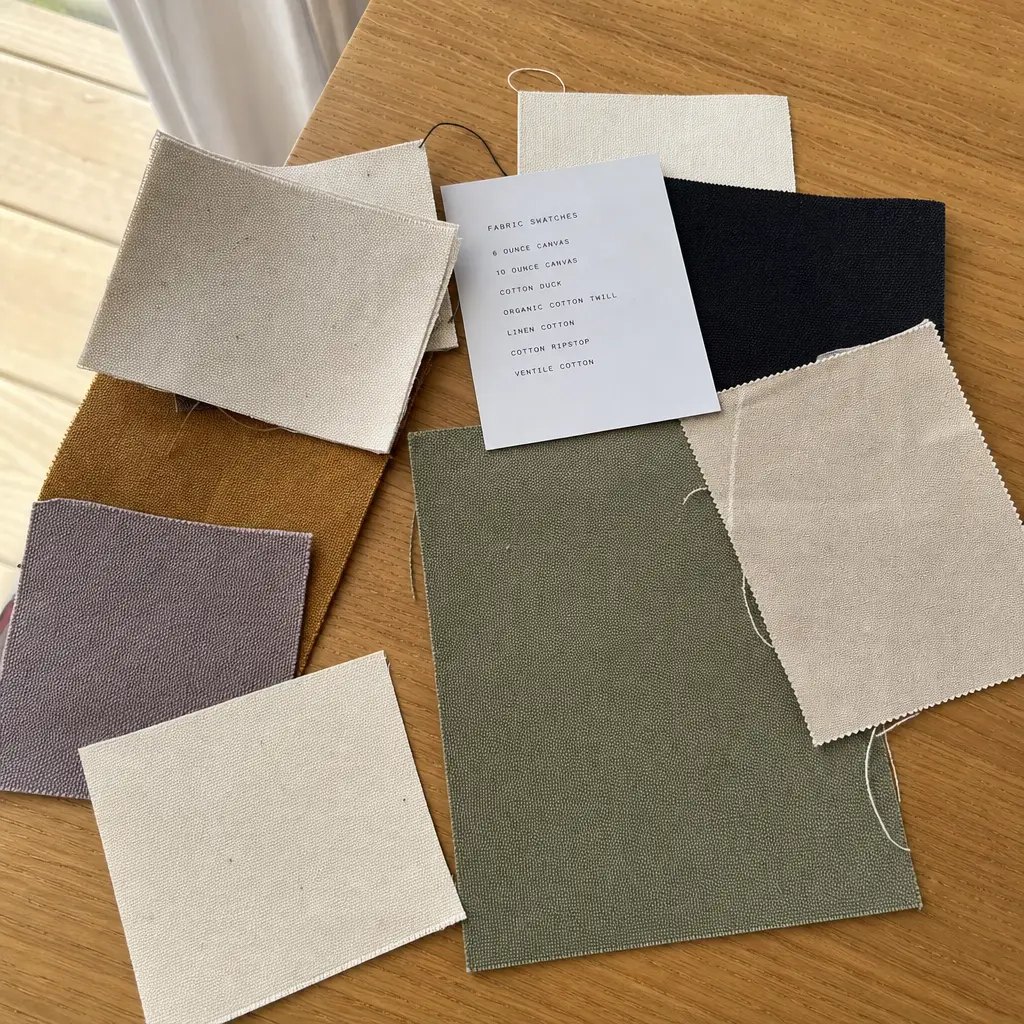
A controlled sample path saves time later. Start with the material. Approve a fabric swatch for natural, bleached, black, or dyed canvas before the supplier commits to bulk production. For custom dyed canvas, approve lab dips before bulk dyeing. If the bag size or gusset is new, approve a blank size sample before final print work. This allows the bakery team to test product fit, handle drop, standing shape, folding, and counter presentation without waiting for screens.
The print strike-off should be made on the approved fabric quality. It should show final logo size, ink color, print coverage, edge sharpness, and handfeel. If the artwork is adjusted for fabric limitations, the revised file should be dated and linked to the purchase order. Avoid vague comments such as make it a little bigger or use the same black as last time. Seasonal bakery programs repeat, and file control prevents expensive guessing.
The pre-production sample should represent the full tote: final fabric, finished dimensions, gusset, handles, reinforcement, thread, label, print, folding, inner packing, carton mark, and any hangtag or barcode. Measure it and record the data. Include body width, height, gusset, handle drop, handle width, logo size, logo position, finished bag weight, bundle count, and carton quantity. This record becomes the inspection standard.
Use sealed samples whenever possible. One signed sample should remain with the factory, one with the buyer or importer, and one with the inspector if a third-party inspection is used. Photos help communication, but they cannot fully show canvas stiffness, ink handfeel, handle construction, or odor. If any specification changes after approval, revise the sample record and purchase order. Do not rely on scattered email history.
- Approve fabric swatch or lab dip before bulk fabric processing.
- Approve blank size sample when dimensions or gusset are new.
- Approve print strike-off before mass printing starts.
- Approve full pre-production sample before bulk sewing and packing.
- Record measurements and finished bag weight on the approval sheet.
- Keep sealed samples for factory, buyer, and inspection reference.
Inspection Checklist: Make Quality Observable
A quality inspection checklist turns expectations into evidence. For wholesale canvas grocery totes for artisan bakeries, inspection should cover appearance, construction, function, packing, and documentation. Inspect random cartons, not only top cartons or factory-selected pieces. Compare production against the signed sealed sample and purchase order. Record measurements, defects, photos, carton numbers, and quantities.
Defect classification should be agreed before the inspection date. Critical defects include mold, insect evidence, sharp foreign objects, unsafe contamination, or strong chemical odor that makes the product unsuitable for handling. Major defects include wrong fabric, wrong color, wrong logo, missing print, incorrect size outside tolerance, open seams, broken handle reinforcement, severe stains, unusable gusset, print transfer, missing labels, or incorrect packing that affects sale or use. Minor defects may include small thread trimming issues, slight acceptable slub, or light creasing within the agreed limit.
Dimension checks need one method. Measure finished bags relaxed and flat, without stretching. Check body width, body height, bottom gusset, side gusset, handle drop, handle spacing, logo size, and logo position. If the order has multiple canvas colors or artwork versions, inspect each one separately. Also check finished bag weight against the approved sample or target range. A lighter bag can signal fabric substitution, smaller panels, or lighter handle material.
Functional checks should match actual use. Load the tote at the agreed safe carrying weight, such as 5 kg or 8 kg, then inspect handle attachments, top hem, side seams, and bottom corners. Perform the agreed dry rub and bend checks on the print. Smell the bag and carton interior for mildew, damp storage, or chemical odor. Open the gusset and confirm the tote loads as intended. The inspection question is simple: can this bag function as a branded bakery grocery tote, not just resemble the sample from a distance?
- Inspect random cartons against the sealed sample and purchase order.
- Measure relaxed finished bags using the agreed method.
- Check body, gusset, handle, logo, finished weight, labels, and carton count.
- Classify defects as critical, major, or minor before inspection.
- Run load checks and inspect stress points after testing.
- Check print rub, cracking, transfer, pinholes, ghosting, and registration.
- Reject mildew, oil stains, water marks, insect evidence, and strong odor.
- Document failures with photos, measurements, defect counts, and carton numbers.
Packing, Cartons, Moisture Control, and Receiving
Packing deserves the same attention as the tote itself. Canvas bags can arrive creased, distorted, damp, dirty, or hard to count if packing is left to factory habit. Over-compressed cartons may reduce freight volume, but they can create hard logo creases, crushed gussets, and pressure marks. Loose cartons can collapse in export handling. The packing plan must protect presentation quality and support receiving at stores, warehouses, fulfillment centers, or kit packers.
Flat packing in counted bundles is common. Bundles may use paper bands, recyclable ties, or inner polybags depending on the buyer’s sustainability goals and moisture-control requirements. A plastic-free preference should be balanced against the shipping route. Cotton canvas absorbs moisture during humid storage or ocean freight. Dry cartons, carton liners, desiccants where appropriate, and clean warehouse handling reduce the risk of mildew and odor. Any sustainability or plastic-free claim should match the actual materials used.
Carton data should be confirmed before freight costing and warehouse approval. Ask for pieces per bundle, bundles per carton, carton dimensions, net weight, gross weight, and approximate CBM. Carton gross weight should stay within the buyer’s manual handling limits. Carton marks should match the purchase order and receiving rules, including item number, PO number, color, quantity, carton number, gross weight, net weight, destination, and country-of-origin marking if required.
Packing should also protect the print. Avoid folding printed panels ink-to-ink when transfer risk exists. Do not place thick seams directly across the main logo under pressure if it can leave marks. If the tote is sold as merchandise, individual hangtags, barcodes, folded presentation, and clean retail bundles may be required. If it is used only behind the bakery counter, bulk counted packing may be enough. Let the receiving channel decide the packing method.
- Confirm pieces per bundle, bundles per carton, carton size, gross weight, and CBM.
- Avoid over-compression that creases logos or deforms gussets.
- Use dry export cartons and route-appropriate moisture controls.
- Verify carton marks, barcode rules, and purchase order details.
- Specify paper bands, polybags, carton liners, hangtags, or no-plastic packing clearly.
- Inspect carton dryness, odor, crushing, count accuracy, and fold presentation.
Lead Time, Change Control, and Reorder Consistency
Lead time should be counted from approvals, not from the first inquiry. A supplier can estimate timing early, but responsible production depends on approved artwork, fabric, lab dip if needed, sample approval, deposit, material booking, packing instructions, and carton mark confirmation. A stock natural canvas tote with one-color printing will usually move faster than a custom dyed tote with several logo versions and retail-ready packing.
Bakery programs often have fixed commercial dates: openings, holiday gift sets, farmers market seasons, subscription launches, wholesale deliveries, and promotional events. These schedules leave little room for rework. Common delays include late artwork edits, unclear Pantone references, lab dip resubmission, fabric shortages, strike-off rejection, carton mark changes, sample shipping time, inspection booking, and failed inspection requiring sorting or repair.
Change control protects both sides. After the pre-production sample is approved, changes to logo size, handle drop, fabric color, packing, label, or carton quantity should be written as a revised specification with cost and timing impact. Verbal approvals create disputes, especially when marketing, procurement, operations, and suppliers are all involved. Each version of the spec sheet should be dated and tied to the purchase order.
Reorder consistency also needs active management. Natural canvas can vary by fabric lot, and dyed canvas can vary by shade lot. If the bakery expects repeat orders, keep the same finished dimensions, artwork files, print references, handle material, packing standard, and inspection checklist. Ask the supplier to flag any material substitution before production. A reorder is not automatically identical unless the original sample and specification system are maintained.
- Start bulk lead time after final approvals and material readiness.
- Set cutoff dates for artwork, fabric color, size, packing, and carton marks.
- Plan extra time for dyed canvas lab dips and shade approval.
- Book inspection before shipment timing becomes urgent.
- Document every post-approval change with version date and cost impact.
- Keep sample records and QC criteria for repeat orders and seasonal programs.
Specification comparison for buyers
| Spec decision | Recommended option | When it fits | Buyer risk to check |
|---|---|---|---|
| Fabric body weight | 10 oz or 12 oz cotton canvas; commonly about 270-340 GSM depending on weave, yarn, and finishing | Reusable bakery grocery totes carrying loaves, pastry boxes, coffee bags, preserves, jars, or small gift bundles | Do not compare oz alone. Ask for GSM, finished bag weight, fabric composition, weave, shrinkage claim, and whether sample stiffness comes from sizing or true fabric weight. |
| Finished bag size | Start around 38 x 42 cm with 10-12 cm bottom gusset, then adjust to the bakery’s largest box or bundle | Counter sales, farmers market bags, subscription pickup, retail coffee and bread programs | Flat totes look cheaper but do not support pastry boxes well. Confirm finished internal base, not only front-panel size. |
| Handle construction | 25-30 cm handle drop, 2.5-3.8 cm cotton webbing or strong self-fabric handles, box-x or bartack reinforcement | Reusable grocery-style carrying by hand or shoulder, especially with jars or coffee bags | Low quotes may reduce handle width, stitch density, thread quality, or reinforcement length. Require handle details in the quote. |
| Load requirement | Define safe carrying weight such as 5 kg for light bakery use or 8 kg for heavier grocery/gift use, then test the approved construction | Programs where customers may carry multiple loaves, jars, drinks, or retail goods | A stated fabric weight does not prove load capacity. Inspect handle attachments and bottom seams after loaded hanging and lift-cycle checks. |
| Logo print method | Water-based screen print for 1-3 solid colors on natural or light canvas; test plastisol or transfer only when needed | Bakery wordmarks, icons, line art, seasonal slogans, and simple store graphics | Fine lines, reversed type, gradients, and flour-dust artwork can fill in on canvas. Require strike-off on production fabric. |
| Dimension tolerances | Typical sewn cotton bag tolerance: about +/- 1 cm for body and gusset; tighter tolerances for logo position, often +/- 5-8 mm if visually critical | Purchase orders requiring repeatable store presentation and carton planning | Tolerance must be agreed before production. Inspectors should measure relaxed finished bags using the same method as the factory. |
| Color and shade | Natural, bleached, black, or dyed canvas with approved swatch; custom dyed canvas needs lab dip approval | Natural for artisan identity, black for stain resistance, dyed for campaign branding | Natural canvas has seed fleck and shade variation; dyed canvas adds MOQ, shade-lot, crocking, and colorfastness risks. |
| MOQ basis | Use stock fabric, standard size, standard handles, and one print version to control MOQ | Pilot orders, regional bakery launches, or first-time supplier qualification | A low MOQ may hide higher unit cost, substituted fabric, excluded packing, limited print colors, or separate setup charges. |
| Packing method | Flat packed in counted bundles with carton liner or other moisture control when route requires it | Wholesale delivery to stores, DCs, fulfillment centers, or promotional kit packers | Over-compression can crease logos and distort gussets. Confirm pieces per carton, carton CBM, gross weight, and carton mark format. |
Buyer checklist before sampling
- Define the selling or usage role: free handout bag, paid retail tote, gift-set packaging, subscription pickup bag, farmers market carrier, or reusable grocery tote.
- List the actual product load: baguettes, round loaves, pastry boxes, cake boxes, coffee bags, jars, bottles, napkins, retail merchandise, or mixed grocery items.
- Measure the largest product combination and convert it into finished width, height, bottom gusset, side gusset, usable base, and opening width.
- Specify fabric by oz, approximate GSM, fiber composition, weave, color, acceptable slub/seed level, shrinkage claim if washable, and target finished bag weight.
- Lock handle material, width, drop, spacing, reinforcement pattern, stitch density target, thread color, and safe carrying weight before sampling.
- Provide vector artwork with Pantone references, logo size, print area, placement from top edge and side seams, minimum line thickness, and artwork version codes.
- Require a print strike-off on actual production fabric because natural canvas texture changes ink edge sharpness, opacity, and perceived color.
- Approve a full pre-production sample covering final fabric, finished size, gusset, handle, stitching, label, print, folding, inner packing, and carton standard.
- Set measurable tolerances for dimensions, logo position, print color, stains, odor, loose threads, broken stitches, handle strength, carton count, and packing compression.
- Classify critical, major, and minor defects before inspection so the supplier, buyer, and inspector use the same pass/fail logic.
Factory quote questions to send
- What exact canvas will be used: oz, GSM, cotton or blended composition, weave, yarn count if available, finish, and natural, bleached, black, dyed, or custom-woven status?
- What are the finished body width, height, bottom gusset, side gusset, usable internal base, handle width, handle drop, handle spacing, and finished bag weight?
- What safe carrying weight is the quoted construction designed for, and what in-house load or seam checks can be performed before shipment?
- Which handle construction is included: self-fabric, cotton webbing, reinforced webbing, folded top hem capture, box-x stitching, bartack, or another reinforcement method?
- Which print method, ink type, number of colors, screen setup, print size, and print placement are included in the unit price, and which items are charged separately?
- Can you make a print strike-off on the same canvas planned for production, and what tolerance do you allow for print color, print size, and print placement?
- What is the MOQ basis: stock fabric, fabric dye lot, handle webbing, print setup, label production, packing material, or production line minimum?
- Which sample stages are included: fabric swatch, lab dip, blank size sample, print strike-off, pre-production sample, packing sample, and sealed approval sample?
- What standard tolerances do you propose for body size, gusset, handle drop, handle spacing, logo position, logo size, shade, and finished bag weight?
- How will bags be packed: pieces per bundle, bundles per carton, inner bag or paper band, carton liner, carton dimensions, gross weight, net weight, and CBM?
Quality-control points to confirm
- Fabric weight, color, handfeel, weave density, and slub level match the approved swatch within written tolerance and do not rely on excessive starch for stiffness.
- Finished dimensions are measured on relaxed completed bags and remain within tolerance for body width, body height, bottom gusset, side gusset, handle drop, and handle spacing.
- Finished bag weight is checked against the approved sample or target range to detect fabric substitution, undersized panels, or lighter handle material.
- Logo size and placement match the approved strike-off, measured from the top edge and side seams, with no visible skew that affects front-panel balance.
- Print surface has no unacceptable pinholes, smearing, ghosting, dirty-screen marks, registration errors, heavy ink ridges, cracking, or transfer marks.
- Print passes the agreed dry rub, bend, and handling checks without unacceptable powdering, flaking, staining, or loss of logo legibility.
- Handles are symmetrical, securely reinforced, correctly spaced, and free from twisting, skipped stitches, loose bartacks, broken thread, or fabric tearing at stress points.
- Seams and hems are secure with no open seams, needle cuts, excessive puckering, exposed raw edges beyond specification, or loose thread clusters left untrimmed.
- Loaded sample checks show no seam opening, handle pullout, top-edge distortion, or bottom-corner tearing after the agreed test weight and handling cycle.
- Natural canvas is free from oil stains, mildew, water marks, strong odor, insect evidence, unacceptable dark fibers, and contamination that could affect bakery presentation.