Why Print Proofing Carries the Real Risk
For wholesale canvas grocery totes for artisan bakeries, the buying risk is rarely the basic idea of a tote bag. It is the proofing detail. The bakery is purchasing a reusable branded item that may sit at checkout, carry premium bread and pastries, appear in customer photos, and travel through farmers markets, delivery routes, and neighborhood streets. A logo that looks polished in a PDF can shift once it is printed on unbleached cotton canvas with slubs, weave texture, and a warm base color.
Bakery artwork often asks a lot from canvas. Think fine serif type, hand-lettered scripts, wheat line art, small branch names, circular seals, cream ink, muted green, chocolate brown, and vintage illustrations. These elements can fill in, lose sharpness, rub during handling, print too low, or become hard to read when the gusset opens. A digital proof can confirm layout. It cannot confirm ink absorption, opacity, curing, hand feel, or how the print behaves on a sewn bag.
Treat proofing as a production control stage, not a design formality. The purchase order should state the proof sequence, who can approve, which tolerances apply, how artwork versions are named, and how bulk goods will be inspected. If those details are missing, the factory may follow a standard promotional tote workflow while the bakery buyer expects retail merchandise quality. That mismatch usually appears late, when rework, air freight, discounting, or store-level sorting is most expensive.
- Approve bulk from a physical printed sample when the order uses a new supplier, fabric shade, artwork, ink, tote size, or print method.
- Use fixed seam measurements for logo position instead of relying on centered, same as mockup, or looks balanced.
- Separate digital layout approval from physical production approval because they control different risks.
- Keep one approved gold sample with the buyer and one with the factory for bulk inspection comparison.
- Reference the sample date, artwork version, print method, and approved comments on the PO.
Start With the Bakery Load
A tote for a paid merchandise wall should not be specified like a one-day promotional giveaway. A farmers market grocery tote may need a wider gusset and stronger handles than a subscription bag carrying one loaf and one coffee bag. Before the RFQ goes out, list the exact products the tote must handle and the setting where it will be used: checkout counter, market stall, online merch order, gift bundle, delivery program, or multi-location replenishment.
Bakery packaging is often rigid, fragile, or both. Pastry boxes, cake boxes, cookie tins, glass jars, bottled drinks, and coffee bags do not behave like soft apparel. If the tote is too narrow, customers tilt the box. If the gusset is too shallow, the bag collapses. If the handles are too short, market shoppers cannot carry it comfortably on the shoulder. If artwork is centered only on the flat panel, it may look off-center once the tote is filled.
This usage review belongs before sampling because it affects the factory pattern. Share box dimensions, expected filled weight, carry style, and whether the tote must stand open at checkout. A supplier can then recommend boxed-bottom construction, side gusset depth, handle length, reinforcement, and canvas weight. Without those inputs, a factory may quote its cheapest default grocery tote, which can look acceptable on paper and disappoint in store.
- List the bakery items the tote must carry, including package dimensions and estimated filled weight.
- State whether the tote is a giveaway, paid merchandise item, subscription bag, loyalty reward, or packaging upgrade.
- Choose a gusseted or boxed-bottom construction when the bag must hold pastry boxes or stand open.
- Define shoulder carry or hand carry before sampling; handle drop is part of the product function.
- Check print visibility with the tote filled, not only while the bag lies flat on a table.
Build a Factory-Ready Specification
A useful RFQ gives the factory measurements it can quote and the inspector can verify. For many bakery grocery totes, a practical starting point is about 38 cm wide by 35 cm high with a 10 cm to 15 cm gusset. The final size, however, should come from the bakery’s actual packaging. Specify finished width, finished height, gusset depth, top hem depth, bottom construction, handle width, handle drop, seam style, reinforcement, label position, and folding method.
Canvas weight should be stated in both ounces and approximate GSM where possible. A common retail-grade range is 10 oz to 12 oz cotton canvas, roughly 340 to 407 GSM. It usually gives more structure than lightweight promotional cotton while keeping carton weight and folding bulk manageable. An 8 oz bag may work for low-cost giveaways, but buyers should not expect the same body or load confidence. A 14 oz canvas can feel premium, yet it can increase unit cost, sewing difficulty, freight, carton volume, and needle stress.
Material wording needs the same care. Natural unbleached cotton, bleached cotton, dyed canvas, organic cotton, recycled cotton, and cotton blends are different sourcing decisions. Natural canvas often has specks and shade movement. Dyed canvas may need lab dips and higher MOQ. Organic or recycled claims should be supported with supplier documentation if the bakery plans to use those terms in consumer-facing marketing. Procurement should avoid broad sustainability language unless the supply chain can substantiate it.
- Specify dimensions as finished measurements, not cutting size or supplier pattern code.
- Use 10 oz to 12 oz cotton canvas for most reusable retail bakery grocery totes.
- Confirm whether GSM is measured before finishing, after dyeing, after washing, or from fabric supplier specification.
- Separate acceptable natural cotton slubs from unacceptable stains, holes, oil marks, mildew, or dark contamination.
- Include woven labels, care labels, hangtags, barcode stickers, paper bands, and carton marks in the first RFQ.
Artwork Files Need Production Detail
Send production artwork, not a screenshot, low-resolution mockup, or photo of a previous bag. The cleanest files are usually AI, EPS, SVG, or editable PDF with fonts outlined, linked images embedded, final print size stated, and each spot color named. Add a placement drawing with distance from the top edge, side seam, bottom fold, and handle stitching. If the program includes several bakery branches, seasonal marks, or language versions, give each file a unique name and revision number.
The factory should review print feasibility before screens or transfers are made. Canvas texture can break thin strokes and close small gaps. Tiny serif type, script taglines, delicate wheat illustrations, and dense halftone shading may look elegant on paper packaging but weak on canvas. Ask the supplier to identify minimum line width, smallest readable text height, minimum negative-space gap, and any risk from large solid ink areas. If the artwork needs thickening or simplification, the brand owner should approve that change before sampling.
Pantone references are useful, but they do not make natural canvas behave like coated paper. Brown, cream, black, and muted green can look warmer, duller, or less opaque on unbleached cotton. State which colors are brand-critical and whether a controlled shade range is acceptable. When color matters, approve a strike-off or physical printed sample on the actual canvas instead of judging from a monitor photo.
- Send vector files with outlined fonts, final print size, color count, and clear artwork version names.
- Identify the smallest text, thinnest line, tightest gap, and largest solid ink area for factory review.
- Use Pantone references, then approve final appearance on the selected canvas color.
- Avoid low-contrast cream, beige, or pale ink on natural canvas unless a physical proof confirms readability.
- Document whether the supplier may thicken lines, simplify art, or resize the logo for production quality.
Select the Print Method Deliberately
Screen printing is usually the most practical method for wholesale canvas grocery totes when the bakery design uses one to three solid spot colors. It is efficient at volume, familiar in hand feel, and durable when the ink is suitable and fully cured. Many artisan bakery marks fit this process well: a one-color store logo, a dark brown seal, a two-color illustration, or a simple icon with branch name. The tradeoff is setup cost, especially when one purchase order is split across many small artwork versions.
Heat transfer can reproduce more colors, gradients, and detailed illustrations, but it may feel like a film on top of the fabric. It can work for short runs, seasonal graphics, or complex artwork, provided the buyer checks edge feel, fold cracking, adhesion, and whether the finish looks too glossy for a craft bakery brand. Digital print may fit lower quantities or multicolor programs depending on the supplier’s equipment, but opacity, rub performance, and hand feel must be tested on the chosen canvas.
Lock the print method before comparing prices. A one-color screen print quote is not equivalent to a multicolor transfer quote. Also require a new physical proof if the factory changes method after sampling. Even with the same artwork file, a method change can alter color, thickness, texture, durability, and the way the bag folds when packed.
- Use screen print for solid bakery logos, limited colors, repeat runs, and larger wholesale quantities.
- Use transfer printing only after checking film feel, edge adhesion, fold behavior, and brand fit.
- Use digital printing selectively for complex art or lower quantities after confirming opacity and rub results.
- Ask how large solid ink areas will be cured and checked to avoid tackiness, cracking, or blocking.
- Quote each artwork version separately when screens, transfers, or setup work are not shared.
- Do not approve bulk after a print-method change without a new physical sample.
Set Approval Gates Before Sampling
A reliable proofing workflow has clear gates: artwork review, digital proof, physical printed sample, pre-production sample, bulk approval, and final inspection. The digital proof should show bag outline, print dimensions, centerline, seam reference points, color callouts, and artwork version. It is valuable for catching placement and file errors before sample cost is incurred. It is not enough for a new or brand-critical order.
The physical printed sample confirms what the PDF cannot show: ink absorption, opacity, edge sharpness, hand feel, rub behavior, and color on the actual canvas. For a first order, the sample should use the same fabric color, same print method, same ink system, and same intended print size as bulk. If the buyer approves art on loose fabric, a later pre-production sample should still confirm placement on the completed gusseted tote.
Approval comments should be measurable. Move print up 12 mm is stronger than make logo higher. Less red, closer to Pantone reference, send revised strike-off is clearer than color is off. The supplier should confirm every approved change in writing before cutting, printing, sewing, or packing bulk goods. If approval is conditional, the condition must be specific enough for an inspector to check later.
- Digital proof should include print size, position from seams, artwork version, color names, and printable-area limits.
- Physical proof should use the same canvas, ink, print method, and logo size planned for bulk production.
- Pre-production sample should confirm fabric, cutting, sewing, handles, gusset, labels, print, folding, and packing.
- Approval comments should use measurements, color references, and clear accept or revise decisions.
- Bulk production should not start until open proof comments are closed in writing.
- Photos can support records, but the physical gold sample should remain the inspection standard.
Compare MOQ and Cost Clearly
MOQ for canvas grocery totes is shaped by more than total order quantity. Fabric stock, dyeing, cutting efficiency, print setup, artwork versions, labels, packing materials, and carton sorting can all create separate minimums. A supplier may offer a low MOQ for stock natural canvas with one screen-printed logo. The same tote in dyed canvas with four branch logos, woven labels, barcode stickers, and destination-specific packing may need a higher MOQ or a higher unit price.
Ask suppliers to break out cost drivers instead of sending one blended number. Useful line items include sample fee, screen charges, color matching, strike-off cost, blank tote price, printing, woven label, hangtag, barcode sticker, paper band, individual bag, master carton, export packing, and inland transport. This makes quote comparison cleaner and reduces late surprises when labeling or packing requirements appear after sample approval.
The cheapest unit price may not be the lowest landed cost. Heavier canvas, oversized gussets, individual packing, low carton fill, and strict carton separation can affect freight and warehouse labor. Ask for pieces per carton, carton dimensions, net weight, gross weight, and maximum recommended carton weight during quotation. For bakery groups with multiple stores, carton marks and artwork separation may matter as much as the tote price.
- Request price breaks that match the program, such as 500, 1,000, 3,000, and 5,000 pieces.
- Confirm whether MOQ applies per order, size, fabric color, artwork, print color count, label type, or packing method.
- Separate setup, sampling, labels, tags, packing materials, and inland freight from the tote unit price.
- Compare EXW, FOB, CIF, and DDP trade terms before choosing the lowest quote.
- Ask for carton size, pieces per carton, gross weight, and packing method during quotation.
- Evaluate total landed and operational cost, not only the first unit price in the email.
Review Samples Like an Inspector
Sample review should follow a written checklist. Start with construction: finished width, height, gusset depth, top hem, handle width, handle drop, handle reinforcement, seam straightness, label position, and folding method. Open the tote fully and measure it as a usable bag, not only while it lies flat. Then fill it with a realistic bakery load such as a pastry box, bread loaf, coffee bag, and jars. Watch how the base sits, whether seams twist, whether handles feel comfortable, and whether the logo remains visible.
Print review needs more precision than color looks good. Check opacity, edge sharpness, registration, skew, placement, small text readability, pinholes, feathering, screen marks, ink buildup, hand feel, and dry rub transfer. A simple dry rub check with a clean white cloth can reveal loose pigment or under-cured ink. If the tote will be sold as merchandise, the buyer may request damp rub or light wash checks as well, but the method and pass/fail rule should be agreed before the order.
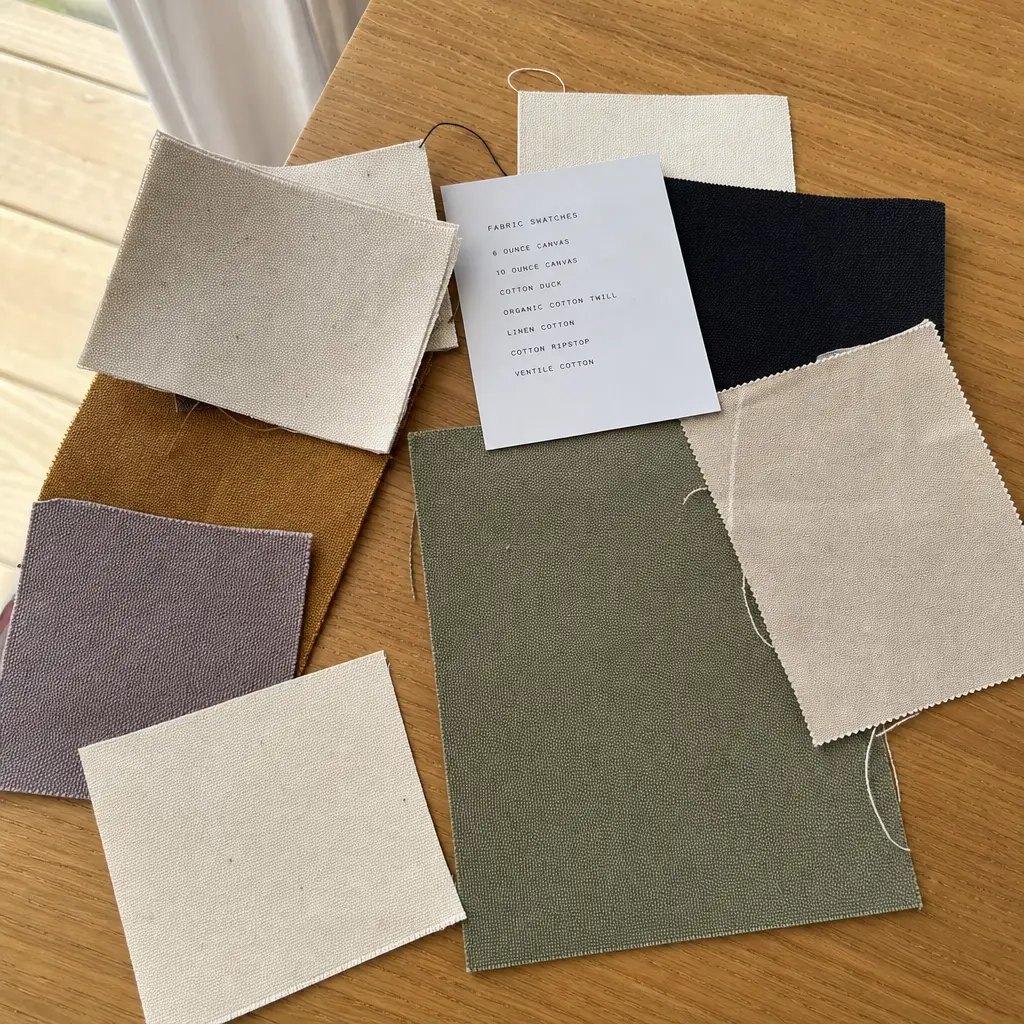
Natural canvas should be judged realistically. Small cotton specks and slubs may be normal for unbleached fabric and may suit the handmade bakery aesthetic. Stains, oil marks, mildew odor, holes, dark contamination, broken yarns, or defects directly under the logo are different problems. The approved sample should show what normal fabric character looks like so inspectors do not reject acceptable slubs or accept serious contamination.
- Measure the sample at consistent points and record actual results against requested tolerances.
- Check the print from seam reference points and confirm that the logo does not visually tilt.
- Test the tote with actual bakery packaging instead of judging capacity by dimensions alone.
- Use a clean cloth dry rub check and record whether visible pigment transfer occurs.
- Accept normal natural-cotton slubs only when they do not interfere with retail appearance or the print.
- Reject stains, odor, holes, loose handle reinforcement, skipped stress stitches, and unreadable text versus the approved sample.
Control Bulk QC and Defects
Final inspection should combine tote workmanship checks with print-specific brand controls. A general AQL inspection can review measurements, stitching, loose threads, stains, labels, odor, packing, and carton condition. Printed bakery totes need additional checks for placement, color consistency, registration, rub performance, artwork version count, carton separation, and comparison to the approved gold sample. Otherwise, a shipment may pass as a textile item and still fail as branded retail merchandise.
Agree tolerances before production begins. Finished width and height are often controlled around +/-1 cm for basic sewn canvas bags, though the exact tolerance should reflect construction and finishing. Logo placement is usually tighter. For centered front prints, many buyers request about +/-5 mm to +/-8 mm from fixed seams if the bag structure allows it. Just as important, define the measurement points and how tilt will be judged.
Defect classification prevents avoidable arguments. Wrong artwork, missing handle reinforcement, severe stain on the print panel, mildew odor, failed rub check, broken seam, or upside-down logo should be treated as serious. Minor loose threads away from the logo may be minor if they can be trimmed. Slight natural shade movement may be acceptable if it matches the approved range. Multi-version orders need extra attention because mixed cartons can create store-level failures even when each bag is well made.
- Use AQL inspection with added print and artwork-version checks, not only generic tote inspection.
- Compare fabric shade, construction, logo placement, print color, and print quality to the physical gold sample.
- Measure finished dimensions, handle drop, gusset depth, and print position using agreed reference points.
- Classify wrong artwork, missing reinforcement, failed rub, major stains, broken seams, and severe tilt as serious defects.
- Verify artwork version counts, carton separation, carton marks, packing list accuracy, and barcode readability.
- Inspect before shipment release, especially when goods ship directly to distributors, warehouses, or multiple bakery locations.
Plan Packing and Lead Time
Packing should protect the print and make receiving easier. Flat packing is common for canvas grocery totes, but heavy compression can leave fold lines across large print areas. Dark or raised prints may need inner paper, controlled face-to-face stacking, or a fold method that avoids abrasion. Sustainability-minded bakeries may prefer no individual polybag or paper bands instead of plastic, but the goods still need to arrive clean, dry, and saleable. Pack method should be quoted and sampled early.
Carton marks are a small control with a large operational effect. Each carton should show purchase order number, item number, artwork version, fabric color, quantity, carton sequence, gross weight, and destination when required. If four branch logos ship under one PO, weak carton identification can send the wrong tote to the wrong store. Inspection should verify packing list, carton labels, and physical contents match before release.
Lead time should be broken into stages rather than treated as one production number. Ask for working days for artwork review, digital proof, sample production, courier transit, buyer approval, fabric sourcing, cutting, printing, curing, sewing, trimming, inspection, packing, and handover to the forwarder. This makes launch planning more realistic and shows the real cost of late artwork changes. A print proofing checklist only works when its approval gates are built into the schedule.
- Define bulk pack, paper band, recycled polybag, individual polybag, carton divider, or no-plastic policy before quotation.
- Avoid fold lines directly through large or raised print areas whenever the packing method allows it.
- Set pieces per carton and maximum gross weight to match warehouse handling requirements.
- Require carton marks that identify PO, item, artwork version, fabric color, quantity, carton number, and destination.
- Separate artwork versions by carton whenever practical for multi-branch bakery programs.
- Build proof review, courier time, inspection, and corrective-action time into the production schedule.
Specification comparison for buyers
| Sourcing decision | Typical B2B specification | Procurement fit | Risk to control before PO |
|---|---|---|---|
| Canvas weight | 10 oz to 12 oz cotton canvas, approximately 340 to 407 GSM; confirm whether weight is nominal, greige, finished, or washed | Retail-grade bakery grocery totes for loaves, pastry boxes, coffee bags, jars, packaged gifts, and market purchases | 8 oz can feel like a giveaway and collapse under mixed loads; 14 oz may increase cost, carton weight, folding bulk, and sewing stress |
| Fabric color and material | Natural unbleached, bleached, dyed, organic cotton, recycled cotton, or cotton blend stated on the RFQ | Brand-led bakery programs where canvas tone and sustainability language influence customer perception | Natural canvas is not a white print base; dyed or certified materials can change MOQ, shade control, testing, documents, and lead time |
| Finished size | Common grocery format around 38 cm W x 35 cm H x 10-15 cm gusset, adjusted to actual bakery packaging | Checkout bags, farmers market totes, subscription bags, gift bundles, reusable retail merchandise, and online orders | Generic tote dimensions may not fit pastry boxes, cake boxes, baguette sleeves, jars, or coffee bags without tilting or crushing |
| Gusset and base | Boxed bottom or side/bottom gusset with agreed fold direction and bottom seam construction | Programs where the tote must stand open, hold boxed goods, or keep purchases stable during carry | Flat totes save cost but reduce capacity, distort front artwork, and perform poorly with square bakery packaging |
| Handle construction | Self-fabric or cotton webbing handles, often 2.5-3.5 cm wide, with X-box, bar-tack, or reinforced stitch pattern | Reusable totes expected to carry heavier retail purchases and be sold as merchandise | Weak anchoring creates complaints even when body fabric is strong; handle drop must match hand-carry or shoulder-carry use |
| Print method | Screen print for 1-3 solid spot colors; heat transfer or digital print only after proofing complex or multicolor artwork | Most artisan bakery logos using seals, wheat icons, line art, hand lettering, branch names, and simple illustrations | Wrong method can cause stiff hand feel, poor opacity, edge bleeding, cracked transfers, setup inefficiency, or unreadable fine text |
| Proof approval | Digital layout plus physical printed pre-production sample on actual canvas, using approved size, ink, and construction | First orders, new suppliers, new artwork, new fabric shade, new print method, or brand-critical launches | Digital proof cannot show cotton absorption, fabric slubs, opacity, rub resistance, print hand feel, or placement on a sewn gusseted bag |
| MOQ and pricing | Quote by total quantity, bag size, fabric color, artwork version, print color count, labels, packing, and trade term | Bakery groups, distributors, regional chains, franchises, or seasonal campaigns with several logos | One PO may hide multiple small runs; screens, sorting, labeling, carton marks, and packing can change the real unit cost |
| Packing and cartons | Flat packed with agreed fold, inner protection, pieces per carton, maximum carton weight, carton marks, and no-plastic or polybag policy | Warehouse receiving, multi-store allocation, online merchandise, and store-ready replenishment | Tight compression can crease print panels; missing carton version marks can send the wrong bakery logo to the wrong location |
Buyer checklist before sampling
- Define finished width, height, gusset depth, top hem, handle width, handle drop, seam type, reinforcement, and target load before asking for price.
- Match tote dimensions to real bakery packaging: bread sleeves, baguette bags, pastry boxes, cake boxes, cookie tins, coffee bags, jam jars, bottled drinks, and gift sets.
- Specify canvas weight in oz and GSM, and state whether the material is natural, bleached, dyed, organic cotton, recycled cotton, or a cotton blend.
- Confirm whether fabric weight is based on supplier nominal weight, greige fabric, finished fabric, washed fabric, or third-party test value.
- State the commercial use: free giveaway, paid merchandise, loyalty gift, subscription bag, farmers market tote, or store packaging upgrade.
- Send vector artwork with fonts outlined, final print size, Pantone references, color count, and placement dimensions from fixed seams.
- Ask the factory to review minimum line width, smallest text height, negative space, halftones, large ink coverage, and print method suitability before quoting.
- Confirm whether the logo is centered on the flat panel, visually centered when the gusset expands, or positioned for visibility when the tote is filled.
- Require a physical printed pre-production sample on the same fabric color and construction for any first order, new supplier, new artwork, or changed print method.
- Define finished measurement tolerances, commonly about +/-1 cm for width and height, with tighter placement tolerance for the printed logo.
Factory quote questions to send
- What exact canvas weight will be used in oz and GSM, and is that value nominal, greige fabric weight, finished fabric weight, or measured after washing or dyeing?
- Is the fabric natural unbleached, bleached, dyed, organic cotton, recycled cotton, or blended, and what shade variation or shrinkage range should we allow?
- Can you confirm finished tote width, height, gusset depth, top hem, handle width, handle drop, handle reinforcement, seam construction, and tolerances in writing?
- What practical load has this construction been designed for, and would you recommend stronger handles, a deeper gusset, or heavier fabric for jars, coffee bags, or boxed items?
- What is the MOQ per bag size, fabric color, artwork version, print color count, label type, and packing method?
- Which print method do you recommend for this artwork on this canvas, and what details may need adjustment for clean bulk production?
- What is the maximum printable area, and how far should the print stay from side seams, gusset folds, top hem, handle stitching, and bottom folds?
- Can you provide a digital proof first and then a physical printed pre-production sample using the same canvas, ink system, print method, and sewing construction as bulk?
- What tolerance can you hold for logo placement from the top seam and side seams, and how will you measure skew or tilt during QC?
- What dry rub, damp rub, curing, adhesion, or blocking checks do you run for screen print, transfer print, or digital print on cotton canvas?
Quality-control points to confirm
- Finished width and height should normally stay within about +/-1 cm unless the tote is washed, heavily gusseted, or intentionally relaxed; agree the exact tolerance before bulk.
- Gusset depth should be measured after the tote is opened and shaped, not only while folded flat, because folded measurements can hide base variation.
- Handle drop should be checked from the top edge to the handle apex and compared to the approved sample, especially for shoulder-carry designs.
- Handle width and reinforcement should match the approved construction; missing X-box stitches, loose bar-tacks, skipped stitches, or weak anchoring should be treated as major defects.
- Print placement tolerance should be defined from fixed seams, commonly about +/-5 mm to +/-8 mm for centered front logos if the bag construction allows it.
- Logo tilt should be measured and visually reviewed; a print can meet horizontal distance tolerance and still look unacceptable on a twisted panel.
- Pantone matching on natural canvas should allow controlled visual variation because beige fabric, slubs, and ink absorption change perceived color.
- Screen print should show no obvious flaking, tackiness, pinholes, heavy edge bleeding, under-cured ink, screen drag marks, or unwanted pigment transfer in a dry rub check.
- Fine lettering and line art should remain readable at normal viewing distance and should not fill in beyond the approved physical sample standard.
- Large solid print areas should be checked for even coverage, acceptable hand feel, no cracking at folds, and no blocking between stacked printed panels.