Start With the Bakery Load, Not the Tote Size
The most common mistake in buying wholesale canvas grocery totes for artisan bakeries is starting with a familiar size such as 38 x 42 cm and only later testing it with real bakery products. A bakery tote is not just a flat advertising bag. It may need to carry a sourdough loaf, a pastry box, a jar of jam, a coffee pouch, a bottle, or a mixed grocery purchase from a market stall. These items create different stress points than folded apparel or event brochures.
Before requesting quotes, define the actual retail use. A tote for one loaf and a receipt can be lighter and simpler. A tote sold as a reusable grocery bag or used for holiday bakery gift sets needs a gusset, stronger handles, and better seam construction. Procurement teams should include photos or dimensions of the typical contents in the RFQ because factories can then recommend fabric weight, handle drop, and carton packing more accurately.
- For bread-only use, prioritize clean appearance, low lint, and a handle that feels comfortable for light loads.
- For pastry boxes, specify bottom gusset depth so boxes sit flat instead of tilting inside the bag.
- For grocery or market use, treat 5 to 8 kg carrying performance as a design requirement, not an assumption.
- For premium retail gifting, add inside seam finishing and tighter print placement tolerance.
Choose Canvas Weight by Use Case
Canvas weight drives cost, hand-feel, print result, folding behavior, and shipping volume. For bakery grocery totes, 8 oz canvas can work for promotional light-duty bags, but it often feels too thin for a reusable grocery promise. A practical wholesale range is usually 10 oz to 12 oz, roughly 280 to 340 GSM depending on yarn and weave. This range gives enough body for a gusseted bag without becoming hard to fold or expensive to freight.
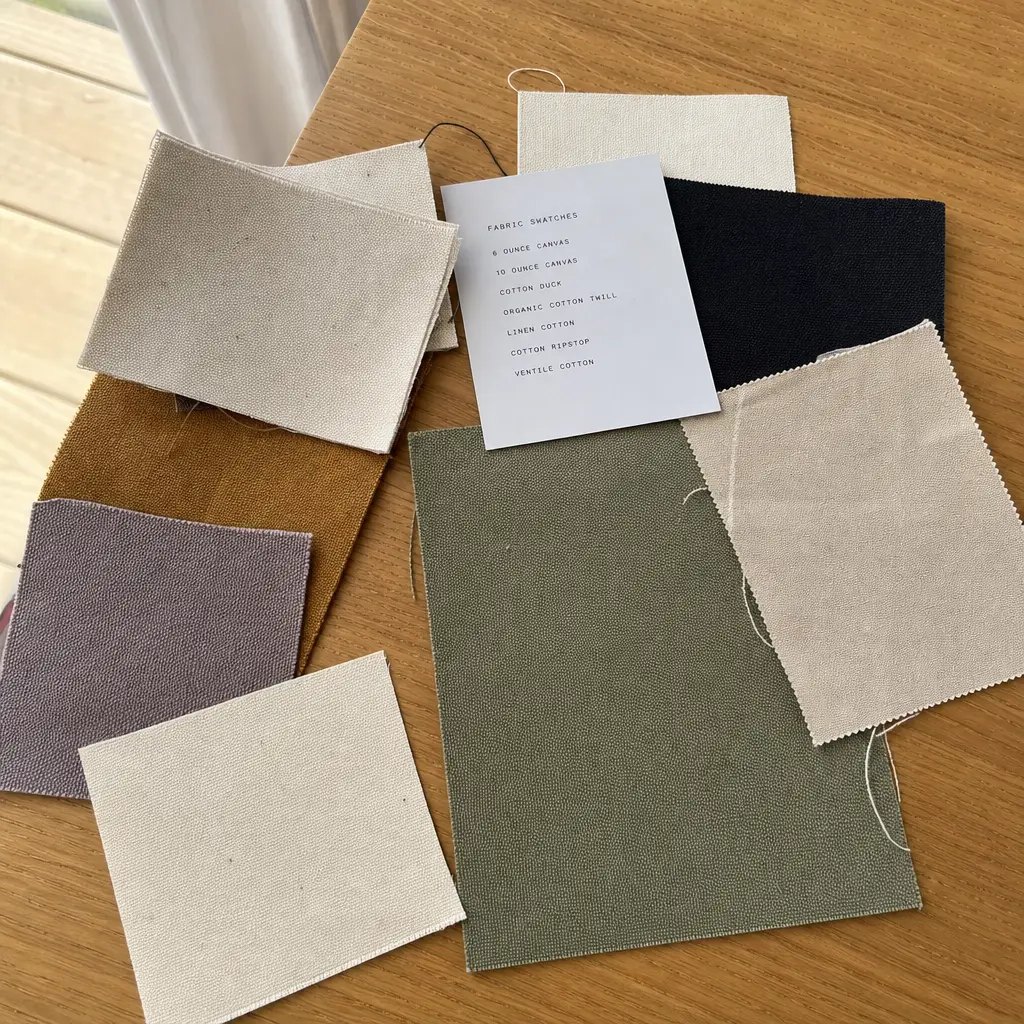
Do not compare quotes only by ounce rating. Some suppliers use different conversion standards or quote nominal fabric weight instead of tested GSM. A 10 oz canvas from one mill may feel tighter and stronger than an 11 oz canvas from another if the weave density differs. For a serious bakery retail program, ask for swatches and record the measured GSM, weave density, and shrinkage expectation in the approved spec.
- 8 oz, about 230 to 260 GSM: suitable for light promotional bags, not ideal for heavy grocery positioning.
- 10 oz, about 280 GSM: balanced for most bakery carryout and retail merchandise use.
- 12 oz, about 340 GSM: stronger hand-feel for reusable grocery bags, but higher unit cost and carton weight.
- 14 oz and above: premium and durable, but often too stiff or costly for high-volume bakery distribution.
Natural, Bleached, Dyed, or Recycled Canvas
Natural unbleached canvas is popular for artisan bakeries because it supports a warm, craft-oriented look and usually has a lower processing cost than dyed fabric. The tradeoff is shade variation. Natural cotton can shift from creamy to grayish or yellowish depending on cotton lot, yarn source, and finishing. If the bakery brand uses a very clean white identity, natural canvas may not match expectations without a swatch standard.
Dyed canvas gives better brand color control but adds lab dip approval, dyeing MOQ, and possible colorfastness concerns. Bleached canvas creates a cleaner background for detailed print, but it can feel less natural and may show dirt quickly in grocery use. Recycled cotton or blended recycled canvas can be attractive for sustainability programs, but buyers should evaluate strength, fiber consistency, and documentation before making claims on hangtags or retailer listings.
- Use natural canvas when the brand accepts small shade variation and wants a bakery-market appearance.
- Use bleached canvas when artwork needs a cleaner base and the buyer accepts higher visible staining risk.
- Use dyed canvas when tote color is part of the retail brand system and lab dip approval is available.
- Use recycled canvas only when the supplier can explain composition, strength impact, and claim documentation.
Build the Gusset Around Bakery Packaging
A grocery tote for bakery use should usually have a side and bottom gusset. Flat totes quote cheaper and pack flatter, but they do not protect pastry boxes or mixed retail items well. When a box is forced into a flat bag, the bag pulls diagonally, the handles twist, and the print panel can distort. A gusseted structure helps the tote stand open during packing at the bakery counter and keeps contents more stable during carryout.
The gusset should be selected from actual product dimensions. A 10 cm gusset may be enough for bread and small retail items. A 12 to 15 cm gusset is more practical for boxed cookies, cake slices, or gift bundles. If the tote is intended for grocery markets, the bottom panel may need additional stitching control because the load sits directly on the gusset seams.
- Measure the widest bakery box and add clearance for easy counter packing.
- Keep the front print away from gusset folds if the artwork has fine text or a border.
- Specify whether the gusset is boxed, folded, or sewn with a separate bottom construction.
- Confirm finished dimensions after sewing because gusset depth can reduce usable front width.
Handle Material and Reinforcement Decide Real Usability
Handles are often where low-priced tote quotes hide risk. A bakery customer may carry the bag by hand while also holding coffee, a phone, or a child’s hand. Narrow handles can dig into the hand when the bag contains jars or bottles. For grocery totes, a 3.0 to 3.8 cm handle width is a practical range. Self-fabric handles give a matched look, while cotton webbing can improve strength and consistency.
Handle drop should match the use. Short hand-carry handles may suit counter takeaway, but many reusable grocery buyers prefer a shoulder carry option. A typical shoulder-friendly drop is around 25 to 30 cm, depending on bag height. Reinforcement matters as much as handle material. Cross-stitch boxes, bartacks, or reinforced stitch patterns should be defined in the RFQ rather than left to the factory default.
- For light bakery carryout, self-fabric handles can control cost and maintain a simple look.
- For market grocery use, cotton webbing handles with reinforced stitching are safer.
- For shoulder carry, confirm handle drop on a filled sample, not an empty flat bag.
- For heavier loads, test handle pull at the attachment point and inspect stitch consistency.
Match Print Method to Canvas Texture
Most bakery tote artwork is a one-color or two-color logo, wordmark, illustration, or store information panel. Screen printing is usually the best fit for wholesale canvas grocery totes because it gives reliable coverage, manageable setup cost for repeat orders, and good control on solid graphics. On coarse canvas, however, very small text, thin lines, and large solid blocks need careful proofing because fabric texture affects edge sharpness and ink laydown.
Heat transfer can work for short runs, complex colors, or photographic artwork, but it may feel less integrated with the fabric and can add concerns around cracking or peeling if the tote is folded heavily. Embroidery is possible but usually not the most cost-efficient choice for grocery totes with large front logos. The buyer should approve the artwork size, Pantone reference, print position, and actual print sample on the selected bulk fabric before mass production.
- Use screen print for simple logos, solid bakery marks, and repeat wholesale programs.
- Avoid tiny reversed text on coarse canvas because ink spread can close the letters.
- Set a print placement tolerance, for example plus or minus 5 mm for standard tote production.
- Require rub testing and fold testing if the printed panel will be heavily creased in packing.
MOQ Logic Behind Factory Quotes
MOQ is not only a factory preference; it is tied to fabric purchase, dyeing, cutting efficiency, print setup, and packing labor. A natural canvas tote with one-color print can often be produced at lower MOQ than a dyed canvas bag with custom webbing, woven labels, and individual retail packaging. When a buyer requests a low quantity with many custom elements, the factory may either raise the unit price or substitute available materials.
For procurement teams, the important point is to separate style MOQ, fabric MOQ, color MOQ, and print MOQ. A supplier may accept 500 pieces for a standard natural canvas tote, but require a higher quantity for custom dyed fabric. If several bakery locations share the same bag body with different prints, it may be possible to consolidate fabric cutting and split printing, but this must be planned before production.
- Standard natural canvas with standard handles usually has the most flexible MOQ.
- Custom dyed fabric may require mill MOQ and lab dip approval before bulk production.
- Multiple logo versions increase screen setup and packing segregation work.
- Lower MOQ may be useful for testing, but compare it against higher per-unit cost and longer setup time.
Sample Approval Should Represent Bulk Production
A sample made from substitute fabric is useful for size review, but it should not be treated as production approval. For bakery grocery totes, the buyer should approve at least one pre-production sample using the confirmed fabric, handle, seam construction, print method, and label position. This sample becomes the reference for factory QC and third-party inspection. If the bulk fabric is still being sourced, label the early sample clearly as a size or construction sample only.
Sample review should include loading the bag with real bakery products or equivalent weight. Check whether boxes sit flat, whether the handles twist, whether the bag mouth opens enough for counter staff, and whether the print distorts when filled. A good sample approval sheet records what is approved and what must change before bulk production. Vague comments such as make it stronger or improve printing do not protect the buyer during inspection.
- Approve fabric swatch, bag construction sample, artwork proof, and pre-production sample as separate milestones.
- Photograph the approved sample from front, side, inside, handle attachment, and carton packing view.
- Record exact finished dimensions and tolerances on the sample approval form.
- Do not release bulk production until print color and position are approved on the final fabric.
Packing Affects Creasing, Freight, and Retail Handling
Canvas totes are simple products, but poor packing can create avoidable claims. Heavy canvas creases when over-compressed, and large printed panels can mark against each other if packed too tightly before ink is fully cured. For wholesale bakery programs, flat packing in export cartons is common, but the fold direction should avoid sharp creases through the logo whenever possible. Moisture protection is also important because cotton canvas can absorb humidity during transit.
Carton planning should consider warehouse handling, not just container loading. Very heavy cartons may reduce freight efficiency claims if the receiving team struggles to move them or if cartons burst during handling. Buyers should request carton dimensions, pieces per carton, gross weight, net weight, and packing method with the quote. If the bags are going directly to retail stores or distributors, inner bundles and shipping marks should be specified early.
- Keep carton gross weight within the buyer’s receiving limits, often under 15 to 18 kg where manual handling is expected.
- Use a poly liner or moisture barrier when shipping natural cotton canvas in humid seasons or long ocean routes.
- Avoid tight compression when the front print uses heavy ink coverage.
- Specify carton marks, PO number, SKU, color, quantity, and destination label requirements before packing.
Lead Time Risks Buyers Should Plan Around
Lead time for canvas grocery totes depends on material availability, printing complexity, sample approvals, and factory capacity. A standard natural canvas tote with one-color screen print is usually faster than a dyed, labeled, individually packed retail program. The biggest schedule risk is not sewing time; it is delayed approval of fabric, artwork, lab dips, labels, and packing instructions. Each missing decision can hold production even when the factory has capacity.
Importers and distributors should build the schedule backward from the needed delivery date. Include time for swatch review, sample making, courier transit, revisions, bulk production, inspection, carton booking, and export handling. If the order supports a seasonal bakery launch, gift program, or farmers market rollout, the RFQ should state the final in-warehouse date and ask the supplier to flag any material that threatens that date.
- Standard fabric and simple print reduce lead time risk.
- Custom dyeing, woven labels, and retail packaging add approval steps before sewing can start.
- Artwork changes after screen making can create extra cost and delay.
- Final inspection should be scheduled before balance payment and before goods leave the factory.
Specification comparison for buyers
| Spec decision | Recommended option | When it fits | Buyer risk to check |
|---|---|---|---|
| Main fabric weight | 10 oz to 12 oz cotton canvas, approximately 280 to 340 GSM | Good balance for bread, packaged pastries, coffee beans, jars, and bakery merchandise without making the tote too stiff | Quotes using the same ounce rating may differ in actual GSM; require measured GSM tolerance and fabric swatch before approval |
| Fabric construction | Plain weave cotton canvas with stable yarn count and minimal slub variation | Suitable when the buyer needs clean printing, predictable shrinkage, and consistent retail appearance | Open weave canvas can distort logos, lose shape at the gusset, and look uneven under solid ink coverage |
| Material finish | Natural unbleached canvas or dyed canvas with pre-shrunk finish if washing is expected | Natural canvas fits bakery branding; dyed canvas fits retail programs with seasonal or brand color requirements | Natural color varies by cotton lot, while dyed canvas needs lab dip approval and colorfastness testing |
| Handle construction | Self-fabric canvas handles or 3.0 to 3.8 cm cotton webbing with reinforced cross-stitch | Best for grocery-style use where customers carry bread, bottles, pantry items, and market purchases | Narrow handles reduce unit cost but create pressure on the hand and can fail at the bartack under heavier loads |
| Bag structure | Bottom and side gusset, commonly 10 to 15 cm depending on bakery box size | Needed for loaf bags, cake boxes, boxed cookies, or multiple retail items that should sit flat | A flat tote may quote cheaper but forces boxes to tilt, increasing customer complaints and product damage |
| Print method | Screen print for solid bakery logos; heat transfer only for short runs or complex multicolor graphics | Screen print fits repeat wholesale orders with 1 to 3 colors and reliable color control | Heavy ink on coarse canvas can crack or feel rubbery; require print hand-feel and adhesion checks on actual fabric |
| Inside finishing | Overlocked seams with clean trimming; bound seams for premium retail programs | Overlock is practical for most wholesale grocery totes; binding improves perceived quality for gift sets | Loose threads inside the gusset can catch on bread bags or retail cartons and make the tote look unfinished |
| Packing method | Flat packed in export cartons with moisture protection and carton weight kept manageable | Works for importers and distributors who need clean receiving, warehouse handling, and easy retailer allocation | Over-compressed packing can crease heavy canvas and affect retail presentation, especially with large front prints |
Buyer checklist before sampling
- Define the intended load: bread only, mixed grocery purchase, gift set, or retail merchandise bundle.
- Specify fabric in both ounces and GSM, with acceptable tolerance and sample swatch approval.
- Confirm bag dimensions after sewing, including width, height, side gusset, bottom gusset, and handle drop.
- Match handle width and reinforcement to expected carry weight rather than choosing the cheapest handle.
- Choose print method based on artwork, order volume, color count, and acceptable hand-feel on canvas.
- Request a pre-production sample made with bulk fabric, bulk handles, and bulk print ink.
- Set QC acceptance criteria for fabric defects, seam strength, print registration, color variance, and packing.
- Confirm carton size, carton weight, inner packing, moisture protection, and barcode or retailer label needs.
- Compare supplier quotes using the same spec sheet, not just the same bag size.
- Build approval time into the schedule for swatches, artwork proof, pre-production sample, and final inspection.
Factory quote questions to send
- What is the actual GSM range of the proposed canvas, and can you provide a cut swatch from current stock or greige fabric?
- Is the quoted fabric natural, bleached, dyed, organic, recycled, or blended, and what documentation is available if we need claims on packaging?
- What shrinkage should we expect after washing or steaming, and is the fabric pre-shrunk or sanforized?
- What handle material, handle width, handle length, and reinforcement stitch are included in the price?
- Are the dimensions quoted before or after sewing, and what tolerance do you apply to width, height, and gusset?
- Which print method is included, how many colors are included, and what is the setup charge for additional screens or artwork changes?
- What MOQ applies to the fabric color, bag style, and print, and does a lower MOQ change the fabric source or unit cost?
- How many pieces fit per export carton, what is the estimated carton size and gross weight, and can carton weight be adjusted for warehouse handling limits?
- What are the sample lead time, bulk lead time after approval, and latest date for artwork, label, and packing confirmation?
- What in-line and final inspection checks are performed, and can the factory support AQL inspection before shipment?
Quality-control points to confirm
- Fabric GSM should be measured from bulk fabric and remain within the agreed tolerance, usually plus or minus 5 percent unless otherwise stated.
- Finished dimensions should be checked after sewing, not from fabric cut panels, with separate tolerance for width, height, gusset, and handle drop.
- Handle attachment should use consistent cross-stitch or bartack reinforcement with no skipped stitches or broken threads.
- Seams should be straight, securely overlocked or bound, and free from open seams at the gusset corners.
- Print position should match the approved proof, with agreed tolerance for centering and distance from top edge or side seam.
- Ink adhesion should pass a rub test appropriate for the print method and should not show cracking on normal folding.
- Natural canvas shade variation should stay within the approved bulk range and should not mix visibly different lots in one carton.
- Cartons should protect against moisture, crushing, and excessive creasing, with shipping marks matching the purchase order.