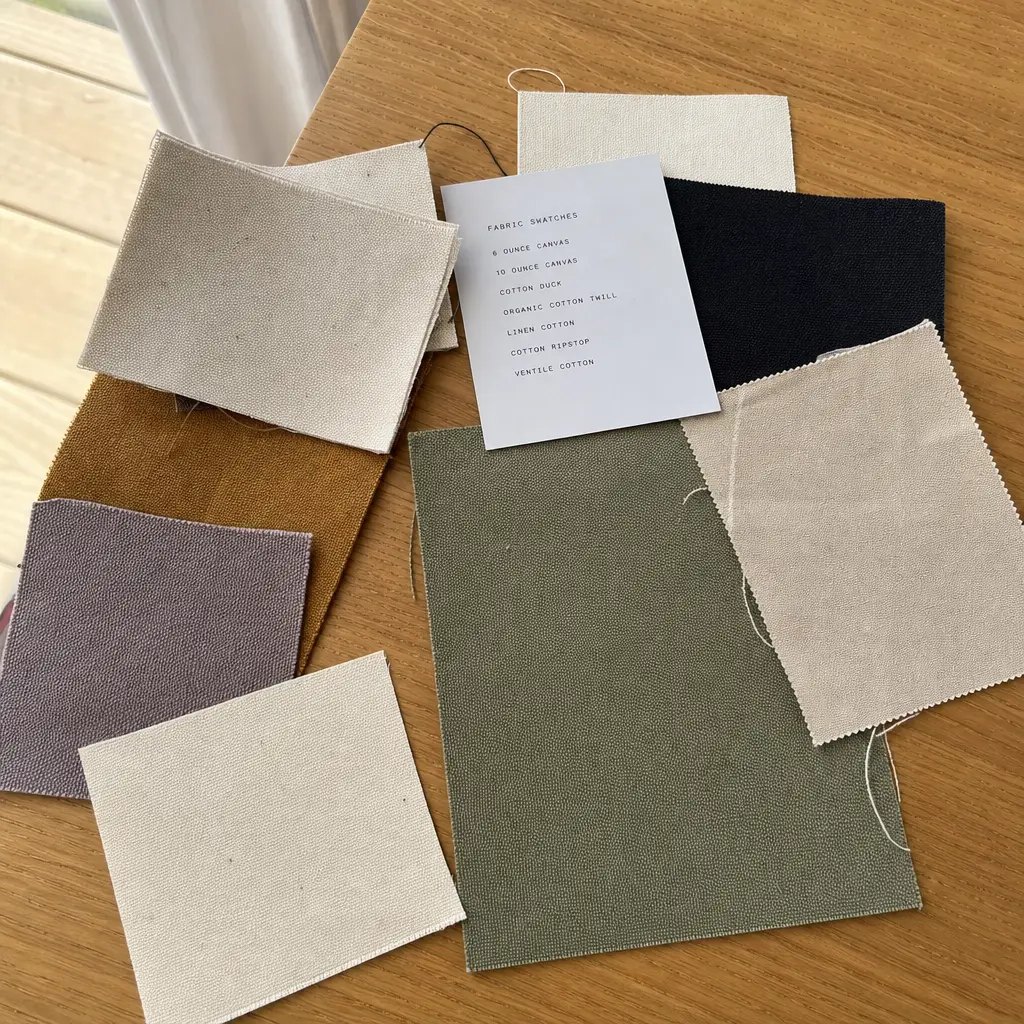
Buying Problem: Same Photo, Different Tote
Wholesale canvas grocery totes for artisan bakeries often look interchangeable in supplier photos, but the quoted product can vary widely. One supplier may price 8 oz cotton, short handles, no inner packs, and basic cartons. Another may include 12 oz cotton canvas, boxed bottom construction, reinforced shoulder handles, screen setup, and stronger export cartons. A third quote may look attractive because it leaves out labels, carton marks, printed strike-offs, or inspection.
That matters because the tote is visible branded packaging. It may carry sourdough loaves, pastry boxes, coffee bags, jam jars, flour packs, gift bundles, or farmers market purchases. If the handles bite, the base collapses, the print cracks, or the canvas arrives stained, customers experience the defect directly. A useful bulk pricing plan begins with the bag's job, then compares prices against one fixed specification.
The goal is not to buy the cheapest photo. It is to build a quote-ready specification that marketing, operations, and finance can approve. Marketing checks brand color, fabric feel, and retail presentation. Operations checks carton size, receiving, allocation, and storage. Finance checks unit cost, total order value, payment terms, reorder risk, and landed cost.
- Compare quotes only when fabric weight, finished size, handles, gusset, print area, packing, and incoterm are identical.
- Separate giveaway totes from paid retail totes because fabric, print, and inspection standards are usually different.
- Treat screens, samples, labels, carton marks, inspection, and packing changes as real cost items.
- Use one fixed specification across 500, 1,000, 2,500, and 5,000 pc price breaks.
- Assign one final sample approver to avoid conflicting brand, procurement, and operations feedback.
Build the Spec Around Bakery Loads
The right tote starts with the bakery's actual load profile. A baguette giveaway bag is different from a grocery-style tote carrying two loaves, a pastry box, coffee, and a jar. A holiday gift bundle may need to stand neatly on a retail table. A farmers market tote needs comfortable shoulder carry. These details turn a general request into a measurable product.
For many artisan bakery programs, 10 oz to 12 oz cotton canvas is the practical starting range. Buyers often see 10 oz canvas around 340 GSM and 12 oz canvas around 407 GSM, although actual GSM depends on yarn, weave, finish, and measurement method. These weights usually balance structure, reuse value, foldability, sewing efficiency, and freight better than very light or very heavy options.
Do not choose fabric weight from a spreadsheet alone. Load the sample with the largest pastry box, heaviest jar combination, common coffee-and-loaf purchase, or intended gift set. Carry it by hand and on the shoulder. Watch the bottom, handle joints, and gusset. If the sample twists, sags, or creases the print badly, adjust before bulk cutting.
- 8 oz canvas: suitable for light promotion, event giveaways, and low-cost launch programs.
- 10 oz canvas: suitable for everyday bakery grocery totes, loyalty rewards, and balanced reorder programs.
- 12 oz canvas: suitable for stronger retail presentation, coffee co-branding, and seasonal gift bundles.
- 14 oz canvas: use only when premium hand-feel justifies heavier cartons and higher freight weight.
- Ask for both ounce weight and GSM tolerance so fabric naming does not hide material differences.
Set Finished Size, Gusset, and Handles
Finished measurements are more useful than catalog names. A common bakery tote starting range is 35-40 cm wide by 35-42 cm high, with a 10-12 cm gusset. That can suit many bread bags, medium pastry boxes, coffee retail bags, jars, and market purchases, but it should be checked against the bakery's actual packaging before the PO is issued.
A boxed bottom or gusseted base usually performs better than a flat tote for bakery grocery use. Boxes sit more securely, jars feel less unstable, and the bag looks more like a reusable carrier than a thin promotional item. Be precise about the gusset measurement: finished depth, folded depth, and pattern size are not the same thing.
Handles deserve the same level of control. Shoulder handles of 55-60 cm are often more useful than short hand-carry handles, especially for customers wearing coats or carrying several items. A handle width of 2.5-3.5 cm is more comfortable under load than a narrow strip. Define the reinforcement as box-stitch, cross-stitch, bartack, or another approved method.
- Request a technical drawing with finished width, height, gusset, handle length, handle width, seam type, and print placement.
- Confirm whether the largest pastry box must sit upright, sideways, or flat inside the tote.
- Use boxed bottom construction when the tote carries jars, boxed pastries, coffee bags, or mixed grocery purchases.
- Specify handle reinforcement, not just handle length, because the handle joint is the main stress point.
- Approve a loaded sample before bulk production so size decisions are tested with real bakery products.
Choose Print Method by Artwork Risk
Most bakery canvas totes are good candidates for screen printing. It works well for clean logos, store names, line drawings, seasonal slogans, and one to three spot colors. It also supports repeat orders because the artwork, ink reference, and print position can be repeated from the approved standard.
Heat transfer and digital printing should solve a specific artwork need. Transfers can reproduce detail, gradients, and small color areas, but film edge, adhesion, and hand-feel should be checked on textured canvas. Digital printing may suit complex graphics or smaller runs if the supplier has appropriate equipment and pretreatment. Embroidery can look premium, but it is slower, costlier, and not ideal for large filled artwork.
Print size affects both cost and defect risk. A small centered logo is easier to hold consistently than a large solid panel. Large prints use more ink, need more curing control, take more handling space, and can create more rejects. Fine lines and small text may soften on canvas texture. A digital mockup should never be the only approval for paid retail totes.
- Screen print: best for spot-color bakery logos, clean illustrations, seasonal slogans, and repeat replenishment.
- Heat transfer: use for detailed artwork after checking edge adhesion, fold behavior, rub resistance, and hand-feel.
- Digital print: consider for complex graphics when the supplier can show comparable canvas samples.
- Embroidery: reserve for premium merchandise and avoid oversized filled designs that stiffen the panel.
- Ask whether screen charges, ink matching, curing, print rejects, and setup waste are included.
Use an Illustrative Bulk Pricing Plan
A pricing plan should show how the same tote changes in cost as quantity rises. Because suppliers, countries, exchange rates, cotton costs, and freight markets vary, buyers should avoid treating any generic unit price as universal. A safer internal model uses an index. Set the 500 pc quoted unit price as 100, then compare how each supplier's 1,000, 2,500, and 5,000 pc prices move against that baseline.
For example, a buyer might expect the 1,000 pc tier to reduce the burden of screens, sampling, and setup; the 2,500 pc tier to improve fabric booking, cutting yield, and line planning; and the 5,000 pc tier to improve production efficiency while making freight, storage, and cash exposure more important. The exact discount is supplier-specific, but the pattern should be explainable. If one supplier shows a dramatic drop, ask what changed: fabric, dimensions, packing, print area, payment term, incoterm, or lead time.
Use the pricing ladder to choose the right order, not automatically the largest. A single-shop bakery testing retail demand may prefer 500 or 1,000 pcs. A multi-location bakery or distributor with proven sell-through may justify 2,500 or 5,000 pcs. Finance should compare unit price, total order value, expected sell-through, storage cost, reorder lead time, and obsolete artwork risk.
- 500 pcs: trial or launch tier; highest unit cost but lowest inventory exposure.
- 1,000 pcs: practical first commercial tier for many bakery tote programs.
- 2,500 pcs: proven-demand tier with better production efficiency and manageable allocation planning.
- 5,000 pcs: annual or multi-location tier where landed cost, warehousing, and release schedule matter most.
- Require the same fabric, finished size, handles, print, packing, carton quantity, incoterm, and payment term at every tier.
Make Quotes Comparable Line by Line
A useful B2B quote does not need to reveal the supplier's margin, but it must show what the price includes. At minimum, request fabric composition, ounce weight and GSM, finished size, gusset, handle length, print method, print colors, print size, packing method, carton quantity, estimated carton dimensions, gross weight, incoterm, sample terms, and lead time.
Many cost surprises come from small design decisions. Adding a few centimeters to the tote can reduce cutting yield. Longer handles increase fabric use and sewing time. A large solid print uses more ink and needs more curing control. Individual polybags, barcode labels, hangtags, paper bands, and store-specific allocation add labor as well as materials. Carton dimensions can also change freight cost, especially when volumetric weight applies.
Separate required costs from optional upgrades before internal approval. If retail hangtags are mandatory, include them in the base quote. If individual polybags are optional, price them separately. If third-party inspection or special documentation is required, state who arranges it and who pays.
- Fabric cost depends on GSM, fabric width, weave, yarn, shrinkage allowance, shade control, and cutting waste.
- Sewing cost depends on gusset construction, handle reinforcement, stitch density, seam finishing, trimming, and cleanliness.
- Print cost depends on color count, print size, ink type, curing time, registration tolerance, and reject allowance.
- Packing cost depends on inner packs, individual bags, paper bands, hangtags, barcodes, carton marks, and allocation.
- Freight cost depends on carton size, gross weight, compression, palletization, shipping mode, and incoterm.
Control Samples Before Bulk Cutting
For canvas grocery totes, photo approval is not enough. The buyer should touch the fabric, inspect stitching, load the bag, check the print surface, and see how the tote folds into its carton. The production standard should represent final fabric, construction, print method, artwork size, handle reinforcement, and packing direction.
A controlled process may include a fabric swatch, blank construction sample, printed strike-off, and pre-production sample. Not every order needs every step, but paid retail merchandise and fixed seasonal launches benefit from tighter control. If an early sample uses substitute fabric or temporary printing, label it as a development sample and do not treat it as the bulk standard.
The approval sheet should record measured width, height, gusset depth, handle length, handle width, print size, print placement, thread color, fabric shade, print ink reference, and packing method. If natural flecks, slubs, or shade variation are acceptable, write the accepted range. Keep one sealed reference with the factory and one with the buyer or inspector.
- Measure the sample flat using the same method planned for final inspection.
- Load the sample with real bakery items, including the heaviest common box, jar, coffee bag, or gift bundle.
- Rub and fold the cured print to check adhesion, cracking, ink transfer, and stiffness.
- Fold the tote as it will be packed to check whether print lines, creases, or pressure marks appear.
- Write accepted deviations on the approval sheet so inspection is not based on memory.
Set QC Tolerances in the PO
Quality control should focus on defects customers notice and failures that create returns: stains on natural canvas, crooked printing, weak handle stitching, open seams, uneven gussets, mold odor, broken yarns, poor trimming, and damaged cartons. Natural cotton canvas has texture and shade movement, so the buyer should separate acceptable natural character from unacceptable defects before fabric is cut.
Dimensional tolerances belong in the purchase order. For cut-and-sew canvas bags, buyers often use plus or minus 1 cm for body width and height, plus or minus 0.5-1 cm for gusset depth, plus or minus 1 cm for long handle length, and plus or minus 0.5 cm for handle width. Print placement tolerance may be plus or minus 0.5-1 cm from fixed seams depending on artwork size and sewing variation. Confirm what the factory can hold consistently.
Inspection can follow an AQL plan or a buyer-defined sampling plan, but defect classification must be clear. Critical defects include unsafe contamination, mold, or structural failure. Major defects include wrong size beyond tolerance, broken handle reinforcement, obvious front-panel stains, incorrect print, severe print defects, or unusable cartons. Minor defects may include small thread ends or slight natural canvas variation inside the approved range.
- Check fabric GSM against the approved swatch and tolerance before or during production, not only after shipment is packed.
- Measure finished size, gusset, handle length, handle width, and print placement from agreed reference points.
- Reject broken stitches, skipped stitches, open seams, fabric tearing, and weak handle reinforcement at stress points.
- Reject front-panel oil stains, dark dirt marks, holes, mold odor, severe slubs, and shade panels outside the approved range.
- Use the signed pre-production sample as the visual standard for shade, hand-feel, print finish, and workmanship.
Plan Packing, Lead Time, and Reorders
Packing affects landed cost, receiving labor, store allocation, and how the tote looks when it reaches the bakery. Flat folding is common because it supports efficient cartons and consistent bag shape. Inner packs of 10-25 pcs help counting and store allocation. Individual polybags keep bags cleaner but add cost, plastic use, and unpacking labor. Paper bands can improve presentation but do not protect against moisture.
Carton data should be part of the quote, not a last-minute shipping detail. Ask for carton quantity, carton dimensions, gross weight, net weight, inner pack count, carton marks, and moisture protection. Cartons should not be so heavy that handling becomes unsafe, so tight that print panels crease, or so loose that abrasion increases.
Bakery tote programs are often tied to shop openings, holiday bundles, farmers markets, loyalty launches, coffee collaborations, and retail resets. The true calendar includes artwork approval, swatches, sample production, sample shipping, review, screen setup, printing, curing, sewing, trimming, packing, inspection, payment release, freight booking, customs, receiving, and internal distribution. A quote that says production takes 20 days usually means 20 days after every approval is complete.
After a successful order, keep a reorder file with the approved specification, artwork, sample photos, inspection results, carton data, packing instructions, and supplier notes. This reduces development time and protects consistency when reordering wholesale canvas grocery totes for artisan bakeries at larger quantities.
- Confirm carton marks: item code, PO number, quantity, carton number, destination, gross weight, and net weight.
- Finalize artwork, fabric shade, sample approval, packing instructions, and allocation files before production starts.
- Schedule inspection before final payment or shipment release, not after goods become urgent.
- Use standard natural canvas and one-color screen print when the launch schedule is tight.
- Keep a reorder file so future bulk pricing plans can use proven specifications and carton data.
Specification comparison for buyers
| Buying decision | Practical baseline | Cost effect | Buyer control |
|---|---|---|---|
| Fabric weight | 10 oz to 12 oz cotton canvas, about 340-407 GSM before agreed tolerance | Major cost driver: heavier canvas increases fabric spend, sewing effort, carton weight, and freight | Ask for both oz and GSM, fabric composition, swatch approval, and GSM tolerance |
| Finished size | 35-40 cm W x 35-42 cm H with 10-12 cm gusset, adjusted to the bakery's largest box or bundle | More fabric, longer seams, and lower cutting yield raise unit cost | Quote finished measurements only, not cut size or catalog size |
| Handles | 55-60 cm shoulder handles, 2.5-3.5 cm wide, with box-stitch, cross-stitch, or bartack reinforcement | Longer and wider handles increase fabric and sewing time but improve comfort and load performance | Define handle length, width, drop, stitch type, and pull/load check |
| Print method | Screen print for 1-3 spot colors; transfer or digital only when artwork detail requires it | Color count, print area, curing time, registration, and reject allowance affect price | Lock artwork size, Pantone or ink target, placement, and curing/rub checks before quoting |
| Illustrative 500 pc plan | Use for first launches, single-shop trials, or short seasonal tests | Highest unit cost because setup, sampling, cutting, and print preparation are spread over fewer bags | Accept only if inventory risk matters more than unit price; keep the spec identical to larger tiers |
| Illustrative 1,000 pc plan | Useful first commercial order for many bakery merchandise or loyalty programs | Often balances lower setup burden with manageable inventory exposure | Compare total cash outlay, expected sell-through, reorder lead time, and storage capacity |
| Illustrative 2,500 pc plan | Fits multi-location bakeries, distributors, and proven retail tote programs | Better material booking, cutting efficiency, print setup absorption, and sewing line planning | Use when artwork is stable and allocation by store or channel is already planned |
| Illustrative 5,000 pc plan | Best for repeat programs, regional chains, wholesale distribution, or annual packaging budgets | Lowest unit-cost potential, but freight, warehousing, and obsolete artwork risk become larger | Confirm landed cost, carton volume, warehouse space, and release schedule before committing |
| Packing | Flat folded in inner packs of 10-25 pcs, export cartons sized by weight, volume, and print protection | Inner packs, barcodes, paper bands, polybags, and store allocation add labor and materials | Require carton qty, dimensions, gross weight, marks, moisture control, and packing mock-up |
Buyer checklist before sampling
- Define the tote's commercial role: free giveaway, paid retail merchandise, loyalty reward, farmers market carrier, gift bundle bag, coffee co-brand item, or wholesale bakery distribution bag.
- List the real load: largest pastry box, typical loaf bundle, coffee bag, jar combination, flour pack, or holiday gift set the tote must carry without twisting or handle strain.
- Specify finished width, height, gusset depth, handle length, handle width, reinforcement type, seam finishing, print size, and print placement from fixed seams.
- Choose canvas weight by use: 8 oz for light promotion, 10-12 oz for regular grocery reuse, and 14 oz only for premium heavy-duty positioning where freight impact is acceptable.
- State fabric composition and finish: cotton canvas, cotton blend canvas, recycled cotton canvas, organic cotton canvas, natural unbleached, bleached, dyed, or shade-controlled custom fabric.
- Ask for ounce weight, GSM, and tolerance. A practical commercial starting point is often plus or minus 5 percent unless the PO sets a tighter requirement.
- Lock artwork before quoting: color count, ink target, print method, print dimensions, placement tolerance, curing requirement, and whether rub, fold, wash, or crocking checks are needed.
- Request 500, 1,000, 2,500, and 5,000 pc pricing using the same final specification so the price curve is real, not created by reducing fabric, size, print area, or packing.
- Separate included and optional costs: sample fee, screen charges, print setup, labels, hangtags, inner packs, carton marks, inspection, documents, and freight terms.
- Approve a physical pre-production sample before bulk cutting, especially for gusseted construction, shoulder handles, 12 oz canvas, large artwork, or retail resale programs.
Factory quote questions to send
- What exact fabric is quoted: cotton canvas, cotton blend, recycled cotton, or another construction, and what are the ounce weight, GSM, yarn/weave description, and GSM tolerance?
- Are the quoted measurements finished after sewing, and what tolerances apply to body width, body height, gusset depth, handle length, handle width, and handle drop?
- Can you provide a simple technical drawing showing measurement points for handle length, gusset depth, print placement, seam allowance, and finished body size?
- Does the price include artwork checking, screen making, ink mixing, print setup, curing, print inspection, print wastage allowance, and rework, or are these separate line items?
- What MOQ applies to fabric color, fabric weight, tote construction, print method, inner packing, carton packing, labels, and hangtags, and which MOQ controls the order?
- Can you quote 500, 1,000, 2,500, and 5,000 pcs with the same fabric, size, handles, print area, packing method, carton quantity, incoterm, and payment term?
- What handle reinforcement is used, such as box-stitch, cross-stitch, bartack, or double stitching, and can you provide close-up photos from comparable production?
- What thread type, stitch density, seam finishing, trimming process, and needle control are used for 10 oz and 12 oz canvas to reduce skipped stitches and loose threads?
- Which samples are available: fabric swatch, blank construction sample, printed strike-off, and pre-production sample, and what are the cost, timing, and approval rules for each?
- Will the pre-production sample use final fabric, final ink, final artwork size, final handle construction, final labels, and the same packing method planned for bulk production?
Quality-control points to confirm
- Fabric weight should match the approved swatch and PO tolerance, commonly plus or minus 5 percent in commercial canvas production unless a tighter written standard is agreed.
- Finished body dimensions should stay within agreed sewing tolerance, often plus or minus 1 cm for width and height, plus or minus 0.5-1 cm for gusset depth, and plus or minus 0.5 cm for handle width.
- Handle length should be measured by the agreed method. A practical starting tolerance is often plus or minus 1 cm for long shoulder handles unless the buyer requires tighter control.
- Handle attachment must show consistent box-stitch, cross-stitch, bartack, or approved reinforcement with no skipped stitches, broken threads, fabric tearing, open seams, needle damage, or loose ends at stress points.
- Print placement should be checked from fixed seams, not estimated visually. Typical tolerance may be plus or minus 0.5-1 cm depending on artwork size, seam variation, and the agreed standard.
- Print quality should show no obvious tilt, smearing, pinholes, under-curing, ink bleeding, transfer lift, shade mismatch, registration errors, or ink build-up beyond the approved sample.
- Gusset and bottom seams should sit evenly so the tote stands, folds, packs, and carries correctly; twisted bottom panels are a functional and cosmetic risk for bakery grocery totes.
- Natural canvas shade should be reviewed under consistent lighting. Approve a shade range before bulk cutting and record it with physical swatches, signed samples, or dated reference photos.
- Fabric surface inspection should reject visible oil stains, dark dirt marks, holes, mold odor, severe front-panel slubs, broken yarns, unacceptable shade panels, and contamination visible at normal viewing distance.
- Seam strength should be checked through practical loading with bakery-style contents or an agreed test weight, not only by static measurement, especially for paid retail merchandise.