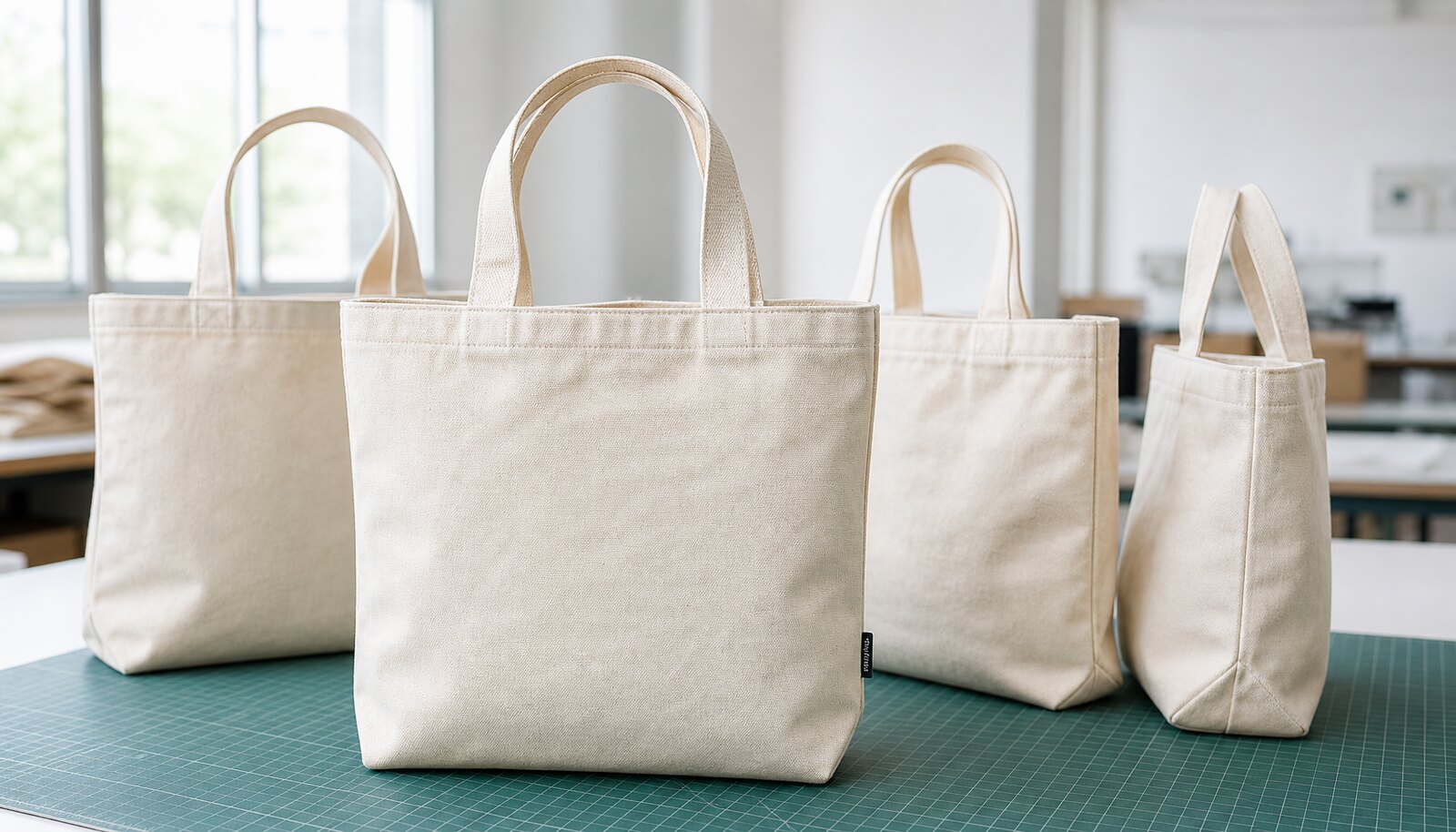
Start With the Campaign Outcome, Not the Tote Name
A canvas tote for a charity campaign is not just a promotional bag. It has a job to do in a specific channel, and that job should drive every sourcing decision that follows. A donor thank-you bag, a retail merchandise bag, a mail-order add-on, and a kit insert all have different failure modes. The donor bag has to look clean and presentable the moment it is handed over. The kit insert has to pack tightly and survive repacking. The retail bag has to look intentional on shelf and hold up after repeated use. If the RFQ only says canvas tote, the supplier will fill in the gaps with its own assumptions about fabric weight, handle build, and print method. That is how quote comparisons become useless.
The buyer should define one primary success metric before requesting pricing. That metric might be low unit cost, shelf presentation, reuse durability, shipping density, or ease of kit assembly. Once the job is clear, the rest of the spec becomes easier to defend. For example, if the bag is going into a donation kit, the packed size and fold direction matter as much as the open size. If the bag will be sold at retail, the finish, seam quality, and print crispness matter more than shaving a few cents off the quote. A clear use case is the fastest way to stop suppliers from over- or under-building the order.
- Define the channel first: giveaway, donor kit, retail merch, mailer, or resale.
- State the expected carry load and whether the bag is meant for one-time or repeat use.
- Decide if the bag must stand, fold small, or arrive shelf-ready before you talk price.
Set the Fabric, Size, and Construction Baseline
For most wholesale canvas tote programs, the real fabric decision sits in the 8 oz, 10 oz, 12 oz, and 14 oz range. Eight-ounce canvas is the low-cost, light-hand option and can work for handouts or kit inserts that are not expected to carry much weight. Ten to twelve ounce canvas is the practical middle ground for most retail merchandise because it gives enough body for printing, better shape retention, and a more durable feel without pushing freight and sewing costs too high. Fourteen ounce canvas adds structure and perceived value, but it raises fabric cost, slows sewing, and can push the order into a higher MOQ and freight bracket. Buyers should think in terms of finished use, not just fabric marketing labels.
Do not price a bag from ounces alone. Ask for the finished GSM, the weave description, and, if possible, a swatch from the actual bulk lot or mill lot. Two bags both described as 12 oz can feel very different if one is loosely woven and the other is tightly woven, prewashed, or made from different yarn quality. Size and construction matter just as much. A bag that needs to hold flat in a donor kit may need a shorter handle drop, a cleaner seam path, and a gusset depth that supports pack-out without wasting carton space. A good baseline spec usually includes finished dimensions, gusset depth, handle length, handle width, seam allowance, and whether the handle is self-fabric or webbing.
- Use 8 oz for light handouts and short-life kit inserts.
- Use 10-12 oz for retail-style merchandise and repeat-use charity bags.
- Use 14 oz only when structure and perceived value justify the extra fabric and freight cost.
Match Print Method to Artwork and Volume
Screen printing is still the default process for most canvas retail merchandise bags because it is durable, cost-effective, and clean on simple art. One to three spot colors usually print well, cure reliably, and survive handling better than many transfer options. If the campaign graphic is bold and the volume is meaningful, screen print usually gives the best balance of cost and wear resistance. If the art includes gradients, tiny type, or photographic detail, another process may be justified, but the buyer should treat that as a different product, not a cheaper shortcut. The main mistake is choosing a print method because the supplier likes the machine, not because the artwork fits it.
The print decision should also reflect order size. A small pilot run with detailed art can make sense with digital transfer or heat transfer, but the buyer should test the hand feel, abrasion, and crease behavior before approving bulk. On dark canvas, ask how the supplier will manage underbase, opacity, cure temperature, and crack resistance after folding. On natural canvas, ask how much the ink soaks into the weave and whether the edges stay sharp enough to read from a distance. Never approve from a PDF alone. Ask for a strike-off or PP sample on the actual fabric, because canvas texture changes how the art will look in real life.
- Use screen print for simple logos, bold copy, and larger order volumes.
- Use transfer or digital methods only when the artwork detail actually requires them.
- Lock placement, color count, and curing method before the factory buys screens or starts bulk.
Sanity-Check Price and MOQ Before You Negotiate
Procurement buyers need a price screen before they start bargaining. As a rough sanity check, many direct-factory blank canvas tote quotes land in a broad ex-works range that can move from under one dollar to a few dollars per piece depending on fabric weight, size, handle build, and quantity. One-color screen print often adds a modest per-piece charge after setup, while extra colors, woven labels, hangtags, polybags, and retail packing can stack on top quickly. If a quote is dramatically below the cluster of other bids, the first question is not how to negotiate lower. The first question is what scope is missing. If a quote is dramatically above the cluster, ask which step is being upgraded and whether that upgrade is actually needed for the campaign.
MOQ behaves the same way. Many factories can work with lower quantities when they are cutting from stock canvas and running one print color, especially if no extra packaging is needed. Once the job adds custom dyeing, multiple colors, woven labels, special handles, or a retail packing format, the MOQ usually rises because setup cost has to be amortized across the order. A useful working assumption is that stock fabric plus one-color screen print may fit in the 300-1,000 piece range, while custom fabric or multi-color work often pushes into the 1,000-3,000 piece range. Those are not rules, but they are good filters. If a supplier offers a very low MOQ without a clear explanation, expect a higher unit price, a looser finish, or a lot of hidden cost in setup and packing.
- Compare quotes only after the same fabric weight, print count, and packing scope are aligned.
- Treat setup, screens, labels, cartons, and inland freight as real cost, not small extras.
- Use MOQ as a function of fabric stock, print complexity, and finishing, not as a marketing number.
Qualify the Supplier Route and Factory Capability
The right supplier route depends on what part of the job the buyer wants controlled. A direct factory is usually the best fit when the order is repeatable, the artwork is stable, and the buyer wants a clear line of responsibility from sewing through packing. A trading company can help when the campaign includes several SKUs or the buyer wants one coordinator, but then the buyer has to know who actually owns inspection and replacement if the shipment lands wrong. A local decorator on imported blanks is a practical route when the deadline is tight and the bag body itself has already been approved. Each path can work, but each one changes who controls quality and where the risk sits.
Capability checks should be concrete. Ask whether cutting, sewing, printing, and packing are in-house or outsourced. Ask how many sewing lines are running the product family, what the daily output is for the exact bag type, and whether the factory can show live or recent footage of the production area. Ask for current company details, the factory address, the legal invoicing name, and the name on the bank account if you are buying direct. If the supplier cannot clearly explain its production chain, treat it as a sourcing broker until proven otherwise. The buyer should also watch for evasive answers about the print room, because outsourced printing often means less control over color consistency, cure quality, and rework speed.
- Choose direct factory when cost visibility and repeatability matter most.
- Use a trading company only if the QC and escalation path are written down.
- Reject suppliers that cannot show their actual production area or explain which steps are outsourced.
Sample the Real Build and Freeze the Spec
Sampling is where the quote becomes a real product. A pre-production sample should be made from the actual bulk fabric and the final print method, not from a substitute body that only looks similar on camera. Ask for a sample that reflects the exact handle, stitch pattern, print placement, and packing method you intend to release. If the bag is going into a charity campaign where the first physical touchpoint matters, the sample should also show how the product looks folded, bagged, or inserted into a kit. A bag that looks fine when flat can become awkward when packed. That is not a packaging issue. It is a product issue that should be solved before bulk cutting starts.
Buyers should approve against a control set, not just a photo. Keep one fabric swatch, one strike-off, one finished bag, and one packed sample. If the factory changes the dye lot, handle source, or print process after sample approval, ask for a fresh sample before moving forward. Do not accept a claim that the line can just make it the same in bulk. That is exactly the point where campaign orders drift. If the supplier is slow to sample, changes the sample more than once without a clear reason, or keeps substituting materials, the order is still unstable and should not be released to bulk.
- Approve the exact bulk fabric and final print process, not a close substitute.
- Sign off on the open-state sample and the packed-state sample before PO release.
- Treat repeated sample changes as a warning that the spec is still moving.
Write QC That Catches Tote-Bag Failures Early
Canvas tote failures are usually visible and measurable, which makes them easier to control if the buyer writes the standard clearly. The common problems are weak handle anchors, crooked prints, loose stitches, stain marks, shade variation, and poorly trimmed threads. Set the acceptance criteria before the factory starts bulk production so defects can be corrected in-line instead of discovered in cartons. For charity campaigns, the visual standard matters almost as much as strength because the bag often becomes a brand touchpoint in front of donors, volunteers, or retail shoppers. A dirty seam or a poor print finish can make the whole program feel lower quality than the rest of the campaign.
Use measurable thresholds where they matter. A practical QC plan usually covers finished dimensions, print placement, fabric shade, seam quality, handle reinforcement, and pack state. Many buyers also use a formal acceptance plan such as their house AQL, often starting around AQL 2.5 for major defects and 4.0 for minor defects, but the exact threshold should follow the buyer's own policy. For reusable bags, ask for a simple load or pull test that reflects the contents the bag will actually carry. A 5 kg handout bag and an 8 kg retail tote should not be judged by the same expectation. When sampling cartons, do not inspect only the top layer. Pull from top, middle, and bottom layers so late-stack damage or staining is not missed.
- Write size, print, and stitching tolerances in the PO or quality agreement.
- Require the specified handle reinforcement and a simple load test if the bag will carry real weight.
- Reject any lot with visible stains, shade bands, crooked print, or loose seam ends beyond the agreed limit.
Audit the Factory and Know When to Reject It
Supplier qualification should feel like evidence gathering, not a name check. Ask for the factory address, legal entity name, recent production photos or live video, machine list, and a current overview of which steps are in-house. Ask how incoming fabric is checked, where rework happens, who signs off on print quality, and how a defective lot is quarantined. If the supplier claims certifications, ask for the certificate number, expiry date, and issuing body so the claim can be verified. A supplier that cannot explain its own process is not ready for a production order. A buyer does not need a perfect factory, but it does need a factory that can show how the order will move from cut to pack without improvising.
There are clear reasons to walk away. Reject the supplier if the company name on the invoice does not match the company that owns the factory and there is no formal explanation. Reject it if the answer changes every time you ask about MOQ, print method, or who owns inspection. Reject it if the supplier refuses to show the actual line, cannot provide a sample from bulk fabric, or pushes back when you ask for a written defect-handling process. Reject it if the quote is only one all-in number and the supplier will not separate bag body, setup, packing, and freight basis. A quote that cannot be broken apart is often a quote that cannot be managed.
- Ask for live or recent proof of the actual production area that will run your order.
- Verify who owns sewing, printing, packing, and rework before you award the PO.
- Reject suppliers that will not separate scope, will not show process, or keep changing the story after sample.
Pack for the Distribution Channel, Not Just the Pallet
Packing should be designed around how the bags will be used after they leave the factory. A retail-ready bag may need a clean fold, a polybag, a barcode, and a hangtag or care label in a fixed position. A donor kit insert may need a fold direction that keeps the front graphic visible when the bag is opened later. A mail-order add-on may need a compact fold that keeps carton weight under warehouse limits and reduces repack labor. If the packing spec is vague, the factory will choose the easiest method for itself, not the most useful method for the buyer. The result is often a product that arrives intact but is awkward to distribute.
Carton planning matters as much as bag construction. Ask for carton quantity, carton dimensions, and gross weight before you release the order. If the warehouse team has a lifting limit, build the carton size around that reality rather than around a theoretical freight optimization. Many buyers try to keep cartons in a hand-manageable range, often around 12-15 kg gross, but the real target should be whatever keeps receiving safe and efficient. If the bags will move through humid transit or ocean freight, ask for moisture protection, carton strength, and any desiccant or inner bag requirement. The goal is to protect the product without creating a packing format that is too expensive or slow to handle.
- Specify whether bags ship bulk, folded, polybagged, or kit-packed.
- Confirm the fold direction and pack count against the carton and the end-use workflow.
- Make master carton marks easy to read and consistent across cartons and pallets.
Normalize Landed Cost and Lead Time Before Award
A procurement decision is only useful if the quote can be normalized. The landed cost should be compared on the same basis: identical fabric weight, same artwork count, same packing method, same carton spec, and same Incoterm. A quote that looks cheaper on unit price can end up more expensive after setup, cartons, inland transport, export documents, freight, duty, customs clearance, and destination delivery are added. The buyer should ask for the full chain of cost before making a selection. If a supplier will only give one all-in number, ask for a breakdown first. Without that, you are not comparing suppliers. You are comparing assumptions.
Lead time should be treated as a chain of steps, not a single promise. Fabric reservation, sample approval, screen making, sewing, packing, inspection, and freight booking all take time, and any one of them can move the schedule. If the campaign date is fixed, consider a pilot run followed by the main run rather than placing the whole order at once. That reduces risk and gives the buyer a real production check before the full quantity is released. If one supplier is promising a much shorter date than the others, ask which step is being skipped, compressed, or assumed to be already complete. The answer usually explains the risk.
- Compare all bids on the same Incoterm, same carton spec, and same packing format.
- Add freight, duty, customs, destination delivery, and rework reserve before deciding on the winner.
- If the schedule is tight, split the order into a pilot run and a main run instead of betting everything on one shipment.
Specification comparison for buyers
| Spec decision | Recommended option | Typical MOQ / cost signal | Buyer risk to check |
|---|---|---|---|
| Low-risk pilot run | Direct factory with stock canvas and one-color screen print | Often 300-1,000 pcs works when the fabric is on hand and the art is simple | Check that setup, screens, and packing are quoted separately |
| Retail-ready campaign bag | Direct factory with in-house sewing, printing, and polybagging | Commonly 1,000-3,000 pcs once labels, inserts, or multiple colors are added | Confirm the print room and packing room are actually in-house |
| Fast turnaround on a fixed art file | Local decorator using imported blanks | Often 100-500 pcs when speed matters more than fabric customization | Verify blank weight, seam reinforcement, and print durability |
| Multi-item charity kit | Trading company with a fixed factory list and one coordinator | Usually 1,000+ pcs across several SKUs | Make sure QC responsibility and replacement terms are written down |
| Domestic delivery with a short calendar | Domestic cut-and-sew supplier | Often 200-1,000 pcs if the buyer values speed and easier communication | Compare the full landed cost, not only the piece price |
| Repeat offshore program | Large offshore exporter with stable sewing lines | Often 3,000+ pcs when the spec is frozen and volume is repeatable | Freeze artwork, color, and carton marks before bulk starts |
| Pilot for a founder-led brand or market test | Small workshop with flexible MOQ | Often 100-300 pcs, but extra variation risk is normal | Inspect stitch consistency, size drift, and packing discipline |
| Retail packing and kit insertion in one place | Integrated packaging supplier | Usually 1,000+ pcs when barcodes, inserts, and fold rules matter | Confirm barcode placement, insert material, and pack method in advance |
Buyer checklist before sampling
- Write the campaign use case first: giveaway, donor kit insert, retail merch, mail-order add-on, or resale item.
- Set the finished size, gusset depth, handle length, handle width, and print area before asking for quotes.
- Choose the fabric weight and keep one physical swatch as the control sample for shade, hand feel, and weave.
- Decide whether the bag must stand flat, fold small, fit into a kit box, or look shelf-ready at retail.
- State the print method, color count, and whether the front, back, or gusset needs artwork.
- Ask for a line-item quote that separates bag body, sewing, print setup, packing, labels, carton work, and freight basis.
- Request MOQ by fabric, color, and artwork version instead of accepting one blended minimum.
- Approve a pre-production sample made from bulk fabric and the final print process, not a substitute material.
- Write tolerances for size, print placement, stitching, shade, and visible defects before production starts.
- Confirm carton quantity, carton dimensions, master carton marks, and whether the bags ship bulk or polybagged.
Factory quote questions to send
- What finished size, fabric weight, handle construction, and gusset are you pricing?
- Is this quote for blank bags, printed bags, label-added bags, or retail-packed bags?
- How many screen setups, print passes, plates, or transfer runs are included in the price?
- What is your MOQ per color and per artwork version?
- Which parts of the job are in-house, and which are outsourced to another vendor?
- Can you separate the quote into bag body, sewing, print setup, packing, carton work, and freight basis?
- Which sample stages will you provide before bulk production, and what does each stage cost?
- What is your standard lead time after pre-production approval, and which step usually causes delay?
- What are the carton quantity, carton dimensions, and gross weight for shipment?
- Which Incoterm is assumed, and which charges are excluded from the quote?
Quality-control points to confirm
- Fabric weight and hand feel match the approved swatch, with GSM within plus or minus 5% of the target.
- Finished dimensions stay within plus or minus 1 cm of the approved sample, including width, height, and gusset.
- Handle drop stays within plus or minus 1.5 cm of the approved sample so the bag carries the same way in use.
- Seam lines are even, with no skipped stitches, broken needle holes, or loose thread tails longer than 1 cm.
- Handle anchors use the specified reinforcement, such as bartacks or box-X stitching, and do not distort the body.
- Print placement stays within the agreed tolerance, usually within 5 mm of the centerline or target point.
- Ink coverage, color count, and registration match the signed-off strike-off or PP sample.
- No visible smears, oil stains, hole marks, shade bands, or fabric flaws appear in the sampled cartons.
- The bag passes the expected load test for the campaign contents, not just a generic tote standard.
- The bag opens, folds, and packs the same way as the approved packed sample, including fold direction and insert placement.