Start With the Selling View
For university bookstores, logo placement is not just a decoration decision. The backpack will be folded, stacked, hung on pegs, handled by students, and photographed for online listings. A logo that looks centered on a flat digital template can disappear when the top channel is pulled tight or when the bag is folded inside a carton.
The safest front placement for cotton drawstring backpacks is usually the lower center panel, far enough above the bottom seam to avoid sewing distortion and low enough to stay visible after the drawstring channel gathers. For most adult sizes around 340 x 420 mm or 350 x 450 mm, a logo width of 180-230 mm gives good shelf visibility without crowding the edges.
- Use finished size measurements, not only artwork mockup dimensions.
- Measure placement from the finished bottom seam and side seams after sewing.
- Keep the main logo away from the gathered top 90-120 mm zone.
- Confirm whether the backpack is sold flat, hung, or folded because each display method changes the visible area.
Choose Fabric Before Final Artwork
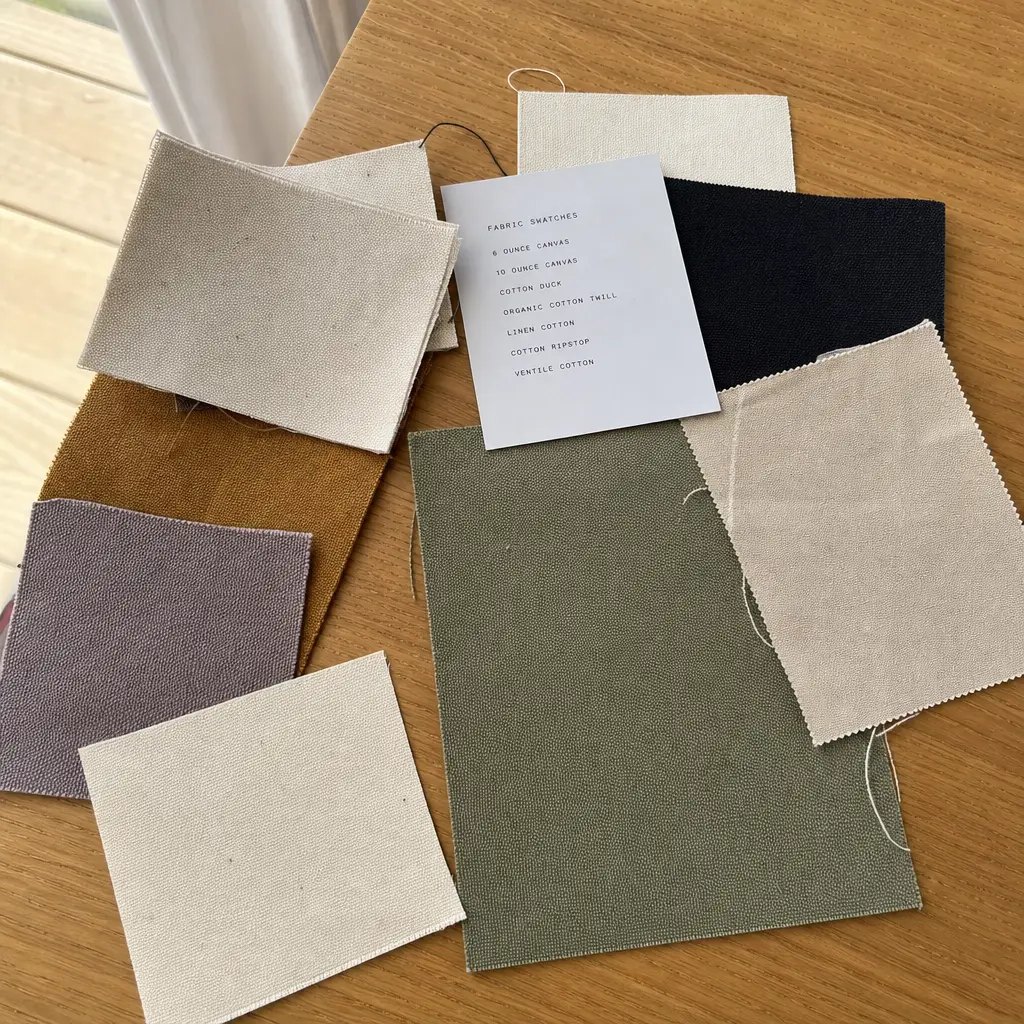
Cotton fabric weight changes how a printed logo sits on the backpack. A 5 oz cotton bag can be suitable for a low-cost orientation giveaway, but it often feels light for bookstore retail and may wrinkle around larger prints. An 8 oz cotton canvas, roughly around 270 GSM, is a common practical point for retail programs because it gives better opacity and a smoother print base without pushing the bag into a heavy canvas price range.
For premium campus merchandise, 10 oz cotton canvas around 340 GSM gives a more substantial hand feel and better structure on display. The tradeoff is higher fabric cost, more sewing load, higher carton weight, and sometimes a slightly stiffer drawstring closure. If the logo has small type, a tighter weave and cleaner fabric surface matter more than simply choosing the heaviest cotton.
- 5 oz cotton: budget promotional use, lighter hand feel, higher wrinkle risk.
- 8 oz cotton canvas: balanced choice for most bookstore retail orders.
- 10 oz cotton canvas: stronger premium feel, higher landed cost and carton weight.
- Natural cotton: popular campus look, but shade and speckle level need approval.
- Dyed cotton: better brand color options, but dye MOQ and colorfastness require tighter control.
Map the Print Area
A cotton drawstring backpack is not a flat poster. The front panel has seam allowances, bottom corner stress points, cord channels, and sometimes metal eyelets or sewn loops. The effective decoration zone is the clean fabric area that remains flat after sewing and after the drawstrings are pulled. That zone should be drawn on the technical sheet before the buyer approves artwork.
For a standard adult cotton drawstring backpack, many factories will recommend keeping artwork at least 25 mm from side seams, 35-45 mm from the bottom seam, and below the drawcord channel by at least 50 mm. If the bag uses bottom corner triangles, reinforcement patches, or eyelets, the print area should move inward. The buyer should approve both a maximum print box and an exact logo position, because those are not the same instruction.
- Mark logo centerline against the finished bag center, not the cut panel center.
- State distance from bottom finished seam to the lowest printed point.
- Leave clearance from eyelets, bartacks, cord loops, and reinforcement patches.
- Avoid printing across folded bottom corners unless a distressed or casual look is intentional.
- Use a placement tolerance in millimeters so QC has a measurable standard.
Match Print Method to Logo Detail
Screen printing is usually the best production method for university bookstore cotton drawstring backpacks when the logo uses one to four solid colors. It gives a clean retail look, works well on cotton, and keeps repeat order pricing predictable after the screens are made. It also allows the factory to control ink thickness and curing more consistently than many short-run transfer methods.
Heat transfer can make sense for small MOQs, photo-style graphics, gradients, or sponsor artwork with many colors. The buyer should be careful with transfer film hand feel on cotton backpacks, especially if the bag will be folded tightly for packing. Embroidery is possible but not always ideal for drawstring backpacks because the light bag panel can pucker around dense stitching, and the back side of embroidery may need covering if it rubs against contents.
- Screen print: best for solid university marks, stable repeat orders, and cost control.
- Water-based ink: softer hand feel, good for natural cotton, but color strength varies by fabric shade.
- Plastisol or rubber ink: stronger opacity on dyed fabric, but can feel heavier on large logos.
- Heat transfer: useful for complex colors or short runs, but fold and crack resistance must be tested.
- Embroidery: premium on small marks, risky for large crests with dense stitch areas.
Control University Color Risk
School colors are often more sensitive than normal promotional colors. A bookstore buyer may reject a bag if the navy looks too purple or the green is too yellow, even when the construction is acceptable. The RFQ should separate fabric color matching from print color matching because they are controlled by different processes and have different MOQ implications.
For print colors, provide Pantone references and clarify whether the factory should match coated or uncoated standards. Cotton absorbs and reflects ink differently from paper, so a signed physical sample is more reliable than a PDF. For dyed cotton, color approval should include fabric swatch, bulk dye lot control, and colorfastness expectations, especially if white logos are printed on dark fabric.
- Use Pantone references for each print color and fabric color where relevant.
- Approve a physical strike-off for strict school colors before bulk printing.
- For natural cotton, approve the base fabric shade because natural is not one universal color.
- For dark dyed cotton, test light print opacity and rub resistance.
- Record acceptable color tolerance against the signed sample, not only against a digital rendering.
Understand MOQ Logic
MOQ for cotton drawstring backpacks is often misunderstood. Buyers may think a 3,000 piece order is automatically efficient, but the factory sees separate cost blocks: fabric color, fabric sourcing, cutting, print setup, sewing line planning, labels, hangtags, and packing. If the order is split into six fabric colors with two print versions each, the practical MOQ pressure becomes much higher.
For university bookstore programs, the cleanest quote structure is usually one base backpack specification with separate line items for each colorway and logo version. This helps the buyer see where setup charges are hidden. It also prevents the supplier from averaging costs in a way that looks attractive at RFQ stage but changes after artwork and packing details are confirmed.
- Natural stock cotton usually has lower MOQ than custom dyed cotton.
- Each fabric color may require its own cutting and sewing control batch.
- Each print color setup can add screen cost, setup time, and approval steps.
- Small logo changes by department, event, or sponsor can create separate print runs.
- Retail barcode and hangtag differences can affect packing labor even when the bag is the same.
Build a Quote Sheet That Can Be Compared
A useful quote for cotton drawstring backpacks should show more than a unit price. If one supplier quotes 8 oz cotton with screen print and another quotes 6 oz cotton with heat transfer, the lower price is not a real saving. The buyer needs enough quote data to compare construction, decoration, packing, sample cost, lead time, and export assumptions on the same basis.
The RFQ should include a target quantity by color, finished size, fabric weight, drawstring material, logo size and color count, label details, packing method, inspection requirement, and shipping term. When these items are missing, factories either quote with assumptions or protect themselves with later revisions. That is how a bookstore order moves from a clean landed-cost plan into a chain of small surprises.
- Finished backpack size and measurement tolerance.
- Fabric type, weight, color, and whether it is stock or custom dyed.
- Cord type: cotton, polyester, flat tape, round cord, color matched or contrast.
- Print method, print size, print colors, and Pantone references.
- Label, hangtag, care label, barcode, and retail sticker requirements.
- Pieces per polybag, pieces per carton, carton marks, and carton dimensions.
- Sample cost, sample lead time, bulk lead time, payment term, and shipping term.
Approve Samples Like Production Parts
A cotton drawstring backpack sample is useful only when it represents production decisions. A blank size sample can confirm shape and sewing, but it cannot approve logo placement. A print strike-off can confirm ink color, but it cannot confirm whether the logo sits correctly on the finished bag. For bookstore orders, the important sample is the pre-production sample using bulk fabric, final cord, final logo, and final packing fold.
The approval should be measured, photographed, and signed with comments. Measure the logo width, vertical position from the bottom seam, distance from side seams, and visible result after the drawstrings are pulled closed. Also fold the sample the way it will be packed. If the cord presses a line into a fresh print or the logo lands on a fold crease, the packing method needs adjustment before bulk production.
- Approve one complete pre-production sample per fabric color if color or print opacity changes.
- Measure placement on the finished sewn bag, not on the flat cut panel.
- Pull the drawstrings closed during approval to see the real display shape.
- Fold the sample into the proposed carton packing method and inspect print creasing.
- Do not release bulk printing until artwork, placement, fabric, cord, labels, and packing are all approved.
Set QC Thresholds Before Bulk Printing
Logo placement defects are difficult to repair after printing. A crooked or low logo may require scrapping the front panel or the entire finished backpack. That is why placement tolerance should be written into the purchase order and inspection plan before production. The factory should also understand which defects are critical for the buyer, because university logos often have stricter acceptance standards than generic event graphics.
For many retail backpack orders, a practical inspection plan includes finished size tolerance, logo position tolerance, print clarity, color consistency, seam strength, cord function, label placement, and packing accuracy. AQL can be negotiated by buyer policy, but critical defects should include wrong logo, wrong school color, unreadable text, severe off-center placement, ink smearing, and missing retail barcode.
- Logo horizontal center: commonly controlled within plus or minus 5 mm from approved centerline.
- Logo vertical position: commonly controlled within plus or minus 8 mm from approved sample.
- Finished size: often plus or minus 10 mm unless retail display fixtures require tighter control.
- Print defects: no smearing, ghosting, heavy pinholes, blurred crest details, or ink bleeding.
- Function defects: drawcord must close smoothly without tearing channel seams or corner reinforcements.
- Retail defects: wrong barcode, missing hangtag, dirty fabric, visible oil marks, or mixed color cartons.
Pack to Protect the Logo
Packing can damage a good logo after the product has passed sewing and printing. Cotton drawstring backpacks are often flat packed because it saves carton space, but tight compression can push cords, knots, or eyelets into the printed face. On natural cotton, dirty cartons or loose fibers can also show quickly, especially around light areas of the logo.
A buyer should decide whether each piece is bulk packed, individually polybagged, belly-banded, or packed with hangtags attached. Bookstore retail orders often need barcode labels and clean shelf handling, while distributor orders may prefer lower packaging cost. The carton plan should include pieces per carton, fold direction, carton dimensions, gross weight, and whether printed faces are stacked print-to-print or protected by the bag body.
- Keep drawcord knots away from the printed logo during folding.
- Avoid over-compressing cartons when ink has a raised or rubberized hand feel.
- Use carton liners or inner bags when natural cotton must stay clean for retail shelves.
- Place barcodes where bookstore staff can scan without unfolding the whole backpack.
- Confirm carton marks by SKU, color, logo version, and quantity to avoid mixed receiving errors.
Specification comparison for buyers
| Spec decision | Recommended option | When it fits | Buyer risk to check |
|---|---|---|---|
| Main logo position | Centered on lower front panel, 45-70 mm above bottom seam | Best for bookstore retail shelves because the logo remains visible when the top is cinched | Logo may distort if placed too high near the drawcord channel or too low into the bottom seam allowance |
| Logo size | 180-230 mm wide for most adult cotton drawstring backpacks | Works for university crests, bookstore marks, orientation graphics, and sponsor logos | Fine text below 1.2 mm stroke can fill in on cotton, especially on 6 oz and slub fabrics |
| Fabric weight | 8 oz to 10 oz cotton canvas for retail bookstore programs | Balances hand feel, opacity, print stability, and unit cost for campus merchandise | 5 oz promotional cotton can look thin and may show print strike-through or panel wrinkling |
| Print method | Screen print for solid school colors; heat transfer only for complex gradients or short runs | Screen print is the most stable choice for repeat orders and color-controlled university logos | Heat transfer can crack if the buyer chooses a stiff film on a backpack that will be folded tightly |
| Side branding | Small woven side label or loop label, 25-35 mm long | Useful when the front panel must carry a large university logo and the supplier or collection mark needs subtle placement | Labels added after final approval can change seam construction and should be included in the first sample |
| Cord and grommet area | Keep decoration at least 35 mm away from cord exit points and reinforcement patches | Prevents print abrasion and avoids conflict with metal eyelets, bartacks, or sewn cord loops | Artwork placed near stress points may look fine flat but fail after repeated opening and closing |
| MOQ planning | Set MOQ by fabric color and print setup, not only total order quantity | Important when bookstores split one order across department colors, alumni colors, or event versions | A 3,000 piece order with six colors may behave like six small orders for dyeing, cutting, and screen setup |
| Carton packing | Flat packed 50 or 100 pieces per export carton with printed face protected | Reduces carton cube and protects front logos from heavy crease marks | Over-compression can leave cord impressions across the printed logo during sea freight |
| Sample approval | Pre-production sample using bulk fabric, bulk cord, final logo size, and final placement | The only reliable approval method when logo position and fabric shrinkage affect the visible result | Photo approval alone can hide skewed panels, uneven print pressure, and incorrect logo height |
Buyer checklist before sampling
- Define the finished backpack size, not only the fabric cut size; common adult retail sizes are around 340 x 420 mm or 350 x 450 mm.
- State the fabric weight in oz or GSM, such as 8 oz cotton canvas around 270 GSM or 10 oz around 340 GSM, and require tolerance in the quote.
- Provide vector artwork with Pantone references and mark whether school colors are strict brand colors or commercially close colors are acceptable.
- Specify front logo position from finished edges: centerline, distance from bottom seam, and maximum print width.
- Keep print artwork outside the drawcord channel, bottom seam allowance, side seam allowance, eyelets, bartacks, and reinforcement patches.
- Request one size set or pre-production sample using bulk fabric, bulk cord, final print method, final logo size, and approved packing fold.
- Require print wash/rub checks appropriate to the order type, especially for dark inks on natural cotton and light inks on dyed fabric.
- List colorway quantities separately because MOQ, dye lot control, and screen setup are usually calculated by fabric color and print color.
- Confirm carton dimensions, pieces per carton, carton weight, polybag requirement, barcode label position, and whether hangtags are packed loose or attached.
- Hold final production until the approved sample includes all bookstore requirements: logo, label, hangtag, barcode, care label, and packing method.
Factory quote questions to send
- What cotton fabric weight and construction are you quoting, and what is the acceptable GSM tolerance for bulk production?
- Is the quoted fabric stock greige/natural, stock dyed, or custom dyed, and what MOQ applies to each color?
- What is the maximum recommended screen print area on this backpack size without panel distortion?
- Will the logo be printed before sewing or after sewing, and how will the factory control placement from finished seams?
- What print method is included in the base quote, how many colors are included, and what is the cost impact for extra colors or metallic ink?
- Can you provide a pre-production sample using bulk fabric and final artwork, and is the sample cost refundable after bulk order placement?
- What are the normal production lead time and the longest-risk process: fabric dyeing, printing, sewing, packing, or third-party inspection?
- How many pieces are packed per carton, what are the carton dimensions, and how will the printed panels be protected from cord marks?
- What AQL level do you recommend for this retail order, and which defects are treated as critical for logo placement and print quality?
- What quote data is missing if the unit price changes after sampling, such as fabric shrinkage, artwork complexity, color matching, or packing requirement?
Quality-control points to confirm
- Finished size tolerance should normally be controlled within about plus or minus 10 mm unless the buyer requires a tighter retail display fit.
- Logo center deviation should be agreed before production; many bookstore orders use plus or minus 5 mm from centerline and plus or minus 8 mm from the approved vertical position.
- Print color should be compared under consistent lighting against approved Pantone or signed sample, not only against a screen photo.
- Ink coverage should be even across seams-free panel areas, with no pinholes, blurred edges, smearing, ghosting, or visible screen mesh marks.
- Drawcord length should be consistent by size and allow the backpack to close fully without exposing unfinished channel stitching.
- Cord exit points, eyelets, bartacks, and bottom corner reinforcements should withstand repeated opening and pulling without tearing the cotton panel.
- Side labels, care labels, and hangtags should match the approved location and must not cover the university logo or retail barcode.
- Packing inspection should include carton count, barcode readability, polybag warning text if used, carton drop condition, and print face protection.