What hotels are really buying
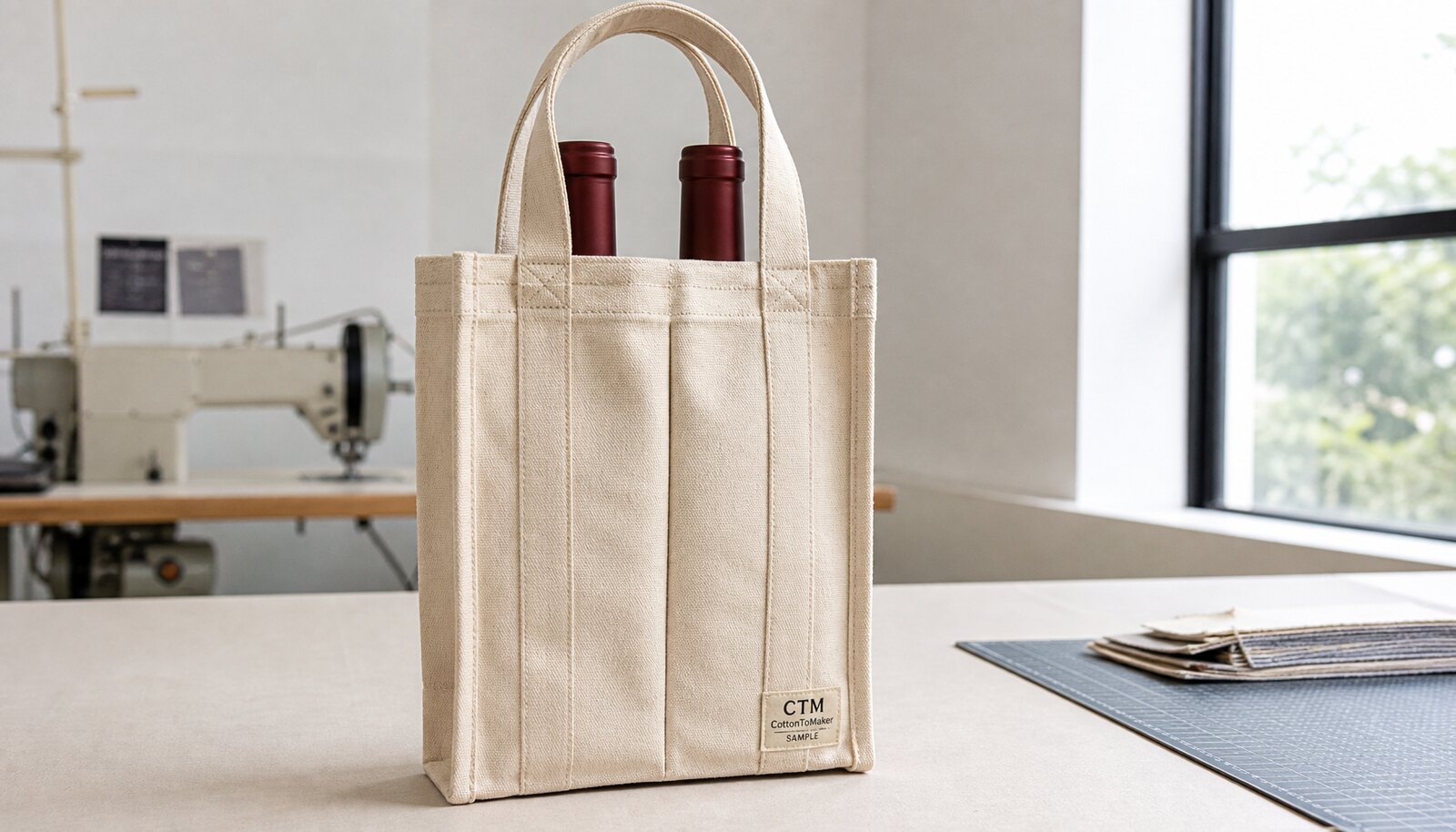
A two bottle wine bag for hotels is not just packaging. It is a small presentation item that has to survive check-in handling, room delivery, minibar use, or a guest gift handoff without looking cheap after the first carry. That means the right answer is usually a balance between appearance, load strength, and packing efficiency, not the fanciest fabric on paper.
For hotel buyers, the common mistake is treating this like a generic bottle carrier. The better RFQ defines the use case first: welcome amenity, VIP gift, retail sell-through, or event distribution. Each one changes the required hand feel, bag height, handle length, and whether you need a divider or base support.
- For guest gifting, the bag should feel premium and hold shape when filled.
- For in-room service, the bag should pack flat and survive repeated handling by staff.
- For retail resale, the brand finish and logo quality matter as much as the fabric weight.
Choose the build before you talk price
The most useful spec decisions are fabric weight, bag structure, and handle reinforcement. A 10 oz cotton canvas can work for lightweight gift programs, but many hotels end up happier with 12 oz because it resists sagging and hides minor handling wear better. If the bag carries two full glass bottles, a bottom insert or reinforced base is often worth the small added cost.
Size is where RFQs often go wrong. Most suppliers can make the outer dimensions you request, but the real question is internal usable space after seams and hems. For standard 750 ml bottles, make the bottle diameter and neck height part of the spec. If the hotel uses mixed wine formats or champagne, the bag needs a wider gusset or taller body.
- 10 oz canvas: lower cost, lighter hand feel, acceptable for short-life programs.
- 12 oz canvas: strong default for reusable hotel gifting.
- 14 oz and above: only if the brand wants a heavier premium look and the budget supports it.
- Add a divider when two bottles can knock together during delivery or transport.
Printing and branding that survive hotel use
For two bottle wine bags for hotels, one-color screen print is usually the most reliable branding method when the logo is simple and the run is large enough to justify setup. Woven labels work well when the brand wants a clean, understated finish and the bag fabric is natural cotton or canvas. Embroidery can look strong, but on thick seams or coarse jute it can distort the face and raise cost fast.
The better choice depends on how close the guest sees the product. If the bag is handed over at a front desk or placed in a suite, the first impression matters and a clean print is enough. If it is sold in a hotel shop, a woven side label, precise logo placement, and controlled color matching become more important than saving a few cents on decoration.
- Screen print: good for solid logos, simple art, and repeat orders.
- Woven label: good for premium but restrained branding.
- Embroidery: suitable only if the fabric thickness and logo size support it cleanly.
- Ask for the exact print area in millimeters, not just a verbal placement note.
MOQ logic and realistic quote structure
MOQ is not just a factory rule. It comes from setup time, fabric waste, print screens, and carton packing efficiency. If a supplier offers a very low MOQ on a custom two bottle wine bag, the quote often reflects stock materials, a simplified decoration method, or a higher unit cost that hides the real setup burden. For hotel buyers, the right question is not only how low the MOQ can go, but what changes at each volume break.
As an example quote structure, a 1,000-piece order might separate into fabric and sewing cost, handle cost, print setup, packaging, and carton work. A 300-piece order may look cheaper to approve quickly, but the per-unit price can rise sharply because the same screen, sample, and production prep effort is spread across fewer units. That is why annual demand should be shared early, even if the first order is small.
- 300 to 500 pieces: usually workable only with stock fabric or simple branding.
- 1,000 pieces: often the practical starting point for stable custom pricing.
- 3,000 pieces and above: better leverage for custom color, labels, and reinforced construction.
- Ask the factory to quote breakpoints side by side so volume tradeoffs are visible.
What should be in the supplier quote
A usable quote is a breakdown, not a single line number. At minimum, it should show fabric weight, handle material, decoration method, packing method, carton size, and sample cost. If the quote only says custom cotton wine bag with no further detail, you cannot compare suppliers on a true like-for-like basis. Hotel procurement teams lose time when they discover after approval that one quote includes a divider and another does not.
The cleanest way to compare quotes is to ask for one exact spec sheet and then force every supplier to price it. That spec sheet should lock the bag dimensions, fabric GSM or oz weight, logo size, stitch type, and carton packing. Once those variables are fixed, the quote differences reveal the real supplier advantage instead of a hidden spec downgrade.
- Fabric type and weight
- Handle width, material, and reinforcement
- Print method and number of colors
- Divider, insert, or closure details
- Packing per carton and master carton size
Sample approval is where most mistakes show up
The pre-production sample should be treated as a control sample, not a showroom sample. Inspect the bag when it is filled with the actual bottle type your hotel will use. A bag can look fine empty and still fail when the bottles press against the side seams or when the handles are pulled at an angle. That is especially important for reusable bags carried by guests between a room, lobby, or restaurant.
If the first sample is close but not correct, do not approve by email alone. Request a corrected sample with the exact changes noted on paper: stitch density, handle length, print position, fabric tone, or pocket size if applicable. Once production starts, these small changes are expensive to recover and usually create a mixed batch that is hard to sort.
- Check the bag with actual filled bottles, not test weights alone.
- Record the approved sample dimensions and keep a sealed reference unit.
- Require visible sign-off on logo size and placement before mass production.
- Reject approval if the sample has loose threads, print blur, or uneven seam tension.
Packing matters more than many buyers expect
Two bottle wine bags often look simple, but the packing method can change freight cost and receiving efficiency. Flat-packed bags reduce carton volume, but some fabrics crease badly and make the product look tired on arrival. If the hotel uses the bag for a premium welcome, a neat fold and stable carton stack are worth planning upfront. If the bag is going straight into storage, flat packing may be the better tradeoff.
For export orders, confirm the number of bags per inner pack and per master carton before approving the quote. The factory should tell you the gross weight, carton dimensions, and whether the bag is protected with tissue, polybag, or a simple bulk fold. Better packing can reduce damage and improve shelf appearance, but it also changes carton volume and freight math.
- Ask whether the bags are folded with inserts or stacked bulk packed.
- Confirm if each piece is polybagged or only carton packed.
- Verify carton marks, item count, and gross weight before shipment.
- If the hotel is distributing directly, request packing that speeds internal receiving.
Lead time, schedule risk, and reorder planning
A realistic lead time depends on whether the bag is stock-based or fully custom. Stock blank bags with added logo can move quickly, while a custom fabric, custom label, and reinforced build usually needs more time for material prep and sample approval. For hotel openings, the real schedule risk is rarely sewing speed alone; it is sample iteration, print correction, and carton approval.
The safest plan is to work backward from the hotel launch date and set a latest approval date for the sample. If the project has no buffer, the supplier may rush production or substitute a slightly different fabric lot to hold the schedule. That can be acceptable for a promotional order, but it is a bad trade for a branded hotel program that needs consistency across multiple locations.
- Stock route: often fastest if branding is simple and inventory exists.
- Custom route: allow time for fabric sourcing, print setup, and sample correction.
- Late approvals usually cost more than the original schedule saved.
- For multi-property rollout, stage the first order and the replenishment plan separately.
Landed cost is more useful than ex-factory price
For hotel procurement, the cheapest ex-factory quote can still become the most expensive landed result if the carton volume is high or the supplier packs inefficiently. Two bottle wine bags are soft goods, so freight density matters. A bag that is 10 percent cheaper at the factory but 20 percent larger in carton form can lose the advantage before it reaches the warehouse.
A practical landed-cost comparison should include unit price, sample charges, carton size, freight class or sea freight impact, duties if applicable, and the cost of any rework caused by weak print or poor packing. If you are comparing a nearby supplier with a lower-cost offshore factory, ask both to quote the same packing method and carton spec. That is the only fair comparison.
- Compare on a landed basis, not only ex-factory price.
- Standardize packing before comparing freight impact.
- Treat sample charges and setup costs as part of the true buy.
- If the hotel reorder cycle is short, shipping speed can outweigh a small unit-price gap.
How to choose the right sourcing route
The right sourcing route depends on quantity, timeline, and brand sensitivity. For a one-off event, a stock blank bag with a good logo add-on can be enough. For a hotel chain or a recurring property program, a direct factory route usually gives better control over fabric weight, seam reinforcement, and reordering consistency. If the buying team is short on bandwidth, a trading company can still make sense, but only if the spec is locked tightly and sample control is disciplined.
Do not overbuy on complexity. A hotel bag does not need every premium feature if the bottles will be stored, carried, and handed over within a controlled service flow. The best product is the one that looks right, holds two bottles safely, and can be reordered without a new round of corrective work. That is the standard worth designing toward.
- Use stock plus logo for speed.
- Use direct custom factory for repeatable hotel branding.
- Use a trader only if procurement needs a single point of contact and accepts less transparency.
- Use nearshore sourcing when lead time and reorders matter more than the lowest headline price.
Specification comparison for buyers
| Spec decision | Recommended option | When it fits | Buyer risk to check |
|---|---|---|---|
| Direct factory quote | Best when you need controlled fabric weight, stable logo placement, and repeat reorders | Annual volume is forecasted and the hotel brand wants a consistent gift or amenity item | Confirm the seller is the actual maker, not a trader relaying an incomplete spec |
| Trading company or sourcing agent | Useful when the buying team wants one contact for mixed items, low admin, and consolidated shipping | You are placing a small multi-SKU order or do not have a local QC team | Margin layers can hide material substitutions and slow issue resolution if the sample fails |
| Stock bag with logo add-on | Fastest route for openings, events, and replenishment orders | You need a short lead time and can accept a standard body fabric and standard size | Stock blanks often limit handle reinforcement, size control, and brand color accuracy |
| Fully custom cotton canvas | Best for a hotel program that needs premium hand feel and stronger repeatability | The bag will be reused by guests or sold at retail and the brand image matters | Custom dye, trim, and print setup raise MOQ and can extend lead time |
| Jute or jute-blend route | Good for eco positioning and rustic or resort-style packaging | The hotel wants a natural look and can accept a coarser hand feel | Check odor, fiber shedding, and whether the logo edge stays clean on the weave |
| Local decorator on blank bags | Works for very small runs or urgent top-ups | You only need a few hundred units and can tolerate a higher unit price | Decoration can vary across thick seams and labor cost rises fast on denser fabric |
| Nearshore supplier | Useful when speed and reorder flexibility matter more than the lowest unit price | The property needs lower inventory and faster replenishment across several locations | Assortment may be narrower, so verify fabric, print, and carton options before quoting |
| Low-cost offshore bulk supplier | Best when annual volume is high and the hotel can plan ahead | You are buying for a chain rollout or a long campaign with stable demand | Long transit, shade variation, and communication gaps can erase the apparent unit-price advantage |
Buyer checklist before sampling
- Define the bottle format the bag must hold: standard 750 ml, Bordeaux, Burgundy, or a mixed set with wider shoulders.
- Set the target fabric weight before asking for quotes: 10 oz for lighter programs, 12 oz for a sturdier hotel gift, 14 oz or above only if the hand feel and budget justify it.
- State whether the bag needs a divider, base board, or top closure so the supplier does not quote a simple tote by mistake.
- Provide logo file format, print size, Pantone reference, and whether one-side or both-side branding is required.
- Tell the supplier the expected annual volume and the first order quantity, because MOQ and unit cost change sharply at 300, 1,000, and 3,000 pieces.
- Request a pre-production sample with the actual fabric, handle, stitch pattern, and print method, not just a blank-size confirmation.
- Ask for carton pack data, carton dimensions, and carton weight before approving freight or warehouse receiving plans.
- Confirm whether the bag will be used for gift presentation, retail resale, or in-room amenity service, because that changes durability and packing needs.
- Specify acceptable size tolerance, color tolerance, and stitch expectations in writing rather than relying on a verbal approval.
- Collect at least one photo of the production line or stitching detail if you are buying from a new supplier.
Factory quote questions to send
- What exact fabric weight are you quoting, and is that before or after printing and washing?
- Is the bag quoted with internal divider, bottom insert, binding, or only the shell and handles?
- What is the unit price at 300, 1,000, and 3,000 pieces, and what cost drops at each step?
- What is the setup charge for screen printing, woven labels, embroidery, or embossing?
- How many sample rounds are included before production starts, and is the sample charge refundable against the order?
- What is the stitch specification for handles and stress points, and can you show a close-up photo of the seam construction?
- How are bags packed per carton, and what are the carton dimensions, gross weight, and master carton mark format?
- What is the standard lead time after sample approval, and what causes delay at your factory?
- Can you confirm whether the quoted material is from current stock or a dye lot that still needs to be arranged?
- What inspection standard do you use for size, print registration, handle strength, and visible defects before packing?
Quality-control points to confirm
- Measure finished size against the approved spec, including gusset depth and usable inner width, not just the flat panel dimensions.
- Check handle attachment with a pull test and inspect bar-tack or reinforcement stitching at each load point.
- Inspect print alignment, ink coverage, and edge sharpness under natural light because hotel buyers notice weak logo execution immediately.
- Verify that the bag stands and carries two bottles without sagging, tearing, or twisting at the base.
- Open random packed units to confirm no strong odor, stain, loose threads, or oil marks from printing and handling.
- Confirm carton count, carton label, and inner packing method so the goods arrive ready for receiving and distribution.
- Review one pre-production sample and one sealed pre-shipment reference sample, then keep both on file.
- For reusable hotel bags, test color fastness and abrasion on the main fabric and logo area if the bag will be handled frequently.