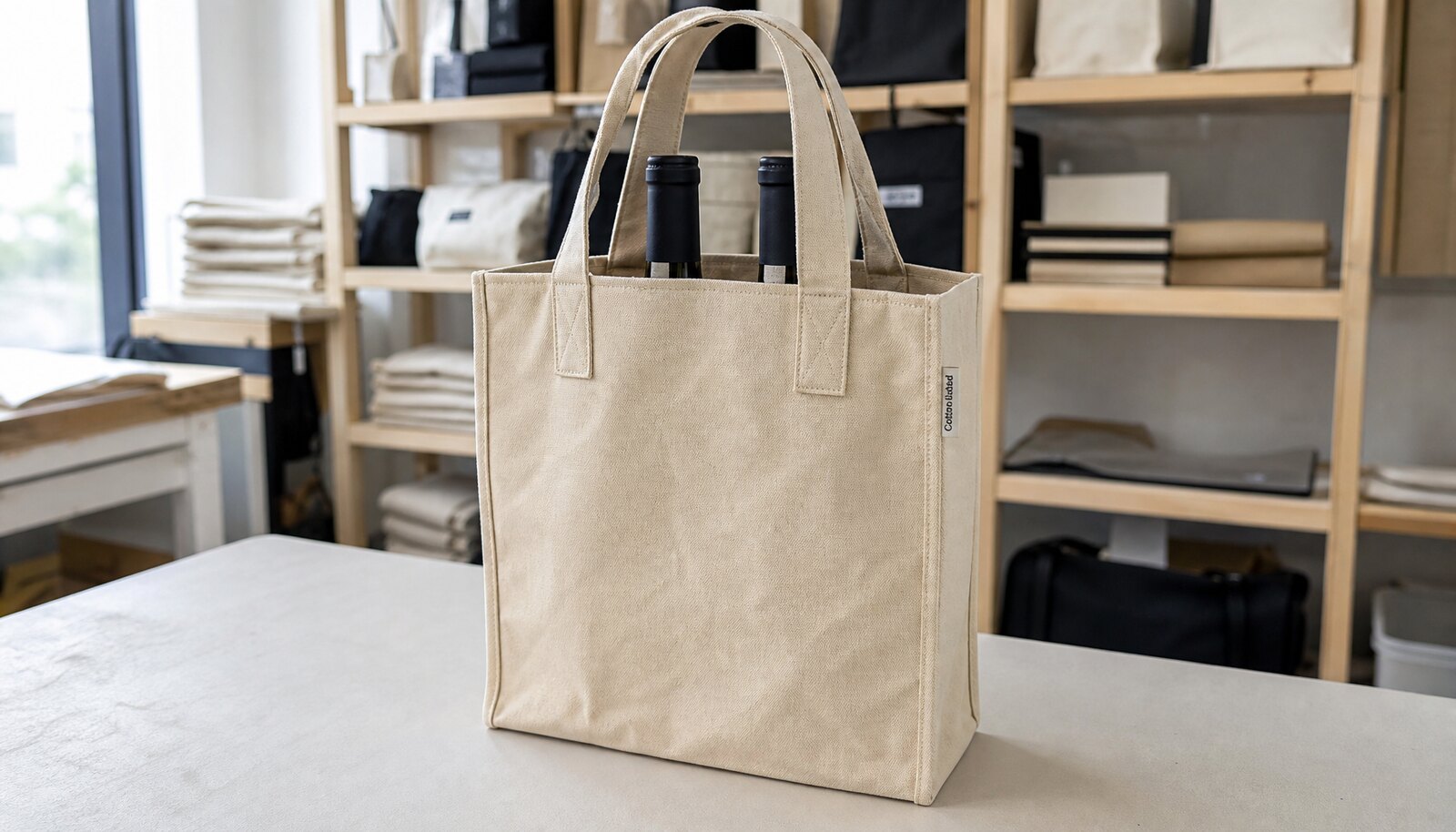
Why two-bottle wine bags need a different sourcing approach
Two bottle wine bags for ecommerce are not just larger gift bags. They have to survive warehouse handling, parcel carrier pressure, and customer unboxing while still looking clean enough to sell as a retail item. A bag that works for a countertop gift presentation can fail once it is packed with two glass bottles, stacked with other SKUs, and shipped through a fulfillment center. That is why the buying question is not only what the bag looks like, but how the construction protects the bottles and holds the format together in transit.
For procurement teams, the real problem is balancing protection, presentation, and pack efficiency. If the bag is too soft, the bottles rub and the product looks cheap on arrival. If the bag is too heavy or overbuilt, freight cost and carton volume rise fast. The best RFQ starts by describing the bottle type, expected route, and selling channel, because a DTC shipment, a winery gift set, and a wholesale retail pack all need different answers.
- Treat the bag as a shipping-sensitive retail item, not only a gift accessory.
- Build the quote around the actual bottle shape and ecommerce packing method.
- Decide early whether the priority is shelf presentation, transit safety, or lowest landed cost.
Start with bottle fit, because the wrong dimensions drive most complaints
The first spec to lock down is bottle fit, not the artwork. Two-bottle layouts usually work best when the supplier knows the exact bottle diameter, shoulder width, and neck height. Standard 750 ml bottles vary more than many buyers expect. A Bordeaux shape can fit comfortably in a narrower body, while a wider Burgundy profile needs extra internal width and more care around the divider. If you skip this step, the supplier will size the bag to a generic wine bottle and you will discover the mismatch only after sampling.
A practical RFQ should describe the internal layout, the opening clearance, and the amount of movement allowed inside the bag. Side-by-side bottles need a divider or a controlled seam structure so the glass does not knock together. Vertical stack styles need stronger base support and a more careful weight path through the handle area. When the supplier understands the bottle geometry, they can adjust seam allowance, body width, and top opening before cutting fabric, which saves time and avoids a weak first sample.
- Provide bottle drawings or a plain spec sheet with height, diameter, and shoulder width.
- State whether labels are tall, embossed, or fragile, because label damage often comes from internal friction.
- Confirm whether the bag should allow chilled condensation, cork cages, or other non-standard bottle features.
Fabric weight and structure: where the quote changes quickly
For ecommerce, cotton canvas and heavier cotton fabrics are usually the most reliable starting point. A range around 280-340 gsm gives enough body for two bottles without turning the bag into a stiff box. If the buyer wants a more natural gift look, lighter cotton can work, but only if the seam construction and carton packing are controlled. Jute has a strong retail look and good structure, but it can be harsher on bottle labels and may need lining or edge finishing to avoid scratch issues.
Fabric weight affects more than feel. It changes cut yield, stitch stress, fold behavior, carton count, and freight volume. A supplier quoting a lower price on thinner fabric may still create a worse landed cost if the bag needs extra reinforcement or arrives crushed. For this category, ask for the exact fabric weight, weave type, and any finishing treatment. If the supplier proposes lining, lamination, or a board insert, make sure those additions are priced separately so you can see what is truly driving the quote.
- Common buyer range: cotton canvas around 280-340 gsm for a balance of structure and flexibility.
- Heavier fabric can improve shelf shape, but it also raises sewing load and shipping weight.
- If the bag is meant for premium retail, request a finished sample that stands upright without forcing the seams.
Construction details that separate a usable bag from a weak one
The weak points in a two-bottle wine bag are predictable: handle attachment, side seams, divider joins, and the top opening where the bottles settle. A supplier can make the exterior look fine while still using a weak internal seam allowance that fails under real load. Ask for a construction sketch or sample photos that show the inside, not just the outside. If there is a divider, check whether it is sewn in, bonded, or inserted, because that choice affects both bottle protection and production stability.
Handle length also matters more than buyers expect. Too short, and the bag is awkward to carry once two bottles are inside. Too long, and the bag swings and stresses the top seam. For ecommerce, the bag should be easy to pack flat, easy to stack in a carton, and still strong enough for repeated retail handling. A clean construction spec should define handle width, reinforcement patch size, seam type, and whether the bag needs a bottom board or gusset to keep the load centered.
- Use reinforced handle stitching and define the stitch count or bar-tack style in the sample approval.
- Require clear internal divider placement if the bottles are stored side-by-side.
- If the bag will be sold as a reusable item, add a durability requirement for the mouth seam and handle area.
Branding options that work in ecommerce without creating quote noise
For two bottle wine bags, the decoration method should match the sales channel. Screen printing works well for one or two colors and keeps the quote readable. A woven side label can be a better choice when you want a cleaner premium look and repeatable bulk quality. Embroidery can look strong on heavier canvas, but it adds cost and can distort lighter fabrics. Heat transfer may help with artwork flexibility, but it can look less natural on cotton and may raise durability questions if the bag is handled often.
The common mistake is to design the bag first and think about print later. Buyers should define the print size, placement, color count, and acceptable color deviation before sampling. If you need a brand color to match existing packaging, include the Pantone references and ask for a lab dip or print strike-off. If the design uses fine lines or small type, ask the supplier how the print will hold up on the chosen weave, because coarse canvas can break up details that look clear in a flat file.
- Use screen print when the design is simple and cost control matters.
- Use a woven label when you want repeatable branding and less risk of print wear.
- Reserve embroidery for heavier fabric and a premium positioning that can absorb the added cost.
How to compare supplier routes without getting trapped in a cheap quote
For this category, the sourcing route changes the outcome as much as the spec. A direct factory usually gives the cleanest control over fabric, sewing, and final inspection, which helps when the bag needs a repeat order or color consistency. A trading company can be useful when you need several related items or you want one team to coordinate packaging and mixed sourcing. A regional converter or local decoration partner can shorten communication and sample turnaround, but they may have less control over raw material cost or custom construction.
Do not compare suppliers only by unit price. Compare who owns the critical steps: fabric sourcing, print execution, sewing, packing, and final quality release. If one quote is cheaper because printing is subcontracted or packing is excluded, you do not have a real like-for-like comparison. The best RFQ forces every bidder to define the same bottle layout, fabric weight, printing method, packing format, and carton specification so the commercial gap is meaningful instead of cosmetic.
- Ask each bidder to state which steps are done in-house and which are outsourced.
- Request the same artwork file and same bottle spec from every supplier.
- Use the same packing standard across quotes, otherwise carton costs will distort the comparison.
What a serious factory quote should include
A useful quote for two-bottle wine bags should break the product into parts, not hide everything in one number. You need the fabric type and weight, finished dimensions, handle construction, divider or insert detail, print method, packing method, and carton data. If the supplier only gives a unit price with no structure, they are leaving room for later changes that you will have to pay for. A clean quote makes it easy to compare options and spot where a supplier has assumed a different spec than you intended.
The same logic applies to schedule. A factory should give separate timing for sample, material booking, production, packing, and shipment readiness. That matters because a fast sample does not mean a fast bulk order if the fabric is special-order or the print must be approved before cutting. Good quote data also includes carton dimensions, quantity per carton, net and gross weight, and whether the product is polybagged or bulk packed. Those details drive freight cost and warehouse receiving time.
- Separate the quote into product cost, sample cost, packing cost, and any setup charges.
- Ask for carton size and packed weight so you can estimate freight before PO issue.
- Require the supplier to identify any assumptions, such as standard color, stock fabric, or generic packaging.
Sample approval: the stage where many ecommerce launches go wrong
A sample is only useful if it reflects the final order. For this product, that means final fabric, final print method, final handles, and the exact bottle type you will ship. A nice-looking sample made from substitute material can hide problems such as seam twist, weak bottle support, or a print that becomes patchy on the real fabric. The safest process is to review a pre-production sample or gold seal sample after all key components are confirmed, then freeze that version before bulk starts.
Sampling should also include practical handling checks. Put actual bottles into the bag, close it if the design has a closure, lift it by the handle, and hold it at carrying height for a realistic load check. Then inspect the bag again after a simple drop or shuffle test to see whether the bottles have shifted or the seams have opened. For ecommerce, the approval should include the packed version too, because a bag that looks right on a table can still be hard to fit into the master carton efficiently.
- Approve the exact bottle fit with production fabric, not with a generic sample bottle.
- Check print position, edge clarity, and color against the approved artwork file.
- Do not release bulk production until the sample, carton plan, and label position are all aligned.
Packing and carton planning for ecommerce fulfillment
Packing can make or break the economics of two bottle wine bags for ecommerce. If the bag is bulky, loose, or inconsistently folded, the carton count drops and freight cost rises. If it is packed too tightly, the fabric creases hard and the bag loses shelf appeal when it reaches the customer. The best compromise is usually an individual protective pack, then a master carton with clearly marked counts, SKU codes, and any warehouse labels your fulfillment partner needs.
The buyer should decide whether the carton is being optimized for export efficiency, warehouse receiving, or retail-ready presentation. Those goals are not always the same. A DTC or marketplace pack often needs barcode clarity, easy counting, and low damage risk. A wholesale order may need a cleaner outer carton stack pattern. In every case, ask the factory to quote the final pack spec, not just the sewn bag, because carton size, inner pack quantity, and label position affect the true landed cost and the receiving workflow.
- Specify whether the bag ships flat, folded once, or pre-shaped for retail presentation.
- Request carton marks that match your warehouse SKU system.
- Confirm if the product needs polybags, warning labels, or moisture protection during transit.
Lead time and landed cost: the two numbers buyers should protect
Lead time is usually overstated in the wrong way and understated in the wrong way. It is overstated when a supplier gives a single generic number without separating sampling, fabric booking, production, and packing. It is understated when the quote ignores artwork approval, material sourcing, or holiday congestion. For two-bottle wine bags, the schedule risk often sits in fabric reservation, print approval, and the final packing stage. A buyer should not release a PO until the factory has shown the real critical path.
Landed cost is where procurement teams need discipline. A lower ex-works quote can lose once you add heavier fabric, larger cartons, extra inner packing, and freight based on cubic volume. The right comparison is not factory price alone but the complete delivered cost against the sales channel. For ecommerce, small changes in carton size and bag thickness can move the freight figure more than the bag's sewing cost. That is why the RFQ should ask for packed dimensions and gross weight as standard quote data.
- Separate sample timing, production timing, and transit timing in the schedule.
- Ask for packed dimensions early so you can estimate freight and warehouse space.
- Re-check the quote if any component changes after sample approval, especially fabric weight or packing method.
Specification comparison for buyers
| Spec decision | Recommended option | When it fits | Buyer risk to check |
|---|---|---|---|
| Launch MOQ | Direct factory with stock cotton canvas and a simple 1-color print | Testing a new ecommerce SKU or a seasonal drop with uncertain demand | Custom fabric, woven labels, or special packing can push MOQ higher than the quote suggests |
| Bottle layout | Side-by-side body with a center divider or fixed insert | Most standard 750 ml bottles and retail packs that need stable presentation | If bottle shoulders are wide, the necks can touch and abrade during transit |
| Fabric weight | 10-12 oz cotton canvas or roughly 280-340 gsm cotton | Reusable retail bags that need enough structure without becoming bulky | Underweight fabric sags; overweight fabric increases freight, stitching stress, and carton volume |
| Decoration method | Screen print for 1-2 colors or a woven side label for repeat orders | Brands that want clean logo visibility and a quote that scales well | Full-bleed art, fine gradients, and multiple print hits can create sampling delays and color variation |
| Supplier route | Direct factory for repeat control, trading company for mixed sourcing, regional converter for speed | When your order size, artwork complexity, and timing do not all point to one route | Find out who owns fabric, print, assembly, and final inspection so accountability does not blur |
| Packing route | Individual polybag plus master carton with clear carton marks | Ecommerce, marketplace prep, and warehouse receiving that needs fast counting | Loose packing can scuff print, bend handles, and slow inbound checks |
| Cost control point | Keep trim simple: same fabric body, reinforced handle, minimal extras | When you need to protect margin while keeping a premium retail feel | Magnetic closures, metal eyelets, or elaborate inserts add cost and can change carton fit |
| Quality focus | Ask for a pre-production sample built from the final fabric and final print file | Any launch where color, handfeel, and bottle fit matter to sell-through | A sample made from substitute material is not a valid approval for bulk production |
Buyer checklist before sampling
- Provide the exact bottle dimensions, including diameter, shoulder width, neck height, and whether the bottles are Burgundy, Bordeaux, or another shape.
- State whether the bag should carry two bottles side-by-side, stacked vertically, or in a divider pocket format.
- Specify fabric type and target weight, such as cotton canvas 280-340 gsm or a heavier structure if the bag must stand up on shelf.
- Send artwork in vector format and define logo size, print position, Pantone references, and whether one-color print or woven branding is acceptable.
- Confirm the closure style, handle length, handle reinforcement, and whether the bag needs an insert, divider, or bottom board.
- Set the packing requirement for ecommerce, including polybag use, carton quantity, carton marks, and any barcode or SKU label placement.
- Tell the supplier your target MOQ, forecast for repeat orders, and whether you need mixed colors or one color per run.
- State the delivery term and destination so the quote includes the real landed-cost path, not just the factory price.
Factory quote questions to send
- What exact fabric, fabric weight, and finished bag dimensions are included in the quote?
- Does the quote include divider construction, base reinforcement, handle tape, and any lining or insert board?
- Which print method is included, how many colors are priced, and what artwork limits apply?
- What is the MOQ by color and by artwork version, and does the MOQ change if we request woven labels or custom packing?
- What sample stages do you offer, and which sample stage should we approve before bulk?
- What is the quoted lead time split between sample, material booking, production, and packing?
- What packing format is included per inner pack and master carton, and what are the carton dimensions and CBM?
- Which parts are produced in-house and which parts are outsourced, such as printing, labels, or final packing?
Quality-control points to confirm
- Check fit with the exact bottles you will sell, not a generic sample bottle, and confirm there is enough headroom at the top closure.
- Inspect seam strength at handle attachment points, divider joins, and bottom corners where two bottles create the highest load.
- Verify print registration, logo placement, and rub resistance on the finished fabric after basic handling.
- Measure finished bag dimensions against the approved spec and allow only a narrow tolerance that you and the supplier agree in writing.
- Review fabric shade, GSM, and handfeel against the approved sample so the bulk run does not drift in look or stiffness.
- Confirm individual packing, carton counts, and carton marks, then sample a carton to make sure the contents match the packing list.
- If the bag uses a closure, test the closure repeatedly and confirm it does not snag the bottles or distort the mouth opening.
- Check for loose threads, skipped stitches, open seams, and crushed corners after carton compression and handling.