Tote Bag Sourcing Sustainability Sourcing Criteria for United States Procurement
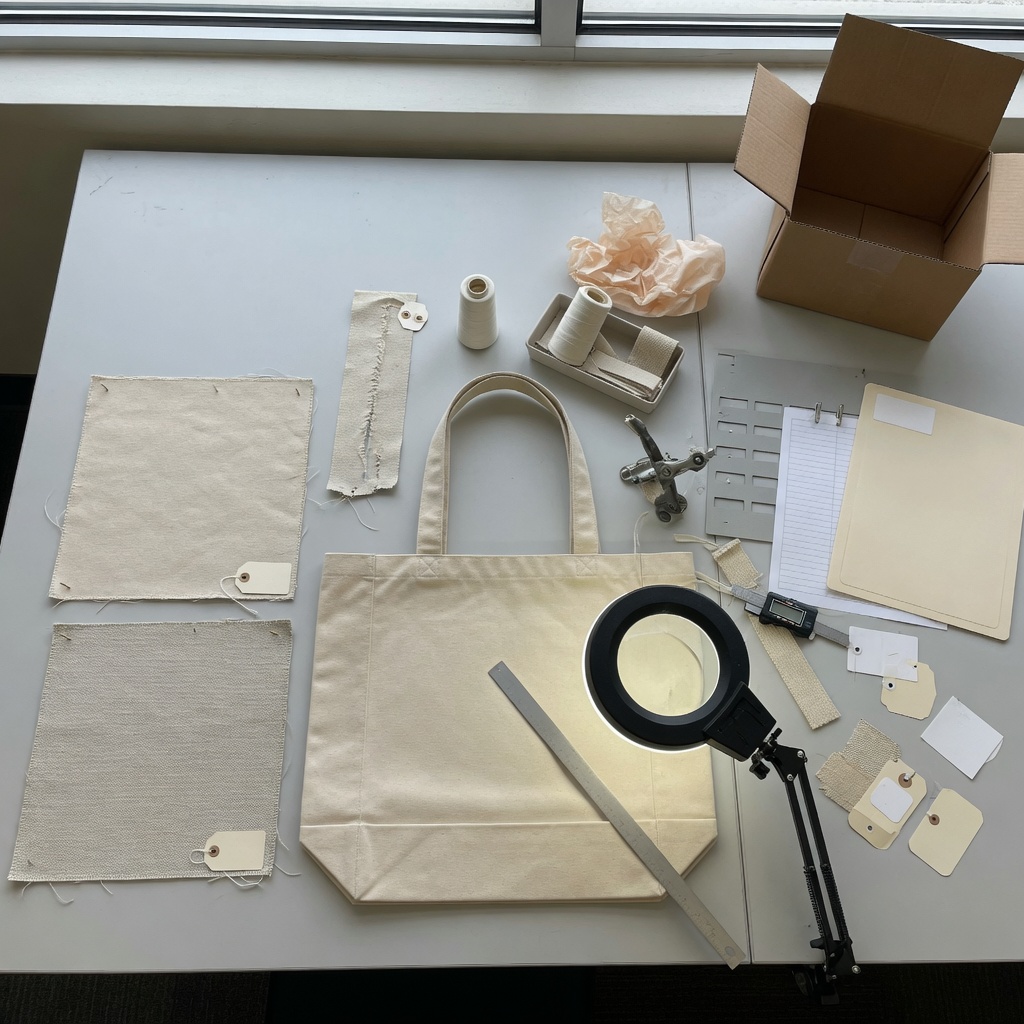
By Vincent Xi — Editorial Author
Tote bag sustainability sourcing criteria for United States procurement are the buyer-defined evidence and commercial gates used to decide whether a quoted SKU may be awarded with a sustainability claim. For business-to-business buyers, those gates should connect the locked SKU and bill of materials to the exact claim, covered component, current evidence, production site, quoted order, approved sample, labeling review, normalized landed cost, dated delivery milestones, and written substitution and remedy terms. If any connection is missing, classify the offer as conditional or unverified and compare it without the sustainability claim until the stated release condition is met.
The supplied citations support narrow sourcing questions. They do not verify a current supplier, quoted material, document, production site, finished bag, United States labeling or customs outcome, price, minimum order quantity, capacity, or delivery date.
Buyer decision rule: If any required connection is missing, classify the offer as conditional or unverified. Compare it without the sustainability claim until the stated release condition is met. These are buyer-defined procurement controls, not claims about a supplier or product.
Sustainability sourcing criteria for United States tote bag procurement
Use consistent status labels so that incomplete evidence is not scored as equivalent to matched evidence.
| RFQ status | Comparison treatment | Minimum release condition |
|---|---|---|
| Award-ready | Include in the sustainability-supported commercial comparison. | The SKU, specification, claim coverage, evidence route, quality plan, label-review status, cost basis, delivery milestones, and remedies align without an unresolved deviation. |
| Conditional | Keep separate with a written hold. | The pending item, responsible party, affected component or claim, expected availability, and release condition are recorded. |
| Claim unverified | Compare the bag without sustainability wording. | The material is described, but evidence is not matched to the quoted component and order. |
| Hold or reject | Do not release affected production or shipment. | A material conflict, unapproved substitution, unsupported wording, omitted cost, missing document, or open remedy remains. |
A different fabric weight, construction, trim set, production site, evidence route, delivery basis, or destination is a different commercial option until the deviation is disclosed, priced, and accepted.
Lock the tote bag SKU before evaluating a sustainability claim
None of the supplied citations establishes a specific tote bag SKU, dimension, fabric weight, tolerance, or performance result. Those fields must therefore remain buyer inputs until confirmed in the supplier quote, approved sample, and purchase order.
| RFQ block | Buyer locks | Supplier returns |
|---|---|---|
| Commercial identity | SKU, intended use, quantity, United States ship-to point, delivery basis, delivery window, and sample reference | Exact quoted scope, minimum order quantity, price tier, packing quantity, assumptions, and exclusions |
| Finished geometry | Width, height, gusset, measurement points, and tolerances | Actual values, measurement method, proposed tolerances, and deviations |
| Shell and components | Material wording, construction, weight, finish, color, trims, labels, packaging, and claim coverage by component | Complete bill of materials, source or mill where available, evidence references, and substitution terms |
| Handles and construction | Handle material, width, drop, placement, reinforcement, seams, stitching, and workmanship criteria | Construction details, attachment method, quality plan, and deviations |
| Decoration and packing | Artwork area, method, placement, appearance criteria, unit packing, carton configuration, and carton marks | Process limits, setup charges, approval sample, packing data, included charges, and exclusions |
| Deviation schedule | Required fields and prohibited substitutions | Every row marked complies, deviation, or not included, with an owner and resolution status |
Illustrative assumptions for measurable RFQ fields
The figures below are explicit example assumptions created for a planning worksheet. They are not source-derived specifications, supplier offers, or market benchmarks.
| RFQ field | Explicit example assumption | Scope, date, and verification |
|---|---|---|
| Order quantity | 5,000 bags | Same quoted tote bag SKU in a United States planning RFQ dated 2026; verify the quantity, minimum order, price tier, packing quantity, and allowable variance in the supplier quote. |
| Finished geometry | 15 inches finished width, 16 inches finished height, and 4 inches gusset depth | Same quoted tote bag SKU in a United States planning RFQ dated 2026; verify measurement points, pattern, tolerances, and usable decoration area on the approved sample. |
| Cotton shell alternative | 10 ounces per square yard cotton canvas | Alternative shell assumption for the same quoted tote bag SKU in a United States planning RFQ dated 2026; verify material identity, construction, finish, and actual weight in supplier records or buyer-approved testing. |
| Recycled shell alternative | 300 grams per square meter rPET woven fabric | Alternative shell assumption for the same quoted tote bag SKU in a United States planning RFQ dated 2026; verify material identity, construction, finish, actual weight, and supporting evidence. |
| Handle drop | 10 inches finished handle drop | Same quoted shoulder-carry SKU in a United States planning RFQ dated 2026; verify handle material, width, placement, reinforcement, attachment, and finished drop on the approved sample. |
Require the supplier to return the actual value, unit, measurement method, tolerance, and evidence reference for each measurable field.
Turn source-listed terms into claim evidence controls
Source contexts used for the RFQ checks
- HomevolutionChina is used only for its discussion of tote bag sourcing topics that include rPET, organic cotton, GRS, OEKO-TEX, and BSCI or Sedex.
- CoraggioBag is used only for its recycled-fabric buyer questions concerning Scope Certificate and Transaction Certificate records, fabric origin, and tear strength.
- EcoicolorTote is used only for its checklist references to rPET, recycled cotton, organic cotton, OEKO-TEX, and social-audit checks.
These sources identify questions to ask. They are not evidence that a supplier, factory, material, document, or order has a particular status.
Use a claim record with the following fields:
Quoted material | exact claim wording | covered component | evidence record | holder or issuer | production site | order linkage | availability | buyer review status
| Source-listed topic | Supplier must return | Buyer verification | Award response |
|---|---|---|---|
| rPET or recycled cotton wording | Exact material description, claimed component, proposed wording, source or mill where available, and evidence status | Match the quote, approved swatch, bill of materials, document holder, production site, and quoted order | Remove the claim or keep it conditional if evidence cannot be matched to the component and order |
| Organic cotton wording | Exact organic wording, covered fabric or component, source, and proposed evidence chain | Check whether current records support the quoted fabric and order under the buyer-approved evidence route | Do not use recycled-material records as support for an organic claim |
| GRS route | Exact intended claim, covered components, and proposed document route | If the supplier proposes this route, request the current Scope Certificate and ask how a Transaction Certificate or other transaction record would link to the order; verify current rules, holder, site, scope, validity, material, and order linkage with the relevant issuer | Hold the claim if any document conflicts with the quote or cannot be validated |
| OEKO-TEX route | Exact document route and the components, colors, and finishes the supplier says it covers | Request a current matching document when the buyer specification calls for it; verify issuer, holder, scope, validity, and coverage | Remove the wording or hold the quote if coverage does not match the quoted component |
| BSCI, Sedex, or another source-listed social review | Production-site identity, requested review route, and record status | Use the record only for the buyer's factory-vetting decision and keep the site aligned with the purchase order | Do not use a site-review record as proof of material content or finished-bag performance |
| No matched sustainability evidence | Ordinary material description without recycled, organic, or certification wording | Retain applicable material and quality records while marking the option unverified | Exclude unsupported wording from labels, hangtags, packaging, invoices, and product copy |
GRS and OEKO-TEX are named only because the supplied pages name them. BSCI and Sedex are treated only as source-listed social-review or factory-vetting references. This article does not state current program requirements, imply certification, or treat a site-review record as material proof. Review a current matching document before approving any related claim.
Set finished-bag quality and substitution gates
The CoraggioBag page raises tear strength as a recycled-fabric buyer question CoraggioBag. It does not provide an acceptance limit or test method for this RFQ. The controls below are buyer-defined requirements rather than rules attributed to a cited program.
| Control area | RFQ must define | Approval record |
|---|---|---|
| Material identity | Material description, construction, weight, finish, color, source, and covered components | Approved swatch, bill of materials, supplier record, and evidence index |
| Tear strength | Method, specimen, direction, sample stage, laboratory, acceptance limit, and failure remedy | Report tied to the quoted material and sample or order, with retest and corrective-action terms |
| Finished dimensions and workmanship | Measurement points, gusset shape, handle drop, seam appearance, tolerances, and defect criteria | Approved sample measurements and final inspection record |
| Seams and handles | Attachment construction, reinforcement, load method, acceptance limit, and failure remedy | Approved sample plus the buyer-defined inspection or test record |
| Color, finish, and decoration | Color reference, finish, placement tolerance, appearance, adhesion or curing expectation, and relevant durability checks | Approved swatch or decorated sample and applicable inspection or test result |
| Packing | Unit packing, carton configuration, carton condition, carton data, and relevant handling requirements | Approved packing sample and final packing inspection |
For each test, record the method, specimen, direction, sample stage, laboratory, acceptance limit, report, and remedy. Do not treat a fabric-only result as proof of finished-bag performance unless the buyer has defined and approved that relationship.
The purchase order should prohibit changes to the shell material, fiber blend, fabric weight, construction, dye, finish, coating, handles, thread, trims, labels, packaging, source, mill, or production site without written buyer approval. An approved change should reopen review of the sample, bill of materials, claim evidence, label wording, landed cost, and delivery schedule.
Use clear release gates:
- Sample, bill-of-materials, and evidence gate: Review the physical bag, swatches, components, decoration, packaging, and evidence index together.
- Production-release gate: Release bulk production only after required pre-production records and deviations are accepted in writing.
- Change-control gate: Stop affected work after a material, component, source, or site change until its effect on claims, quality, cost, and timing is reviewed.
- Final inspection and shipment gate: Match the finished bag to the approved sample, specification, packing requirements, inspection result, and required shipping or claim records before release.
United States labeling, landed cost, and delivery controls
Review labels and sustainability claim copy
The supplied citations are not United States legal authorities, so this article does not assert a universal label formula. Before artwork release, route proposed wording to the buyer's compliance reviewer, counsel, or customs broker for a determination of the requirements that apply to the product and transaction.
Require the supplier to return drafts for:
- Proposed country-of-origin wording and placement.
- Proposed fiber or material wording and the components it describes.
- Care or use wording when included in the buyer specification.
- Sustainability wording on sewn labels, hangtags, packaging, cartons, invoices, and online product copy.
- Import, carton, and packaging marks requested by the buyer, broker, or receiving operation.
Maintain a claim-to-document matrix for each wording location. Record the covered component, evidence record, document holder or issuer, quoted order, and buyer approval status. Place artwork on hold whenever the wording extends beyond the available evidence. A document image supplied by a seller is not, by itself, buyer approval of label or marketing copy.
Normalize landed cost to the same commercial basis
Do not compare a product-only price with a delivered United States cost. Use the same tote bag SKU, quantity, destination, delivery basis, evidence burden, inspection plan, and acceptance denominator.
Evaluated landed cost per accepted bag = product price + samples and setup + evidence charges + testing and inspection + export packing + origin-to-United States freight + validated import charges + United States delivery + applicable exception costs, divided by the accepted quantity.
| Cost line | Supplier response required | Buyer validation |
|---|---|---|
| Product price | Price per bag, currency, quantity basis, delivery basis, named place, quote validity, and exclusions | Confirm that the price matches the locked SKU, claim status, and evidence burden |
| Samples and setup | Sample, artwork, decoration setup, tooling, and courier charges | Separate recurring, non-recurring, and refundable amounts |
| Evidence, testing, and inspection | Document, transaction-record, verification, laboratory, sample-preparation, inspection, and reinspection charges | Identify what is included, who selects the reviewer, and who pays after failure |
| Packing and freight | Unit packing, carton configuration, handling, freight basis, named place, and included charges | Normalize each offer to the same United States destination and service scope |
| Import inputs | Material composition, manufacturing origin, proposed classification, value data, and duty or brokerage assumptions | Obtain broker review rather than treating supplier input as final |
| United States delivery | Domestic transport, appointment, liftgate, storage, or warehouse assumptions when applicable | Match the actual ship-to point and receiving conditions |
| Commercial and failure terms | Payment schedule, currency basis, price-adjustment triggers, rework, sorting, replacement, shortage, return, and delay responsibility | Include financing, currency, quality, and schedule exposure in the award comparison |
Illustrative landed-cost arithmetic
Every amount below is an explicit example assumption or calculation. None is a supplier price, benchmark, or CottonToMaker product figure.
| Cost line | Explicit example assumption or arithmetic | Scope, date, and verification |
|---|---|---|
| Product | 5,000 bags multiplied by USD 2.40 per bag equals USD 12,000 per order | Same quoted tote bag SKU and order in a United States planning RFQ dated 2026; verify in the supplier quote. |
| Evidence, testing, and inspection | USD 600 per order | Same quoted tote bag SKU and order in a United States planning RFQ dated 2026; verify with the supplier, laboratory, and inspector as applicable. |
| Packing and origin-to-United States freight | USD 1,200 per order | Same quoted tote bag SKU and order in a United States planning RFQ dated 2026; verify with the supplier and carrier. |
| Duty and brokerage placeholder | USD 500 per order | Same quoted tote bag SKU and order in a United States planning RFQ dated 2026; verify with the buyer's customs broker. |
| United States domestic delivery | USD 300 per order | Same quoted tote bag SKU and order in a United States planning RFQ dated 2026; verify with the domestic carrier or warehouse provider. |
| Listed-cost arithmetic | USD 14,600 per order divided by 5,000 accepted bags equals USD 2.92 per accepted bag | Arithmetic derived only from the preceding example assumptions for the United States planning RFQ dated 2026; it assumes the full 5,000-bag quantity is accepted and every input must be verified. |
The calculation includes only the listed lines. Add any unlisted taxes, storage, financing, rework, disposal, delay, and buyer-specific charges before approving the commercial comparison.
Put delivery and evidence on a dated milestone plan
Require calendar dates tied to buyer approvals instead of relying on a single lead-time statement.
| Milestone | Supplier must return | Buyer hold or recovery control |
|---|---|---|
| Sample | Dispatch, receipt, revision, and approval dates | Tie production release to written sample approval |
| Evidence index | Availability date for each record, holder or issuer dependency, and order-linkage status | Mark the claim pending and define the document, claim-use, payment, or shipment hold |
| Materials and production | Material booking, production release, completion, and packing dates | Identify upstream dependencies and recovery action for a missed milestone |
| Inspection | Booking, completion, corrective-action, and reinspection dates | State failure cost, responsible party, and effect on shipment |
| Shipment and delivery | Shipping-document deadline, cargo handover, planned departure, estimated United States arrival, and delivery appointment | Confirm delivery basis, destination assumptions, document requirements, and delay remedies |
If an order-linked record will be available only after shipment, disclose that timing before award. Classify the claim as pending and define the applicable document, payment, claim-use, or shipment hold rather than assuming the record will arrive.
RFQ return and award controls for United States tote bag procurement
Require a completed response for each package item. Blank fields should be marked not included or not available rather than left open to interpretation.
| RFQ package item | Supplier return | Award gate |
|---|---|---|
| Locked specification | Completed specification, bill of materials, sample reference, and signed deviation schedule | No unresolved product or packing deviation |
| Claim and evidence index | Exact claim, covered components, record names, holder or issuer, production site, validity status, order linkage, and availability | No sustainability credit without matched evidence |
| Quality plan | Sample schedule, test methods, acceptance criteria, inspection stages, reports, and failure remedies | No production release before measurable criteria are accepted |
| Label and claim artwork | Draft origin, material, care or use, sustainability, packaging, carton, and online wording | Buyer-side United States review before artwork release |
| Landed-cost worksheet | Unit price, setup, evidence, testing, inspection, packing, freight, import inputs, delivery assumptions, and exclusions | Normalize every offer to the same destination and accepted-quantity basis |
| Milestone schedule | Dated sample, evidence, production, inspection, shipment, arrival, and recovery milestones | Critical dates and consequences written into the purchase order |
| Contract controls | No-substitution terms, inspection rights, rework, replacement, shortage, delay, payment, and document holds | No open responsibility or remedy term at award |
Final award rule: Approve a quote as a sustainability-supported option only when the same tote bag SKU, specific claim, matched evidence, finished-bag controls, United States labeling review, normalized landed cost, delivery schedule, and contractual holds align. If the evidence is inadequate, compare the same bag without sustainability wording or hold the award until the stated gap is resolved.
Evidence basis, methodology, and limitations
First-hand experience note
The first-party profile identifies Vincent Xi as Editorial Author. It does not provide support for claims of factory visits, personal product tests, certification reviews, client work, or customer outcomes. No first-person sourcing experience is claimed.
Methodology
The cited pages were retained only for the explicit sourcing topics described in their source contexts. Each topic was converted into a procurement sequence: buyer input, supplier statement, covered component, evidence record, validation step, status, and release or remedy control. The specification and cost figures are constructed example assumptions for a United States planning RFQ dated 2026. The listed cost result was derived by adding the example line items and dividing the total by the example accepted quantity. None of those figures was derived from the cited pages.
Limitations and what to verify
This package does not treat the cited pages as verification of current program rules, supplier certificates, factory-review status, laboratory results, material origin, finished-bag performance, price, minimum order quantity, capacity, or delivery. It does not establish United States labeling, customs classification, duty, brokerage, or other legal outcomes. Verify current records with the relevant issuer or document holder, match evidence to the quoted component and order, approve samples and test methods, and obtain current compliance and broker review before artwork, production, shipment, payment, or claim release. No CottonToMaker manufacturing, certification, testing, pricing, minimum quantity, capacity, delivery, or product-performance claim is made.
Discuss Your Requirements
Review our manufacturing capabilities, then share your specifications for a supplier-fit review.