Start With the Carry Scenario, Not the Logo File
Logo placement on canvas messenger bags should begin with how the bag will be used. A tech startup ordering for a developer conference usually wants the logo visible when the bag is worn across the body. A startup ordering for employee onboarding may prefer a cleaner look that people will carry after the first week. Retail buyers often need a quieter logo position because the customer is buying the bag, not just receiving it.
The same artwork can perform very differently depending on the flap shape, strap angle, front pocket, buckle, and canvas stiffness. A large centered print looks strong on a flat flap but can distort when the flap is rounded over a full main compartment. A small woven side label looks premium, but it will not support brand exposure in event photos. Procurement should define the commercial objective before negotiating print cost.
- For conference giveaways, prioritize visibility on the closed flap while the bag is worn.
- For employee kits, balance brand recognition with daily-use discretion.
- For retail or distributor resale, avoid oversized logos unless the brand itself drives demand.
- For co-branded campaigns, reserve space for both logos before confirming bag pattern.
Choose the Logo Zone by Visibility and Wear Risk
The front flap is the strongest logo zone for most canvas messenger bags because it stays visible when the bag is closed. The usable area is not the full flap. Seam allowance, curved flap corners, magnetic snaps, buckles, leather tabs, and edge binding reduce the safe zone. A factory should mark a real printable rectangle on the pattern, not just place the logo in the middle of a catalog photo.
Lower flap corners, side labels, inner pocket prints, and strap labels each solve different problems. Lower corner printing gives a more retail-friendly look but may be partly hidden by the user's arm. A woven side label is durable and premium but has less impact from a distance. Inside pocket printing is useful for QR codes, support URLs, or property labels, but it should not be counted as the primary branding location.
- Best high-visibility zone: centered front flap, placed clear of buckles and flap edge stitching.
- Best premium zone: small woven label sewn into side seam or flap edge seam.
- Best functional zone: inside pocket print for QR code, asset tag, or employee kit message.
- Avoid risky zones: heavy seam crossings, flap fold line, buckle contact points, and strap friction areas.
Match Canvas Weight to Print Stability
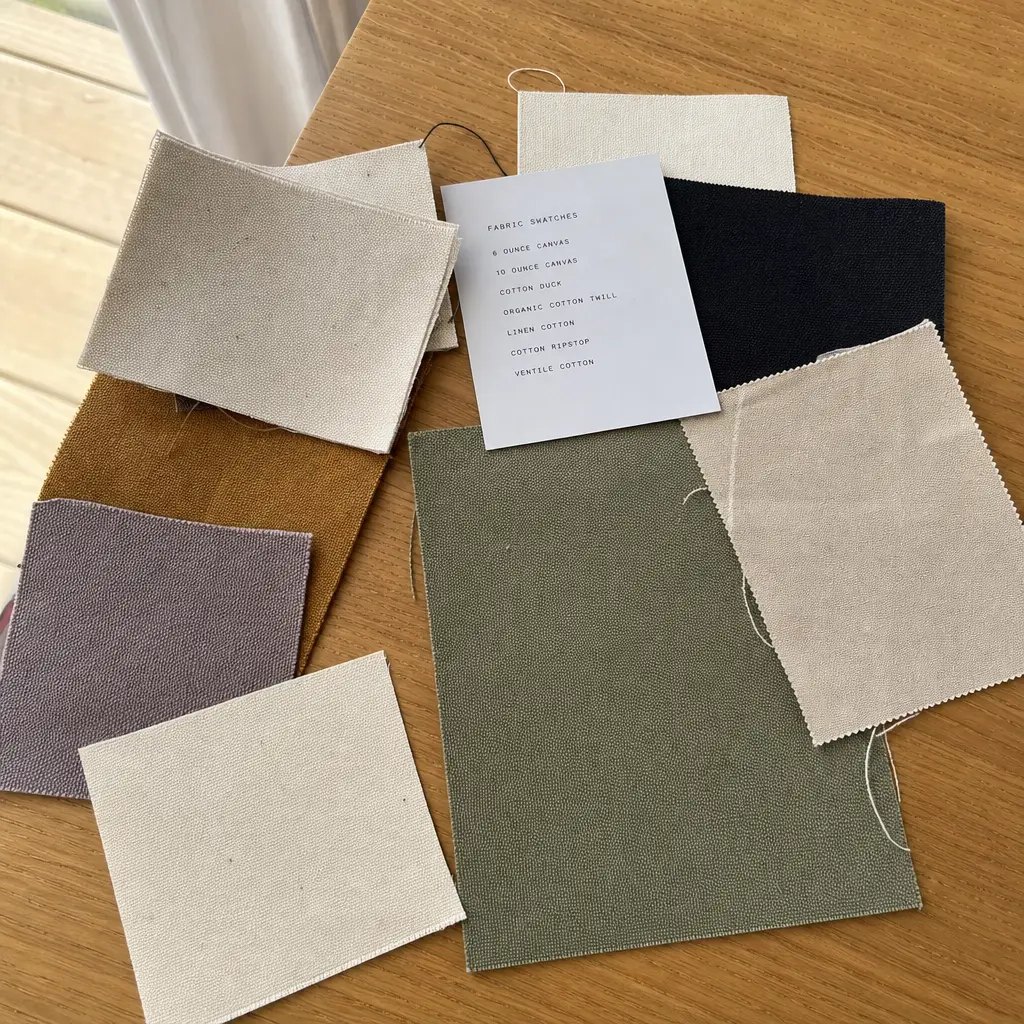
Canvas weight affects both bag structure and logo result. A common buyer mistake is choosing the cheapest 10 oz or light 12 oz canvas for a large front-flap print, then expecting the flap to sit flat like a retail laptop bag. Lighter canvas can work for simple promotional messenger bags, but it may wrinkle around the print and make alignment look less precise. For a startup bag intended to carry chargers, notebooks, and a small laptop, 14 oz or 16 oz canvas is usually a safer specification.
Factories may describe canvas by ounces, GSM, yarn count, or finished feel. These are not always interchangeable. A 12 oz canvas is often around 380-410 GSM, while 16 oz may be around 500-540 GSM, but coating, washing, and dyeing can change hand feel and shrinkage. The RFQ should require the supplier to state both oz and GSM where possible and confirm whether the sample fabric is the same as bulk fabric.
- Light promotional build: 10-12 oz canvas, simple screen print, limited load expectation.
- Balanced daily-use build: 14 oz canvas, reinforced strap anchors, stable front flap print.
- Premium heavy build: 16 oz canvas, stronger structure, higher freight weight, longer needle and sewing control needed.
- Natural canvas shows ink texture; dyed black or navy canvas needs opacity planning for light logos.
Select a Print Method That Survives the Flap
Screen printing is usually the most practical method for canvas messenger bag logos when the artwork uses solid colors. It gives good cost control at 300 pieces and above, works well with Pantone references, and can cover the textured surface of canvas if the mesh, ink, and curing are chosen correctly. For white logos on dark canvas, the quote should state whether an underbase is included because this changes both opacity and cost.
Heat transfer can handle gradients, small color runs, and complex digital artwork, but buyers should be careful on a flap that bends often. Transfer edges may lift if the adhesive is not matched to canvas texture or if the bag is packed under pressure while still warm from production. Embroidery can look premium but is not always the best choice for thin startup wordmarks. Dense stitches can pucker the flap, especially on lighter canvas.
- Use screen print for solid logos, one to four colors, and repeat orders.
- Use heat transfer for gradients, photo-style marks, or small pilot quantities after wash and bend testing.
- Use embroidery for short names, patches, or simple icons with enough fabric support.
- Use woven labels for subtle retail branding, but simplify fine lines before approving artwork.
Control Logo Size With Millimeter Rules
Logo placement should be specified with dimensions, not phrases such as 'medium size' or 'front center'. A buyer-ready RFQ should include the finished bag size, flap width, flap height, logo width, logo height, and distances from fixed construction points. For example, a 120 mm wide logo centered horizontally and positioned 70 mm above the lower flap edge is much clearer than a screenshot with an arrow.
Tolerance also needs to be realistic. On cut-and-sew canvas bags, slight variation comes from fabric stretch, sewing tension, and flap turning. For most screen-printed logos, plus or minus 5 mm placement tolerance is practical. Sewn woven labels can often be controlled within plus or minus 3 mm if the seam guide is stable. Very tight tolerances increase rejection risk and should be reserved for retail packaging or symmetrical panel designs.
- Provide vector artwork in AI, EPS, SVG, or production-ready PDF format.
- State logo size in millimeters and colors by Pantone, CMYK, or approved physical standard.
- Define distances from flap bottom edge, flap side edge, buckle center, and stitch line.
- Require supplier artwork proof on a bag pattern or actual sample photo before screens are made.
Understand MOQ and Cost Drivers Before Comparing Quotes
Messenger bag quotes vary widely because suppliers include different assumptions. One factory may quote a stock natural canvas body with one-color screen print. Another may include custom dyed fabric, metal hardware, lining, woven side label, and individual retail packaging. The first price will look cheaper but may not match the intended product. Procurement teams should compare quote scope before negotiating unit price.
MOQ is usually driven by fabric purchasing, dyeing, printing setup, label weaving, hardware sourcing, and sewing line efficiency. A simple natural canvas messenger bag with one print may be possible around 300-500 pieces depending on factory capacity and material availability. Custom fabric colors, custom lining, colored webbing, metal logo plates, or woven labels often push MOQ closer to 800-1,000 pieces because upstream suppliers have their own minimums.
- Screen charge: normally depends on number of logo colors and print size.
- Fabric cost: rises with canvas weight, dyeing, washing, coating, and shrinkage allowance.
- Sewing cost: increases with padding, lining, internal pockets, binding, and reinforced strap anchors.
- Packaging cost: changes with hangtags, barcode stickers, individual cartons, or plastic-free packing.
- Freight cost: heavy canvas increases carton weight and may affect air freight decisions.
Approve Samples With Production Conditions
A logo placement sample is only useful if it represents bulk production. Many early samples are made from available fabric, substitute strap, or manual print setup. That can help confirm general look, but it should not be treated as a final approval sample. The pre-production sample should use bulk canvas weight, bulk color, final print method, final strap width, final hardware, and the actual logo size.
Sample review should include handling, not only photography. Close the flap, fill the bag lightly, wear it over the shoulder, and check whether the logo remains visible and level. Fold the flap repeatedly and rub the printed area with a dry white cloth. If the bag is dark-colored, rub the strap and body fabric against the logo area to check transfer risk. For embroidery, inspect the inside for rough backing and the outside for puckering.
- Accept only after reviewing logo placement on a closed, filled, and worn bag.
- Measure logo position from physical edges, not only visual center.
- Check print opacity after the ink has cured, not immediately after printing.
- Photograph approved sample with ruler reference and keep it as the inspection standard.
Set Quality Thresholds for Bulk Inspection
Inspection criteria should be written before bulk production starts. If the buyer only says 'logo must look good', the inspector and factory will judge subjectively. A better standard defines placement tolerance, color tolerance, ink adhesion, print surface defects, seam quality, strap strength, and packing condition. This gives the supplier a clear target and gives the buyer leverage if the goods are off standard.
For canvas messenger bags, logo issues often come from flap variation, printing before full fabric relaxation, or poor carton packing. AQL inspection can be used, but some logo defects should be treated as major defects because they affect brand presentation. Examples include a visibly tilted logo, wrong Pantone, cracked print, missing side label, upside-down label, or logo partly hidden by buckle hardware.
- Logo alignment: normally within plus or minus 5 mm for screen print on flap.
- Color: match approved sample under agreed lighting, allowing natural canvas texture variation.
- Adhesion: no peeling after tape pull and no obvious cracking after repeated flap bend.
- Sewing: no open seam, skipped bartack, loose strap anchor, or broken edge binding.
- Packing: no ink transfer, deep compression marks, buckle dents, or stained canvas panels.
Plan Packing Around the Printed Flap
Packing is often treated as an afterthought, but it can damage the logo after the bag passes sewing inspection. Canvas messenger bags are usually flat packed, but buckles, strap sliders, and heavy webbing can press into the printed flap during long transit. If the logo is printed on the lower flap, the factory should avoid placing metal hardware directly against that area inside the carton.
Retail buyers may need individual polybags, paper belly bands, hangtags, barcode labels, or plastic-free packaging. Each option changes packing speed, carton size, moisture control, and landed cost. For natural canvas, moisture and dirt control are important because stains are more visible than on dark fabric. If the buyer wants no individual polybag, the carton liner, tissue placement, and carton strength become more important.
- Use tissue or paper protection between printed flaps when the ink area contacts another bag.
- Place straps so metal sliders do not sit on the logo during compression.
- Confirm pieces per carton only after the final sample is packed, not from a catalog estimate.
- Mark cartons with PO number, SKU, color, quantity, gross weight, net weight, and carton number.
- For plastic-free programs, specify carton liner and moisture control method.
Build a Realistic Lead-Time Schedule
Lead time should not be counted from the first inquiry. For custom canvas messenger bags, the meaningful clock starts after artwork, material, sample, payment, and order details are approved. A practical schedule may include artwork proofing, material booking, sample making, sample shipment, buyer review, correction if needed, bulk cutting, printing, sewing, trimming, inspection, packing, and export booking.
Logo placement decisions can create schedule risk when they are made too late. If the print area changes after screens are made, the supplier may need new screens. If the logo moves across a seam or near hardware, the sewing sequence may need adjustment. If the buyer changes from screen print to woven label, the label supplier lead time becomes a separate dependency. For event deadlines, keep one correction round in the schedule rather than assuming the first sample will pass.
- Artwork proofing: usually 1-3 working days after usable vector files are received.
- Pre-production sample: often 7-12 days after artwork and material confirmation.
- Bulk production: commonly 25-45 days after approved PP sample for standard materials.
- Extra time drivers: custom dyeing, lab testing, special hardware, retail packaging, or peak-season capacity.
- Shipment planning: request carton data early so air versus ocean cost can be compared.
Specification comparison for buyers
| Spec decision | Recommended option | When it fits | Buyer risk to check |
|---|---|---|---|
| Main logo position | Centered on front flap, 90-130 mm wide depending on bag size | Best for startup event giveaways, employee onboarding kits, and distributor samples where brand visibility matters before the bag is opened | Flap curvature, buckle location, and seam allowance can reduce the usable print area; require an artwork placement proof on the actual pattern |
| Low-visibility brand position | Small woven side label or lower corner print, 35-60 mm wide | Suitable for premium retail bags, investor gifts, or co-branded programs where the bag should not look like a billboard | Small labels need higher MOQ and clear Pantone limits; thin startup icons may lose detail in weaving |
| Fabric weight | 12 oz to 16 oz cotton canvas, roughly 380-540 GSM depending on construction | 12 oz works for lighter conference bags; 14-16 oz supports laptop-style messenger use and better flap structure | Factories may quote by ounce or GSM differently; request measured finished fabric weight and shrinkage allowance |
| Print method | Screen print for solid startup logos; heat transfer only for gradients or short pilot runs | Screen print gives stable cost at volume and good opacity on natural, black, navy, or dyed canvas | Ink cracking appears when the flap bends if curing is weak or ink layer is too thick; include a fold and rub test in sample approval |
| Embroidery option | Embroidery patch or direct embroidery away from bulky seams | Works for premium founder gifts, retail capsules, and smaller logos with simple shapes | Dense embroidery can pucker 12 oz canvas and distort the flap; require backing approval and stitch count disclosure |
| MOQ logic | 300-500 pieces for plain screen print; 800-1,000 pieces when custom dyed fabric, woven labels, or hardware colors are added | Useful for separating a real production quote from a low teaser quote that excludes fabric dyeing or label setup | Combining too many custom elements in a low MOQ order raises unit cost and sample delays |
| Packing method | Flat packed with tissue on printed flap, 20-50 pieces per export carton based on bag size and fabric weight | Best for protecting flap graphics and keeping retail-ready creases under control | Over-compressed cartons can transfer ink, bend buckles, or create permanent strap marks on the printed panel |
| Lead time basis | 7-12 days for pre-production sample after artwork approval; 25-45 days for bulk after PP sample approval | Realistic for standard canvas colors and existing hardware; longer if fabric dyeing, lab testing, or retail packaging is required | Counting lead time from inquiry date instead of approved artwork and deposit causes missed event deliveries |
Buyer checklist before sampling
- Define the bag use case: event giveaway, employee kit, retail product, distributor promotion, or laptop carry.
- Select canvas weight by function, not only price: 12 oz for light use, 14-16 oz for stronger messenger structure.
- Mark the exact logo position on a bag dieline or photo with millimeter dimensions from seams, flap edge, buckle, and pocket line.
- State the print size, Pantone colors, artwork format, and whether the logo can be simplified for screen print or woven label production.
- Require a pre-production sample using bulk fabric, bulk color, bulk strap width, and the final logo method.
- Set acceptance limits for logo alignment, color tolerance, ink adhesion, embroidery puckering, stitch quality, and carton compression.
- Separate tooling, setup, sample, unit price, packaging, carton, and inland freight lines in the quotation.
- Confirm packing orientation so the printed flap does not press against buckles, metal sliders, or dark straps during ocean or air freight.
- Reserve time for one sample correction round before committing the launch, event, or retail delivery date.
- Request carton dimensions, gross weight, HS code suggestion, and pieces per carton before comparing landed cost.
Factory quote questions to send
- What is the confirmed canvas weight in oz and GSM, and is the weight measured before or after washing, dyeing, or finishing?
- What is the maximum safe print area on the front flap after seam allowance, buckle placement, and flap curve are considered?
- Which print method do you recommend for our logo on this fabric color, and what are the setup charges by color?
- Can you provide a placement proof with logo size in millimeters and distance from flap edge, side seam, and buckle centerline?
- What is the MOQ for the bag body, custom fabric color, woven side label, custom lining, and each print color?
- Will the pre-production sample use bulk canvas, bulk strap, bulk hardware, and final logo technique, or only available substitute materials?
- What tests will you run for print adhesion, dry rub, wet rub, seam strength, strap pull, and carton drop?
- How many pieces fit per export carton, and how will the printed flap be protected from transfer marks?
- What quote terms are included: EXW, FOB, sample cost, mold or screen charge, packaging, carton marking, and local port charges?
- When does bulk lead time start: deposit date, artwork approval date, material arrival date, or approved PP sample date?
Quality-control points to confirm
- Logo placement tolerance should normally be within plus or minus 5 mm for screen print and plus or minus 3 mm for sewn labels when the seam is stable.
- Pantone matching should be reviewed under D65 or agreed lighting, with wider tolerance expected on natural canvas than on coated paper.
- Screen print should pass tape pull, dry rub, and repeated flap folding without obvious cracking, peeling, or color transfer.
- Embroidery should not create visible flap puckering, thread loops, skipped stitches, or backing that scratches the inside pocket.
- Main seams should have even stitch density, locked backstitching at stress points, and no open seam near strap anchors.
- Shoulder straps and sliders should be pull-tested because a heavy canvas messenger bag is often loaded with laptops, chargers, and documents.
- Cartons should be checked for correct assortment, carton mark, polybag or no-polybag instruction, and flat packing direction.
- Final inspection should include actual logo measurement on randomly selected pieces, not only visual approval from carton-top samples.