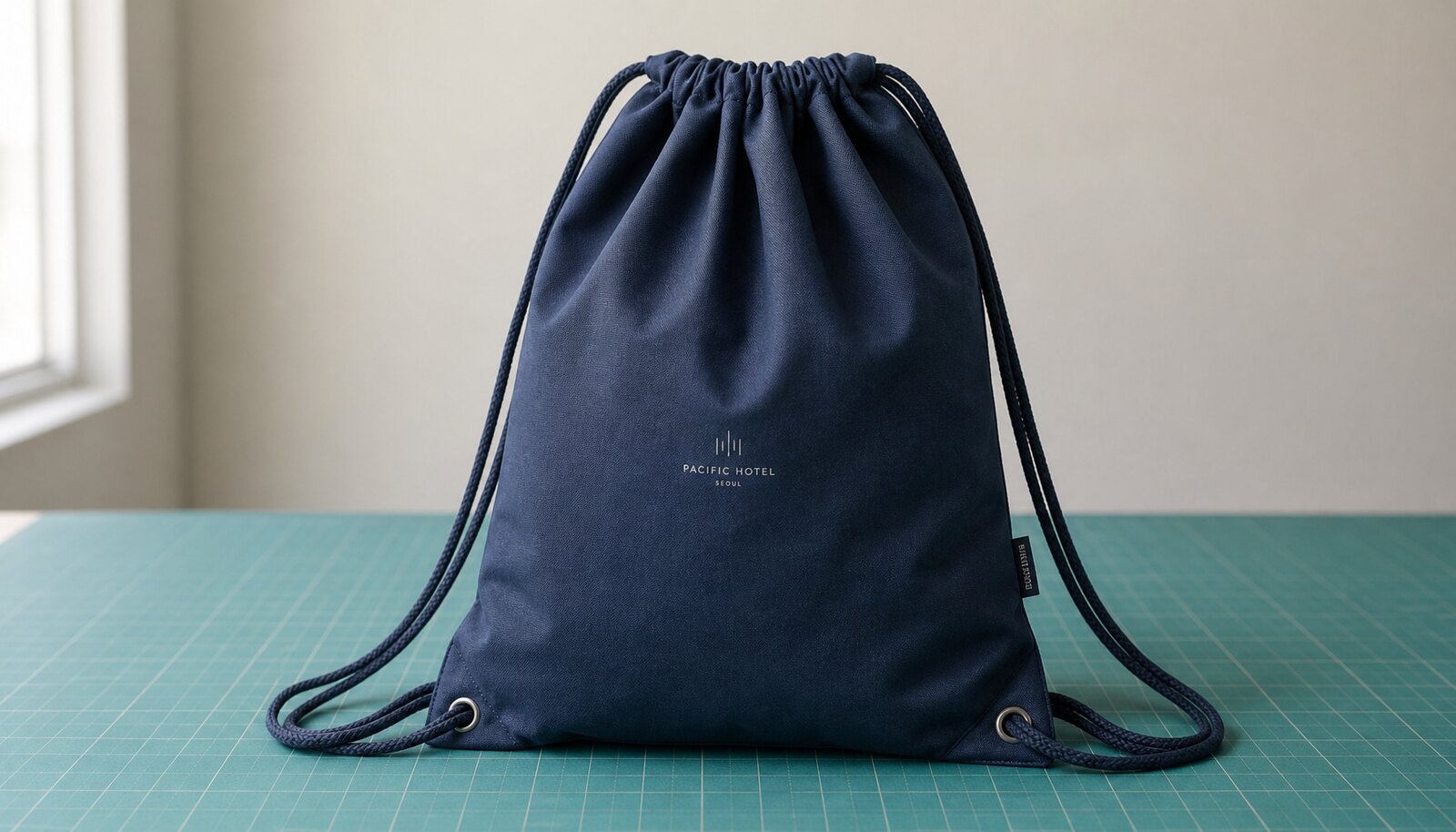
Why hotels buy sports drawstring backpacks in the first place
Hotels usually source sports drawstring backpacks for a narrow set of jobs: gym amenities, welcome kits, conference giveaways, resort activity packs, and premium room drops. The bag is not just a freebie. It needs to carry a towel, bottle, shoes, or a small set of travel items without looking cheap on arrival. That is why the real buying decision is not the artwork alone. It is the balance between fabric weight, seam strength, and the level of finish your property standard allows.
For procurement teams, the biggest mistake is treating all drawstring backpacks as the same commodity. A bag used for a one-night event can be light and simple. A bag meant for repeated guest use in a hotel gym should have stronger corners, a more stable weave, and print that survives friction from towels and bottles. Once you define the use case, supplier quotes become easier to compare because you can separate cosmetic features from functional ones.
- Guest gym use: prioritize comfort, quick access, and abrasion resistance.
- Welcome kits: prioritize logo visibility, clean packing, and consistent fold appearance.
- Conference or event giveaways: prioritize unit cost, fast production, and stable carton packing.
- Resort or premium properties: prioritize tactile quality, color matching, and stronger hardware.
Spec choices that change the quote more than the logo does
The fastest way to clean up an RFQ is to specify the bag structure in plain manufacturing terms. For sports drawstring backpacks for hotels, the main cost drivers are fabric denier or GSM, lining or coating, cord type, corner reinforcement, and print method. A 210D polyester bag with a single-color screen print will sit in a very different price band from a 300D polyester bag with a full-color transfer and sewn side label. If you do not define these items, suppliers will fill the gap with their own assumptions and your quotes will not compare well.
For hotel buyers, 210D polyester is usually the entry point for budget programs, while 300D polyester is a safer choice if you expect heavier use or want a less wrinkled appearance. If you want a softer, more natural look, canvas is possible but usually over-specifies a gym giveaway and raises weight and freight. For most hotel programs, a plain weave polyester with a clean surface for print is the most practical route.
- 210D polyester: lower cost, lighter feel, suitable for short-term use or giveaways.
- 300D polyester: better body, stronger hand feel, better shape after packing.
- Fabric weight to state in RFQ: denier for synthetic bags or GSM if using cotton/canvas blends.
- If the bag must hold shoes, request reinforced corners and minimum stitch density in the spec.
How print method affects MOQ, lead time, and logo quality
Printing is where many hotel programs lose money without noticing it. A one-color screen print is usually the most economical method at scale because setup is simple and repeat runs are stable. Heat transfer helps when the artwork has gradients, multiple colors, or smaller quantity needs, but it can add labor and may not age as well under repeated abrasion. Embroidery looks premium, but on thin drawstring bags it can distort the fabric and raise cost fast. Woven labels are useful when the hotel wants a subtle brand mark rather than a large logo panel.
If you need the fastest quote comparison, ask each supplier to price the same artwork in the same method. Do not compare a screen-printed quote against a heat-transfer quote unless you also compare durability and setup cost. For hotels, the most common mistake is overpaying for multi-color decoration when a clean one-color mark would look more consistent across room kits and event packs.
- Screen print: best for repeat volume and simple logos.
- Heat transfer: useful for small runs or complex artwork, but confirm rub resistance.
- Embroidery: premium look, but only if the fabric can support the stitch density.
- Woven side label: good for subtle branding and stronger perceived quality.
Supplier routes: factory direct, trading company, or local stock house
For sports drawstring backpacks for hotels, your sourcing route matters as much as the spec. Factory direct is usually the best route if you want repeatability, clear trim control, and lower unit cost at stable volumes. A trading company can help if you need mixed product consolidation, multi-item hotel kits, or a supplier who already knows your destination documentation. A stock house or local distributor can reduce lead time, but you often lose visibility into fabric origin, stitch control, and print consistency.
When comparing supplier options, look for evidence, not promises. Ask for recent production photos, trim references, carton shots, and a sample showing the actual cord, eyelet, and print method offered in the quote. If a supplier cannot show a current factory sample or a matching production reference, their price may be based on a generic bag that is not the one you will receive.
- Factory direct: best for annual hotel programs and controlled QC.
- Trading company: useful for bundled hospitality purchasing and mixed SKUs.
- Stock house: fastest route for urgent giveaways, but usually least customizable.
- If the quote is unusually low, verify whether fabric weight, print area, or packing has been reduced.
Comparison of sourcing routes for hotel drawstring backpack orders
The table below helps buyers choose the most practical route, not just the cheapest headline price. In hotel procurement, the right route depends on whether you need one-off event bags, repeat room-amenity kits, or a replenishable line that can be reordered without changing the look every season.
Use this comparison to narrow the RFQ before you send it. Once the route is chosen, you can structure the quote request around the same sample, same spec, and same packing target.
- Write decisions in measurable language, not only descriptive wording.
- Ask for sample photos plus one physical approval sample for important orders.
- Keep quotation, sample approval, and inspection notes tied to the same spec version.
What a usable supplier quote should include
A quote is useful only if it lets you forecast landed cost and production risk. For hotel drawstring backpack programs, the quote should separate base bag cost, print setup, sample charges, packing, cartonization, and any special handling. If the supplier gives one number without a spec breakdown, you cannot tell whether the bag is priced with a 210D shell, a thin cord, or a simplified finish that may fail QC later.
Ask for tiered pricing at realistic volumes. Many hotel buyers order in bands such as 1,000, 3,000, 5,000, and 10,000 pieces. That reveals where the real cost break sits and whether the supplier is giving a stable production quote or just a promotional teaser. If you plan to reorder, make sure the supplier states whether the same price applies to repeat orders with no artwork changes.
- Unit price by volume tier.
- Artwork/setup charge per side and per color.
- Sample charge and whether it is refundable after bulk order.
- Packing cost for individual polybags, inserts, or custom hang tags.
- Lead time for sample, pre-production sample, and mass production.
MOQ logic and the order size that actually makes sense
MOQ for sports drawstring backpacks for hotels depends on three things: stock fabric availability, print complexity, and whether trims are standard. If you choose a common black, navy, or white polyester bag with a one-color logo, many factories can support a lower MOQ because the main body material is already in rotation. If you choose a custom PMS body color, special cord color, or woven label, the MOQ usually rises because the supplier must reserve fabric and run separate trim setup.
Do not let the supplier set MOQ in a vague way. A clear RFQ should say whether MOQ is per artwork, per color, per size, or per shipment. For hotel groups and distributors, this matters because one group may want different property names on the same bag style. The bag body can stay the same while the print changes, but the supplier should quote the real impact on setup and carton planning.
- Lowest MOQ route: stock color + standard size + one-color print.
- Medium MOQ route: stock body + custom logo + side label.
- Higher MOQ route: custom fabric color, custom cord color, and special packing.
- Always separate MOQ for sample approval from MOQ for bulk production.
Sample approval: what to inspect before you release bulk
A hotel sample should not be judged only by appearance. It should be handled the way guests will handle it. Open and close the cord several times, load the bag with a towel or shoes, and inspect whether the corners stretch, the print cracks, or the fabric puckers around the logo. If the bag is for premium property use, check whether the surface looks neat when the bag is cinched tight, because that is how it will often be seen at reception or in a guest room.
The most useful sample is a pre-production sample that matches the final material, final print, and final packing. Ask for sample photos of the actual bulk components if the supplier needs to substitute anything. If they change the cord thickness, eyelet material, or print technique after approval, the sample is no longer valid unless you sign off again.
- Verify finished dimensions, not only flat pattern size.
- Check logo placement with the bag closed and open.
- Test cord glide and corner reinforcement under moderate load.
- Review stitching on the inside of the opening channel and at all bartacks.
- Match sample packing to the agreed bulk pack if the bag is boxed or polybagged.
Packing, cartonization, and hotel delivery formats
Packing can change landed cost more than buyers expect. A flat-packed bag in a master carton is usually the most efficient route for hotel and distributor orders. If the hotel will distribute the bags directly, you may need individual polybags or a folded insert card, but each added step increases labor, carton volume, and waste. For most procurement teams, bulk packing is the cleanest commercial decision unless the presentation requirement justifies the extra cost.
Carton planning matters because drawstring backpacks compress well, but poor folding creates thick bundles that raise freight costs. Ask the supplier to state units per carton, carton size, gross weight, and carton marks. This lets you compare air and sea freight properly and prevents surprises when the shipment is repacked at the warehouse.
- Flat pack is best for export and bulk hotel distribution.
- Individual polybag is only necessary for hygiene, retail resale, or presentation.
- Ask whether cartons are double-walled if the route involves long transit or humid storage.
- Confirm whether the final shipment is palletized or loose loaded.
Lead time risks that can delay a hotel program
The calendar risk in drawstring backpack sourcing is usually not sewing time. It is artwork approval, fabric reservation, and the wait for pre-production sign-off. If your hotel needs bags for a seasonal launch, conference, or opening event, you need a supplier who can hold the base materials while the logo file is finalized. Once the fabric color or print method changes late in the process, the schedule can slip by more than the sewing time itself.
A realistic timeline for a standard custom run often includes sample development, approval, bulk production, inspection, and export packing. If a supplier promises a very short lead time without asking about artwork and packing, they may be quoting from stock or planning to substitute materials. That is acceptable only if the substitution is written into the order.
- Artwork approval usually comes before cutting.
- Sample approval can be the critical path if logo colors are precise.
- Peak season and pre-holiday hotel orders often compress factory capacity.
- Build time buffer if the order needs carton marks, hang tags, or special folding.
Specification comparison for buyers
| Spec decision | Recommended option | When it fits | Buyer risk to check |
|---|---|---|---|
| Fabric | 210D polyester or 300D polyester | Hotel gym bags, event kits, light sports use, branded giveaways | Thin 210D can feel flimsy if guests carry shoes or water bottles; confirm fabric weight and hand feel, not just denier |
| Backing/lining | Unlined for lowest cost; light PU backing only if shape retention matters | Budget hotel programs and short-stay guest kits | Unlined bags show print-through and scuff faster; backing can raise cost and extend lead time |
| Print method | 1-color screen print for volume; heat transfer for small multi-color logos | Simple hotel branding, property names, event marks | Heat transfer can crack under repeated friction; screen print needs correct mesh and cure to avoid wash-off |
| Closure style | Standard drawcord with reinforced corner holes and metal or plastic eyelets | General hotel use and giveaways | Weak corner stitching causes tearing when guests overpack; eyelet material should match use and cost target |
| Handle feature | Top webbing handle only if guests will carry the bag by hand | Resort gyms, day trips, conference kits | Added handle increases sewing points and defect risk if not bartacked well |
| MOQ route | Stock fabric + standard size + one-color print for the lowest MOQ | Chain hotels, distributors, pilot programs | Custom fabric colors and special trims raise MOQ quickly; confirm whether MOQ is per color, per artwork, or per shipment |
| Packing | Flat pack with bulk master carton and carton marks | Wholesale hotel procurement and export shipments | Individually polybagged units may be unnecessary unless retail resale or hygiene policy requires it |
| Supplier route | Direct factory for repeat programs; trading company only if you need mixed product consolidation | Annual hotel supply contracts, regional distribution | Trading margins can hide fabric spec differences; demand factory photos, trim cards, and packing references |
| Quality standard | AQL-based inspection with seam strength, print adhesion, and dimensions defined in the PO | Most hotel sourcing projects | Without measurable acceptance criteria, suppliers may deliver acceptable-looking bags with weak seams or misaligned logos |
Buyer checklist before sampling
- Confirm final bag size, gusset, handle drop, and usable loading weight.
- Specify fabric type, GSM/oz weight, color tolerance, and shrinkage expectations.
- Send vector artwork and define logo size, print position, and Pantone references.
- Ask for sample photos plus one physical pre-production sample before bulk approval.
- Agree carton packing, barcode or hangtag needs, and shipment marks before production.
- Record inspection checkpoints for stitching, print adhesion, stains, and quantity count.
Factory quote questions to send
- What is the exact fabric spec, including denier or GSM, weave, and any coating or backing?
- Is the quoted MOQ based on stock fabric, custom fabric, artwork setup, or carton quantity?
- Which print method is included, how many colors, and what is the setup charge per color or per side?
- What is the unit price at 1,000 / 3,000 / 5,000 / 10,000 pieces, and what changes after each tier?
- What are the carton pack details, including units per carton, carton size, and gross weight?
- What sample charge, sample lead time, and artwork proof process apply before bulk production?
- What seam reinforcement, eyelet type, and cord thickness are included in the standard quote?
- What inspection standard is used before shipment, and can you provide a pre-shipment QC report template?
Quality-control points to confirm
- Measure finished size against tolerance, especially width at the opening and bag depth after stitching.
- Pull-test corner seams and cord attachment points to confirm reinforcement holds under hotel-use loading.
- Check print placement, color density, and edge sharpness on a flat panel and after the bag is cinched closed.
- Inspect cord running speed through the channel; cords should move smoothly without fraying or snagging.
- Confirm eyelets or stitched openings are centered and not cutting into the cord under tension.
- Review carton count, barcode or shipping mark accuracy, and whether all bags are flat packed as agreed.
- Reject samples with crooked logos, weak bartacks, loose threads, or visible oil marks from sewing machines.