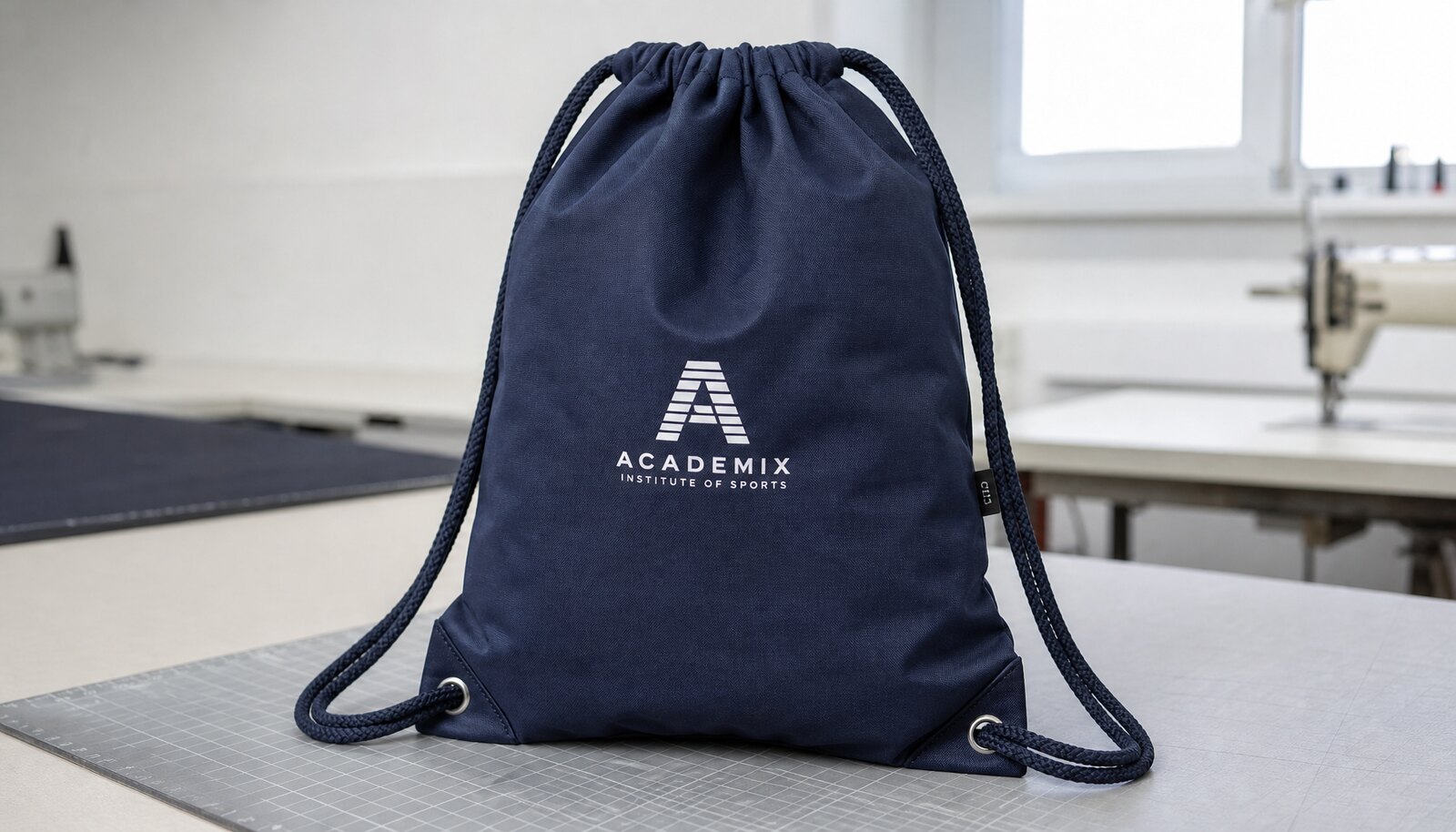
Start With The Use Case, Not The Logo
Sports drawstring backpacks for corporate gifts succeed or fail on use case. If the bag is meant for a wellness day, a marathon promo, a dealer incentive, or an internal onboarding kit, the right spec changes immediately. A bag that only holds a T-shirt and brochure can stay light and simple. A bag expected to carry shoes, a water bottle, a towel, and a phone charger needs more body, better corners, and a print method that survives real handling.
The most common mistake is treating every drawstring backpack as the same product. Buyers often start with artwork and end up forcing the factory to build around a vague idea. That creates weak quotes and weak samples. Write the RFQ around load, audience, and presentation. A gift that feels cheap in hand will be judged by the recipient before the logo is ever noticed. A good corporate gift bag should be light enough to mail or hand out, but not so thin that it collapses when filled.
- State the intended contents and estimated load, not just the bag name.
- Define whether the bag is a giveaway, a premium gift, or a reusable daily carry item.
- Tell the supplier if the bag must fit inside a mailer, event box, or retail carton.
- If the gift must feel more premium, specify the visible surface area that will carry the brand.
Choose Fabric And Build For The Load
For this product, 210D polyester is the common starting point because it keeps cost under control and prints cleanly. It is suitable for mass giveaways and light event use, but it should not be treated as a premium bag. If the recipient will actually use the bag for sports or commuting, 300D polyester is often a better balance. It holds shape better, looks fuller in photographs, and hides minor wrinkles and packing marks more effectively. If the campaign needs a stronger handfeel or a more structured profile, 420D or 600D polyester can work, but the cost, weight, and print behavior will change.
Build details matter as much as the fabric. A sports drawstring backpack should have reinforced corners, clean internal seams, and cord tunnels that do not distort after filling. If the factory uses eyelets, ask how they are reinforced and whether the metal finish can scratch other packed items. If the design includes a front pocket, zipper, or reflective trim, make sure those options are quoted on the same basis. Water resistance also needs a clear note. A PU or light coating can help, but it changes the handfeel and can affect ink adhesion, so the print method must be matched to the cloth.
- Use 210D polyester for the lowest-cost, high-volume gift route.
- Use 300D polyester when the bag needs a fuller shape and better perceived value.
- Use 420D or 600D only when the campaign justifies a stronger, more premium build.
- Ask for corner reinforcement, seam allowance, and cord diameter in the spec sheet.
- If water resistance matters, name the coating and require print compatibility confirmation.
Match The Decoration Method To The Artwork
Screen print is usually the best value when the logo is simple, bold, and limited to one or two colors. It gives a clean brand read, keeps setup manageable, and is easy to repeat on bulk orders. Heat transfer works better when the artwork has gradients, many colors, or small detail that cannot be separated cleanly for screens. For a more premium corporate gift, a woven patch or embroidery patch can lift the perceived value without changing the bag structure. The right method depends on the logo, the fabric, and the target price band, not on what the supplier happens to prefer.
The artwork file should be prepared for production, not just presentation. Ask for vector artwork, Pantone references if color matters, and a minimum line width that the method can actually hold. Small type is where many gifts fail. Fine text can blur on textured fabric, and tiny elements can disappear after heat pressing or stitching. Placement matters too. If the logo is too close to a seam, the panel can distort during sewing. For outdoor or sports campaigns, reflective ink can be useful, but it should be treated as a functional design choice, not just a visual effect.
- Use screen print for simple logos and large solid areas.
- Use heat transfer for complex graphics or multi-color artwork with fine detail.
- Use a woven patch or embroidery patch when the gift needs a more premium feel.
- Keep the logo away from seams and cord tunnels unless the sample proves the placement works.
- Require artwork approval on the exact print size, location, and color count before bulk production.
Read Quotes On The Same Basis
A useful supplier quote should read like a production plan, not a single number. It needs the exact fabric spec, bag size, print method, logo size, packing format, incoterm, and lead time. If the supplier only gives one unit price, you cannot tell whether the bag includes stock cloth, custom dyeing, individual polybags, or carton marks. That is how buyers end up comparing incomplete offers and choosing the wrong one. Two quotes that look close can be very different once setup, packing, and freight are made visible.
A buyer should also ask what is standard and what is optional. Does the price include one print position only? Is a second color a separate setup? Is an insert card free or charged as a packing labor item? Is the sample fee refundable against bulk? The more explicit the quote, the easier it is to protect margin and avoid scope creep. A factory that can break out these items usually understands bulk production better than one that hides them behind a single number.
- Require the quote to state fabric, size, print method, packing, and delivery basis.
- Ask for all setup costs to be listed separately from the unit price.
- Make sure sample charges, carton charges, and insert-card charges are visible.
- Compare only quotes that use the same incoterm and the same packing assumption.
- If one supplier includes freight and another does not, normalize the numbers before deciding.
Use MOQ To Control Cost Without Overcommitting
MOQ is usually driven by fabric color, decoration, and setup complexity, not by the bag shape alone. A stock body with a custom logo usually gives the lowest workable MOQ because the factory can cut from available cloth and focus the setup on print or patch work. A fully custom body color, lining, or reflective trim pushes up the minimum because the supplier has to reserve materials, schedule dyeing, and lock production time. For a corporate gift program, one body color and one logo position is usually the cleanest route unless there is a clear brand reason to build variants.
It is also important to keep SKU fragmentation under control. Orders often become expensive when different departments want different colors, different logo placements, or different pack-ins. The factory may quote each variant as a separate setup, which makes the real cost much higher than the first unit price suggests. If the campaign needs internal segmentation, it is often cheaper to keep the bag body identical and change only the insert card, hang tag, or external packaging. Ask the supplier for the exact MOQ logic by fabric, print color, and packing style so you can see where the breakpoints sit.
- Lower MOQ is easiest when the bag body color stays standard and only the logo changes.
- Full custom color and trim choices should be treated as a separate budget decision.
- Multiple department variants should be justified against the setup cost they create.
- Request evidence of same-material orders, not just a generic factory photo gallery.
- If a supplier claims in-house print, ask for a short photo or video of the same fabric and method.
Lock The Sample And Set Real QC Thresholds
The sample is the physical definition of the order. A proper pre-production sample should use actual fabric, the actual print method, the actual cord, and the final packing style. A photo sample or a mockup can help with early approval, but it should never replace a sewn sample. Once the sample is approved, keep one sealed golden sample in the buyer file and one at the factory. That way, if bulk production drifts, both sides have the same reference point for size, color, and logo placement.
QC needs acceptance criteria that a line supervisor and a purchasing team can both understand. Reasonable thresholds are more useful than vague language. For example, confirm size within a practical tolerance, logo placement within a small positional band, and no open seams, skipped stitches, or loose ends on load-bearing points. A simple load test should reflect how the bag will actually be used. If the bag is expected to carry gym gear, it should survive a realistic weight without seam failure, cord slip, or corner tear. The goal is not laboratory perfection. The goal is to stop expensive complaints after distribution.
- Approve a sewn sample, not only a digital proof.
- Keep a sealed golden sample and make sure both buyer and factory have one.
- Measure the bag and logo placement before approving bulk.
- Use a practical load test that matches the expected contents.
- Reject any sample with weak corners, open seams, print rub, or poor cord movement.
Packing Should Fit The Distribution Channel
Corporate gifts often move through a second packing step after they leave the factory. Some bags are inserted into event kits, others are sent to distributors, and some are packed for direct mail. That means the factory packing format matters. Bulk packing keeps cost down, but individual polybags protect printed surfaces and make counting easier. If an insert card, barcode, or instruction leaflet is needed, define it early so the factory can quote the labor and carton space correctly. For printed sports drawstring backpacks, over-compression can leave crease lines that make the gift look lower quality when opened.
Carton planning is part of product quality, not just logistics. Ask for pack count per carton, carton dimensions, gross weight, and whether the bag is folded or stuffed. If the print sits on the front panel, make sure items are stacked in a way that avoids direct print-on-print abrasion. If the order will be palletized, the master carton size should be set to protect cube efficiency without crushing the contents. For retail-style programs, carton marks, SKU labels, and barcode accuracy become critical because the bags may be scanned, repacked, or distributed through multiple hands before final delivery.
- Choose bulk pack for cost-sensitive internal campaigns.
- Choose individual polybag when print protection, counting, or retail handling matters.
- Specify any insert card, barcode, or leaflet before the quote is finalized.
- Ask for carton size and carton weight so you can check freight efficiency.
- Avoid pack styles that crease the front panel or rub the print against another bag.
Plan Lead Time Around Approval, Not Just Sewing
Lead time starts before the first piece is sewn. Artwork confirmation, sample approval, and packing confirmation all consume calendar days, and those days are often what break an event schedule. Once the sample is signed off, the actual production path usually includes material allocation, cutting, printing or patch application, sewing, trimming, final QC, packing, and booking. If the factory says the sewing time is short but the artwork is still not approved, the quote is not really usable. A buyer should ask for lead time stated in calendar days from approved sample and deposit, not in vague production days.
Schedule risk is highest around seasonal peaks, public holidays, and freight booking windows. Sports-themed gift bags often move in waves tied to events, product launches, or employee campaigns, so the order can land exactly when the factory is busy. If the delivery date is fixed, build a buffer and ask the supplier to identify the longest internal step. Sometimes the bottleneck is print setup, not sewing. Sometimes it is shipping space, not production. A realistic schedule always includes one fallback route for freight and one internal sign-off deadline that cannot move.
- Freeze artwork early so sample approval does not become the critical path.
- Ask for calendar days from approved sample, not just factory working days.
- Build a schedule buffer for holiday congestion and freight booking delays.
- If the event date is fixed, keep a backup shipping method in reserve.
- Do not release bulk until the golden sample, packing, and carton marks are all approved.
Build The Landed Cost Before You Place The PO
For importers and procurement teams, the unit price is only one part of the decision. The real comparison is landed cost, which includes unit price, setup charges, packing, inland transport, freight, duty, and any rework risk. A lower quote on a thin bag can disappear once you add stronger packing, a better print method, or the freight cost of a larger carton. Sports drawstring backpacks are relatively light, so freight math can look favorable at first, but carton size, bag count per carton, and packaging choice still move the total sharply. The cheapest quote is not the cheapest order if it produces higher defects or a weaker gift presentation.
The RFQ should make landed-cost comparison easy. Ask every supplier to quote the same size, same fabric, same logo method, same packing format, and same delivery basis. If you want to compare sourcing routes, request a stock-body option and a custom-body option side by side. That will show where the cost jumps and whether the premium is justified by the brand brief. A clean RFQ also helps your team compare the quote against internal budget and against alternative gift items. If the bag is part of a broader campaign, this is where you decide whether the value comes from the bag itself or from the packaging and decoration around it.
- Compare quotes on the same incoterm and the same packing spec.
- Model freight using the actual carton size, not just the bag quantity.
- Treat setup, sample, and rework risk as part of the landed cost.
- Ask for stock-body and custom-body pricing if you need a route comparison.
- Keep the RFQ simple enough that every supplier can answer the same way.
Specification comparison for buyers
| Spec decision | Recommended option | When it fits | Buyer risk to check |
|---|---|---|---|
| Sourcing route | Direct factory with in-house cutting and print | Best for repeat programs, controlled QC, and one accountable lead time | Confirm whether the supplier owns sewing and decoration or outsources both |
| Base fabric | 210D polyester for standard giveaways; 300D polyester for a better handfeel | Works for event kits, employee gifts, and distributor promos with moderate budgets | Thin fabric can look translucent, wrinkle easily, or collapse under load |
| Decoration method | Single or two-color screen print on the front panel | Fits most corporate logos and keeps setup simple for bulk orders | Small text, halftones, and tight registration can fail on textured fabric |
| Premium route | Woven patch or embroidery patch on a sewn panel | Good when the gift must feel more premium without rebuilding the whole bag | Patch size, placement, and sewing quality must be fixed in the sample |
| MOQ strategy | Stock body color with custom logo | Useful when timing is tight or quantity is still being finalized | Color mismatch and leftover stock risk rise if the body color is too custom |
| Packing route | Bulk packed in master cartons, with optional individual polybag and insert card | Best for internal distribution and cost-sensitive corporate campaigns | Retail-ready packing adds labor, carton volume, and barcode control requirements |
| Sample path | Photo sample, pre-production sample, then sealed golden sample | Appropriate when multiple departments need sign-off on branding and fit | Skipping the final sample usually creates disputes on logo position and trim detail |
| Commercial basis | FOB or EXW quote with freight modeled separately | Best for importers who need real landed cost and route comparison | A cheap unit price can hide expensive packing, loading, or paperwork assumptions |
Buyer checklist before sampling
- Define the end use: event giveaway, employee wellness kit, distributor promo, or retail-style gift
- Confirm target contents and load: T-shirt only, shoes and bottle, or full gym kit
- Approve size, fabric denier, color, and logo placement before sampling
- Send vector artwork, Pantone references, and minimum line-width requirements
- Set one primary packaging format and state whether polybag and insert card are required
- Specify quantity by color or SKU so the factory can calculate MOQ correctly
- Agree on incoterm, destination, and target ship date before comparing quotes
- Name the person who will approve the sample and the person who will approve bulk shipment
Factory quote questions to send
- What exact fabric specification is included in the quote, including denier, coating, and whether the cloth is stock or custom dyed?
- Which decoration method is priced, how many print colors are included, and what is the setup cost for screens, patches, or embroidery?
- What is the MOQ per color and per artwork version, and does that MOQ change if we keep one body color across the order?
- Does the quoted unit price include individual polybag, insert card, carton marks, and outer carton packing, or are those extra?
- What is the production lead time after sample approval and deposit, and what part of that timeline is the current bottleneck?
- What QC standard do you use on seams, print adhesion, load-bearing points, and final packing count?
- Can you show a sample or short production photo of the same fabric and print method on your line?
- Which incoterm is the quote based on, and what freight or inland transport assumptions are already included?
Quality-control points to confirm
- Match the approved fabric swatch for handfeel, color, and visible weave or coating
- Measure body size, cord length, and strap symmetry against the signed sample
- Inspect print position, print sharpness, and color alignment under daylight or equivalent neutral light
- Check all load points for bar-tacks, seam density, and loose thread control
- Run a practical load test with the intended content weight or a specified test load
- Verify that cords slide smoothly and do not twist, fray, or cut into the fabric tunnel
- Confirm packing count, carton marks, barcode labels, and any inserted cards or leaflets
- Compare a pre-shipment sample to the golden sample before release