1. Start With the Use Case, Not the Quote
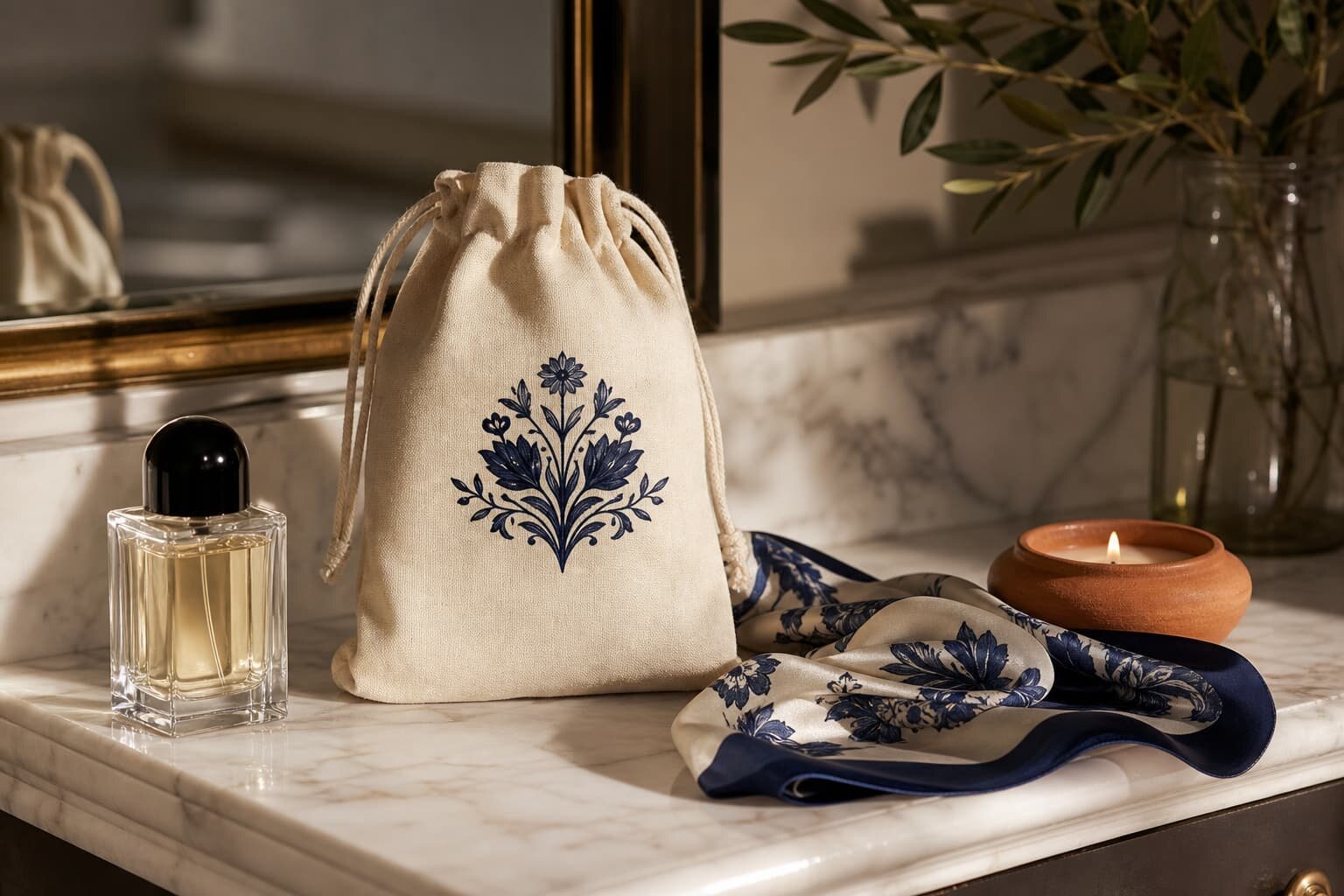
A small cotton pouch sounds simple until the order is tied to a real use case. A jewelry insert, a cosmetic gift pouch, and a trade-show giveaway do not need the same cloth weight, closure tension, or print durability. Before you request pricing, define what will go inside, how often the pouch will be reused, and whether the buyer is paying for presentation or protection. If that is vague, every supplier will quote a different product and the comparison will be meaningless.
For a bulk order checklist, the first job is to lock the product brief. State the finished size, intended contents, fabric color, logo method, and whether the pouch is for retail resale, campaign packaging, or internal fulfillment. A good RFQ does not ask only for 'small cotton pouches'; it gives the factory enough detail to decide material, sewing method, and packing format. That is how you reduce quote noise and keep hidden extras from appearing later.
- Define the end use: jewelry, cosmetics, samples, gift sets, tea, herbs, or accessories.
- State whether the pouch will be reused often or only once as gift packaging.
- Include target size, logo coverage, and whether the pouch needs a premium hand feel.
- Tell suppliers if the order is for one SKU or multiple size/color combinations.
2. Choose Fabric Weight for the Real Load
Fabric weight is one of the biggest cost and quality drivers in a small cotton pouch order. For light promotional use, 120-140 GSM cotton is common because it keeps the pouch soft and affordable. If the pouch needs a better drape, less transparency, and stronger handling, 160-200 GSM is a safer band. Many buyers make the mistake of asking for 'cotton' without a GSM target, then compare quotes that are not actually the same product.
The right GSM depends on what the pouch must hold and how the end customer will judge it. Thin cloth can be acceptable for sample kits, but it can look wrinkled, show contents, and distort under print. Heavier cloth improves structure, but it also increases sewing time and may require a more careful fold for packing. For a buyer, the real question is not 'which is best' but 'which one matches the selling channel, margin, and durability requirement.'
- 120-140 GSM: lower cost, softer feel, lighter contents, and short promotional use.
- 160-180 GSM: balanced option for general retail and repeat handling.
- 180-200 GSM: better structure for premium packaging and heavier contents.
- Ask for the fabric spec in writing, including whether the cloth is bleached or natural.
3. Match the Print Method to Artwork and Quantity
Print method has to follow both the artwork and the order volume. For a simple one-color logo, screen print is usually the cleanest bulk option because it is repeatable and cost-effective after setup. If the artwork has multiple colors, gradients, or fine detail, a factory may suggest heat transfer or another decoration method, but you should ask how that affects feel, wash performance, and crease resistance. The cheapest-looking quote is not useful if the logo fails after folding or shipping.
When comparing quotes, do not stop at 'printed pouch' as a label. Ask how many colors are included, whether the print is single-side or double-side, and how the factory handles placement tolerance. You should also ask to see the approved art size relative to pouch dimensions. A logo that looks fine on a mockup may be too close to seams in production, especially on small sizes like 3 x 4 inches or 4 x 6 inches.
- Screen print works best for simple logos and stable, repeat bulk orders.
- Heat transfer can handle complex art, but durability and hand feel must be checked.
- Embroidery is possible on some pouches, but it changes fabric pull and unit cost.
- Confirm print size, placement, and the acceptable shift around the center line.
4. Use MOQ Logic to Compare Real Quotes
MOQ is not just a factory gatekeeping number; it is usually the point where setup cost, fabric waste, and labor efficiency become workable. A supplier may quote a lower unit price if you accept their preferred size, color, and print method, but the price can climb fast if you split the order into multiple versions. When you compare suppliers, ask them to break MOQ by size, color, and artwork version so you can see whether the quote is built for your actual order plan or only for a standard spec.
A useful MOQ discussion should expose how the order changes when you combine SKUs. For example, one factory may allow multiple logo colors under one fabric run, while another may charge a separate setup for each colorway. Some factories also price natural cotton differently from dyed cotton because of dye lot management and extra inspection. If you are buying for a brand or retail program, the cheapest MOQ is not automatically the best choice if it creates inconsistency across replenishment.
- Ask whether MOQ changes by size, color, print area, or closure style.
- Check if combining SKUs lowers cost or creates separate setup charges.
- Confirm whether the quoted MOQ is for finished units or for fabric yardage.
- Watch for low MOQ quotes that hide setup cost inside the unit price.
5. Approve the Sample Like a Production Buyer
A small cotton pouch sample should be judged as a production tool, not a presentation sample. Measure the finished size, check seam straightness, inspect the drawcord channel, and compare the print position to the approved artwork file. If the sample is for a brand launch or retail line, touch the fabric, fold the pouch several times, and see whether the logo cracks, blurs, or shifts under pressure. The sample has to answer one question: can the factory repeat this result in bulk without a surprise change?
The sample review is also where most avoidable production mistakes are caught early. Pay attention to thread ends, odor, stain marks, ink curing, and whether the drawcord closes evenly on both sides. If you need a strict retail look, define what is acceptable and what is not. For example, a small center shift may be fine on a giveaway pouch, but not on a premium pouch set. Put the acceptance criteria in writing before you approve the sample so the factory is not guessing later.
- Check finished dimensions against the spec sheet, not the flat pattern only.
- Open and close the pouch repeatedly to test closure balance and cord friction.
- Inspect logo placement, color accuracy, and any bleed or off-center print.
- Review stitching, loose threads, odor, stain marks, and fabric shade consistency.
6. Packing Details Can Change the Real Cost
Packing is often treated as an afterthought, but it affects labor, carton size, damage risk, and warehouse handling. Bulk-packed pouches are usually the most efficient for price and freight, especially for importers who will re-pack locally. Individual polybags may be required for retail presentation or hygiene, but they increase material and labor cost. If you do not state the packing method in the RFQ, different factories will quote different assumptions and the comparison will be off by more than the unit price suggests.
Ask for the full packing structure: inner pack count, master carton quantity, carton marks, and whether the pouches are folded, stacked, or inserted with tissue. Small cotton pouches can wrinkle badly if compressed too tightly, and print surfaces can rub if there is no separation. For imported orders, carton dimensions matter because they affect freight math and warehouse shelf efficiency. A supplier who gives only unit pricing without packing data is not giving you a complete sourcing answer.
- Choose bulk pack if you will re-pack locally or use the pouches in internal operations.
- Choose polybag or labeled retail packing only if the end channel requires it.
- Request carton dimensions and gross weight before you approve freight planning.
- Confirm whether packing labels identify size, color, logo version, and PO number.
7. Ask for Quote Data That Lets You Compare Factories
The best quote is not the lowest number; it is the one you can audit. A useful factory quote should separate fabric cost, sewing cost, printing cost, packaging cost, and any setup or tooling charges. If those parts are blended together, you cannot tell where the savings or risk sits. This matters even more when you request different pouch sizes or multiple print colors, because some suppliers will underquote the first sample and recover margin later through change fees.
When you compare suppliers, make sure the same data is being used on both sides. The quote should show finished size, fabric GSM, print method, packing format, lead time, and validity period. It should also state whether the price includes sample correction, carton labels, and export marks. A clean quote makes it easier for procurement, design, and operations teams to sign off the same version without rework.
- Request a line-item quote instead of one blended unit price.
- Make sure all suppliers quote the same finished size and same packing method.
- Ask whether carton marks, barcode labels, or insert cards are included.
- Confirm quote validity so you know when raw-material changes can alter the price.
8. Plan Lead Time Around the Approvals, Not the Calendar
Lead time for a small cotton pouch bulk order usually depends on more than sewing capacity. The schedule is shaped by fabric availability, print setup, sample approval, packing requirements, and whether the order uses one colorway or several. In many factories, a sample can take about 5-10 days and bulk production about 20-35 days after approval, but those ranges change when fabric must be dyed, artwork needs revision, or packaging is custom printed. Treat these as planning references, not promises.
To avoid delay, identify the milestone that actually starts mass production. Some buyers assume the clock starts when the PO is issued, but the factory may not begin until the sample, packaging spec, and payment terms are all approved. Build your timeline backward from the ship date and include buffer time for artwork correction, carton proof approval, and pre-shipment inspection. If the order is seasonal or tied to a launch, the cost of a late pouch order is usually higher than the cost of a slightly better planned one.
- Ask what must be approved before bulk production can start.
- Separate sample lead time from bulk lead time in the schedule.
- Include print proof, carton proof, and inspection time in your plan.
- Check whether split shipments are possible if the order is urgent.
9. Common Mistakes That Cause Requotes or Rework
Most pouch problems come from incomplete specifications, not from complicated manufacturing. Buyers often send artwork without a print size, ask for 'eco cotton' without GSM, or forget to define the closure style. Then the factory fills in the gaps based on its own standard and the first sample does not match expectations. Another common mistake is quoting by unit only while changing the size, packing, or label requirements later. That is how budget gets lost in change orders.
The other failure point is accepting a sample that looks right but has no production guardrails. If you do not lock tolerance, acceptable defects, and packing rules, the bulk order can drift from the approved version. To prevent that, turn the sample into a written standard: finished size, logo location, thread trim, fabric shade, and carton format. The more routine the product looks, the more important it is to spell out the details.
- Do not use vague fabric descriptions such as 'nice cotton' or 'eco cotton'.
- Do not approve a sample until the final logo size and location are fixed.
- Do not compare quotes that use different packing or different GSM values.
- Do not assume the factory will match your brand standard without a written reference.
10. A Practical Sourcing Workflow for the Bulk Order
If you want a fast but disciplined buying process, use the same sequence every time. First, define the pouch use case and send a short RFQ with size, GSM, print method, quantity, and packing needs. Second, ask shortlisted factories to quote the same data set and to show any assumptions that affect cost. Third, request a production sample and test it against the checklist before you approve the bulk order. This workflow is simple, but it prevents most of the quote confusion that slows procurement teams down.
Once the sample is approved, freeze the specification and communicate only through controlled changes. That means no last-minute size tweaks, no unapproved print changes, and no packing swaps unless the impact on cost and lead time is accepted in writing. For a small cotton pouch bulk order, the best sourcing result is not just a low price; it is a repeatable spec that can be reordered without re-learning the product every season.
- Step 1: Send one clear RFQ with the same spec to every factory.
- Step 2: Compare like-for-like quotes with the same size, GSM, print, and packing.
- Step 3: Approve a sample only after it passes measurement and finish checks.
- Step 4: Freeze the spec before bulk production and keep change control tight.
Specification comparison for buyers
| Spec decision | Recommended option | When it fits | Buyer risk to check |
|---|---|---|---|
| Fabric weight | 120-140 GSM cotton | Promotions, light inserts, tight budgets | Too thin can show contents, pucker at seams, and feel weak after repeated use |
| Fabric weight | 160-200 GSM cotton | Retail, gifting, beauty, premium inserts | Heavier cloth raises cost and may need stronger sewing and more careful folding |
| Print method | 1-2 color screen print | Simple logos, repeat bulk orders, lower unit cost | Check registration tolerance, ink curing, and whether the print cracks on repeated folding |
| Print method | DTF or heat transfer | Short runs, complex art, multi-color logos | Confirm hand feel, wash durability, and whether the print fits the pouch texture |
| Closure style | Cotton drawcord with stitched channel | Most small pouches, reusable packaging, gift sets | Inspect cord fray, channel width, and whether both sides close evenly |
| Packing method | Bulk packed by size and color in master cartons | Import efficiency and warehouse handling | Verify carton count, label accuracy, and crease control during compression |
Buyer checklist before sampling
- Confirm finished size, not only flat size, and state tolerance in millimeters or inches.
- Specify cotton fabric weight, weave type, and whether the cloth is bleached, natural, or dyed.
- Choose print method based on artwork complexity, order quantity, and required durability.
- Set MOQ by size, color, and print version so suppliers do not hide setup costs in the unit price.
- Approve sample points for seam strength, drawcord action, print placement, and smell/cleanliness.
- Define packing method, inner pack count, carton marks, and whether pouches must be folded or flat packed.
- Ask for production lead time, sample lead time, and the milestone that starts bulk production.
- Request a quote that separates fabric, printing, stitching, packaging, and freight assumptions.
Factory quote questions to send
- What is the finished size, fabric GSM, and measurement tolerance you are quoting?
- Which print method are you using, how many colors are included, and what setup charges apply?
- What is the MOQ by size, color, and artwork version, and how does it change if we combine SKUs?
- Are the pouches priced bulk packed, individually polybagged, or with custom inserts and labels?
- What sample type can you provide first, and what changes are still possible after approval?
- What is your standard production lead time after sample approval, and what delays typically extend it?
- Can you share carton dimensions, carton quantity, and gross/net weight assumptions for shipping?
- Which quality checks do you run before shipment, and what defect level do you treat as unacceptable?
Quality-control points to confirm
- Finished dimensions match the approved spec and stay within the agreed tolerance.
- Fabric weight is checked against the order spec, not only the supplier's stock description.
- Seams are straight, balanced, and strong enough to hold the intended contents.
- Drawcord moves smoothly, ends are secure, and the closure opens and closes evenly.
- Print placement is centered or positioned as approved, with no obvious smearing or color shift.
- No loose threads, oil marks, stains, odor, or mixed shade lots appear in the packed goods.
- Cartons, inner packs, and labels match the approved packing list and SKU breakdown.
- Random carton checks confirm quantity count, fold quality, and compression damage before release.