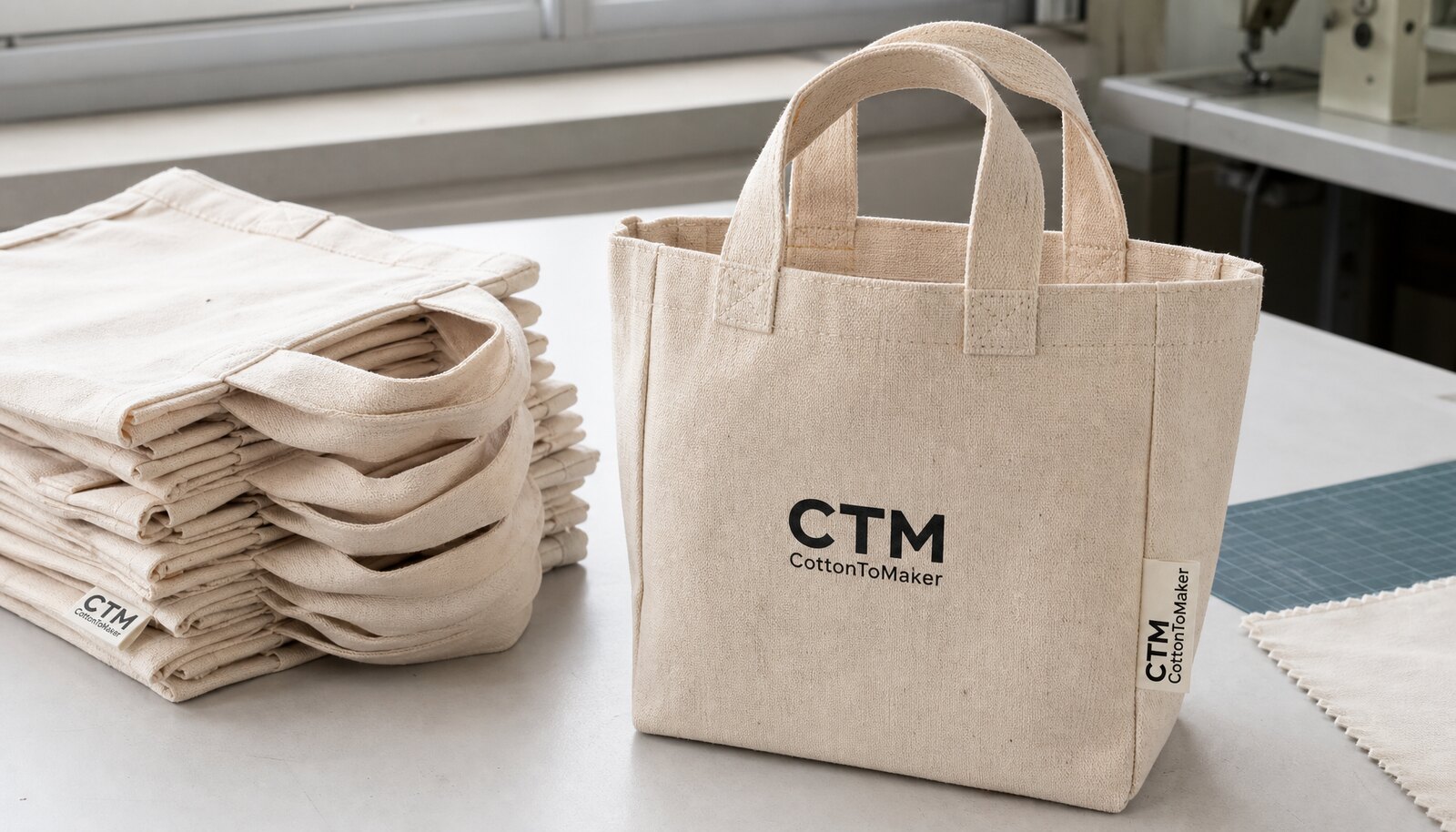
Why small canvas tote bags work for corporate gifts
Small canvas tote bags are a practical corporate gift format because they solve two problems at once: they present a brand well and they add usable value after the event. Buyers do not need a full-size retail tote if the gift set only contains a notebook, drinkware, sample kit, accessory bundle, or welcome pack. A smaller bag is easier to hand out, cheaper to ship, and less likely to look oversized for the contents.
The real buying decision is not whether canvas totes are common. It is whether the bag feels intentional for the recipient. If the fabric is too thin, the handles are weak, or the logo sits awkwardly on the front panel, the giveaway looks cheap even if the unit price was attractive. That is why procurement teams should treat the bag as part of the gift experience, not just as packaging.
- Best use cases include onboarding kits, conference packs, holiday gifts, client thank-you sets, and internal recognition programs.
- Typical contents include notebooks, mugs, stationery, skincare items, sample products, vouchers, and small tech accessories.
- A good small tote balances hand feel, print clarity, and packing efficiency instead of chasing the lowest possible quote.
Choose the right size before you talk to suppliers
Many tote bag issues start with a vague size brief. A supplier can quote a small canvas bag in dozens of ways: flat, gusseted, short-handled, long-handled, narrow, or tall. For corporate gifts, the bag must match the actual contents, not just a nominal size label. If the gift set includes a box, a bottle, or several stacked items, measure the full pack-out first and then decide whether the tote needs a gusset or a slightly taller body.
A useful size range for small branded canvas bags is often around 20 to 25 cm wide with a proportionate height. That keeps the bag compact enough for gifting while still allowing a usable front print area. If the opening is too narrow, pack-out becomes slow and the bag can distort once the gift is inside. If it is too wide, the contents may shift and the presentation can look loose or unfinished.
- Use a flat bag when the contents are thin, light, and presentation is more important than volume.
- Use a gusset when the gift set includes rigid packaging or multiple items that need body support.
- Confirm the print-safe area early so the logo does not clash with the seam, hem, or handle attachment.
Fabric weight and canvas construction are the real cost drivers
The word canvas is not enough for procurement. Suppliers can quote very different fabrics under the same label, and the difference shows up in hand feel, opacity, and print quality. For small canvas tote bags for corporate gifts, a practical starting range is 10 oz to 12 oz, roughly 340 to 400 GSM. That range usually gives enough structure for a professional look without pushing the bag into a heavy retail style that increases cost and shipping weight.
Lower-weight fabric may wrinkle more easily and can look weak when the bag is only partly filled. Heavier fabric gives a better feel, but it also adds material cost and can make the bag less efficient for bulk distribution. Buyers should also ask whether the canvas is natural, bleached, dyed, or pre-washed, because each choice changes appearance, dye behavior, and the risk of lot-to-lot variation.
- 10 oz is generally suitable for light gifting and event use when the bag is not expected to carry much weight.
- 12 oz is a better fit when the bag should feel more substantial or when the recipient may reuse it often.
- If the supplier mentions pre-shrunk or washed canvas, ask for the basis of measurement so the bulk lot can be compared fairly to the sample.
Decoration choices should follow the artwork, not the supplier's default
For most corporate gift programs, one-color screen print is still the most commercially sensible option. It is cost-effective, readable, and usually the easiest method to control when the logo is simple. The more colors, shadows, gradients, or fine lines the artwork contains, the more the supplier will need to spend on setup and the more likely the final print will lose clarity on woven canvas.
Embroidery can add a premium feel, but it is not a universal upgrade. On a small tote, dense stitching can distort the fabric or make the logo look too small if the artwork was designed for a flatter print method. Heat transfer can be useful for complex art or shorter runs, but procurement should treat it as a separate durability decision and ask for evidence that the finish can handle folding, handling, and pressure in transit.
- Use screen print for simple logos, repeat orders, and the cleanest cost structure.
- Use transfer only when artwork complexity or quantity makes screen printing inefficient.
- Use embroidery only when the logo size, thread detail, and fabric weight all support it.
- Ask for a print strike-off or sample placement proof if the logo needs to sit close to the edge or seam.
Construction details determine whether the bag feels premium or flimsy
Small tote bags can look similar in a catalog and still perform very differently in use. The top hem, seam finish, handle attachment, and thread quality all affect whether the bag feels sturdy once it is loaded. A neat exterior hides nothing if the inside edges are messy or the handles pull at the first sign of weight.
For corporate gifts, the best construction is usually the simplest one that is executed cleanly. Self-fabric handles can look coordinated and cost less, while webbing handles can offer a more reinforced feel. The important point is not the aesthetic alone; it is whether the reinforcement is visible, consistent, and strong enough for the contents you expect the bag to carry.
- Check that seam allowances are even and that the side seams do not twist the body shape.
- Ask whether handle anchors use bar-tacks, box stitches, or another reinforcement method and confirm that the method is consistent on all samples.
- Inspect the inside of the bag as carefully as the outside because loose threads and raw edges are obvious when the recipient opens it.
- If the bag will be reused often, prioritize handle reinforcement and stitch consistency over decorative extras.
How to compare suppliers without falling for the cheapest quote
A usable factory quote should let you compare the same bag across suppliers without guessing what is missing. Ask for the finished size, fabric weight, decoration method, pack-out, carton data, and sample plan in writing. If the offer only gives a unit price and a generic description, the buyer does not yet know what is being priced. In tote bag sourcing, the hidden variables are usually fabric quality, printing setup, and packing detail.
The most common sourcing mistake is to compare one supplier's bare bag price with another supplier's fully packed and labeled price. That gives a false cost advantage. A better approach is to request separate pricing for the bag, printing, labels, and packaging, then compare landed cost using the same assumptions. If the program is repeatable, also ask what changes when the quantity doubles or when the same artwork is reordered.
- Direct factory sourcing is usually best when the order is custom, repeatable, or sensitive to unit cost.
- A local decorator can make sense when the order is urgent and the run is too small to justify a factory cycle.
- A trading company can help when the order bundles several gift items, but it often adds margin and reduces factory visibility.
- Always ask for the quote to identify what is included and what would trigger a revision, such as carton labels or special tissue wrapping.
Sample approval is where most preventable mistakes can still be caught
The sample stage is not just a formality. It is the point where the buyer can check whether the bag actually matches the intended gifting experience. Put the sample next to the approved artwork, measure the dimensions, inspect the stitch lines, and look at the print under normal light. On a small tote, a logo that appears slightly too low or too close to the handle can quickly make the bag feel poorly planned.
A useful sample review also includes a simple load test. Put in a typical gift set and see whether the bag stands, folds, and carries the contents the way the program requires. If the handles twist, the top hem curls, or the print sits awkwardly once the bag is filled, that is a real product issue, not a cosmetic one. Keep the approved sample on file and use it as the reference for bulk inspection and future reorders.
- Check logo placement from the front, side, and top, not only in a flat lay.
- Measure handle drop so the bag carries correctly in hand and does not feel awkward when loaded.
- Confirm that the sample matches the final packing format, not just the bare bag.
- Save a physical approved sample and a dated photo record for the purchase file.
Use tighter QC thresholds than the supplier's general promises
A procurement spec should define defects in practical terms, not in vague language like good quality or best craftsmanship. For a corporate gift tote, the critical defects are wrong size, wrong logo, broken seam, missing item, and visible contamination. Major defects usually include shifted print, weak handles, crooked top hems, or seam slippage. Minor defects are limited to acceptable natural variation, such as small fiber specks on unbleached canvas.
QC should also include measurement and finish checks. Agree a body tolerance, a handle-drop tolerance, and a print placement tolerance before production begins. If the supplier is printing on woven canvas, ask for a simple rub check after curing so the order does not pass visually but fail in handling. When the order is large enough, use an AQL inspection plan and make sure the inspector knows which defects are automatic rejects.
- No skipped stitches, open seams, or loose thread tails that remain untrimmed after finishing.
- No print bleeding, smearing, or obvious misregistration on the approved logo placement.
- No stains, oil marks, holes, or fabric damage visible from normal viewing distance.
- No carton count mismatch, label mismatch, or pack-out mismatch against the purchase order.
- Hold the supplier to the same sample reference for repeat orders so bulk drift is easy to spot.
Packing and carton data matter more than many buyers expect
Packing is a commercial decision, not just a warehouse detail. Bulk packed totes are cheaper and usually best for internal distribution, but individual polybagging or insert cards may be necessary if the bag is part of a finished gift presentation. The wrong pack-out can crease the fabric, add labor, and increase the chance of contamination before the bags reach the recipient.
For a small canvas tote bag order, carton volume often affects freight more than unit weight does. Ask for carton dimensions, piece count per carton, and gross weight so logistics can price the shipment accurately. If the route is long or humid, add moisture protection and ask how the bags are protected from dust, compression, and carton damage during storage and transport.
- Specify whether the bags should be flat-packed, folded with tissue, or inserted with a board.
- If the order will be distributed by branch or event kit, align carton count with the final distribution unit.
- Require destination labels, PO numbers, and shipping marks when the goods move through multiple receiving points.
- Check whether the cartons can stack without collapsing if the bags will sit in warehouse storage before delivery.
Plan lead time around approval, seasonality, and change control
Lead time should be planned from approved sample to shipment, not from the date the PO is sent. For standard custom tote bag orders using stock canvas and simple print, a common planning window is 15 to 25 days after sample approval, but that is only useful if the artwork, fabric, and pack-out do not change. Custom dye, special labels, and retail-style packing can extend the schedule quickly.
The biggest schedule risks are late artwork sign-off, material substitution, and packing changes after sewing has started. A small change to the print position or carton label may seem harmless, but it can stop production if the factory has already booked the run. If the order is for a conference, holiday program, or onboarding campaign, put buffer time into the plan and freeze the spec before bulk release.
- Build a buffer for first-time suppliers, especially when the approval cycle is managed across several internal stakeholders.
- Confirm raw material availability before authorizing a time-sensitive order.
- Treat packaging artwork as a production input, not a late-stage cosmetic add-on.
- If the project is seasonal, ask the supplier whether stock fabric and print capacity are already reserved.
Specification comparison for buyers
| Spec decision | Recommended option | When it fits | Buyer risk to check |
|---|---|---|---|
| Fabric weight | 10 oz to 12 oz canvas, about 340 to 400 GSM | Corporate gifts that need a substantial hand feel without becoming overly heavy or expensive | Ask whether the quoted weight refers to the greige fabric, finished fabric, or washed fabric so the sample and bulk lot can be compared correctly |
| Bag size | Small format around 20 to 25 cm wide with a matched height and a modest gusset if the gift set is thick | Welcome kits, event giveaways, and compact branded bundles that need to look tidy on arrival | Confirm flat size versus usable interior size and agree a size tolerance before production starts |
| Handle construction | Self-fabric handles or cotton webbing with reinforced anchor stitching | Orders that will carry notebooks, brochures, apparel, or boxed samples | Check handle drop, handle width, and whether the stress points use bar-tacks or another visible reinforcement method |
| Decoration method | One-color screen print for simple logos; transfer or embroidery only when the artwork requires it | Most brand-forward corporate gift programs where the logo is clean and the quantity is meaningful | Fine type, small lines, and gradient art can fill in, blur, or add cost fast if the method is not matched to the artwork |
| Interior finish | Clean overlocked seams and a neat top hem, with lining only for premium presentations | Presentation-sensitive campaigns where the bag will be opened and handled before the gift is removed | Loose threads, raw edges, and uneven seam allowances are easy to see when the bag is empty |
| Packing format | Bulk pack for distribution; individual polybag plus insert card when the bag is handed out as a finished gift | Branch rollouts, direct mail kits, trade-show packs, and direct-to-recipient gifting | The wrong pack-out can crease the fabric, slow fulfillment, and increase carton volume and freight cost |
| MOQ route | Standard natural canvas and one-color print for the easiest entry point; custom dye or special trims for larger programs | Repeat campaigns or larger brand programs where the team values repeatability and controlled unit cost | A low MOQ can still carry high setup cost per bag, especially if the artwork or pack-out is complex |
| Supplier route | Direct factory for custom specs; local decorator for urgent small runs; trading company for mixed-item programs | Procurement teams balancing control, speed, and consolidation across multiple gift items | Middleman convenience can hide material substitutions and reduce visibility into the actual QC process |
| Lead time profile | Plan from sample approval, not from PO date; add buffer for custom labels, packaging, or peak season | Campaigns with fixed event dates and a need for sample sign-off before bulk release | Late artwork changes and packaging edits are the most common cause of schedule slip |
Buyer checklist before sampling
- Confirm finished bag size, including tolerance, and state clearly whether the quoted size is flat size or usable interior size.
- Lock fabric weight in GSM or oz and state whether the canvas is natural, bleached, dyed, or pre-washed.
- Specify handle material, handle width, handle length, handle drop, and reinforcement method so the bag will hold up in use.
- Define the decoration method, print size, print position, ink color, and file format before asking for pricing.
- State whether the order needs bulk packing, individual polybags, insert cards, barcode labels, or retail-style presentation.
- Ask for a physical pre-production sample when the order is brand critical or the print placement is tight.
- Request carton dimensions, carton count, and gross weight so freight and warehouse handling can be estimated accurately.
- Write the acceptable tolerances for size, seam quality, print registration, and visible defects into the purchase order.
- Confirm whether the lead time starts from sample approval, artwork approval, or deposit receipt so the project schedule is realistic.
- Ask the supplier to state which items are included in the unit price and which are billed separately, such as setup, labels, or special packing.
Factory quote questions to send
- What exact fabric weight are you quoting, and how was it measured on the finished material?
- Is the handle self-fabric or webbing, and how many reinforcement stitch points are included at each anchor?
- Which print method is included in the price, and what setup charges apply for each color or each side?
- What is the finished size, and what tolerance do you allow on width, height, gusset depth, and handle drop?
- What is your MOQ by color, print color count, and packing style?
- Can you provide a blank sample, printed sample, and pre-production sample before bulk approval?
- What is the carton pack count, carton size, and gross weight for the finished tote?
- What defect rate or replacement process applies if the bulk lot differs from the approved sample?
- What is the production lead time after sample approval, and which steps can extend it?
- Can you quote EXW and FOB separately and break out product cost, packing cost, and any inland charges?
Quality-control points to confirm
- Measure width, height, and handle drop against the approved sample and the written tolerance; for many small totes, a practical starting point is plus or minus 5 mm on body dimensions and plus or minus 10 mm on handle drop unless the project needs tighter control.
- Check that the bag sits square and that both handles are aligned within the agreed placement tolerance; obvious skew should be treated as a defect, not a minor variation.
- Inspect the stitch line at the top hem, side seams, and handle anchors for skipped stitches, open seams, loose thread tails, or uneven tension.
- Use a simple pull test on sampled bags that matches the intended use weight; the bag should hold the expected contents without seam opening or anchor failure.
- Inspect bar-tacks or other reinforcement at each handle anchor and confirm they fully cover the stress zone with no broken stitches or thin spots.
- Check print placement, registration, and edge clarity against the approved artwork; a practical tolerance for logo position is often plus or minus 2 to 3 mm on small bags if the design is centered and uncomplicated.
- Test print durability after curing or drying by rubbing the printed area with a clean white cloth; there should be no significant visible transfer, smearing, or cracking under normal handling.
- Reject visible stains, oil marks, holes, contamination, frayed binding, or fabric damage that would be obvious to a recipient on first inspection.
- Confirm that all labels, barcode stickers, insert cards, and carton marks match the purchase order and do not conflict with the destination or pack plan.
- Check carton count, carton condition, and overall pack-out accuracy before shipment release, because tote bag orders often fail at the packing stage rather than at sewing.