Treat the carton as part of the product spec
For custom canvas messenger bags shipping to coffee roasters, the carton is not a separate logistics detail. It is part of the product. A bag that looks low-risk in a mockup can become expensive to receive if it arrives in cartons that are too heavy, too large, or too inconsistent to handle at warehouse speed.
That matters because roaster programs are usually sold through more than one channel. The same bag may serve cafe retail, wholesale gifts, ecommerce bundles, staff kits, or event merchandise. Each channel cares about a different outcome. Retail teams care about presentation. Warehouses care about count accuracy and stackability. Procurement cares about landed cost and avoidable damage.
A practical starting range for a structured canvas messenger bag is often 20 to 25 pieces per export carton at about 12 to 15 kg gross weight. That is not a rule. It is a baseline that should be proven with a packed sample. Heavier canvas, lining, padding, metal hardware, or insert boards can reduce the count. Softer unlined bags may allow more pieces, but only if the fold still protects the logo and shape.
The correct buyer question is not just what is the unit price. It is what is the sellable-unit cost after packing, receiving, and damage risk. A cheaper sewn bag can become more expensive once the carton cube grows or the warehouse has to repack awkward cartons.
- Get carton dimensions, pieces per carton, net weight, and gross weight in the first quote.
- Set a buyer maximum gross weight before the factory decides how tightly to pack.
- Compare FOB price together with carton cube and landed cost per sellable bag.
- Put the approved carton plan into the PO, packing list, and inspection checklist.
Write a spec the factory can quote without guessing
A logo image is not a buying specification. To quote a messenger bag properly, the factory needs the body width and height, gusset depth, flap length, front pocket size, internal pocket size, strap width, handle drop if used, and adjustable strap length range. It also needs to know whether the bag has lining, a zipper, magnetic snaps, webbing, binding tape, a padded divider, or a reinforced base.
Each detail changes cost and packed size. A divider adds material and sewing time. A wider strap changes webbing consumption and folded bulk. A snap or buckle may need extra reinforcement to stop canvas pull-through. Even a small pocket can affect how the bag folds inside the carton if it lands on a pressure point.
Use tolerances that fit sewn goods. Soft canvas products should not be treated like molded plastic parts. A common starting point is plus or minus 1 cm for body width and height, plus or minus 0.5 cm to plus or minus 1 cm for logo or pocket placement, and plus or minus 2 cm for adjustable strap length unless the design needs tighter control. The point is to make the tolerance visible before sampling, not to argue about it after shipment.
Coffee roasters should also state the use case. A light promo bag for tasting-room merch does not need the same build as a daily-carry bag meant for notebooks, laptop accessories, or several retail coffee packs. Overbuilding raises cost and lowers carton density. Underbuilding creates returns and complaints.
- List all finished measurements in centimeters, not generic size words.
- Name every trim and closure, including lining, divider, zipper, snaps, and hardware.
- Call out reinforcement at strap roots, flap corners, pocket openings, and zipper ends.
- Tell suppliers whether the bag is promo merch, standard retail merch, or premium daily-carry goods.
Choose canvas weight based on use, handfeel, and freight
Canvas weight shapes the entire buying decision. It affects the feel in hand, print clarity, seam behavior, fold memory, and carton efficiency. A 10 oz canvas, about 340 gsm, tends to feel lighter and fold more easily. It can work for lower-cost promotional programs or simple cafe merchandise, especially when freight cube matters more than a heavy handfeel.
A 12 oz canvas, about 407 gsm, is often the most balanced first sample point for roaster programs. It usually has enough body to feel intentional without becoming hard to pack. For new programs, this is a useful baseline because it shows how the logo, stitching, and carton all behave together before the buyer commits to a higher volume order.
A 16 oz canvas, about 544 gsm, creates a more premium and structured result. It can be the right choice for limited releases or heavier daily use, but it usually reduces pieces per carton and raises handling weight. Add lining or padding and the carton plan should be recalculated, not assumed.
Ask suppliers to quote both oz and gsm. Market terminology varies, and some factories are more precise in one unit than the other. Also ask whether the production fabric is natural, dyed, washed, softened, coated, or preshrunk. Those finishing choices change shade, handfeel, and folded thickness, which means they change the carton math too.
- Use 10 oz when lower cube and lighter cost matter most.
- Use 12 oz as the default sample point for most roaster retail programs.
- Use 16 oz when premium feel justifies lower carton density.
- Ask whether washing, coating, lining, padding, or reinforcement changes the folded unit size.
Choose decoration that survives folding and handling
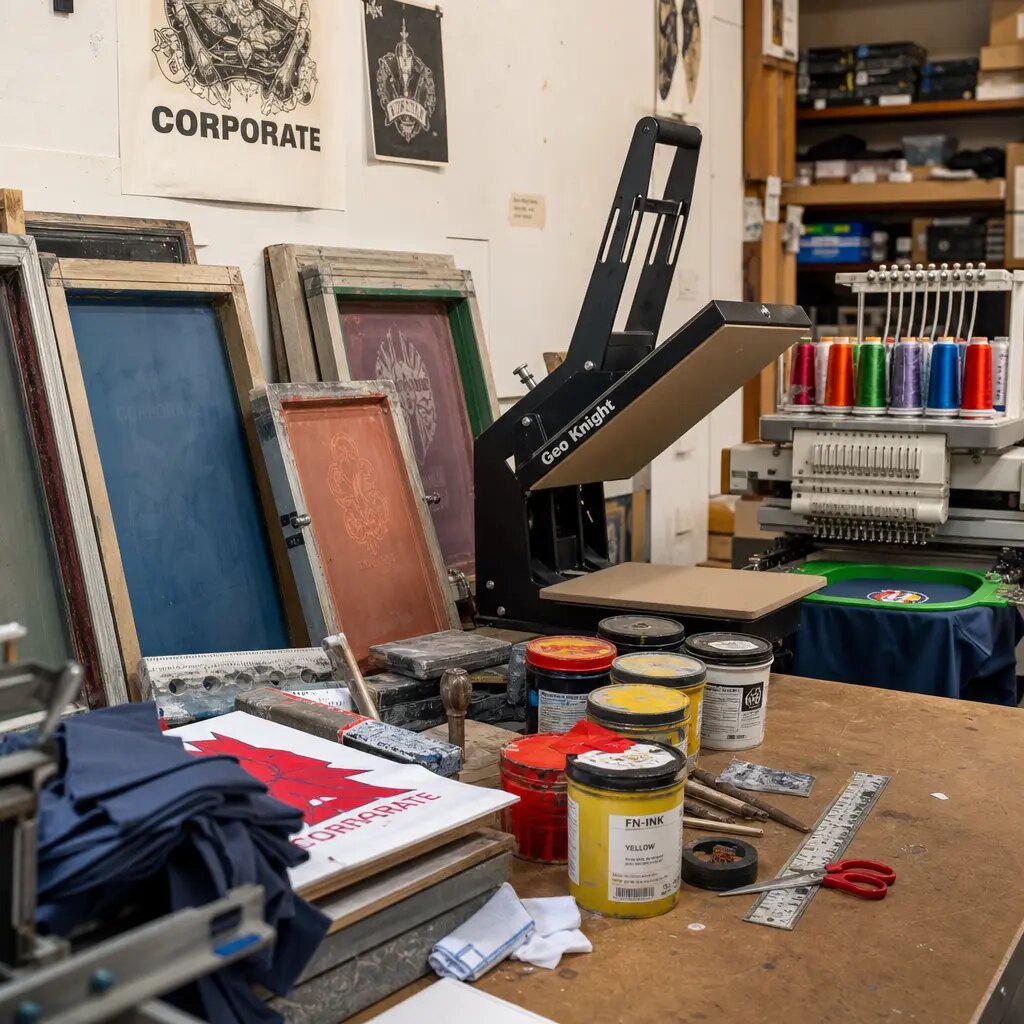
Decoration is a packing issue as much as a brand decision. One-color screen printing is often the cleanest option for coffee roaster logos because many roaster marks are bold and simple, and the print stays relatively flat in the carton. The RFQ should still state the artwork size, exact placement from a seam or panel edge, PMS reference, curing requirement, and acceptable placement drift.
Embroidery can look more premium, but it adds thickness and can create a pressure point in the carton. On lighter canvas, embroidery can pucker if the backing or tension is wrong. Woven labels are a useful middle option when the buyer wants durable branding without a heavy printed field or raised thread stack.
The approved sample should be checked in the folded state, not only as a flat bag. A print that looks fine loose can rub when stacked. A label that sits too close to a fold can curl. Embroidery can leave a dent on the neighboring unit. These are preventable if the buyer tests the final pack, not just the sewn piece.
Inspect decoration with simple rules. For screen print, check full coverage, clean edges, no bleeding, no ghosting, no obvious pinholes, no cracking, and acceptable registration. For embroidery, check missing stitches, loose thread, puckering, backing exposure, and placement. For woven labels, check alignment, seam security, and visibility after folding.
- Give logo placement as a measured distance from seams or panel edges.
- State PMS, thread, or woven-label references and define acceptable shade variation.
- Test the logo after the approved fold method is repeated several times.
- Quote setup fees, screens, plates, digitizing, and color-change charges separately.
Match inner packing to the route, not to habit
Inner packing should match the route the product will actually take. Bulk fold with no individual pack lowers material and labor. It can work for short domestic movement or fast event use, but it leaves the goods more exposed to dust, moisture, and abrasion. It also gives the warehouse less control if the bags need to be redistributed later.
Individual polybags make sense when the goods travel by ocean, sit in inventory, or pass through multiple locations. If plastic reduction matters, ask for recycled-content polybags, paper bands, or other lower-material options. Do not leave this open-ended. A small packing change can alter cube, labor, and carton count enough to affect the landed cost.
Tissue, hang tags, barcode labels, insert boards, and desiccants should be added only when they solve a real problem. A hang tag can support retail display. A barcode label can help ecommerce receiving. An insert board can preserve shape, but it can also lower pieces per carton. Desiccant can help on humid or long routes, but it is not a substitute for dry fabric and a sound carton.
The best packing instruction is visual. Show fold direction, strap position, flap orientation, logo direction, tag placement, barcode placement, and carton loading pattern. Photos remove guesswork from the line and give the inspector a clear standard.
- Quote bulk fold, paper band, and individual pack options separately.
- Specify polybag material, thickness, sealing method, warning text if needed, and barcode placement.
- Approve insert boards only after checking carton count and gross weight.
- Attach packing photos that show fold direction, strap position, and carton orientation.
Build the carton around warehouse handling
The export carton has to protect the bag, preserve the count, and survive normal handling. Ask for carton length, width, height, board grade, ply, tape method, carton marks, net weight, and gross weight. If the supplier can provide burst strength or edge-crush information, include it. If not, ask for carton photos or a preproduction carton sample before mass packing starts.
Carton count should come from a packed sample, not a table estimate. Straps, metal hardware, lining, and reinforced seams all change the folded thickness. A theoretical 25-piece carton may become a better 20-piece carton once the approved fold and inner pack are used. Forcing the count higher can cause crushed flaps, surface abrasion, weak corners, or cartons that are difficult to receive.
Carton dimensions also have to fit the route. A carton that looks efficient on paper may stack badly on a pallet, exceed a warehouse height limit, or be awkward for parcel carriers after import. If cartons are floor-loaded, confirm the stacking plan. If they are palletized, confirm pallet pattern and maximum height. If they will be repacked, tape strength and mark placement matter more than a tiny cube gain.
Any carton change after approval should require buyer signoff. Factories sometimes change carton size because local stock cartons are available or because the packing team wants faster loading. That may be harmless, or it may change freight cost and receiving behavior. The PO should treat the approved carton as part of the product standard.
- Approve carton dimensions and pieces per carton using a real packed sample.
- Keep gross weight within the receiving warehouse's manual handling limit unless the warehouse agrees otherwise.
- Confirm pallet pattern, maximum pallet height, and parcel movement if relevant.
- Require written approval before changing carton size, board grade, count, tape method, or mark format.
Qualify the supplier before you compare the quote price
A low quote is not useful if the factory cannot hold the spec, the schedule, or the packing plan. Supplier qualification matters because canvas messenger bags sit in the middle of sewing, printing, packing, and carton control. Ask what similar sewn goods they already make, how much capacity is available on the relevant line, and whether they control printing, embroidery, and carton packing in-house or through a subcontractor.
Look for evidence that the supplier can work with a repeatable standard. Useful signals include a recent packed sample, a clean sample room, clear material labeling, documented inspection steps, and willingness to mark deviations before approval. Weak signals include vague answers about carton count, no physical sample for pack approval, and a reluctance to separate setup charges from unit cost.
Ask how they handle material booking and change control. If the supplier does not know when fabric must be booked, how shade lots are separated, or how carton procurement is scheduled, the order is more likely to slip. Production capacity is not only the sewing line. It includes printing queues, carton supply, inspection resources, and the ability to finish a batch without mixing specs.
If the program matters commercially, ask for references from similar sewn or branded merchandise work, factory photos of current capacity, and a plain explanation of what they inspect internally before shipping. Procurement does not need a polished sales pitch. It needs proof that the factory can repeat the same packed bag more than once.
- Check similar product history, current line capacity, and whether packing is done in-house or subcontracted.
- Request a packed sample, not only a loose sewn sample.
- Look for documented inspection steps, not just verbal assurances.
- Ask how the factory separates fabric lots, setup work, and final packing.
Make the RFQ do the comparison work
A good RFQ keeps suppliers from quoting different assumptions. Give every factory the same fields: canvas spec, finished dimensions, tolerances, decoration method, trims, inner pack, export carton, pieces per carton, carton dimensions, net weight, gross weight, MOQ, sample cost, setup charges, lead time, inspection standard, and replacement policy. If a field is blank, the quote is not truly comparable.
Separate line items make tradeoffs visible. Decoration, polybags, hang tags, barcode labels, desiccant, cartons, carton marks, and palletization should not disappear into one unit price. A stronger carton may cost more but prevent damage. A polybag may add a small amount but reduce stains or handling wear. Procurement can only judge those choices when the costs are shown.
Ask suppliers to state assumptions in writing. Did they quote natural canvas or dyed canvas? Did they include lining? Did they assume individual polybags or bulk fold? Did they calculate carton count from a sample or from prior experience? Are spare units included? Does the price include domestic transport to port? These details prevent a lot of later correction work.
For coffee roasters, add the commercial use case to the RFQ. Say whether the bag will be displayed in a cafe, shipped in ecommerce kits, sent to wholesale accounts, or used for events. That context helps the supplier choose the right pack level and quote a carton plan that matches the channel.
- Use one quote sheet so every factory returns the same data in the same order.
- Ask suppliers to flag assumptions that change price, MOQ, lead time, carton count, or gross weight.
- Require itemized pricing for decoration, inner pack, carton, palletization, and setup fees.
- Ask for first-order cost and repeat-order cost when setup charges apply only once.
Approve samples that prove the packed product
A loose preproduction sample is necessary, but it does not prove the shipment. Buyers should approve the finished bag, logo method, fold method, inner pack, carton count simulation, carton mark layout, and loaded-carton photos. For higher-risk orders, ask for a pilot carton after the first production pieces are complete and before the whole run is packed.
Sample approval should be measured. Check body size, gusset, pocket placement, strap length, stitch density, reinforcement, hardware function, logo placement, print cure, fabric shade, odor, and folded size. If the bag uses a zipper, cycle it several times. If it uses magnetic snaps, check alignment and whether the canvas pulls. If metal hardware touches natural canvas, look for sharp edges, stains, or pressure marks.
Inspect decoration before and after folding. A flap print may rub against the next bag in the carton. A woven label may sit too close to a fold and curl. Embroidery may create a raised point that dents the adjacent unit. These issues are easier to fix before bulk production than after cartons are sealed.
Keep approved samples controlled. Record the sample version, approval date, material standard, artwork file, fold method, and carton instruction in the PO. For repeat programs, keep both a loose approved sample and a packed reference. Reorders are much easier when the buyer, factory, and inspector are comparing the same physical standard.
- Approve the loose bag and the packed presentation before bulk production.
- Record sample version, approval date, artwork file, fabric standard, and carton instruction.
- Test logo appearance after repeated folding, stacking, and handling.
- Request a pilot carton when fold pressure, carton count, or gross weight is a major cost driver.
Write QC criteria the inspector can actually use
Quality control works best when the factory, inspector, and buyer share the same definitions. Before production, classify critical, major, and minor defects. Critical defects may include wrong fabric, wrong logo, mold, strong chemical odor, broken load-bearing stitching, sharp hardware, mixed SKU cartons, or wrong carton marks. Major defects may include dimensions outside tolerance, visible print defects, missing reinforcement, broken zippers, badly uneven straps, or crushed cartons. Minor defects may include small loose threads or slight shade variation within an approved band.
Dimension checks should cover body width, body height, gusset depth, flap length, pocket placement, strap width, handle drop if used, and adjustable strap length. If the buyer uses AQL, a common starting point is General Inspection Level II with buyer-defined acceptance limits. AQL only works when defect definitions are clear. It does not decide whether a wrong logo is acceptable; the buyer's defect list does that.
Stitching deserves special attention because messenger bags carry load through straps, corners, and seams. Define stitch density, seam allowance, bar tack or box-stitch placement, and no skipped stitches at stress points. Inspect strap roots, flap corners, pocket openings, gusset seams, zipper ends, and webbing foldbacks. If the bag is intended for heavier contents, ask the factory what load check they can perform and write the method into the QC plan.
Carton QC needs the same discipline as product QC. Check carton count, carton dimensions, gross weight, board condition, tape adhesion, carton marks, barcode readability, PO number, SKU, destination mark, and signs of wetting or panel collapse. A shipment can pass bag inspection and still create costly receiving problems if carton control is weak.
- Classify wrong logo, mold, unsafe hardware, wrong carton marks, and mixed cartons as critical defects.
- Define measurable tolerances for dimensions, logo placement, pocket placement, and strap length.
- Inspect stress stitching, print quality, odor, hardware function, carton count, and carton condition.
- Hold shipment review if unapproved carton sizes, wrong counts, or mixed specifications appear.
Specification comparison for buyers
| Procurement decision | Practical B2B spec range | Best fit for coffee roasters | Quote or QC risk to control |
|---|---|---|---|
| Canvas weight | 10 oz / about 340 gsm for lighter promo bags; 12 oz / about 407 gsm for balanced retail merch; 16 oz / about 544 gsm for premium or heavier-use bags | 12 oz is a strong default for first samples because it balances handfeel, print clarity, and carton efficiency | Ask for fabric weight tolerance, shrinkage behavior, and whether finishing changes fold thickness or carton count |
| Construction and reinforcement | Plain-weave cotton canvas with bar tacks, box stitch, or cross-box reinforcement at strap roots and stress points | Works well for daily-carry merch, staff kits, and retail programs that need a durable but not overbuilt bag | Confirm reinforcement locations on the tech pack and inspect the actual stitch pattern on the approved sample |
| Decoration method | One-color screen print, woven label, or embroidery depending on brand look and thickness tolerance | Screen print is usually the easiest to pack and repeat for roaster logos | Require artwork size, placement tolerance, curing or backing details, and rub-check expectations |
| Fold and inner pack | Bulk fold, paper band, recycled polybag, tissue, hang tag, barcode label, or insert board | Use the lightest pack that still protects the bag through the actual route and receiving process | A change in inner pack can change cube, labor, and carton count, so quote each option separately |
| Export carton plan | Common starting range of 20 to 25 structured bags per carton at about 12 to 15 kg gross, adjusted after sample packing | Good for warehouse handling and repeat retail replenishment if the bag is not overly bulky | Lock carton dimensions, gross weight, board strength, tape method, and carton marks before bulk packing |
| Supplier qualification | Factory should show similar sewn goods experience, active production capacity, and willingness to provide packed samples and inspection records | Better for roaster programs than a supplier that only quotes a low sewn-unit price | Check production line capacity, sample turnaround, audit history, and whether the factory actually controls carton packing in-house |
| Carton testing and docs | Carton spec, packed sample photos, carton drop or compression evidence if available, and final inspection report | Useful when bags ship long distance, move through multiple warehouses, or are parcel-repacked after import | Do not accept carton claims without a sample, photos, or documented test basis |
| Carton weight limit | Often set by the buyer or warehouse at about 15 kg gross for manual handling, unless the destination can handle more | Prevents overpacked cartons that are hard to receive or prone to crush damage | Gross weight must include bag, inner pack, carton, labels, and inserts, not just product weight |
Buyer checklist before sampling
- State the finished bag size in centimeters, including body width, body height, gusset depth, flap length, pocket size, strap width, and adjustable strap length range.
- Specify canvas weight in oz and gsm, fabric color standard, finish, and whether the fabric is natural, dyed, washed, softened, coated, or preshrunk.
- Define all trims: zipper type and length, snap or magnetic closure, lining, webbing, label type, hardware material, and any padded divider or pocket board.
- Give the logo method, artwork size, placement from seams, PMS or thread reference, curing or backing requirement, and acceptable placement tolerance.
- Set the fold method and target folded size, then request a physical packed sample instead of relying on a drawing.
- Specify inner pack details: bulk fold or polybag, polybag thickness or paper wrap, hang tag, barcode label, insert board, and desiccant if needed.
- Define the export carton target: pieces per carton, maximum gross weight, carton dimensions if fixed, board grade or strength reference, tape method, and carton marks.
- Tell the factory the shipping route, destination warehouse rules, pallet requirement, maximum pallet height, and whether cartons will be repacked for parcel shipping.
- Request a pre-production sample, a packed sample, and carton photos before bulk packing starts.
- Set measurable QC tolerances for size, stitch density, reinforcement, print quality, odor, fabric shade, carton count, carton marks, and carton damage.
Factory quote questions to send
- What finished bag dimensions and tolerances are included in your quote, including gusset, flap, pocket, strap width, and strap length range?
- What canvas construction, weight in oz and gsm, fabric weight tolerance, shrinkage allowance, and finishing process are you quoting?
- What folded unit dimensions do you expect after the approved pack method, and did you verify those dimensions with a physical sample or only by estimate?
- How many bags per export carton do you recommend for this exact spec, and what are the carton length, width, height, net weight, and gross weight?
- What carton board grade, ply, burst strength or edge-crush reference, tape method, and carton mark format are included in the price?
- Can you quote the bag, decoration, inner pack, hang tag, barcode label, carton, carton marks, palletization, and any setup fees as separate line items?
- What changes to carton count and gross weight should we expect if we move from 10 oz to 12 oz or 16 oz canvas, or if we add lining, padding, or a divider?
- For the logo method you recommend, what setup charges, screens, plates, embroidery digitizing, color-change charges, curing time, and minimum order rules apply?
- What inspection standard do you use for messenger bags, and can you inspect dimensions, stitch density, print placement, strap reinforcement, odor, carton count, and carton marks against our checklist?
- What is your normal production lead time after sample approval, and which step is most likely to delay shipment: fabric booking, printing, sewing, carton procurement, inspection, or freight booking?
Quality-control points to confirm
- Canvas weight is checked against the approved range, with fabric color compared to the approved shade standard under consistent lighting.
- Finished dimensions remain within agreed tolerance for body width, body height, gusset depth, flap length, pocket placement, strap width, and strap length.
- Stitch density, seam allowance, bar tacks, box stitches, and cross-box reinforcement match the approved sample at all load-bearing points.
- No broken stitches, skipped stitches, exposed raw edges, needle holes, loose thread nests, oil marks, visible dirt, mold, or unacceptable odor are present.
- Logo print, embroidery, or woven label placement stays within tolerance and is free from bleeding, cracking, puckering, ghosting, missing stitches, or poor registration.
- Zippers, sliders, snaps, magnetic closures, buckles, and adjusters function smoothly and do not scratch, distort, or stain the canvas.
- Folded pack method matches the approved packed sample, including strap position, flap direction, inner pack, tag placement, desiccant placement, and barcode orientation.
- Carton count is verified on a defined sample from every packing lot, and any shortage, overpack, or mixed-spec carton is treated as a shipment hold issue.
- Export carton dimensions, board grade, tape method, carton marks, destination marks, PO number, SKU, quantity, and gross weight match the PO and packing list.
- Cartons show no crushed corners, wet marks, burst seams, weak tape adhesion, illegible marks, or panel collapse after normal stacking in the factory warehouse.