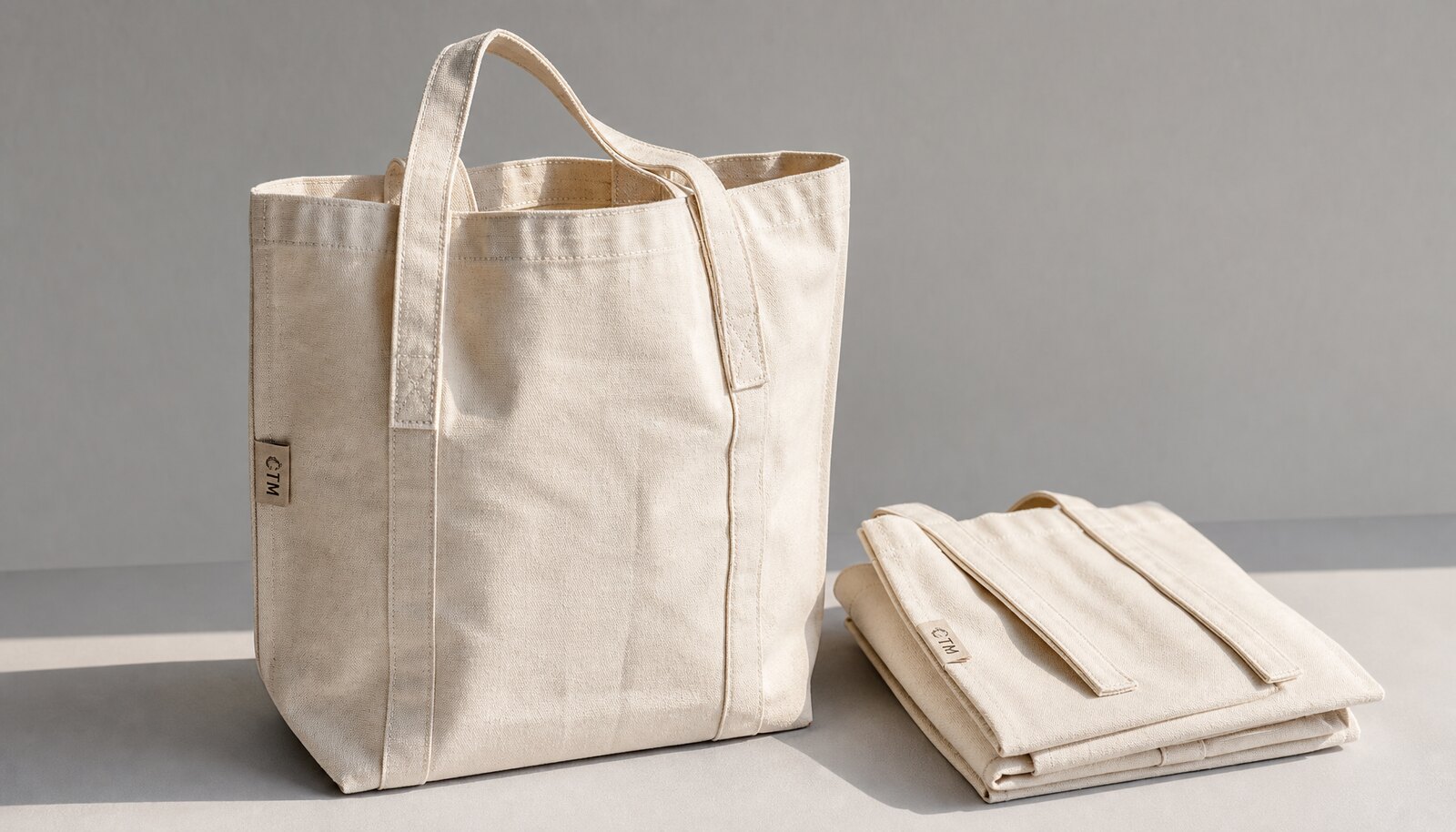
Why hotel buyers need a different bag spec
Reusable shopping bags for hotels are not just another tote purchase. A hotel bag may sit at a gift shop counter, go into a guest amenity kit, support a room-service program, or be handed out for a branded opening. Each use case changes the buying standard. A bag that looks fine in a supplier photo can still fail if it wrinkles too easily, feels too thin in the hand, or does not carry the hotel logo cleanly enough for front-of-house use.
The most common mistake is to source by unit price alone and ignore how the bag will actually move through the property. Hotels care about presentation, repeat use, and consistency across locations. If the bag is too flimsy, the guest notices immediately. If the print is weak or the handle stitching is light, the procurement team ends up solving the same problem again on the next replenishment order.
- Define the use case before the RFQ: retail sale, guest carry bag, amenity insert, or event giveaway.
- Decide whether the bag must feel premium in hand or simply perform at the lowest workable cost.
- Think in terms of reuse cycles, not only first-use appearance.
Pick the base material and GSM for the job
For hotel use, the base material should match the brand position and the workload. A 10 oz cotton canvas bag, roughly in the 300-340 GSM range, gives a balanced result for retail and guest-facing programs. It has enough body to stand up on a shelf, accepts print well, and does not feel cheap in a boutique or lobby setting. If the program is more budget-sensitive, 160-180 GSM nonwoven PP can work for short-cycle promotions or property giveaways, but it will not deliver the same long-term impression.
If you are sourcing a premium retail item, do not under-spec the fabric just to hit a low quote. Thin fabric often means more complaints about sagging, curling at the seams, and weak handle feel. On the other hand, over-specifying the bag adds weight, raises freight, and can make the finished piece harder to fold, pack, or distribute across multiple hotel sites. The practical middle ground is usually the best choice unless the bag will carry heavy purchases or be sold as a premium souvenir.
- Use cotton canvas when the bag needs a structured, premium feel.
- Use nonwoven PP when the order is promotional, seasonal, or price-sensitive.
- If the bag must carry heavier items, specify reinforced handles and a bottom gusset instead of relying on thicker fabric alone.
- Ask the supplier to quote the fabric weight in writing, not only describe it as standard or heavy.
Choose a print method that survives hotel use
For most reusable shopping bags for hotels, 1-2 color screen print is the most commercially sensible option. It is easy to repeat, gives a clean brand look, and holds up better than a quick-transfer decoration when the bag gets folded, carried, and stored again. A woven side label or a small stitched patch can also work well if the hotel wants a quieter premium mark instead of a large front print.
Heat transfer can be useful for complex artwork or short runs, but it is not always the best choice for a bag that will be reused often. Fine lettering, thin strokes, and gradients are where suppliers start to create problems. If the logo has a lot of detail, decide early whether to simplify the artwork or move to a different decoration method. The quote should state the print area, Pantone target, number of colors, and any position tolerance so the supplier is not guessing.
- For a simple hotel logo, screen print is usually the safest cost-to-durability choice.
- For a premium look, use a woven label, stitched patch, or small emboss on an accessory panel.
- Request a strike-off or printed sample against the actual fabric before approving bulk.
- Set a clear rule for logo placement, especially if the bag has a gusset or extra side panel.
Compare sourcing routes before you compare prices
Not every supplier route gives the same control. Factory-direct OEM is the strongest option when a hotel group wants repeat orders, stable quality, and the ability to keep the same spec across several properties. A trading company or consolidator can be useful if you are managing multiple bag categories in one order, but that convenience may come with less visibility into where the bags are actually made and how changes are handled on the production floor.
A stock body plus local print route can make sense for quick hotel openings or urgent promotional needs. The tradeoff is limited control over fabric shade, handle length, and exact construction. For a buyer, the important question is not which supplier looks cheapest on the first page of the quote. It is which route can keep the same approval standard when the order is repeated six months later and the original sample is no longer in front of you.
- Ask who owns the factory, the cutting, the print process, and final packing.
- Request photos from the actual production line, not only showroom images.
- Verify whether the supplier can repeat the same fabric and print setup on replenishment orders.
- If you are buying through a trader, still ask for factory evidence and a named QC contact.
Build MOQ around how many variables you change
MOQ is rarely just a supplier demand. It is usually the result of how many variables you are changing at once. If you keep one bag size, one fabric, one body color, one logo location, and one packing format, the order is much easier to quote and produce. If you add multiple hotel names, special inserts, different handle colors, or mixed retail and amenity packaging, the supplier has to reset material planning and setup more often, and that raises the minimum order pressure.
This is where hotel buyers can save real money. Instead of making a unique bag for every property, consider a shared base bag with a variable label, swing tag, or small woven side mark. That keeps the buying spec stable while still allowing property-level branding. When you request quotes, insist that the supplier separate the unit price from screen fees, plate fees, sampling, packing, and any surcharge for color changes or mixed cartons. A quote that hides those items is not a clean quote.
- Keep one base bag design across properties whenever possible.
- Ask for MOQ by size, color, and print method, not just a single headline number.
- Require the supplier to list all setup charges separately.
- Compare quotes only after the same packing and artwork scope is fixed.
Use samples to prove the bag, not just the artwork
A sample is only useful if it reflects the real bulk run. For reusable shopping bags for hotels, the pre-production sample should be made from the actual cloth or nonwoven lot, with the approved print method and the planned handles, stitching, and packing. If the supplier sends a neat showroom sample that uses different material or a cleaner print setup, you are approving the wrong thing. The sample should confirm size, seam finish, handle symmetry, logo placement, and the way the bag folds after production finishing.
The hotel buyer should also test the sample in a realistic way. Put weight in it. Fold it. Open and close it. Check whether the print cracks, whether the handles sit flat, and whether the bag still looks presentable after a few rounds of use. A bag that only passes an appearance review is not enough if it will be used for guest shopping or carried around a property all day.
- Approve only a pre-production sample made from bulk material.
- Check size tolerance, handle length, stitch density, and logo position against the spec sheet.
- Load-test the sample with a realistic retail weight before sign-off.
- Keep one signed sample and one photo record as the production reference.
Treat packing as part of the product
Packing is not a minor detail on hotel bag programs. If the bags go into a back-of-house store, flat-fold bulk cartons are usually the most efficient route. If the bags are sold in a gift shop, they may need individual polybags, tissue, barcode stickers, or a folded presentation that looks clean on the shelf. The wrong packing choice can add labor at the hotel end or create wrinkles, crush marks, and messy shelf presentation that defeat the branding effort.
The quote should include carton count, carton dimensions, gross and net weight, and any special label content. If bags will be distributed across multiple hotel sites, ask for master carton marks that clearly show PO number, size, color, and quantity. For international shipments, packing also matters for freight cost. A bag that packs inefficiently can raise volumetric cost even when the unit price looks attractive on paper.
- Choose bulk packing for warehouse distribution and individual packing for retail display.
- Specify carton marks, barcode format, and carton count before production starts.
- Keep fold size consistent if the bag must fit into amenity kits or retail sleeves.
- Ask for moisture protection if the shipment will sit in transit or storage for a long time.
Plan lead time around sample approval and freight risk
For a first order, lead time is usually driven less by sewing and more by decision speed. Sample approval, artwork corrections, fabric sourcing, and packing alignment can take longer than the factory run itself. In practical terms, a simple bag may move faster than a fully customized hotel program, but only if the buyer freezes the spec early. Once the artwork changes after sampling, the schedule becomes unstable and the supplier has to rework the job.
Seasonality matters too. Hotel programs often peak around openings, events, holidays, and procurement cycles when multiple properties are ordering at once. If you need replenishment on a fixed date, do not treat the supplier's stated production window as a guarantee. Build room for sample review, freight booking, and document handling. Ask the supplier for milestone photos during production so you can catch fabric or print issues before the bags are all the way at the packing stage.
- Expect sample work to take longer than the buyer team usually hopes for.
- Freeze artwork before you approve the pre-production sample.
- Reserve freight early if the delivery date matters to a hotel opening or event.
- Ask for production progress photos when the order is first cut, printed, and packed.
Compare landed cost, not just ex-works price
The cheapest ex-works quote is often not the cheapest landed result. For reusable shopping bags for hotels, total cost includes fabric, cutting and sewing, print setup, inner packing, cartons, export handling, inland movement, and freight. If the bag is overpacked, poorly folded, or requires rework after print approval, the extra cost may show up later in the process instead of in the headline quote. That is why hotel buyers should compare the same spec across all suppliers before making a call.
The right economic metric is not only cost per bag. For hotel use, think about cost per guest impression, cost per resale unit, or cost per reuse cycle. A slightly higher-quality bag that survives longer and presents better on property can be the better commercial decision. The reverse is also true: a premium spec that exceeds the actual use case can tie up budget without improving the guest experience.
- Normalize quotes to the same fabric weight, print count, packing, and shipping term.
- Separate one-time setup charges from recurring unit cost.
- Watch for hidden costs such as sample fees, color matching, and carton marking.
- Choose the bag spec based on its actual hotel use, not on the most ambitious version of the design.
Specification comparison for buyers
| Spec decision | Recommended option | When it fits | Buyer risk to check |
|---|---|---|---|
| Sourcing route | Factory-direct OEM with one approved spec sheet | Repeat hotel orders, multi-property rollouts, and buyers who need stable replenishment | Lead time can slip if the supplier is still sourcing fabric or revising artwork |
| Sourcing route | Stock body plus local print or embroidery | Hotel openings, urgent launches, or low-volume seasonal campaigns | Fabric shade, handle length, and construction may vary from batch to batch |
| Sourcing route | Trading company or consolidator | Mixed bag programs where one buyer manages several bag types at once | The real factory may be hidden, so QC accountability and change control can weaken |
| Body material | 10 oz cotton canvas or around 300-340 GSM | Premium hotel gift shops and guest-facing retail where structure matters | If the bag is too heavy, freight rises and the quote can look more expensive than it is |
| Body material | 160-180 GSM nonwoven PP | Budget giveaways, event use, or short-cycle hotel promotions | Lower perceived value and lower abrasion life than woven or canvas options |
| Print method | 1-2 color screen print | Simple hotel logos, repeat orders, and a clean branded look | Fine details, small text, and color registration need tighter control |
| Packing route | Flat-fold bulk pack with carton marks | Back-of-house distribution, store replenishment, and lower freight cost | Retail shelf presentation may suffer if folding and packing are not standardized |
| Sample route | Pre-production sample from bulk material | First orders, new logo layouts, and brand-sensitive hotel programs | A showroom sample can hide the real fabric, print density, or stitch quality |
Buyer checklist before sampling
- Define the use case first: gift shop retail, guest amenity, laundry carry, or event giveaway.
- Lock one base size, one fabric, one logo location, and one packing format before requesting prices.
- Provide vector artwork, Pantone targets, and the exact print area in millimeters.
- State whether the bag must stand upright, fit inside an amenity kit, or carry a specific load.
- Ask for fabric GSM or ounce weight, not just a generic cotton or nonwoven description.
- Require a pre-production sample made from bulk material before mass production starts.
- Compare all supplier quotes on the same Incoterm, carton count, and packing method.
- Set acceptance criteria for size tolerance, stitch quality, print placement, and overrun or underrun limits.
Factory quote questions to send
- What is your MOQ by size, material, color, and logo color count?
- What exact fabric weight are you quoting, and is that before or after finishing?
- Does your unit price include printing plates or screens, sampling, inner packing, and export cartons?
- Can you make a pre-production sample from bulk material, not just a showroom sample?
- What are your size tolerance, stitch tolerance, and print placement tolerance on this bag?
- What is the standard lead time after sample approval, and what changes it during peak season?
- What packing format is included in the price: flat fold, polybag, tissue, barcode, or no individual packing?
- What Incoterm and loading port are quoted, and what freight assumptions are excluded?
- What is your overrun or underrun policy, and how do you handle defect replacement?
Quality-control points to confirm
- Match the approved fabric swatch against bulk cloth for shade, handfeel, and thickness before cutting starts.
- Hold size tolerance within a practical range, typically about plus or minus 1 cm for small bags and 1.5 cm for larger canvas bags.
- Check handle length symmetry, bar-tack strength, and stitch density at stress points.
- Verify logo position, color density, and edge sharpness against the approved artwork sample.
- Reject loose threads, skipped stitches, needle holes, oil marks, and visible contamination on the bag body.
- Test the bag with a realistic retail load so the seam and handle construction are judged in use, not just by appearance.
- Confirm carton count, carton marks, and carton dimensions against the packing list before shipment.
- If your team uses AQL, align the standard and defect classification before production, not at inspection time.