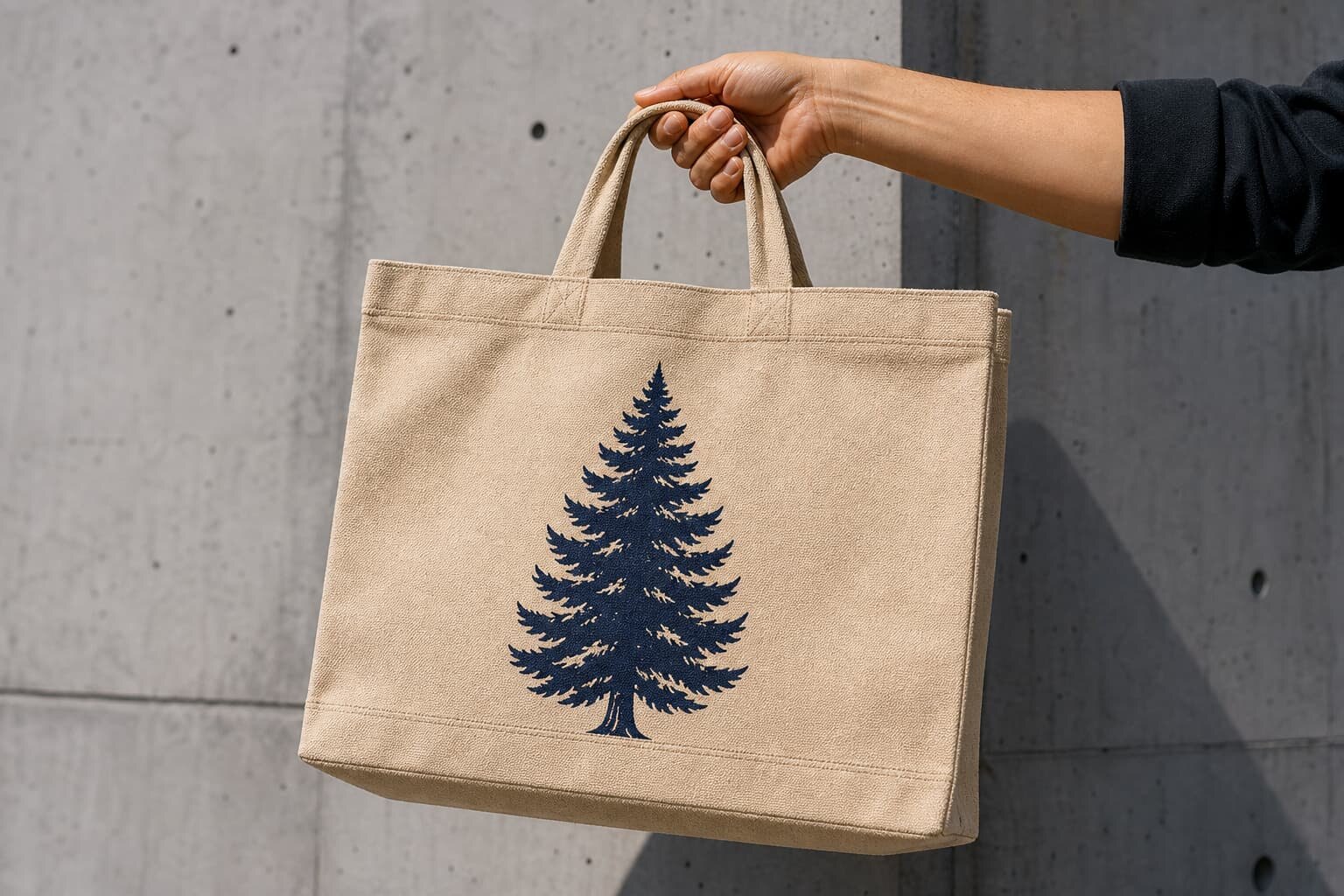
Start With The Procurement Risk
Reusable bags with logo are easy to underestimate because the product looks familiar. A buyer may ask for a tote, receive five low prices, and assume the decision is mainly about unit cost. In practice, reusable shopping bags are sewn or bonded packaging products with many cost levers: fabric weight, construction, logo process, handle reinforcement, folding method, carton quantity, and inspection standard. If those details are not fixed, each supplier may quote a different bag while using the same general product name.
The first RFQ decision is not the logo. It is the job the bag must perform after delivery. A supermarket promotion needs a different specification from a bookstore tote, a premium retail bag, a conference giveaway, or a delivery packaging program. Heavy products require stronger handles and gussets. A fashion retailer may need a cleaner print surface and a better handfeel. A distributor may care about carton dimensions and reliable repeat orders. A procurement team importing full containers needs quote validity, CBM, and inspection acceptance rules before it can compare landed cost.
A stronger RFQ for reusable bags with logo should connect the commercial purpose to measurable specs. Instead of asking for a reusable bag with one-color logo, ask for a 38 x 35 x 12 cm non-woven PP shopping bag, 100 GSM, stitched seams, reinforced handles, one-color screen print on one side, 10 kg static load target, bulk bundle packing, and FOB price with carton data. That type of request gives suppliers less room to fill in blanks with cheaper assumptions.
- For grocery and club-store programs, prioritize capacity, handle strength, gusset shape, and carton efficiency.
- For apparel retail, prioritize surface appearance, logo placement, fabric color, and neat finishing.
- For trade shows, balance budget, event date, carton handling, and acceptable load target.
- For resale bags, define retail packing, barcode, label, carton marks, and a stricter defect limit.
- For imported programs, request CBM, gross weight, quote validity, sample schedule, and inspection terms with the first quote.
Match Material To Use Case
Material choice is the largest driver of cost, durability, appearance, and freight. Non-woven PP is usually the most economical option for large promotional programs. Cotton and canvas give a more natural handfeel and stronger brand impression, but they cost more and can increase carton volume. RPET can support recycled-material positioning, but the RFQ must state the exact fabric type and the documents expected. Laminated non-woven bags offer structure and strong graphic panels, yet they need extra control for creasing, lamination quality, and carton compression.
A common buying mistake is comparing quotes by bag size alone. A 70 GSM non-woven bag and a 120 GSM non-woven bag may share the same dimensions but perform very differently. The same is true for cotton: 4 oz, 6 oz, 8 oz, and 10 oz are not interchangeable in strength, print result, or shipping volume. Thicker fabric may improve durability and perceived value, but it also reduces pieces per carton and can raise air or ocean freight cost. Procurement teams should compare unit price and landed cost together.
Material should also be matched to logo method. Screen printing often works well on cotton, canvas, and non-woven PP for solid artwork. Heat transfer can handle gradients and small details, but the buyer should test film edge feel and peeling resistance. Sublimation is normally tied to polyester-based materials, not natural cotton. For laminated non-woven bags, the print may be on film before lamination or applied to the finished surface, and the quote should say which process is included.
- 70-90 GSM non-woven PP: light event giveaways, short-cycle retail campaigns, simple carry use.
- 100-120 GSM non-woven PP: stronger grocery-style promotions and repeat shopping use.
- 5-6 oz cotton: lightweight tote programs, simple logos, compact carton packing.
- 8-10 oz cotton canvas: stronger retail and merchandise bags with better structure.
- 120-190 GSM RPET or recycled polyester: useful when recycled material positioning is part of the brief, subject to documentation.
- 90-140 GSM laminated non-woven: structured grocery or delivery bags with wipe-clean panels and stronger visual graphics.
- Jute or cotton-jute blends: natural-look retail and gift bags where fiber variation is acceptable.
Specify Size As Real Capacity
Bag size should describe usable capacity, not just a flat panel. A flat tote measuring 38 x 42 cm does not carry products the same way as a 38 x 35 x 12 cm gusseted shopping bag. If the buyer needs the bag to hold groceries, shoe boxes, folded apparel, wine accessories, catalogs, or takeaway items, the gusset and bottom construction must be specified. Otherwise one supplier may quote a flat tote while another quotes a box-gusset bag, making the price comparison unreliable.
Procurement teams should ask whether measurements are finished size after sewing. Cutting size is larger because it includes seam allowance, folding, trimming, and shrinkage. Cotton may shrink or distort slightly after finishing. Canvas can pull differently depending on weave and sewing tension. Laminated bags may look smaller if compressed during packing. For repeat orders, finished size should be checked against the approved sample and written tolerance, not only the artwork proof.
Handle dimensions deserve the same attention. Handle length is the total strip length, while handle drop is the space from the top opening to the highest point of the handle when lifted. Buyers usually care about handle drop because it determines hand carry or shoulder carry comfort. A heavy grocery bag with narrow handles may technically pass a load test but still feel poor in use. If the bag is expected to carry heavier items, handle width, reinforcement stitching, and attachment area should be part of the RFQ.
- State dimensions as width x height x gusset, for example 38 x 35 x 12 cm finished size.
- For flat totes, confirm whether there is no gusset, a bottom gusset only, or a side and bottom gusset.
- Define handle drop separately from handle strip length, especially for shoulder-carry bags.
- For grocery bags, consider a box gusset or bottom board if the bag must stand and hold bulky goods.
- For apparel retail, confirm whether the bag needs to sit neatly at checkout or only carry folded garments.
- Use realistic tolerances such as +/- 0.5 cm to +/- 1 cm depending on fabric and construction.
Control Logo Method And Artwork
A branded reusable bag succeeds or fails visually at the logo. The RFQ should include vector artwork, Pantone references, print size, print location, number of colors, and whether the print appears on one side, two sides, gussets, or handles. A photo of a logo in an email is not enough for production control. Suppliers need proper artwork to quote screens, plates, transfers, print time, and positioning risk.
Screen printing is often the best value for simple solid logos, especially one to three colors. It can give strong coverage on many bag materials, but ink selection and curing matter. Heat transfer is useful for gradients, full-color artwork, or small details; the buyer should test edge feel, stretch, rubbing, and peeling. Digital printing may work for short runs or complex artwork, but unit cost and shade consistency need review. Embroidery can look premium on heavier canvas, but it is rarely the right choice for thin non-woven bags because dense stitching can distort the panel.
Logo placement should be measured from fixed reference points, such as top edge, side seam, or bottom fold. This is especially important on gusseted bags because a print too close to the side fold can wrinkle or disappear around the corner. Large prints on thin fabric may show uneven coverage. White ink on dark cotton or black non-woven may require special handling. If brand color is strict, approve a physical print sample rather than relying on a screen proof.
- Screen print: best for solid logos, text, simple icons, and efficient bulk production.
- Heat transfer: useful for gradients, full-color artwork, small details, and complex brand graphics.
- Digital print: flexible for lower quantities, but check color consistency and cost at scale.
- Sublimation: suitable for polyester-based materials, not natural cotton.
- Embroidery: best on heavier canvas with enough body to support the stitch count.
- Woven or sewn label: good for subtle premium branding or when large print is not desired.
Build A Comparable RFQ
A commercially useful RFQ does not need to be long, but it must remove ambiguity. The buyer should list the bag type, material, fabric weight, finished size, gusset, handle construction, logo method, print details, quantity, packing, required certificates or documents, inspection standard, delivery term, and requested lead time. This allows suppliers to quote the same product and makes negotiation more factual.
The RFQ should also separate must-have requirements from options. For example, a buyer may require a 10 kg load target and one-color logo, but ask for optional pricing on individual polybags, barcode labels, or a heavier fabric. This approach helps procurement see which features add cost without asking suppliers to guess. If the order has several artwork versions or store destinations, include a version matrix with quantities and packing instructions.
Trade terms should be clear before price comparison. EXW may look cheaper than FOB because it excludes inland handling and export charges. DDP may look higher because it includes more logistics work. Neither is automatically better; the issue is whether the buyer is comparing like with like. At minimum, ask for unit price, sample charge, setup charge, carton quantity, carton dimensions, gross weight, net weight, CBM, lead time, and quote validity.
- Product: reusable shopping bag, tote, grocery bag, laminated bag, or delivery bag.
- Material: exact fabric type, GSM or oz, color, recycled claim if any, lamination if any.
- Construction: finished size, gusset, bottom board, handles, stitching, reinforcement, binding, and closure if any.
- Logo: artwork file, print method, color count, Pantone references, size, placement, and sides printed.
- Quantity: total order, SKU split, artwork versions, color assortment, and reorder expectation.
- Packing: pieces per bundle, polybag, inner carton, export carton, carton marks, barcode, and pallet requirement.
- Commercials: trade term, port or address, payment terms, sample cost, setup cost, lead time, and quote validity.
Read The Quote Beyond Unit Price
The lowest unit price may not be the lowest landed cost. A quote with thinner fabric, smaller gusset, lighter cartons, or missing setup charges can look attractive until sampling or freight booking exposes the difference. Procurement buyers should read reusable bag quotes line by line and ask suppliers to revise incomplete offers. A clean quote is easier to approve internally and easier to defend if there is a quality dispute later.
Freight is often the hidden swing factor. Cotton canvas bags and laminated non-woven bags can be bulky. Individual polybags, hang tags, retail sleeves, or bottom boards may increase carton volume. Compressed packing can reduce CBM but may deform laminated panels, crease prints, or make bags look poor on arrival. For urgent air shipments, even a small increase in carton volume can matter. Always request estimated carton dimensions before order confirmation, not after production is finished.
Setup and sampling charges should be transparent. Screen charges, plate charges, transfer film setup, sample labor, courier cost, and remake sample fees may be reasonable, but they should not appear as surprises after purchase order approval. If artwork versions are split by store, branch, sponsor, or event, ask whether each version has a separate setup and minimum quantity. The quote should state what happens if a pre-production sample is rejected because of supplier workmanship versus buyer artwork changes.
- Check whether the material weight in the quote matches the RFQ exactly.
- Confirm whether logo setup includes all colors and all versions.
- Ask whether packing is bulk bundle, individual polybag, retail sleeve, or custom carton.
- Compare carton CBM and gross weight, not only unit price.
- Check trade term, port, local charges, and delivery address assumptions.
- Confirm quote validity for material and freight-sensitive orders.
- Ask for separate optional pricing when deciding between fabric weights or packing methods.
Sample Approval Should Prove Risk
Sampling should focus on the parts of the order that can go wrong. A stock sample can show general workmanship, factory sewing quality, and material handfeel. It cannot approve the buyer's actual logo, print color, handle drop, carton packing, or exact construction. For reusable bags with logo, a pre-production sample using final material and final branding method is the main control point before bulk production.
When reviewing a sample, inspect it as a product, not as a photo. Measure finished width, height, gusset, handle width, and handle drop. Pull the handles by hand. Check the inside seams and the bottom corners. Fold and unfold the printed panel. Rub the logo with a clean white cloth to see whether ink transfers. If the bag is laminated, bend the corners and gusset folds to look for white stress marks, bubbles, or cracking. If the bag has barcode labels or retail packing, scan the barcode and confirm label position.
A simple written load test is often enough for procurement control. For a light event bag, the buyer may specify 5 kg static load for 2 hours with no handle failure or seam tearing. For grocery-style reusable bags, 8-10 kg may be more appropriate. For heavier canvas or retail merchandise bags, 10-15 kg may be used depending on construction. The exact target should match real use, not an impressive number. The factory should test the pre-production sample and the inspection team should repeat random checks during final inspection.
- Approve fabric swatch before approving print where material shade affects logo appearance.
- Approve one physical sample with final material, final print, final handle construction, and representative packing.
- Write sample comments with measurements and photos rather than informal email reactions.
- Seal or sign one approval sample for factory reference and keep one for inspection.
- Do not allow bulk cutting before approval when color, logo placement, or size is critical.
- If the sample fails, record whether the cause is wrong material, wrong artwork, poor curing, weak stitching, or unclear RFQ.
Set Tolerances And Inspection Rules
Reusable shopping bags are sewn or bonded products, so small variation is normal. The purpose of tolerances is to define what is acceptable before goods are made. Without written tolerances, the buyer and supplier may argue after production over whether a crooked logo, short handle drop, loose threads, or fabric slub is a defect. Inspection should use the approved sample, purchase order, artwork proof, and written tolerances together.
Many buyers use ANSI/ASQ Z1.4 or ISO 2859-1 sampling plans with AQL levels. A common starting point for general consumer goods is 0 for critical defects, 2.5 for major defects, and 4.0 for minor defects, but the final levels should match the buyer's risk, market, and retailer requirements. For reusable bags, critical defects may include wrong logo, unsafe contamination, sharp broken needle fragments, mold, or a completely wrong material. Major defects may include broken handles, severe size deviation, wrong color, heavy stains, peeling print, missing barcode, or carton mix errors. Minor defects may include small trim threads, slight allowable shade variation, or minor wrinkles within the agreed limit.
Acceptance thresholds should be practical. For example, the RFQ may allow size tolerance of +/- 1 cm for a sewn non-woven grocery bag, logo position tolerance of +/- 0.5 cm to +/- 1 cm depending on print size, no broken handle reinforcement, no open seams, and no visible stains larger than an agreed small limit on the main panel. For print, specify no cracking or peeling after normal folding and no obvious ink transfer when rubbed lightly after curing. These details make inspection clearer and reduce subjective decisions.
- Critical defects: wrong logo, wrong product, unsafe contamination, mold, sharp metal, or serious odor that makes goods unsellable.
- Major defects: broken handle, open seam, severe print peeling, wrong size beyond tolerance, wrong carton quantity, missing barcode, or incorrect SKU mix.
- Minor defects: untrimmed thread, slight wrinkle, small allowable shade variation, or minor stitching irregularity that does not affect function.
- Typical dimensional tolerance: often +/- 0.5 cm to +/- 1 cm, adjusted by fabric and construction.
- Typical logo position tolerance: define from top edge and side seam, commonly within +/- 0.5 cm to +/- 1 cm for many bag programs.
- Load test example: agreed weight suspended for 2 hours, followed by repeated lift cycles, with no handle detachment, seam opening, or fabric tearing.
Plan Packing, Cartons, And Freight
Packing affects cost, freight, warehouse receiving, and product appearance. Bulk bundle packing is efficient for wholesale distribution and usually keeps material use low. Individual polybags protect bags during handling and make store allocation easier, but they add labor, packaging material, and carton volume. Retail sleeves, hang tags, barcode labels, and inner cartons can be necessary, but they should be quoted from the beginning.
Carton quantity should be suitable for the material. Too many heavy canvas bags in one carton may make handling difficult and increase carton breakage. Too much compression on laminated non-woven bags can crease the print panels or damage corners. For overseas shipments, export cartons should be strong enough for handling, stacking, and warehouse movement. If pallets are required by a retailer or distribution center, pallet height, carton layout, and pallet label rules should be part of the packing plan.
For multi-SKU orders, packing control is as important as sewing quality. If bag colors, logo versions, or destination labels are mixed incorrectly, the buyer may face expensive sorting after arrival. The purchase order should include a packing matrix showing SKU, logo version, bag color, carton quantity, pieces per carton, carton mark, and destination. Inspectors should open cartons from different parts of the shipment to verify the matrix, not only check the first carton near the door.
- Request units per carton, carton dimensions, gross weight, net weight, and estimated CBM with the quotation.
- Use bulk bundle packing for efficient wholesale distribution where individual presentation is not needed.
- Use individual polybags for clean handling, store allocation, resale, or kit packing, while checking added CBM.
- For laminated bags, avoid excessive compression that creates panel creases or corner damage.
- Include carton marks with PO number, item code, color, logo version, quantity, destination, and carton number if required.
- Test barcode scan quality and label adhesion before approving retail packing.
- Confirm pallet requirements early because they can change freight volume and warehouse receiving cost.
Manage Lead Time And Reorders
Lead time should be counted from the point when the factory has everything needed to proceed: approved artwork, approved sample, confirmed material, deposit or payment arrangement, and final packing instructions. Counting from the first inquiry creates unrealistic expectations. Reusable bag production may include material sourcing, dyeing or lamination, print setup, cutting, sewing or ultrasonic bonding, trimming, inspection, packing, and export handover.
The schedule changes when the specification changes. Custom fabric color, RPET documentation, multiple logo versions, special labels, barcode packing, and retailer carton rules can all add time. Late artwork revisions are especially risky because they may require new screens, new transfers, new samples, or revised print positioning. Peak season can also affect fabric availability, factory line capacity, and freight space. A procurement calendar should include sample time, approval time, production time, inspection time, and freight handover, not only the factory's sewing days.
For repeat programs, the buyer should keep the specification stable and record approved materials. A reusable bag may be reordered months later, but fabric lots and shades can change. Keep the approved sample, artwork file, Pantone references, packing matrix, carton data, and inspection report. If exact matching matters, ask for a new swatch or sample before repeat production. If the program allows minor changes, state what may vary, such as fabric shade within approved tolerance or carton quantity within logistics limits.
- Sample stage: allow time for artwork proof, material swatch, printing, sewing, approval comments, and courier transit.
- Pre-production stage: approve final sample before bulk cutting when size, logo, or material is sensitive.
- Bulk production: depends on quantity, fabric availability, print process, SKU count, and factory loading.
- Inspection stage: reserve time for final random inspection, sorting, or corrective action if needed.
- Shipping stage: confirm carton data before freight booking and check whether goods are ready for pickup or export handover.
- Reorders: reference the previous PO, approved sample, artwork file, material weight, carton data, and inspection findings.
Specification comparison for buyers
| Bag option | Typical spec range | Best-fit buying use | Cost and freight implication | Procurement risk to control |
|---|---|---|---|---|
| Non-woven PP bag | 70-120 GSM, stitched or ultrasonic, flat or gusseted | Budget retail campaigns, grocery promotions, membership giveaways, high-volume events | Usually lowest unit cost; compact when flat packed; higher GSM and gussets increase CBM | Thin fabric can tear at handles; confirm GSM, reinforcement, finished size, and load test |
| Cotton tote | 4-6 oz cotton, natural or dyed, flat construction | Apparel retail, conferences, bookstore bags, simple branded giveaways | Moderate cost; folds well; natural cotton color may reduce dye cost | Light fabric can show print-through or wrinkles; confirm oz weight, shrinkage, print coverage, and color limits |
| Cotton canvas bag | 8-12 oz canvas, flat or gusseted, reinforced handles | Premium retail, resale bags, heavier shopping use, brand merchandise | Higher material cost and carton volume; stronger perceived value | Heavy canvas can raise freight cost; check seam strength, handle comfort, needle marks, and logo detail |
| RPET reusable bag | 120-190 GSM non-woven RPET or woven polyester/RPET canvas | Programs needing recycled-material positioning, retail campaigns, corporate gifting | Often costs more than standard PP; documentation and fabric availability affect MOQ | Clarify exact recycled content claim, fabric type, certificates available, print compatibility, and shade consistency |
| Laminated non-woven bag | 90-140 GSM PP plus lamination, often with full-color printed film | Grocery bags, delivery bags, wipe-clean retail bags, large graphic panels | More structure and visual impact; carton volume increases; compression may crease panels | Control lamination bubbles, film adhesion, corner cracking, odor, carton pressure, and print alignment |
| Jute or blended natural bag | Jute, juco, cotton-jute blends, often 10-16 oz equivalent handfeel | Natural-look retail, wine, gift, specialty food, farmers market programs | Can be bulky and freight-sensitive; higher unit cost than basic non-woven | Natural fiber variation is visible; set expectations for slubs, odor, shedding, and logo clarity |
Buyer checklist before sampling
- Define the actual use case: grocery load, apparel checkout, trade show handout, retail resale, delivery packaging, staff kit, or corporate gift.
- Specify finished bag size as width x height x gusset, and state whether measurements are after sewing and finishing.
- Separate handle length from handle drop, and define handle width, material, and reinforcement method.
- Choose fabric by use case, not only price: 80-100 GSM non-woven for light campaigns, 100-120 GSM non-woven for stronger promotions, 5-6 oz cotton for light totes, 8-10 oz canvas for heavier retail use, RPET when recycled material positioning is required, and laminated non-woven when structure or wipe-clean panels matter.
- Send vector artwork and define logo size, print location, Pantone references, number of colors, print method, and maximum acceptable logo movement.
- Ask whether the quoted price includes screen charges, plate charges, digital proof, sample cost, sample freight, individual packing, barcode labels, carton marks, and export cartons.
- Set a practical load target, such as 5 kg for light event bags, 8-10 kg for grocery-style non-woven bags, or 10-15 kg for heavier canvas bags, then ask how the factory will test it.
- Confirm whether the supplier quoted finished size or cutting size, because sewing allowance, top folding, and shrinkage can change the final dimension.
- Require a pre-production sample using final material, final logo process, final handle construction, and representative packing before bulk cutting.
- Define tolerances for size, logo position, fabric shade, print color, stitch quality, stains, loose threads, lamination defects, odor, and carton damage.
Factory quote questions to send
- Which exact material is included in the quote: non-woven PP, cotton, canvas, RPET, laminated non-woven, jute, or a blend? What GSM or oz weight applies?
- Is the fabric stock color, custom dyed, natural, bleached, laminated, recycled, or coated, and can you provide a swatch before sample approval?
- Are bag dimensions quoted as finished size after sewing? What tolerance do you apply to width, height, gusset, handle width, and handle drop?
- What construction is included: flat bag, side gusset, bottom gusset, box gusset, bottom board, binding, top fold, stitched seams, or ultrasonic bonding?
- Which logo method is priced, how many colors are included, what is the maximum print area, and what Pantone or artwork tolerance can you hold?
- Are screen charges, plate charges, digital proofing, pre-production sample charges, courier charges, and remake sample charges included or separate?
- What is the MOQ for this exact fabric, bag color, print method, logo version count, packing method, and carton mark requirement?
- Can you make a pre-production sample using bulk-intended fabric and the final logo method before mass production begins?
- What handle reinforcement is included, and can you perform a load test such as hanging the bag with the agreed weight for 2 hours plus repeated lift cycles?
- How many pieces are packed per polybag, bundle, inner carton, and export carton, and what are the estimated carton dimensions, gross weight, and CBM?
Quality-control points to confirm
- Measure finished bag width, height, gusset, handle width, and handle drop against the approved sample and written tolerances.
- Verify fabric weight by GSM or oz specification where practical, and compare color, texture, stiffness, and handfeel with the approved swatch.
- Check whether each logo version, bag color, barcode, label, and carton mark matches the purchase order and packing matrix.
- Inspect logo color, position, registration, print coverage, edge sharpness, curing, cracking, peeling, pinholes, ink transfer, and contamination.
- Use a written load test, such as hanging the agreed weight for a defined time and checking handle seams, bottom seams, gusset corners, and fabric tearing.
- Pull-test handles manually during inspection and check bartacks, cross-stitching, seam allowance, webbing quality, and skipped reinforcement.
- Review stitch density, loose threads, broken stitches, needle holes, uneven top folding, puckering, and exposed raw edges.
- Check stains, oil marks, odor, fabric holes, shade variation, heavy slubs, lamination bubbles, delamination, film scratches, and edge fraying.
- For laminated bags, flex corners and gussets to check film cracking, white stress marks, and print scuffing after folding.
- Verify packing quantity, inner packing method, carton strength, carton marks, barcode placement, polybag suffocation warnings if required, and export carton sealing.