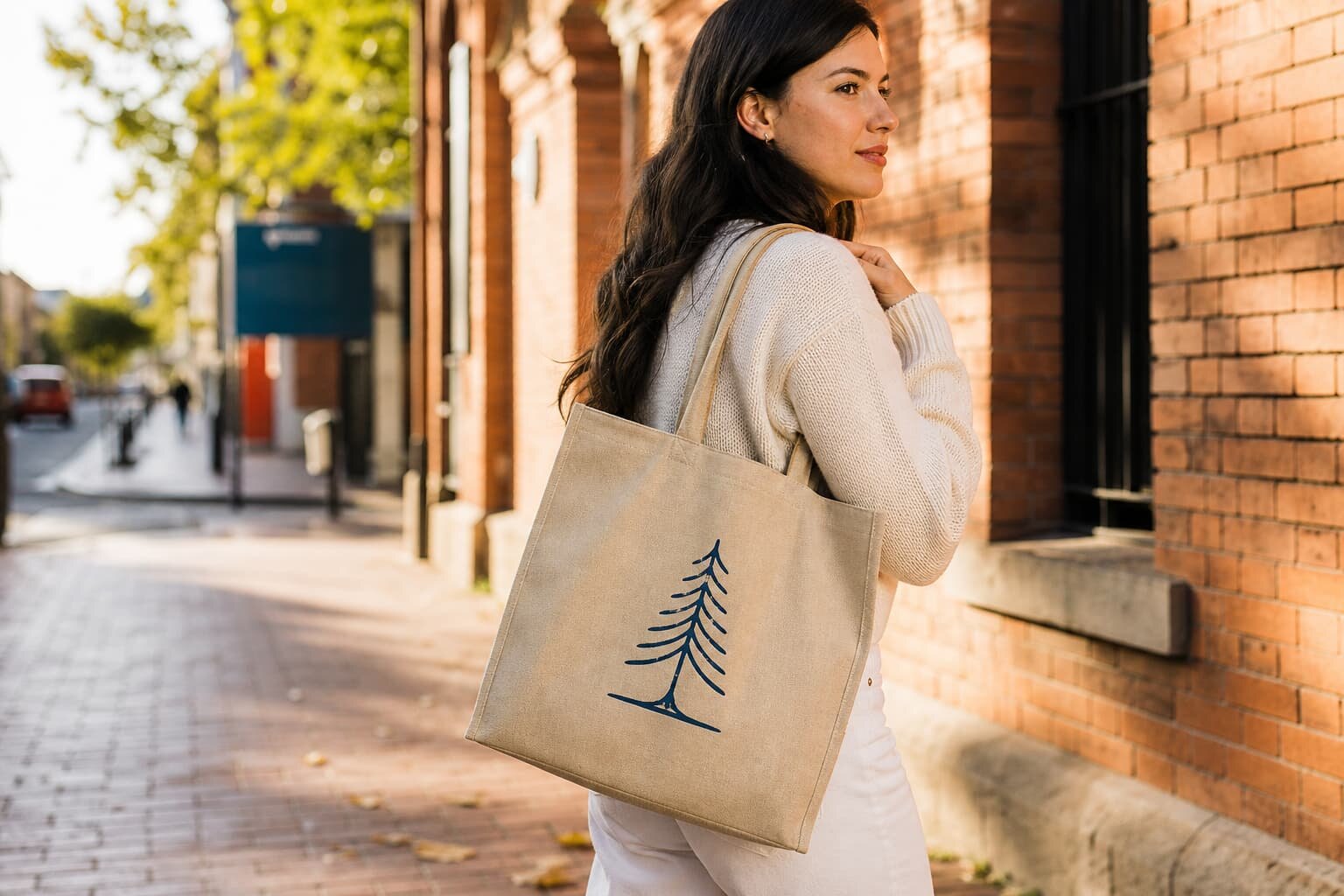
1. The quote problem: similar totes, very different costs
A retail canvas tote looks simple on a product page, but wholesale quotes can hide major differences. Two factories may both write “cotton canvas tote, screen print, export carton,” yet one is quoting 8 oz fabric with narrow handles and loose packing while another is quoting 12 oz canvas, reinforced seams, individual polybags, barcode labels, and a printed pre-production sample. If your RFQ does not control those points, the lowest price may only be the thinnest specification.
For procurement teams and retail buyers, the goal is not to ask for the cheapest canvas tote. The goal is to define the tote that your sales channel can accept, then get comparable quotations. A better RFQ should make the factory price the same product, the same artwork, the same packing, and the same delivery basis. This is where many quote comparisons fail.
- Do not ask only for “canvas tote with logo.” State fabric weight, bag size, handle drop, print size, packing, and quantity.
- Ask for quantity breaks because MOQ logic changes when fabric, dyeing, printing, and packing are combined.
- Require the supplier to list what is included and excluded, especially setup cost, sample cost, carton cost, and labeling.
2. Define the retail use before choosing fabric GSM
Fabric weight is the first cost driver and the first customer-experience driver. In canvas tote sourcing, buyers often use ounces while mills and factories may also use GSM. As a practical guide, 8 oz is around 270 GSM, 10 oz is around 340 GSM, and 12 oz is around 407 GSM, depending on fabric construction. The conversion is not enough by itself because weave density, yarn count, washing, and finishing also affect the hand-feel.
For retail canvas tote programs, 10 oz / 340 GSM is usually the safe starting point. It gives enough body for store shelves and good print support without making the carton too heavy. If the tote will be sold as a premium accessory, carry books, or be positioned as a reusable daily bag, 12 oz may be justified. If the tote is sold as low-cost merchandise or bundled with products, 8 oz can work, but it must be approved with a physical sample.
- 8 oz / about 270 GSM: budget retail, light carrying, lower freight weight, less structure.
- 10 oz / about 340 GSM: common retail choice, stronger appearance, good screen-print surface.
- 12 oz / about 407 GSM: premium hand-feel, higher durability, higher cost and carton weight.
- Ask for GSM tolerance, such as plus or minus 5%, because fabric lots are rarely exact.
3. Bag construction details that change the quote
The finished size of the tote is not just a marketing dimension. Width, height, and gusset affect fabric consumption, cutting efficiency, carton size, and the way the bag hangs in store. A flat tote without gusset is cheaper and packs efficiently, but it carries less volume. A bottom gusset or full side-and-bottom gusset improves usability, yet it adds sewing time and material.
Handle construction is another quote trap. Narrow handles save cost but may feel uncomfortable and weak. Self-fabric handles made from the same canvas look consistent and are common for retail totes. Webbing handles may be stronger or cheaper depending on material, but they change the look. Reinforcement stitching should be specified. A simple box stitch or cross-stitch at the handle attachment is safer than a straight seam only.
- State finished bag size, for example 38 cm W x 42 cm H x 10 cm bottom gusset.
- State handle drop, not only handle length. A 25-30 cm drop usually works for shoulder carry.
- Confirm whether seams are overlocked, bound, folded, or French seamed if inside appearance matters.
- For heavier retail use, request handle reinforcement and a simple load check on the approved sample.
4. Choose the print method around artwork, not habit
Screen printing is still the most practical method for many wholesale retail canvas tote orders. It works well for solid logos, slogans, simple illustrations, and 1-3 color artwork. It gives good opacity on natural canvas when the ink and mesh are selected properly. However, each color may require a screen and setup, so cost changes with color count and artwork complexity.
Digital print, DTF, heat transfer, embroidery, and woven labels all have a place, but they should not be chosen only because they sound premium. Full-color seasonal artwork may suit digital or transfer printing, but wash resistance and hand-feel need testing. Embroidery looks durable but can pucker lighter canvas and costs more for large filled areas. Woven labels are useful for subtle retail branding, especially when the main tote is unprinted or when brand owners want a cleaner product line.
- For screen print: provide vector artwork, Pantone colors, print size, and exact placement.
- For full-color artwork: request a printed sample and check edge sharpness, cracking, and fabric hand-feel.
- For embroidery: confirm stitch count, backing, pucker risk, and whether the fabric weight can support it.
- For labels: define woven label size, fold type, seam location, and color standard.
5. MOQ logic: why the minimum order changes
A factory MOQ is not one fixed number for every canvas tote. It depends on fabric availability, color, printing method, labor setup, and packing requirements. Natural canvas in common weights usually has a lower MOQ because fabric may be available from stock. Custom dyed canvas, special GSM, organic or recycled fabric, and multiple color assortments often require a higher minimum because the mill or dye house has its own minimum.
Print MOQ also matters. A one-color screen print on natural canvas is easy to run at a modest quantity. A six-color print with tight registration, multiple designs, or barcode-level packing by SKU needs more setup control. If you need a low opening order, reduce the number of variables: use stock natural canvas, one bag size, one print method, and simple carton packing.
- Lowest MOQ path: stock natural canvas, standard size, one-color screen print, bulk carton packing.
- Higher MOQ path: dyed fabric, custom GSM, multiple designs, individual retail packaging, special labels.
- Ask the supplier which part of your specification is driving MOQ instead of only asking for a lower number.
- For distributors, separate test order MOQ from repeat order MOQ so the factory can plan fabric buying.
6. What a useful wholesale quote should show
A good wholesale quote should let your team compare line by line. If a supplier sends only one unit price, you do not know whether the price includes sample, setup, packing, export carton, or inspection support. The quote should name the fabric, dimensions, handle details, print method, quantity, packing, lead time, payment terms, and shipping term. It should also show validity because cotton fabric and freight-related costs can move.
Ask suppliers to split options instead of blending everything into one number. For example, request pricing for 8 oz, 10 oz, and 12 oz canvas; pricing with and without individual polybags; and pricing by 1,000, 3,000, and 5,000 pieces. This helps your team decide whether a slightly higher unit cost is buying better retail value or only adding unnecessary specification.
- Quote line 1: unit price by quantity break and fabric weight.
- Quote line 2: logo setup or screen charge, if not included.
- Quote line 3: sample fee and sample freight, if applicable.
- Quote line 4: packing cost differences, including individual polybag, hangtag, barcode, or inner carton.
- Quote line 5: Incoterm, loading port, estimated carton quantity, carton size, and gross weight.
7. Sampling workflow that prevents bulk production disputes
Sampling should not be treated as decoration. It is the control document for fabric, size, print, sewing, and packing. For a new retail canvas tote, start with fabric swatches if the hand-feel is important. Then approve a blank construction sample to check dimensions, handle drop, seam finish, and general shape. After that, approve a printed pre-production sample before bulk cutting and printing.
The pre-production sample should be kept as a sealed reference. One approved sample should stay with the buyer, and one should stay at the factory. If your order has multiple SKUs, do not approve only one design unless the others share the same size, fabric, print scale, and packing. Many bulk disputes happen because the buyer approved a logo layout on one color but assumed all other designs would automatically look the same.
- Check fabric weight by hand-feel and, when needed, by weighing a measured fabric area.
- Measure finished sample size after sewing, not flat fabric before sewing.
- Compare print color under consistent lighting and record Pantone or approved visual standard.
- Rub the print lightly after curing and ask whether a wash or crocking test is recommended.
- Photograph approved packing layout, carton mark, hangtag position, and barcode location.
8. Packing decisions affect cost, cleanliness, and receiving
Natural canvas gets dirty easily in production and transit. Packing is not only a logistics line item; it protects the retail appearance. Bulk packing in master cartons is cheaper and creates less plastic waste, but it increases the risk of dust, corner creasing, and warehouse handling marks. Individual polybags keep the tote cleaner and support retail distribution, but they add cost, labor, material, and sometimes compliance requirements for suffocation warnings.
Retail buyers should define packing based on the receiving channel. If goods go to a distributor warehouse for repacking, bulk carton packing may be enough. If goods go directly to retail stores or ecommerce fulfillment, individual packing, barcode stickers, SKU separation, and carton marks become important. Carton weight should also be practical. Very heavy cartons may reduce carton cost per unit but can create handling damage and warehouse complaints.
- Define folded size if totes are individually packed.
- State whether polybags must be recyclable, vented, or printed with warning text.
- Request carton assortment by SKU, color, and print design to avoid warehouse sorting cost.
- Confirm carton gross weight and carton strength before booking shipment.
- Use waterproof inner lining only when needed; it adds cost and may not be necessary for all routes.
9. Lead time planning: separate sample, material, production, and shipping
Lead time should be discussed in stages. A supplier may quote 25-35 days, but that may mean after sample approval, after deposit, after artwork confirmation, or after fabric arrival. Procurement teams should ask for a timeline that separates artwork checking, sample making, sample approval, material booking, bulk cutting, printing, sewing, trimming, inspection, packing, and shipment handover.
The biggest schedule risk is late approval. If the buyer changes artwork after screen setup, switches fabric weight after sample approval, or delays barcode files, the factory cannot fairly keep the original production plan. For seasonal retail programs, give the factory a required ex-factory date and the final in-warehouse date. Then work backward with time allowed for inspection, customs documents, and freight.
- Ask whether quoted lead time starts from deposit, artwork approval, or pre-production sample approval.
- Confirm if fabric is in stock or needs weaving, dyeing, washing, or special finishing.
- Reserve time for sample shipment and buyer approval, especially for international teams.
- Set a final date for barcode, hangtag, carton mark, and packing instruction submission.
- Do not schedule final inspection on the same day as vessel cutoff or courier pickup.
10. Common sourcing mistakes and how to avoid them
The most common mistake is comparing canvas tote quotes without locking the fabric weight. A quote for 8 oz natural canvas can look attractive next to a 10 oz or 12 oz quote, but the product will not feel the same in a retail setting. The second mistake is approving artwork on a screen or PDF only. Print size and placement must be checked on a real bag because handles, seams, gussets, and fabric texture affect visual balance.
Another mistake is ignoring packing until the end. By the time production is finished, adding hangtags, barcode stickers, individual polybags, or special cartons may cause delays and extra labor cost. Buyers should also avoid vague inspection standards. If stains, loose threads, print skew, and measurement tolerance are not defined, the factory and buyer may disagree over what is acceptable.
- Do not approve production from digital mockup only; require a physical printed sample for new artwork.
- Do not assume natural canvas color is identical across fabric lots; approve tolerance or swatch range.
- Do not leave handle drop unspecified; it changes usability and customer complaints.
- Do not mix many low-quantity designs unless you accept higher setup cost and more QC complexity.
- Do not accept a quote without carton information if you need accurate landed cost calculation.
Specification comparison for buyers
| Spec decision | Recommended option | When it fits | Buyer risk to check |
|---|---|---|---|
| Main fabric weight | 10 oz / 340 GSM cotton canvas for most retail totes | Good balance of structure, printability, and manageable freight weight | Some suppliers quote 8 oz as 10 oz equivalent; request GSM tolerance and fabric swatch |
| Premium fabric choice | 12 oz / 407 GSM canvas or heavier | Gift shops, bookstore totes, heavier retail use, higher perceived value | Higher unit cost, slower sewing, larger carton weight, and possible handle seam stress |
| Budget retail option | 8 oz / 270 GSM canvas with simple construction | Promotional retail, light shopping, lower price point programs | May feel thin after washing; print opacity and bag shape can disappoint retail buyers |
| Logo printing | Screen print for solid 1-3 color logos | Most wholesale retail tote orders with clean brand graphics | Pantone matching, ink hand-feel, and curing must be approved on pre-production sample |
| Full-color artwork | DTF, heat transfer, or digital print after testing | Small MOQ, complex artwork, photographic designs, seasonal collections | Wash resistance, heat marks, edge peeling, and different fabric hand-feel |
| Handle construction | Self-fabric canvas handles with cross-stitch reinforcement | Retail totes expected to carry books, groceries, or daily items | Handle length tolerance and reinforcement stitching must be specified, not assumed |
| Packing method | Individual polybag optional; master carton packing by color/design | Retail distribution, Amazon prep, warehouse receiving, or store allocation | Overpacking increases cost; underpacking causes dirty natural canvas and carton mix-ups |
| Sampling approval | Fit sample plus printed pre-production sample before bulk cutting | New supplier, new fabric weight, new artwork, or new retail program | Skipping PPS approval can lock in wrong GSM, wrong logo size, or weak handle sewing |
Buyer checklist before sampling
- Confirm bag dimensions as width x height x gusset, and state whether measurements are finished size or cutting size.
- Specify fabric in oz and GSM, including acceptable tolerance, color, weave, shrinkage expectation, and whether fabric is natural, dyed, or bleached.
- State handle material, handle width, finished handle drop, reinforcement stitch type, and load expectation if the tote will carry books or groceries.
- Provide logo artwork in vector format and list exact print size, location from top edge or seam, Pantone colors, and print method preference.
- Request a fabric swatch, blank sample, and printed pre-production sample when ordering a new retail canvas tote style.
- Define retail packing needs: folded or flat, individual polybag or not, hangtag, barcode sticker, carton assortment, and carton marking.
- Ask for quotation split by quantity breaks, print colors, fabric weight, packing method, and shipping term so quotes can be compared fairly.
- Check lead time in stages: material booking, sample approval, bulk production, final inspection, and vessel or courier pickup.
- Confirm QC standard for stains, loose threads, print registration, measurement tolerance, handle strength, and carton labeling.
- Keep one approved sealed sample at your office and one at the factory to avoid disputes during production inspection.
Factory quote questions to send
- What exact fabric are you quoting: cotton canvas, recycled cotton canvas, organic cotton canvas, or poly-cotton blend, and what is the GSM tolerance?
- Is the fabric greige, natural, bleached, dyed, or washed, and can you provide a physical swatch before sample approval?
- Are the dimensions quoted as finished bag size after sewing, and what measurement tolerance will apply in bulk production?
- What is the minimum order quantity for this fabric weight, bag color, print color count, and packing style?
- Which print method do you recommend for this artwork and why: screen print, digital print, DTF, heat transfer, embroidery, woven label, or another option?
- Does the quoted price include artwork setup, screen charges, sample fee, individual polybags, hangtags, barcode labels, export carton, and inspection preparation?
- What is the sample lead time for blank sample and printed pre-production sample, and what approval deadline is needed to hold the bulk schedule?
- What handle reinforcement will be used, and can the factory run a simple load test on the pre-production sample?
- How many pieces per carton are planned, what is the estimated carton size and gross weight, and will heavy cartons be kept under practical warehouse handling limits?
- Which Incoterm is quoted, what port is used, and what documents are included for import clearance?
Quality-control points to confirm
- Fabric weight check by cutting and weighing a known area, not only by supplier description.
- Finished size measurement across multiple pieces, including width, height, gusset, handle length, and handle drop.
- Print position check against approved sample, including distance from top edge, side seam, and bottom fold.
- Print quality check for cracking, pinholes, uneven ink coverage, color difference, registration shift, and curing problems.
- Stitching check for skipped stitches, open seams, loose threads, uneven seam allowance, and weak handle attachment.
- Load check on handles using a realistic weight for the intended retail use, with attention to seam tearing and fabric distortion.
- Color and stain check, especially for natural canvas, where oil marks, dirt, and yellowing are common receiving complaints.
- Packing check for carton assortment, barcode accuracy, polybag ventilation warning if required, carton strength, and shipping marks.
- Needle or metal contamination control if the tote is intended for large retail distribution channels.
- Approved sample comparison before packing, not only after cartons are sealed.