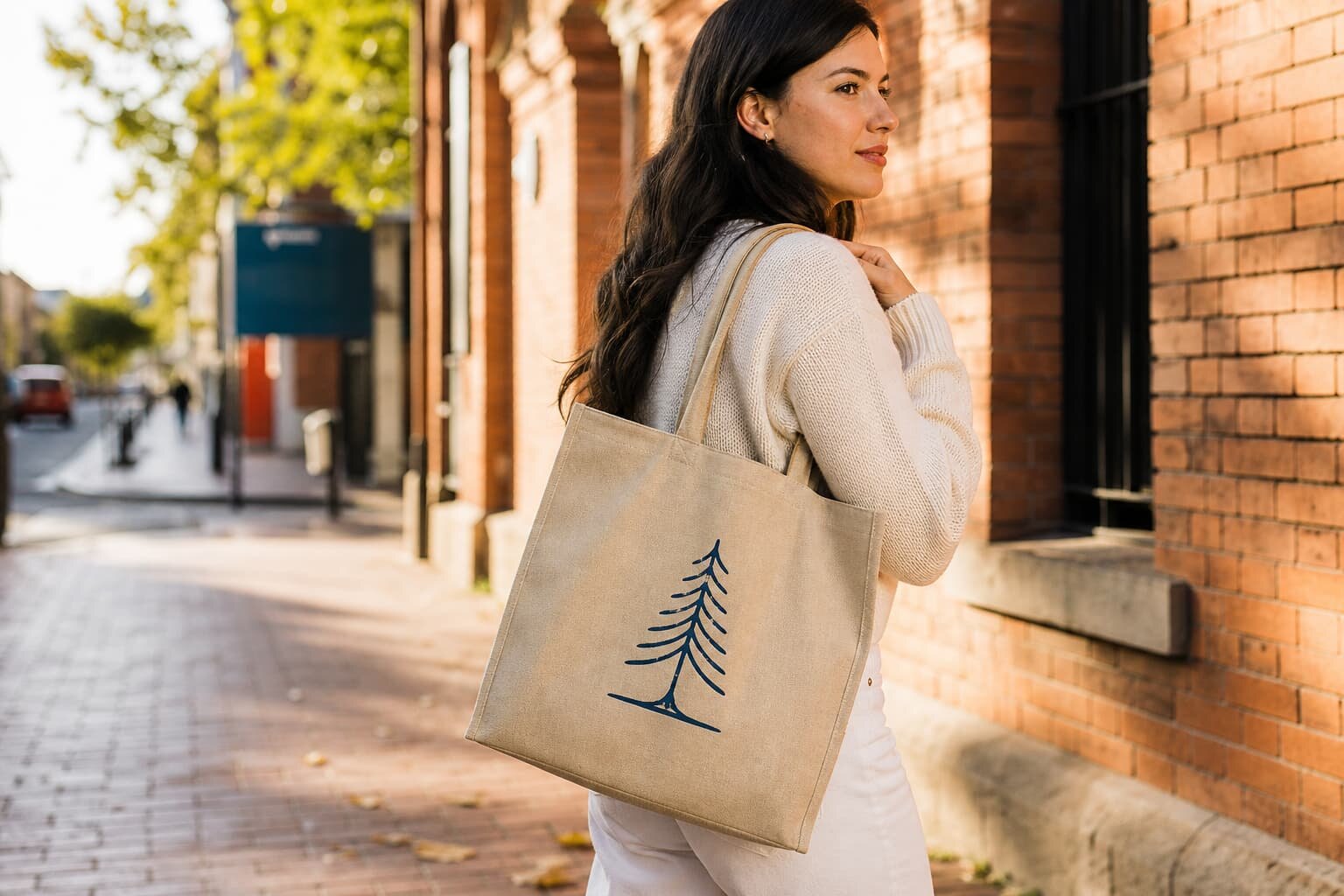
1. The buying problem: wholesale quotes look similar but are not comparable
A retail canvas tote looks simple on a quotation sheet: material, size, logo, quantity, unit price. In production, those four words hide most of the cost and most of the quality risk. Two suppliers can quote the same 38 x 42 cm canvas tote and still be quoting different fabric weights, handle strength, print systems, packing labor, and carton volume. For a brand owner or importer, the problem is not only getting a low unit price. The problem is getting a quote that can become a reliable production order without surprise add-ons after sampling.
The best RFQ for a retail canvas tote should remove guesswork before the factory calculates. If your request only says cotton canvas tote with logo, the supplier must assume fabric, construction, logo size, color count, packing, and inspection standard. Those assumptions make quotes fast but not safe. This guide focuses on building a quote request that gives procurement teams clear comparison points and helps a factory sales engineer return a firm commercial offer instead of a loose estimate.
- Use finished size, not only flat cutting size.
- Ask for GSM and ounce weight when comparing fabric.
- Separate bag cost, logo cost, packing cost, and accessory cost.
- Treat sample approval as a buying control point, not a decoration step.
2. Start the RFQ with the retail use case, not only the bag size
The same canvas tote can be used as a bookstore product, a cosmetics gift bag, a grocery loyalty item, a trade show giveaway, or a fashion accessory. Each use case changes the correct specification. A low-cost open tote for gift-with-purchase does not need the same fabric hand feel as a tote sold at retail price. A distributor selling blank stock needs flexible packing and standard colors. A brand launching a retail SKU needs better surface consistency, accurate folding, barcodes, and repeatable logo placement.
Tell the factory how the tote will be sold and handled. If it will hang in store, the fold line, label position, and handle presentation matter. If it will be packed inside ecommerce parcels, carton compression and individual polybags matter more. If it will carry heavy goods, handle reinforcement and bottom seam strength must be part of the quote. When the use case is clear, the factory can suggest a cost-saving change without damaging the product's purpose.
- Retail resale: prioritize fabric hand feel, sewing neatness, print durability, and presentation packing.
- Gift-with-purchase: prioritize stable unit cost, fast production, simple print, and carton efficiency.
- Distributor inventory: prioritize standard size, stock fabric, neutral colors, and repeatable reorder terms.
- Premium brand merchandise: prioritize heavier canvas, controlled color, inner label, and stronger finishing.
3. Fabric weight: quote GSM, ounce weight, and the fabric condition
Canvas fabric weight is one of the largest cost drivers. Retail canvas totes commonly use 8 oz, 10 oz, 12 oz, or 14 oz cotton canvas, roughly moving from lighter promotional use toward stronger retail-grade use. The exact GSM is not always identical between mills because ounce weight may be based on square yard while GSM is grams per square meter. A 10 oz canvas is often around 270 to 300 GSM, while 12 oz may be around 320 to 360 GSM, depending on weave density and finishing. Always ask the supplier to state both the commercial ounce rating and the actual GSM used for quotation.
Also define fabric condition. Natural canvas, bleached canvas, dyed canvas, black canvas, and washed canvas do not quote the same. Natural cotton may show cotton seed specks and shade variation, which some eco brands like and some retail buyers reject. Dyed dark canvas may need colorfastness attention and may show more lint or rubbing marks. Washed canvas gives a softer hand feel but can shrink, wrinkle, and change the finished size. If a buyer wants a crisp retail tote with a clean print, the fabric condition must be controlled before sampling.
- For cost-sensitive retail: ask for 8 oz to 10 oz canvas only if the expected load is light.
- For standard retail resale: 10 oz to 12 oz canvas is often a safer starting point.
- For premium heavy tote: 14 oz canvas can work, but it increases sewing difficulty, shipping weight, and folded carton size.
- For natural canvas: define acceptable cotton seed marks and shade variation before bulk production.
4. Size, gusset, and handles: small changes affect both price and usability
Finished size should be measured after sewing. A common retail tote may be around 38 x 42 cm, but that does not tell the full story. A flat tote uses less fabric and is easier to fold. A tote with an 8 cm or 10 cm gusset holds boxed products better and stands more neatly, but it requires more fabric and sewing time. A boxed bottom also changes how the bag looks in product photos and how many units fit into a carton. If your sales channel needs the bag to hold apparel packs, books, or bottles, do not remove the gusset only to save a few cents and then receive a product that fails in store.
Handle specification is another common quote gap. Buyers often say long handles, but the factory needs handle length, handle drop, width, fabric type, and reinforcement method. A shoulder tote may need a handle length of about 60 to 70 cm depending on bag height and target market. A hand-carry retail tote may be shorter. Self-fabric handles look consistent with the bag body, while cotton webbing handles may feel stronger and cleaner but change the appearance. Reinforcement should be stated clearly: cross-stitch, box-stitch, bartack, or double row stitching.
- State finished width x height x gusset, for example 38 x 42 x 10 cm.
- Define handle length and width, for example 65 cm long and 3 cm wide.
- Confirm whether the handle is self-fabric canvas or separate cotton webbing.
- Ask for reinforcement stitching photos on the sample and bulk inspection report.
5. Logo printing: the quote must include method, color count, and artwork size
Logo application can be simple or expensive depending on artwork. Screen printing is usually the practical choice for solid color logos, slogans, and large flat graphics on canvas. It gives good coverage and stable cost at wholesale quantities, but setup depends on color count and screens. Heat transfer can handle gradients, small details, or multicolor designs, but the hand feel and durability must be checked on canvas texture. Embroidery gives a premium look for small marks but is not suitable for every large artwork because stitch count, puckering, and backing can change the bag surface.
A serious quote should not say logo included without details. Ask the factory to state the printing method, number of colors, print size, print position, ink type if relevant, and whether artwork setup is included. For screen printing, Pantone color matching is normally more reliable than describing a color as dark green or beige. For natural canvas, the base fabric color affects printed color appearance. White ink, metallic ink, puff ink, and large coverage prints can all change cost and curing risk.
- Send vector artwork in AI, PDF, EPS, or SVG format when possible.
- Define print size, for example 220 mm wide on front center.
- Define placement from a seam or bag edge, not only visually centered.
- For dark canvas, ask whether a white underbase is needed.
- For large solid prints, ask the factory to test cracking and rubbing after curing.
6. MOQ logic: why the minimum changes when your spec changes
MOQ is not a fixed number for all canvas totes. It depends on fabric availability, fabric color, printing setup, cutting efficiency, accessory sourcing, and packing labor. If the factory has natural 10 oz canvas in stock, the MOQ may be lower than a custom dyed 12 oz Pantone-matched canvas. If your order needs two fabric colors, three logo versions, and retail barcode stickers for each SKU, the true production complexity is higher even if the total quantity looks attractive.
When a supplier gives an MOQ, ask what drives it. A fabric mill MOQ is different from a sewing line MOQ. A print setup MOQ is different from a packing MOQ. This matters for brand owners planning first orders. You may be able to keep the same fabric and bag construction while splitting print designs, or you may need to combine colors to reach a dyeing minimum. Understanding the MOQ logic helps you negotiate intelligently instead of pushing for a number that creates unstable production.
- Stock natural canvas usually supports more flexible MOQ than custom dyed canvas.
- One bag size with one logo is easier to quote than multiple sizes and artwork versions.
- Retail labels, hangtags, and barcodes can create SKU-level handling costs.
- A lower MOQ may carry a higher unit price because setup and sampling are spread across fewer pieces.
7. Sample checks: approve the product the factory will actually make
Sampling is where many retail canvas tote problems should be stopped. A reference sample made from similar fabric is useful for direction, but it is not enough for production approval. The sample you approve should use the same fabric weight, same color, same handle construction, same print method, same label, and same packing concept as the bulk order. If any item is substituted during sampling, mark it clearly and require a corrected pre-production sample before bulk cutting if the risk is important.
Do not only look at the tote from the front. Measure it flat, check the gusset, pull the handles, inspect inside seams, look at stitch density, rub the print lightly, and fold it the way it will be packed. For retail products, also photograph the sample under normal lighting and compare it with the ecommerce image requirement. A bag that looks acceptable in a factory room may show wrinkles, uneven handles, or print placement problems in online product photos.
- Measure width, height, gusset, handle length, and handle drop.
- Check print size, color, edge sharpness, curing, and position.
- Inspect handle reinforcement and bottom seam strength.
- Confirm label placement, care label wording, hangtag hole, or barcode location.
- Approve the folded packing method if the tote will be retail-ready.
8. Packing and carton data: not a minor line item for importers
Packing affects labor cost, product appearance, warehouse handling, and freight cost. Bulk packing may be enough for a simple distributor order where bags will be unpacked and reworked locally. Retail-ready orders may need each tote folded to a fixed size, placed in a recyclable polybag, packed with a hangtag, or labeled with a barcode sticker. Every added step should be included in the quote. If it is not listed, assume it is not included.
Carton data is also part of a professional wholesale quote. Ask for estimated pieces per carton, carton dimensions, gross weight, net weight, and total CBM. Canvas totes are not fragile, but heavy canvas increases carton weight quickly. Overpacked cartons can cause deep fold marks and print transfer. Underpacked cartons increase freight volume. If your forwarder needs carton marks, SKU labels, or palletization, tell the factory before final quotation so packing labor and materials are calculated correctly.
- Define individual pack, inner pack, and master carton pack.
- Ask whether carton marks are printed, stickered, or left blank.
- Confirm mixed color or mixed SKU packing rules before production.
- For printed bags, avoid packing before ink is fully cured.
- For retail display, approve fold direction and visible logo position.
9. Lead time: separate sampling, material preparation, production, and inspection
Lead time should not be quoted as one vague number. A realistic schedule has sample development, sample approval, material preparation, bulk cutting, printing, sewing, packing, inspection, and shipment handover. Natural stock fabric with a simple one-color print can move faster than custom dyed canvas with multiple accessories. The biggest delays usually happen when artwork is not final, fabric color approval is slow, or packing labels arrive late.
For procurement planning, ask the supplier to show which steps are on the critical path. If fabric is already available, the schedule mainly depends on sample approval and production capacity. If fabric must be dyed, the schedule depends on lab dip approval, dyeing queue, and shade confirmation. If the order includes hangtags or woven labels, those trims may have their own lead time. A clear schedule prevents the common mistake of approving the bag but forgetting the label or barcode file.
- Sample lead time should be quoted separately from bulk lead time.
- Bulk lead time should start from deposit, artwork approval, and sample approval, not from first inquiry.
- Custom dyed fabric requires extra approval time for lab dips or strike-off swatches.
- Final inspection time should be included before shipment booking.
- Packing label delays can stop finished goods from leaving the factory.
10. Quote data: what a complete wholesale canvas tote quotation should show
A complete quote should allow your team to compare suppliers line by line. It should include material, fabric weight, finished size, handle details, print method, print size, color count, accessories, packing, MOQ, sample terms, lead time, payment terms, carton information, and quote validity. If one supplier gives only a unit price and another gives full construction details, do not treat the lower number as equal. The missing information may become extra charges later.
For internal approval, ask the factory to break out cost drivers where possible. Not every factory will reveal full costing, but they can usually separate base bag price, logo charge, special packing charge, sample charge, mold or screen charge if any, and accessory cost. This is especially useful when your brand team changes artwork or adds an inner pocket after the first quote. You can see which change affects cost instead of restarting the whole negotiation.
- Base bag: fabric, size, gusset, handles, sewing construction.
- Decoration: print or embroidery method, colors, positions, setup requirements.
- Trim: woven label, care label, zipper, snap, pocket, hangtag, barcode.
- Packing: individual bag, master carton, carton marks, pallet requirements if any.
- Commercial terms: MOQ, sample cost, lead time, payment terms, quote validity, incoterm.
Specification comparison for buyers
| Spec decision | Recommended option | When it fits | Buyer risk to check |
|---|---|---|---|
| Fabric weight | 10 oz to 12 oz cotton canvas, usually about 270 to 340 GSM depending on weave | Most retail totes that need shelf presence, resale value, and repeated daily use | Confirm whether supplier quotes ounce per square yard or GSM; compare actual fabric swatch thickness, not only stated weight |
| Bag structure | Flat tote with boxed bottom or 8 to 12 cm gusset | Retail merchandise, bookshops, lifestyle brands, events with paid merchandise | A cheaper flat bag may not stand or hold packaged goods well; gusset depth changes fabric consumption and carton volume |
| Handle construction | Self-fabric handles with cross-stitch reinforcement | Retail bags expected to carry groceries, books, bottles, or apparel | Ask handle length, width, and reinforcement stitch; narrow or single-row handles reduce cost but feel weak |
| Printing method | Screen print for solid logos; heat transfer for fine multicolor detail; embroidery only for small premium marks | Brand logos, slogans, campaign graphics, simple retail artwork | Different factories may quote different print methods for the same artwork; request method, ink type, print size, and number of colors |
| Closure | Open top for standard retail tote; zipper or magnetic snap only when function requires it | Open top for low-cost retail; zipper for travel, cosmetics, or higher-ticket merchandise | Closures add labor, reject risk, and sampling time; make sure quotes include zipper quality and color matching |
| Inside features | No pocket for basic retail; one hanging inner pocket for premium or utility lines | Apparel brands, bookstores, trade merchandise, membership gifts | Inner pocket affects sewing sequence and inspection; specify pocket size, placement, and whether it needs a label |
| Logo position | Front center print with tolerance of about plus or minus 5 mm after approval | Most retail shelf and ecommerce product photos | Unclear placement causes reprints or disputes; define distance from top seam or bottom edge |
| Packing | Individual folded bag in recyclable polybag or bulk pack with tissue separation if print may rub | Retail-ready SKUs, distributor stock, and ecommerce fulfillment | Packing style changes labor cost, carton CBM, barcode work, and risk of print transfer during transit |
Buyer checklist before sampling
- Define the retail use case: resale tote, gift-with-purchase, event merchandise, subscription packaging, or store carry bag.
- Specify fabric clearly by material, weight system, weave, color, and shrinkage expectation, not only by the word canvas.
- Confirm finished bag size after sewing and washing if washed canvas is required.
- State handle length, width, reinforcement stitching, and whether handles use self-fabric or cotton webbing.
- Send vector artwork with Pantone colors, print size, print position, and required printing method if already decided.
- Ask whether the quoted MOQ is based on fabric dyeing, fabric stock, printing setup, or packing configuration.
- Request pre-production sample approval before bulk cutting, especially for retail resale programs.
- Confirm packing format, carton quantity, carton marks, barcode labels, and whether bags must arrive folded in a fixed way.
- Ask for a quote sheet that separates bag cost, logo cost, sample cost, packing cost, and estimated carton details.
- Define inspection criteria before production: measurement tolerance, print position tolerance, stitch defects, stains, odor, and packing errors.
Factory quote questions to send
- What fabric weight are you quoting in GSM and in ounces, and is it greige, dyed, natural, or washed canvas?
- Is the fabric in stock, or does this quote require custom weaving or dyeing?
- What is the finished tote size, gusset depth, handle length, and handle width included in the quote?
- Which print method is included, and how many colors, print positions, and print size are calculated?
- What is the MOQ for this exact fabric color, bag size, print method, and packing requirement?
- Can you provide a production sample using the same fabric weight, stitching, print method, and packing as the bulk order?
- What are the normal sample lead time, bulk production lead time, and lead time risk if the fabric is dyed?
- How many pieces per export carton, what is the estimated carton size, and what is the estimated gross weight?
- Are individual polybags, hangtags, barcode stickers, woven labels, or master carton labels included or extra?
- What measurement tolerance, color tolerance, and print position tolerance will your QC team use for final inspection?
Quality-control points to confirm
- Check fabric weight by cutting and weighing a measured fabric piece or comparing an approved swatch against production fabric.
- Measure finished bag width, height, gusset, handle length, and handle drop against the approved production sample.
- Inspect handle reinforcement for cross-stitch or box-stitch consistency, skipped stitches, loose threads, and weak seam ends.
- Check print color, registration, curing, cracking, bleeding, and placement against the approved artwork and sample.
- Review stains, slubs, oil marks, odor, dye streaks, and unacceptable shade variation across cartons.
- Open packed cartons to confirm folding method, individual packing, barcode placement, quantity, carton marks, and mixed SKU separation.
- Perform a simple load test based on expected use, especially when the tote is sold as a reusable retail product.
- Confirm metal accessories, zippers, snaps, labels, and trims if included; small trim changes are common sources of shipment disputes.