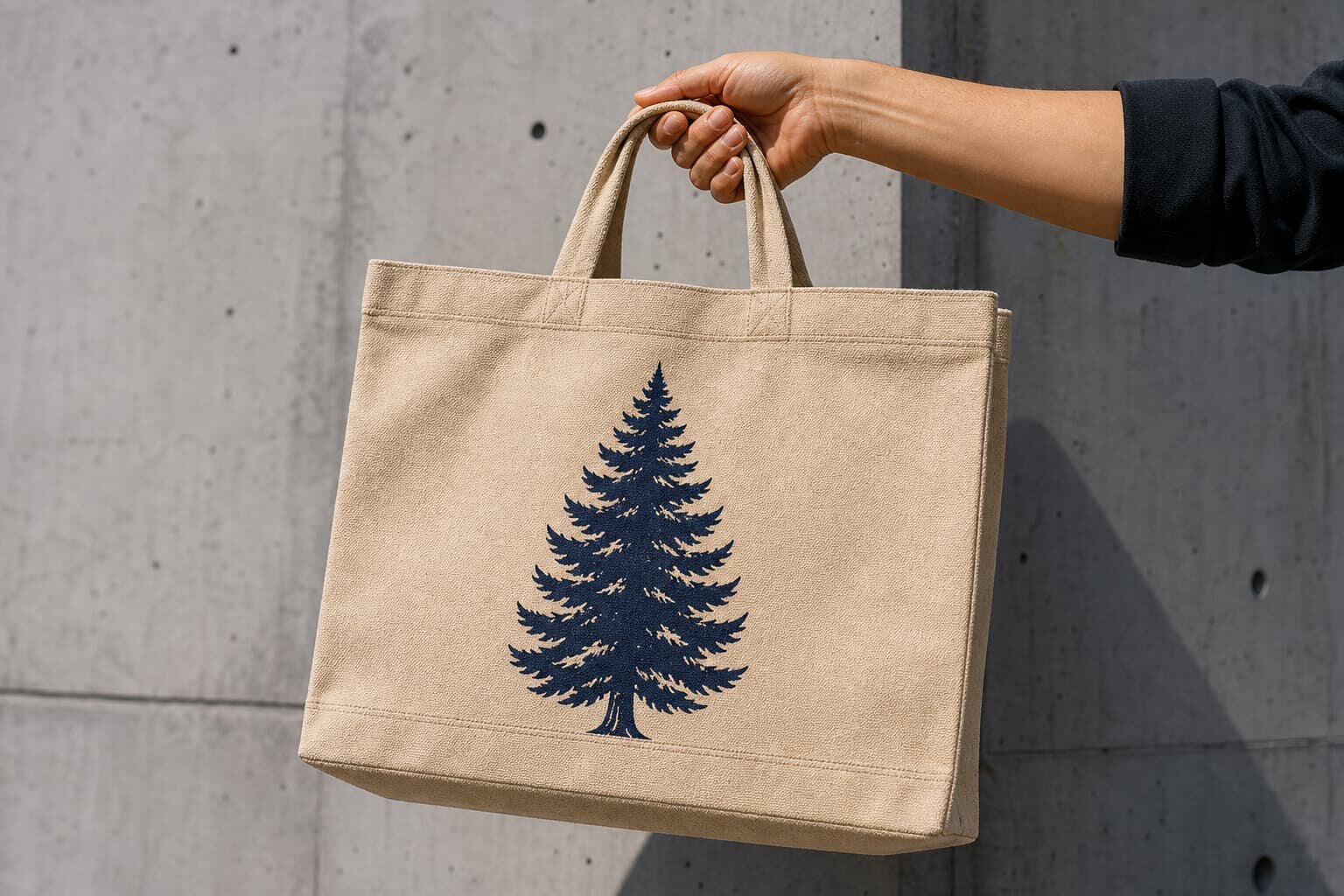
1. The buying problem: MOQ and price are linked to every spec
Brand owners often ask for a low MOQ retail canvas tote and then compare only the unit price. That is where many sourcing mistakes start. A tote that looks simple may include custom canvas weight, dyed fabric, long handles, gusset sewing, two-side printing, woven labels, hangtags, barcodes, and individual packing. Each of those choices can change the factory MOQ and the final landed cost.
A useful RFQ should not say only “canvas tote with logo, 500 pcs.” It should separate the cost drivers so suppliers quote the same product. Otherwise one quote may be for 8 oz natural cotton with one-color print and bulk packing, while another is for 12 oz dyed canvas with retail packaging. Both may look like canvas totes, but they are not commercially comparable.
- MOQ is usually controlled by fabric availability, printing setup, label MOQ, and packing labor.
- Unit price is affected by fabric consumption, GSM, sewing complexity, print area, wastage, and carton volume.
- The lowest unit price may exclude setup charges, sampling, retail packing, or realistic freight data.
- For a first retail launch, define an acceptable balance between low MOQ, retail appearance, and repeat-order scalability.
2. Start with the retail use case before choosing GSM
Canvas tote fabric is normally discussed in ounces or GSM. Buyers may see 6 oz, 8 oz, 10 oz, 12 oz, 14 oz, or equivalent GSM values. As a practical reference, 8 oz is often around 270 GSM, 10 oz around 340 GSM, and 12 oz around 400 GSM, depending on yarn, weave, and finishing. Do not treat ounce and GSM as perfectly interchangeable unless the supplier confirms the actual tested weight.
For retail sales, 10 oz canvas is a common starting point because it gives enough body for a paid tote without making the bag too costly or bulky. If the tote will be sold as a fashion item or used for heavier daily carry, 12 oz may be better. If it is a low-cost gift-with-purchase, 6-8 oz may be acceptable, but it will feel softer and less structured.
- 6 oz / about 200 GSM: light promotion, low cost, less structure.
- 8 oz / about 270 GSM: budget retail, event merchandise, simple shopper bags.
- 10 oz / about 340 GSM: balanced retail canvas tote for most brand launches.
- 12 oz / about 400 GSM: premium feel, stronger body, higher fabric and freight cost.
- 14 oz and above: heavy retail bag, but check sewing needle marks, fold bulk, and shipping volume.
3. MOQ logic: what actually forces the minimum quantity
A factory MOQ is not only a sales rule. It often reflects the smallest practical production batch. If the factory has natural canvas in stock, it may accept a lower MOQ for a simple tote. If the buyer needs a custom dyed fabric, special width, custom woven label, special zipper pocket, or multiple print colors, the MOQ can increase because the upstream fabric mill, dye house, label supplier, or printing department has its own minimum.
For brand owners testing a new retail product, it is useful to ask for tiered pricing rather than one MOQ number. For example, request 300, 500, 1,000, and 3,000 pcs based on the same specification. This shows where the factory becomes more efficient. It also helps procurement decide whether a small first order is worth the surcharge or whether a larger opening order improves margin.
- Stock natural canvas can support lower MOQ than custom dyed canvas.
- One bag size and one print design is easier than splitting quantities across many SKUs.
- A woven label may have a separate MOQ, often higher than the bag sewing MOQ.
- Retail packaging can increase MOQ if custom printed belly bands, hangtags, or barcode stickers are required.
- Multiple colorways reduce efficiency because each fabric color and print color may need separate setup.
4. Product specification that makes quotes comparable
A comparable quote begins with a fixed product drawing or a clear written specification. The most important details are finished bag width, height, gusset depth, handle length, handle width, fabric weight, fabric color, stitching method, print size, print position, and packing. If one supplier assumes no gusset and another assumes a 10 cm gusset, the fabric consumption and sewing time will not match.
For a standard retail canvas tote, many buyers start with a body size around 38 x 42 cm, a 8-10 cm bottom or side gusset, and 60-65 cm shoulder handles. This is only a starting point. If the tote needs to hold shoe boxes, wine, books, or folded apparel, check the actual product dimensions before approving the bag size.
- State finished size, not only cutting size.
- Confirm whether the gusset is bottom only, side only, or side-and-bottom construction.
- Specify handle drop or total handle length; these are often confused.
- Ask for handle reinforcement: cross stitch, box stitch, bartack, or full seam insertion.
- Mention whether inside seams are overlocked, folded, bound, or French seamed.
5. Printing and branding choices that change cost and risk
Screen printing is usually the most practical method for retail canvas totes with one to three solid colors. It gives good coverage on cotton canvas and works well for logos, slogans, and large flat artwork. The cost depends on print size, number of colors, one-side or two-side printing, ink type, and setup screens. Buyers should confirm whether the screen charge is included or billed separately.
Digital printing, heat transfer, embroidery, woven labels, and patches can also be suitable, but each has a different risk profile. Digital print is better for full-color artwork but may need fabric pretreatment and testing. Heat transfer can produce sharp graphics but may feel less natural on canvas. Embroidery looks premium but can pucker lighter fabric. Woven labels and sewn side tabs are efficient for subtle retail branding, but the label MOQ and lead time must be confirmed early.
- For screen print, provide Pantone colors, artwork size, and print position from seams.
- For large ink coverage, ask about ink hand feel, cracking resistance, and curing process.
- For dyed black canvas, test print opacity because white and light colors may need underbase ink.
- For embroidery, confirm stitch count, backing material, and fabric weight suitability.
- For woven labels, approve label artwork, fold type, sewing position, and separate label MOQ.
6. Pricing breakdown: what should be visible in the quote
A retail canvas tote quote should show more than one unit price. At minimum, procurement should know what is included in the price and what is charged separately. A quote that looks cheaper may exclude screen setup, sample cost, courier charges, hangtags, barcodes, individual packing, or export carton upgrades. These items may be small individually, but they affect budget approval and margin calculation.
Ask the factory to quote by quantity tier and by Incoterm. FOB, EXW, CIF, and DDP are not interchangeable. If one quote is EXW and another is FOB port, the buyer still needs to add inland transport and export handling to compare them. For distributors and retail buyers, carton data is also part of the price because bulky canvas totes can increase freight cost even when the unit price looks attractive.
- Unit price by MOQ tier: 300, 500, 1,000, 3,000 pcs where possible.
- Fabric cost basis: natural stock, dyed stock, or custom dyed.
- Printing cost: number of colors, print positions, and setup charges.
- Trims and labels: woven label, hangtag, barcode sticker, care label, side tab.
- Packing cost: bulk pack, individual polybag, recycled bag, belly band, inner carton.
- Export data: carton size, units per carton, gross weight, net weight, CBM.
- Commercial terms: Incoterm, payment term, sample fee, mold or screen fee, validity date.
7. Sampling workflow: do not approve only a nice showroom tote
A sample is useful only if it represents the intended production. Many suppliers have attractive showroom totes made from available fabric, but that does not prove the bulk fabric, print ink, handle length, or packing will match the buyer’s order. For a paid retail tote, procurement should separate the sample stages: prototype for size and construction, print strike-off for logo approval, and pre-production sample for final confirmation.
The pre-production sample should ideally use the confirmed bulk fabric or a clearly identified substitute if bulk fabric is not yet available. The buyer should approve fabric hand feel, weight, color, stitching, print placement, handle comfort, label position, and packing. Keep one approved sample with the buyer and one sealed sample at the factory so both sides have a reference during inspection.
- Check finished size with a ruler, including gusset and handle drop.
- Load the bag with realistic weight for the intended use, such as books or apparel.
- Rub the print area lightly after curing to check smudging or poor adhesion.
- Review the inside seams for loose threads and skipped stitches.
- Confirm whether the sample was made by sample room staff or production line operators.
- Do not release bulk cutting if fabric color, GSM, or print position remains undecided.
8. Packing and carton planning can change landed cost
Canvas totes are not fragile, but packing still matters. Flat bulk packing is cost-efficient for wholesale distribution and ecommerce repacking. Individual polybags protect against dirt and moisture but add material cost and may conflict with sustainability requirements. Belly bands, hangtags, barcode stickers, and retail-ready cartons help store handling but increase labor and create more inspection points.
Before confirming the order, ask for carton quantity, carton size, gross weight, net weight, and estimated CBM. A heavier 12 oz canvas tote with gusset and long handles may take more carton space than expected. If the product is shipped by air or courier, volume weight can become a major cost. If shipped by sea, carton strength and moisture protection should be checked.
- For retail stores, confirm barcode position and scannability before mass packing.
- For ecommerce, consider individual packing to avoid dirt marks during fulfillment.
- For distributor orders, ask whether cartons need customer SKU marks and PO numbers.
- For sustainability programs, specify recycled polybag, paper band, or no individual bag.
- For sea shipment, confirm master carton strength and avoid overpacking that deforms bags.
9. Lead time: separate material, sampling, production, and packing
Lead time should not be stated as one vague number unless all inputs are ready. A realistic schedule separates artwork confirmation, sample making, sample approval, fabric purchasing or dyeing, bulk cutting, printing, sewing, finishing, inspection, packing, and export booking. If the buyer delays artwork approval or label confirmation, the factory cannot protect the original shipment date.
Retail buyers should also consider reorder timing. If the first order uses stock natural canvas and simple screen print, the repeat order may be faster. If the order uses custom dyed canvas, custom woven labels, or seasonal packaging, the reorder still depends on upstream supplier timing. Ask the factory which components should be reserved or standardized for repeat production.
- Confirm lead time starts after deposit, artwork approval, and sample approval.
- Ask whether fabric is in stock or must be woven or dyed.
- Confirm whether print and sewing happen in-house or through subcontractors.
- Plan extra time for new woven labels, barcode approval, and retail packing tests.
- For launch dates, add inspection and freight buffer instead of relying on the factory production date only.
10. Quote comparison workflow for procurement teams
The safest way to compare suppliers is to build a quote matrix using the same product specification. Put each supplier’s answer into the same columns: MOQ, unit price, fabric GSM, print method, setup cost, sample cost, packing, carton data, lead time, Incoterm, and payment term. This exposes missing information quickly and prevents a low headline price from driving the decision.
When two quotes are close, compare risk rather than price only. A supplier that gives clear fabric data, sample procedure, packing details, and carton measurements may be easier to manage than a supplier with a slightly lower price but vague terms. For brand owners, the cost of a delayed or poorly packed retail launch is usually higher than a small difference in unit price.
- Reject quotes that do not specify fabric weight or finished dimensions.
- Clarify whether MOQ applies per total order, per color, per design, or per SKU.
- Ask for a photo of similar production, but do not treat photos as approval samples.
- Compare total order cost, not only unit price.
- Confirm all commercial terms in the proforma invoice before paying deposit.
Specification comparison for buyers
| Spec decision | Recommended option | When it fits | Buyer risk to check |
|---|---|---|---|
| Fabric weight | 10 oz / 340 GSM cotton canvas | Standard paid retail tote needing structure without becoming too heavy | Some suppliers quote 10 oz before washing or use lighter fabric; ask for GSM tolerance and fabric swatch |
| Fabric color | Natural unbleached canvas or dyed black canvas | Natural for eco-positioned ranges; black for fashion, events, and high perceived value | Natural shade varies by lot; black dye can crock if not well fixed |
| Bag size | 38 x 42 cm body with 8-10 cm gusset | Retail tote for books, apparel, gifting, and daily carry | Small gussets reduce capacity; oversized bags increase fabric waste and carton volume |
| Handle length | 60-65 cm self-fabric shoulder handles | Most retail buyers want shoulder carry, not hand carry | Handle width and stitching method affect comfort and load strength |
| Logo method | Screen print for 1-3 solid colors | Clean brand marks, slogans, retail graphics, and repeat orders | Large ink coverage can stiffen the panel and crack if wrong ink is used |
| Premium branding | Woven label, inner label, or small PU/cotton patch | Retail lines needing visible brand detail without heavy front printing | Label MOQ may be separate from bag MOQ; confirm label lead time |
| MOQ structure | 300-500 pcs for standard fabric and simple print; higher for dyed fabric or custom hardware | Start-up retail launches and distributor test orders | Low MOQ may carry sample, screen, fabric dye, and packing surcharges |
| Packing | Flat packed in master carton; optional individual recycled polybag or belly band | Flat packing controls freight cost; retail packaging supports store display | Retail-ready packing adds labor, material, carton size, and inspection points |
| Sample approval | Pre-production sample using bulk fabric or confirmed substitute | Before deposit release or before bulk cutting | A showroom sample may not match bulk fabric, print hand feel, or final packing |
Buyer checklist before sampling
- Define the selling channel first: boutique retail, museum shop, event merchandise, supermarket promotion, online DTC, or distributor resale.
- Specify fabric by GSM or ounce plus composition, not only the word canvas.
- Confirm whether the quoted fabric weight is before or after finishing, washing, or dyeing.
- Provide finished bag size, gusset size, handle length, handle width, seam type, and target load use.
- State logo artwork size, print colors, Pantone references, print position, and whether print is one side or two sides.
- Ask if printing setup charges, screen fees, label development, sample cost, and courier cost are included or separate.
- Request MOQ by each variable: fabric color, bag size, print design, label, packaging, and shipment destination.
- Confirm sample stages: proto sample, print strike-off, pre-production sample, and approval method.
- Ask for carton size, units per carton, gross weight, net weight, and estimated CBM before confirming freight budget.
- Require a written production tolerance for size, GSM, print position, color, and quantity overrun or underrun.
Factory quote questions to send
- What is your minimum order quantity for this tote by fabric color, bag size, and print design?
- Is the quoted canvas weight 8 oz, 10 oz, 12 oz, or expressed in GSM, and what tolerance do you allow?
- Is the fabric ready stock, greige fabric to be dyed, or woven after order confirmation?
- Can you quote natural canvas and dyed canvas separately, including any dyeing MOQ?
- Which print method do you recommend for our artwork: screen print, heat transfer, digital print, embroidery, woven label, or patch?
- Are screen charges, printing setup, sample making, label setup, and packing material included in the unit price?
- What is the exact finished size, handle length, handle width, and gusset depth included in your quotation?
- Can you provide a pre-production sample using bulk fabric before mass cutting?
- What is the expected production lead time after sample approval, artwork confirmation, and deposit?
- What are the carton dimensions, quantity per carton, gross weight, net weight, and estimated CBM?
Quality-control points to confirm
- Measure finished bag width, height, gusset, handle length, and handle drop against the approved sample and tolerance sheet.
- Check fabric weight by cutting and weighing a sample piece or confirming mill test data where available.
- Review fabric defects such as slubs, oil marks, weaving lines, dye stains, and color lot variation.
- Inspect handle attachment with cross stitch, box stitch, or reinforced bartack as specified.
- Test seam strength by loading sample bags with a realistic retail load, not only by visual inspection.
- Check print color, registration, placement, ink coverage, cracking, smudging, and hand feel.
- Confirm labels, hangtags, barcodes, and carton marks match the purchase order and retail system data.
- Inspect packing count per inner pack and master carton before sealing cartons.
- Verify carton strength and carton dimensions for sea, air, or courier shipment.
- Keep an approved pre-production sample and production sample from bulk goods for dispute reference.