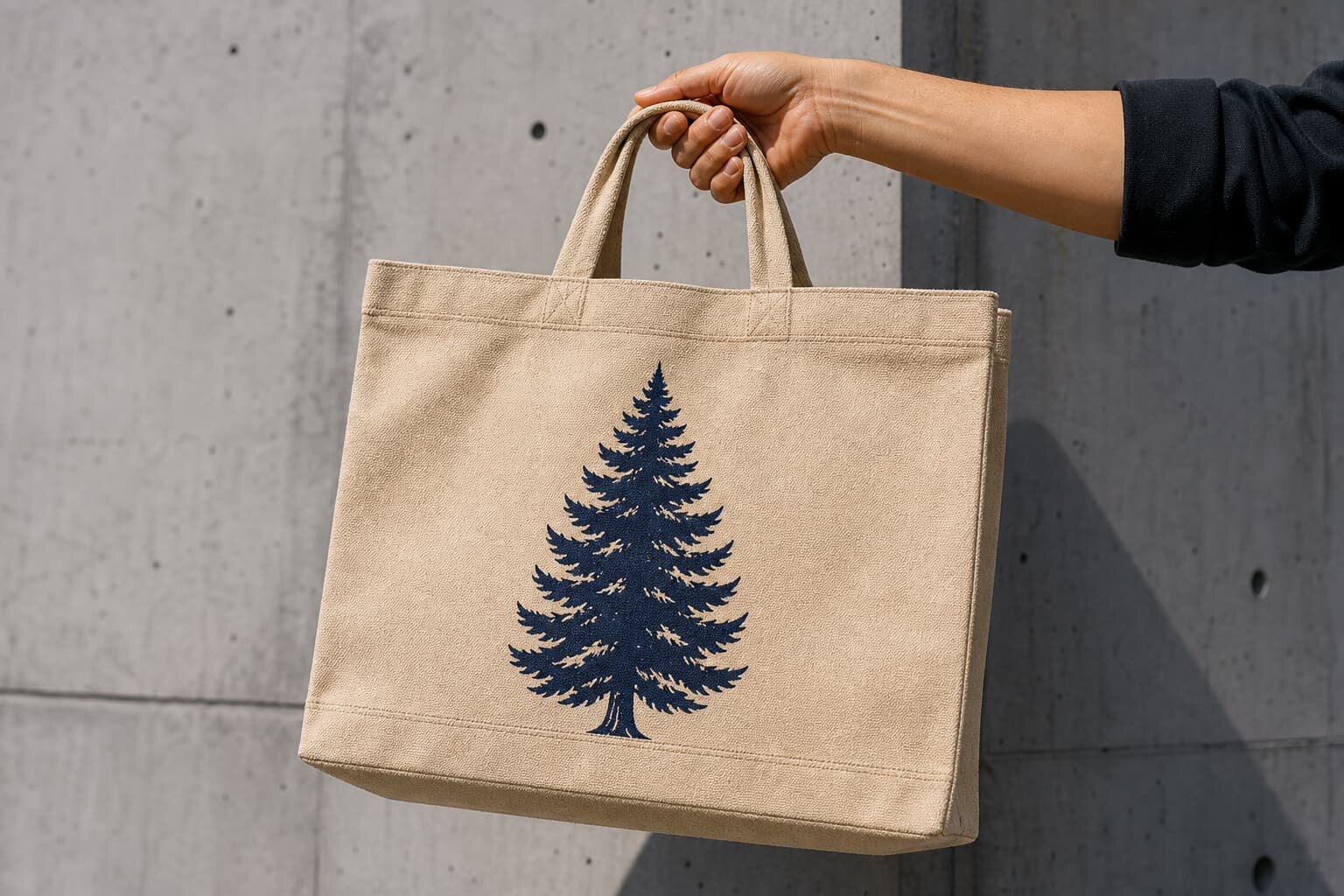
1. Start with the retail use case, not the print method
When procurement teams source a retail canvas tote, the wrong starting point is often the logo method. The better starting point is the selling environment. A tote that sits on a boutique shelf, gets folded into a gift set, or ships through ecommerce all needs a different balance of body, print sharpness, and packing. If you define the use case first, the rest of the quote becomes easier to compare.
For retail programs, the tote is not just a carry bag. It is part of the brand presentation. That means you need to think like a merchandiser and a factory buyer at the same time: how stiff the bag stands, how the print looks when folded, how the handles sit, and whether the pack-out is store ready or warehouse ready.
- Ask whether the tote must hold shape on a shelf or only function as a giveaway.
- Decide if the bag is sold as a standalone retail item, bundled with products, or used as a promo add-on.
- Confirm if the bag must fit a specific shelf peg, display bin, or shipping carton size.
2. Choose fabric weight based on structure and print quality
Canvas tote buyers often compare quotes without noticing that the fabric weight changes both the look and the print result. A 10 oz / 280 GSM canvas can be fine for a price-sensitive retail program, but it will look softer and may wrinkle more after folding. A 12 oz / 340 GSM canvas gives a firmer body, better shelf presence, and usually a more premium feel. The right choice depends on whether the bag needs to look substantial at retail or simply carry well.
Do not stop at the GSM number. Ask whether the fabric is prewashed, bleached, dyed, or greige. A heavier fabric with poor finishing can still print poorly or shrink unevenly. For buyer approval, check fabric hand feel, yarn evenness, and whether the weave is tight enough to support your logo detail.
- 10 oz / 280 GSM: good for cost control and lighter retail positioning.
- 12 oz / 340 GSM: good for premium retail, more structure, and better print presentation.
- Higher GSM usually increases raw material cost, sewing time, and carton weight.
3. Match the logo printing method to artwork complexity
The logo method should follow the artwork, not the other way around. Simple one-color logos with clean shapes are usually best for screen printing. Screen print is cost-efficient at scale, but it needs stable artwork, clear registration, and agreement on ink color. If your logo includes thin lines, gradients, or many colors, screen print can create unnecessary risk unless the factory has strong prepress control.
Heat transfer, embroidery, and woven or sewn branding each have their place. Heat transfer can help with short runs or multi-SKU programs, but you need to check edge lifting and hand feel. Embroidery gives a premium effect, but it can distort on soft canvas if the backing is not right. Woven labels or side labels are useful when you want a subtle brand mark without affecting the front print area.
- Screen print: best for flat, simple, repeatable logos.
- Heat transfer: useful for smaller runs or faster sample turns.
- Embroidery: premium look, but check distortion and backing.
- Woven or sewn labels: good for restrained branding or side placement.
4. Use a print placement checklist before you request quotes
Many quote disputes begin because the buyer says “logo on front” and the factory interprets that differently from the merchandiser. You need a placement spec with measurements. State the logo size in millimeters, the distance from top seam and side seam, and whether the logo must be centered on the panel or shifted for handle spacing. This is especially important on retail totes where the visual balance matters on shelf.
You should also define what happens on seam crossings, pockets, or gussets. If the logo falls too close to a seam, the print may distort or the embroidery may pucker. A clear placement spec protects both sides from sample disappointment and keeps factories from quoting based on assumptions.
- Specify logo width and height in mm.
- Mark exact distance from top edge, side edge, and bottom seam.
- State whether the logo must avoid stitching lines or folded edges.
- Confirm placement on both small and large bag sizes if the artwork must scale.
5. Compare quote structures, not just unit prices
A retail canvas tote quote can look cheap until you compare what is actually included. One supplier may quote a low unit price but exclude screen setup, sample shipping, barcode stickers, or individual polybags. Another supplier may include more in the unit price and appear higher at first glance. Procurement teams should normalize quotes so the comparison is apples to apples.
The biggest hidden cost areas are setup charges, print plate fees, packing upgrades, and color change fees. If you are quoting more than one logo color or more than one bag color, ask the factory to separate these costs. That makes it easier to estimate the true landed unit cost and understand where the supplier has flexibility.
- Separate fabric cost, sewing cost, print cost, and packing cost.
- Ask whether the unit price changes by print color count.
- Confirm if sample fees are refundable or credited against bulk orders.
- Check whether carton packing and barcode labeling are included.
6. Understand MOQ logic before you negotiate
MOQ on a retail canvas tote is rarely one single number. It often changes by fabric color, logo color count, bag size, and packaging method. A factory may accept a lower MOQ for a simple one-color screen print, but the same factory may require a higher MOQ if you want custom dyeing, woven labels, or individual retail packaging. If you do not ask how MOQ is calculated, you may compare quotes that are not built on the same production logic.
For procurement teams, the useful question is not only “What is your MOQ?” but “What production variables push the MOQ up or down?” That answer tells you where you can simplify the spec to win a better price. For example, choosing stock canvas color and one print color may reduce risk and let the factory combine your order with standard material usage.
- MOQ often increases with custom fabric color, multiple print colors, or special packaging.
- Stock fabric colors usually support lower MOQ than custom dyed canvas.
- A low MOQ quote may carry higher setup costs or a less efficient carton pack.
7. Approve the sample like a production sample, not a sales sample
The most common mistake is approving a sample that is too idealized. A sales sample made on different fabric, with a temporary print, does not protect you from bulk issues. Ask for a pre-production sample that uses the actual fabric weight, the actual thread, the actual handle tape, and the actual logo method. If the factory cannot do that, treat the sample as a reference only, not as final approval.
Your sample check should cover structure, print, and retail appearance. Fold the bag the way it will ship, inspect the logo after folding, and check how the bag opens again. Also look for smell, stain marks, skewed seams, loose threads, and print transfer onto the reverse side if the ink is heavy. These are small issues that become expensive if missed before bulk.
- Use the final artwork file, not a draft, for the approval sample.
- Inspect print sharpness, placement, and color under neutral light.
- Check handle length, seam reinforcement, and bag symmetry.
- Confirm that the sample matches the planned retail pack method.
8. Define packing and carton rules before mass production
Packing sounds like an afterthought until the warehouse receives dented prints, crooked folds, or missing barcodes. Retail canvas totes are especially sensitive because the face print can rub against seams or other units in transit. Decide whether the bags will be bulk packed, individually polybagged, folded with a retail insert, or packed with a barcode sticker already applied. Each choice changes labor cost and carton efficiency.
If your tote will go directly to stores, ask the factory to show the fold method and carton pack count in writing. If it will go into ecommerce fulfillment, you may need cleaner presentation and stronger protection against abrasion. A simple print on a clean tote can still arrive looking cheap if the pack format is wrong.
- Ask for carton pack count, carton dimensions, and gross weight.
- Confirm whether barcodes, hangtags, or price stickers are factory applied.
- Define a fold standard so every bag opens the same way at receiving.
9. Build a simple cost model before you release the PO
A useful procurement method is to break the tote into cost buckets: fabric, sewing, printing, packing, and logistics. That gives you a way to compare suppliers and decide where to simplify. For example, if the print cost is high because the logo uses multiple colors, you may save more by simplifying the artwork than by changing the tote size. If packing is expensive, reducing retail packaging complexity may lower total landed cost more than pushing the factory on fabric.
This is also the best way to avoid last-minute change requests. If your internal team wants to add a woven side label, custom hangtag, and individual polybag after quote approval, the factory will often revise the price and extend lead time. Lock the spec early so the PO matches the approved sample and the factory can schedule materials correctly.
- Fabric: confirm GSM, color, and finish.
- Sewing: confirm handle type, seam reinforcement, and pocket count if any.
- Printing: confirm method, color count, placement, and setup fees.
- Packing: confirm folding, polybag, barcode, and carton rules.
- Logistics: confirm carton quantity, pallet needs, and export marks.
10. Use acceptance criteria to prevent disputes at inspection
A good retail canvas tote purchase order should not rely on vague language like “good quality” or “nice printing.” It should state acceptance criteria that the factory can follow and the inspector can verify. Define acceptable tolerance for print alignment, seam deviation, loose threads, stain marks, and color variation. If your brand team cares about shelf appearance, add a rule for bag symmetry and fold consistency.
For importers and distributors, this matters because the tote is often judged quickly at receiving. If the bag arrives warped, wrinkled, or off-center, you may reject product that is technically usable but commercially unsellable. A short quality spec protects both the buyer and the factory by making the target clear before production starts.
- State acceptable print shift and color variance in writing.
- Require no visible oil stains, holes, or major loose threads.
- Set handle symmetry and seam strength expectations.
- Ask for pre-shipment photos of random cartons if the order is large.
Specification comparison for buyers
| Spec decision | Recommended option | When it fits | Buyer risk to check |
|---|---|---|---|
| Fabric weight | 12 oz / 340 GSM canvas | Retail programs that need structure and a better shelf look | Too thin looks floppy; check shrinkage and weave consistency |
| Fabric weight | 10 oz / 280 GSM canvas | Price-sensitive retail or promotional programs | Lower body stiffness; print registration may show more on uneven fabric |
| Logo method | Screen print | Simple 1-2 color logos with larger flat areas | Ink thickness, cracking after folding, and color match tolerance |
| Logo method | Heat transfer | Small runs, multiple SKUs, or short lead-time samples | Wash durability and edge lift; confirm retail-hand feel |
| Logo method | Embroidery | Premium retail positioning or small logo placement | Need stable backing; avoid distortion on soft canvas |
| Logo method | Woven side label | Branding with a subtle retail look | Label size, stitch position, and readability at shelf distance |
| Packing | Bulk polybag with carton inner pack count | Standard import and warehouse handling | Carton compression and scuffing on print surface |
| Packing | Individual retail polybag with barcode sticker | Store-ready or ecommerce-ready units | Plastic thickness, suffocation warning, and label placement |
| MOQ logic | By fabric color + print color + bag size | When the factory sets separate production runs | A low MOQ quote can hide setup fees or force higher unit cost |
Buyer checklist before sampling
- Confirm the exact tote size, seam construction, handle length, and target fabric weight before asking for logo pricing.
- Send final vector artwork and state print placement in millimeters, not only by visual reference.
- Ask the factory to quote with the same fabric GSM, print method, and packaging across all suppliers.
- Request a pre-production sample made with the actual fabric, ink, and label or tag structure.
- Define acceptable color variation, print edge tolerance, and folding marks before mass production.
- Confirm carton pack count, master carton dimensions, and whether retail barcodes or hangtags are applied at factory.
- Check whether MOQ changes by logo color count, bag color, or packing type.
- Lock lead time separately for sample approval, bulk production, and export packing.
Factory quote questions to send
- What canvas GSM and finished fabric width are you quoting, and is the fabric washed or unwashed?
- What logo method are you quoting, and does the unit price include screen setup, plate cost, or embroidery digitizing?
- What is the MOQ by bag size, bag color, and print color count?
- Will the quoted sample be made with the same fabric, handle tape, thread, and print process as bulk production?
- What packaging is included: bulk pack, individual polybag, barcode sticker, hangtag, or insert card?
- What is the standard lead time after sample approval, and what part of that time is fabric sourcing versus production?
- What carton pack count and carton size are used for this quote, and can the packing be changed without affecting the price?
- What quality checks do you perform before shipment for print alignment, stitching strength, and stain control?
Quality-control points to confirm
- Fabric GSM and weave should match the approved sample, with no obvious thin spots or yarn slubs in the print area.
- Handle stitching should be even, with secure bar-tacks or reinforced seams at stress points.
- Print position should match the approved artwork placement within an agreed tolerance, especially on front-center logos.
- Ink or transfer edges should be clean, with no bleeding, cracking, or smudging after folding.
- Color consistency should hold across cartons, not just within one sample piece.
- Needle holes, loose threads, stains, oil marks, and puckering should be checked on both sides of the tote.
- Carton packing should protect the printed face from abrasion during transit and warehouse handling.
- Barcode, hangtag, and retail fold presentation should be verified if the totes go directly to stores or fulfillment.