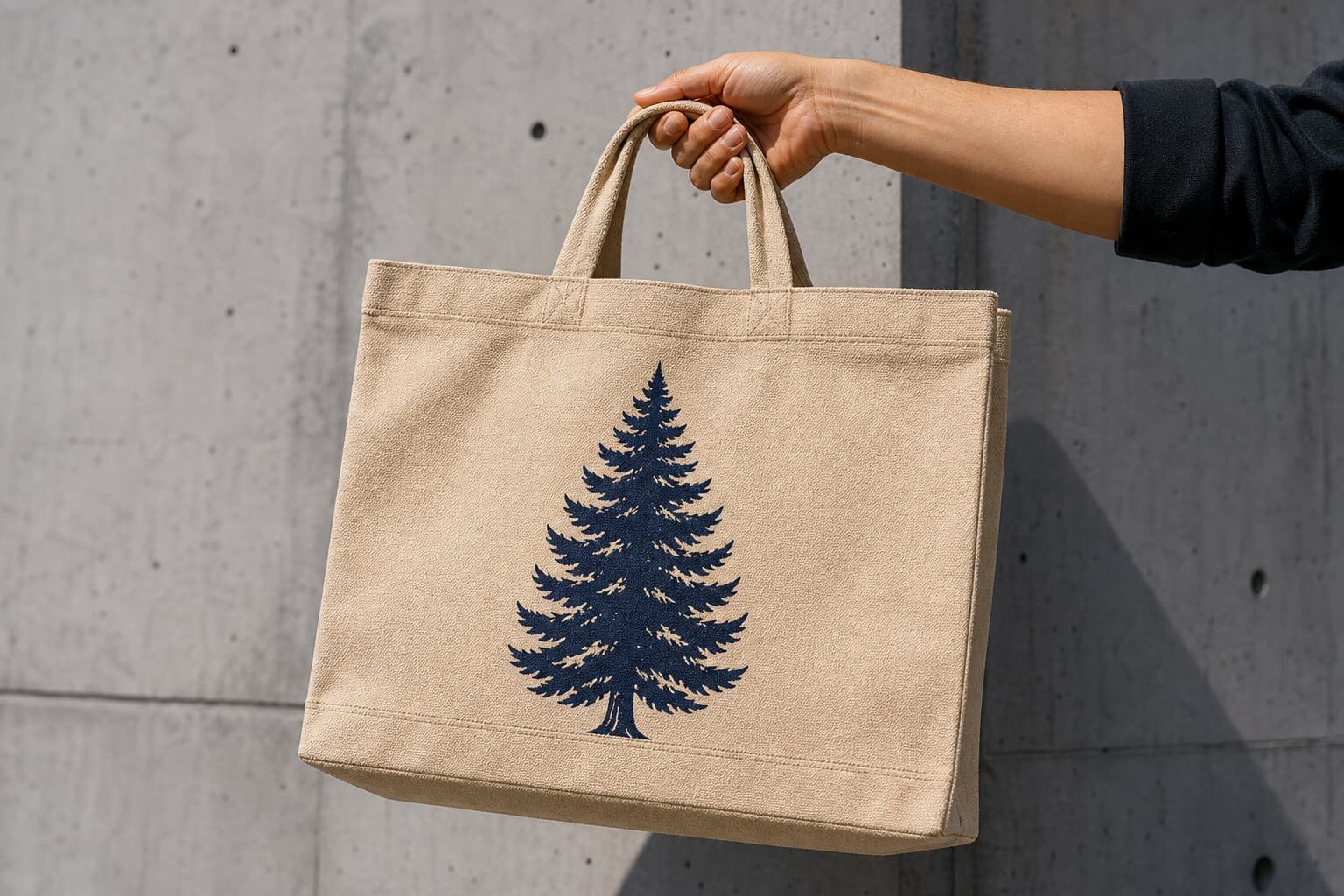
Start With The Retail Use Case, Not The Logo
A retail canvas tote can do very different jobs. A bag that sits on a boutique shelf, a tote sold at checkout, and a bag used as a branded gift all need different specs even if the logo is the same. Before you ask for a quote, decide how the bag will be handled in the real channel. That choice affects canvas weight, handle strength, print durability, packing style, and even how much the bag can afford to weigh once folded and barcoded.
Buyers often start with the artwork because it is the most visible part of the order. That is the wrong starting point. A factory can print almost any logo on almost any bag, but the commercial result depends on whether the bag is meant to be soft and low cost, sturdy and retail-ready, or premium enough to support a higher shelf price. If you define the retail job first, you get quote comparisons that are actually meaningful instead of a stack of inconsistent numbers.
- Define the sales channel: store shelf, checkout resale, promo bundle, or gift-with-purchase.
- Set the expected load and usage: light lifestyle carry, books and groceries, or repeated daily use.
- Decide whether the tote must look premium at point of sale or simply function well in bulk.
- Confirm whether the buyer will need barcoding, hangtags, or shelf-ready packing.
Choose Canvas Weight And Construction Before Artwork
Fabric weight is one of the biggest drivers of both cost and perceived value. An 8-10 oz canvas can work for lightweight retail programs and lower-cost resale bags, but it will show the shape of the contents and can feel soft or thin. A 10-12 oz canvas is usually the safer default for a standard retail tote because it gives better body, holds print more cleanly, and supports a better shelf impression without going too far up the cost curve. For premium retail or heavy-use programs, 12-16 oz often performs better, especially when the brand wants a firmer hand feel and cleaner side panels.
The construction matters as much as the fabric weight. Handle length changes how the tote hangs on a rack, gusset depth changes how it stands, and top hem construction affects how the bag feels when picked up. If the stitching is weak or the handle attachment is not reinforced, a good logo print will not save the order. Ask for the fabric GSM or oz, the finished dimensions, handle width and drop, gusset depth, and seam construction before you discuss print placement.
- Use 8-10 oz only when the channel tolerates a softer, lighter bag.
- Use 10-12 oz for most retail programs that need a balanced price and presentation.
- Use 12-16 oz when shelf feel, structure, and durability matter more than the lowest quote.
- Confirm reinforcement at the handle attachment and bottom seam if the tote will carry weight.
Pick The Logo Method That Matches Quantity And Artwork
For most retail canvas totes, screen printing is still the best base option because it is predictable, scalable, and easy to inspect. One-color screen print is usually the cleanest and easiest to control. Two or three colors can still work well if the artwork is built for it and the factory has solid registration control. If the logo is detailed, graded, or seasonal, a transfer method may be better for a short run, but it needs careful checking for peel resistance and surface finish. For a premium look, embroidery or a woven patch can raise perceived value, but it changes cost, hand feel, and sometimes the retail position of the bag.
The wrong print method creates avoidable problems. A buyer may request a small logo with too much detail for the fabric, then wonder why edges blur or fine text disappears. Another common mistake is assuming that a digital image on screen will print the same way on textured canvas. The factory needs to know the logo size, number of colors, exact placement, and whether the brand accepts slight texture or a perfectly flat look. The answer determines tooling, MOQ logic, sample timing, and final retail appearance.
- Use screen print for most one-color and low-color retail tote programs.
- Use transfer print when the artwork changes often or the run is small.
- Use embroidery or a woven patch when the brand wants a more premium finish.
- Check the logo at real size on the actual fabric, not only on a flat art file.
Build An RFQ That A Factory Can Price Cleanly
A weak RFQ forces the factory to guess, and guessing shows up later as revised quotes, sample confusion, or post-order surprises. The RFQ should state the product size, fabric weight, construction details, logo method, logo dimensions, color count, packing style, and order quantity by color or design. If you are asking for multiple print options, separate them clearly. If you need retail labeling or barcode application, include that too. The goal is not just to ask for a price. The goal is to make every supplier price the same spec so you can compare them on equal terms.
Include the data that changes cost, not just the data that describes the bag. Factories need artwork files, preferred ink or finish if you have one, target delivery window, carton count, and whether the order is for a single retail launch or a recurring program. If the buyer does not define these details, the quote can look attractive but exclude key work such as setup, packing inserts, or secondary labeling. A quote is only useful when it is line item enough to be audited.
- State size in finished inches or millimeters, not only as a photo reference.
- Include fabric weight, color, and whether the canvas is natural, dyed, or bleached.
- Give exact logo dimensions and placement from the top edge and side seam.
- Specify packing count per polybag and per carton if the bag is going to retail.
Understand MOQ Logic And Sample Path
MOQ is not a random number. It is driven by setup time, print screens or plates, fabric cutting efficiency, and how many color changes or artwork versions are involved. A one-color tote on a standard canvas body usually has a cleaner MOQ than a multi-color order with several print positions. If you change the logo size, color, or bag color after sampling, the factory may need to reset the job and the real MOQ can move. Buyers who understand this can negotiate better because they know which cost driver they are trying to reduce.
Sampling should be staged, not rushed. For a retail tote, the clean path is often a blank sample, then a printed strike-off or sample print, then a pre-production sample if the order has important shelf timing or tight appearance standards. The sample should not just show the logo. It should prove the whole package: fabric weight, seam quality, print position, folding method, label placement, and packing count. If the sample fails, fix the issue before production, not after cartons are already sewn and packed.
- Expect MOQ to move with print colors, artwork complexity, and bag color changes.
- Ask which sample stage is included and which stage is billed separately.
- Use a blank sample to verify size, handle length, and fabric feel.
- Use a printed sample to verify registration, cure, color, and logo scale.
Inspect Logo Quality Like A Retail Buyer
A retail tote is judged at arm's length, under store lighting, and after handling. That means the print must look good from a distance and still hold up when the bag is folded, stacked, or rubbed against other goods. For screen print, check whether the ink sits evenly on the weave and whether the logo edges stay crisp across the full print area. If the artwork includes fine text or thin strokes, view it at the actual size, not enlarged on a monitor. Small text that looks good in a file can disappear on canvas.
The acceptance check should include both appearance and performance. Ask whether the print will pass a simple rub test, whether the ink feels sticky after packing, and whether the finish creates unwanted shine. If the tote uses a premium dark ink on natural canvas, check whether strike-through or shadowing appears on the back side. If the bag is intended for resale, also check the front face, back face, and folded state. A tote can look acceptable flat on a table and still fail once it is packed and displayed.
- Check logo centering, height from the top edge, and consistent placement across cartons.
- Inspect print registration on every color layer if the logo has more than one color.
- Verify no bleed-through, tackiness, cracking, or patchy coverage.
- Approve the print under store-like lighting, not just in bright inspection light.
Packing And Labeling Can Change The Retail Outcome
Packing is not a last-mile detail. For a retail tote, packing determines how the bag sits on the shelf, whether the logo is visible at opening, and how much warehouse labor the buyer will need later. A flat-packed tote with a clean fold and a simple barcode sticker can be efficient for distribution. If the tote is sold directly at retail, you may also need a hangtag, belly band, or insert card. These choices add cost and labor, but they also change shelf readiness and the customer's first impression.
Confirm the carton pack early because it affects freight and damage risk. Too many bags per carton can compress the canvas and crease the print. Too few bags per carton can inflate shipping cost. If the buyer requires a master carton mark, country-of-origin label, barcode, or carton quantity split by color, that needs to be in the quote from the start. The factory should be able to tell you whether the bag will be folded, stuffed, sleeved, or packed with insert board, because each method changes how the logo presents when the carton is opened.
- Confirm fold direction so the logo is visible in the right position when opened.
- State whether the tote needs a hangtag, barcode sticker, or retail insert.
- Set carton quantity by bag size and fabric weight, not only by target price.
- Check that packing does not rub or distort the print before shipment.
Plan Lead Time Around Approval, Not Just Sewing
Lead time is usually lost before production starts. Artwork corrections, color matching, sample approval, and packing confirmation can take longer than the sewing line itself. A practical schedule usually breaks into sample lead time, approval time, bulk production time, and shipping time. If the tote is for a retail launch or a seasonal reset, build in room for at least one revision cycle. The best suppliers will tell you where the risk is: print setup, special fabric sourcing, label lead time, or carton allocation.
Do not ask only, 'How fast can you make it?' Ask what has to be frozen before the factory can start. If the buyer has not approved artwork, color, packaging, and carton marks, the factory is not ready to commit to bulk timing. For recurring programs, once the spec is locked, the next order is easier to schedule. That is one reason a disciplined first order matters. It becomes the control sample and the timing reference for future replenishment.
- Separate sample lead time from bulk lead time in your internal plan.
- Lock artwork and pack style before the factory starts final quoting.
- Ask what material or accessory items are long lead, such as labels or tags.
- Keep one revision cycle in reserve if the tote is tied to a retail launch date.
Common Quote And Production Mistakes To Avoid
The most expensive mistakes are usually the quiet ones. A buyer may accept a quote without noticing that the supplier priced a lighter canvas, a smaller logo, or a different packing method than the team expected. Another common issue is assuming that a low unit price includes every step, when setup, printing, cartons, inserts, and label application are all separate. If those items are not specified, the order can still be technically correct and commercially wrong. That is a sourcing failure even if the bag itself looks fine.
Production mistakes often come from late changes. A logo moved after sampling can affect stitch placement, print registration, or bag folding. A fabric color changed late in the process can shift the retail look in ways that the buyer only sees after bulk arrival. To avoid this, freeze the spec and only compare quotes that match the same bill of materials. If one supplier is quoting a different construction or a looser tolerance, do not treat it as the same product. Line-by-line comparison is the only honest comparison.
- Do not compare quotes that use different fabric weights or different print methods.
- Do not ignore setup charges, sample charges, and packing labor.
- Do not change logo size after the sample has been approved unless you expect a reset.
- Do not accept a quote that does not identify the exact canvas, construction, and carton pack.
Compare Quotes On The Full Commercial Picture
The lowest number on the page is not always the best value. A good quote tells you what is included, what is optional, and what will trigger a revision. Compare fabric weight, print method, number of setup colors, sample policy, packing configuration, lead time, and whether the supplier is quoting finished bags or only sewing and print. When buyers look only at unit price, they often miss the cost of rework, freight inefficiency, or retail packaging added later at a different facility.
The cleanest award decision is made on a complete spec sheet and a short test matrix. Ask each supplier to quote the same artwork, the same size, the same canvas weight, the same pack, and the same delivery term. Then evaluate them on print quality, communication, production control, and how clearly they explain exceptions. A supplier that asks smart clarification questions early is often safer than one that answers too quickly with a vague low price.
- Compare suppliers only after the spec is frozen.
- Rank quotes by included scope, not just the number at the bottom.
- Check how the supplier handles sample approval and change requests.
- Award to the quote that matches your retail spec with the fewest assumptions.
Specification comparison for buyers
| Spec decision | Recommended option | When it fits | Buyer risk to check |
|---|---|---|---|
| 8-10 oz canvas with one-color screen print | Best default for a core retail tote program | Simple logo, moderate carry weight, and a price point that still supports retail margin | Check ink strike-through, edge sharpness, and whether the fabric distorts during printing |
| 10-12 oz canvas with 1-3 color screen print | Best for standard branded retail bags | The logo must look clean at scale and survive repeated folding, display, and checkout handling | Check registration tolerance, curing consistency, and print size on the full bag face |
| 12-16 oz canvas with transfer print | Best for small runs, seasonal launches, or full-color artwork | Artwork changes often, gradients are involved, or the buyer needs a faster sample path | Check peel resistance, gloss level, and heat marks on the fabric surface |
| 12-16 oz canvas with embroidery or woven patch | Best for premium retail, boutique, or gift programs | The brand wants a textured logo and a higher perceived value on shelf | Check puckering, backing material, and whether the finish changes the bag hand feel |
Buyer checklist before sampling
- Confirm the retail use case first: shelf display, checkout resale, gift-with-purchase, or event resale.
- Lock the bag size, gusset, handle length, and target load before approving the logo placement.
- Specify canvas weight in GSM or oz and ask for the actual fabric construction, not just a generic 'canvas' description.
- Provide the artwork in vector format and state the exact logo size, print position, and number of colors.
- Ask the factory which print method they recommend for your volume and whether the price includes setup, screens, or plates.
- Request a blank sample, a printed strike-off, and a pre-production sample if the order is high value or seasonally fixed.
- Confirm packing style: flat pack, folded with insert, polybag, barcode sticker, carton quantity, and master carton mark.
- Check lead time for sampling, approval, bulk production, and shipping separately.
- Ask for an itemized quote that separates fabric, printing, sewing, packing, and any special finishing.
- Approve the sample against a written checklist for color, registration, hand feel, dimensions, and defect limits.
Factory quote questions to send
- What canvas weight, weave, and finished bag construction are you quoting?
- What print method are you recommending for this logo, and why?
- How many colors are included, and what setup charges apply?
- What is the MOQ by color, by print method, and by artwork version?
- What sample stages do you offer before bulk production starts?
- What are the exact finished dimensions, handle length, and gusset depth in the quote?
- What packing configuration is included, and what is extra?
- What is the standard lead time for sample approval and bulk production?
- What quality checks do you run on print registration, color matching, and stitch strength?
- What quote line items could change if the artwork, pack style, or carton count changes?
Quality-control points to confirm
- Finished size matches the approved spec within the agreed tolerance.
- Canvas weight and color are consistent across the bulk order.
- Handle stitching, side seams, and bottom seam reinforcement are clean and even.
- Logo position is centered or placed to the approved measurement from the top edge and side seam.
- Print color matches the approved reference under daylight and indoor lighting.
- Print edges are sharp, with no smearing, pinholes, or unwanted fabric show-through.
- Curing or bonding is complete, with no tackiness, cracking, or easy rubbing off.
- Bag has no oil stains, loose threads, broken stitches, or obvious weaving defects.
- Packing count, barcode, and carton marks match the purchase order.
- Random carton samples match the approved pre-production sample for size, print, and folding style.