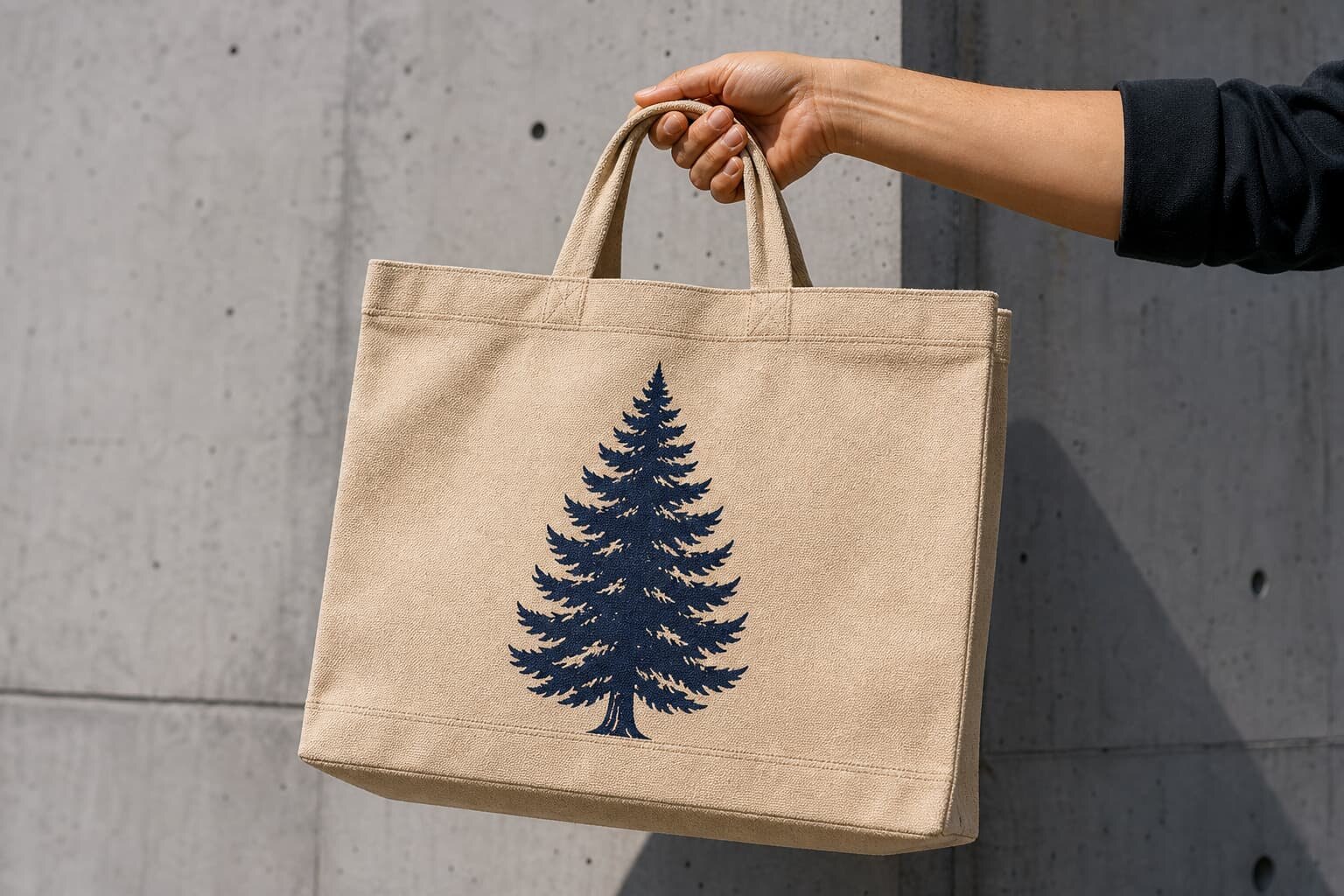
1. Start with the gift use case, not a generic tote description
A retail canvas tote for gift buyers is not simply a “canvas bag with a logo.” It may be a gift-with-purchase item, a holiday gift-set container, a branded client gift, a resale accessory, or an event retail bag. Each use case changes the specification. A gift-set insert needs predictable folding and low lint so it fits cleanly inside a carton. A resale tote needs stronger shelf presentation, barcode accuracy, and better stitch consistency. A short-use promotional giveaway may accept lighter fabric, but a premium client gift usually cannot.
Open the RFQ with one sentence that tells the supplier what the tote must do. For example: “Natural 10 oz cotton canvas tote for holiday gift-with-purchase program, one-color front screen print, reinforced handles, flat packed 50 pcs/carton, final inspection required before shipment.” This sentence does not replace a spec sheet, but it stops early quote drift.
Separate visual value from physical performance. If the tote will hold a small cosmetics kit, presentation and clean folding may matter more than extreme load strength. If it will be reused as a shopping bag, handle reinforcement and seam strength become more important. The final spec should follow the actual retail use case, not a generic premium wish list.
- Gift-with-purchase tote: prioritize clean presentation, brand print, predictable packing, and moderate durability.
- Gift-set container: prioritize fold control, low dust/lint, stable dimensions, and carton or tray fit.
- Retail resale tote: prioritize fabric hand-feel, stitch consistency, barcode/hangtag accuracy, and shelf appearance.
- Client or employee gift tote: prioritize logo quality, perceived value, and practical reuse strength.
- Event retail tote: prioritize schedule reliability, carton organization, and fast receiving by SKU or artwork version.
2. Specify fabric weight, fiber, color, and shrinkage in measurable terms
Fabric is the largest visible driver of perceived quality and one of the biggest reasons tote quotes become incomparable. For many retail gift programs, 10 oz to 12 oz cotton canvas is a practical range because it gives more structure than thin promotional cloth without making the bag unnecessarily heavy. An 8 oz canvas may be suitable for light inserts or short-use campaigns, but it will not feel the same in hand. A 12 oz or heavier canvas can improve shelf presence, but it increases material cost, sewing resistance, carton weight, and sometimes lead time.
Do not write only “cotton canvas” in the RFQ. A buyer-ready spec should state fiber content, weave, color, target finished weight, and whether the fabric is natural, bleached, dyed, washed, coated, or otherwise finished. Ask whether the quoted weight is raw/greige cloth weight or finished fabric weight. If weight is measured before finishing, the bulk bag may feel lighter than expected after dyeing, washing, or softening.
Color needs the same control. Natural canvas can vary from creamy to greyish depending on cotton source and finishing. Dyed canvas requires lab dip approval, while custom dyeing usually increases MOQ and shade-lot risk. If multiple production lots will ship to different distribution centers, require shade lots to be separated and marked. Shrinkage also affects size, print placement, and pack-out fit, so define whether the approved finished size is before or after any washing or pre-shrinking process.
- Example fabric line: “100% cotton plain-weave canvas, natural unbleached, 10 oz finished weight, acceptable finished weight tolerance ±5%, no coating unless approved.”
- For dyed goods: request lab dip approval before bulk dyeing and require lot-to-lot shade review before cutting.
- For washable totes: define maximum shrinkage after the agreed wash method, not only first-sample size.
- For natural canvas: approve a physical swatch because unbleached shade varies by mill and finishing process.
3. Choose decoration by artwork, durability, and order economics
Decoration should follow artwork and durability requirements, not factory habit. Screen printing is often the practical choice for bold one- to four-color graphics because it gives predictable coverage and efficient unit cost at volume. It is also easier to inspect for placement, opacity, and edge quality than more complex methods. Heat transfer, digital print, and embroidery can be useful, but each adds different approval and inspection requirements.
The common procurement mistake is approving artwork without approving the decoration on the actual production fabric. Natural canvas absorbs and displays ink differently from white paper or a digital mockup. A beige base can dull light colors, and a rough weave can reduce crispness on fine lines. If brand color matters, require a strike-off using the same fabric color and decoration method planned for bulk.
Ask the supplier to separate setup charges. Screen printing may require screens per color and per design. Transfers may require film or plate charges. Embroidery may require digitizing and has stitch-count implications. Digital print may have fewer setup charges but higher unit cost at scale. Also test how decoration behaves after folding. Thick ink or transfer film can crease if the fold line crosses the graphic.
- Screen print: strong choice for bold logos, solid colors, and medium to high quantities.
- Heat transfer: useful for complex artwork or lower quantities, but check edge lifting, cracking, and hand-feel.
- Digital print: useful for detail and many colors, but confirm opacity, cost, and rub performance at the target quantity.
- Embroidery: premium tactile option, but confirm stitch count, backing, puckering risk, and needle marks.
- PO wording example: “Bulk print must match approved strike-off for color, placement, opacity, edge quality, and cure; print method may not be changed without buyer approval.”
4. Lock construction details that affect load, appearance, and defect risk
Two factories can quote very different prices because they are not actually quoting the same construction. Handle material, top hem, seam allowance, gusset, reinforcement, lining, pocket, closure, label type, and thread color all change labor time and defect risk. For retail gift buyers, the strongest design is often simple but well controlled: clean top hem, stable side seams, reinforced handle joins, accurate logo placement, and consistent packing.
Handle construction deserves special attention because it is one of the first places a reusable tote fails. Self-fabric handles can look integrated and economical. Cotton webbing handles can feel stronger and more comfortable. Whichever you choose, specify handle width, finished drop, stitch type, reinforcement method, and load-test requirement. “Strong handles” is not enforceable. “3 cm cotton webbing handles, finished drop 25 cm ±1 cm, box-and-cross stitch at four handle ends, no skipped stitches, load test required” is enforceable.
If the tote needs a gusset, define whether it is a bottom gusset, side gusset, or full box gusset. Gussets improve capacity but add cutting and sewing steps. If the tote needs a closure, state component color, placement, and operation. Zippers require extra inspection for smooth running, end stops, puller strength, and seam alignment. For many gift programs, an open-top tote with excellent print and packing control is safer than a highly customized build with uncertain QC.
- Basic retail gift build: open top, clean hem, reinforced handles, one front print, flat packing.
- Higher-function build: gusset, snap closure, heavier canvas, stronger handles, barcode or hangtag.
- Premium build: lining, zipper, pocket, embroidery, custom dyed fabric, or special trim—use only when the retail value justifies added risk.
- Inspection checkpoint: pull each tested handle upward and outward to check seam stress, not only vertical load.
5. Use a quote-ready spec sheet so every factory prices the same item
A quote-ready spec sheet is the buyer’s best protection against misleading comparisons. It should define the finished product, not just the concept. At minimum, include bag size, fabric, color, decoration, handle details, seam construction, labels, packing, carton marks, inspection standard, sample stages, and shipment terms. If these fields are blank, suppliers will make their own assumptions and the quotes will not be comparable.
For example, “natural canvas tote with logo” could mean 8 oz or 12 oz fabric, screen print or transfer, single stitch or reinforced handle, bulk pack or individual retail pack. A lower quote may simply exclude details that another supplier included. Ask for quote breakdowns by material, sewing, decoration, labels, packing, carton, sample, and setup charges. The goal is not to force a supplier to reveal margin; it is to identify which assumptions drive price.
Include approval references in the spec. If a pre-production sample is the golden standard, state that bulk production must match it for fabric hand-feel, size, construction, print, labels, and packing. Keep the approved sample sealed or clearly labeled. If the buyer allows commercial tolerance, write it down. A factory cannot manage a standard that exists only in a marketing email thread.
- Spec example: “Finished size 38 W x 42 H cm, no gusset, tolerance ±1 cm, natural 10 oz cotton canvas, one-color screen print 22 W x 18 H cm centered on front panel.”
- Handle example: “Self-fabric handles, 3 cm width, 25 cm drop, box-stitch reinforcement, thread color matched to body.”
- Packing example: “Flat folded once, 50 pcs/export carton by same SKU only, carton marks on two sides, barcode label on short side.”
- Approval example: “Bulk must conform to signed pre-production sample; material or process substitutions require written approval before production.”
6. Manage MOQ, sample approval, and lead time as one production flow
MOQ is not a single number. It is affected by fabric color, artwork versions, label versions, trim color, and packing format. A natural tote with one print is much easier to produce than the same order split across three body colors, four logos, and two retail pack styles. Ask the supplier to break MOQ down by variable so you can decide which options are worth keeping.
Sampling should be staged. A blank sample verifies size, fabric, handle construction, stitching, and shape. A print strike-off verifies artwork size, ink color, opacity, edge quality, curing, and placement. A pre-production sample confirms the final product exactly as bulk will be made, including label, hangtag, barcode, fold method, polybag if used, and carton mark sample. Skipping stages may save days but can create larger risk in bulk.
Lead time should be built from milestones, not one promise date. Ask for planned dates for fabric booking, lab dip approval if needed, blank sample, print strike-off, pre-production sample, bulk cutting, printing, sewing, packing, inspection, and loading. If the tote is tied to a holiday campaign or gift launch, include time for one sample revision and possible re-inspection. A schedule with no correction buffer is not a production plan.
- Ask: “Is MOQ calculated per total order, per body color, per artwork, per label, or per packing style?”
- Reduce MOQ pressure by keeping the same body fabric and changing only print or hangtag.
- Sample log fields: date, revision, fabric weight, artwork file name, print method, comments, and approval status.
- PO clause example: “Bulk cutting may not begin until buyer signs the pre-production sample or issues written approval by email.”
7. Confirm compliance, testing, and retailer documentation before bulk production
Compliance requirements depend on destination market, retailer policy, product claims, and end use. A plain adult canvas tote usually has different requirements from a children’s item, food-contact package, or product sold with sustainability claims. Do not assume that because the item is simple, documentation is unnecessary. Retailers may still require restricted-substance declarations, country-of-origin labeling, fiber content information, packaging warnings, barcode validation, or supplier social-compliance documentation.
Testing should match the risk. For fabric and decoration, buyers may request colorfastness, rub/crocking, shrinkage, fiber content, azo dye, formaldehyde, heavy metal, or other restricted-substance checks depending on market and retailer rules. For performance, define handle load testing, seam strength checks, wash testing if washable, and print durability checks. If formal lab testing is required, state the test method, sample quantity, pass/fail criteria, who pays, and whether testing must be completed before shipment release.
Be careful with environmental or organic claims. If the tote is marketed as organic cotton, recycled cotton, biodegradable, low-impact dyed, or plastic-free, require the relevant certification or documentation before approving artwork or hangtags. Avoid adding claims to retail packaging unless the sourcing team can support them with records. Unverified claims create brand and compliance risk even when the physical tote is acceptable.
- Ask the retailer or importer for required standards before RFQ, not after production starts.
- Confirm country-of-origin marking, fiber content labeling, care label needs, and hangtag wording for the destination market.
- If formal lab testing is required, write the method, lab, timing, sample quantity, pass/fail rule, and cost responsibility into the PO.
- Do not print sustainability claims unless the supplier provides documentation the retailer accepts.
8. Build QC around tolerances, AQL, and clear acceptance rules
Quality control for canvas totes should not depend on subjective comments such as “neat stitching” or “good print.” A useful QC plan defines what will be checked, how many pieces will be checked, what tolerance applies, and what happens if the result fails. For bulk orders, many buyers use a recognized random inspection approach such as ANSI/ASQ Z1.4 or ISO 2859-1. The exact AQL levels should follow retailer policy and product risk, but they must be written before inspection day.
Define defect severity. Critical defects normally include safety issues, broken needle contamination, mold, severe odor, wrong product, wrong artwork, or handle failure. Major defects include open seams, incorrect size outside tolerance, severe stains, visible print defects, wrong packing, missing labels, or carton count errors. Minor defects include small loose threads or slight cosmetic imperfections that do not affect retail presentation. If critical defects are found, the buyer may require rejection or 100% sorting depending on PO terms.
Use measurable checks. Measure selected bags flat using the same method every time. Check width, height, gusset, handle drop, handle width, and print placement from fixed reference points. Verify fabric weight if it is contractual. For handle load, agree a practical target based on intended use and define load, duration, quantity tested, and pass/fail rule. Print durability should match the claim: washable totes need wash criteria, while light gift totes may require rub checks and fold checks.
- Measurement tolerance example: finished width/height ±1 cm, handle drop ±1 cm, print placement ±5 mm unless the approved sample states otherwise.
- Fabric tolerance example: finished fabric weight within agreed percentage range, with no visible holes, oil marks, severe slubs, or panel shade mismatch.
- Load-test example: selected samples must hold the agreed static load for the agreed time with no handle detachment, seam tearing, or major distortion.
- Acceptance rule example: inspection passes only if defects are within agreed AQL and no critical defects are found; failed lots require sorting, rework, and re-inspection before shipment.
9. Specify packaging, barcode, carton, and logistics limits before price approval
Packing is part of the product for retail gift buyers. A well-made tote can still fail receiving if it arrives crushed, dusty, mislabeled, damp, or mixed by SKU. Flat packing is usually efficient for wholesale distribution because it reduces carton volume and helps receiving teams count quickly. If the print surface is vulnerable to rub, consider tissue, a paper band, or individual polybag. Individual packing adds cost, labor, material, and sometimes sustainability concerns, so use it only when it supports presentation or retailer requirements.
Define exactly how the tote is folded. If a fold crosses a heavy print, it may create creasing or transfer marks. If the tote will be inserted into a gift box, test the fold with the real box. State whether handles are tucked inside, laid flat, or folded behind the body. Define whether hangtags are attached before folding or packed separately. Barcode and hangtag positions should be consistent so store teams do not need to search for them.
Carton specification should include quantity per carton, carton dimensions, maximum gross weight if applicable, SKU mixing rules, carton marks, and barcode label placement. Avoid mixed SKUs unless your distribution team requires them. If mixed cartons are unavoidable, request an inner pack list and clear separation. For seasonal gift programs, carton mark accuracy is critical because receiving delays can miss the selling window even when goods shipped on time.
- Packing line example: “Flat folded with front print facing inward, 25 pcs/inner bundle, 50 pcs/export carton, same SKU only, no individual polybag unless approved.”
- Carton mark example: SKU, PO number, color, size, artwork code, quantity, carton number, gross/net weight, country of origin, and destination if required.
- Retail label example: barcode sticker applied to hangtag lower back, readable and scannable, same position on all units.
- Logistics checkpoint: confirm carton cube, gross weight, pallet pattern if needed, container loading assumptions, and destination receiving rules before final price approval.
10. Evaluate cost-driver tradeoffs and close the PO with enforceable clauses
The lowest unit price is not always the lowest landed cost. Fabric weight, custom dyeing, print complexity, handle material, lining, zipper, labels, hangtags, individual packing, carton size, inspection, testing, and freight mode all affect total cost. A heavier tote may look better but increase carton weight and freight. Individual polybags may improve presentation but add labor and packaging cost. Custom dyed canvas may improve brand match but add lab dip time, MOQ, and shade-lot management.
Use tradeoffs deliberately. If the tote is a high-visibility retail gift, spend on fabric consistency, decoration quality, handle reinforcement, and packing presentation. If the tote is an insert inside a larger gift set, spend on accurate size, clean fold, lint control, and barcode accuracy. If the program is a test launch, reduce SKU complexity before weakening the base construction. Often the best cost reduction is fewer variants, not thinner fabric or weaker stitching.
Close the sourcing workflow with clear PO clauses. State that the approved pre-production sample governs bulk production. State that material substitutions, fabric weight changes, decoration method changes, label changes, subcontractor changes, or packing changes require written approval. Include inspection rights, AQL or sampling standard, defect classification, rework obligation, and shipment release process. After delivery, ask the warehouse to report carton damage, count discrepancies, barcode issues, odor, moisture, print transfer, or excessive wrinkling so the next order can be improved.
- Cost drivers to isolate: fabric weight, dye method, decoration, handle build, closure, labels, packaging, testing, inspection, carton cube, and freight mode.
- Workflow: spec sheet → artwork → sample approval → PO → production schedule → inline check → final inspection → shipment release.
- PO clause: “No bulk production may proceed from unapproved artwork, unapproved fabric, or unapproved packing format.”
- PO clause: “Goods failing agreed inspection standard are subject to sorting, rework, replacement, and re-inspection before shipment approval.”
- Final release checkpoint: approved sample, passed inspection report, packing photos, carton marks, shipping documents, and SKU count summary.
Specification comparison for buyers
| Option set | Lower-cost choice | Balanced retail gift choice | Premium or higher-risk choice | Procurement note |
|---|---|---|---|---|
| Canvas weight | 8 oz canvas; lighter hand-feel; better for low-cost inserts or short-use promotions | 10 oz canvas; common balance for gift programs, better structure, manageable carton weight | 12 oz canvas or heavier; stronger shelf presence but higher material, sewing, and freight cost | Quote finished GSM/oz with tolerance. Do not compare an 8 oz quote against a 12 oz quote as if they are the same product. |
| Fabric color | Natural unbleached canvas; usually simpler to source and easier to control | Standard dyed color from available shade card; suitable for brand programs with moderate color needs | Custom dyed canvas; better brand match but may require higher MOQ, lab dips, and shade-lot control | State whether color approval is by Pantone, fabric swatch, or lab dip. Require shade consistency within one production lot. |
| Print method | One-color screen print; economical for bold logos at volume | Two- to four-color screen print or simple transfer; works for most retail gifting artwork | Digital print, complex transfer, or embroidery; better detail or texture but needs stricter approval and durability checks | Ask for print sample on actual bulk fabric. Require rub/crocking and adhesion checks when the logo will receive frequent handling. |
| Top opening | Open top; fastest sewing and easiest flat packing | Magnetic snap or button closure; adds perceived value without a full zipper build | Zipper closure or lining with pocket; more labor, more components, and more inspection points | Closures affect MOQ, defect risk, and lead time. Include component color, puller style, and opening tolerance in the spec. |
| Handle build | Self-fabric handles with single reinforcement stitch | Cotton webbing or self-fabric handles with cross-stitch or bartack reinforcement | Wide premium webbing, contrast color, leather-like trim, or custom dyed handles | Specify handle width, finished drop, stitch pattern, and minimum load test. Handle failures are usually critical defects. |
| Packing format | Bulk flat packed without individual polybag | Flat packed by SKU, 25–50 pcs/carton, with carton marks and optional tissue or paper band | Individual retail polybag, hangtag, barcode, insert card, or gift-ready packaging | Packing changes landed cost and receiving accuracy. Confirm carton count, carton size, gross weight, label position, and mixed-SKU rules. |
Buyer checklist before sampling
- Write one clear use-case sentence: gift-with-purchase, retail resale, event gifting, gift-set insert, or employee/client gift.
- Confirm finished bag width, height, gusset if any, handle drop, handle width, seam allowance, and measurement tolerance.
- Specify fabric fiber content, weave, color, target finished weight in oz/GSM, and whether weight is measured before or after washing/finishing.
- Define acceptable fabric tolerances, such as finished fabric weight within an agreed range and no obvious slubs, holes, oil marks, or shade panels on the visible face.
- Choose one decoration method per artwork version and state artwork file format, Pantone references, print size, placement, and approval standard.
- Specify handle material, attachment method, stitch pattern, bartack or box-stitch requirement, and minimum load-test target for the intended use.
- Separate MOQ by body color, print version, label version, and packing style rather than asking only for total order MOQ.
- Request blank sample, printed sample, and pre-production sample, and define who signs off each stage before bulk cutting.
- Define packing: fold method, units per polybag if used, units per carton, carton size target, gross weight limit, carton marks, barcode position, and mixed-SKU policy.
- Put inspection standards in the PO, including AQL level, defect classification, measurement tolerances, load-test quantity, print rub checks, and acceptance/rework rules.
Factory quote questions to send
- What exact fabric construction, fiber content, finished GSM/oz, color method, and shrinkage allowance are included in your quote?
- Is the fabric weight quoted as greige/raw cloth weight or finished fabric weight after dyeing, washing, coating, or other finishing?
- What is the MOQ by bag color, by artwork version, by label version, and by packing method?
- Which decoration method is included: screen print, heat transfer, digital print, embroidery, woven label, or a combination?
- What print setup, screen, plate, film, embroidery digitizing, label, hangtag, or barcode charges are separate from the unit price?
- What sample stages are included and charged: fabric swatch, lab dip, blank sample, strike-off/print sample, pre-production sample, or size-set sample?
- What tolerances do you accept for finished width, height, gusset, handle drop, print placement, and fabric weight?
- What load test can the handle construction pass, and how many pieces will be tested during production or final inspection?
- Which inspection standard will be used: AQL level, sample size, defect classification, measurement method, and rework process?
- What are the carton size, carton gross weight, quantity per carton, folding method, and carton mark assumptions behind the price?
Quality-control points to confirm
- Use a written inspection plan, such as ANSI/ASQ Z1.4 or ISO 2859-1 sampling, with AQL targets agreed before production. Many buyers use stricter AQL for critical defects and moderate AQL for major/minor defects, but the exact level should match the retailer’s policy.
- Classify defects before inspection: critical defects include broken needles, unsafe sharp objects, handle detachment, wrong artwork, wrong SKU, or mold/odor; major defects include size outside tolerance, severe print defects, open seams, wrong packing, or visible stains; minor defects include small loose threads or slight non-visible cosmetic issues within the agreed limit.
- Finished bag dimensions should be measured flat using the approved method. Common commercial tolerances are often around ±1 cm for width/height and ±1 cm for handle drop, but the buyer should approve the exact tolerance based on the retail pack-out requirement.
- Fabric weight should match the approved spec within the agreed tolerance, commonly written as a percentage range such as ±5% if acceptable to the buyer and factory. Require testing on finished fabric, not only supplier claims on raw cloth.
- Print placement should be checked from fixed reference points, such as top hem and side seam. Define an allowed placement shift, for example ±3 mm to ±5 mm for small logos or a wider tolerance for large graphics if the buyer accepts it.
- Print quality checks should include color match against approved swatch or Pantone reference, no pinholes beyond the agreed limit, no ink bleed, no obvious skew, no transfer edge lifting, and no unwanted show-through to the back panel.
- For printed totes that will be handled frequently, include dry rub and wet rub/crocking checks using a recognized method when available, such as AATCC 8 or ISO 105-X12, or agree to a practical in-house rub test if formal lab testing is not required.
- For washable or reusable retail totes, define whether wash testing is required. If yes, state the wash method, number of cycles, acceptable shrinkage, print cracking limit, and whether the bag must still meet size tolerance after washing.
- Handle strength should be validated with a defined load and duration. For example, a buyer may require a static load test using the intended maximum carry weight plus a safety margin for a set time, with no seam tearing, handle detachment, or major distortion. The target must be agreed for the actual use case.
- Stitching checks should cover stitch density, skipped stitches, loose threads, open seams, broken stitches, bartack or box-stitch consistency, and seam allowance. Stress points at handle joins should receive extra inspection.