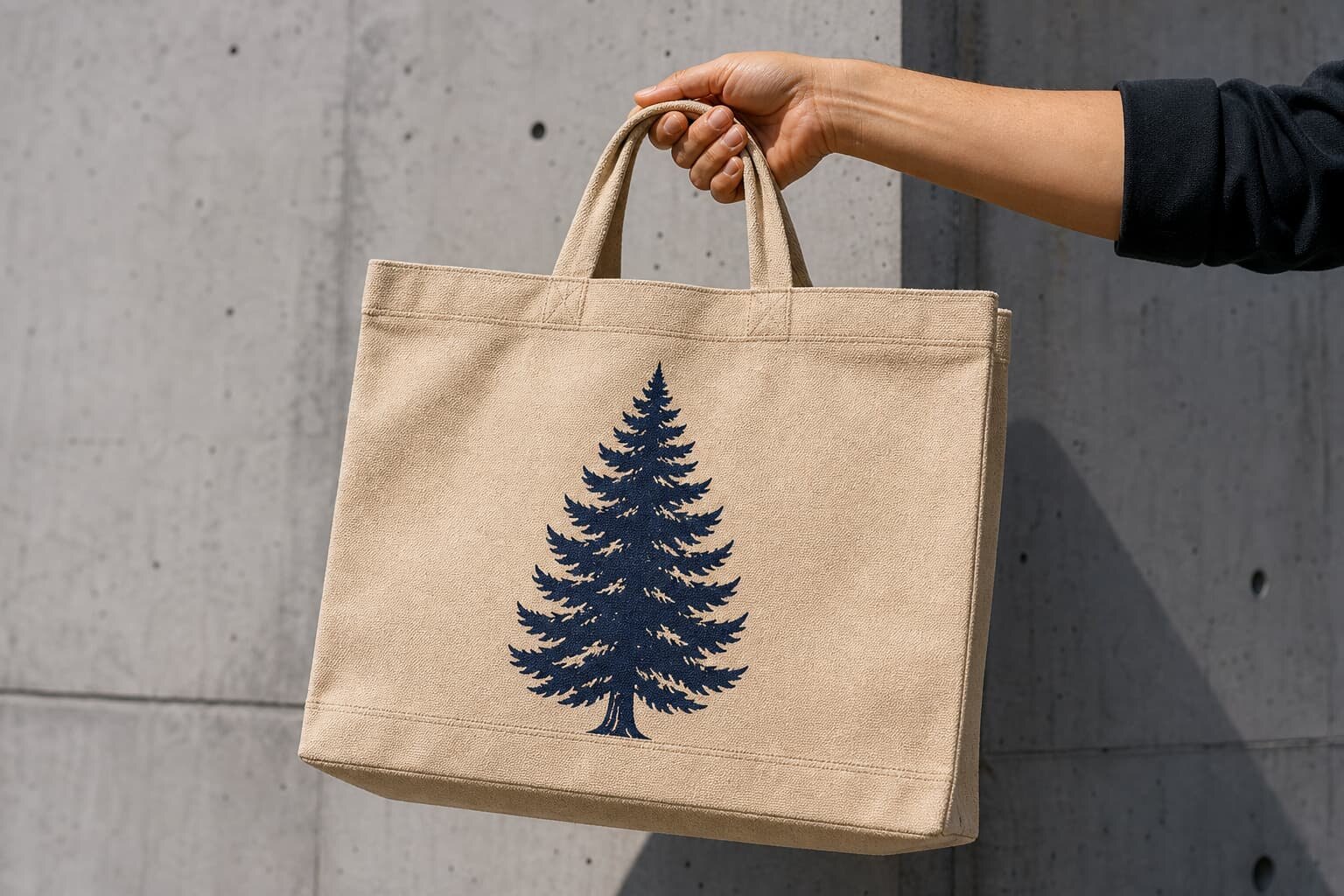
1. The buying problem: retail gift totes fail when the RFQ is too vague
A retail canvas tote for gift buyers is not the same as a loose promotional giveaway bag. Gift buyers usually need a tote that looks acceptable on a shelf, carries a boxed item or bundle, matches brand artwork, and arrives packed in a way that a warehouse or store team can handle without rework. The common sourcing mistake is sending a short RFQ such as “cotton canvas tote, logo print, best price.” That wording gives factories too much room to quote different fabrics, handle materials, print methods, and packing methods.
When quotes come back with a wide price gap, the cheapest supplier may not actually be cheaper. They may have quoted 8 oz fabric instead of 12 oz, one-color print instead of two-color, thinner handles, no individual packing, or a low MOQ that applies only to one plain fabric color. Your job as a buyer is not to over-engineer the bag; it is to remove the hidden variables that create production arguments later.
- Use the RFQ to define how the tote will be sold or gifted, not only how it looks.
- Ask factories to quote against the same fabric GSM, bag size, handle type, logo process, packing, and inspection expectations.
- Treat sample approval as a commercial checkpoint, not a design formality.
2. Start with the retail use case before choosing the canvas weight
Canvas weight drives the first big cost and quality decision. For retail gift buyers, 10 oz cotton canvas, roughly 280-300 GSM depending on weave and finishing, is often the practical starting point. It gives better body than a lightweight promotional cotton bag, prints cleanly, and still folds efficiently for export packing. If the tote is meant for books, bottles, folded apparel, boxed cosmetics, or a holiday gift bundle, 10 oz usually feels retail-appropriate without pushing freight volume too high.
For a more premium tote, 12 oz canvas, commonly around 340-360 GSM, gives a heavier hand and more structure. It is suitable for bookstores, museum shops, premium corporate gifting, or brands that want the bag to remain useful after the gift is opened. The trade-off is higher material cost, more carton volume, and stricter sewing control. Heavy fabric requires proper needle size, stitch tension, and seam handling, otherwise the bag may show puckering, corner bulk, or visible needle marks.
- 8 oz / 230-250 GSM: cost-sensitive, softer hand, best for light gift packaging.
- 10 oz / 280-300 GSM: balanced retail option for most branded gift programs.
- 12 oz / 340-360 GSM: premium feel, stronger structure, higher packing and sewing demands.
- 14 oz and above: possible for specialty retail, but confirm sewing capability and carton volume before approving.
3. Specify the tote shape around the gift item, not only the logo
A retail gift tote often has to fit a real object: a box of skincare, a folded sweatshirt, a wine accessory set, a book bundle, or a conference welcome kit. If the bag is too flat, the gift may distort the side seams. If the handles are too short, the recipient cannot carry it comfortably. If the opening is too narrow, store staff will struggle to insert the product at scale. Before asking for a quote, measure the item or expected bundle and define the minimum usable internal space.
The most common tote sizes for retail gifting fall around 35-40 cm width by 38-42 cm height, with or without a gusset. A 10 cm gusset can make a large difference when packing boxed gifts, but it also increases fabric consumption and sewing time. Handle drop should be chosen based on carrying style. A short hand-carry handle may be 18-22 cm drop, while shoulder carry often needs 25-30 cm drop. Do not assume every supplier uses the same interpretation of handle length; define finished drop from top edge to handle peak.
- Flat tote: best for books, documents, folded apparel, and low-profile gift inserts.
- Bottom gusset: better for boxed items and retail bundles that need stable capacity.
- Side and bottom gusset: more volume but higher cutting and sewing cost.
- Long shoulder handle: better user value but may need reinforcement to avoid stretching.
4. Choose a print method that matches artwork and repeat order risk
For most retail canvas totes, screen printing is still the safest commercial choice. It works well for solid logos, slogans, and simple illustrations, especially in one to three colors. On natural cotton canvas, however, ink color can look different from coated paper or digital artwork. Natural canvas has a warm base color and a textured surface, so light ink may need an underbase or adjusted ink coverage. This should be discussed before the factory makes the print screen.
Heat transfer, DTG, embroidery, and woven labels each have a place, but they should not be selected only because they look attractive in a presentation file. Heat transfer can handle full-color artwork, but buyers should check flexibility, edge feel, and wash behavior. Embroidery gives texture and a premium impression, but it adds cost and can distort lighter canvas if the stitch density is high. A woven side label is useful for retail branding when the main front artwork needs to stay clean.
- Screen print: practical for bold retail logos and repeat orders with controlled artwork.
- Heat transfer: useful for gradients or photo-style graphics, but check handfeel and durability.
- Embroidery: premium look for smaller logos, but not ideal for large dense artwork on soft canvas.
- Woven label: good for brand detail, size marking, or a quieter retail finish.
5. Understand MOQ logic before comparing factory quotes
MOQ for retail canvas totes is not only a number picked by the sales team. It is affected by fabric availability, dyeing or bleaching requirements, printing setup, label production, cutting efficiency, and packing labor. A factory may accept a lower quantity for natural canvas with a one-color print because the fabric is in regular stock. The same factory may require a higher MOQ for dyed canvas, custom lining, special handle webbing, multiple logo positions, or barcode-packed retail units.
When a supplier says MOQ is 500 pieces, ask what that MOQ applies to. It may mean 500 pieces per size, per fabric color, per print design, or per carton configuration. For a gift buyer ordering several seasonal designs, this is critical. Four artwork designs at 500 pieces each is a different commitment from 500 pieces total split across four designs. If you need assorted designs, ask whether the factory can gang print, share fabric cutting, or quote a surcharge for smaller design splits.
- Lowest MOQ is usually available for stock natural canvas and standard handles.
- Custom dyed canvas usually raises MOQ because of dye lot and shade control.
- Multiple print designs increase setup time, screen cost, and inspection complexity.
- Retail packing with individual barcode labels can affect MOQ because of packing line setup.
6. Build the quote around cost drivers, not only unit price
A useful quote should make the cost structure visible enough for you to compare suppliers. You do not need the factory’s full internal costing, but you do need to know what is included. Fabric weight, bag dimensions, number of print colors, print positions, handle material, labels, hangtags, individual polybags, carton quantity, and export terms all affect the final unit price. If one quote includes individual barcode labeling and another quote is bulk packed, the comparison is not fair.
Retail gift buyers should also ask whether setup costs are separated or amortized. Screen charges, sample charges, custom label fees, cutting mold charges, or packaging artwork costs may appear outside the unit price. For a first order, this may be acceptable. For a reorder, you should clarify whether those charges repeat. Quote validity also matters because cotton fabric and exchange rates can move. A professional quote should state validity period and any assumptions.
- Unit price should state fabric weight, print method, number of colors, and packing method.
- Setup charges should identify screen, sample, label, hangtag, or special packaging costs.
- Carton data should include pieces per carton, carton size, gross weight, and net weight.
- Trade terms should be clear: EXW, FOB, CIF, DDP, or buyer-nominated forwarder.
7. Sample approval: check the factory’s production path before bulk cutting
The pre-production sample is where many retail tote problems can be prevented. A photo sample may confirm layout, but it cannot confirm fabric weight, handfeel, seam strength, ink opacity, odor, or packing thickness. For any retail-facing gift order, request a physical sample made as close as possible to the bulk specification. If the sample uses substitute fabric or temporary print ink, the supplier should clearly state that and you should not treat it as final approval.
Your sample comments should be written like acceptance criteria. Instead of saying “make logo better,” state that the logo should be centered 12 cm below the top edge, print width 18 cm, Pantone reference to be matched as closely as possible on natural canvas, no visible pinholes, no ink spread beyond artwork edge, and handle drop 28 cm plus or minus agreed tolerance. This helps the factory production team, not only the salesperson.
- Measure sample size after pressing and compare with requested finished dimensions.
- Load the sample with expected gift contents and check handle comfort and seam stress.
- Rub the printed area lightly with a white cloth after drying to check obvious ink transfer.
- Fold the bag as it will be packed and check whether print cracking or hard creasing appears.
- Photograph approved details and include them in the production file.
8. Packing decisions affect retail presentation and freight cost
Packing should be chosen according to your sales channel. A distributor shipping to retail stores may need each tote folded with a belly band, hangtag, barcode sticker, or individual polybag. A corporate gift program may prefer bulk flat packing because the tote will be packed together with other items locally. A warehouse handling ecommerce kits may require carton quantities that match pick-pack routines. If packing is not specified, factories usually quote the simplest method, which may not match your channel.
Heavy canvas totes can develop strong fold marks if they are compressed too tightly, especially when screen print is placed across the fold line. For premium retail totes, ask the factory to show the folded method and carton arrangement before bulk packing. Carton strength and moisture protection also matter. Cotton canvas absorbs moisture and odor, so cartons should be clean, dry, and not overloaded. If the goods will sit in a humid port or warehouse, discuss desiccants or polybag policy based on your market requirements.
- Flat bulk packing: lowest labor and packaging cost, efficient for local kitting.
- Individual polybag: protects from handling dirt, but may conflict with plastic reduction goals.
- Belly band or kraft sleeve: better shelf presentation, needs accurate folding and artwork approval.
- Hangtag and barcode: useful for retail scanning, but must be checked for placement and readability.
9. Lead time planning: separate approval time from production time
Lead time problems often happen because buyers count only sewing days. A factory order includes artwork checking, fabric confirmation, sample making, sample shipping, buyer approval, material booking, cutting, printing, curing, sewing, trimming, inspection, packing, and export handover. If the buyer takes one week to approve a sample, the production schedule usually moves. A realistic timeline should show which steps are waiting for buyer input and which steps are controlled by the factory.
For a repeat retail tote, production can be faster if fabric, artwork, label, and packing files are unchanged. For a first order, allow more time for print strike-off and sample revision. Custom dyed fabric, custom woven labels, or multi-design assortments add risk to the schedule. If your delivery window is fixed for a holiday campaign or store launch, tell the factory the required handover date and ask what specification choices reduce lead time risk.
- Artwork confirmation should happen before sample clock starts.
- Bulk fabric should not be cut until the approved sample and production file are aligned.
- Print curing time and ink testing should not be skipped to recover lost schedule.
- Final inspection should happen before final balance payment or shipment release where possible.
10. Acceptance criteria reduce disputes after the cartons arrive
Retail gift buyers should define what is acceptable before the factory ships, not after receiving a complaint from stores. Canvas is a natural textile, so minor shade variation, small slubs, and texture differences can occur. The question is not whether every piece is perfectly identical; the question is what tolerance is acceptable for your retail channel. Define critical defects such as broken handles, wrong logo, severe stains, unreadable barcode, major size error, or mixed designs. Then define minor defects such as small thread ends or slight fabric slubs that do not affect saleability.
A simple inspection plan can prevent expensive sorting. Ask the factory to inspect during cutting, after printing, after sewing, and before packing. For larger orders, you may arrange a third-party inspection using AQL criteria, but even without that, the supplier should have clear internal checkpoints. Keep one approved production sample, one approved packing photo, and one approved carton mark file as references. These references are more useful than long email threads when a warehouse reports an issue.
- Critical defects: wrong fabric, wrong print, broken handle, mold, heavy stain, unsafe needle fragment.
- Major defects: print misregistration, open seam, severe puckering, large size deviation, wrong barcode.
- Minor defects: loose thread ends, small fabric slubs, slight shade variation within approved range.
- Reorder control: compare new bulk goods against the last approved sample, not only the new quote.
Specification comparison for buyers
| Spec decision | Recommended option | When it fits | Buyer risk to check |
|---|---|---|---|
| Fabric weight | 10 oz / 280-300 GSM cotton canvas | Retail gift totes that need structure but still fold for packing | Supplier may quote lighter 8 oz fabric unless GSM and tolerance are written |
| Premium fabric option | 12 oz / 340-360 GSM cotton canvas | Higher ticket gift sets, museum shops, book stores, corporate gift boxes | Higher freight volume and possible needle marks if sewing is not adjusted |
| Budget fabric option | 8 oz / 230-250 GSM cotton canvas | Promotional gift bags where price matters more than standing shape | Bag may feel soft and less retail-ready after washing or pressing |
| Handle construction | Self-fabric canvas handles with X-box reinforcement | Retail bags expected to carry books, bottles, apparel, or gift bundles | Weak bar tacks or thin webbing can fail during load testing |
| Logo method | Screen print with water-based or discharge-style ink where suitable | 1-3 color logos, medium to large artwork, stable repeat orders | Color shift on natural canvas and ink bleeding on open-weave fabric |
| Small detailed branding | Woven side label plus simple front print | Gift buyers wanting a retail brand feel without heavy artwork | Label artwork, placement, and fold direction must be approved before bulk |
| Packing style | Flat packed 50-100 pcs per export carton with inner polybag only if required | Retail distributors, warehouse storage, and freight-efficient replenishment | Over-compression may create hard fold marks on heavy printed panels |
| Sample approval | Pre-production sample using bulk fabric, bulk handle, and final print ink | Any retail order where color, handfeel, or shelf presentation matters | Salesman sample may not match production if mill lot and print setup change |
Buyer checklist before sampling
- Confirm finished bag size, gusset size, handle length, and tolerance before requesting quotes.
- Specify fabric by oz and GSM range, not only by the words cotton canvas or heavy canvas.
- State whether the tote must stand, fold flat, hold a gift box, or hang on a retail hook.
- Send logo artwork in vector format and define exact print size, placement, and Pantone references.
- Ask whether the quoted print is screen print, heat transfer, DTG, embroidery, woven label, or mixed branding.
- Request a pre-production sample made with actual bulk fabric, final handles, final thread, and approved packing.
- Check whether MOQ is per style, per color, per print design, or per shipping carton configuration.
- Define packing: individual polybag, belly band, hangtag, barcode sticker, master carton quantity, and carton marks.
- Ask for lead time split into material preparation, sample approval, production, packing, and export handover.
- Compare quotes using total landed assumptions, not only unit bag price.
Factory quote questions to send
- What exact fabric weight are you quoting in oz and GSM, and what is the acceptable production tolerance?
- Is the fabric greige, bleached, dyed, or washed, and will shrinkage be controlled before cutting?
- Are the handles self-fabric, cotton webbing, or another material, and what is the handle width and finished drop length?
- Which print method is included in the quoted unit price, and how many colors, positions, and screens are included?
- Can the factory match Pantone colors on natural canvas, and will there be a lab dip or strike-off before production?
- What MOQ applies to each bag size, fabric color, print design, label, and packing method?
- What sample types are available, what cost applies, and what is the sample lead time after artwork confirmation?
- What packing method is included, including pieces per carton, carton dimensions, gross weight, and barcode handling?
- What quality inspection standard do you use for stitching, stains, print registration, size tolerance, and packing?
- What quote validity period applies, and which cost items may change if cotton price, exchange rate, or freight terms change?
Quality-control points to confirm
- Measure finished width, height, gusset, handle width, and handle drop against approved tolerance.
- Check fabric handfeel and weight against the approved sample, especially if reorder timing crosses a new fabric lot.
- Inspect handle reinforcement with pull testing or load simulation for the intended gift contents.
- Check print position, registration, opacity, handfeel, cracking, ink smell, and color consistency across cartons.
- Review seam strength, skipped stitches, broken threads, uneven top hems, loose bartacks, and corner puckering.
- Confirm label direction, hangtag placement, barcode readability, and carton mark accuracy before shipment.
- Open cartons from different production batches to check shade variation, stains, dust, odor, and mixed styles.
- Verify packing count, carton strength, moisture protection, and pallet or container loading requirements.