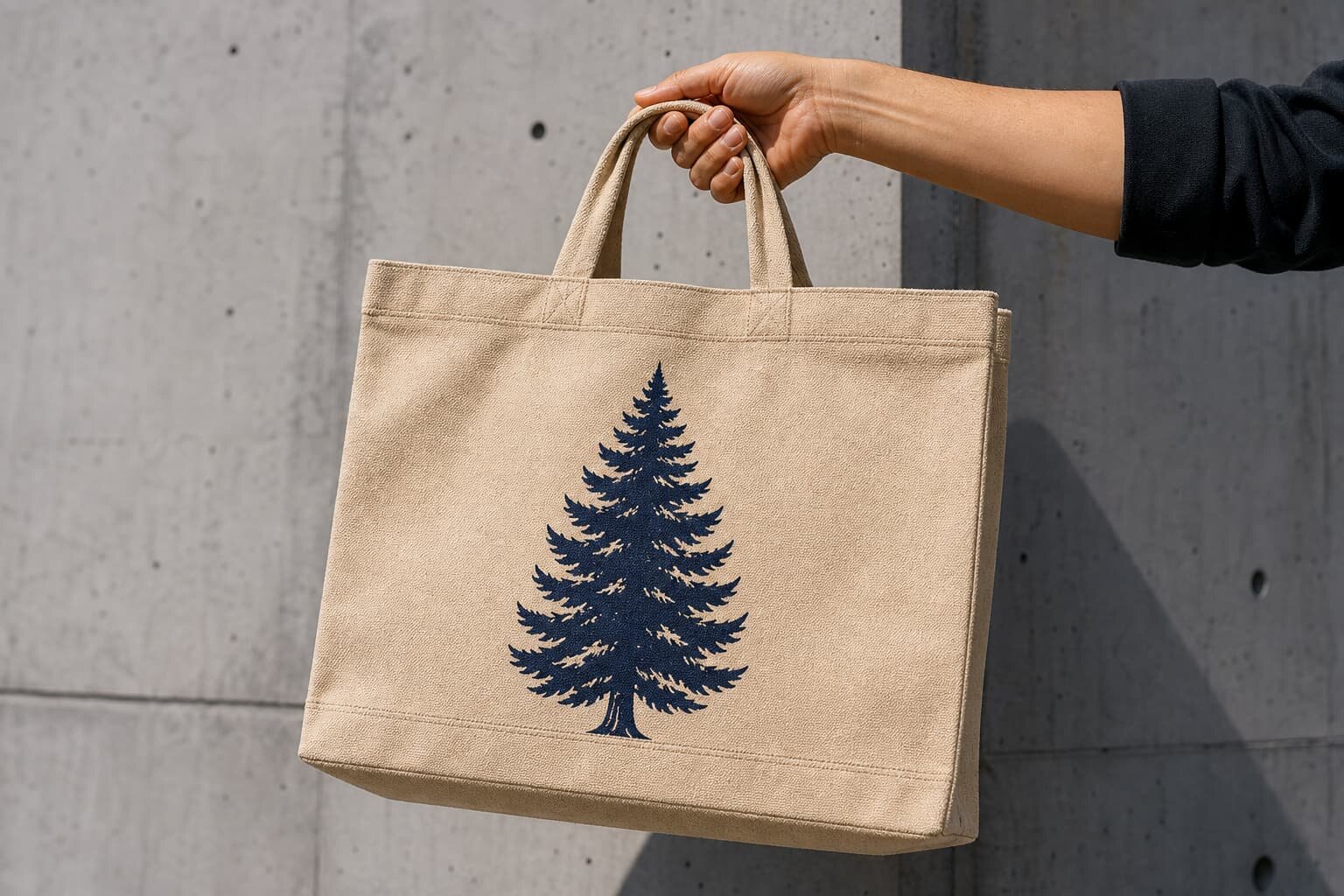
1. The buying problem: quotes look similar, but the totes are not
A retail canvas tote for an ecommerce brand is not just a cheap cotton bag with a logo. It may become order packaging, resale merchandise, a subscription insert, a gifting item, or a marketplace bundle component. Each use changes the required fabric weight, print method, packing, barcode handling, and quality tolerance. If the RFQ says only “canvas tote, natural color, logo print,” suppliers will quote different constructions while appearing to offer the same product.
The main buying problem is quote comparability. One supplier may price 8 oz light canvas with a flat bottom and simple handle stitching. Another may quote 12 oz canvas with a gusset, reinforced handles, individual packing, and export cartons. The second quote may be higher but more suitable for retail sale. Procurement teams should force the quotation into clear specification lines before comparing unit prices.
- Define the commercial use first: resale, packaging, giveaway, or fulfillment insert.
- Ask every supplier to quote the same finished size, GSM, print area, handle style, and packing.
- Separate product cost from sample cost, setup cost, inner packing, labels, and freight.
- Treat very low prices as a signal to check fabric weight, construction, and excluded charges.
2. Start the RFQ with finished size and load expectation
Tote size controls fabric consumption, sewing time, packing volume, and the way the bag looks in customer photos. For ecommerce brands, common retail tote sizes are around 35 x 40 cm for apparel and lifestyle goods, 38 x 42 cm for books or larger order bundles, and gusseted versions such as 35 x 38 x 10 cm when the bag must hold boxed items. A flat tote costs less, but it does not create the same retail presentation when used as packaging.
Handle drop is often missed in RFQs. A short handle may look clean in product photography but will not fit comfortably over the shoulder. A long shoulder handle may drag visually on a smaller tote. For retail ecommerce use, buyers usually need a handle drop around 25-30 cm, depending on bag height and target use. Ask the factory to confirm finished handle length, handle width, and reinforcement method instead of assuming the sample photo shows production quality.
- Quote dimensions as width x height x gusset, not just “medium” or “large.”
- State whether dimensions are finished outside measurements or panel cutting size.
- Confirm handle width, total handle length, and handle drop after sewing.
- Mention intended load, such as 3 kg apparel order, 5 kg books, or light cosmetic kits.
- Set a realistic size tolerance, commonly around plus or minus 0.5-1.0 cm depending on construction.
3. Fabric weight and GSM: the biggest hidden quote variable
Canvas tote pricing is heavily affected by fabric weight. A bag quoted in 8 oz canvas can be much cheaper than the same size in 12 oz canvas, but it will feel softer, thinner, and less structured. For retail ecommerce brands, 10 oz to 12 oz cotton canvas, approximately 340-407 GSM, is often a practical range. Lighter 6 oz to 8 oz cotton may work for promotional giveaways or very low-cost packaging, but it usually feels less premium when sold as merchandise.
Buyers should ask whether the quoted GSM is measured before or after dyeing, washing, or finishing. Natural cotton canvas can have slubs and shade variation; dyed canvas can shrink or change hand-feel. If the brand needs a clean retail look, request a fabric swatch or blank sample before approving bulk production. A small difference in GSM can change the unit price, carton weight, shipping cost, and customer perception.
- 6 oz to 8 oz: budget promotional use, lighter ecommerce inserts, lower perceived retail value.
- 10 oz: good middle option for DTC brands balancing cost and structure.
- 12 oz: stronger hand-feel, better for paid merchandise and heavier product bundles.
- 14 oz and above: premium but higher freight weight, longer sewing time, and more needle control needed.
- For dyed canvas, confirm whether shrinkage and shade tolerance are controlled by lot.
4. Print method selection should follow artwork, not habit
Screen printing is usually the most economical method for solid logos, slogans, and one to four spot colors. It gives good opacity on natural canvas if the mesh, ink, and curing are controlled. For ecommerce brands using large front logos, the factory should confirm whether the print will have a soft hand-feel or a thicker ink layer. A large stiff print can make the tote feel cheap even if the artwork looks correct in the proof.
Digital printing, heat transfer, and embroidery may be suitable in specific cases. Digital print can handle gradients and small batches but may be limited by fabric texture and color. Heat transfer can support detailed art, but the film edge and wash performance should be tested. Embroidery gives a premium look for small logos but adds cost and may pucker lighter canvas. Do not let a supplier choose the method only because it is convenient for their workshop.
- Use screen print for solid brand marks, bold type, and repeatable bulk orders.
- Use digital print when the artwork has gradients, photos, or many colors and the order size supports it.
- Use heat transfer carefully for detailed artwork; request wash and rub testing on canvas.
- Use embroidery for small premium logos, not large filled artwork on light fabric.
- Always state print size, print position, Pantone colors, and whether printing is one side or both sides.
5. MOQ logic: why the same quantity can price differently
MOQ is not only a number of bags. It is driven by fabric purchasing, dyeing minimums, print setup, sewing line efficiency, label production, and packing requirements. A supplier may accept 500 natural canvas totes with one black screen print, but the MOQ may rise for custom dyed canvas, multiple artwork versions, or many small SKU splits. If buyers ask for 1,000 bags across five colors and ten designs, the factory sees many small production runs, not one efficient order.
A better RFQ groups the order by real production variables. Natural canvas with one print color may have a lower entry point because fabric is easier to source. Custom Pantone dyed canvas requires minimum dye lot volume and may have shade variation risk. Multiple print colors add screens, setup time, and registration control. Procurement teams should ask suppliers to show MOQ and price by scenario instead of pushing for one blended price too early.
- Ask for MOQ for blank natural canvas before adding print and packing.
- Ask for MOQ per fabric color when dyeing or custom color fabric is required.
- Ask for MOQ per artwork if designs are different, even on the same bag size.
- Ask whether mixed designs can share fabric cutting and sewing to reduce cost.
- Check if low MOQ pricing includes higher print setup charges or sample charges.
6. Sample workflow: what to approve before bulk cutting
For first orders, a material swatch alone is not enough. A proper approval path may include a fabric swatch, print strike-off, blank size sample, and pre-production sample. The pre-production sample should use the actual fabric weight, correct logo size, correct handle construction, and agreed packing. If the supplier sends only a photo, the buyer cannot evaluate thickness, hand-feel, print curing, handle comfort, or real capacity.
Sample approval should create a physical standard for production and inspection. Keep one approved sample at the factory and one with the buyer or inspection team. Mark the approved sample with date, version, artwork file name, fabric GSM, and packing method. When changes are made after sample approval, record them in writing. Many tote problems happen because the factory follows the approved sample while the buyer assumes the later email comment changed the standard.
- Check fabric thickness and stiffness by hand, not only by photo.
- Measure bag body, gusset, handle drop, and logo placement on the sample.
- Rub the print surface with a white cloth after curing to check obvious ink transfer.
- Load the sample with expected product weight and hang it for a practical stress check.
- Approve packing sample if the tote will be sold retail or sent to marketplace fulfillment.
7. Packing decisions affect cost, freight, and warehouse handling
Packing is often treated as an afterthought, but ecommerce brands may need different packing from promotional buyers. Bulk packing in master cartons is cost-efficient for warehouse use, but it can allow creasing, dust, or handling marks if the fabric is natural light color. Individual polybags protect each tote but add material cost, labor, carton volume, and sometimes sustainability concerns. Paper bands or belly bands can improve retail presentation but need artwork, barcode placement, and folding consistency.
Before approving the quote, ask for carton quantity, carton dimensions, gross weight, and packing layout. These details affect freight estimates and warehouse receiving. A heavy 12 oz gusseted canvas tote packed too tightly may crease badly. A loosely packed carton may collapse in transit. For marketplace fulfillment, barcode orientation and polybag warning rules may also matter depending on the destination platform and country.
- Bulk pack: lowest packing cost, suitable for internal fulfillment or repacking.
- Individual polybag: protects light fabric, useful for resale and marketplace inbound, but adds plastic.
- Paper band: better retail appearance, less protection from dust and moisture.
- Hangtag and barcode: useful for retail distribution but must be included in unit cost.
- Export carton: confirm ply, dimensions, gross weight, and maximum pieces per carton.
8. Lead time planning: separate sample, material, production, and shipping
A useful lead time estimate should not be a single vague number. Buyers need sample lead time, artwork approval time, material procurement or dyeing time, bulk sewing and printing time, inspection time, and transport time. Natural canvas orders using available fabric may move faster than custom dyed canvas or complex printing. Peak season, holiday closures, and packaging component delays can also change the schedule.
When comparing quotes, ask when the production clock starts. Some factories count lead time after deposit; others count after sample approval, artwork confirmation, and receipt of all labels. For a retail ecommerce launch, the safest schedule includes buffer time for one sample correction and final inspection. If a supplier promises a very short schedule, confirm whether fabric is in stock, print screens are ready, and packing materials are included.
- Sample phase: confirm artwork, fabric, size, and packing before bulk commitment.
- Material phase: natural stock canvas is different from custom dyed or special finish fabric.
- Production phase: cutting, printing, curing, sewing, trimming, and packing must be sequenced correctly.
- Inspection phase: reserve time before shipment instead of inspecting after goods are loaded.
- Shipping phase: carton size and gross weight should be confirmed before final freight booking.
9. Quote data buyers should request to compare suppliers fairly
A professional quote should show more than a unit price. It should identify the exact specification, Incoterm, currency, MOQ, validity period, sample charges, setup charges, packing method, carton details, and lead time assumptions. If these lines are missing, the buyer may discover extra costs after artwork approval. For example, a quote may exclude inner labels, custom hangtags, barcode stickers, or stronger export cartons.
Ask suppliers to itemize optional upgrades rather than hiding them inside one number. This helps procurement decide where to spend and where to save. A paid retail tote may justify 12 oz canvas, woven side label, and individual packing. A free ecommerce insert may only need 10 oz natural canvas with one color print and bulk cartons. The best quote is not always the lowest; it is the one that matches the selling channel and reduces rework.
- Product spec: finished size, fabric GSM, color, handle style, print method, and print size.
- Commercial terms: MOQ, price breaks, currency, Incoterm, payment terms, and quote validity.
- Cost add-ons: screen fees, artwork setup, sample cost, label cost, hangtag, barcode, and packing.
- Production data: sample lead time, bulk lead time, production start condition, and inspection timing.
- Logistics data: pieces per carton, carton dimensions, gross weight, and estimated ready date.
10. Common production mistakes and how to prevent them
Most canvas tote problems are preventable if the RFQ and approval process are specific. The frequent issues are thinner fabric than expected, wrong handle drop, print color mismatch, logo placed too low, weak handle stitching, dirty natural fabric, inconsistent folding, and missing labels. These mistakes are not always caused by bad factories; many happen because the buyer approved a visual mockup instead of a production sample and did not define acceptance criteria.
Set simple acceptance criteria before production begins. For example, define print position tolerance, maximum visible stains per bag, size tolerance, color tolerance against approved sample, and unacceptable stitching defects. Ask the factory to send production photos after cutting, after printing, and during packing. This is not a replacement for inspection, but it can catch problems earlier than a final carton check.
- Prevent thin fabric issues by approving GSM and retaining fabric swatch standards.
- Prevent print mistakes by approving a strike-off at real size on actual canvas.
- Prevent handle failures by specifying cross stitch or bartack reinforcement.
- Prevent dirty goods by agreeing on packing, handling, and rejection rules for visible stains.
- Prevent receiving problems by matching carton marks, barcodes, and packing list to the purchase order.
Specification comparison for buyers
| Spec decision | Recommended option | When it fits | Buyer risk to check |
|---|---|---|---|
| Fabric weight | 10 oz to 12 oz cotton canvas, about 340-407 GSM | Retail ecommerce totes that must hold folded apparel, books, cosmetics, or subscription items | Quote may look cheaper if supplier uses 8 oz canvas or blends; confirm actual GSM before approval |
| Bag construction | Boxed bottom or gusseted tote with reinforced handle stitching | Brands selling the tote as merchandise or using it for premium order packaging | Flat totes are cheaper but may not stand well or fit bulky ecommerce orders |
| Printing method | Screen print for solid logos; heat transfer or digital print for gradients and small batches | Most ecommerce brand artwork with one to four colors | Large print areas can crack, bleed, or feel stiff if ink type and curing are not confirmed |
| Handle option | Self-fabric canvas handles, 2.5-3.0 cm width, cross-stitched | Retail-ready tote with consistent appearance and stronger load support | Narrow handles reduce cost but feel uncomfortable and may fail on heavier orders |
| MOQ planning | Base MOQ around fabric color, print colors, and packing style rather than only bag quantity | Buyers comparing multiple artwork versions, sizes, or colorways | Splitting one order into many designs can push unit cost up due to setup and material loss |
| Packing method | Individual polybag or paper band only when retail presentation requires it; master carton for bulk ecommerce use | DTC brands, gift sets, event resale, marketplace fulfillment | Over-packing adds cost and carton volume; under-packing can create creases and dirty bags |
| Sample approval | Pre-production sample in correct fabric weight, handle length, print size, and packing | Any first order or revised artwork order | A photo sample is not enough for retail totes; handle feel, thickness, and print hand-feel must be checked |
| Quote comparison | Request itemized quote with fabric, print, label, packing, carton, sample, and freight terms separated | Importers comparing factories or negotiating with distributors | Lowest unit price may exclude labeling, inner packing, export carton strength, or artwork setup |
Buyer checklist before sampling
- Define the finished tote size in width, height, gusset, handle length, and handle width; do not quote only from a photo.
- Specify fabric composition, weave, color, and weight in oz or GSM; ask whether the supplier is quoting finished fabric weight or nominal greige weight.
- State the expected retail use: product packaging, paid merchandise, subscription box insert, gift-with-purchase, or marketplace bundle.
- Provide artwork files in vector format with Pantone references and exact print dimensions in centimeters.
- Confirm whether printing is one side, two sides, full bleed, seam-to-seam, or positioned away from seams and handles.
- Request a quote with MOQ logic by size, fabric color, artwork version, and packing method.
- Ask for sample cost, sample lead time, and whether the sample charge is refundable after bulk order.
- Confirm acceptable tolerances for size, fabric weight, print position, color, stitch density, and carton quantity.
- Decide whether each bag needs hangtag, barcode sticker, sewn label, care label, or marketplace FNSKU label.
- Check carton dimensions, gross weight, and packing quantity before confirming ocean, air, or courier freight.
Factory quote questions to send
- What fabric weight are you quoting in GSM and oz, and is it based on finished fabric after dyeing and finishing?
- Is the canvas 100% cotton, recycled cotton, cotton-poly blend, or another composition?
- What is your MOQ for natural canvas, dyed canvas, custom Pantone fabric, and each artwork version?
- What bag size, gusset depth, handle length, and handle reinforcement are included in the quotation?
- Which print method do you recommend for this artwork, and what are the setup charges per color or per design?
- Can you match Pantone colors on natural canvas, and what color tolerance should we expect after curing and washing?
- What is included in the unit price: woven label, hangtag, barcode, polybag, carton, export packing, or only bulk bags?
- What sample type will you make: material swatch, blank bag, print strike-off, pre-production sample, or full packing sample?
- What is the estimated sample lead time and bulk production lead time after sample approval and deposit?
- How many bags per carton, what are the carton dimensions, and what is the estimated gross weight?
Quality-control points to confirm
- Verify fabric weight with a GSM cutter or agreed weighing method before bulk cutting.
- Check finished bag dimensions against approved sample, including gusset and handle drop.
- Inspect print color, position, curing, rub resistance, and edge sharpness before packing.
- Confirm handle stitching is reinforced and symmetrical with no skipped stitches or loose threads.
- Check seam allowance and inside finishing, especially at side seams and bottom gusset corners.
- Review stains, slubs, weaving defects, needle holes, oil marks, and uneven dye lots under proper light.
- Confirm labels, hangtags, barcodes, and packing sequence match the purchase order.
- Perform carton drop and compression reasonableness checks when bags are packed for export or ecommerce fulfillment.
- Count pieces per inner pack and master carton to prevent receiving shortages at warehouse.
- Retain approved pre-production sample and compare random bulk units against it during final inspection.