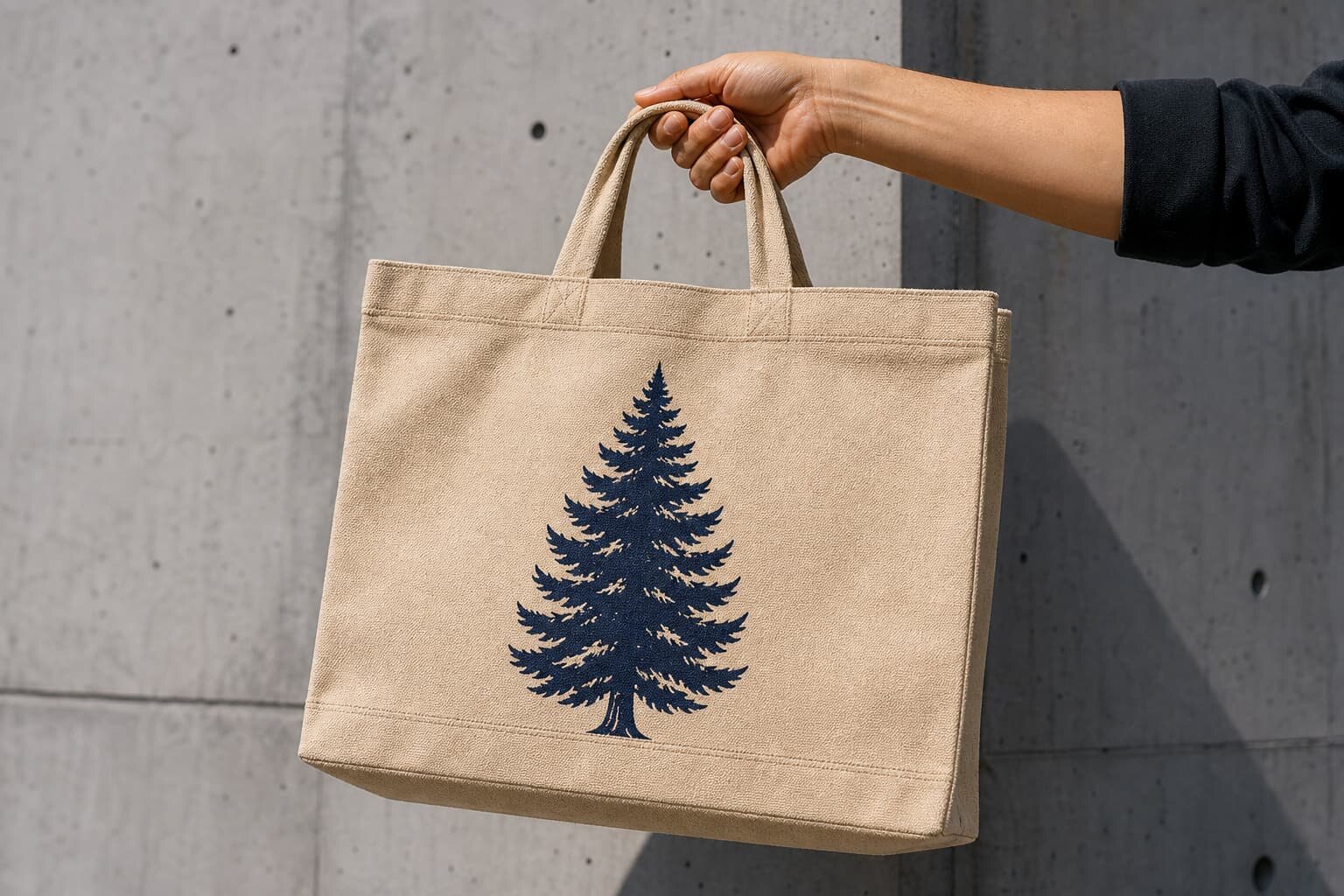
1. The quoting problem: most tote RFQs are too vague
Retail canvas tote quotes can look similar on a spreadsheet while the actual products are very different. One supplier may quote 8 oz canvas with a simple heat transfer and flat bottom. Another may quote 12 oz canvas, reinforced handles, boxed bottom, and individual packing. If the RFQ only says “canvas tote with logo,” the lowest price often wins before the buyer understands what has been removed from the specification.
For corporate buyers, the risk is not only paying too much. The bigger risk is ordering a tote that does not match the selling channel. A free conference tote can be lighter. A retail tote sold in a company store, bookstore, resort shop, or distributor catalog needs better fabric body, cleaner stitching, controlled print placement, and packaging that survives warehouse handling. The quote request should force every factory to price the same construction.
- Bad RFQ: “Please quote 5,000 canvas tote bags with logo.”
- Better RFQ: “Quote 5,000 pcs natural 12 oz cotton canvas tote, finished size 38 x 42 x 10 cm, 60 cm self-fabric handles, boxed bottom, 1-color screen print 26 x 22 cm, woven side label, individual polybag, export carton.”
- Best practice: ask for one base quote and two controlled alternatives, such as lighter fabric and upgraded retail packing.
2. Start with retail use, not just bag dimensions
A tote for corporate retail must be designed around what it will carry, how it will be displayed, and whether the end user is expected to pay for it. A bag used for employee onboarding can be simple and functional. A tote sold in a retail program needs stronger perceived value: fabric thickness, straight seams, consistent color, and a logo method that does not look like a disposable promotion.
Before asking factories for pricing, define the commercial role of the bag. If the tote will hold books, drinkware, catalogs, or boxed gifts, the bottom and handle reinforcement matter more than a few cents of fabric savings. If the tote is folded in a retail carton or mailed inside an ecommerce parcel, packing and crease control become part of the product specification, not an afterthought.
- Paid retail tote: usually needs 10-14 oz canvas, clean finishing, better print, barcode or hangtag, and consistent folding.
- Corporate gift tote: may prioritize appearance, handle comfort, and room for multiple kit items.
- Distributor stock tote: should avoid over-custom features that slow replenishment or create color matching issues.
- Event retail tote: needs a realistic production lead time because artwork approval and print curing can become bottlenecks.
3. Fabric weight and GSM: the biggest cost and quality driver
Canvas weight should be stated in both ounces and approximate GSM because different markets use different language. As a practical reference, 8 oz canvas is often around 230-240 GSM, 10 oz around 280 GSM, 12 oz around 340 GSM, and 14 oz around 400 GSM. Exact conversion varies with yarn, weave density, finishing, and moisture, so the RFQ should include an acceptable tolerance rather than treating these numbers as laboratory constants.
For retail canvas totes, 10 oz to 12 oz is often the balanced range. It gives better handfeel and structure than lightweight promotional cotton, but it remains easier to sew and ship than very heavy canvas. Premium programs may choose 14 oz or 16 oz, but thick seams, higher carton weight, longer print drying time, and higher needle breakage risk should be expected. If a supplier quotes a surprisingly low price, ask whether the fabric is actually lighter or more open-weave than requested.
- 8 oz / 230-240 GSM: suitable for simple giveaway or low-cost stock tote.
- 10 oz / around 280 GSM: good entry retail option with moderate structure.
- 12 oz / around 340 GSM: strong retail feel for corporate stores and gift programs.
- 14-16 oz / 400-450 GSM: premium feel, but higher sewing and freight cost.
- RFQ wording: “Quote based on 12 oz cotton canvas, approx. 340 GSM, natural color, tolerance to be confirmed by factory.”
4. Construction details that change the quote
Two totes with the same outside dimensions can have different production costs because of construction. A flat tote is simpler to cut, sew, fold, and pack. A boxed-bottom tote needs more sewing steps and more accurate alignment, but it holds merchandise better and stands more neatly when filled. For retail buyers, the boxed bottom often improves usability enough to justify the extra cost, especially for apparel, books, and packaged gift sets.
Handle construction is another area where quotes drift. Self-fabric handles look consistent with the body, while cotton webbing can be strong and efficient. A long shoulder handle uses more material than a short hand-carry handle. Cross-stitch or box-stitch reinforcement adds sewing time but reduces complaints when customers load the bag heavily. State the handle drop and reinforcement method clearly, because “standard handle” means different things in different factories.
- Finished size should include width, height, and gusset after sewing.
- Common retail size example: 38 x 42 x 10 cm, but adjust to your product load.
- Handle drop example: 25-30 cm for shoulder carry; confirm by physical sample.
- Reinforcement: X-stitch or box-stitch at handle ends for better strength.
- Optional features such as zipper, snap, inner pocket, lining, and woven label must be quoted as separate line items if cost comparison matters.
5. Logo printing: choose the method before comparing price
Logo method can change the price, sample time, and final appearance more than buyers expect. For most corporate canvas totes, screen printing is the most practical method for solid logos, slogans, and simple graphics. It gives good coverage, works well on natural canvas, and is cost-effective for medium and larger runs. The RFQ should state number of print colors, Pantone references, print size, and print position measured from the seams or bag center.
Full-color artwork needs more discussion. DTF and heat transfer can handle gradients or complex graphics, but the handfeel, edge, cracking risk, and heat mark risk should be tested on the actual canvas. Embroidery can look premium on heavier canvas, but it can pucker lighter fabric and is usually less suitable for very large filled areas. Woven labels, side labels, and leather-look patches are good for retail branding, but they require placement approval and may affect lead time.
- Screen print: best for 1-3 solid colors and larger production quantities.
- Heat transfer or DTF: useful for complex artwork or smaller runs, but test handfeel and durability.
- Embroidery: premium small logos, but not ideal for large filled graphics on lightweight canvas.
- Woven label: good for subtle retail branding and repeat programs.
- Ask for print curing information and a rub test on the pre-production sample.
6. MOQ logic: why the minimum order is not only about sewing
Minimum order quantity depends on fabric availability, color, logo process, trims, and packing. If the buyer selects natural stock canvas with a one-color print, the factory can often support a lower MOQ than for custom dyed canvas, special webbing, custom zipper color, woven label, or retail barcode packing. A low MOQ quote may be real for a basic tote but not valid after all branding requirements are added.
Corporate buyers should ask factories to explain MOQ by component. This helps separate the sewing minimum from the material minimum. For example, the factory may be able to sew 500 bags, but the fabric mill may require a larger dye lot for a custom color. A woven label supplier may have its own minimum. A custom carton or printed belly band may also have a minimum that affects unit cost. Clear MOQ logic prevents surprises after design approval.
- Stock natural canvas: usually easiest for lower MOQ and faster sampling.
- Custom dyed canvas: may require higher MOQ due to dye lot and color approval.
- Private labels and hangtags: check trim supplier MOQ and setup charges.
- Multiple artwork versions: confirm whether MOQ applies per design, per color, or total order.
- Reorders: ask whether the same fabric batch or label stock can be repeated consistently.
7. What quote data you should request from every factory
A useful wholesale quote should allow the buyer to compare the same bag across suppliers. Unit price alone is not enough. Ask for the quoted fabric weight, logo method, included accessories, packing method, carton quantity, sample cost, estimated lead time, and quote validity. If the supplier does not state these details, the quote is not complete enough for procurement approval.
It is also useful to ask for option pricing. Instead of sending separate RFQs later, request controlled alternatives in the first round: 10 oz versus 12 oz canvas, flat bottom versus boxed bottom, screen print versus woven label, bulk pack versus individual polybag. This helps a procurement team explain cost drivers internally and prevents design teams from approving features without understanding the price effect.
- Request unit price by quantity breaks such as 1,000 / 3,000 / 5,000 / 10,000 pcs if relevant.
- Ask whether the price includes print setup, screen charge, label setup, sample charge, or carton marking.
- Require carton data: pieces per carton, carton size, gross weight, and estimated CBM.
- Ask for payment terms, quote validity, and production lead time after approved PP sample.
- Request a specification sheet or proforma that repeats the exact construction, not just the price.
8. Sample approval: what to check before bulk production
Sampling should prove both appearance and manufacturability. A blank construction sample can confirm size, fabric feel, handle length, gusset, and sewing method. A printed pre-production sample confirms artwork scale, ink coverage, placement, curing, and packing fold. For retail canvas totes, approving only a digital mockup is not enough because fabric texture, seam bulk, and print absorption change the final result.
When reviewing samples, measure the finished bag rather than only looking at it. Cotton canvas can shrink during finishing, and sewing can reduce dimensions from the cut panel size. Print placement should be measured from finished seams and bag center. If the artwork is close to the side seam, gusset fold, or handle stitch area, it may distort during folding or loading. Mark all sample comments clearly and ask the factory to confirm changes in writing before production.
- Check finished width, height, gusset, handle drop, and print size.
- Compare fabric handfeel and stiffness against the intended retail value.
- Confirm logo color against Pantone or approved physical standard.
- Inspect handle reinforcement and seam allowance at stress points.
- Test folding method to see whether the logo creases heavily in retail packing.
- Keep one signed approval sample with the buyer and one with the factory.
9. Packing and shipping details that affect retail quality
Packing is often treated as a logistics detail, but for retail canvas totes it affects customer presentation. A tote can leave the sewing line clean and arrive with heavy creases, ink transfer, crushed corners, or mixed barcode labels if packing is not specified. Bulk packing is economical, but individual polybags, belly bands, hangtags, or barcode labels may be required for retail distribution and warehouse receiving.
Ask the factory to quote packing clearly. The carton quantity should match bag thickness and fold size, not only the buyer’s preferred number. Overpacked cartons can deform boxed bottoms and press print areas against seams or labels. Underpacked cartons waste freight space. If the tote uses dark ink, heat transfer, or a large printed area, confirm that prints are fully cured before stacking and that any protective paper is included if needed.
- Common options: bulk pack, individual polybag, belly band, hangtag, barcode sticker, inner carton, or master carton.
- Confirm fold direction so the main logo is not sharply creased if presentation matters.
- Ask for carton marks and SKU separation rules for mixed designs.
- Request estimated carton dimensions and gross weight before freight booking.
- For humid shipping routes, discuss moisture control and avoid packing damp printed goods.
10. Lead time planning and mistake prevention
Lead time should be counted from final approval, not from the date the first email is sent. A realistic timeline includes artwork confirmation, material sourcing, sample making, sample shipping, buyer review, revised sample if needed, bulk material preparation, cutting, printing, sewing, trimming, inspection, packing, and export handover. If custom dyed canvas or special trims are involved, material approval can become the longest step.
The most expensive mistakes usually happen when the buyer approves artwork late, changes packing after production starts, or compares quotes that are not based on the same specification. Build a sourcing workflow with decision points. Approve fabric first, then construction, then print, then packing. Ask the factory what must be locked before they purchase fabric or open screens. This keeps the program controlled and gives procurement a stronger basis for supplier comparison.
- Lock artwork size and Pantone colors before print screens or transfers are made.
- Approve physical fabric color before bulk cutting, especially for dyed canvas.
- Do not change handle length after cutting unless the factory confirms material impact.
- Confirm retail labels and barcodes before packing materials are printed.
- Schedule final inspection before goods are sealed and loaded.
- For launch programs, keep buffer time for sample revisions and courier transit.
Specification comparison for buyers
| Spec decision | Recommended option | When it fits | Buyer risk to check |
|---|---|---|---|
| Fabric weight | 10 oz to 12 oz canvas, about 280-340 GSM | Retail programs needing better handfeel, structure, and perceived value | Factories may quote lighter 8 oz fabric unless GSM and tolerance are stated |
| Budget fabric option | 8 oz canvas, about 230-240 GSM | High-volume giveaways, employee kits, simple event merchandise | May feel thin for retail shelves and may not hold a box shape well |
| Premium fabric option | 14 oz to 16 oz canvas, about 400-450 GSM | Paid retail, corporate gift sets, heavy contents, bookstore or lifestyle ranges | Higher sewing difficulty, thicker seams, higher freight weight, and longer drying time for print |
| Logo method | Screen print for solid 1-3 color logos | Most corporate branding, retail graphics, and larger front panels | Need Pantone reference, print size, placement, and wash/rub resistance expectations |
| Full-color artwork | DTF or heat transfer after testing on canvas | Short runs, gradient artwork, complex campaign graphics | Transfer edge, handfeel, cracking risk, and heat marks on dyed canvas |
| Handle construction | Self-fabric handles with cross-stitch reinforcement | Retail totes that need a consistent look and stronger load bearing | Handle length, webbing width, and reinforcement stitch size must be approved on sample |
| Bottom structure | Flat bag for lower cost or boxed bottom for retail use | Boxed bottom fits folded apparel, kits, books, and display packing better | Boxed gusset changes usable volume and folding size; confirm dimensions after sewing |
| Packing method | Individual polybag or belly band plus export carton | Retail distribution, warehouse receiving, and cleaner shelf presentation | Carton quantity, barcode position, and moisture protection must be quoted, not assumed |
| MOQ logic | MOQ based on fabric, color, print, and packing complexity | Corporate buyers comparing several suppliers for the same program | A low headline MOQ may exclude custom dyed fabric, private label, or retail packing |
Buyer checklist before sampling
- Define tote purpose: paid retail item, corporate gift, event merchandise, employee kit, or distributor stock.
- State finished size in width x height x gusset, not only flat fabric size.
- Specify fabric type, canvas weight in oz and approximate GSM, color, and acceptable weight tolerance.
- Confirm whether the fabric is natural, bleached, dyed, recycled cotton blend, or certified material if required.
- Provide artwork file, Pantone colors, print size, placement from seams, and required print method if already decided.
- State handle material, handle width, total handle length, drop length, and reinforcement stitching method.
- Confirm seam construction, boxed bottom or flat style, inner pocket, zipper, snap, label, hangtag, and barcode requirements.
- Ask for sample type: blank construction sample, printed pre-production sample, or both.
- Define inspection standard: dimensions tolerance, print position tolerance, fabric defects, stitching defects, carton drop or loading check.
- Request packing details: individual bag, master polybag, carton quantity, carton size, carton weight, and pallet needs.
Factory quote questions to send
- What exact canvas weight in oz and GSM are you quoting, and what is the normal production tolerance?
- Is the quoted fabric stock fabric, custom dyed fabric, or greige fabric finished to order?
- What is the minimum order quantity for this fabric color, logo method, and packing style?
- Can you quote the same tote in 8 oz, 10 oz, 12 oz, and 14 oz canvas so we can compare retail value against cost?
- Which print method do you recommend for our artwork, and what are the setup charges, color limits, and print size limits?
- Will you provide a printed pre-production sample for approval before bulk cutting and printing?
- What dimension tolerance, print placement tolerance, and stitching tolerance do you normally accept for this style?
- How many pieces per export carton, what carton dimensions, and what estimated gross weight per carton?
- What is included in the quoted unit price: tote only, label, hangtag, barcode sticker, individual polybag, carton marking, and export carton?
- What is the estimated production lead time after sample approval, and what steps could delay it?
Quality-control points to confirm
- Check fabric weight by cutting a measured sample panel and calculating GSM, not only relying on a supplier description.
- Measure finished width, height, gusset, handle drop, and print placement against the approved sample.
- Inspect handle reinforcement stitching for skipped stitches, loose threads, broken thread, and uneven cross-stitch shape.
- Check side seams and bottom seams for seam allowance consistency and stress points, especially on boxed-bottom totes.
- Review print color against Pantone reference under consistent lighting and compare first production pieces with the approved PP sample.
- Perform rub testing on printed areas after drying or curing, especially for dark prints on natural canvas and white ink on dyed canvas.
- Check for fabric slubs, stains, oil marks, dye streaks, and heavy creases before packing.
- Confirm labels, hangtags, barcode stickers, warning labels, and carton marks match the purchase order.
- Verify folding method and packing quantity per carton to avoid crushed corners, transfer marks, or mismatched carton counts.
- Keep retained approval samples from pre-production and final production for reorder comparison.