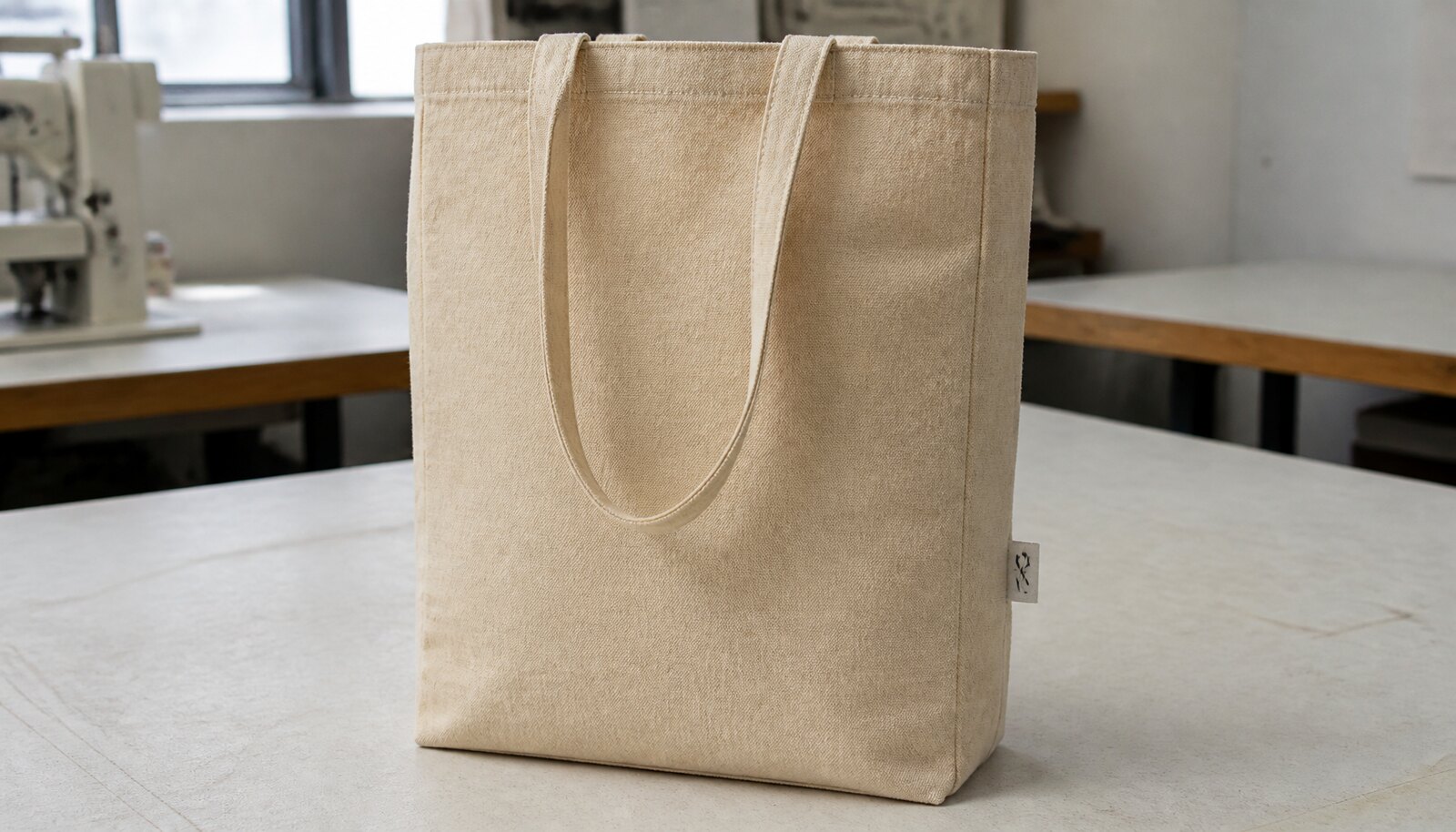
What wellness buyers need from a recycled canvas tote
A wellness tote is usually asked to do more than carry product. It may go into studio retail, retreat welcome kits, membership drops, supplement bundles, or event merchandising, and each use case changes the buying brief. A bag that looks fine in a catalog can still fail if the canvas is too limp, the print cannot handle repeated folding, or the handle spacing makes the bag uncomfortable to carry with bottles, towels, journals, or boxed sets.
For that reason, the first decision is not artwork. It is the working profile: how much weight the tote must carry, how often the bag will be reused, and whether the buyer needs a premium retail finish or a functional bulk giveaway. In wellness, the bag often becomes part of the brand experience, so the quote should reflect both durability and presentation instead of treating the tote like a low-spec promo item.
A useful way to brief the supplier is to name the real use case. A retreat bag that carries slippers, a water bottle, and a notebook needs different reinforcement from a grocery-style tote distributed at a yoga pop-up. A retail tote sold at a studio checkout counter also needs better edge finishing, cleaner seam appearance, and more controlled color than a bag used only once for an event. Buyers who define the use case early usually get tighter quotes because the factory can match the construction to the actual load and presentation target.
The commercial benefit of doing this up front is simple: fewer revisions, fewer sample rounds, and less risk that the first bulk shipment becomes unsellable or too flimsy for the intended use. If the bag is part of a wellness retail line, the tote may also influence brand perception more than the contents inside it. That makes the spec sheet a merchandising tool, not just a production form.
- Treat the tote as a retail carry item if it will be sold, not only handed out.
- Plan around the heaviest practical fill weight, not just the empty bag sample.
- Decide early whether the bag needs to fold flat for kits or stand up for shelf display.
Fabric weight, weave, and the recycled-content detail that matters
For most wellness orders, recycled canvas in the 8 to 10 oz range, or roughly 280 to 340 GSM, is the practical starting point. Lighter fabric can work for simple event totes, but it tends to look less premium and may distort with heavier contents. Heavier fabric improves structure and print clarity, yet it also raises material cost, makes sewing slower, and can increase freight weight across a large run. The right choice depends on whether the bag is being sold at retail or used as a kit component with controlled contents.
The recycled-content claim needs more than a line in the quote. Ask how the supplier defines recycled content, what documentation is available, and whether the fabric is recycled cotton canvas, recycled blended canvas, or a mix that includes post-industrial fiber. The buyer should also confirm if the fabric is washed, pre-shrunk, or compacted before cutting, because these details affect finished size and can create disagreements later when the bulk run lands smaller or softer than the approved sample.
The weave matters too. A tighter weave usually improves print sharpness and reduces distortion at the seams, but it can feel stiffer and may require more careful sewing. A looser, more natural weave often suits a wellness brand aesthetic, yet it can allow ink bleed and make the bag look less crisp at retail. Ask the supplier to send fabric photos, GSM confirmation, and if possible a swatch showing the actual weave density under the chosen print method. That small request often tells you more than a polished product image.
If the order is intended for repeat replenishment, consistency matters more than the absolute look of one sample. A slightly rustic fabric is fine if the supplier can hold the same texture and shade across lots. What procurement teams should avoid is a quote that describes the material only as recycled canvas without naming weight range, fiber basis, and shrink behavior. Those omissions are where disputes start.
- 8 oz works for light retail or event use; 10 oz is safer for premium resale and heavier kits.
- A looser weave can look more natural but may print less sharply.
- Ask whether the fabric is pre-shrunk if your size tolerance is tight.
Decoration choices that survive retail handling
Screen print is still the most efficient option for recycled canvas when the artwork is simple, the run is repeatable, and the buyer wants a clean cost structure. It gives reliable color coverage on coarse fabric if the ink is matched to the weave and cured properly. For wellness brands, one or two spot colors often work better than a full-color design because the tote then reads as a practical retail item instead of a noisy promotional piece. If the logo is small, a woven label or stitched side label can create a cleaner result than trying to force fine detail onto rough canvas.
Heat transfer and digital print can make sense for complex art, but they need tighter control on surface texture, wash resistance, and folding marks. Embroidery is usually limited to small logos because it adds cost and can distort lighter canvas. The question is not which method looks best in isolation. It is which method will still look acceptable after packing, shipping, shelf handling, and repeated use by end customers who are not treating the bag gently.
From a procurement perspective, the print method changes three things at once: MOQ, lead time, and defect risk. Screen printing usually requires screens or plates, which adds setup and can push MOQ upward if the design has multiple colors. Digital methods can reduce setup for small runs but may create more variability on coarse fabric. Embroidery adds sewing time and can create puckering if the canvas weight is too light or if the stitch density is too high. Buyers should ask what the factory’s standard method is for their chosen fabric weight, because some suppliers can quote a method they do not actually run well at scale.
A practical rule for wellness orders is this: if the tote is likely to be handled daily, folded into bags, or shipped as a kit insert, prioritize a decoration method that can tolerate abrasion. If the tote is a premium merch item displayed in-store, you can accept more finish complexity, but you should still ask for a rub test or a folded-crease check on the sample.
- Use screen print for simple logos and stable repeat orders.
- Use a sewn or woven label when the brand wants a clean premium cue with low risk.
- Avoid overcomplicated artwork if the bag weave is visible and the print area is large.
How MOQ really works on factory quotes
MOQ for recycled canvas totes is usually driven by fabric purchase, cutting efficiency, print setup, and sewing line balancing. A supplier may quote a low unit price that only works at a higher run size because the real cost sits in setup, screens, cutting loss, and packing labor. If your order mixes multiple sizes, colors, or logo versions, each added variation raises complexity and often pushes the effective MOQ upward even if the supplier does not call it that.
The cleanest way to compare quotes is to separate the order into three parts: base bag construction, decoration, and packaging. Some factories can handle a small order if the bag is blank or only carries a side label. The moment the buyer asks for multiple colors, custom inner packing, or a special insert card, the MOQ logic changes. A quote that ignores those lines is not actually comparable, because it hides cost in process assumptions rather than in the unit price.
A useful commercial comparison is to ask the factory to price one of three order shapes: blank bag, single-color logo, or retail-ready packed bag. The gap between those numbers tells you where the factory is making money and where the process is fragile. For example, if the blank bag MOQ is modest but the printed version jumps sharply, the print setup is the main driver. If the packed retail version spikes, the real issue may be labor and carton handling rather than sewing.
Buyers planning repeat replenishment should also ask whether the factory can hold the same cut ticket, screen, and material source for a second run. That matters because the lowest MOQ quote is not always the lowest long-term cost. A slightly higher first-order MOQ can be the safer choice if it locks a repeatable spec and avoids future color drift or fit changes.
- One artwork, one size, one fabric spec usually gives the best MOQ efficiency.
- Multiple colors or multiple print positions usually raise setup cost more than buyers expect.
- If the supplier is unusually cheap at a low MOQ, inspect what is missing from the quote.
Lead time is mostly a production sequence problem
A realistic lead time starts with sample approval, not with the deposit date. For a custom recycled canvas tote, the longest delays usually come from fabric booking, print screen confirmation, stitching queue time, and packing changes after the buyer has already approved the visual sample. If the supplier is waiting to source recycled fabric in the exact weight and shade, that delay should be stated up front rather than hidden inside a vague shipment promise.
Most schedule failures are caused by avoidable changes. A logo repositioned after the sample, a handle length adjustment, or a packing instruction added late can force the factory to redo cutting or print screens. Buyers should ask for the critical path in writing: artwork approval, sample sign-off, bulk fabric arrival, cutting, sewing, print, inspection, packing, and export booking. If the factory cannot describe the sequence, the lead time number is probably only a guess.
As a working benchmark, simple blank totes or one-color printed totes often move faster than complex, retail-packed versions. Sample lead time is usually the first bottleneck: a blank pre-production sample may be available in about 5 to 10 days once materials are available, while a printed sample can take 7 to 14 days because screens, curing, and corrections add steps. Bulk production for an uncomplicated order may sit around 20 to 30 days after sample approval, but that can stretch to 30 to 45 days when the order includes a custom print, tighter inspection requirements, or recycled fabric sourcing. Transit sits on top of that: air is fast but costly, while sea can add several weeks depending on destination.
The key buyer action is to separate the timeline into three buckets in every quote: sample time, production time, and transit time. A supplier who gives only one total date is forcing procurement to guess where the risk sits. For wellness launches and retreat kits, that distinction matters because a two-week delay in sample approval can move the whole order into a more expensive freight lane.
- Treat sample approval as the gate that starts bulk production.
- Separate production lead time from ocean or air transit time in every comparison.
- Add a buffer when the order includes recycled fabric sourcing or seasonal congestion.
Sample approval should lock the build, not just the look
A sample is useful only if it captures the actual production method. For recycled canvas totes, the buyer should compare more than artwork placement. Measure the finished dimensions, inspect seam density, feel the hand of the fabric, test handle comfort, and confirm whether the bag folds the way the brand expects. A sample that is visually close but structurally different will create disputes once the bulk lot arrives, because the factory will often claim it matched the artwork while the buyer is looking at a different construction detail.
The most effective approach is to keep one golden sample sealed and reference it during production. The approved sample should note the fabric weight, print method, label placement, handle length, and packing style so the factory can reproduce it. If the buyer expects a premium retail finish, include acceptance criteria for print clarity, trim alignment, and seam neatness. This is where many orders go wrong: the sample gets approved as a concept, but not as a production standard.
For a procurement team, the pre-production sample should answer four questions. First, does the bag match the size drawing? Second, can the supplier reproduce the chosen finish repeatedly without visible drift? Third, does the decoration hold up after folding and light abrasion? Fourth, is the packing method compatible with the warehouse or kitting workflow? If the sample does not answer those questions, it has not earned approval yet.
One practical control is to write sample comments in measurable terms. Instead of saying the tote looks slightly small, note that the finished width is 1.5 cm below target. Instead of saying the print seems off, note that the logo is 8 mm higher than the approved position. Measurable comments reduce back-and-forth and help the factory correct the issue before bulk cutting begins.
- Measure the sample before approving it, not after bulk production starts.
- Seal one golden sample with a written spec sheet.
- Note visible defects that are acceptable and defects that are not.
Quality control: stitch counts, seam allowance, and load testing
QC needs to be specific enough that the factory knows what to check, not just that the bags should be “good quality.” For recycled canvas totes, a solid starting point is to require a seam allowance of at least 8 to 10 mm on main seams, bar-tacks at handle joins, and a documented stitch density target of about 6 to 8 stitches per inch on load-bearing seams unless the supplier has a different controlled standard that is tested and recorded. The exact number matters less than the fact that it is written down and tied to inspection.
Load testing should match the tote’s real purpose. A retreat bag carrying towels and products does not need the same test as a simple giveaway, but it should still be filled to the intended use weight and lifted repeatedly to verify that the handle joins do not creep, stitch lines do not open, and the fabric does not distort around the anchor points. Buyers should ask the factory how they verify seam strength: pull test, static load test, or another repeatable method. If the supplier only inspects visually, the functional risk stays high.
AQL or an equivalent inspection plan gives procurement a way to control batch quality at the carton level. For higher-value retail totes, ask for a final inspection that checks dimensions, print position, stitching, color consistency, packing count, and carton labeling across random cartons from multiple pallets. The point is not to create bureaucracy. It is to catch common defects before they hit the warehouse, where returns and repacking cost much more.
A good defect threshold should be named in advance. For example, define critical defects as broken seams, incorrect size that affects use, wrong artwork, or major print failure. Define major defects as misaligned prints, weak handles, or visible stains. Define minor defects as small thread trims or slight weave variation within an agreed range. If the supplier does not want these terms, ask how they classify and correct defects internally. That answer often reveals how serious their QC system really is.
- Measure finished bag size against the approved sample with defined tolerance for width, height, gusset depth, and handle drop.
- Set stitch requirements before mass production: bar-tacks at handle joins, seam allowance of at least 8 to 10 mm, and a visible stitch density target of about 6 to 8 stitches per inch on main seams unless the factory uses a different documented standard.
- Pull seam and handle-load tests from pilot pieces and confirm the bag tolerates the intended fill weight without thread breakage, seam slippage, or handle distortion.
- Inspect print placement, opacity, and cure quality after folding to make sure the logo does not crack, transfer, or offset onto the opposite panel.
- Compare fabric shade, weave consistency, and recycled-fiber variation across cartons so lot-to-lot changes are identified before shipment release.
- Use an AQL-based final inspection or a documented internal inspection plan; for critical retail orders, inspect dimensions, print, stitching, carton count, and packing accuracy on random cartons from multiple pallets.
- Open random cartons to verify folding direction, barcode or carton-label accuracy, pack count per master carton, and moisture protection for long transit routes.
- Retain one sealed golden sample and compare bulk production against it before shipment release, especially when the order is a repeat replenishment for retail or wholesale.
Packing and carton control affect both damage and labor cost
Packing is not a minor afterthought on a tote order. A bag that ships flat in bulk cartons is cheaper to pack, cheaper to freight, and usually easier for warehouses to receive. But if the buyer wants individual polybags, barcode stickers, or insert cards for retail distribution, the cost and lead time move immediately. This is especially relevant for wellness brands that bundle the tote with skincare, supplements, or event literature and need every piece to open cleanly at the point of sale.
You should also decide whether the tote must arrive crease-free or whether fold marks are acceptable. Heavy canvas often holds creases more than buyers expect, especially if it is packed tightly for export. If presentation matters, ask the factory to define the fold direction, carton count, and whether tissue paper or inner wrapping is required. These details are cheap to specify before production and expensive to correct after the run has been packed.
Packing control also affects replenishment workflows. A retailer that reorders the same tote every quarter needs consistent carton counts, carton dimensions, and barcodes that match the receiving system. If the factory changes fold style or carton fill count without notice, warehouse labor rises and the bag can arrive with crushed corners or inconsistent presentation. For that reason, procurement should ask for a packing approval step just like sample approval.
When comparing quotes, do not stop at “bulk pack” versus “polybag.” Ask whether the carton is export-grade, whether desiccant or moisture protection is used on long sea routes, whether cartons are drop-tested or only taped, and how many units fit per carton before compression becomes a risk. These are small details on paper and large differences in damage rate after transit.
- Bulk pack lowers cost but may leave permanent fold marks on heavy canvas.
- Individual polybags improve retail presentation but add labor and plastic use.
- Carton labels should match the item code, color, quantity, and carton count on the PO.
Compare sourcing routes before you compare unit prices
A direct factory quote is usually the best route when the order has enough volume to justify fabric procurement, print setup, and sewing efficiency. A trading company or local converter can be more useful when the buyer needs smaller quantities, faster decision-making, or mixed product assembly across multiple SKUs. The wrong comparison is unit price alone. A lower quote can become the more expensive option if it hides sample fees, print rework, higher packing labor, or poor control over lead time.
For wellness buyers, the practical sourcing question is whether the supplier can produce the same construction twice. If the order is a one-off event kit, the buyer may accept a looser cost structure. If the bag will be reordered for a retail line, the supplier needs a stable spec, documented sample approval, and a clean history of repeat output. That is why the best quote is the one that shows how the supplier handles variation, not just the cheapest number on paper.
Direct factory, trading company, and local converter each have a different cost structure and risk profile. A direct factory usually gives the best piece price, but the buyer may have to manage more technical details and accept a slower response if the plant is busy. A trading company often adds margin, yet it can bundle coordination, multiple-item sourcing, or language support. A local converter may cost more per unit, but it can be faster for low-volume replenishment, warehousing, and last-mile distribution if the buyer needs domestic turnarounds. The procurement question is not which model is universally best; it is which model reduces total landed cost and execution risk for that specific order.
For a first run, a local converter can be the safest path when the buyer is testing demand or has a fixed event date. For a repeat retail SKU, a direct factory often becomes the better long-term choice if the team can lock the spec and tolerate longer communication cycles. Trading companies sit in between, and their value depends heavily on transparency: they should still be able to show the underlying fabric spec, sample control, and packing method rather than treating those details as private internal knowledge.
- Direct factory works best for repeatable private label orders.
- Local converters can reduce coordination burden on low-volume or urgent buys.
- Trading routes can be useful, but the buyer should still demand the same proof of build control.
RFQ structure that produces a usable quote
A useful RFQ for recycled canvas totes should make it hard for the supplier to hide assumptions. State the finished size, fabric weight, recycled content requirement, print method, artwork size, handle spec, packing style, and expected order quantity in one brief. Add the sample schedule and ask the supplier to identify what is included in the price and what is not. If the supplier leaves out screens, carton labels, packing labor, or freight assumptions, the order will not be easy to compare and the landed cost will drift.
The best buyer RFQs also ask for exceptions, not just confirmation. Ask the supplier to tell you where the quote becomes unstable, such as when the logo has too many colors, when the bag width changes, or when the requested lead time is shorter than the standard production window. That answer is more useful than a generic yes. It reveals whether the factory has a real process or is simply reacting to the purchase order after the fact.
The RFQ should also force the supplier to name the documentation they will provide at each stage. For recycled-content verification, ask whether they can share a recycled-content declaration, material traceability note, fabric mill invoice, or third-party testing summary if available. For compliance, ask what testing or certification file they can attach for the target market. For packing control, ask for carton dimensions, units per carton, net/gross weight, and mark format. Procurement teams often say they want a clean quote, but the real goal is a quote that can survive audit, warehousing, and reordering.
If you are sourcing for wellness retail, add the business context directly into the RFQ: is this tote for a product launch, retreat welcome kit, subscription add-on, or wholesale shelf item? The answer changes the acceptable cost, the acceptable finish, and the acceptable lead time. A supplier that understands the sales channel will usually quote more accurately than one that only sees a generic canvas bag request.
- Write the order in one spec sheet, not across scattered email replies.
- Require separate lines for sample cost, unit cost, packing, and freight assumptions.
- Ask the supplier to identify the single biggest schedule risk before quoting.
Specification comparison for buyers
| Spec decision | Recommended option | Buyer tradeoff: price, lead time, and risk | When to choose it |
|---|---|---|---|
| Sourcing route for first order | Direct factory with pre-production sample and written spec sheet | Lowest unit cost at scale, but longer communication path and more risk if the spec is vague | Best for 1,000 to 10,000 units, repeat orders, and private label launches that need tight control over fabric and packing |
| Fabric weight | 8 to 10 oz recycled canvas, or about 280 to 340 GSM | 8 oz is cheaper and faster to sew, but looks softer and may feel less premium; 10 oz costs more and can add 3 to 7 days if fabric booking is tight | Choose 8 oz for light event kits and 10 oz for retail resale, retreat welcome kits, or heavier contents like bottles and journals |
| Bag structure | Unlined body with reinforced seams; add a bottom gusset only when the fill profile needs it | Unlined keeps cost and lead time down; gussets improve usability but add sewing steps and can slow production | Choose unlined when the tote must fold flat or be used as a giveaway; choose gusseted when the bag needs to stand open or carry boxed sets |
| Print method | 1 to 2 color screen print or woven/embroidered side label | Screen print is the best balance of cost and speed; extra colors raise setup cost, and embroidery raises labor cost and can extend lead time | Choose screen print for simple logos, woven labels for a clean premium cue, and embroidery only for small marks or premium retail lines |
| Handle spec | Self-fabric or cotton webbing handles with bar-tack reinforcement | Webbing and bar-tacks increase sewing time but improve load capacity; weak handle joins are the most common functional defect | Choose webbing for daily carry, retail sales, and heavier kit loads; choose self-fabric handles when cost and foldability matter more than premium feel |
| Compliance and recycled claim route | Request specific recycled-content and testing documents, not just a sustainability statement | Documentation adds review time, but it reduces claim risk and protects procurement sign-off | Choose this route whenever the tote will support a retail sustainability claim, wholesale packaging, or brand marketing copy |
| Packing method | Bulk pack in carton with controlled fold and carton marks; use individual packing only when retail presentation requires it | Bulk packing is cheaper and faster; individual packing adds labor, plastic, and usually 2 to 5 extra days | Choose bulk pack for warehouse or kitting flow; choose retail pack when the bag must arrive shelf-ready or be sold as a standalone item |
| Sample path | Golden sample plus pre-production sample before bulk release | More sample rounds slow the project but reduce the risk of a bad bulk run; skipping the pre-production sample is the fastest way to create disputes | Choose this for first-time suppliers, new artwork, higher-ticket retail bags, or orders that depend on color and finish consistency |
| Shipping route | Sea freight for planned launches, air only for urgent replenishment | Sea freight lowers landed cost but adds transit time; air freight shortens delivery but can erase margin on a low-ticket tote | Choose sea for forecasted replenishment and air only when the launch date is fixed and the replenishment window is already at risk |
Buyer checklist before sampling
- Specify finished bag size, fabric weight in GSM, handle length, seam allowance, and whether the tote needs a gusset, lining, or closure.
- State the print method, number of colors, print size, print position, and whether the artwork must survive folding without cracking or offsetting.
- Define the target order quantity, reorder expectation, and whether you want one production run or a staged replenishment plan for retail and event channels.
- Request a pre-production sample, a retained golden sample, and written acceptance criteria for size, color, print placement, and stitch quality.
- Ask for the exact recycled-content proof the supplier can provide, plus the testing or compliance documents that support the claim.
- Confirm the tolerance for size, stitch count, color variation, and print placement before the quote is accepted or the PO is released.
- Ask whether the quoted lead time starts from sample approval, deposit receipt, artwork confirmation, or fabric arrival, and require the supplier to name the gating step.
- Request packing instructions, carton count, carton marks, and freight assumptions in writing so landed cost can be compared on the same basis across suppliers.
Factory quote questions to send
- What exact fabric weight, weave type, recycled-content basis, and shrinkage allowance are included in the quote?
- Is the quoted MOQ based on one size, one artwork, one colorway, or a combined production run across variants?
- What sample stages are included before bulk production, and how many correction rounds are covered without extra charges?
- Which print method are you pricing, what is the maximum artwork size, and what is the expected cure or drying requirement?
- What is included in packing: individual polybag, bulk pack, inner carton, carton labels, master cartons, and drop-test protection if needed?
- What is the production lead time after sample approval, and which step is most likely to delay the schedule?
- Which inspection standard or internal QC point do you use for stitch strength, print alignment, color consistency, and carton count?
- Can you separate unit cost, sample cost, screen or plate cost, packing cost, compliance/testing cost, and freight assumption in the quote?
Quality-control points to confirm
- Measure finished bag size against the approved sample with defined tolerance for width, height, gusset depth, and handle drop.
- Set stitch requirements before mass production: bar-tacks at handle joins, seam allowance of at least 8 to 10 mm, and a visible stitch density target of about 6 to 8 stitches per inch on main seams unless the factory uses a different documented standard.
- Pull seam and handle-load tests from pilot pieces and confirm the bag tolerates the intended fill weight without thread breakage, seam slippage, or handle distortion.
- Inspect print placement, opacity, and cure quality after folding to make sure the logo does not crack, transfer, or offset onto the opposite panel.
- Compare fabric shade, weave consistency, and recycled-fiber variation across cartons so lot-to-lot changes are identified before shipment release.
- Use an AQL-based final inspection or a documented internal inspection plan; for critical retail orders, inspect dimensions, print, stitching, carton count, and packing accuracy on random cartons from multiple pallets.
- Open random cartons to verify folding direction, barcode or carton-label accuracy, pack count per master carton, and moisture protection for long transit routes.
- Retain one sealed golden sample and compare bulk production against it before shipment release, especially when the order is a repeat replenishment for retail or wholesale.