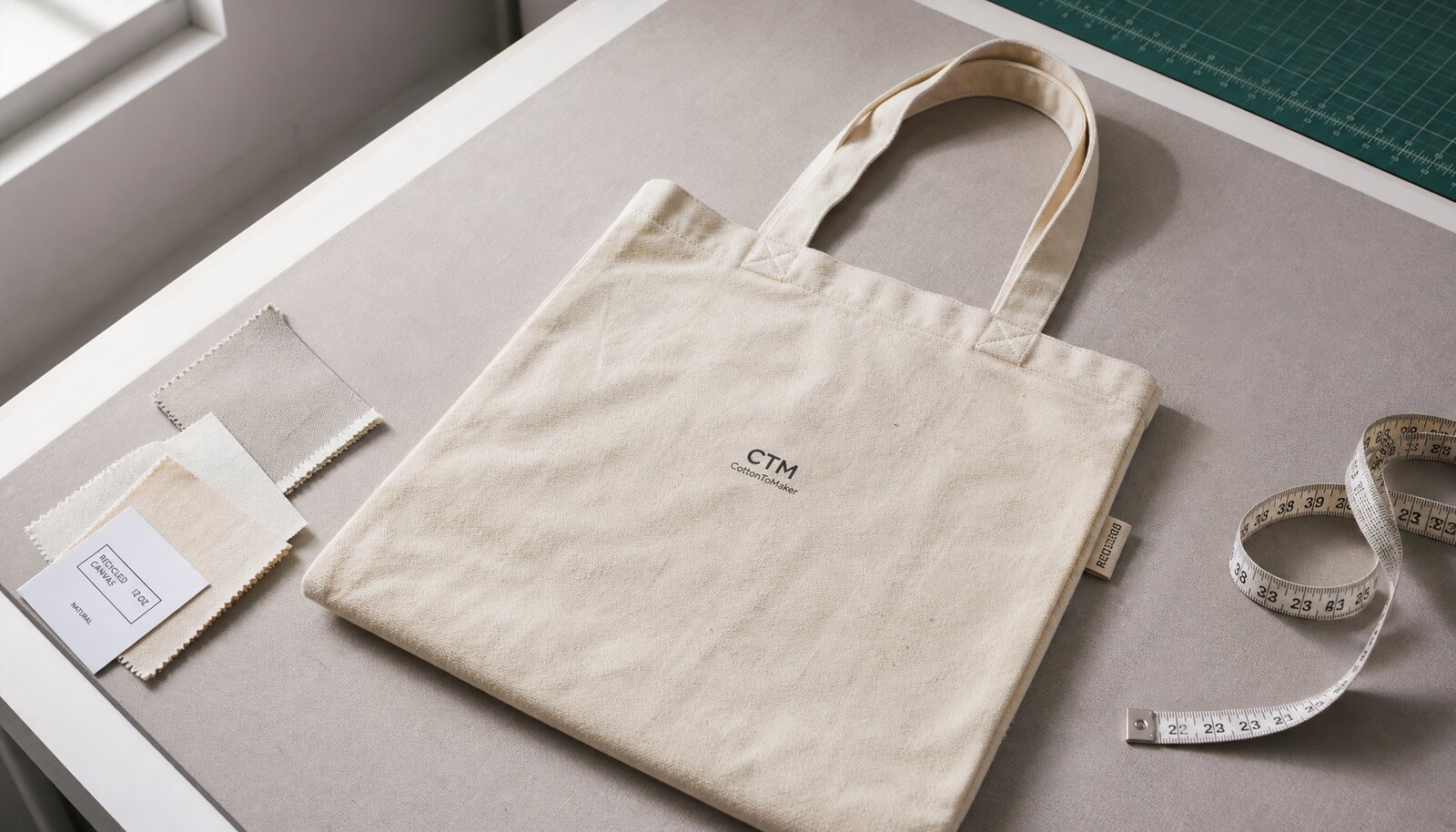
Why recycled canvas tote sourcing is different for subscription boxes
Subscription box buyers are not sourcing a generic promotional tote. They are buying a packaging component that must fit the carton, support the product mix, and still leave enough margin for fulfillment, freight, and recurring reorder cycles. That changes the sourcing logic. A tote can look attractive in a sample room and still create problems if it arrives too bulky for the box, too thin to feel premium, or too inconsistent to support the same unboxing experience every month.
For procurement teams, the key question is not simply whether the tote is made from recycled canvas. It is whether the tote is designed for the exact box system, the correct packing method, and the buyer’s commercial model. In subscription programs, the tote often carries light inserts, product samples, or marketing collateral, then becomes part of the customer’s daily use. That means the bag has to perform as both an inner pack component and a brand object.
The best sourcing result usually comes from defining the tote around three constraints at the same time: internal carton size, target landed cost, and acceptable presentation quality. If one of those is missing, the quote comparison becomes misleading. A low unit price can hide a higher freight bill, while a premium-feeling bag can silently break the box plan. Buyers should therefore brief suppliers on the entire packaging system, not only on the bag artwork.
This is also where recycled canvas deserves a more careful procurement review than a standard cotton tote. Recycled yarn and recycled fibers can create natural variation in texture and tone. That variation is acceptable when managed, but it must be defined in the approval standard. Otherwise, one production lot may be judged normal by the factory and inconsistent by the brand team. The sourcing job is to convert that variability into a controlled commercial spec.
- Treat the tote as a packaging component first and a promotional item second.
- Brief suppliers on carton fit, not only bag dimensions or artwork.
- Write the acceptable recycled-fabric variation into the spec before sampling.
Start with the subscription box requirement, not the tote catalog
The most useful starting point is the subscription box itself. Measure the internal carton length, width, and height, then identify what else shares the box with the tote. A tote that looks perfect in a catalog may fail in your fulfillment line if it raises the box lid, compresses product inserts, or forces a larger carton format. For procurement buyers, those downstream effects matter more than a small difference in fabric hand-feel.
Buyers should also define the customer use case. If the tote is a one-time box insert, the requirement may be flat packability, light structure, and a clean printed front. If the tote is meant to become a reusable carry bag, the specification should shift toward stronger seams, a more stable body, and better load retention. The same tote can serve both purposes, but not without tradeoffs.
A practical RFQ should therefore include the box size, target placement inside the box, and the required presentation at unboxing. Some brands want the tote folded neatly on top of the kit; others want it wrapped around the contents or used as a compartment liner. Each option changes packing time and carton cube. Procurement teams should ask suppliers to quote the exact packing method they can support, not a generic “flat packed” description.
If the bag must fit a fixed shipper, ask for a sample folded to the target thickness and a test pack with the actual contents. This simple step often exposes the real issue: the tote may be the right size on paper but too stiff at the chosen GSM or too wide once seams and hems are added. That is a planning problem, not a print problem.
- Measure the internal carton, then design the tote for that space.
- Specify whether the tote is disposable packaging support or a reusable consumer bag.
- Test the exact fold, insert position, and pack-out order before approval.
Fabric selection: GSM, weave, and recycled provenance
For most subscription programs, recycled canvas in the 240–320 GSM range is the most practical specification window. This range usually gives enough body for printing, a stable fold, and a presentable hand-feel without overbuilding the package. On lighter kits, 240–280 GSM is often sufficient. On premium bundles or reuse-oriented programs, 300–380 GSM may be justified if the carton design and freight model can absorb the added bulk.
GSM should not be treated as the only fabric decision. Weave density, yarn consistency, and recycled-fiber content also affect appearance and performance. Two fabrics with the same nominal GSM can behave very differently in the hand and under print. A tighter weave may show graphics more crisply, while a looser weave can feel softer but may distort more when folded. Procurement buyers should ask for both the nominal GSM and the construction description, including weave style and whether the supplier is using recycled cotton, recycled blended yarn, or a mixed recycled canvas structure.
Fabric provenance matters because it affects consistency and auditability. A supplier that can identify the mill, the recycled input source, and the stage at which the recycled claim is controlled will usually give buyers better reorder visibility. When that information is vague, lot matching becomes harder. It is worth asking whether the recycled claim is based on yarn-stage documentation, fabric-stage documentation, or only a supplier declaration. Those are not identical controls.
In commercial terms, the safest approach is to approve a fabric swatch from the same lot or the same mill program intended for bulk production. If the supplier changes mills or substitutes fabric after sample approval, the tote may still technically meet the GSM target but look and feel different in bulk. That is exactly how buyer complaints start: the spec is numerically correct, but the shopping experience changes.
Compare supplier routes before you request quotes
Supplier route matters because it changes who controls the fabric, who owns the print process, and who is responsible when a defect appears. Direct factories usually provide the strongest control over cut-and-sew consistency and are often the best option for repeat orders. Trading companies can simplify communication and may help when you need mixed products in the same shipment, but buyers should be careful about hidden factory switching. Local converters or printers are useful for small launches, urgent timelines, or domestic fulfillment, although their source material often comes from multiple upstream vendors.
The best supplier is not always the cheapest or the fastest; it is the one whose operating model fits your reorder plan. If you expect the subscription box to repeat every quarter, a direct factory with stable fabric access usually reduces variation risk. If you are testing a seasonal campaign or need a smaller launch quantity, a local converter may be more efficient even if unit cost is higher. The decision should reflect your reorder pattern, not just the first PO.
Country choice also changes the commercial picture. Buyers may compare China, Vietnam, India, or Bangladesh depending on duty exposure, freight route, and production calendar. A lower ex-factory quote from one country can be offset by longer transit, more complex documentation, or a less mature recycled-fabric supply chain. In practice, buyers should ask each supplier to quote the same fabric, same print method, same packing standard, and same shipping assumption before evaluating price.
One useful differentiator is whether the supplier can show process visibility. Can they identify the mill, confirm the print line, share a sewing workflow photo, and explain the packing method? Those details are not decorative. They tell you whether the quote is based on an actual production path or on an estimated middleman calculation.
- Direct factory: best for repeatability and tighter spec control.
- Trading company: useful for coordination, but verify actual factory identity.
- Local converter: good for speed and small runs, but ask where blanks and decoration come from.
- Compare countries on freight, lead time, documentation, and fabric availability, not only unit price.
Pricing bands and what drives the quote up or down
Procurement buyers need pricing bands, not just an invitation to “request a quote.” While exact pricing depends on size, decoration, and order quantity, it helps to think in bands. Blank recycled canvas totes often price lower than printed totes, while sewn labels, individual polybags, custom hangtags, or premium finishing move the order into a higher band. As order quantity rises, setup cost gets amortized, but only if the spec stays stable. A small change in artwork or fabric weight can reset the economics.
The biggest quote drivers are usually fabric cost, cutting efficiency, stitch time, print setup, and packing. For simple one-color artwork, screen print is often the most cost-efficient method at meaningful volume. For detailed seasonal graphics, transfer methods may be more practical, but buyers should expect higher per-unit pricing and a stronger need to validate durability. Handle reinforcement, gusset depth, and top hem construction also affect labor content. A bag that looks simple may still be expensive if the factory must add reinforcement steps to meet the load target.
Do not compare supplier quotes without the same commercial basis. Ask whether the price includes recycled fabric, print, sewn label, thread color matching, inner packing, master cartons, and export cartons. Some suppliers will quote only the sewn bag body and leave decoration or packaging as add-ons. That can make the first quote look attractive but create a higher landed cost once all necessary items are added.
A useful buying habit is to ask for three quote views: blank tote, fully decorated tote, and packed carton price. That gives procurement, warehouse, and marketing a shared baseline. If a supplier cannot break the order into those lines, the quote is harder to audit and harder to compare across factories.
Print methods: match decoration to canvas texture and reorder volume
For recycled canvas totes used in subscription boxes, print method should be chosen for both legibility and repeatability. Screen print remains the safest choice when the artwork is simple, the logo is bold, and volumes are stable. It gives a clean commercial look on textured canvas and is usually easier to price at scale. For buyers, the advantage is not just cost: screen print also tends to be easier for factories to control when the same design reorders multiple times.
Transfer decoration can be a better fit for seasonal artwork, limited runs, or multi-color graphics that would be costly in screen print setup. But the buyer should be careful about durability and edge wear. Repeated folding, carton compression, and customer reuse can expose weak transfer film or poor press settings. If the bag is likely to be kept as a daily carry item, ask for a rub test and fold test, not just a visual proof.
Embroidery or woven labels can elevate the look, but they add labor and may affect lead time. They are usually most appropriate for premium subscription tiers or low-volume brand programs where tactile branding matters more than price. For simple subscription inserts, a sewn label or direct print often provides a better commercial balance.
The key procurement question is not “which decoration looks best?” but “which decoration remains readable after packing, shipping, and consumer handling?” Ask the supplier to show the art at actual size on the intended fabric texture and to explain how they will control registration, ink opacity, and edge sharpness. That creates a more realistic approval process than a paper proof or a digitally cleaned mockup.
- Screen print: best for repeat orders, simple logos, and cost control.
- Transfer print: best for detail or short runs, but validate fold and rub resistance.
- Embroidery or woven label: premium feel, but higher cost and longer lead time.
- Ask to review decoration on the actual recycled canvas, not only on artwork files.
MOQ, lead time, and reorder logic for recurring programs
MOQ should be read as a production formula, not a fixed number. It changes with fabric availability, color choice, print method, and packing format. A supplier may accept a smaller MOQ if they already have the correct recycled canvas in stock, while a custom-dyed or mill-ordered fabric can require a much larger minimum. For this reason, buyers should always ask for MOQ by size, color, and decoration method. A tote that is cheap at 1,000 units may become expensive or unavailable if the same spec is requested with a second print color or different handle length.
Lead time deserves the same level of detail. Procurement teams should separate sample lead time, pre-production approval time, bulk sewing time, and shipping time. That breakdown helps you see where the schedule can slip. If the supplier needs mill booking for recycled fabric, the lead time can stretch even when the sewing line is open. If print is outsourced, the decoration step may become the bottleneck. Buyers should request the actual critical path, not a single generic delivery estimate.
For subscription box programs, reorder logic is especially important. A supplier that can repeat the same tote with the same fabric shade and same carton plan may be more valuable than a supplier with a slightly lower first-order price. Quarterly or seasonal reorders often expose weak documentation, especially when the first order was approved from a sample that did not fully define the fabric source. The safest commercial approach is to lock the source, keep a golden sample, and assign a reorder tolerance in the PO.
If your demand is uncertain, ask the supplier to quote a smaller pilot quantity with a clear step-up price for the next batch. That gives you flexibility without losing the ability to compare future orders on a stable basis. It also helps procurement quantify whether the tote should be treated as launch packaging or as a long-term program item.
- Ask for MOQ by fabric weight, color, artwork complexity, and packing method.
- Separate sample, pre-production, and bulk lead times in the schedule.
- Keep a golden sample and reorder spec to avoid drift between orders.
Sample approval should test fit, fold, and brand presentation together
The sample stage is where many avoidable production problems can be caught cheaply. A finished tote sample should not only look correct; it should fit the actual box, pack the way the warehouse team plans to use it, and present the artwork clearly at first opening. Procurement buyers should test the bag with the real subscription contents or a weight-equivalent pack. If the tote bulges, creases badly, or closes the carton unevenly, the issue is probably construction or fold design—not the artwork.
A strong sample review process has three parts. First, confirm the physical dimensions with a tape measure. Check width, height, handle length, handle drop, and gusset depth against the approved spec, not against memory. Second, test the packed appearance. Fold the tote the way it will be folded in the warehouse, then place it in the carton to see how much volume it uses and whether the bag springs open. Third, inspect the brand effect. Evaluate logo clarity, color contrast, and how the recycled canvas texture changes the printed image at arm’s length.
Buyers should also compare the first sample to the pre-production sample and then to bulk output. If the supplier uses a different lot of recycled canvas or changes print settings, the difference can be visible even when the bag is still “within spec.” That is why sample approval should be tied to a sealed reference sample and a written production note. The production note should list the approved fabric source, stitch details, print method, and packing arrangement.
In a buyer workflow, sample approval should end with a go/no-go decision and a list of non-negotiable items. If the tote is being used in a subscription box, those non-negotiables usually include pack size, fold behavior, and logo visibility. Treat the sample as a production control tool, not as a design exercise.
- Measure the sample against the spec with a tape, not by eye.
- Test the bag in the actual box with the intended contents.
- Freeze the approved sample as the reference for bulk and reorder checks.
Quality control thresholds that reduce disputes and chargebacks
Quality control for recycled canvas totes should be written in operational terms. Recycled fabric is expected to show some natural variation, but the buyer needs limits. Define acceptable shade range against a sealed sample, and state whether slubs, speckling, or small fiber flecks are allowed. Without that language, a factory may approve fabric that the brand views as inconsistent. The same principle applies to print. Texture can soften the edge, but the logo still has to read clearly and stay centered within the agreed placement window.
For function, handle and seam testing matter most. Ask the factory to perform a static load test on assembled totes using the target use weight. A practical buyer standard is no seam opening, no handle slip, and no bar-tack failure after the agreed load hold. If the tote will be reused by the consumer, the bag should also survive repeated lifting and folding without stitch pop or seam distortion. Buyers should ask how the factory tests at line level and what sample size they use for pre-shipment inspection.
AQL should be part of the conversation, not an afterthought. Whether the supplier uses AQL 2.5, 4.0, or a different standard, the buyer should confirm the defect classification for major and minor issues. Typical major defects include broken stitches, torn seams, unreadable logos, off-center artwork beyond tolerance, and visible stains. Minor defects might include loose threads, slight print fuzziness, or small packaging imperfections. The important point is that the thresholds are agreed before production starts.
Sample-vs-bulk workflow also matters. A good workflow is: approved sample, first-off inspection, in-process check, final audit, carton seal, and then shipment release. If a defect appears after the first carton, the factory should know whether the issue is isolated or systemic. That prevents the common procurement problem where a late-discovered issue forces a full shipment hold without a clear correction path.
Packing and carton design can change landed cost more than the tote itself
For subscription boxes, the tote’s pack-out method is part of the commercial specification. A bag that folds to a predictable thickness can be inserted quickly, packed consistently, and shipped in a carton that uses cube efficiently. A bulkier tote may force a larger shipper or reduce pack count, which raises freight and warehouse labor. That means the packaging decision should be tested with the warehouse team before the order is locked.
Ask each supplier to quote both bulk-packed and individually packed options. In some cases, a simple bulk pack is best because the tote is clean, flat, and going straight into a subscription carton. In other cases, a light protective polybag is justified because the print could scuff or because the bag is being stored before kitting. The right answer depends on the line process and storage conditions, not on a generic policy.
Concrete carton data helps procurement compare offers properly. Ask for master carton dimensions, pack count per carton, and folded unit dimensions. For example, a supplier might propose 100 units per carton at a compact size, while another offers 50 units in a larger carton with more empty space. The second option can look operationally easier but may cost more in freight. Buyers should request carton examples in the quote so logistics teams can calculate dimensional weight before purchase order approval.
If your fulfillment operation is sensitive to labor time, ask whether the bag can be delivered pre-folded in a repeatable way. The difference between a quick insert and a bag that requires hand refolding can materially affect throughput. In recurring subscription programs, those small labor differences become real budget items.
- Quote bulk pack and individual pack separately.
- Request master carton dimensions and pack counts in the RFQ.
- Test the tote in the warehouse kitting flow before approving final packing.
Specification comparison for buyers
| Supplier route | Best fit | Typical pricing band | Lead time and country tradeoffs | Fabric provenance and control |
|---|---|---|---|---|
| Direct factory with recycled canvas sewing and in-house print | Repeat programs, stable artwork, custom sizing, and tighter QA control | Blank or simple printed totes often land in a lower-to-mid pricing band once MOQ is met; setup costs are clearer and reorders are usually more favorable | Usually the best choice for control and repeatability; lead times are often more predictable when fabric is already sourced, but a factory in a lower-cost country may still need extra days if recycled fabric is mill-specific or booked in advance | Best option when the factory can document where the recycled canvas comes from, whether yarn or fabric is certified, and whether the same mill or lot can be reserved for reorder |
| Trading company coordinating multiple bag factories | Mixed-SKU programs, fast coordination, and buyers who need a single point of contact | Unit price can look competitive on paper, but the real band depends on which factory is assigned and whether the trading margin is embedded in the quote | Can shorten communication time, but factory choice may change by order; country of production may vary, which can affect customs documents, labor timing, and material consistency | Fabric traceability is often less direct; request the actual mill, dye lot, and sewing site rather than only the trading company name |
| Local converter or decorator | Short runs, domestic fulfillment, urgent promotions, and smaller launch tests | Usually higher per-unit pricing, but freight, duties, and rework risk can be lower on small domestic orders | Fastest for urgent needs and small programs; ideal when the subscription warehouse is domestic and turnaround time matters more than lowest unit cost | Fabric is often sourced through third parties and the converted tote may be assembled from multiple inputs, so consistency depends on the converter’s supply chain discipline |
| Integrated sourcing office or bag specialist with audited partner factories | Brands that need both commercial comparison and production oversight across regions | Often sits between direct factory and trading company pricing, with better visibility into cost drivers than a pure middleman quote | Can compare country options such as China, Vietnam, India, or Bangladesh depending on sourcing strategy; buyers should weigh freight lanes, tariff exposure, and calendar risk | Usually better documentation on mill source, recycled content claim, and bulk lot matching if the specialist has an established QA workflow |
| Material | 8-12 oz cotton canvas, 120-220 gsm cotton, recycled cotton, or blended fabric selected by use case and target price | Before price comparison | Different cloth weights, backing, or certification claims make quotes hard to compare | |
| Construction | bag size, gusset, handle drop, seam allowance, stitch density, reinforcement patch, and loading expectation | Before sampling | Weak stress points create returns and failed inspections | |
| Decoration | screen print, heat transfer, embroidery, woven label, or hangtag matched to fabric texture and brand durability needs | Before artwork approval | The wrong method can crack, bleed, pucker, or fail on the chosen fabric | |
| MOQ | Base MOQ plus change drivers | During quote review | Custom colors, trims, and packing can change minimums |
Buyer checklist before sampling
- Lock the tote around the carton: internal box dimensions, folded tote thickness, and insertion method should be specified before asking for a quote.
- State recycled canvas GSM, weave, handle length, gusset depth, top hem, and whether the tote must stand upright or ship flat.
- Define the exact artwork location, print area, number of colors, allowable shift, and acceptable shade variation for recycled fabric.
- Request a functional load target in kilograms or pounds, plus the actual contents the tote needs to carry during use.
- Specify packing format: bulk pack or individual polybag, pack count per carton, carton dimensions, and barcode position.
- Ask for a sealed sample or golden sample that matches the final fabric, trim, and print method; do not approve from artwork proof alone.
- Request defect limits in writing for loose threads, stains, misprints, broken stitches, and measurement variance.
- Compare unit cost with carton cube, freight class, and rework exposure; never compare ex-factory price alone.
Factory quote questions to send
- What recycled canvas options do you have in stock or under regular mill supply, and what lot-to-lot tolerance do you allow for GSM and shade?
- Can you document the recycled content source at yarn stage, fabric stage, or through supplier declaration, and which documents can you share for audit?
- What is the MOQ by size, color, fabric weight, and print method, and does the MOQ change for one-color versus multi-color artwork?
- Please quote blank tote, sewn label, print, individual polybag, inner carton, and master carton separately so we can compare landed cost accurately.
- What lead times do you quote for sample, pre-production confirmation, bulk sewing, and shipment, and what conditions typically extend the schedule?
- What stitch, seam, and load checks do you perform before packing, and can you share the acceptance criteria used on the line?
- What folded dimensions and carton size do you recommend for subscription box fulfillment, and how many units fit safely per master carton?
- How do you control recycled-fabric speckling, oil spots, slubs, and print edge clarity during final inspection?
- Which inspection standard do you ship to: AQL level, 100% check, or inline plus final audit, and who signs off the release?
- Can you provide photos or a short process video of cutting, sewing, printing, and packing from the actual factory that will produce the order?
Quality-control points to confirm
- Measure fabric GSM against the agreed tolerance, not the nominal spec alone; a practical buyer tolerance is often ±5% to ±8% depending on fabric availability and mill process.
- Confirm measurement points for width, height, gusset depth, handle length, and handle drop, with an allowed dimensional variance defined in the PO.
- Inspect stitch count and bar-tack placement at the top handle stress points; request a minimum of 2 reinforced bar-tacks per handle attachment unless the construction drawing specifies otherwise.
- Run a load test on a finished tote using the intended use weight; a useful acceptance threshold is no seam failure, no handle slip, and no stitch opening after static hold and repeated lift cycles at the agreed load.
- Check print registration, opacity, and edge sharpness on textured recycled canvas; define a maximum artwork shift in mm and reject any unreadable text or bleeding that affects brand legibility.
- Set explicit limits for visible defects such as loose threads, staining, broken stitches, needle holes, oil marks, and foreign fibers; ask the factory to classify major and minor defects before bulk packing.
- Use a sealed sample or golden sample as the reference for shade, texture, print, and packing method; sample-to-bulk differences should be reviewed against that reference, not memory.
- Sample inspection should be followed by inline checks and a final pre-shipment audit; buyers should review first-off, mid-run, and carton-close samples to catch drift before the order is packed.
- Confirm carton pack count, folded dimensions, and carton compression; cartons should match the approved pack plan so the tote does not spring open, crease excessively, or waste cube in the warehouse.