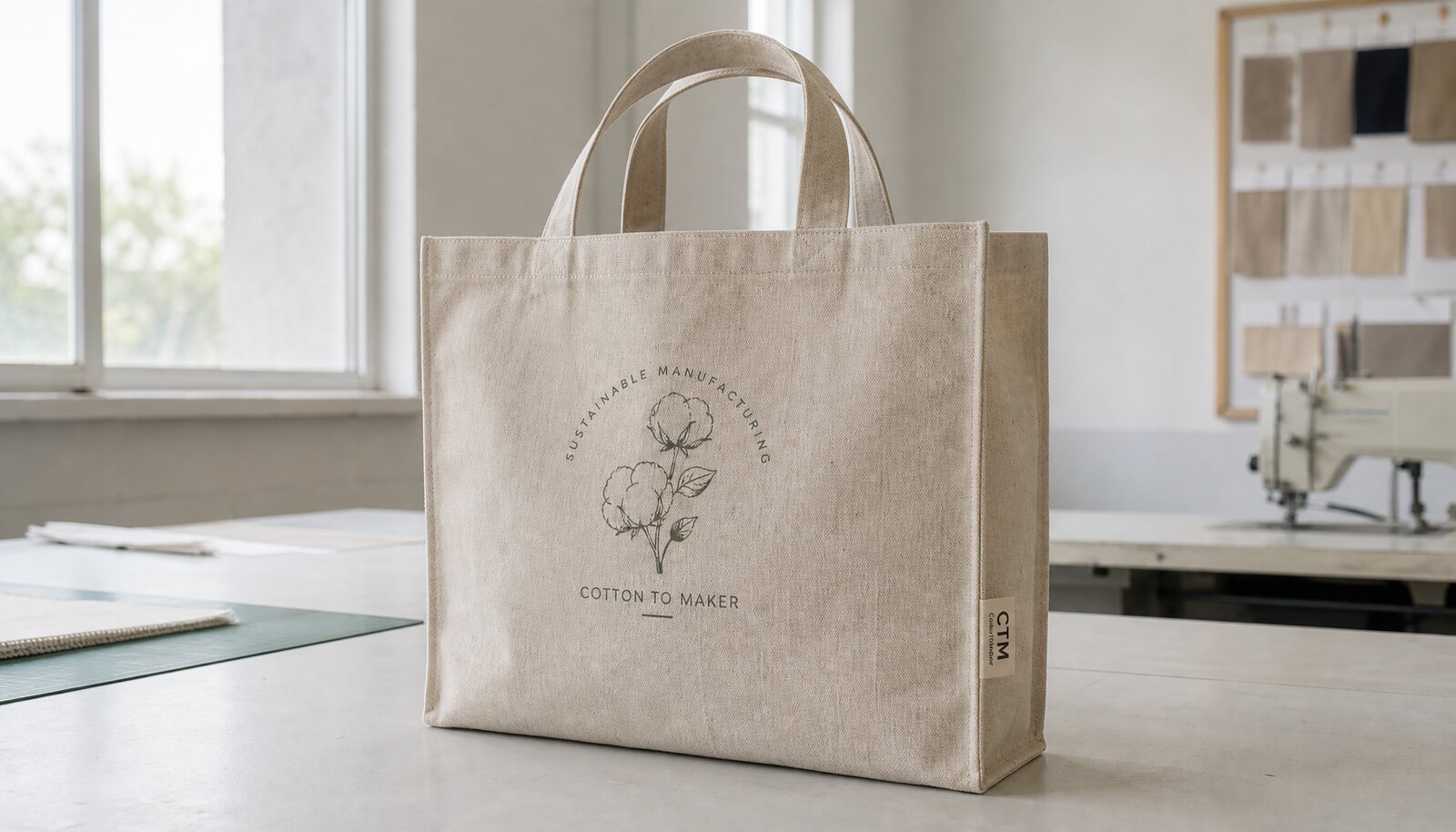
What makes subscription box totes different from normal promo bags
A recycled canvas tote for a subscription box is not just a giveaway bag. It has to fit inside a master carton, survive repeated handling at the fulfillment center, and still look good when the customer opens the box. That means the buying decision starts with dimensions, folding behavior, and how the tote interacts with the rest of the subscription contents.
Buyers often focus on logo placement first and discover too late that the bag is too bulky, too soft, or too expensive to ship. For subscription programs, the tote has to balance unboxing presentation with flat-pack efficiency. If the bag is meant to hold a beauty kit, stationery set, or seasonal bundle, the tote should be spec’d around the payload and the carton, not around a generic tote standard.
- Define whether the tote is an insert, a reusable gift, or a retail item with resale expectations.
- Confirm the exact folded size needed for the box pack-out line.
- Check whether the tote must match a monthly theme or stay consistent across multiple runs.
Start with the right recycled canvas specification
For most subscription box programs, recycled canvas in the 10–12 oz range, or roughly 280–340 GSM, is the practical middle ground. It has enough body to look premium, holds print well, and usually avoids the floppy feel that comes with lighter fabrics. If the tote needs to carry heavier inserts or be reused after unboxing, lean toward the upper end of that range.
Do not let the supplier quote only by name, such as "recycled canvas," without a fabric spec. You need the actual weight, weave feel, fiber content, and whether the fabric is post-consumer or pre-consumer recycled content. If the bag must appear premium in retail photography, a tighter weave and cleaner surface will matter more than a small price difference.
- Use 10–12 oz for standard subscription inserts and moderate reuse.
- Use 12–14 oz when the tote must feel substantial or carry heavier contents.
- Ask for fabric photos under daylight, plus a cut swatch if color consistency matters.
Compare sourcing routes before you compare unit prices
The cheapest quote is not always the lowest-risk quote. Factory-direct buying usually wins on transparency and repeatability, but the MOQ can be higher and the buyer needs stronger spec control. Local stockholders can solve urgency, but the exact fabric shade, logo size, and trim options may be limited. A sourcing agent can coordinate a mixed program, but that adds a layer between the buyer and the production floor.
For subscription box buyers, the right route depends on how stable the SKU is. If the tote repeats every month with the same artwork, a direct factory relationship usually pays off after the first round. If the campaign changes every quarter and quantities are small, a stock-and-brand route may be more practical. What matters is not the label on the supplier, but who owns the fabric, who controls the print process, and who is accountable if the cartons miss the assembly window.
- Direct factory: best for repeat runs, better cost control, stronger spec locking.
- Local stock supplier: best for urgent launches, limited customization, and short replenishment cycles.
- Sourcing agent: best when bundling several SKUs, but compare total service cost and response speed.
How to read a factory quote without missing hidden costs
A real quote should break out the tote spec in enough detail that procurement can compare one supplier against another on equal terms. If the quote only gives a single unit price, it is hiding something important: fabric weight, print complexity, carton packing, or setup fees. For subscription box sourcing, those hidden items are often what break the budget after the first production sample.
A usable quote should show the base bag price, print method, sample charges, setup or plate fees, packing standard, and the lead time from sample approval to shipment. If the supplier will not state the fabric weight or finished size in writing, the quote is not ready for a purchasing decision. It is a conversation starter, not a procurement document.
- Look for FOB price plus itemized extras, not a bundled mystery price.
- Separate setup fees from recurring unit cost so reorders can be compared correctly.
- Ask whether the quote includes label sewing, carton marks, and inner packing.
Use the right comparison logic for MOQ and price breaks
MOQ is not just a supplier constraint; it is a cost structure. On recycled canvas totes, the first price break usually reflects print setup, cutting efficiency, and sewing line setup time. If your subscription box program is stable, ordering a slightly higher volume may actually lower landed cost enough to offset storage and freight. If the program is uncertain, avoid overcommitting just to reach a better price tier.
Ask the supplier to quote at least three volume points. In practice, 1,000 pcs, 3,000 pcs, and 5,000 pcs will show whether the factory has real efficiency gains or just a nominal pricing ladder. A quote that barely changes between tiers may mean the factory is not truly set up for your bag or is padding the low-end price. A good quote should show where the setup cost gets diluted.
- Use 1,000 pcs to test the real first-run economics.
- Use 3,000 pcs to compare standard production efficiency.
- Use 5,000 pcs only if the replenishment plan and storage space are already approved.
Print method choice affects both appearance and reject rate
For recycled canvas totes in subscription boxes, 1-color screen print is usually the safest default. It is durable, clear, and cost-efficient for a logo-led design. Water-based print can be a good choice when the brand wants a softer handfeel or a more natural appearance. Digital print works when the art is complex or the run is short, but it can increase variability and may not be the best fit if you need exact repeatability across multiple monthly drops.
The wrong print choice can show up as a production issue after the tote is already sewn and packed. Heavy ink coverage can stiffen the fabric, distort the fold, or cause curing marks. A buyer should specify the print area, artwork size, and acceptable color variation before the sample stage. If the tote will be photographed in the box opening, check how the print reads when the bag is folded, not just when it is flat.
- 1-color screen print: best for logos, strong durability, low complexity.
- Water-based print: good for soft handfeel and eco-positioning.
- Digital print: use only when artwork complexity justifies the cost and variability.
Sample approval should match the real production method
A flat sample is not enough for this product. The sample needs to be made from the same fabric weight, with the same print method, the same thread color, and the same packing format that will be used in bulk. If the supplier sends a prettier sample made from a different fabric lot or a different print process, the bulk order may disappoint even if the sample looks excellent.
Approving the sample means more than signing off on appearance. Measure finished size, handle length, stitch density, and print placement. Pull the handles with a real load. Check whether the tote folds cleanly to fit the subscription box. If the program includes a side label, care label, or woven logo tab, verify that the label does not interfere with stacking or insert packing.
- Approve the exact fabric lot or at least the same weight and weave.
- Check print sharpness, edge bleed, and curing under real lighting.
- Confirm that the sample is packed the same way as the bulk cartons.
Packing details matter because subscription box fulfillment is unforgiving
Packing is where many tote programs create avoidable labor costs. If the tote arrives loosely folded, miscounted, or overpacked into cartons, your 3PL or assembly line pays for the extra handling. For subscription boxes, the best packing format is the one that balances carton efficiency with easy line pickup. That often means a consistent fold, a fixed quantity per inner polybag or master carton, and carton dimensions that fit the receiving shelf or pallet pattern.
If the tote is inserted into a curated box, consider whether the buyer wants each bag individually polybagged or bulk packed. Individual bagging protects the surface and keeps counts clean, but it adds material cost and can create more waste. Bulk packing reduces packaging waste and often lowers cost, but it may increase scuffing or require more QC attention at the fulfillment center. The right answer depends on how premium the unboxing needs to feel and how the warehouse handles inbound goods.
- State the preferred fold direction and maximum folded thickness.
- Lock carton counts so fulfillment can receive by carton without manual recounting.
- Specify whether barcodes, carton marks, or lot numbers are required.
Build your landed-cost view before approving the quote
The FOB unit price is only one line in the cost structure. For subscription box totes, freight can move quickly because fabric weight and carton volume both matter. A heavier recycled canvas tote may still be the better choice if it reduces returns, improves customer perception, or supports reuse. But you should compare the landed cost with realistic packaging and freight assumptions, not with a theoretical unit price alone.
A practical landed-cost view should include sample fees, print setup, packaging labor, cartons, inland transfer, export documents if applicable, and inbound freight to your warehouse or 3PL. If you are comparing factories, normalize the quotes to the same fabric weight, same print method, and same packing standard. Otherwise, the lowest quote may simply be quoting a lighter fabric or fewer packing steps.
- Compare by total cost per delivered tote, not FOB alone.
- Normalize fabric weight before comparing suppliers.
- Include carton dimensions because volumetric freight can change the economics.
Set acceptance criteria so the order can actually ship on time
The last thing a procurement team wants is a shipment held because everyone had a different idea of what "good" meant. Set acceptance criteria before cutting starts. Define the acceptable fabric range, print placement tolerance, stitching standard, and carton count variance. If the tote is tied to a box launch, the factory should know what happens when a sample or bulk lot misses the agreed standard.
The best buyers are specific about what will be rejected and what can be reworked. That does not mean creating an unrealistic zero-defect promise. It means defining practical limits: slight natural shade variation may be acceptable in recycled fabric, but print smudging, broken stitching, or missing labels should not be. If you need inspection photos, a pre-shipment report, or carton marking confirmation, add those requirements to the PO rather than relying on email memory.
- Set measurable tolerances for size, stitch quality, and print placement.
- Decide in advance what can be repaired and what must be remade.
- Tie the shipping release to sample approval and inspection signoff.
Specification comparison for buyers
| Spec decision | Recommended option | When it fits | Buyer risk to check |
|---|---|---|---|
| Fabric weight | 10–12 oz recycled canvas or 280–340 GSM | Subscription boxes that need a branded insert with real carry strength and a premium handfeel | Too-light fabric can wrinkle, sag, or show print distortion; too-heavy fabric raises freight and unit cost |
| Print method | 1-color screen print or water-based print for simple branding; digital only for short runs or complex art | When the artwork is flat, logo-led, and repeatable across many monthly box cycles | Complex color gradients or full-wrap art can increase rejection risk, curing issues, or color variation |
| Handle construction | Reinforced self-fabric handles or 1" webbing handles with bar-tack reinforcement | When the tote will hold boxed products, catalogs, or multiple items during unboxing and reuse | Weak handle stitching is the fastest way to trigger complaints; test load and seam pull before approval |
| Closure style | Open top for low-cost inserts; zipper or snap only when product security matters | When the tote is a gift-with-purchase, welcome kit, or retail add-on where access speed matters | Closures add material, labor, and failure points; unnecessary hardware increases lead time |
| MOQ route | Factory-direct at 1,000–3,000 pcs for custom specs; trader/distributor for 200–500 pcs mixed needs | When you need custom size, print, and packaging but can still commit to a planned run | Low-MOQ offers often hide higher unit pricing, weaker QC control, or limited spec flexibility |
| Sample stage | Pre-production sample with print, stitch, and packing exactly matched to the PO | When the tote is tied to a subscription launch date or seasonal box schedule | A flat sample is not enough if the bulk run changes fabric lot, trim, or packing inserts |
| Packing format | Bulk polybag with carton count, or individual bag-in-bag if the tote ships as part of a premium unboxing kit | When subscription box assembly is done in-house or at a 3PL and requires predictable carton counts | Loose packing can cause contamination, folding marks, and receiving-count errors |
| Supply route | Direct factory for repeat programs; local stockholder for urgent replenishment; sourcing agent only when managing multi-item bundles | When timing, customization, and pricing transparency matter in different proportions | Each route changes price, communication speed, and claim responsibility; compare on landed cost, not unit price alone |
| Quality standard | Written AQL target plus stitch and print acceptance limits | When the tote is a repeat SKU and defects will be visible to end customers at unboxing | Without a defined QC threshold, factories may ship small defects that become expensive brand damage |
Buyer checklist before sampling
- Define the exact tote use case inside the subscription box: insert only, reusable gift, retail resale item, or add-on purchase.
- Lock the fabric spec in writing, including recycled canvas content, fabric weight in oz or GSM, and acceptable shade range.
- State the finished size, handle length, gusset, closure type, and whether seam allowance is included in the quoted dimensions.
- Provide print artwork in vector form and specify print area, number of colors, ink type, and whether the logo must match Pantone targets.
- Request a pre-production sample with the real fabric, real print method, real label, and final packing format before mass production.
- Ask for carton count, bag count per carton, carton dimensions, and gross weight so the 3PL can validate receiving and storage.
- Compare landed cost, not just FOB unit price: add inland charges, cartons, sample fees, and freight impact from weight and volume.
- Set a clear QC standard for stitching, print registration, odor, fabric defects, and handle strength before production starts.
Factory quote questions to send
- What recycled canvas fabric weights do you stock or source regularly, and which weight is most stable for this tote size?
- Is the quoted price based on dyed fabric, greige fabric, or post-consumer recycled content, and what content declaration can you provide?
- Which print method is included in the quote, how many colors are priced, and what is the setup charge for each method?
- What is the MOQ by size, color, and print design, and how does the unit price change at 1,000, 3,000, and 5,000 pcs?
- Will the pre-production sample match the final trim, stitching, print placement, and packing exactly?
- What is the standard production lead time after sample approval, and what parts of the schedule are most likely to slip?
- How do you pack the totes for shipment, how many per carton, and can you keep cartons within our warehouse receiving limit?
- What QC points do you inspect before shipping, and can you share an inspection report with photos or measurement data?
- What costs are excluded from the quote, including sample freight, plate fees, tag insertion, carton marks, or special packing labor?
Quality-control points to confirm
- Fabric weight should match the approved range within an agreed tolerance; do not accept a lighter lot without written buyer approval.
- Seam strength at handles and side seams should survive a practical load test aligned with the tote's real use, not just a visual inspection.
- Print alignment, color density, and cure quality should be checked under natural light to catch smudging, pinholes, and registration drift.
- Finished dimensions should be measured after pressing and packing, because over-tight sewing can shrink the usable opening.
- Odor, lint, and surface contamination matter for subscription boxes because the tote may sit next to cosmetics, snacks, or paper inserts.
- Carton labels, quantity marks, and packing list counts should match the warehouse receiving process exactly to prevent reconciliation delays.