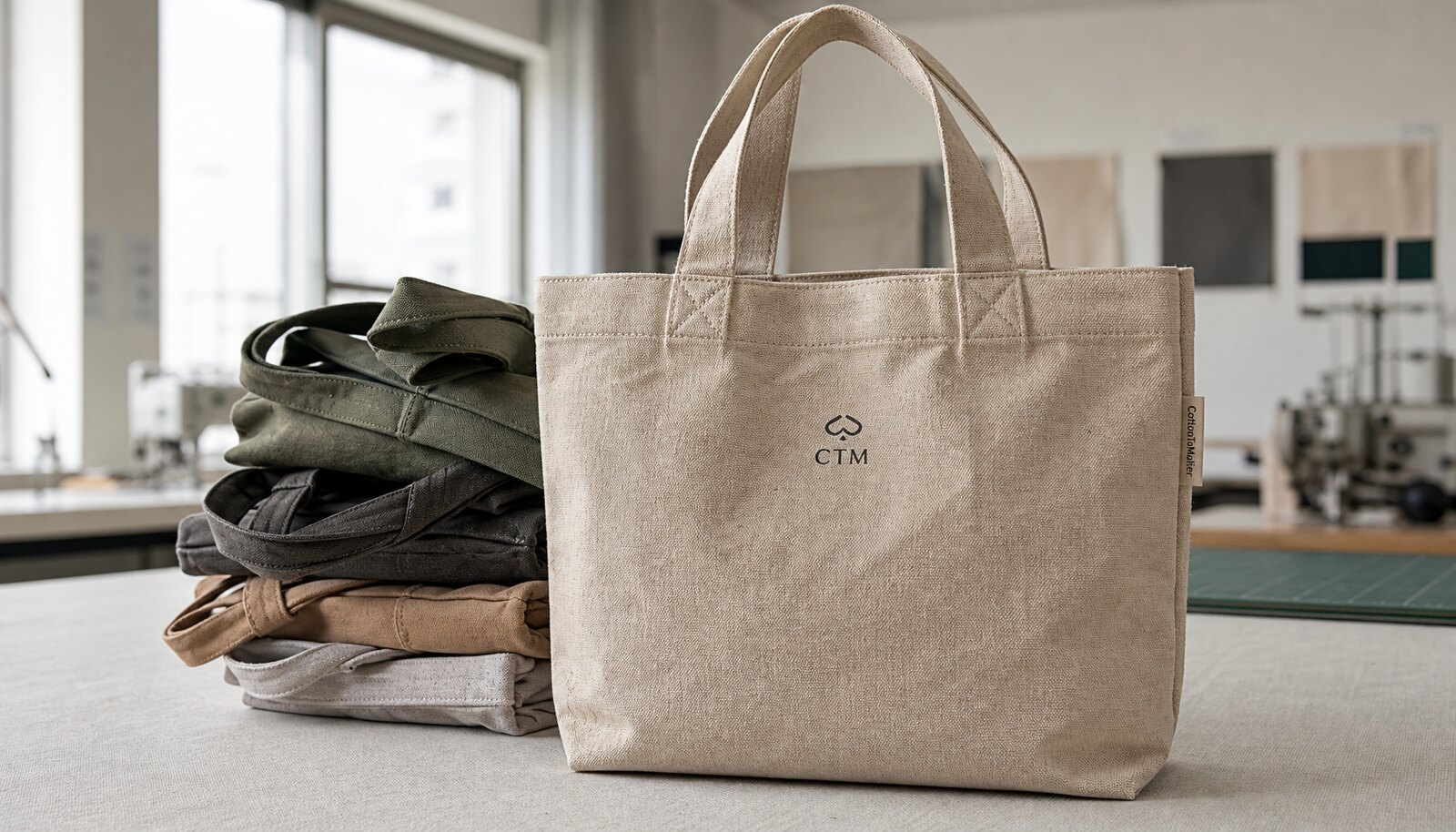
Why recycled canvas tote QC fails in retail chain programs
Retail chains do not usually reject recycled canvas totes because the concept is wrong. They reject them because the bag that arrived does not match the shelf-ready version that procurement thought it bought. The common gap is not dramatic: the sample looked fine, but the bulk run came in lighter fabric, weaker handles, softer shape, or with print drift that is noticeable once 300 units sit side by side in a distribution center.
A chain program amplifies small defects. A tote that looks acceptable in a 20-piece sample can still create a problem when the order is split across multiple stores and multiple carton openings. That is why the buying problem is not just 'find a supplier'; it is 'set inspection criteria that hold up in bulk.' If the specification is loose, every other quote comparison becomes unreliable.
- The real risk is variance, not one-off defects.
- Retail distribution exposes packing and color consistency issues fast.
- The approved sample must match the bulk sourcing route, not just the design.
Start with a fabric spec the factory can actually hold
For recycled canvas totes, the fabric decision drives almost everything else: structure, print performance, cost, and even lead time. In retail chain orders, a practical range is usually 10–12 oz recycled canvas when the bag needs visible body without becoming too expensive. If the bag is intended for heavier store purchase carry, 12 oz is safer. If it is a light promotional tote for checkout resale, 10 oz may be enough, but the buyer should expect a softer drape and more visible seam puckering if sewing control is weak.
Do not let the quote hide behind the word 'canvas.' Ask for GSM, fabric width, weave direction, and shrinkage expectation. Recycled cotton content can vary, and that matters. A recycled blend may print differently from virgin canvas, and a bulk lot can shade slightly differently from the pre-production sample. If the retail program includes multiple replenishment waves, the supplier should state whether later lots will be matched to the first lot by yarn or dye control, not by visual guesswork.
- Useful quote language: '10–12 oz recycled canvas, stated GSM with tolerance, pre-approved shade, and shrinkage range.'
- If the bag must stand upright on shelf, specify the minimum body stiffness you expect, not only fabric weight.
- For natural recycled canvas, clarify whether small flecks, slubs, or irregular texture are acceptable as part of the material character.
Use the right comparison route before you compare price
A retail buyer often compares two numbers that are not truly comparable. One supplier is quoting factory-direct with in-house cutting, sewing, and printing; another is quoting through a trading company that will source fabric, subcontract print, and subcontract sewing. Those two routes can land at very different levels of control, especially for recycled canvas totes where fabric shade and print absorption matter. A low quote from a loose sourcing route may look better until the sample revision cycle starts.
The table below is not about spec labels alone. It helps you compare sourcing routes by what they can realistically control. Use it before you argue over unit price. If the supplier cannot control one of the top risk items, the quote should either be discounted for higher supervision or rejected for a chain program.
- Factory-direct is usually better for repeat retail programs.
- Trading routes can work for simple programs, but they need stronger documentation.
- The cheapest quote is often the least defined quote.
How to read the quote like a production manager
A useful tote quote should separate fabric, cutting, sewing, print, packing, and any extra finishing. If the supplier gives one total price and nothing else, you cannot tell whether the low number comes from thinner fabric, lower stitch density, fewer bartacks, or minimal packing. That makes later disputes almost inevitable. Procurement teams should push for a quote that shows assumptions, not just a final price.
For recycled canvas totes, ask the supplier to state the MOQ logic. A common structure is a sample MOQ for print and a bulk MOQ tied to fabric order or color lot. If the bag uses a custom size, custom label, or complex print, the MOQ should rise because cutting waste and setup time rise. If the supplier claims a very low MOQ with full customization, the buyer should inspect whether the quote is actually based on standard stock fabric and simplified packaging.
- Separate unit cost from sample fee, tool/setup, and packaging upgrades.
- Check whether the price assumes one color, one size, and one carton configuration only.
- If there are multiple retail SKUs, confirm whether each SKU shares the same base fabric lot.
Comparison table: supplier routes for retail chain tote programs
Use this comparison to decide which supplier path fits the program. It is designed for buyers comparing practical control, not just quote formatting. For a retail chain rollout, the best option is usually the one that can hold fabric consistency, print placement, and packing discipline across the whole order cycle.
The sample record for recycled canvas totes for retail chains quality inspection checklist should include front, back, side, seam, logo, label, inside, and packed-carton photos. For important programs, keep one signed physical sample and record the sample version in the approval file.
- Write decisions in measurable language, not only descriptive wording.
- Ask for sample photos plus one physical approval sample for important orders.
- Keep quotation, sample approval, and inspection notes tied to the same spec version.
Sample approval: what the pre-production sample must prove
A sample is only useful if it proves the right things. A nice-looking prototype that was made from different fabric, different print settings, or hand-trimmed pieces can mislead the buyer. For recycled canvas totes for retail chains, the approved sample should be built as close as possible to bulk reality: same fabric source, same print method, same seam construction, same handle attachment, and same packing format if possible.
The sample should be inspected for appearance and function. Measure overall dimensions, handle length, print placement, seam allowance, and finished weight. Then load it with a realistic product weight to see whether the handle attach points distort or the bag body twists. If the chain will merchandize the tote at checkout or on a shelf, take a side-by-side check against the approved visual standard under normal store lighting, not just in a sample room.
- Reference sample should include actual artwork placement notes and color codes.
- Approve one physical sample and one photo record with dimensions marked.
- If the factory revises any material or construction detail, reapprove before bulk.
Acceptance criteria that stop vague inspection arguments
The best inspection checklist is short enough to use on the floor and strict enough to protect the chain. For recycled canvas totes, define critical defects first: wrong size, wrong print, open seam, missing label, mixed SKU, damaged bag, or carton count error. These should be automatic reject items. Then define major defects such as large misalignment, visible stain, weak handle stitch, or severe shade mismatch. Minor defects can include small thread ends, slight creasing, or non-structural surface marks if the buyer accepts them.
Set measurable thresholds where possible. For example, print placement should stay within the agreed tolerance window, handles should be symmetrical within a practical manufacturing limit, and carton counts should match the purchase order exactly. If the retail chain has many stores, put extra focus on mixed packing prevention. A carton with one wrong color can create store-level discrepancies that are more expensive to fix than the defect itself.
- Critical defects: wrong SKU, wrong logo, open seam, missing label, carton count error.
- Major defects: large shade shift, off-center print, weak reinforcement, visible stain.
- Minor defects: loose thread ends, light wrinkles, small non-functional marks.
Packing and carton spec: where chain programs quietly lose money
Packing sounds secondary until the bags reach warehouse receiving. A recycled canvas tote can look perfect individually and still fail the program if cartons are overstuffed, the bags are folded inconsistently, or the pieces scuff during transit. Decide early whether the tote ships flat, semi-folded, or with tissue and inner polybag. The more premium the retail presentation, the more controlled the folding and insertion need to be.
Carton markings should carry the SKU, color, quantity, and PO reference in a format the warehouse team can read without opening the carton. If the tote has multiple colors or print versions, label each inner pack clearly. Retail buyers should also decide whether moisture protection is needed. Recycled cotton can absorb humidity and develop packing odor if cartons sit in transit too long.
- Specify pieces per carton and do not leave it open to factory interpretation.
- Ask for carton dimensions before booking freight; oversized cartons change landed cost quickly.
- If folding affects logo appearance, approve the fold line as part of the sample standard.
Lead time risk is usually hidden in fabric and print, not sewing
Many tote schedules are quoted as if sewing time is the whole timeline. For recycled canvas totes, that is rarely true. Fabric sourcing, shade matching, sample corrections, print plate or screen setup, and carton prep can absorb more time than the stitching line. If the order is tied to a retail promotion or seasonal shelf change, the buyer should map the schedule from approved artwork to ship-ready cartons, not from sewing start date to ship date.
The safest way to manage schedule risk is to separate milestones: artwork approval, sample approval, fabric confirmation, bulk cutting, production, in-line QC, final inspection, packing, and dispatch. Ask the supplier which milestone is on the critical path. If the factory is waiting on print approval or recycled fabric allocation, the delivery promise should reflect that bottleneck. A realistic lead time is usually more valuable than an aggressive one.
- Bulk fabric availability can change the schedule more than sewing capacity.
- Artwork approvals should be locked before screen making or print setup.
- Always add buffer for inspection rework and freight booking delays.
How to compare landed cost without getting fooled by unit price
A unit price for recycled canvas totes tells only part of the story. For retail chains, landed cost can move because of carton size, packing density, label requirements, and reject allowance. A slightly higher unit price may actually be cheaper if the supplier packs more efficiently, has lower defect rates, or ships cartons that optimize pallet utilization. On the other hand, a bargain quote with weak yield may cost more after replacements and warehouse handling.
Compare quotes using the same assumptions: fabric weight, logo colors, handle construction, pack count, carton size, and inspection standard. Then add likely hidden costs: sample revisions, print setup, label changes, and any rework risk. If one supplier gives a vague all-in number and another provides clear cost lines, the clearer quote is often easier to manage even when the headline number is higher.
- Compare landed cost on the same carton count and shipping basis.
- Include replacement risk for misprints and mixed packing.
- A clear quote is often cheaper operationally than a vague one.
Specification comparison for buyers
| Spec decision | Recommended option | When it fits | Buyer risk to check |
|---|---|---|---|
| Fabric weight | 10–12 oz recycled canvas with stated GSM and weave direction | Retail chain carry bags that need a clean hand feel and enough body for shelf presentation | If the supplier quotes only 'canvas' without GSM, expect uneven thickness and weak bag structure |
| Fabric content | Recycled cotton canvas with documented fiber mix and shade tolerance | Programs where sustainability claims are part of the retail brief | Mixed fiber lots can change shrinkage, print absorption, and color consistency |
| Printing route | Screen print for 1–2 spot colors; heat transfer or digital only for short-run complexity | Simple retail logos, seasonal campaigns, or repeat SKU programs | Fine lines may blur on rough recycled fabric if the print method does not match the weave |
| Handle construction | Reinforced self-fabric handles or folded webbing with bartacks at stress points | Retail chain totes expected to carry heavier impulse purchases | Weak handle anchoring is the fastest failure mode in store use |
| Seam specification | Chain stitch or lockstitch with bar-tack reinforcement on stress zones | Bags sold across many store locations with varied handling | Loose stitch length and low SPI can open up at corners and handle tops |
| Sample route | Pre-production sample from bulk-dyed or bulk-fabric source, not a random hand-made sample | When print placement and sizing must match chain planograms | A perfect prototype can hide bulk-shift problems in fabric shade, shrinkage, or print registration |
| Packing method | Flat packed with stated piece count per carton and moisture protection if needed | Long-distance imports and warehouse-receipt programs | Loose inner packing causes creasing, print rub, and carton count disputes |
| Supplier route | Factory-direct with in-house cutting, sewing, printing, and QC control | Programs with repeat orders and tighter specifications | Trading routes can look cheaper until communication gaps appear at sample and inspection stage |
| Inspection standard | AQL-based inspection plus buyer-specific critical defects list | Retail chains that require consistent store-level appearance and carton accuracy | General AQL alone may not catch logo misplacement, color shade drift, or packing mix-ups |
Buyer checklist before sampling
- Fabric GSM is stated in the quote, and the supplier confirms recycled canvas composition, weave type, and shrinkage range.
- Artwork size, logo placement, and print method are fixed in the sample approval file before bulk cutting starts.
- Handle length, handle reinforcement, seam allowance, and stitch density are written into the spec sheet.
- Carton pack count, inner polybag or tissue use, and carton markings are agreed before production.
- A pre-production sample has been approved against the same fabric lot or approved bulk substitute.
- Inspection defects are defined by severity: critical, major, and minor, with a reject rule for misprints, open seams, or mixed packing.
- Lead time includes fabric sourcing, printing, sewing, QC, packing, and booking buffer, not only sewing days.
- The quote separates unit price, sample fee, tooling if any, packing, and freight assumptions.
Factory quote questions to send
- What exact recycled canvas GSM, yarn count, and fabric width are you quoting, and can you show the base fabric source or mill specification?
- Is the quote based on in-stock recycled fabric or a fresh fabric order, and how will that change lead time and color tolerance?
- Which print method are you pricing, how many colors are included, and what is the maximum acceptable logo tolerance for placement and registration?
- How many seams, bartacks, and stitch density points are included in the quoted construction, and which areas are reinforced?
- What is the sample process before bulk: proto sample, pre-production sample, or production reference sample?
- How many pieces per carton, what carton dimensions, and what outer carton test or compression level do you use for export packing?
- What AQL level do you inspect to, and what are your top three defect categories for this tote program?
- Which costs are excluded from the quote, including artwork setup, sampling, replacement of rejects, labels, or special packing?
Quality-control points to confirm
- Fabric weight matches the approved range and does not vary more than the agreed tolerance across the lot.
- Bag dimensions stay within tolerance after sewing and any required wash or finishing process.
- Print color, placement, opacity, and edge sharpness match the signed-off sample.
- Handle attachment points are secure, symmetrical, and reinforced; no skipped stitches or loose thread bundles at stress points.
- Seams are straight, closed, and free from holes, puckering, or seam slippage.
- Cartons contain the exact pack count with no mixed colors, sizes, or print versions.
- Labels, hang tags, care marks, and side marks match the purchase order and artwork file.
- No oily stains, fabric damage, odor issues, or contamination visible at carton-open inspection.