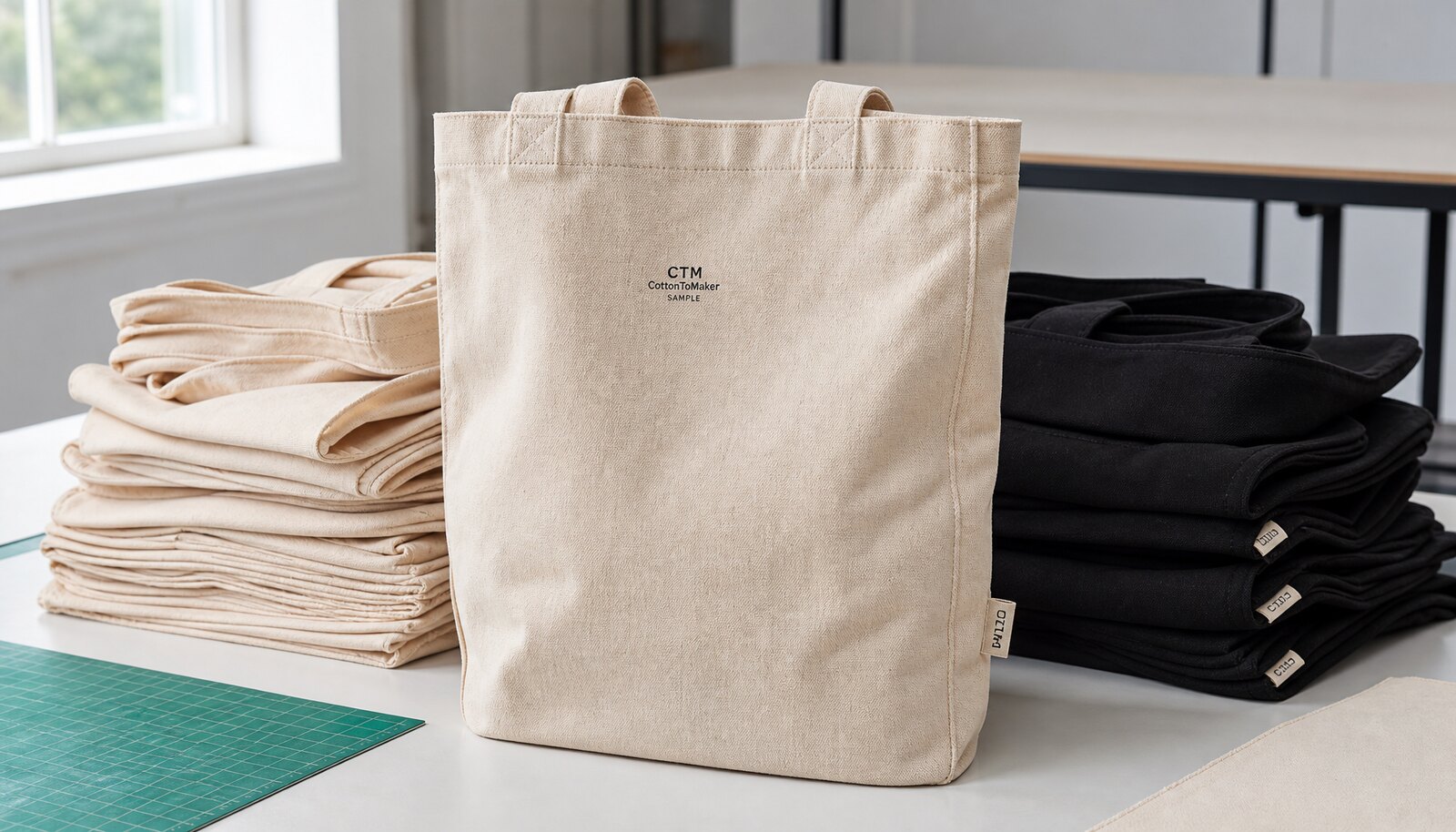
Why hotel buyers price recycled canvas totes differently from standard tote bags
Hotel buyers are not sourcing a generic tote. They are buying a branded operational item that has to look good at check-in, hold real contents, and arrive on time for an opening date or seasonal program. That changes the pricing logic. The right question is not only what the bag costs, but what it costs to keep the spec stable across properties, reorders, and freight lanes.
The phrase recycled canvas totes for hotels bulk pricing plan makes sense only if the buyer defines the use case first. A welcome bag for a lifestyle property, a retail tote sold in the lobby shop, and a conference carry bag all have different durability and presentation requirements. If procurement does not separate those use cases, quotes will look comparable even when the bags are not. That leads to false price wins and avoidable reorders.
A useful buyer mindset is to treat the tote as a small engineered product. Fabric weight, weave, handle construction, print method, carton count, and packing format all affect the number on the quote. If those inputs are not locked, a supplier can legally quote a lower price by changing a detail that later shows up as weak structure, poor print opacity, or more freight cube. For hotel programs, that is a procurement problem, not just a merchandising issue.
- Price the tote against the actual guest use, not a generic promotional benchmark.
- Keep one master spec for all properties if you want predictable reorders.
- Use samples to validate the bag under load, not just as a flat visual asset.
Start with fabric construction, recycled content, and GSM
For most hotel programs, the starting point is a recycled canvas in the 280-340 GSM range. That gives enough structure for a premium look without making the bag so stiff that it becomes expensive to sew or awkward to pack. If the tote must carry heavier welcome kits, retail merchandise, or boxed amenities, a higher GSM may be justified. The key is to choose the weight because of the load case, not because a heavier number sounds better.
Do not let the term recycled canvas stay vague in the RFQ. Some suppliers mean recycled cotton, some mean post-industrial cutting waste, and some use recycled blended yarn. These are not interchangeable in appearance, hand feel, and finishing behavior. One can print cleaner; another may have more visible flecking or shade variation. If the hotel brand wants a natural, quiet look, ask the factory to quote the same construction for sample and production, then freeze it in writing.
The same logic applies to the bag body and base. A flat tote with no gusset is cheaper, but it is also less stable on a counter and less forgiving when packed with irregular items. A gusseted base, reinforced bottom seam, or denser weave can improve function, but each adds material or labor. The procurement team should ask for the incremental price of each upgrade rather than guessing from the total quote.
- Specify fiber source, weave, GSM, and finishing in the RFQ line by line.
- Ask for the same fabric batch or matching lot as the approved sample when possible.
- Request an upgrade price for heavier fabric, reinforced base, and gusset changes so you can compare the value of each change.
Choose the decoration method around artwork, not around habit
For simple logos and one- or two-color artwork, screen printing is usually the most efficient choice for bulk hotel orders. It tends to be the easiest method to control on textured canvas and the most predictable when the same artwork will be reordered throughout the year. The setup cost is real, but for a stable program the cost per unit usually improves once volume rises. That is why it remains a default for many hospitality buyers.
If the artwork has gradients, thin lines, or multiple color transitions, digital print can be the better visual fit. The tradeoff is that the quote should reflect the slower process, higher ink usage, and potentially different wash or abrasion behavior. Buyers should ask the factory to explain whether a design is print-friendly on recycled canvas or whether the texture will soften the edges more than expected. A beautiful digital proof can still fail if the base cloth is too coarse.
Woven labels, patches, and embroidery have their own place. They can deliver a quieter, more premium feel, especially for boutique properties or lobby retail, but they should be used because the brand wants that finish, not because the supplier is trying to hide the cost of print setup. The best hotel sourcing rule is simple: match the decoration method to the artwork and the reorder frequency, then ask for a line-item price delta on each alternative.
- Use screen print when the logo is simple and the order is large enough to absorb setup.
- Use woven labels or patches when the brand wants a low-ink, premium appearance.
- Use embroidery only if the logo size, fabric thickness, and placement can support it without distortion.
Compare sourcing routes before you compare supplier names
The same tote can price very differently depending on the buying route. A factory-direct source usually gives the cleanest view of material cost and process control, which matters when you need repeatability across hotel groups. A trading company or sourcing agent may add service value, especially if the buyer needs communication support or wants to consolidate several products through one point of contact. A regional decorator can be useful for short timelines, but the unit cost is usually higher and the material options are narrower.
The real commercial issue is transparency. If the seller does not own cutting, sewing, printing, or packing, the sample may come from a different line than the bulk order. That creates a hidden risk: the sample looks right, but the production run drifts on stitching, shade, or placement. Buyers should ask who touches the product at each stage and whether the same site handles both sample and bulk. If the answer is unclear, the quote is incomplete.
Compare the route, not just the price. A quote that looks lower may still cost more after rejects, rework, freight cube, or schedule slippage. The right procurement comparison is the full landed cost of a tote that passes QC, arrives on time, and can be reordered without rework. That is especially important when the tote is part of a hotel opening kit or a chain-wide branding program.
- Ask each bidder whether they are factory, trading company, or decorator, then compare on the same sheet.
- Verify whether any step is subcontracted, including print and packing.
- Treat sample consistency and lead-time control as part of the supplier score, not as a side note.
Build the bulk pricing plan around the cost drivers that actually move the number
A useful bulk pricing plan starts with the pieces that change the quote the most. For recycled canvas totes, those are fabric weight, cut size, handle type, print method, closure option, packing format, and carton size. A higher GSM usually adds cost first at the material line. Webbing handles often cost more than self-fabric handles. Closures add both hardware and sewing time. Individual polybagging adds material, labor, and cube. None of these are surprising, but buyers often see only the final number and not the drivers underneath it.
The best way to make a quote comparable is to request pricing by option, not just by total. Ask the supplier to show the base tote price, then the incremental price for heavier fabric, longer handles, an extra print color, a zipper, or retail-ready packing. This exposes where the price curve is steep and where it is flat. It also helps the team decide whether a feature is worth buying. For example, if a zipper adds a meaningful amount and the tote is only a welcome bag, that upgrade may not be justified.
Landed-cost math should be part of the buying plan from the start. A simple internal model can look like this: ex-factory price, plus carton and packing cost, plus inland freight, plus inspection or rework allowance, plus duty, plus destination handling. Even an illustrative difference of a few cents per piece can matter when the order is large and the bag is repeated across multiple properties. Procurement should ask for the full cost stack before approving the PO.
- Require separate price lines for fabric, printing, sewing, packing, and carton cost.
- Ask for upgrade deltas on each optional feature instead of a single all-in quote.
- Build a landed-cost worksheet before award so freight and handling do not surprise the budget later.
Use MOQ as a planning tool, not just a gate
MOQ matters because it reveals how the factory really makes the bag. At low quantities, the supplier may rely on stock fabric, simpler printing, or more manual packing. At higher quantities, the cutting and sewing workflow becomes more efficient and the price per unit usually improves. For a hotel buyer, the question is not whether the MOQ is high or low in the abstract. The question is whether the MOQ aligns with the property count, the launch schedule, and the expected reorder rate.
This is where procurement should separate launch orders from steady-state replenishment. A flagship opening might justify a smaller first order if the design is still being tested. A chain rollout or a resort group with multiple properties can usually absorb a higher MOQ if the spec stays fixed. The supplier should quote the same tote at different quantity levels so the team can see the breakpoints. If the price barely changes between tiers, that is a signal to ask whether the factory is truly optimizing the run or just guessing at demand.
Be cautious when a very low MOQ is presented as a major advantage. It can be legitimate, but it often means the factory is holding stock fabric, simplifying the build, or charging setup cost in another part of the quote. Low MOQ is valuable when speed and flexibility matter more than the lowest unit price. It is less valuable if the hotel expects repeat orders and wants the best long-term cost structure.
- Match MOQ to properties, reorder cadence, and opening date.
- Ask for pricing at multiple tiers so the team can see the true volume break.
- Treat unusually low MOQ offers as a signal to inspect fabric availability and hidden setup costs.
Gate samples with real acceptance criteria, not a yes-or-no visual check
The sample stage should prove that the tote is manufacturable at bulk quality, not just that one example looks decent on camera. The first step is a blank sample to confirm body shape, proportions, and handle length. The second is a decorated sample to check print opacity, placement, and edge quality. The third, if the order is important, should be a pre-production sample made with production materials and the final packing method. That sequence prevents a lot of avoidable misses.
Buyers should test the bag with real contents. Put brochures, slippers, toiletries, or whatever the hotel expects the tote to carry into the sample and see how it behaves. Does it stand up? Does the base twist? Do the handles cut into the hand? Does the print crack when the bag is flexed? A tote that looks fine empty can fail once the contents change shape. The approval process should capture that reality before bulk starts.
Sample sign-off should also create a frozen spec. Record finished measurements, approved artwork placement, fabric description, handle construction, and packing format in one file attached to the PO. If the supplier changes any of those details after approval, the buyer should know whether the change is a free correction, a cost change, or a new lead time. Without that discipline, the sample becomes a reference image instead of a contract control point.
- Approve one blank sample and one decorated sample before production release.
- Test the tote with the real contents it will carry in hotel use.
- Freeze the spec sheet and attach it to the order so later changes are controlled, not informal.
Write the RFQ so suppliers cannot quote different products by accident
A clean RFQ is the fastest way to get comparable pricing. It should state the bag size, recycled canvas construction, handle length and type, print method, artwork color count, packing style, and required delivery date. If the buyer leaves any of those open, the supplier can make different assumptions and still technically answer the request. The result is a quote pack that looks complete but cannot be compared fairly.
It also helps to define what the team does not want. If the hotel does not need a zipper, say so. If retail-ready individual polybags are unnecessary, say that bulk packing is preferred. If color matching matters, define whether the factory should match a Pantone reference, a physical swatch, or the approved sample. These constraints remove ambiguity and usually reduce quote churn.
For procurement teams managing multiple stakeholders, the RFQ should name the internal approver for artwork, the approver for materials, and the person who can authorize change requests. That avoids the common problem where sales approves the decoration, operations changes the pack-out, and procurement is left comparing a new quote that no longer matches the original request. A well-structured RFQ is not just cleaner; it protects the budget.
- State exactly one finished size and one approved build spec in the RFQ.
- Include required packing format, carton labeling, and delivery date on the first page.
- Name the internal sign-off owner for artwork, sample approval, and final PO release.
QC should focus on failure modes that matter in hotel use
Good QC for recycled canvas totes is not a generic checklist. It should focus on the ways the bag can fail in service. The first failure mode is dimensional drift: a tote that is too small to fit the contents or too large to pack efficiently. The second is decoration drift: logo placement that creeps, print opacity that weakens, or color that shifts across cartons. The third is structural failure: handle seams that pull apart, bar-tacks that are incomplete, or corners that twist when loaded.
A practical inspection plan checks random bags from different cartons, not just the first few off the line. Measure width, height, and gusset against the approved sample. Inspect the print edge for feathering, smudging, or strike-through. Pull the handles with enough force to reveal weak stitching. Open the top edge and inspect thread trimming, seam allowance, and any internal stains or broken needles. If the tote includes hardware, confirm that snaps or zippers function consistently and do not distort the fabric.
Buyers should also verify the supply chain evidence, not only the finished product. If the order was sold as recycled content, ask for the related documentation and make sure it matches the actual material used. If the supplier substituted fabric or changed the packing route after approval, the inspector should flag it immediately. QC is most valuable when it catches material substitution and workmanship drift before shipment, not after the bags reach the hotel warehouse.
- Check random bags from multiple cartons, not just the top of the first carton.
- Measure size, inspect print, and test handles as separate acceptance points.
- Verify recycled-content documents against the production materials and reject unapproved substitutions.
Packing, palletizing, and freight planning can change the real economics
Packing has a direct effect on landed cost. A tote packed flat in bulk cartons will usually ship more efficiently than the same tote folded with inserts, hangtags, and individual polybags. For hotel backstock or distribution to multiple properties, bulk packing is often the best answer. If the bags need to go straight to retail shelves or guest-facing gift packaging, the buyer can still choose retail-ready packing, but the labor and cube should be visible in the quote. A hidden packing upgrade is a common way for price comparisons to become misleading.
Carton fit deserves the same attention as the tote itself. If the carton is too large, cube increases and freight becomes wasteful. If it is too tight, the tote wrinkles and the cartons can crush at destination. Ask the supplier for the exact pieces per carton, carton dimensions, gross weight, and whether the bags are folded with boards, tissue, or no insert at all. That information is what makes it possible to estimate container loading, warehouse receiving, and palletization in advance.
For larger hotel programs, a small change in packing density can matter. For example, if a supplier can move from a retail-style individual pack to efficient bulk pack without affecting guest presentation, the freight savings and handling simplification can outweigh a slightly higher sewing cost. Procurement should compare the full chain, not just the factory price. The right packaging decision is the one that reduces total cost while still meeting brand presentation rules.
- Default to bulk packing unless the end channel truly needs individual retail units.
- Request carton dimensions, gross weight, and fold method before award.
- Check whether packing changes improve or damage freight density, warehousing, and appearance at destination.
Specification comparison for buyers
| Buying route | Likely pricing band | Best for | Main tradeoff to verify |
|---|---|---|---|
| Factory-direct tote manufacturer | Usually the best route for repeat bulk pricing | Chains, groups, and standard programs that can hold one spec across reorders | Ask who actually cuts, sews, prints, and packs; some factories still outsource key steps |
| Trading company or sourcing agent | Mid to upper-mid pricing, depending on markup and service scope | Buyers who need communication support, mixed product sourcing, or help managing multiple suppliers | Confirm subcontracting, QC ownership, and whether the sample comes from the same line as bulk |
| Domestic decorator or regional print shop | Highest unit price in most cases, but can be fastest for short runs | Rush launches, local delivery, and low-volume orders where freight time matters more than factory price | Check fabric options, decoration limits, and whether the material is actually recycled canvas |
| Stock tote plus decoration | Lowest setup cost, but not always the lowest landed cost | Event kits, trial programs, and small hotel launches with limited artwork complexity | Stock color and size may not match the brand, and freight can erase the savings if carton cube is poor |
| Dual-source plan | Mixed pricing; often useful as a risk buffer rather than a cheapest-bid strategy | Large hotel groups, seasonal programs, and buyers that need a backup supply route | Master spec control is critical or the two sources drift apart over time |
| Material | 8-12 oz cotton canvas, 120-220 gsm cotton, recycled cotton, or blended fabric selected by use case and target price | Before price comparison | Different cloth weights, backing, or certification claims make quotes hard to compare |
| Construction | bag size, gusset, handle drop, seam allowance, stitch density, reinforcement patch, and loading expectation | Before sampling | Weak stress points create returns and failed inspections |
| Decoration | screen print, heat transfer, embroidery, woven label, or hangtag matched to fabric texture and brand durability needs | Before artwork approval | The wrong method can crack, bleed, pucker, or fail on the chosen fabric |
Buyer checklist before sampling
- Define the use case before you price anything: welcome bag, amenity carrier, retail tote, conference bag, or resale item.
- Lock one finished size, one recycled canvas construction, and one decoration method before requesting comparable quotes.
- Ask the supplier to quote the same spec at at least two quantity tiers so you can see the real volume break.
- Require separate pricing for each upgrade: heavier fabric, webbing handles, zipper or snap closure, extra print colors, and individual polybagging.
- Request a blank sample and a decorated pre-production sample, not just a photo or a one-off sales sample.
- Approve the sample with real contents inside the tote so you can check shape, handle comfort, and seam behavior under load.
- Ask for carton dimensions, piece count, gross weight, and packing orientation so you can estimate freight cube and warehouse handling.
- Confirm recycled-content documentation, material source, and whether the fabric is recycled cotton, recycled blended yarn, or post-industrial waste.
- Set a sign-off owner, a sample approval deadline, and a change-control rule so artwork or spec changes do not reset lead time.
- Compare landed cost, not only ex-factory or FOB: add inland freight, cartons, inspection, duty, and destination handling before approving the PO.
Factory quote questions to send
- What exact recycled canvas construction are you quoting, including GSM, weave type, fiber content, and finishing process?
- Is the fabric made from recycled cotton, post-industrial cutting waste, or recycled blended yarn, and what traceability documents can you provide?
- Which decoration method do you recommend for this artwork, and what is the setup charge, per-color charge, and reprint cost for each option?
- What is your MOQ per color, per logo version, and per packing format, and do those MOQs change if we keep the same body color across properties?
- Can you provide a tiered quote at 1,000, 3,000, and 5,000 pieces so we can see the real volume break?
- What sample stages are included: blank sample, decorated sample, and pre-production sample, and which sample fees are refundable against order?
- What are your standard size tolerances, stitch-density targets, handle reinforcement details, and acceptance criteria for print placement?
- How do you test handle strength, seam integrity, and color consistency before bulk release?
- How many pieces per carton, what are the carton dimensions, and what is the gross weight per carton?
- What lead time starts the clock: artwork approval, sample approval, or deposit receipt, and what events can extend the delivery date?
Quality-control points to confirm
- Fabric weight matches the approved sample or the agreed tolerance range; do not accept a visual match alone.
- Finished size, gusset depth, and handle length stay within tolerance on a random carton check, not just on the first sample.
- Print placement remains aligned to the approved top-edge and centerline measurements across the whole run.
- Ink coverage is opaque enough that the canvas texture does not break the logo edges or leave patchy fill.
- Handle stitching has complete bar-tacks, even stitch length, and no skipped stitches at stress points.
- Seams are straight, corners do not pucker when the bag is filled, and no seam allowance is exposed at the top edge.
- Color remains within the approved shade band across cartons; if shade matters, compare against a physical reference, not only a screen image.
- No loose thread ends, oil marks, broken needles, or foreign fibers remain on the bag surface or inside seam lines.
- Carton count, SKU label, and carton mark all match the PO, and the cartons survive normal handling without crush damage.
- Recycled-content documentation matches the actual fabric used in production; do not accept a last-minute material substitution.