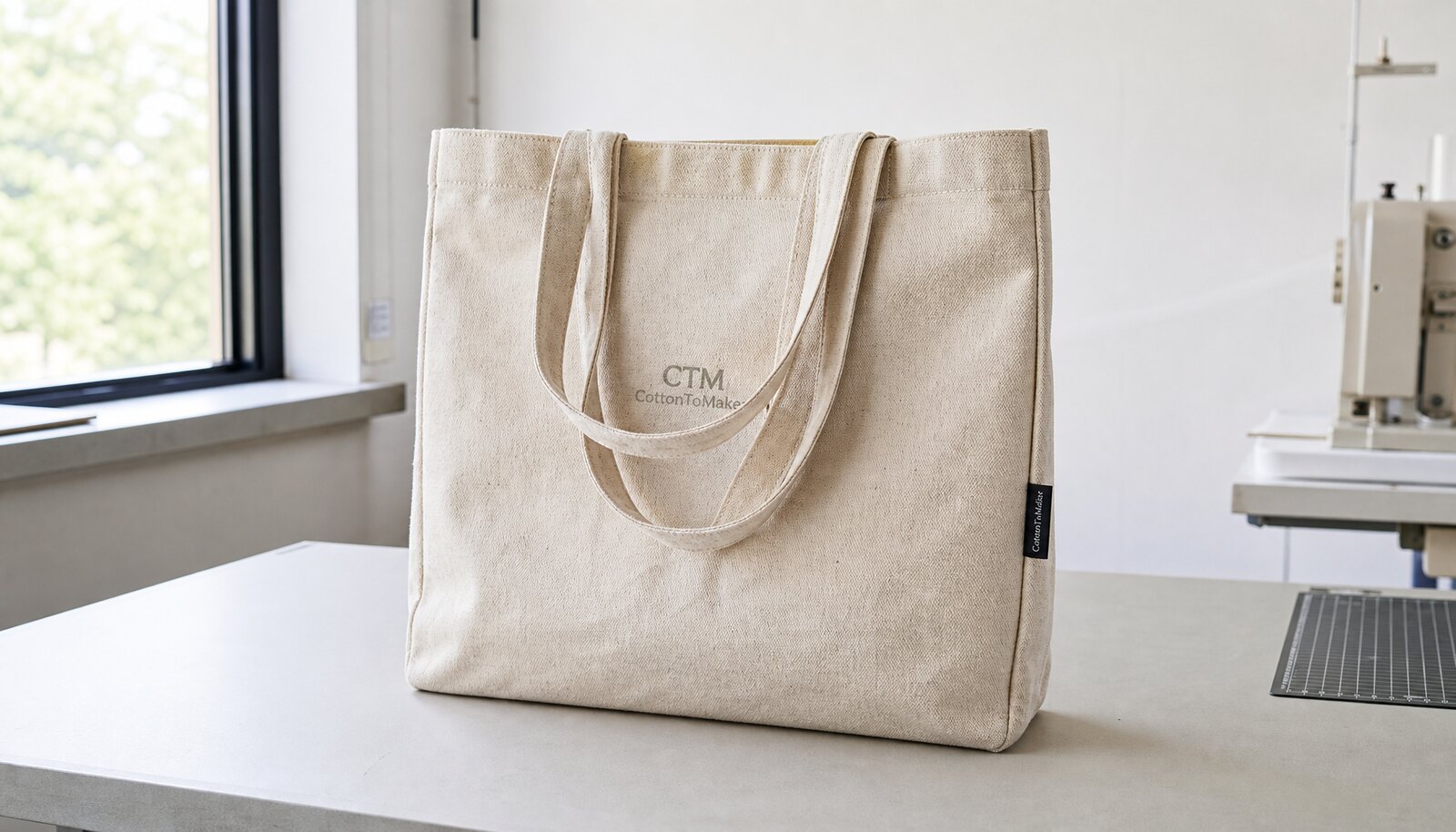
Why recycled canvas totes are a different buy for cosmetic brands
For a cosmetic brand, a tote is rarely just a carrier. It may sit inside a holiday set, hold sample jars and cartons, or become a retail accessory that customers reuse in public. That means the bag has to do three jobs at once: protect product, support the brand image, and feel consistent with the rest of the packaging system. A low-cost promo tote can survive an event table. A cosmetic-brand tote has to survive the shelf, the warehouse, the customer’s first impression, and sometimes the second life the customer gives it after purchase.
That is why recycled canvas totes for cosmetic brands should be compared as part of a packaging program, not as a generic promo item. Procurement needs to ask whether the bag can support the intended load, whether the canvas texture works with the print method, and whether recycled-content wording can be supported without overclaim risk. If the tote will be photographed, resold, or reused often, finish quality matters nearly as much as unit price.
The buying decision is also tied to packaging strategy. Some beauty teams use the tote as an outer gift bag, some use it as a retail merchandise item, and some use it as a replacement for single-use outer packaging. Each use case creates a different spec profile. The right bag for a lightweight event handout may be wrong for a boxed skincare set with glass bottles.
For procurement teams, the practical lesson is simple: define the tote’s job before comparing suppliers. Otherwise, one supplier may quote a light promotional bag while another quotes a retail-grade build, and the price difference will look larger than it really is. In reality, the supplier is pricing different performance expectations. The comparison becomes useful only when those expectations are visible.
This is also where sustainability language can become too broad. “Recycled” is not one material category. A recycled cotton canvas made from post-industrial textile waste is not the same as a recycled cotton blend with polyester, and neither should be described vaguely. Cosmetic brands are often more exposed to claim risk because the packaging is part of the consumer-facing story. The cleaner the sourcing language, the safer the commercial discussion.
- A cosmetic tote must support load, presentation, and reuse, not only logo visibility.
- The spec should match the actual product set inside it: jars, bottles, palettes, or flat inserts.
- Recycled-content wording should be supported by supplier documents, not inferred from a marketing phrase.
Start with the end use: retail, gift-with-purchase, influencer set, or store packaging
The most useful RFQ question is not “what size bag do you have?” It is “what must the tote do in our packaging flow?” A retail tote that hangs on a shelf has different needs from a gift-with-purchase bag that is folded into a promotional box. An influencer kit may prioritize appearance and unboxing, while an event giveaway may prioritize speed, cost, and efficient carton packing.
If the tote is for retail sale, buyers usually need a cleaner surface, stronger seams, and a more consistent folded presentation. If it is used as a packaging replacement, the critical issues are pack-out efficiency, load safety, and whether the bag protects the contents during transit. For VIP or influencer programs, presentation may matter more than durability, but the tote still needs to look high quality in photos and on video.
The commercial implication is important. When the use case is clear, the rest of the spec becomes easier to standardize. A supplier can quote a lighter bag for a flat giveaway and a stronger bag for a boxed skin-care set, but those are not interchangeable offers. If procurement does not separate them, the evaluation becomes noisy and the shortlist becomes weak.
A buyer can also use the use case to decide which finishing details are worth paying for. Retail merchandise may justify cleaner edge finishing, tighter print placement, and more deliberate fold presentation. A shipping-oriented tote may not need those extras. The savings from removing cosmetic-only features can be meaningful, but only if the brand is comfortable with the simpler appearance.
For beauty teams, the biggest mistake is treating all tote bags as one category. A tote that holds a 50 ml serum and a palette is not automatically suitable for a candle-style gift set or a fragrance box. The load case should be stated clearly in the RFQ, ideally with a representative weight or sample pack-out photo attached.
If the brand plans to reuse the same tote across campaigns, the use case should also include reorder behavior. A launch bag may be accepted with a wider texture range, while a retail SKU may need tighter consistency over multiple production lots. That should be decided before the first order, not during the reorder dispute.
- Retail tote: prioritize appearance, repeatability, and clean finishing.
- Gift-with-purchase tote: balance cost with enough body and print quality to feel intentional.
- Influencer or VIP tote: prioritize first-impression quality, print clarity, and photo readiness.
- Packaging replacement: prioritize load strength, carton efficiency, and protection during shipping.
Fabric choice: why GSM, weave, and recycled-content wording matter
Canvas weight is one of the first levers procurement should lock down. For many beauty programs, roughly 320–420 GSM, or about 10–12 oz, is the practical middle range because it gives the bag enough body to look intentional without pushing cost and freight weight too high. A lighter canvas may work for a flat giveaway, but it can arrive wrinkled, feel soft in the hand, and make the printed logo look less premium. A heavier canvas can improve structure, but it adds unit cost and makes folding and packing less efficient.
Weight alone is not enough. Recycled canvas can vary in weave density, color tone, and surface texture depending on fiber input and mill process. That matters in cosmetic packaging because the tote often sits close to the brand’s visual identity. A natural canvas with visible fiber variation can look authentic and premium to one brand and inconsistent to another. The buyer should define whether slight variation is acceptable or whether the supplier must hold a tighter shade window.
The wording around recycled content deserves as much attention as the weight. Recycled cotton, recycled cotton-poly blend, and reclaimed textile input are not interchangeable. They do not all support the same claim, and they do not always behave the same in sewing or printing. Ask the supplier exactly what the recycled input is, what share of the finished fabric it represents, and what document backs that statement. That documentation should be material-specific, not just a general sustainability brochure.
For reorders, lot-to-lot variation matters more than many buyers expect. If the first batch looks warm and natural but the next batch appears slightly grayer or rougher, the SKU may no longer match your packaging standard. That does not automatically mean the product is defective. It may mean the spec allowed too much variation. If the tote is being sold as a retail item, write the acceptable variation more tightly than you would for a short-run event bag.
A practical buyer threshold is to ask for a measured fabric reference, not only a verbal description. If the supplier quotes 12 oz canvas, ask how they measure it, what tolerance they allow, and whether the weight is based on the finished fabric or the greige base before processing. That distinction matters because recycled fabric can be described loosely in supplier conversations even when the actual material performance is narrower.
If the tote is part of a branded claim, buyers should also separate marketing language from auditable documentation. A certificate may support a recycled-fiber claim, but only if it applies to the actual supplier, the actual material, and the relevant transaction scope. Do not let a broad sustainability statement replace a clear material specification.
- 10–12 oz / 320–420 GSM is a common middle range for cosmetic programs, but the right weight depends on load and presentation.
- Ask whether the fabric is recycled cotton, recycled blend, or reclaimed textile waste, and what that means for claim wording.
- Request the supplier’s measurement method, tolerance, and lot reference for the quoted fabric.
- Write the acceptable shade and texture variation into the spec if the tote will be reordered.
Comparison table: how to compare supplier routes, not just tote specs
A lot of sourcing comparisons fail because every supplier is quoting a different version of the same-looking bag. One factory may use stocked fabric, another may run a custom mill lot, a third may outsource printing, and a fourth may include retail packing in the unit price. If you compare only the final number, you are comparing business models as much as products. That is why a real commercial comparison has to include supplier route, process control, and the documentation behind the claim.
For recycled canvas totes for cosmetic brands, procurement should compare whether the supplier can actually deliver the same outcome again. A lower unit price is not useful if the shade changes, the print shifts, or the bag must be reapproved for every reorder. The comparison should show where each supplier is strong and where the risk sits. That is especially true when the tote is tied to a brand launch or seasonal calendar, because delay has a cost that does not show up on the invoice.
The table below is designed to help shortlist suppliers on a commercial basis rather than just a product basis. Use it to separate budget-friendly options from retail-ready options, and to show what extra checks are needed before issuing a purchase order.
- Compare the supplier route as well as the product.
- Insist on the same spec sheet across all suppliers before pricing.
- Ask which parts of the cost are fixed, which are variable, and which change if artwork or packing changes.
Sample approval: the checkpoints that prevent expensive mistakes
The sample is where a tote either becomes a releasable product or stays a concept. For cosmetic brands, a useful sample must prove more than visual likeness. It has to show the actual canvas feel, the print result on textured fabric, the way the handles sit after folding, and whether the bag still looks clean once it is packed. A sample that is only “close enough” can create a much bigger problem later, because the production run will expose issues that were not visible on paper.
Ask for a pre-production sample, not just a blank body or a digital mockup. The sample should use the final fabric, the final print process, the final handle construction, and the final packing style. If the tote includes a logo, review the mark placement against the approved drawing and measure the distances rather than trusting the eye alone. If the bag is part of a gift set, load it with a representative cosmetic kit or equivalent weight so you can see how the structure behaves.
Procurement should create a sample approval checklist before the sample arrives. That checklist should cover size, handle drop, stitch quality, seam alignment, print position, color appearance, and packaging. If the factory needs revisions, issue them in a numbered format with photos. This is cleaner than sending vague comments like “make it feel more premium.” The more precise the feedback, the fewer production surprises later.
One useful rule: do not approve a sample until it passes both appearance review and practical handling. A tote can look fine on a table and still fail when folded, packed, or loaded with rigid cosmetic items. If the tote will be sold in retail or used in a gifting program, that second check is not optional. If the brand team likes the look but the bag twists under load, the sample is not approved yet; it is a design direction only.
A good sample review also documents what was not tested. If the supplier sends a cosmetic display sample without a full load or without production packing, note that clearly. Otherwise, the sample can be mistaken for a release-ready reference and the first production lot becomes the real test. That is where many tote programs lose time, especially when the order is tied to a fixed launch date.
- Approve the exact fabric, not a substitute fabric.
- Measure size, handle drop, and gusset depth rather than relying on appearance.
- Test the bag with a real or representative cosmetic load before release.
- Document sample revisions by version number and date so the final approved spec is clear.
Print method and artwork: how to match branding to canvas
Canvas texture changes how artwork looks. That matters in beauty, where the brand mark often carries a lot of value. Screen printing is usually the most stable and economical choice for simple logos and one to three spot colors. It provides good coverage on textured fabric and tends to hold up well in normal handling if the ink system is appropriate. But buyers should not assume every screen print will look the same. Mesh count, ink type, cure conditions, and print alignment all affect the final result.
Heat transfer and DTF can be practical for smaller runs or more detailed graphics, especially when the brand wants more color variation or a faster sample cycle. The tradeoff is that the print layer can feel different on canvas and may need more careful adhesion testing. For premium cosmetic projects, that surface feel matters. A print that looks good at first glance but peels, cracks, or sits poorly on the weave will damage the perceived quality of the tote.
Embroidery can be attractive for premium or limited-edition bags, but it changes the economics and the hand feel of the bag. It adds thickness and can make the logo area stiffer, which may or may not be desirable. For many cosmetic programs, embroidery is best used selectively. If the bag is a retail item or a premium gift, it can work well. If the bag is a volume packaging component, it may be unnecessary cost.
Whatever the method, ask for the artwork proof to show exact dimensions and placement. On canvas, a logo can appear smaller once the texture absorbs some of the visual edge. That is why print size should be approved on an actual sample, not only in a flat artwork file. For buyers comparing suppliers, the important question is not “can you print it?” but “can you print it consistently on this fabric, at this size, for the whole order?”
A useful buyer check is to ask what print failures the supplier sees most often. Common issues include haloing around edges, uneven ink deposition on thicker weave, misregistration on multi-color art, and rub-off on loosely cured prints. The supplier does not need to promise perfection, but they should be able to explain how they prevent the failure modes that matter for your artwork and your fabric.
- Screen print: best for straightforward logos and repeatable volume orders.
- DTF or transfer: useful for smaller runs, multi-color artwork, or faster iteration.
- Embroidery: premium look, but only if the added thickness and cost match the use case.
- Approve artwork on actual canvas, not just on a digital proof.
Bag construction: the details that affect load strength and shelf appearance
The bag’s structure often decides whether it feels premium or promotional. Boxed corners, reinforced top stitching, balanced handle placement, and tidy seam finishing all affect how the tote stands, folds, and carries weight. Cosmetic brands should pay particular attention to the handle attachment points because sample kits and gift sets often include heavier items than a normal shopping bag would carry. If the handles are weak or the stitch density is low, the first complaint may come from a retail customer or a field team, not from the factory.
Handle width and handle drop are easy to overlook. Narrow handles can cut into the hand and look less substantial, while a short drop may make the tote awkward over the shoulder. If the tote is meant for retail resale or daily reuse, comfort becomes part of the brand experience. The same is true for the opening: if the bag collapses too easily, it can look cheap even if the print is excellent. Buyers often discover this only after seeing the sample packed with real product, which is why load testing is worth the extra step.
Some buyers also ask for lining or internal reinforcement, but that should be a deliberate decision rather than a default request. Lining can improve appearance and help hide internal seams, yet it increases cost and assembly complexity. If the tote must hold rigid cosmetic packaging or glass, reinforcement may be worth it. If the bag is a light promotional accessory, simpler construction may be the better commercial choice.
The key is to align construction with the load case. A recycled canvas tote intended to carry fragrance boxes or jars should not be specified like a flat paper carrier. Conversely, a lightweight promotional carry bag does not need features that only add cost. Procurement gets better pricing when the construction spec is tied to the actual product use.
A field-tested way to make the spec real is to name one or two example contents. For instance: “must hold six 30 ml glass bottles and two cartons without handle stretch or seam opening” or “must carry one palette, two serum cartons, and one brochure pack.” That gives the factory a better target than a vague statement such as “must feel premium,” and it gives procurement a clearer way to reject underbuilt samples.
- Confirm boxed corners, seam finishing, and top-stitch quality before production.
- Specify handle width and handle drop because these affect comfort and perceived quality.
- Only add lining or reinforcement if the load case justifies the extra cost and complexity.
- Use a representative product load in the RFQ so the factory understands the performance target.
Commercial comparison: the cost drivers buyers should ask suppliers to separate
The right comparison is not “bag A costs less than bag B.” It is “which design and supply route gives us the best total landed value for the same retail or packaging outcome?” That means procurement should ask suppliers to break the quote into understandable components. Fabric weight, sewing complexity, print setup, packing standard, sample charges, and carton specification all influence the final price. A quote that does not separate those items is harder to negotiate and harder to compare.
Fabric weight is usually the first cost driver, but it is not always the biggest one. For smaller orders, print setup and labor can dominate. If the logo has multiple colors, the difference between one screen and three screens can matter more than a slight fabric change. Packing also matters: individual polybags, folded inserts, retail labels, or special carton marks all add labor and materials. If the bags are moving through a warehouse rather than a retail shelf, that packing cost may be worth it. If not, it may just inflate the landed price.
This is where landed-cost language becomes useful. A lower FOB price can become a worse landed outcome once freight, packing, inspection, and defect risk are included. A factory with better process control may quote more at the start but create less rework, fewer surprises, and easier receiving later. For procurement teams, the most useful comparison is the total cost of getting an acceptable tote into the channel on time.
A practical landed-cost framework for tote buying is easy to build. Start with the quoted unit price, then add print setup allocated across the order, sample or development fees, packing materials, carton charges, third-party inspection if required, inland freight to port or warehouse, international freight or courier, duty if applicable, and the internal cost of any rework or relabeling you expect. That gives you a more honest comparison than unit price alone.
For example, a tote quoted at a lower unit price may become more expensive if it needs extra folding labor, individual polybags, a higher rejection rate, or a repeat sample cycle. A slightly higher-priced supplier can still win on landed value if the quote already includes the packing and QC scope you need. Buyers should ask for the quote to identify what is included and what is excluded before comparing totals.
When you request quotes, ask suppliers to price the same spec and to flag any assumptions. If one supplier uses stocked fabric and another mills fresh fabric, the lead time and color consistency are not comparable. If one includes carton packing and another does not, the unit price is not comparable. Without that cleanup, the cheapest quote is often just the least complete quote.
A simple procurement model helps keep the comparison visible. Score each quote on four lines: direct price, documentation confidence, process confidence, and reorder consistency. The lowest number on the first line is not always the best option if the other three lines are weak.
- Ask for fabric, sewing, print, packing, and carton costs separately.
- Compare landed cost, not only unit price.
- Treat lower quote transparency as a risk signal, not a bargain.
- Identify which assumptions would trigger a revised price before you issue the PO.
Packing and warehouse handling: why the tote can fail after it is sewn correctly
Many tote orders are technically fine at the factory and still disappointing when they arrive at the warehouse. The reason is usually packing. Flat folding, carton density, dust control, and carton labeling affect whether the product is easy to receive and retail-ready. A tote packed too loosely can crease and collect dust. A tote packed too tightly can deform, stress the seams, or look compressed when opened. For cosmetic brands, that first unpacking moment matters more than buyers sometimes expect.
The packing standard should be part of the quote, not an afterthought. Ask whether the tote is single-packed, bulk packed, or polybagged, and whether the folded size is controlled. If the bags are for retail or DTC use, check whether the packaging format complies with your destination market or retailer requirements. If the bags go to a fulfillment center, ask what carton dimensions best fit warehouse shelving, picking, and carton scan processes.
Carton control also affects loss prevention. A clear outer carton mark with style number, quantity, color, and batch identification helps receiving teams count and store the order correctly. If the order includes multiple colors or sizes, carton segregation matters even more. A small mistake in carton labeling can slow the warehouse far more than a small defect in stitching would.
For beauty programs, cleanliness is part of product quality. Lint, oil odor, and storage dust can make a tote look less premium even when the sewing is acceptable. Define your acceptance standard in advance. If a supplier treats packaging as only a shipping step, they may miss the fact that the tote is also a consumer-facing product.
It is also worth asking how the supplier protects finish quality during packing. Some programs need a tissue insert, some need a belly band, and some only need a controlled flat fold. The right choice depends on how visible the tote is when the consumer opens the outer pack and whether the tote is meant to be sold immediately or stored for later use. The answer should come from the use case, not from a default factory habit.
- Specify fold size, carton quantity, and carton marking by SKU.
- Decide whether individual polybags are required, optional, or prohibited.
- Check for dust, odor, and lint before shipment release.
- Align packing format with the receiving warehouse, not only with factory convenience.
Lead time, reorder risk, and how to keep the calendar realistic
Lead time is often quoted as a single number, but that hides the real schedule risk. For tote programs, the schedule usually breaks into sample development, sample approval, fabric reservation, production, inspection, packing, and shipping preparation. If the supplier gives you only one number, ask them to split it. That is especially important for cosmetic launches, where the bag may be linked to a campaign date that cannot move.
Sample time can stretch if the logo needs adjustment or the factory proposes a different fabric than the one you expected. Production time can slip if the factory must source a specific recycled canvas lot or if the sewing line is busy. Packing time can also become a bottleneck when the order requires retail-ready presentation or special carton markings. These are not minor details; they are often the real source of delay.
Reorders deserve special attention. Cosmetic brands often want the same tote back for a seasonal refresh or a repeat promotion, and that is where fabric variation and documentation matter. If the first order used one fabric lot and the second order uses another, the bag may look close but not identical. That can be acceptable if the spec allows it. If not, the reorder may need a fresh approval. Buyers should ask in advance how the supplier handles repeat lots and whether they can hold or reference a prior fabric.
A simple way to reduce risk is to set milestone dates, not just an end date. Lock the sample approval deadline, the PO release date, the production start date, and the pre-shipment inspection date. If any one of those slips, the calendar impact becomes visible early. That gives procurement time to intervene before the tote becomes a late addition to a launch that is already in motion.
For programs with multiple SKUs, the calendar should also include a receiving and relabel window. If the tote is only one piece of a larger cosmetic gift set, it may need to arrive early enough for kitting, shrink wrapping, or pick-and-pack staging. The true schedule is therefore not only the factory’s schedule; it is the whole downstream packaging calendar.
- Break lead time into sample, approval, production, packing, and shipment stages.
- Ask how the supplier manages fabric reservation for recycled canvas lots.
- Set milestone dates so one delay does not hide inside a single headline lead time.
- Confirm whether reorders can match the prior approved lot or need fresh approval.
Specification comparison for buyers
| Comparison factor | Budget-oriented recycled canvas tote | Mid-market cosmetic retail tote | Premium gift or retail tote | Procurement tradeoff to verify |
|---|---|---|---|---|
| Fabric construction | Recycled cotton canvas, lighter weave, fewer finishing steps | Recycled cotton canvas or recycled cotton blend, balanced structure | Heavier recycled canvas, tighter weave, cleaner finishing | Check whether the supplier is quoting the same recycled input and same finished GSM or oz weight; price differences often start here |
| Typical fabric weight | About 220–300 GSM / 6–8 oz for low-load use | About 320–420 GSM / 10–12 oz for common beauty programs | About 420–520 GSM / 12–15 oz for stronger shape and shelf presence | Do not compare price by GSM alone; ask whether heavier cloth also changes sewing cost, freight, and carton density |
| Best cosmetic use case | Event giveaway, light sample kit, campaign handout | Gift-with-purchase, brand retail accessory, sampling bundle | Premium retail merchandise, influencer set, luxury gifting | Match the tote to the actual load case: bottles, jars, palettes, or flat inserts |
| Print method | 1-color screen print or simple heat transfer | 2–3 color screen print, or DTF for more detailed artwork | High-coverage screen print, refined embroidery, or mixed decoration | Ask for adhesion, rub resistance, and color placement checks on actual canvas texture |
| Print look on canvas | Simple logo with acceptable texture show-through | Good balance of clarity and fabric character | Sharper artwork, cleaner registration, better premium appearance | Canvas absorbs ink differently than paper or polyester; approve on the approved fabric, not a flat proof |
| Construction detail | Basic seam finish, standard handles, minimal reinforcement | Reinforced handles, neat topstitch, optional boxed corners | Bar-tacks, reinforced stress points, cleaner seam hiding, better shaping | Construction often explains the price gap more than printing does |
| Packing format | Bulk packed or simple flat-fold with carton mark | Flat-folded, carton-count controlled, optional individual bagging | Retail-ready folding, controlled presentation, stronger carton labeling | Packing can add labor and damage risk; compare the exact pack-out, not just the tote body |
| Documentation strength | Basic composition statement and supplier spec sheet | Specification sheet plus lot identification and simple claim support | More complete traceability, test records, and stronger claim file | Ask which recycled-content claims are auditable and which are only descriptive language |
| Lead-time profile | Faster if stocked fabric is used, but more variation risk | Moderate lead time with manageable approval cycle | Longer lead time because of sample refinement and process control | Ask whether the supplier is using stocked fabric, reserved fabric, or fresh mill production |
Buyer checklist before sampling
- Start with the use case: event giveaway, gift-with-purchase, retail accessory, staff carry bag, or packaging replacement. Load, presentation, and reuse expectations should determine the spec.
- Define recycled-content wording before you request pricing. Ask whether the bag uses recycled cotton, recycled cotton blend, reclaimed textile waste, or another input, and require the supplier to state what claim can be supported.
- Specify canvas weight in GSM or ounces and keep the same unit across all supplier quotes. If the tote needs body and a premium hand feel, many cosmetic programs start around 320–420 GSM / 10–12 oz and adjust from there.
- Request a fully comparable RFQ: finished size, gusset depth, handle width, handle drop, stitch allowance, print area, print method, packing format, carton quantity, and inspection standard.
- Ask for a pre-production sample using the final fabric, final print method, final construction, and final packing format. Do not approve a blank body or a mockup alone.
- Set tolerances before production starts: finished dimensions, handle length, print placement, stitch appearance, and acceptable shade variation. Put the tolerances in writing and reference them in the PO.
- Request a quote with separate line items for fabric, sewing, print setup, sample cost, packing, cartons, testing, inspection, and freight assumptions. A separated quote is easier to compare and negotiate.
- Ask for documentation that matches the claim. Useful proof can include a composition statement, lot identification, production records, and any third-party certificate only where the supplier is actually authorized to use it.
- Confirm packaging requirements early if the tote will go into retail shelves, DTC fulfillment, or a retailer-controlled program. Define whether individual polybags are required, prohibited, or only allowed under a destination-market rule.
- Compare lead time in stages: sample development, sample approval, fabric reservation, production, packing, inspection, and shipping. A short headline lead time is not useful if the approval step is unstable.
Factory quote questions to send
- What exactly is the recycled input: recycled cotton, recycled cotton blend, or reclaimed textile waste, and what is the finished GSM or oz weight?
- Can you confirm finished dimensions, handle width, handle length, handle drop, gusset depth, seam allowance, and whether the bag has boxed corners or reinforcement patches?
- Which print method is included in the quote, how many colors are included, and what are the setup charges for screens, plates, or transfer tooling?
- What is your MOQ for this exact fabric, size, and decoration combination, and what changes would trigger a different MOQ or price tier?
- Can you provide a pre-production sample with final fabric, final print, final stitching, and final packing? What is the sample charge and sample lead time?
- What is the production lead time after sample approval, and what are the usual bottlenecks in your process?
- How do you manage recycled-canvas lot variation for reorders, especially if we need to match a prior approved batch?
- What packing format is quoted: flat-folded, bulk packed, individual polybagged, belly band, carton insert, or retail-ready pack? How many pieces per carton and what is the gross weight?
- What QC checks do you run in-line and before shipment for stitch density, handle reinforcement, print adhesion, size accuracy, and carton count?
- Can you provide photos or short video from cutting, sewing, printing, and packing on the first run so we can verify process control?
Quality-control points to confirm
- Fabric weight verification: agree the acceptable tolerance before production and check random rolls or cut pieces against the approved spec. If the bag needs body for retail use, do not accept a softer-than-approved canvas just because the finished dimensions are correct.
- Fabric appearance: inspect for visible slubs, uneven weave, oil spots, loose threads, lint, and abnormal shade variation. Recycled canvas can look more natural than virgin canvas, but the buyer should still define what variation is acceptable and what is not.
- Stitching density and consistency: check stitches per inch, seam alignment, and whether the topstitch is even along all major seams. Pay special attention to handle attachment points and the top edge, which usually fail first when bags are overloaded.
- Handle reinforcement: inspect bar-tacks, cross-stitching, or reinforcement patches at stress points. If the tote will carry sample kits with glass, jars, or boxed products, request a simple load test on representative pieces before shipment release.
- Print approval: check logo position, edge sharpness, color density, registration, and coverage on the textured canvas. Review the print under daylight and white indoor light because recycled canvas can shift the apparent tone of the artwork.
- Print durability: if the bag will be folded, handled, or shipped in cartons, run a rub test and inspect for cracking, flaking, or poor adhesion. Ask the supplier which internal test they use and what pass/fail result they expect.
- Size tolerance: measure body width, height, gusset depth, and handle drop on random units from multiple cartons. Compare the readings against the signed sample and approved drawing rather than against a verbal description.
- Packing count and carton marking: verify exact piece count per carton, outer carton labeling, SKU accuracy, and master carton totals. For multi-SKU beauty programs, carton errors can create receiving issues even when the tote itself is acceptable.
- Cleanliness and odor: inspect for dust, lint, moisture marks, and oil or storage odor. Cosmetic brands often have stricter unboxing standards than generic promo buyers, so cleanliness should be part of acceptance.
- Lot traceability: retain records of fabric lot, print batch, and carton numbers for each shipment. If a reorder is expected, traceability makes shade and workmanship comparisons much easier.