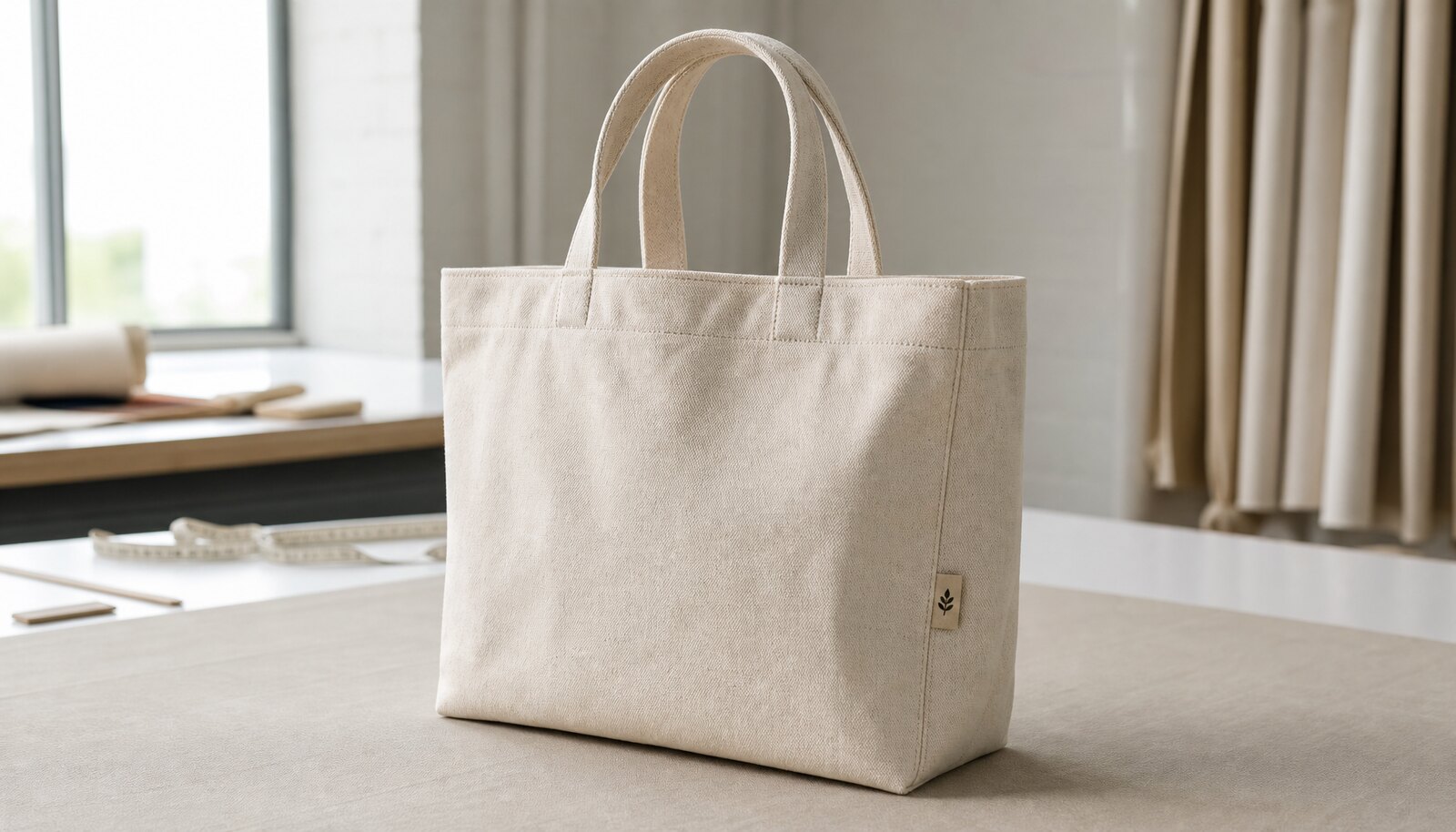
Start With the Reorder Problem, Not the Bag
A reorder memo for recycled canvas totes only works if it starts with the business problem. For cosmetic brands, the real issue is rarely the bag itself. It is the risk that a repeat order arrives with a different shade, a softer handfeel, a shifted logo, or a packing format that no longer fits the retail channel. Once the first run is approved, buyers often assume the next run will follow the same standard automatically. In practice, that is where small changes creep in and create costly receiving problems.
The clean way to manage a reorder is to treat the approved sample as a control document, not a marketing prop. Record the fabric weight, tote size, handle length, gusset, logo placement, fold method, and carton pack that actually shipped well. If the bag will sit next to skincare or fragrance in a retail environment, the tote needs to look consistent enough that the brand can buy again without re-approving the whole product from scratch.
- Use the first approved sample as the reference, not the last photo in the sales email.
- Document any packaging or carton changes separately from the bag spec.
- Treat a reorder as a repeat production run with a known baseline, not a fresh design exercise.
Lock the Base Spec Before You Compare Quotes
For recycled canvas totes, the spec has to be tight enough that different factories are quoting the same article. The easiest place to lose money is in vague wording like 'heavy canvas' or 'nice quality'. Cosmetic brands usually do better with a simple spec block: bag size, fabric weight in GSM, recycled content definition, handle length, seam style, and whether the bag includes lining, gusset, zipper, or closure. A tote at 300 to 320 GSM will behave differently from one in the 380 to 420 GSM range, especially once you add print coverage and retail packing.
The same logic applies to recycled content. Some suppliers mean post-industrial cotton waste, while others mean a recycled cotton blend with a different surface texture and more visible slub. If you do not define the fabric source, one quote may look cheaper simply because it is quoting a lighter or more irregular cloth. That is not a fair comparison. A buyer should decide first whether the tote is meant to feel premium and structured or soft and promotional, then request quotes on that fixed base.
- For premium cosmetic retail, a mid-heavy recycled canvas is usually easier to merchandize than a thin promo bag.
- Ask for the same fabric lot or a matching lot reference if the reorder must blend with the first run.
- Make the size tolerance and handle reinforcement part of the spec, not an afterthought.
Choose the Print Method That Repeats Cleanly
Cosmetic brands often want a clean logo, a short seasonal line, or a simple campaign graphic. For that kind of artwork, screen print is usually the most repeatable option on canvas because it holds strong color and can be controlled by Pantone reference. It is also easier to compare between suppliers because the production variables are more visible: mesh count, ink type, print area, and curing method. If the design uses only one or two colors, screen print normally gives the best balance of durability and cost.
Heat transfer or digital transfer can work when the artwork changes often or has more detail, but the buyer should accept the tradeoff. Transfers can feel less integrated with the canvas, and some versions crack or lift sooner if the tote is folded, packed tightly, or handled as a retail giveaway. Embroidery can look premium on a small logo, yet it adds cost and may distort lighter canvas. For a reorder, the safest move is to use the same print method as the first approved sample unless the brand has a deliberate reason to change it.
- Define print area in centimeters, not just 'front logo'.
- Require a strike-off or print sample before bulk production if the logo has brand-critical colors.
- If the tote will be folded inside a cosmetic box, test how the print behaves after compression.
Use MOQ Logic to Protect Unit Cost and Availability
MOQ is not just a supplier demand; it is a production math issue. The minimum often changes by fabric color, print color count, and whether the bag needs special packing. A one-color natural recycled canvas tote may have a lower MOQ than a dyed body with a multi-color print, because the factory can run more of the same material through the line with less setup waste. If you change the handle tape, zipper, or inner label, you may trigger a second MOQ layer even if the bag body looks identical.
For a cosmetic brand, the smarter strategy is to keep the base tote stable and vary only the artwork or insert when possible. That keeps the reorder cheaper and easier to approve. It also gives the procurement team leverage when comparing suppliers: one factory may quote a lower unit price but hide setup fees, while another may quote a slightly higher unit price with a clearer MOQ and fewer surprise charges. The useful question is not only 'What is the minimum order?' but 'What is the minimum order at the exact spec I need?'
- Ask for MOQ by body color, print color, and packaging version separately.
- Check whether the supplier can combine a few SKUs into one production lot.
- If the reorder is uncertain, design the bag so the same base can support future print updates.
Compare Supplier Routes, Not Just Factory Prices
A fair quote comparison depends on where the tote is actually being produced. A direct factory quote can look stronger because it removes a middle layer, but only if the factory controls cutting, printing, sewing, and packing in-house. A trading company may be better at communication and faster to react on paperwork, but it can add margin and lose some control over production detail. A stock-based vendor can move quickly, yet the fabric, size, and print options will be narrower. For a reorder, those differences matter more than a small headline price gap.
The best route depends on what is changing. If the base bag is fixed and the brand only needs another run, a direct factory with the original pattern and same print method is usually the cleanest path. If the brand is testing a new market or wants to lower cash exposure, a stock-fabric sourcing route can be acceptable as long as the buyer signs off on the exact shade and weight. The point is to compare the route against the business need, not to chase the cheapest line item in isolation.
- Direct factory suits repeat runs and tighter spec control.
- Stock-fabric vendors suit small tests and faster replenishment.
- Trading companies suit buyers who need more support on coordination, but they should still disclose the production source.
Treat Samples as Production Controls
Sample approval should be used to lock production behavior, not just to admire the logo. For recycled canvas totes, a useful sample set often includes a pre-production sample, an artwork strike-off, and, when color is sensitive, a fabric swatch or shade band. The buyer should compare the sample against the exact buying intent: weight, texture, handle width, stitch density, and the way the tote folds. A nice-looking sample can still be wrong if the handle reinforcement is weak or the body panel twists after pressing.
Good sample approval is practical and measurable. If the tote is for cosmetic retail, the sample should show how it looks with the brand's actual print coverage and how it packs into a carton or shelf-ready shipper. Any change after approval needs a written note. That includes font thickness, logo position, thread color, inner label size, or the addition of a barcode sticker. If the supplier cannot reproduce the sample consistently, the reorder should not go to bulk.
- Keep one signed master sample at the buyer side and one at the factory side.
- Record the print placement, seam finish, and fold method on the approval sheet.
- Reject any bulk sample that changes the approved look even if the bag is technically usable.
Set Packing Rules for Retail and Distribution
Packing is where a lot of buyer pain shows up later. A canvas tote can be sewn correctly and still arrive in a format that is hard to receive, hard to display, or damaged by moisture and compression. Cosmetic brands often need a cleaner standard than a generic promo bag. That may mean a consistent fold direction, a recyclable inner bag, a side insert to keep the tote flat, and a carton mark that matches the retailer's receiving system. If the bag is traveling through multiple channels, the packing spec should protect the print surface and keep counts easy to audit.
Do not let packing remain a verbal note. Put the fold orientation, individual polybag requirement, desiccant need, carton size, carton weight limit, and barcode location into the order file. If a tote has a printed surface, make sure printed sides do not rub against rough seams or zipper hardware during transit. The right packing can reduce claims, speed up receiving, and make the product look more premium when it is opened by distribution teams or store staff.
- Specify pack counts per inner and master carton.
- Use a packing photo from the sample stage as the reference for bulk.
- If the tote is meant for shelf display, require a fold that reveals the logo cleanly.
Build the Schedule Backward From the Reorder Date
A reorder should be scheduled from the retailer's need date, not from the factory's first available start date. The practical way to work is backward: allowance for sample approval, material booking, production, final inspection, and shipping. If the supplier must source recycled canvas in a specific shade or weight, the fabric lead time may matter more than the sewing time. Buyers often discover this too late and then accept rushed substitutions that break consistency between seasons.
A stable reorder flow usually needs a buffer between order release and sell-through. If the tote is tied to a cosmetic launch, the buyer should leave enough room for print approval, carton confirmation, and freight booking before inventory gets tight. Sea freight rewards early planning; air freight solves emergencies but should be treated as an exception because it changes the landed cost sharply. For repeat orders, the best risk reducer is a small time buffer plus a clear rule that no spec changes are allowed once the bulk run is released.
- Plan for sample approval before the material booking window closes.
- Protect a small contingency in case the recycled fabric lot needs rechecking.
- Do not assume the second run will be faster if the first run was late because of approvals.
Compare Landed Cost and Keep the RFQ Usable
The cleanest RFQ is the one the factory can quote without guessing. A useful quote packet should include bag size, fabric weight, recycled content definition, print method, artwork count, packing format, quantity by SKU, and delivery destination. If that packet is complete, the supplier can give a quote that is actually comparable. If it is incomplete, the quote may look cheaper only because the factory has left out screen fees, special packing, or carton work that will appear later as extras.
Landed cost matters more than ex-factory price. A tote with a slightly higher factory price can still be the better buy if it arrives with fewer defects, better packing, and less receiving labor. For cosmetic brands, that matters because the tote is usually part of the brand presentation, not a disposable commodity. The goal of a reorder memo is to keep the same product standard repeatable, so procurement can compare one supplier against another without rewriting the spec each time.
- Ask for unit price, setup fee, sample fee, packing fee, and carton cost separately.
- Compare quotes only after normalizing the spec and the packing method.
- Keep the RFQ file short enough that the factory can follow it without interpretation.
Specification comparison for buyers
| Spec decision | Recommended option | When it fits | Buyer risk to check |
|---|---|---|---|
| First reorder after a successful launch | Direct factory using the same pattern, fabric lot, and master sample | You already approved the bag and only need a repeat run with low risk of change | Confirm the supplier is not substituting fabric weight, handle tape, or print ink from the first order |
| Small test refill under 1,000 pcs | Cut-and-sew supplier with stock recycled canvas and local printing | You want to protect cash while you test a new shade, slogan, or regional market | Stock fabric may vary in shade and handfeel, so lock an approved swatch before you pay |
| Multiple colorways on one base bag | One factory with in-house cutting, sewing, and print setup | The bag body stays the same but the cosmetic brand needs several seasonal versions | Watch for setup fees per color and ask how they control artwork registration across variants |
| Premium retail presentation | Factory that can fold, label, polybag, and carton-pack to retail spec | The tote will sit on shelves or ship through a distributor network | Check if the supplier can keep dust off the bag and keep folds consistent across cartons |
| Short lead time reorder | Supplier with reserved fabric, spare capacity, and no outsourcing | You need a faster replenishment window after sell-through | Ask whether cutting, printing, and sewing are all done in-house or pushed to subcontractors |
| Lowest unit price priority | Larger direct-factory run with a simplified print and standard packing | The tote is a promo item and the brand can accept a basic finish | Low price often hides weaker handles, thinner canvas, or extra charges for packaging and cartons |
| High color fidelity for brand graphics | Factory with Pantone-controlled screen print and strike-off approval | The bag carries a clean logo or campaign artwork that must match brand standards | Make sure the supplier is not substituting digital print for screen print without approval |
| Multi-market distribution | Route with factory QC photos, carton marks, and barcode control | The same tote will ship to retail, e-commerce, and distributor accounts | Verify carton count accuracy, barcode placement, and packing list consistency before booking freight |
Buyer checklist before sampling
- Freeze the tote size, gusset depth, handle length, and fabric weight before comparing price.
- Define recycled content clearly, including the fiber source and any blend allowance.
- Approve one master sample for body shape, sewing, print placement, and color.
- State the print method and Pantone references in the RFQ, not only the logo artwork.
- Confirm if the quote includes sample fees, screens, plates, packing, and carton marks.
- Ask for the supplier's MOQ by color, print version, and packaging configuration.
- Set an agreed tolerance for size, weight, and stitching before production starts.
- Build the delivery plan backward from launch date, not from the factory's earliest ship promise.
Factory quote questions to send
- What exact recycled canvas composition, fabric weight in GSM, and fabric finish are quoted?
- Is the quoted unit price based on the approved sample spec or on a similar standard bag?
- How many print colors are included, and are screens, setup, or artwork adjustment fees extra?
- What is the MOQ per size, color, and print version, and what changes that MOQ?
- What packing is included in the price, including fold style, polybag, insert card, and carton label?
- What is the lead time after sample approval, and how many working days does each step take?
- Can you share pre-shipment QC photos, carton count photos, and a final inspection report?
- How long is the quotation valid, and which raw material assumptions could change the price?
Quality-control points to confirm
- Fabric weight should stay within an agreed tolerance of the approved sample, with no thin panels or weak weave lines.
- Bag dimensions should match the approved spec closely enough that shelves, inserts, and shipping cartons still fit as planned.
- Print placement should stay aligned to the artwork proof, with no bleeding, ghosting, broken lines, or color shift.
- Handle stitching should be even and secure, with reinforced attachment points and no skipped stitches or loose thread tails.
- All folding, polybagging, and carton counts should match the packing instruction sheet exactly.
- Cartons should arrive clean, dry, and correctly labeled, with no crushed corners or mildew smell.