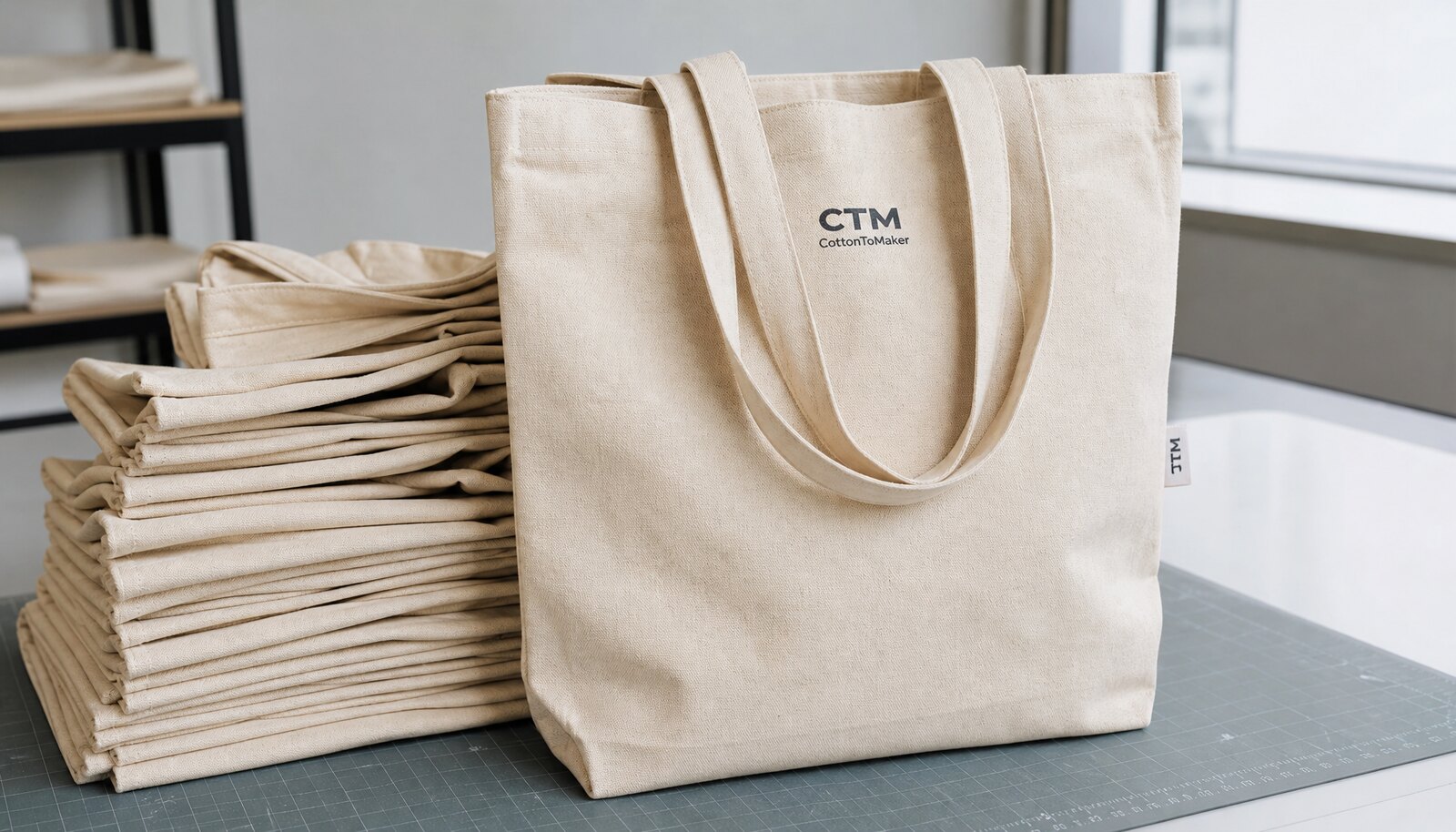
What corporate event buyers are really sourcing
When a procurement team searches for recycled canvas totes for corporate events wholesale buying checklist, the real job is not just to buy a tote. The job is to source a bag that survives venue handling, carries enough weight for printed materials and samples, and still looks presentable when a guest carries it out of the hall. That means the buying decision starts with use case, not with a generic product photo.
For corporate events, the tote often functions as both packaging and branded media. It may hold a lanyard, program booklet, bottle, sample kit, or sponsor insert, and then keep working after the event as a daily carry bag. That dual use is where quality differences show up. A weak seam, sloppy print, or undersized panel is not a minor defect; it affects brand perception in every attendee photo and every reuse.
- Typical event loads: brochures, notebook, bottle, small merch items, or sample kit
- Common failure points: handle tear-out, thin fabric, poor print alignment, weak bottom seam
- Commercial goal: a bag that looks clean on arrival and still holds shape after distribution
Start with the right fabric weight and finish
For most event programs, recycled canvas in the 12oz to 14oz range is the practical starting point. At this weight, the bag has enough body to feel like a real product rather than a giveaway sack, but it is still economical to sew and ship. If the event tote only carries paper inserts, 10oz can be workable, but the bag will look softer and may collapse more easily on a registration table. If the tote is part of a premium sponsor package, 14oz or even heavier canvas can be justified.
Do not treat GSM or oz as a branding detail. It affects sewing behavior, print appearance, freight weight, and carton count. A recycled canvas fabric that is loosely woven at the same nominal weight can behave very differently from a dense weave. The supplier should tell you not only the weight, but also whether the fabric is pre-shrunk, washed, or calendered. Those finishing steps can change size stability and print result.
- 12oz to 14oz: balanced for conference kits and general corporate events
- 10oz: lower cost, lighter feel, acceptable for short-life giveaways
- 16oz and above: better structure, but watch cost, sewing speed, and freight weight
- Ask for fabric width, weave density, and batch consistency, not just a recycled content claim
Choose a print method that matches the artwork and the volume
A tote quote is only meaningful if the print process is matched to the artwork. For a clean logo and one or two colors, screen printing remains the most efficient route for wholesale corporate runs. It gives strong opacity, relatively low cost per unit at scale, and a result that is easy to inspect. Water-based print can work well when the brand wants a softer hand feel, but the factory must control ink saturation and curing carefully to prevent fading or transfer.
Heat transfer is useful when the order is small, the logo has fine detail, or the artwork has many colors. The tradeoff is durability and feel. On recycled canvas, transfer film may sit on the surface and can crack if the bag is folded repeatedly. Embroidery looks premium, but it adds labor and is not ideal for a large event giveaway unless the logo is simple and the bag price can absorb the extra operation.
- Screen print: best for simple logos and medium to large quantities
- Water-based print: better hand feel, but depends on fabric absorbency and curing control
- Heat transfer: useful for short runs and complex art, but confirm crack resistance
- Embroidery: premium look, slower production, and higher defect risk on thick seams
Use a quote structure that exposes hidden cost drivers
A supplier quote that only shows a unit price is not enough. For event totes, the real comparison comes from separating fabric cost, sewing labor, print setup, packing, and cartonization. Two suppliers can both quote a similar unit number, but one may include only a plain bag while the other includes print, inner packing, and export cartons. You cannot compare those numbers fairly unless the quote is broken down in the same format.
The most useful quote has enough detail to reveal what happens when the order changes. Ask for a price at your target volume, then ask what happens if the run increases by 20 percent, drops by 15 percent, or adds a second print position. That reveals whether the factory is actually managing cutting efficiency and print setup well, or just padding a one-off number.
- Separate unit price from setup fee and sample fee
- Ask for pricing by size, color, print color count, and packing type
- Compare carton counts and carton dimensions because freight can shift landed cost
- Look for price breaks that reflect real production efficiencies, not vague volume promises
Compare supplier routes before you compare prices
For recycled canvas totes, the sourcing route matters. A direct factory is usually the best option when the order needs controlled print quality, consistent color, and a stable lead time. Direct production also makes it easier to approve samples, request photo updates, and control carton packing. If the buyer is planning annual events or multiple campaigns, the factory route often reduces risk even when the first quote is not the lowest.
A trading company or sourcing agent can be useful for smaller quantities, mixed product programs, or buyers who need one contact for several items. The downside is transparency. If the supplier does not clearly identify the actual production source, buyers may see inconsistent fabric lots, different stitching standards, or unclear accountability when defects appear. For branded corporate events, a low-priced intermediary can become expensive if the bag arrives with the wrong handle length or a weak print cure.
- Direct factory: better for repeatability, custom spec control, and bulk event runs
- Trading route: more flexible for smaller or mixed orders, but higher transparency risk
- Local stock route: fastest, but limited on customization and recycled fabric claims
- Importer/distributor route: useful when timelines are tight, but inspect the actual spec before purchase
Decision table: sourcing routes and spec choices that change the outcome
Below is a practical comparison for buyers comparing recycled canvas tote supply options for corporate events. Use it to see where the quote can look cheap on paper but become expensive in production, freight, or rejection risk.
Do not read the table as a fixed rule. Use it to decide what to prioritize: speed, control, custom branding, or landed cost stability.
- Write decisions in measurable language, not only descriptive wording.
- Ask for sample photos plus one physical approval sample for important orders.
- Keep quotation, sample approval, and inspection notes tied to the same spec version.
Set sample approval criteria before bulk production starts
A sample is not just for visual approval. It is the reference point for every acceptance decision in the bulk order. The pre-production sample should be made from the same fabric weight, the same thread color, the same handle length, and the same print method planned for production. If the factory sends a different fabric for the sample, the approval has limited value.
Inspect the sample the way the bags will be used. Put in brochures, a bottle, and a notebook. Check whether the tote stands flat, whether the handles sit comfortably on the shoulder, and whether the print remains centered when the bag is filled. Measure the bag after slight handling, because some recycled canvas relaxes after cutting and sewing.
- Compare sample against drawing with size tolerance written on the spec sheet
- Rub the print lightly and fold the bag to see whether ink cracks or transfers
- Pull the handle joins and top edge stitching for stress weakness
- Review color against a physical reference, not only a digital PDF
Quality control points that matter on recycled canvas
Quality control on recycled canvas totes is about repeatability, not perfection. Buyers should define which defects are acceptable and which are not. A small shade variation from batch to batch may be normal in recycled fabric, but a visible mismatch inside one packed carton is not. Similarly, a loose thread at trim level may be tolerable if the bag functions normally, but a skipped stitch at the handle join is a structural defect.
Because recycled canvas can have a more natural or irregular surface, print registration and ink coverage need extra attention. Fine logos should not be too small if the weave is coarse. If the artwork relies on thin lines, the supplier should send a print strike-off or a high-resolution photo against a ruler before bulk starts. That reduces the chance of receiving a logo that looks sharp on screen but fills in on fabric.
- Stitching: no skipped stitches, open seams, or weak handle join areas
- Dimensions: maintain enough tolerance for brochures, notebooks, or gift inserts
- Print: centered, legible, fully cured, and consistent across the run
- Cleanliness: no oil marks, dust, odor, or carton contamination before shipment
Packing, cartonization, and freight are part of the tote spec
Packing affects both cost and presentation. If the corporate event bags are distributed directly from cartons, bulk packing is usually the lowest-cost choice. If the bags need shelf presentation or retail-style handout, individual polybags may be necessary, but that raises labor and waste. Some buyers request compression packing to reduce carton volume, yet over-compression can create creases that make the tote look lower quality at first opening.
Packing details should be written into the purchase order before production. Buyers need carton count, carton dimensions, inner pack count, and label format. If the factory changes pack count without warning, warehouse receiving becomes harder and freight cost can shift. For international shipments, a clean packing list and outer carton mark reduce customs and receiving disputes.
- Confirm bags per carton and whether cartons are single-size or mixed-size
- Specify if polybags are required and whether they should be recycled or standard PE
- Ask for carton dimensions early because cubic freight can be a major hidden cost
- Require an outer label format that matches the importer’s warehouse system
Lead time risk comes from approvals, not just sewing
For corporate event projects, lead time often slips because sample approval starts late or artwork changes after the quote is issued. The factory may be able to sew the order quickly, but if print screens, fabric booking, or carton labels are delayed, the shipment window moves. Buyers should separate sample lead time, bulk production time, and packing time instead of using one total estimate with no detail.
If the event date is fixed, build in a buffer for revisions. A small logo correction, handle length adjustment, or print alignment tweak can add several days. Ask the supplier what normally causes delay: fabric dye lot wait, print curing, sewing bottleneck, or packing queue. The answer tells you where the schedule is fragile. A supplier that cannot explain its bottleneck is more likely to miss a hard event deadline.
- Sample approval window: allow time for at least one revision if artwork is new
- Bulk production: track cutting, printing, sewing, and packing as separate milestones
- Buffer time: protect the event date from freight delay and customs hold risk
- Document all approved changes in writing to prevent late-stage disputes
Specification comparison for buyers
| Spec decision | Recommended option | When it fits | Buyer risk to check |
|---|---|---|---|
| Fabric weight | 12oz to 14oz recycled canvas for standard event use | Seminar kits, conference giveaways, registration packs, and light retail resale | Too light below 10oz can wrinkle, sag, and feel cheap; too heavy can raise cost and increase stitch stress |
| Handle length | 58 to 65 cm total drop for shoulder carry | Corporate events where attendees carry brochures, bottles, or swag after registration | Short handles create complaints at the venue; long handles can drag when tote is lightly filled |
| Print method | 1 to 2 color screen print or water-based print for larger runs; heat transfer only for short runs or complex art | Simple logos, sponsor marks, and event branding with medium volume | Fine lines may fill in on coarse recycled canvas; multicolor art can crack or shift if print setup is weak |
| Lining choice | Unlined for lowest cost, partial lining for better shape, full lining for premium feel | Unlined for mass giveaways; lined for VIP kits or retail-facing event merch | Unlined bags may show stitch bulk; lined bags need more production control and longer lead time |
| MOQ route | Direct factory MOQ with one main size and one print position | Brand buyers with repeat events or forecasted annual volume | Too many color/size variants split the run and inflate unit cost, sample cost, and packing complexity |
| Closure option | Open top or simple snap button | Fast-pick event distribution and common conference use | Zipper and complex closures add cost, sewing time, and defect points unless needed for security |
| Packing method | Bulk packed in export cartons with inner polybag only if required | Importers optimizing freight and warehouse handling | Retail-ready individual packing increases labor and carton count; confirm bag count per carton and compression level |
| Supplier route | Direct manufacturer with in-house cutting, printing, and packing | Custom corporate event orders needing controlled lead time and consistent shade | Trading routes may be useful for very small orders but can hide the true production source and QA standard |
| Sustainability proof | Material declaration plus recycled content statement tied to fabric batch | Brands making environmental claims or corporate responsibility statements | Generic recycled claims without batch-level support can create compliance and marketing risk |
Buyer checklist before sampling
- Confirm tote size, target fabric weight in GSM or oz, handle length, and whether the bag must stand upright when filled with event materials.
- Lock artwork limits: number of print colors, print position, logo size, and whether the design needs edge-to-edge coverage or a single front mark.
- Request a pre-production sample made with the same fabric weight, thread color, handle length, and print process planned for the bulk run.
- Require a quote that separates unit price, print charges, sampling charges, carton charges, and any setup fees.
- Specify carton pack count, inner packing requirement, and outer carton mark format before production starts.
- Set acceptance criteria for stitching, print registration, odor, size tolerance, and color variation before factory approval.
Factory quote questions to send
- What is the exact fabric spec, including recycled content claim, finished GSM or oz, weave density, and whether the fabric is pre-shrunk or enzyme washed?
- Which print method will you use for this artwork, and what is the maximum print area, color limit, and wash or rub resistance target?
- What is the MOQ by size, color, and print version, and how does the unit price change if we reduce the order quantity or add a second logo position?
- Can you quote separately for sample, bulk production, packing, and carton marks so we can compare suppliers on the same basis?
- What is the standard lead time for sample approval, bulk production, and export-ready packing, and what steps usually cause delays?
- What inspection standard do you use for stitch defects, measurement tolerance, print defects, and carton count accuracy?
Quality-control points to confirm
- Fabric weight must match the agreed range within a practical production tolerance; do not accept a lighter fabric substituted without written approval.
- Seam strength at handle joins and side seams must be even, with no skipped stitches, loose thread clusters, or stress puckering.
- Print must sit square on the panel, with sharp edges and no obvious ink bleed, ghosting, or cracking on the approved sample standard.
- Bag dimensions should stay within the agreed tolerance so inserts, brochures, or bottles fit correctly after packing.
- Odor, dust, and visible contamination should be low enough for event handout use; strong chemical smell is a rejection risk.
- Carton count, bundle count, and label information must match the packing list before shipment release.