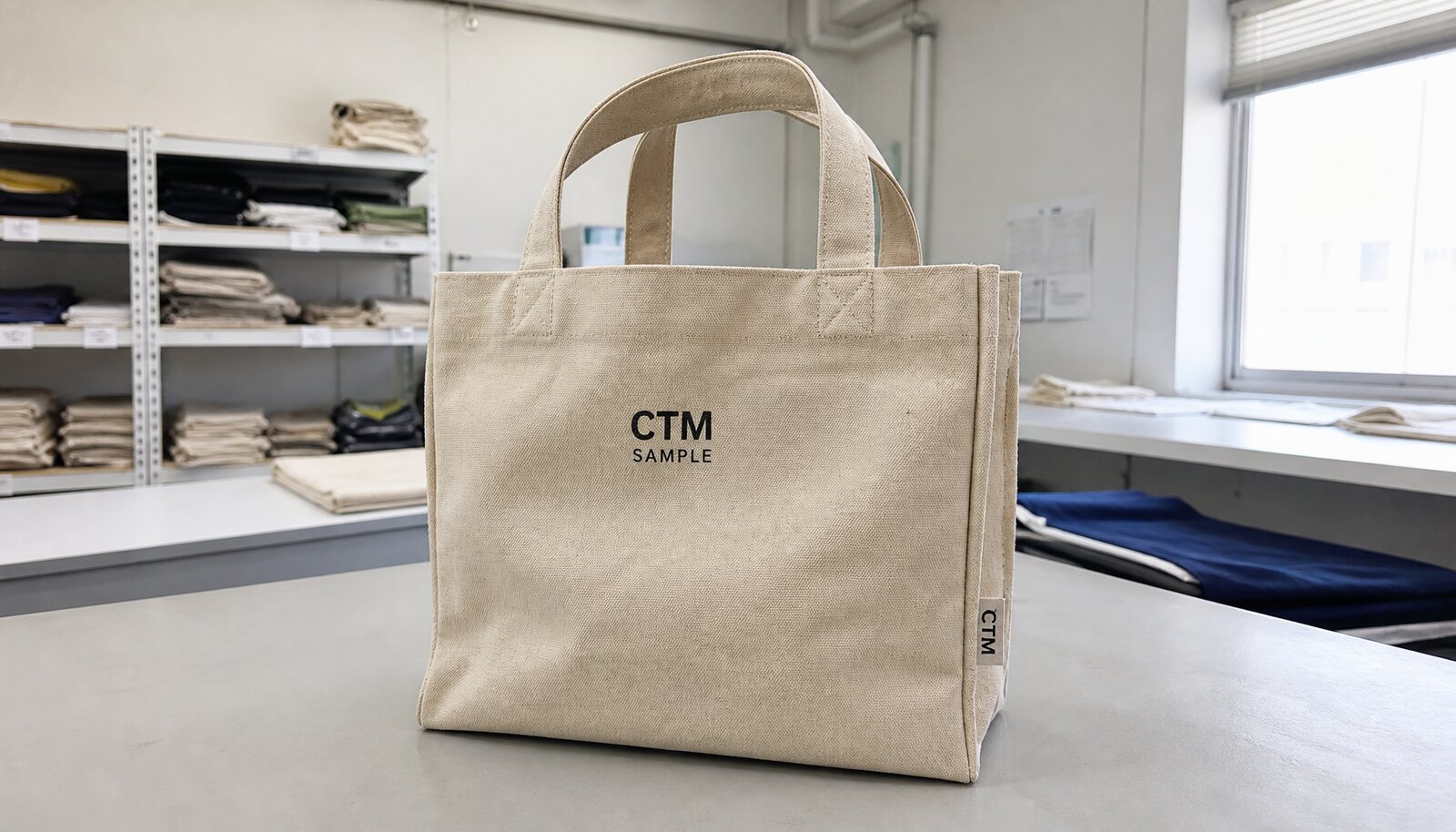
Why recycled canvas tote approval needs a procurement checklist, not just an artwork sign-off
Recycled canvas totes for corporate events are often purchased for more than carrying items from one venue table to another. They are part of the event brand experience, a practical packaging format for kits and gifts, and sometimes a visible sustainability message that attendees will keep after the event. That combination makes the sample approval process more important than a simple art proof. A tote can look attractive on screen, then fail as a usable product if the fabric is too soft, the handles stretch, or the print loses clarity after folding and handling.
A procurement buyer should treat the sample as a contract standard, not a courtesy sample. Once the sample is approved, it becomes the reference for fabric weight, recycled content, print process, stitch quality, packing, and final shipment quality. If those points are not controlled in writing, the supplier may still deliver something that is close to the picture but not close enough to be accepted. That is why the strongest approval process starts with a measured spec sheet and a checklist built for factory execution, not only marketing preference.
For corporate event programs, the business risk is usually not one catastrophic failure. It is a long list of small misses: the bag slumps on the registration table, the logo is smaller than expected, the handles feel weak, or the cartons arrive with a packing count mismatch. Each issue can create extra receiving time, rework at the event site, or a perception that the sponsor or employer chose a low-grade giveaway. A strong approval checklist prevents those issues before bulk production begins.
- Treat the approved sample as the production standard, not as a casual reference.
- Approve both appearance and performance: print, structure, load behavior, and packing.
- Write every important spec into the PO or quality agreement before production starts.
Define the tote specification before you ask for a sample
The fastest way to waste time with recycled canvas totes is to ask for a sample before the technical brief is complete. A supplier cannot accurately quote or sample a tote unless the buyer has already decided the finished size, gusset depth, handle style, target use, and print area. For corporate events, the tote usually needs to carry brochures, notebooks, giveaways, or boxed items, so the intended load matters as much as the artwork. A bag designed for light handouts is not the same as a bag designed to hold a heavy conference kit.
The spec should be written in measurable terms. Use finished width, height, and gusset in centimeters or inches. Define handle drop, handle width, and whether the handles are self-fabric, cotton webbing, or recycled webbing. State whether the tote must stand upright on a table, whether it needs an inner pocket or zipper, and whether the bottom should be reinforced for boxed items. If the event kit includes a water bottle or rigid box, test the bag shape with those items in mind.
The buyer should also decide the acceptable visual standard before sampling begins. Some recycled canvas has a natural, slightly mottled appearance that is part of the material story. Other programs need a cleaner, more uniform surface for premium branding. If the buyer does not define whether natural variation is acceptable, the supplier may select a fabric that passes technically but misses the brand expectation. A clear spec saves everyone from round after round of sample revisions.
- Specify the tote by size, gusset, handle drop, and intended load.
- Define whether the bag must stand upright, fold flat, or hold rigid event items.
- State the acceptable visual character of the canvas: natural, uniform, washed, or brushed.
Compare material and supplier options the way procurement teams actually buy
The comparison buyers need is not just a list of fabric weights. It is a tradeoff between material type, supplier route, compliance burden, and event use. A recycled canvas tote from a direct factory with documented material sourcing is not the same commercial option as a tote from a trading company that sources from multiple subcontractors. Likewise, a 12 oz recycled canvas bag and a 10 oz recycled canvas bag may look similar in a photo but behave very differently in use. Buyers should compare options by performance, documentation, and risk, not by marketing language.
For corporate event procurement, the most useful evaluation is a side-by-side view of the options that might actually be shortlisted. That is why the table in this article compares both material choices and sourcing routes. It helps the buyer identify what the supplier can really control. A better quote is often the one that explains the fabric source, the recycled-content evidence, the print method, and the inspection standard, even if the unit price is not the lowest on the first line.
When two offers look close, ask which one gives more control over repeatability. A supplier with a single production line, stable fabric source, and sample-room ownership usually has better version control than a seller who outsources cutting and printing to a network of subcontractors. For recurring corporate events, that consistency is often worth more than a small initial price difference.
- Compare by use case, documentation, and repeatability, not by photo alone.
- Ask which supplier can control fabric lot, print process, and final inspection.
- Shortlist the option that reduces rework, not only the one with the lowest ex-factory price.
Choose the right recycled canvas weight, weave, and hand feel
Fabric weight is the first screening point, but not the only one. Most corporate event buyers land in the 12 oz to 14 oz recycled canvas range because it balances structure, print quality, and carrying strength. That range usually gives the bag enough body to look premium on a reception table and enough stability to handle standard event contents. A lighter 10 oz fabric can be acceptable for brochure-only programs or low-load giveaways, but it should not be approved casually for a tote that will hold a full event kit.
Buyers should ask what the oz or GSM figure actually means in the supplier’s process. Some factories quote a nominal fabric weight while the finished bag feels lighter because of weave density, washing, or finishing. A tighter weave can improve print edges and reduce distortion, while a looser weave can look rougher but may cost less. If the supplier says the bag is recycled canvas, ask whether the recycled content comes from recycled cotton, blended yarns, or mixed fiber feedstock. That affects both the hand feel and the evidence available for sustainability claims.
The sample should be judged in the same condition as the final product. If the supplier shows a heavily pressed or heavily steamed sample while bulk bags will arrive with a softer finish, the buyer may approve a different look than what production will deliver. Ask for a raw swatch, a cut panel photo, and the finished sample. If possible, compare the sample to a reference tote already used at an event or to a known benchmark from a previous order.
- Use 12 oz to 14 oz recycled canvas for most corporate event tote programs.
- Reserve 10 oz for lighter kits where structure and load are less important.
- Ask for raw swatches and finished panel photos so finishing does not mask the real fabric character.
Recycled content proof and compliance documents buyers should request from the factory
A recycled canvas tote is only procurement-safe if the buyer can document what “recycled” means in the supplier’s process. Many buyers stop at a verbal claim, but that is not enough when the bag will be used in a corporate sustainability program, an ESG-linked campaign, or a branded event where the claim may appear in marketing materials. The supplier should be able to explain whether the canvas uses recycled cotton, recycled fiber blends, or a combination of recycled and virgin yarns, and the factory should state the recycled-content percentage clearly on the quote or product sheet.
Buyers should request documents that match the commercial claim level. A supplier declaration may be enough for internal buying decisions, but some programs require stronger evidence. Depending on the market and claim, that could include a mill certificate, third-party recycled-content test report, transaction certificate, or chain-of-custody documentation. If the supplier cannot provide any paperwork, the buyer should not build externally visible sustainability messaging around the order. That protects the brand from greenwashing risk and keeps the procurement file defensible.
Regional sourcing also affects document reliability and lead time. In some markets, recycled-content traceability is easier when the mill and factory are integrated or when the supplier has frequent export experience with compliance paperwork. In other regions, the bag itself may be easy to make but the supporting documents can be slow, incomplete, or inconsistent across reorders. Procurement should ask early whether the factory has handled the target market’s documentation before, especially if customs declarations, chemical compliance, or sustainability verification will be reviewed by a distributor, retailer, or corporate legal team.
- Request a written recycled-content statement with percentage and fiber basis.
- Ask for mill certificates, transaction certificates, or test reports when the claim must be verified.
- Do not use sustainability claims in public materials unless the paperwork supports them.
Sample approval should cover construction, not only print appearance
For recycled canvas totes used at corporate events, construction quality is often more important than buyers expect. A clean print cannot rescue a weak seam or a handle that stretches under load. The sample should show the same cut, stitch path, seam allowance, and reinforcement planned for the bulk order. If the factory is showing a nicely finished display sample but changing the handle attachment or stitch density for production, the buyer is approving the wrong standard.
The most important construction points are the side seams, bottom corners, handle attachment, and any added reinforcement patches. Ask whether the bag uses single-needle stitching, double stitching, chain stitching, bartacks, or box-X reinforcement. For carrying capacity, reinforcement should be visible and consistent, not hidden or improvised. If the tote is meant to hold a kit with hard edges, test whether the bottom corners maintain shape without seam strain. If the handles are self-fabric, check whether the fabric has been folded and stitched evenly so the edges do not curl.
Do not overlook the inside of the bag. Procurement teams sometimes focus on the logo and forget the internal finish, but event attendees often notice loose thread ends, raw seams, or uneven trimming once the bag is opened. Turn the bag inside out and inspect every stress point. If there is a lining or pocket, verify that the stitching does not reduce opening size or create a weak pull point at the top edge.
- Inspect handle ends, bottom corners, and side seams separately.
- Confirm the exact stitch construction before approving the sample.
- Turn the bag inside out and check trimming, raw edges, and reinforcement quality.
Print method selection: what to approve for logo clarity and durability
The print method should be selected before the sample is made, not after the sample disappoints. For most corporate event totes, silkscreen printing is the default choice because it handles simple logos well and scales economically at volume. But the buyer still has to match the artwork to the method. A one- or two-color logo with clean lines is ideal for screen print. Small text, gradients, and thin lines may look acceptable on a digital proof but become less legible on textured recycled canvas.
Heat transfer can be a practical option when the artwork is more detailed or when the order quantity does not justify full screen setup. However, the buyer should test whether the transfer edges stay down after folding and whether the finish cracks or peels at the corners. Embroidery can create a premium effect, but it also changes the behavior of the fabric, especially on lighter canvas. It can pucker around the design, add cost, and create a heavier hand feel that may or may not suit the event brand.
The sample should be judged under normal use conditions. Fold it, open it, handle it, and view it from the distance people will actually see at registration or in an event photo. Ask the supplier to state the ink type, cure method, and any wash or abrasion test used to validate the print. If the buyer expects the bag to be reused, request evidence that the print will not flake after repeated folding. If the logo has critical brand colors, compare the sample to a physical color reference instead of relying on a screen image.
- Use silkscreen for simple logos and event names whenever possible.
- Use heat transfer only after checking edge lift, fold durability, and color stability.
- Use embroidery only when the logo size and fabric stability can support it.
Set measurable QC thresholds before production starts
A quality-control plan for recycled canvas totes should include hard checkpoints, not general language such as “good stitching” or “acceptable print.” Before production, the buyer and supplier should agree on what counts as a major defect, what counts as a minor defect, and what is rejectable at shipment. For example, a critical defect might be a broken handle, a missing seam, or a print that is unreadable. A major defect might be a crooked logo, a visible stain, or a seam that fails a light pull test. Minor defects might include a loose thread that can be trimmed without affecting use, if the buyer accepts that level.
The inspection method should also be defined. For bulk orders, use a recognized sampling logic such as AQL-based inspection or an equivalent lot sampling approach. The buyer should know the sample size, the acceptance number, and which defect levels trigger hold or rework. This matters because a tote order can look fine in a small sample but still hide systematic issues in a larger carton lot. If the supplier will not accept a defined inspection method, the buyer is taking an unnecessary shipment risk.
Testing should be practical as well as visual. A simple pull test on handles can expose weak reinforcement. A load test using the actual event kit can show whether the bottom sags or the seam opens. A color tolerance check against a swatch or Pantone reference can prevent disputes later when the bulk lot looks different under event lighting. If the bag will be shipped internationally, also ask for carton-drop or packing integrity checks so the product arrives ready for distribution rather than requiring repacking on site.
- Define critical, major, and minor defects before bulk production.
- Use AQL or another written lot-inspection logic and record the sample size.
- Perform pull tests, load tests, and color checks against a physical reference.
- Reject unreadable logos, broken handles, seam failure, and visible contamination.
Use an inspection checklist that matches real factory risk points
The most useful inspection checklist is built around how tote bags actually fail in production. First, verify finished size and symmetry. A tote can be within dimensional tolerance and still look wrong if the front and back panels are skewed or if the gusset is uneven. Then check the print registration relative to seams and edges. On recycled canvas, the weave can pull slightly during printing, so a logo that was centered on the art file may appear shifted in the finished bag. Buyers should define how much shift is acceptable and where a shift becomes a reject.
Next, inspect stitch density and seam integrity. If the bag uses a box-X or bartack at the handles, inspect whether each reinforcement pattern is complete and consistent. Loose thread ends are not just cosmetic if they are signs of poor trimming or rushed finishing. If the tote has a lining, pocket, or zipper, open and close it several times. A zipper that snags or a pocket that distorts the front panel can make a premium event tote feel cheaply made. Finally, check for fabric contamination such as oil marks, dark specks, or dye transfer, especially on natural or light-colored canvas.
The defect standard should be documented in writing with photos if possible. Buyers should not rely on a general note like “supplier to ensure good quality.” That phrase is too weak to support a rejection discussion later. A stronger method is to include a defect library, even if it is simple: photos of acceptable, borderline, and rejectable conditions for print alignment, seam quality, and shade variation. The clearer the standard, the easier it is for the factory QC team to inspect to the same line.
- Check dimensional symmetry, not only measured size.
- Use reference photos for acceptable, borderline, and rejectable defects.
- Inspect for contamination, loose trim, seam distortion, and zipper or pocket issues.
Packing, labeling, and event readiness are part of quality, not afterthoughts
Corporate event buyers often discover packing problems only when the pallets arrive. A tote that is technically correct but poorly packed creates extra work for the event team. If the bags are folded inconsistently, the opening may not reset neatly, the logo may show creases, or the team may spend hours sorting counts. Packing should therefore be part of the approved sample standard. Ask the supplier to show how each tote will be folded, how many pieces go into each carton, and whether the bags will be polybagged, banded, or left in bulk form.
The quote should include carton size, carton marks, piece count, and the gross weight per carton. Those details matter for freight planning, warehouse receiving, and event-site distribution. If the bags are going to a distributor or a regional office, carton labeling should include SKU, color, quantity, and purchase order number. If there are multiple event dates or multiple ship-to locations, use labeling that allows the receiving team to identify the correct lot without opening every box. That is especially important when the buyer is ordering multiple print versions or colorways.
Where presentation matters, ask the supplier to confirm fold logic and crease behavior. A bag packed too tightly may arrive with deep lines that are difficult to remove. A bag packed loosely may shift in transit and arrive dusty or wrinkled. Neither result is ideal for a premium corporate event. If the bags are intended as welcome gifts, a polybag or insert card may be worth the extra labor. If they are for mass distribution, bulk packing may be more efficient, but only if carton protection is sufficient.
- Approve the fold method and carton count before bulk shipment.
- Require carton marks that match the PO, SKU, color, and quantity.
- Use polybagging only when presentation justifies the added cost and labor.
Specification comparison for buyers
| Option to compare | Best fit | Tradeoffs for buyers | Procurement notes to verify |
|---|---|---|---|
| Recycled canvas, 12 oz-14 oz | Standard corporate event tote, premium giveaway, reusable conference bag | Good balance of structure, print quality, and carrying strength; higher cost than light stock canvas | Ask for fabric swatch, yarn content, and recycled-content declaration; confirm finished hand feel and shrink behavior |
| Recycled canvas, 10 oz | Light handout bag, brochure carrier, low-load event distribution | Lower cost, softer structure, weaker perceived value, greater risk of bag collapse when loaded | Use only when load is low and appearance requirements are modest; ask for load test results and handle reinforcement details |
| Organic cotton canvas | Brand programs that prioritize natural-fiber positioning over recycled-content messaging | Usually higher cost and may not meet the same sustainability story as recycled content; supply can be less flexible | Request third-party documentation if sustainability claims will appear on packaging or event signage |
| Recycled polyester tote | Foldable giveaways, lightweight event kits, weather-resistant use cases | Different look and feel from canvas; print and branding appearance are less premium for some corporate events | Confirm whether the buyer wants canvas texture or a smoother synthetic surface; compare crease behavior and color consistency |
| Jute-blend tote | Rustic, gift-style, or seasonal programs | Coarser hand feel, less suitable for sharp logo detail, can shed fiber and vary more in appearance | Check whether the event audience expects a premium conference look; verify odor, fiber shedding, and print readability |
| Direct factory sourcing | Repeat programs, tighter sample control, better cost transparency | Requires clearer spec discipline and usually more buyer preparation | Best when the buyer wants control over recycled-content evidence, construction standards, and version control |
| Trading company / agent sourcing | Small exploratory runs, multi-category sourcing, faster quote aggregation | Can hide fabric source, subcontracted production, or changing sample standards | Ask who actually cuts, prints, and inspects the bags; request factory name, audit status, and production photos |
Buyer checklist before sampling
- Lock the tote size, gusset depth, handle length, and target carry load before any sample is approved.
- Require the supplier to state fabric weight in oz or GSM, plus recycled-content percentage and base fiber type.
- Ask for a pre-production sample made with the same fabric, print method, handle material, and seam construction planned for bulk production.
- Compare the sample against a measured spec sheet with finished dimensions, tolerance limits, seam allowance, and handle placement.
- Confirm logo position from the front, back, and edge views, and review it at normal viewing distance, not only in close-up photos.
- Inspect inside seams, bottom corners, handle ends, and any reinforcement patches for trimming quality and stitch consistency.
- Ask for a load test using real event contents such as brochures, bottles, notebooks, or boxed gifts.
- Set an acceptable defect benchmark in writing, including visible blemishes, misprints, crooked seams, and loose threads.
- Review packing count, carton dimensions, carton markings, and whether the folded bag size fits the event deployment plan.
- Archive the approved sample photos, fabric swatch, print reference, and revision number as the production master record.
Factory quote questions to send
- What is the exact fabric construction, recycled-content percentage, and base fiber source of the quoted canvas, and can you provide a swatch or mill reference?
- Is this a sales sample or a pre-production sample made from production fabric with the final print method and final handle build?
- What is your MOQ by color, print design, and packing format, and how does unit price change at 500, 1,000, and 3,000 pieces?
- Which print methods can you support on this fabric, what is the expected color tolerance, and what adhesion or wash tests do you use to validate the print?
- How are the handle ends, side seams, and bottom corners reinforced, and what stitch type, stitch density, or bartack standard do you use?
- What packing format is included, how many pieces per carton, and what are the carton dimensions, net weight, and gross weight?
- What is the lead time from sample approval, and which steps can add delay, such as fabric dyeing, screen preparation, accessories, or third-party testing?
- What documents can you provide for recycled-content verification, compliance, and export paperwork, and are any of these extra charges?
- What defect rate do you consider acceptable before shipment, and what inspection standard do you use for finished goods?
- If we order again, how will you keep the same color, print placement, and fabric lot consistent across reorders?
Quality-control points to confirm
- Finished size should stay within the agreed tolerance, typically +/- 1 cm for most standard tote dimensions unless a wider range is approved in writing.
- Color consistency should be controlled with a physical swatch or Pantone reference; visible shade variation between panels, handles, or between sample and bulk should be flagged before release.
- Logo placement should remain within the approved print window, with no meaningful shift across the front panel, gusset, or seam crossings.
- Print quality should show full coverage, readable small text, no pinholes, no smearing, no flaking, and no obvious registration drift at edges.
- Handle stitching should be even and reinforced at the ends with box-X, bartack, or equivalent reinforcement; skipped stitches, loose tension, or broken thread are rejectable.
- Seams should be flat, aligned, and trimmed cleanly, with no raw-edge exposure, twisted panels, or puckering that affects appearance or strength.
- Corner and bottom reinforcement should be checked by load simulation; stitching should not open or distort when the bag is filled to the intended event load.
- A practical pull test should be performed on handles and seam junctions; any early failure, seam opening, or excessive elongation should be rejected.
- Inspection sampling should be agreed before production: use an AQL or similar lot inspection standard for major, minor, and critical defects, and record the sample size used.
- Defect thresholds should be written into the PO or quality agreement; for example, no critical defects, tightly limited major defects, and a small tolerated minor-defect rate only if the buyer accepts it.